

Guest writer Christina Newland sits down with writer-director Annapurna Sriram to discuss all things Fucktoys.
Debut writer-director-star Annapurna Sriram’s film Fucktoys is what she calls ‘a bubblegum grindhouse adventure’. This kaleidoscopic mix of girlypop aesthetics and metaphysical doom is self-consciously retro; heightened in a cartoonish manner. Starring Sriram herself as a sex worker called AP, it is also a queer love story about a woman who believes she has had a curse placed on her – and will stop at nothing to try and reverse it. Sriram, who has her own experience of sex work, based much of the story on people she knew and experiences she witnessed, wanting to take her character AP on a raucously funny, campy, feminist odyssey. And, as she says, to give herself an opportunity to play a lead who could be ‘a brown Brigitte Bardot.’
A Nashville native, Sriram locates her story in a dreamy, quasi-John Waters place in the unspecified American South called ‘Trashtown, USA. Shot on 16mm on location in and around Louisiana, the film opens with a tarot reading from a garrulous psychic (‘Honey, you got a curse on you’), which sets the tone for what’s to come. Following AP on a madcap adventure with her wayward love interest (Sadie Scott), they try to reverse the so-called curse through raising cash, leaning on hapless male clients, and zooming around on a baby-blue moped out of a 60s French film. Sitting down for a long, enthusiastic, and sometimes emotional chat with Fucktoys debut director and star, we could truly get onboard with her impromptu manifesto: ‘It’s all for the girls. I want a new wave of girls making weird, smutty, fun, irreverent, silly movies.’
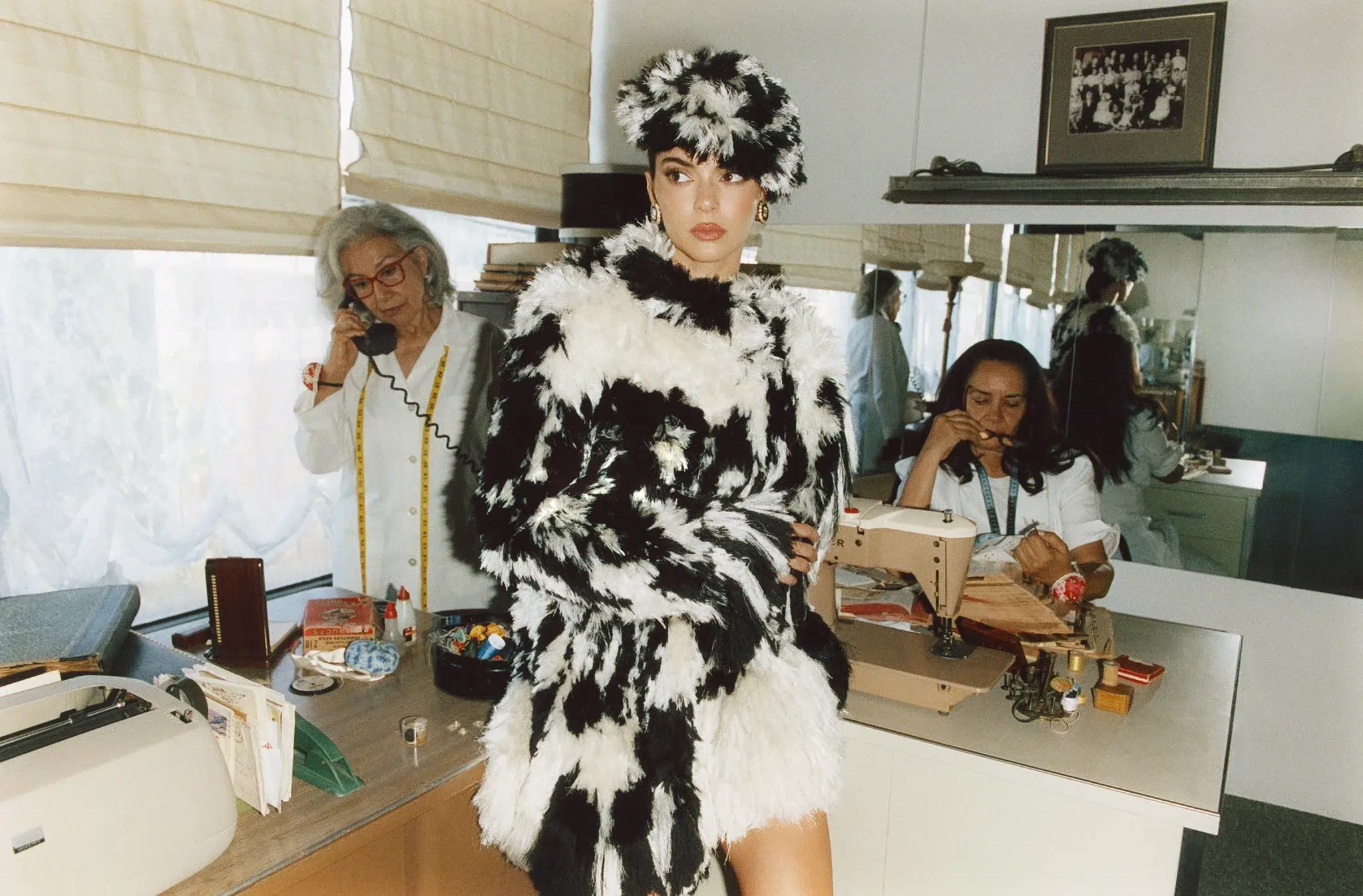
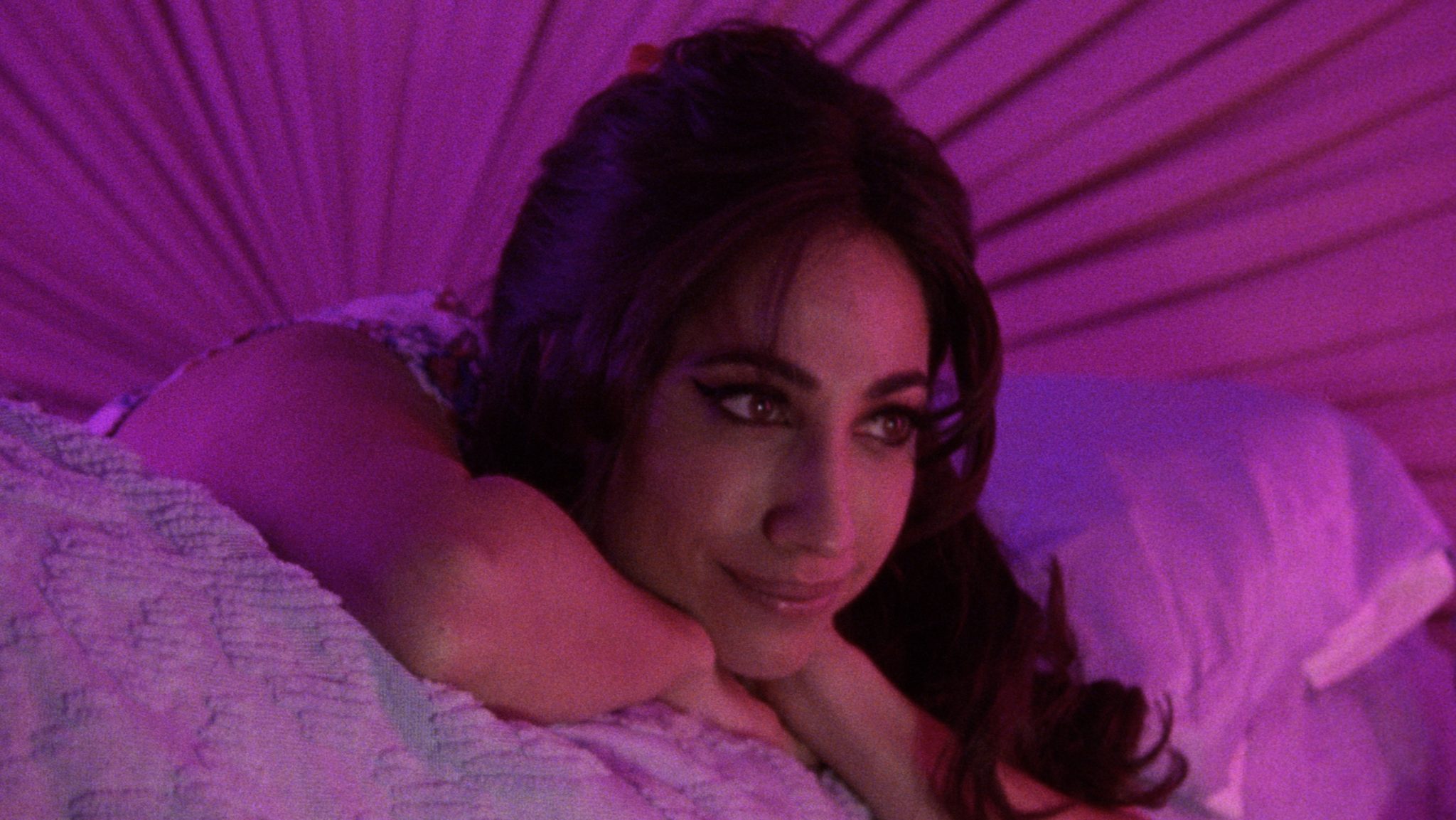
A still from Fucktoys (directed by and starring Annapurna Sriram, 2026)
Christina Newland: Tell me about the setting for this movie—Trashtown, USA.
Annapurna Sriram: It is the American South, because we did film in Louisiana. But in my original dream, it was like Springfield from The Simpsons—everywhere, America, but also nowhere, America. Parts that felt neglected, Americana of yesteryear – a Main Street, but also an abandoned warehouse or weird oil refinery. And then, because I’m from the south, I wanted it to have more lush overgrowth. A sort of lush green dystopia.
It also let me forgo the shortcomings of an indie film. I could build sets with found materials, trash, and repurposed materials. I could use the landscape. If I couldn’t build the most expensive set, I could build something that was found and portable. How could I use what existed organically when I didn’t have the budget?
CN: What was the inspiration for writing the film?
AS: When I wrote the script, I was going through a breakup. I was really heartbroken, and I was feeling stupid because a psychic actually told me to break up with my boyfriend. Which is why I broke up with him. Then I was like: what the fuck? Why did I break up with him because a psychic told me to? So I was a little emo, and some of the scenes that came out were these moments that made me laugh. Other aspects of it that I wanted to include: I’m very close to other women, especially sex workers I know. We’re here to help each other and keep each other safe, and push through our lives and achieve. Another thing that I wanted to reflect was that the women are not in competition with each other, and the women are not there to tear each other down. They’re like your survival friends; the people that you’re in the trenches with. I don’t think I’d ever seen a movie that explored sex work that didn’t use the women in conflict against each other.
“When I wrote the script, I was going through a breakup. I was really heartbroken, and I was feeling stupid because a psychic actually told me to break up with my boyfriend. Which is why I broke up with him. Then I was like: what the fuck? Why did I break up with him because a psychic told me to?”
Annapurna Sriram
CN: It’s still rife, isn’t it—feeling that there’s a sense of competitiveness with each other. Maybe it’s because sex work is more female-dominated, there’s more solidarity. Whereas in male-dominated fields—like film—women feel they have to fight for space.
AS: These experiences have helped me re-programme what you’re describing, which is being a minority in a field and feeling like, ‘oh, there’s only a few slots for us’, so we have to compete against each other. Actually, that’s bullshit. That’s a made-up thing. There’s room for everyone, and there’s room for everyone to make a movie about the same thing. You can all make movies about sex work or psychics. I tried to make that part of my practice. I feel like when I’m talking to other female filmmakers, I can also just be fucking real about these mediocre men. We have to work 10 times harder just to have a chair pulled out at the table. The older I get, the less patience I have for men.
CN: Can you talk about the look of the film and its sort of oscillation between the rough hinterlands of a broken-down Americana and the more cottagecore, aestheticised, retro stuff?
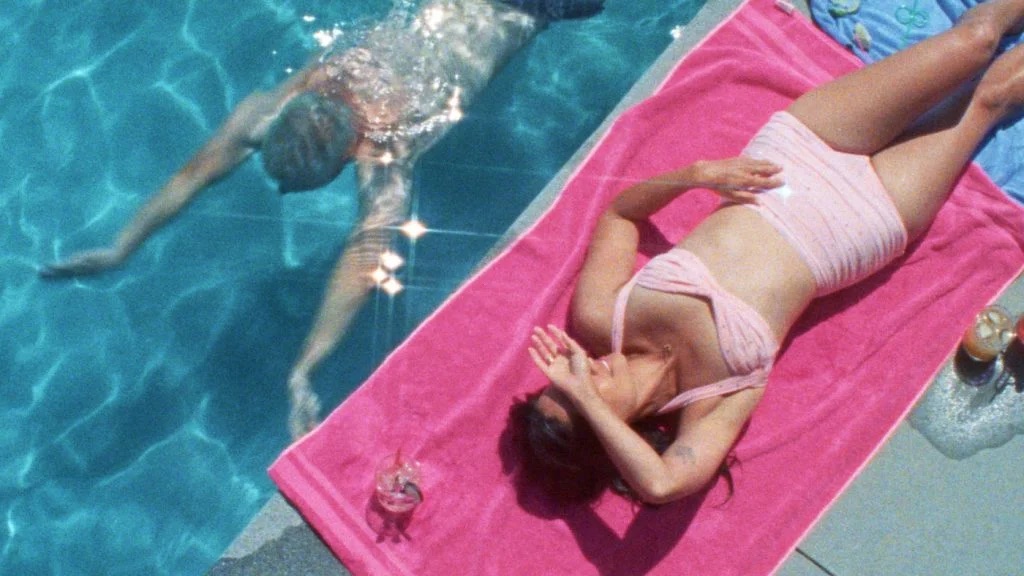
AS: I was thinking of keeping it very feminine, whimsical and feeling like it’s a live action cartoon, like Pee-Wee’s Big Adventure. The colour palettes are very distinct. There’s also a sort of cottagecore—I wanted a feminisation of a dystopian universe which might otherwise look like Mad Max—all car parts and machines. Or Sin City, which is very dark and sort of brooding and sort of sleek.
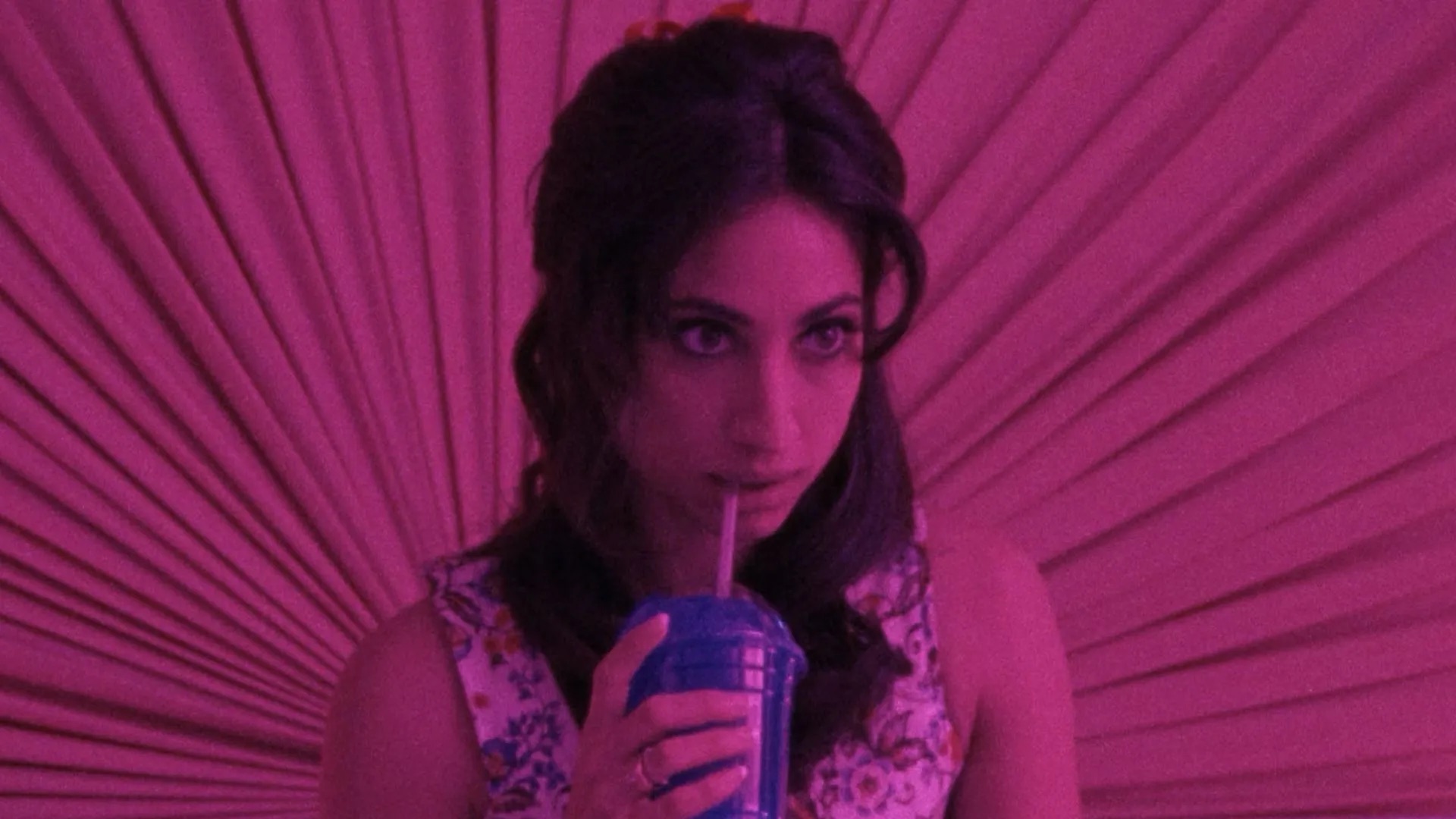
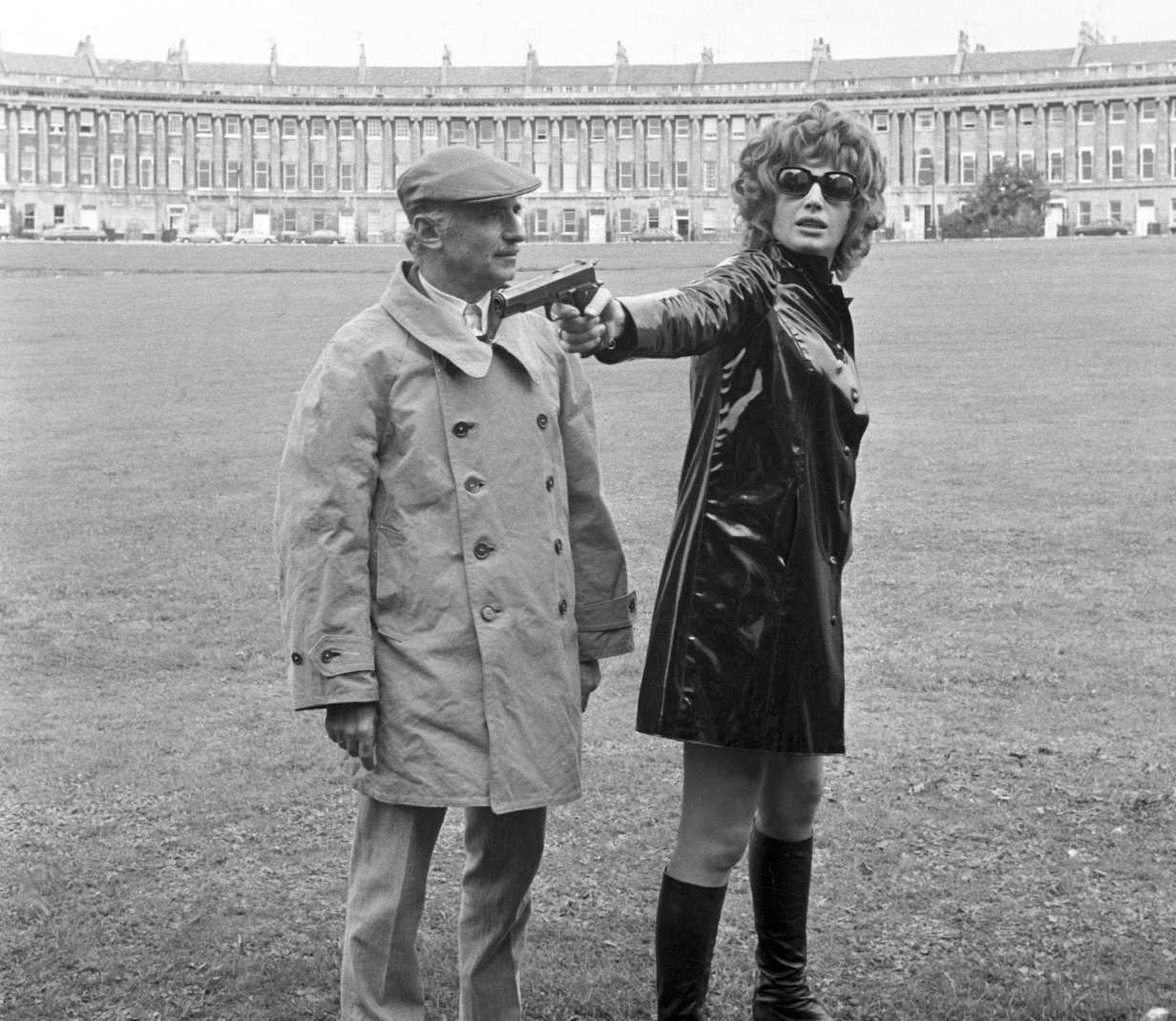
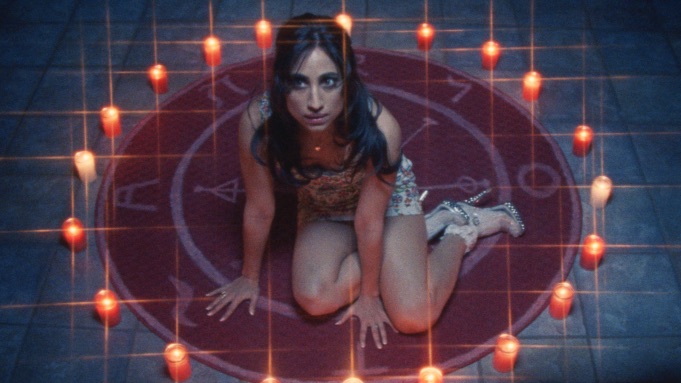
A still from Fucktoys (directed by and starring Annapurna Sriram, 2026)
CN: What about the film’s relationship to the occult – tarot, curses, reiki. Are we all seeking something to replace religion?
AS: l have a love-hate relationship with spirituality and the occult, I think religion is a double edged sword. I think it’s a con, and I also think it helps people. The same is true with a lot of things. If you’re seeing a medium or doing spells with your friends – these things are kind of hokey, but they might be real. Even just because they just give you a sense of peace, even if it’s all made up. So I wanted to walk this line with the psychics in the film. Ultimately, the metaphor of a curse is about structures of oppression. The curse is generational; economic. The curse is being a woman. The curse is being black, trans, queer, whatever. And there is no solution to that. I used to struggle with feeling there weren’t opportunities for me. That there was racism, and there were doors that wouldn’t open for someone like me. So part of this movie was also to give myself an opportunity and to make a role that’s mixed race, but she doesn’t ever have to explain her identity, or play into a trope. And the same is true for Sadie [Scott]. They get to just be the masculine heartthrob love interest, they don’t have to explain their gender to the world. They are just accepted as they are.
CN: Tell me about styling the film – the costuming, hair, makeup, and so on.
AS: The film took me eight years to make. So as years would go by, I would watch trends kind of come and go. So I wanted very classic shapes, classic looks. And I was pulling from, like, a lot of references: Showgirls, Crimes of Passion, Sweet Charity, French New Wave. I liked the girly socks and stripper shoes look.
CN: The film very much exists as a postmodern mash-up of various other influences and films. Where did you draw inspiration from?
AS: I love camp and I love cult movies, but when you look back, you realise so many were just made by men. I love Almodovar, Ken Russell, Russ Myers, John Waters, but then you’re like: who are the women doing this? Very few. So let’s have a new generation of girls doing this!