

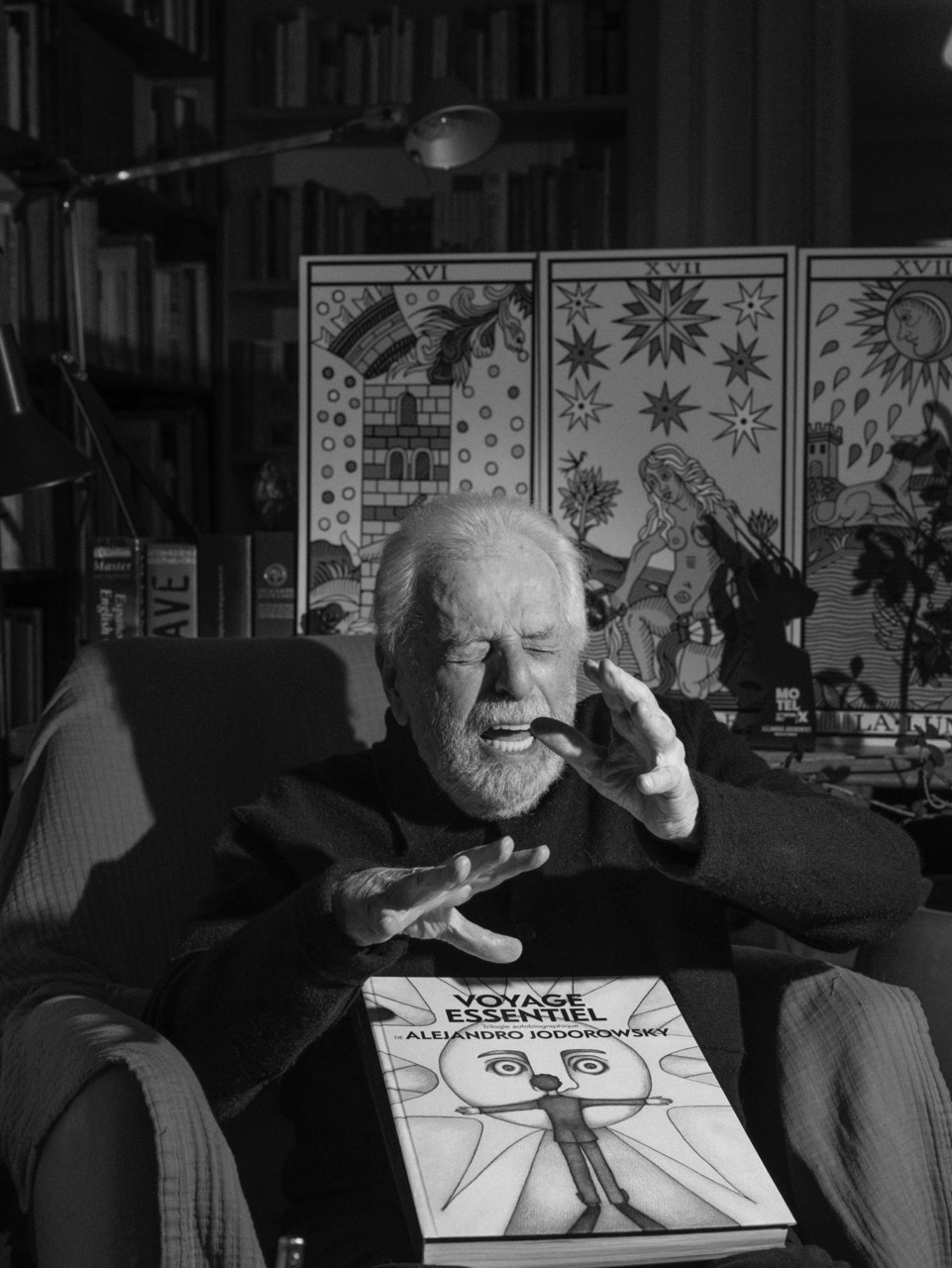
Alejandro Jodorowsky has spent his life building a world that exists entirely on his own terms. Filmmaker, poet, comic book auteur, shaman, tarot reader, theatre provocateur: the categories accumulate and still fall short. We visited him at his Paris home to understand why, for so many, he remains the closest thing to a living prophet.
The lift at Alejandro Jodorowsky’s building descends like an old gatekeeper holding a lantern, beckoning us to follow him. Rattling, slow, it brings us to the apartment of one of the previous century’s most illuminating truth seekers; a guru to those who obsess over his books or study his films, and a shamanic figure for people searching for answers.
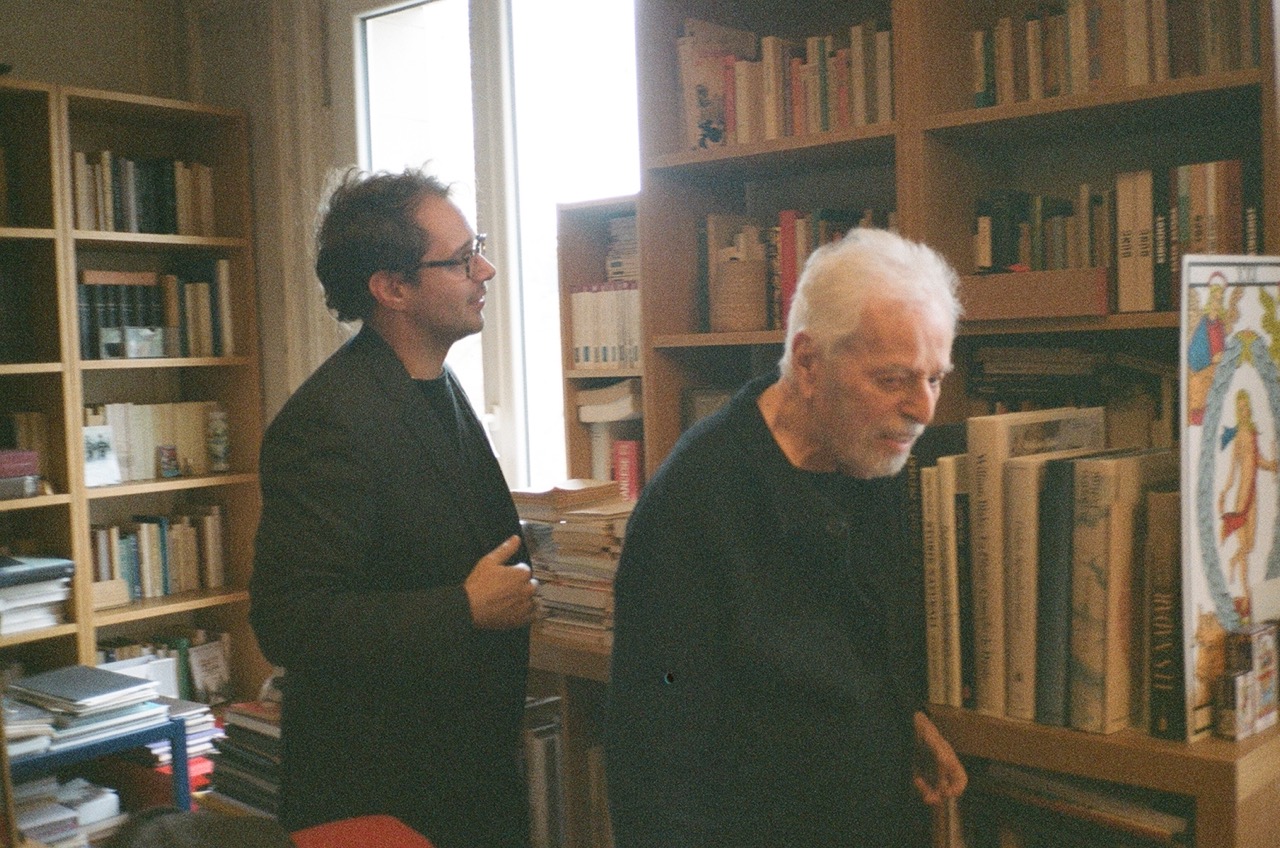
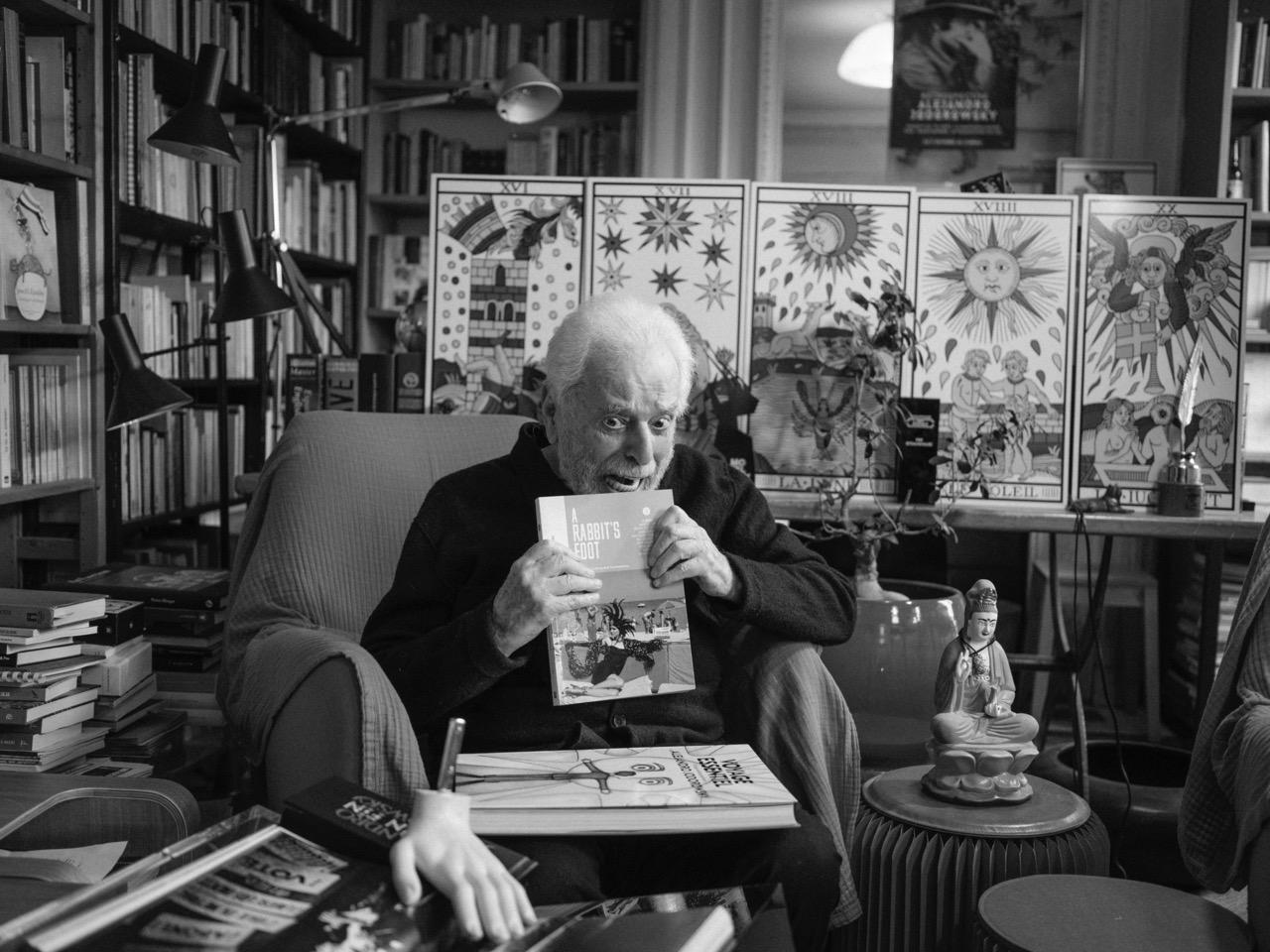
Alejandro Jodorowsky, 97 years old, stands waiting at the door with his wife, Pascale Montandon-Jodorowsky. It has been his home for most of his life, and the stacks of books, knee to shoulder high, loom like the uneven spires of a city. He wades through them like a giant, bringing us to a room with four chairs and further piles of books. It’s testament to Jodorowsky’s career that half are his own.
Like many cinephiles, my interest in Jodorowsky began with Frank Pavich’s documentary on his failed attempt to adapt Frank Herbert’s novel Dune (1965). It is perhaps cinema’s most famous “what if”—teased only through concept art depicting a surreal, ultra-saturated space opera, starring Orson Welles, Salvador Dalí, and Mick Jagger, and with a score from Pink Floyd.
When I interviewed Denis Villeneuve in 2024, while the director was on press duty for Dune: Part Two, he explained to me that he hoped to meet Jodorowsky one day—not to talk about Herbert, but to discuss dreams.
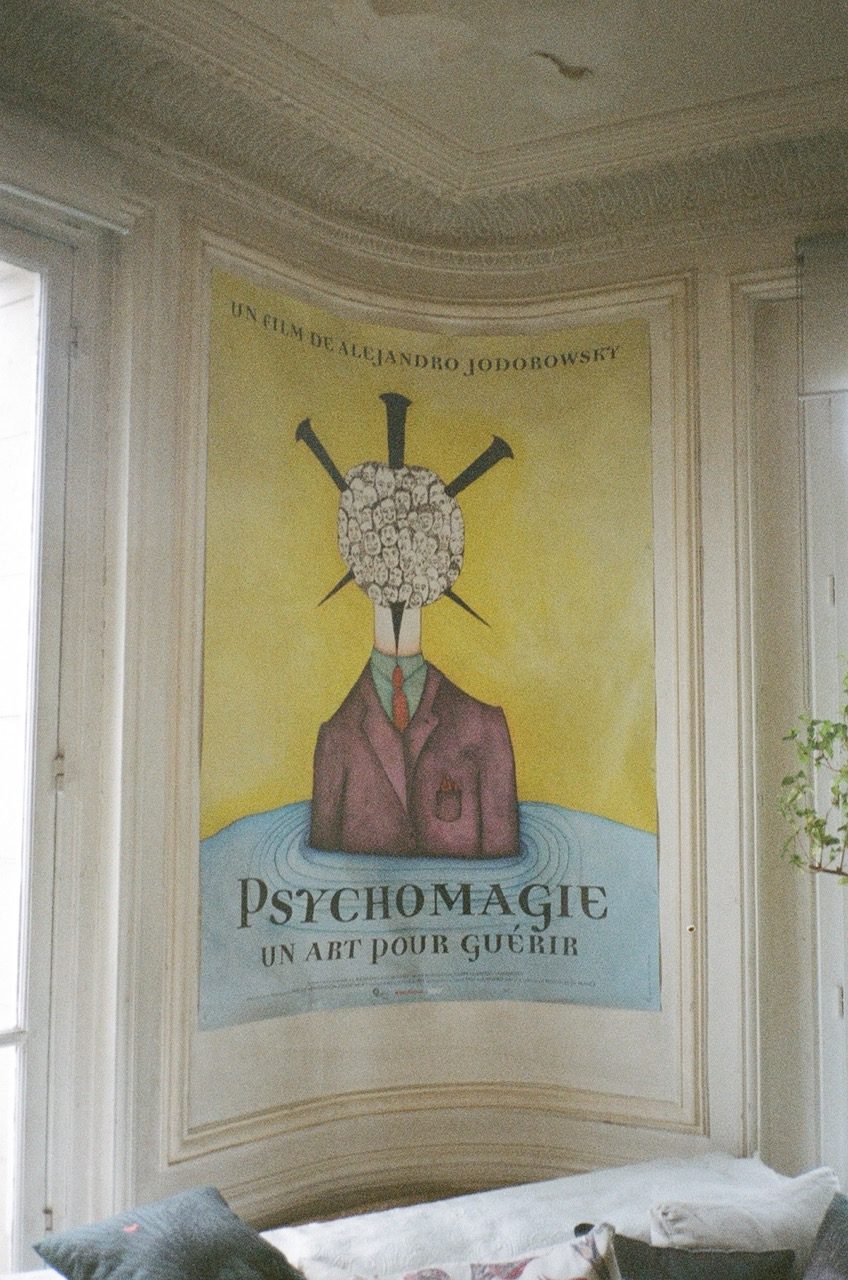
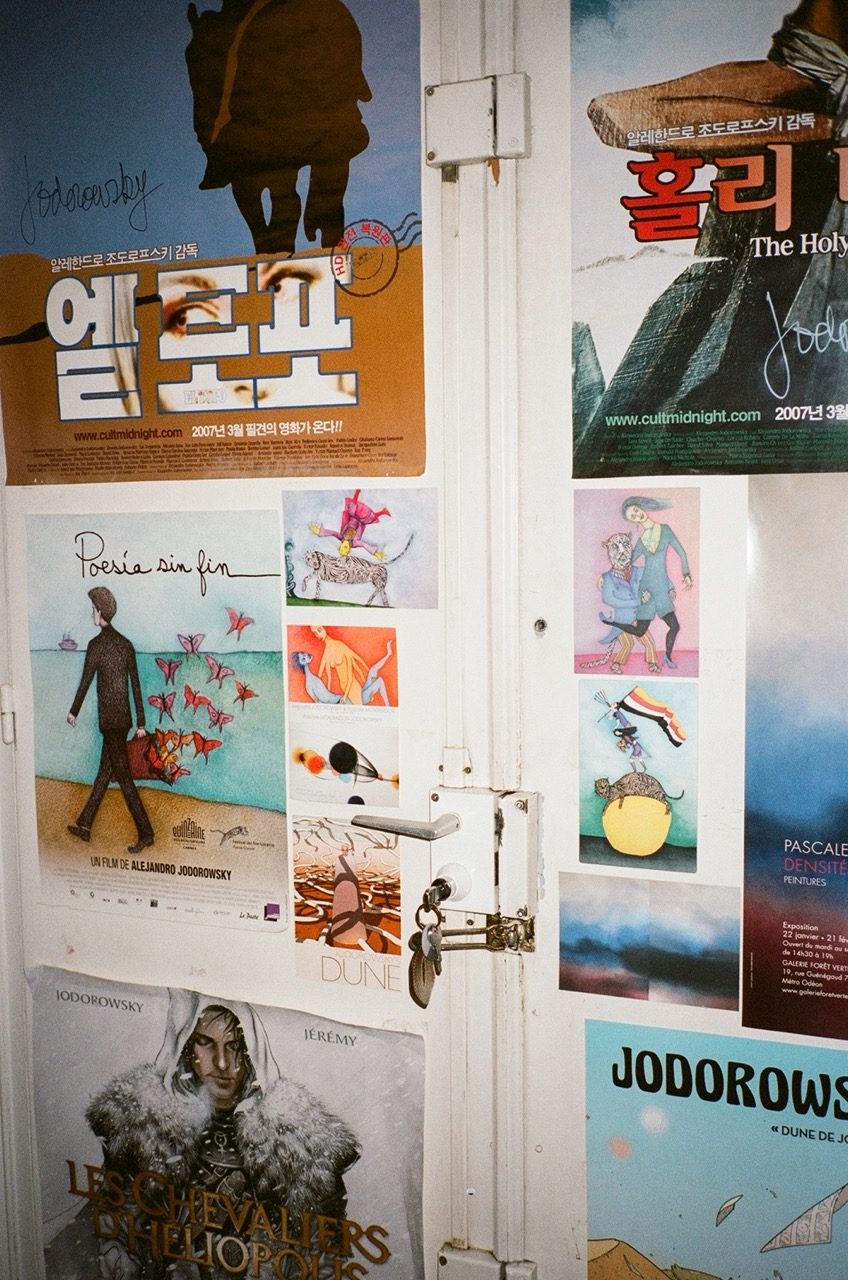


Like Villeneuve, certain friends of mine pore over Jodorowsky’s books on “psychomagic” (his own school of thought that adapts psychotherapy into acts of healing), influencing his challenging works of cinema. These are credited for inventing the “midnight movie” phenomenon: films banned for their provocative, psychedelic imagery, circulated in privacy, but today appreciated as cult classics.
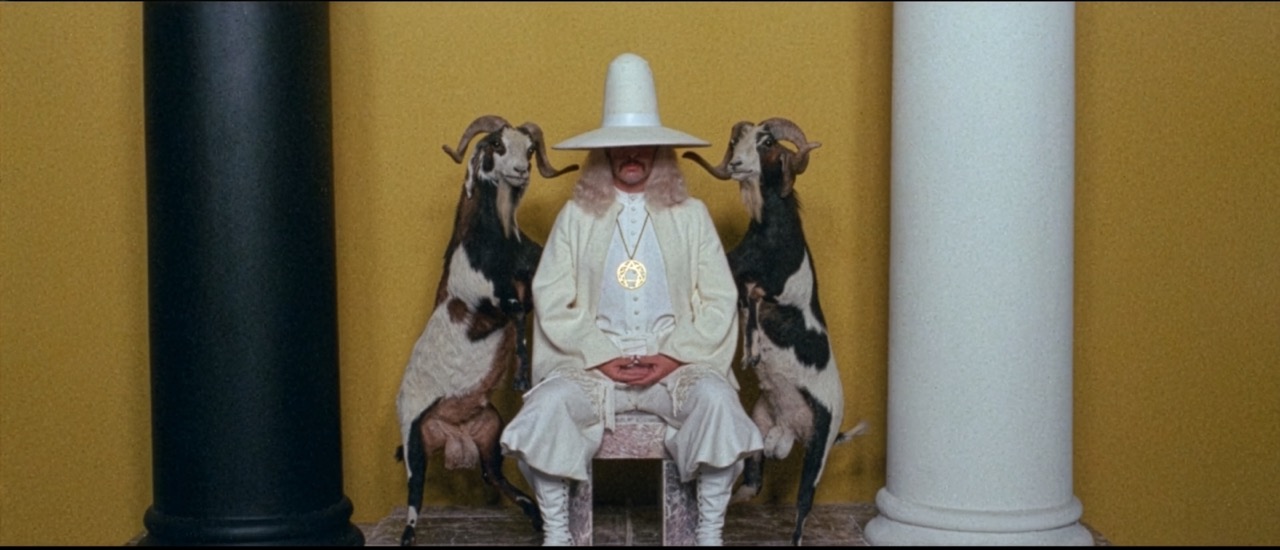
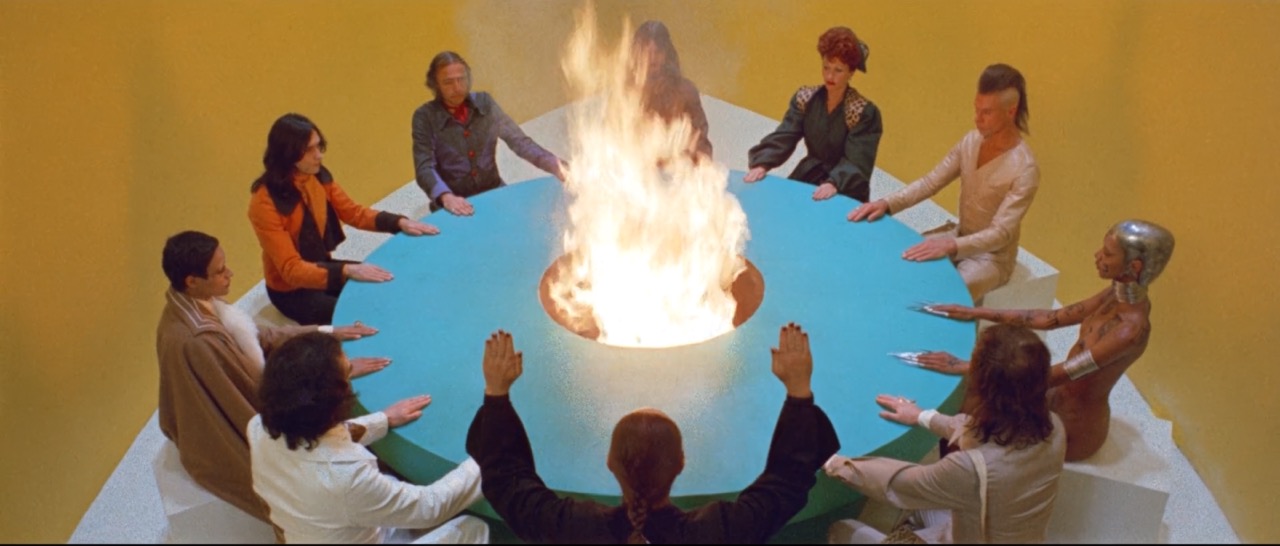
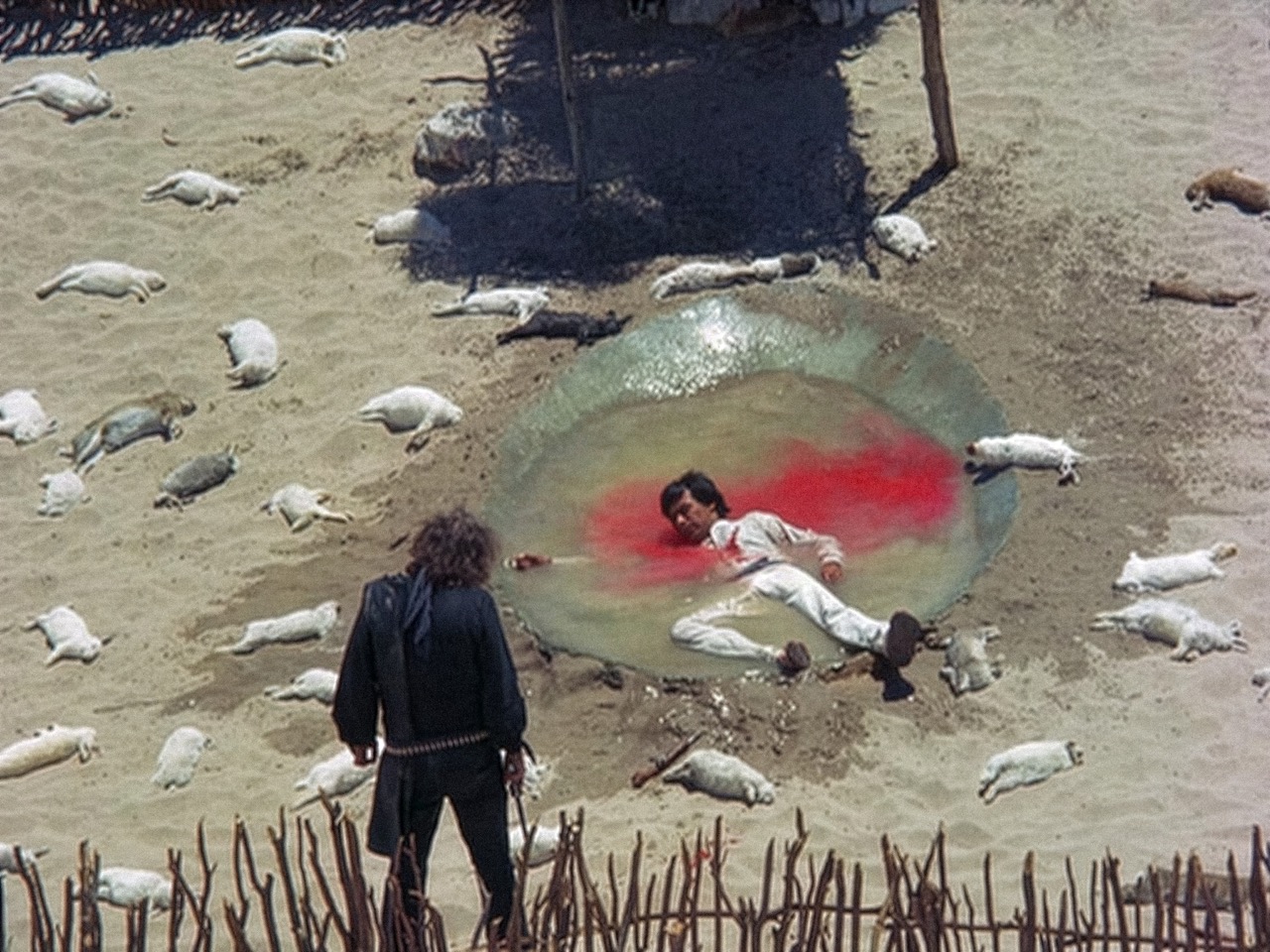
Although Jodorowsky is almost a century old, the events of his life are enough for three separate lives. As a young boy, he was a prodigious poet in his native Chile, before running away from a troubled home to join the circus. It brought him to the avant-garde theatres of Mexico City and the surrealists in Paris. His tutelage under zen master Ejo Takata taught him the “death of intellect”, and shaped his path as a spiritual teacher and healer. He achieved global infamy when John Lennon, impressed after watching Jodorowsky’s difficult “acid Western” El Topo (1970), convinced his manager to invest $1m in what then became The Holy Mountain (1973). It was this surreal, yet shocking, art-house masterpiece that Jodorowsky first used cinema as a medium to spread his message. Yet no matter what medium he chooses, people listen. His charisma transmutes esoteric themes and ideas accompanied by bizarre, unsettling iconography. At the time of writing, Jodorowsky has almost half a million followers on his Instagram account.
His most spirited followers are a gallery of provocateurs: among them Nicolas Winding Refn (who dedicated two films to him), Erykah Badu (the singer shouts his name on stage), Kanye West (who sought out Jodorowsky for tarot readings), Marina Abramović (who follows his teachings on psychomagic), and Marilyn Manson. The latter asked him to officiate his wedding with vedette Dita Von Teese.
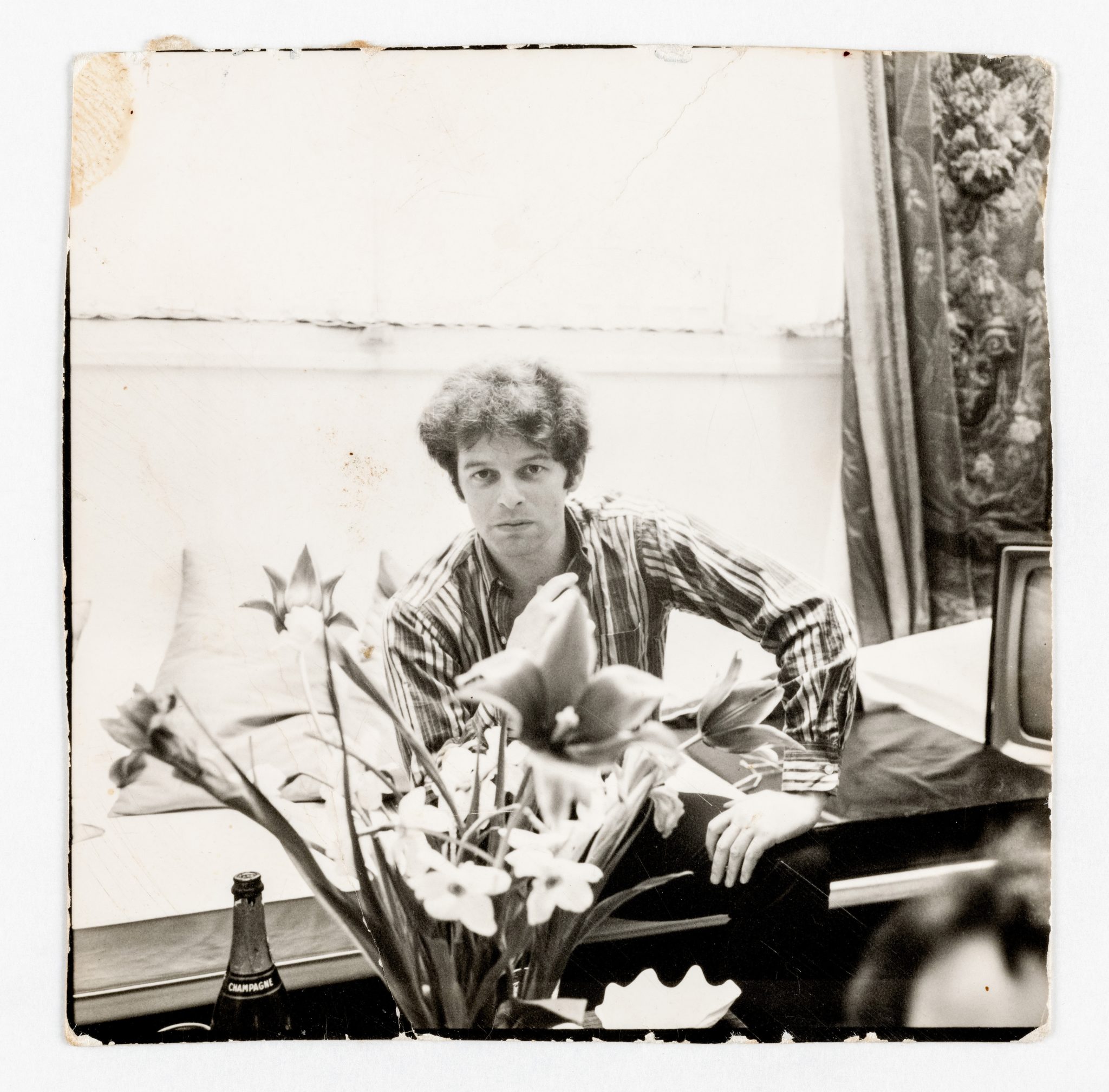
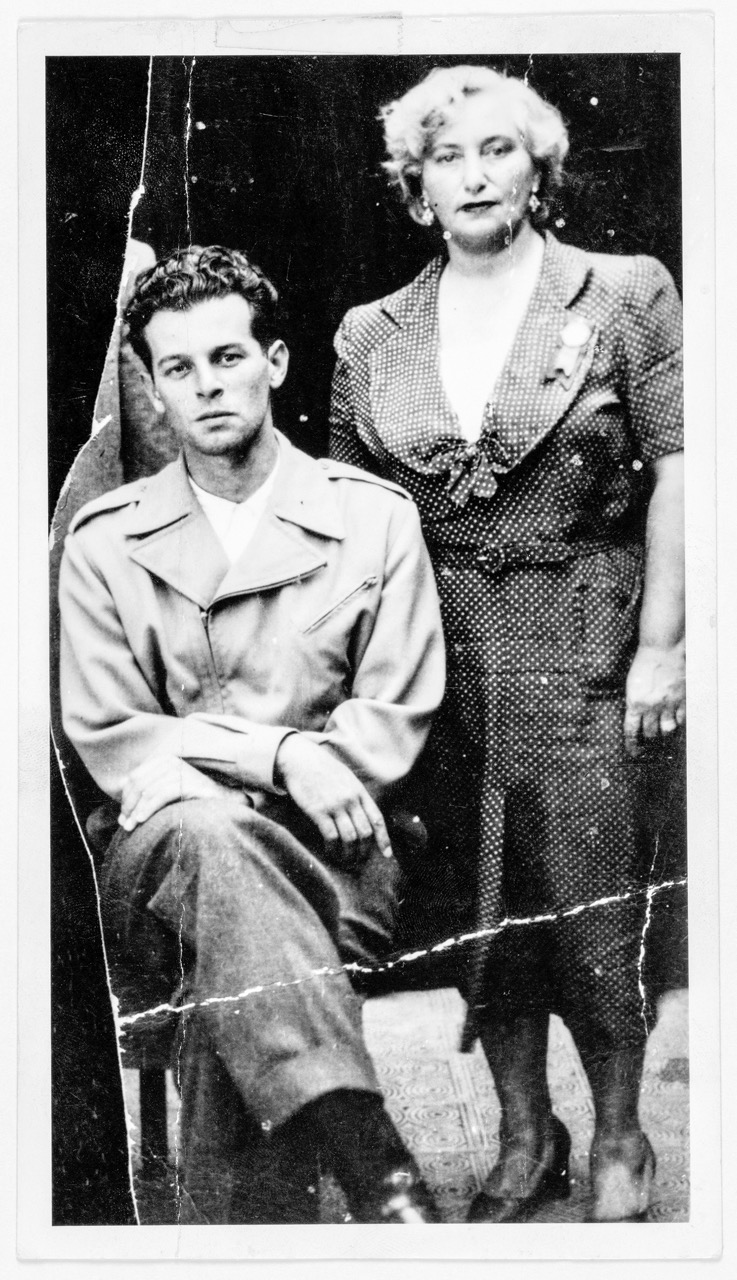
Alejandro Jodorowsky at age 27, Mexico, 1956. Courtesy of the Alejandro and Pascale Jodorowsky Archives.
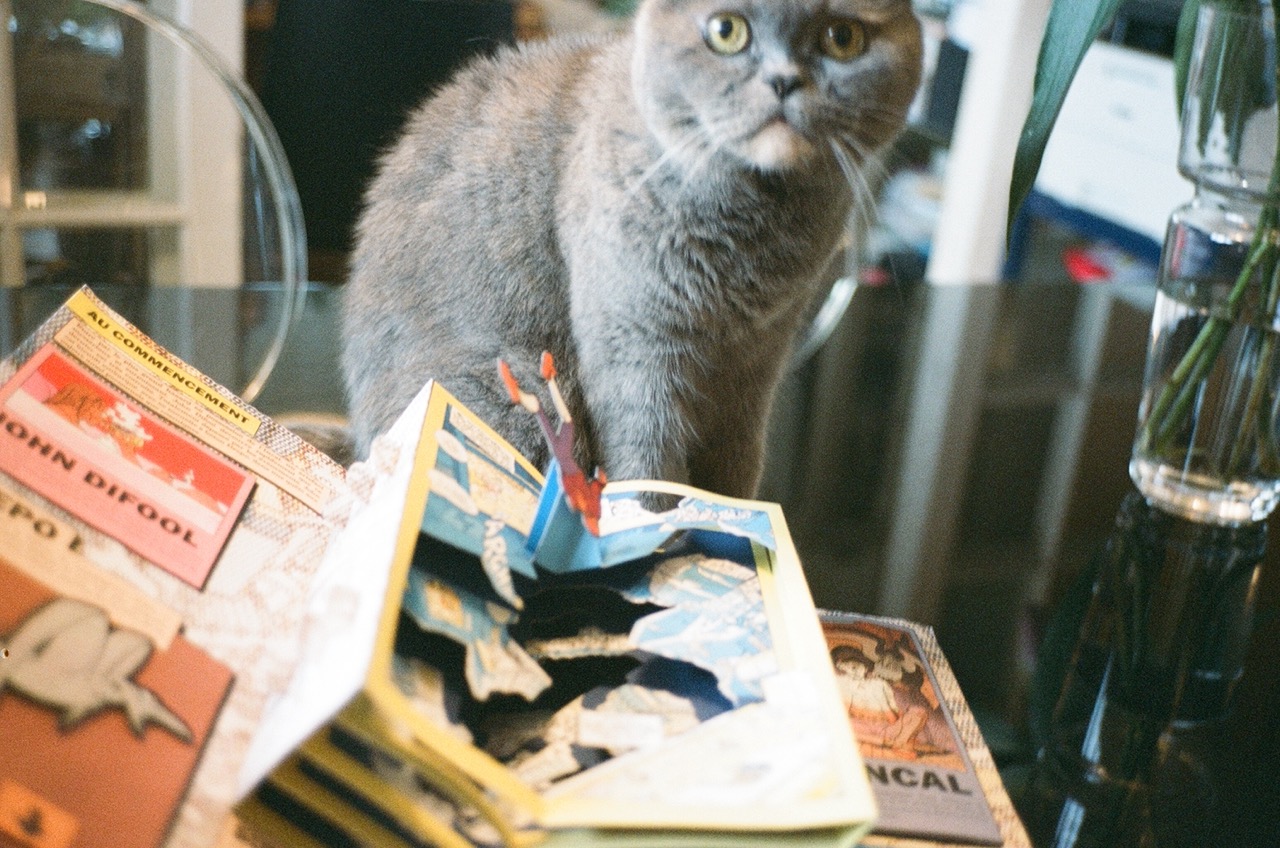
Jodorowsky has an immediate aura—largely of familiarity and kindness. It puts us at ease as he tours us through his home, beginning with a series of figurines gathered like a shrine, two Hindu gods, the Virgin Mary and El Topo, on top of the fireplace. In the middle stands his most famous comic book character, John Difool—a detective from The Incal (1980-2014), an influential science-fiction comic book, made with his friend and collaborator Jean “Moebius” Giraud.
Jodorowsky is thought of as the “fifth Beatle” of The Humanoides; the groundbreaking French comic book collective who Moebius belonged to, and that inspired generations of artists; most famously Ghibli animator Hayao Miyazaki. Beside those graphic novels, I spy a rare original volume of Herbert’s book on the shelves, as well as editions that were written in homage to his efforts. Just in the past week, a major auction house sold the “Jodorowsky Dune bible” for tens of thousands of pounds (one has allegedly gone for $3m). There are 20 copies in existence, and they include artwork by Moebius and HR Giger, with Jodorowsky’s storyboards and his script. In an attempt to get Dune made, in 1973, he posted one to each major studio, and for decades directors took fragments of his ideas for their own films—most famously, Ridley Scott’s Alien (1979), James Cameron’s The Terminator (1984), and Luc Besson’s The Fifth Element (1997). Jodorowsky’s vision too was ambitious for Hollywood in 1974, and the project left him disillusioned. He winces when I ask about it.
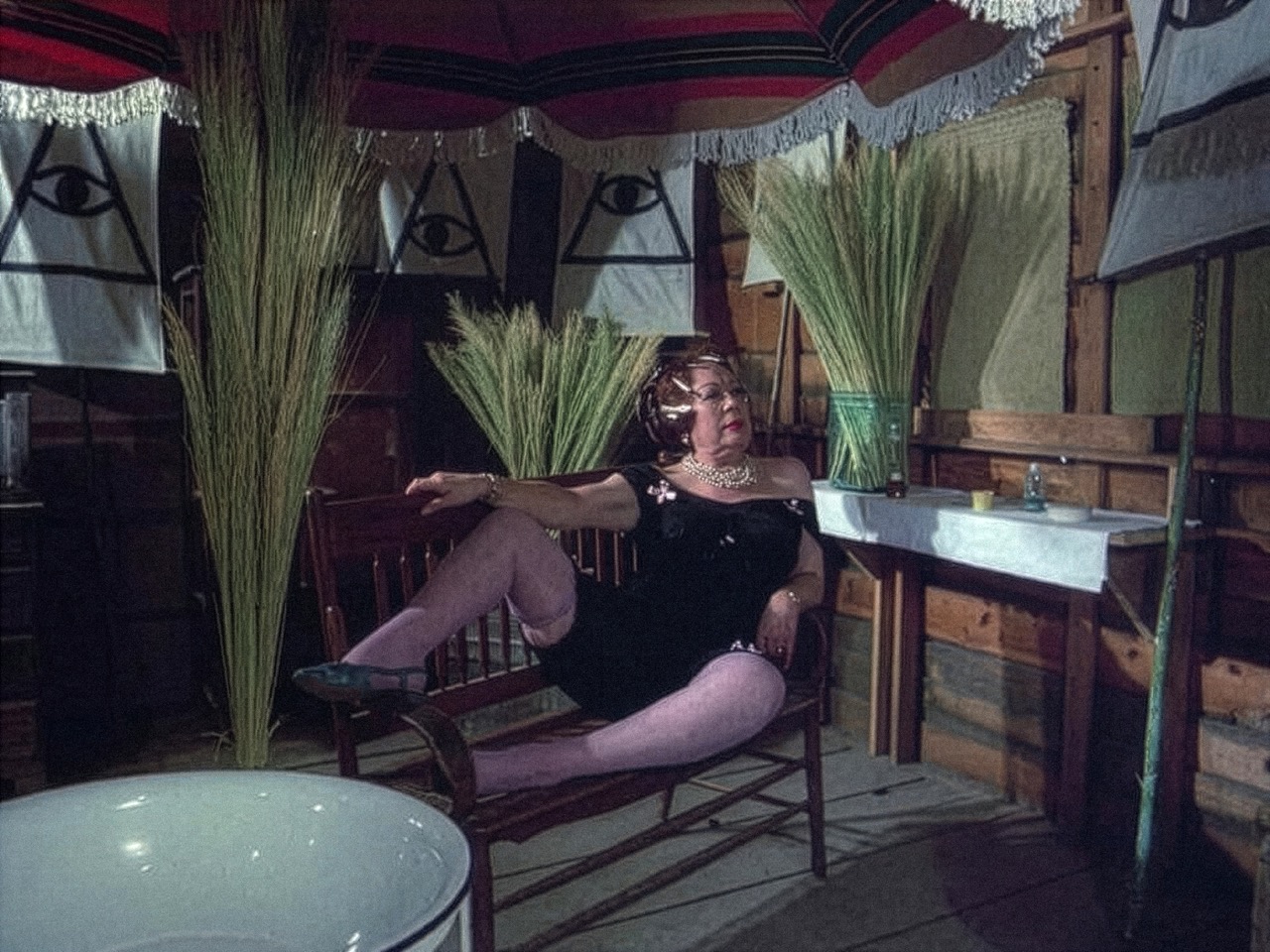
In the dining room are canvases painted by his wife. Their collaborations, their artistic fruit, are named PascALEjandro. On nearby shelves, we see photos of a young Jodorowsky with long hair, his mouse-like nose and pointed jaw. Nearby are VHS tapes and merchandise from El Topo, The Holy Mountain, Santa Sangre (1989), and Endless Poetry (2016). In the furthest room of this sprawling Jodotecque are rows of his graphic novels, plus some infant plants. “Pascale’s mother keeps sending them,” he shrugs.
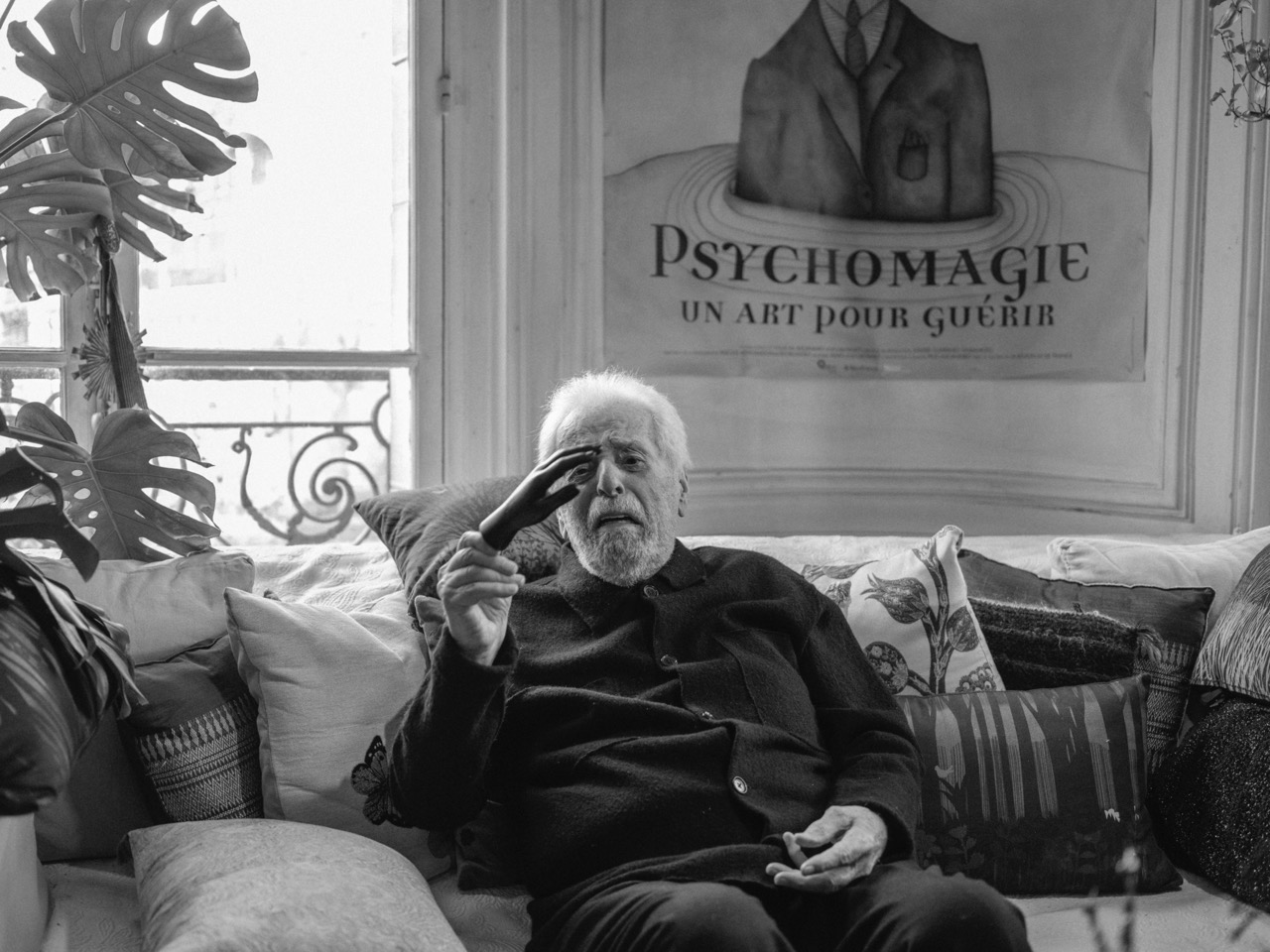
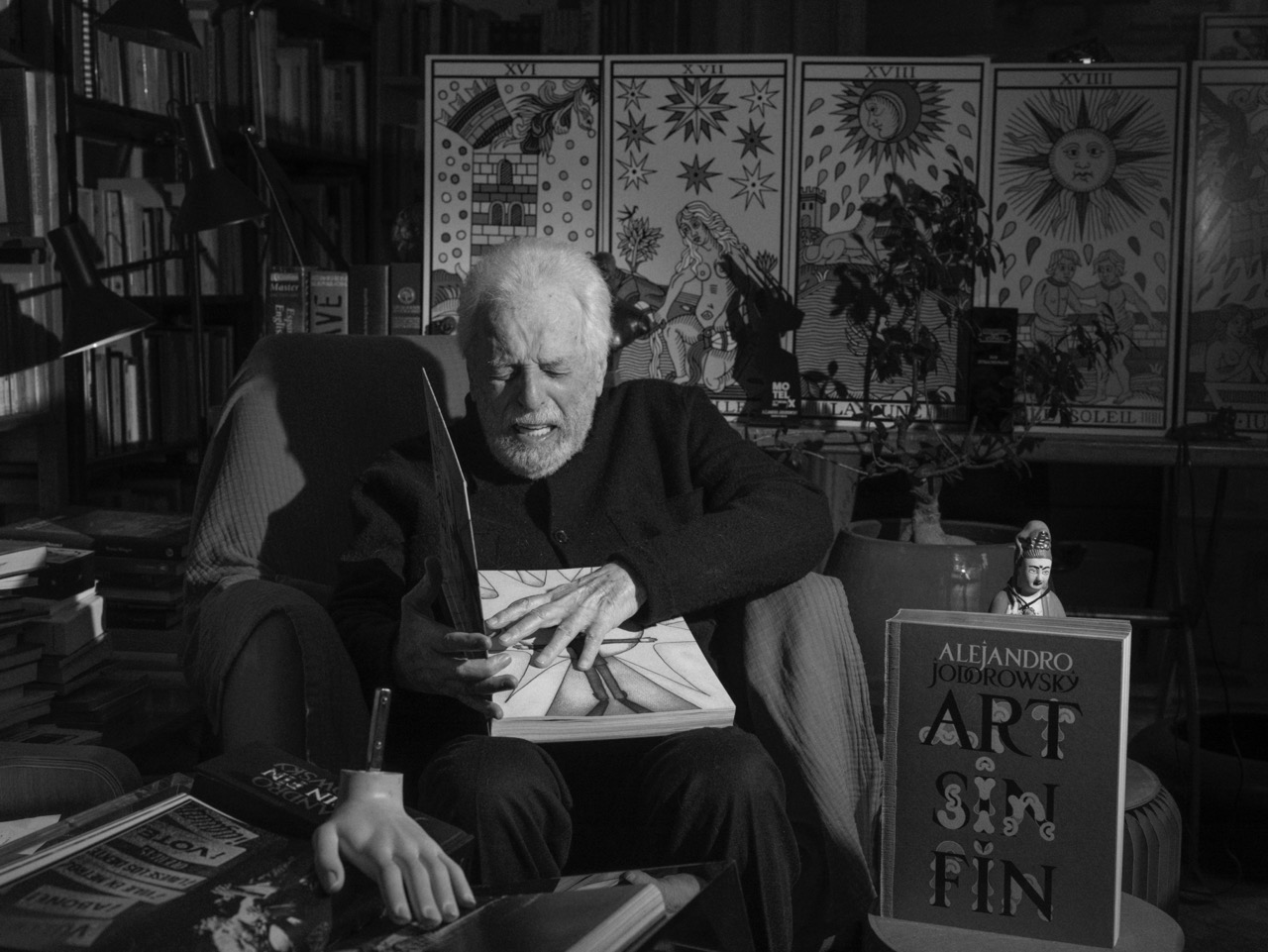
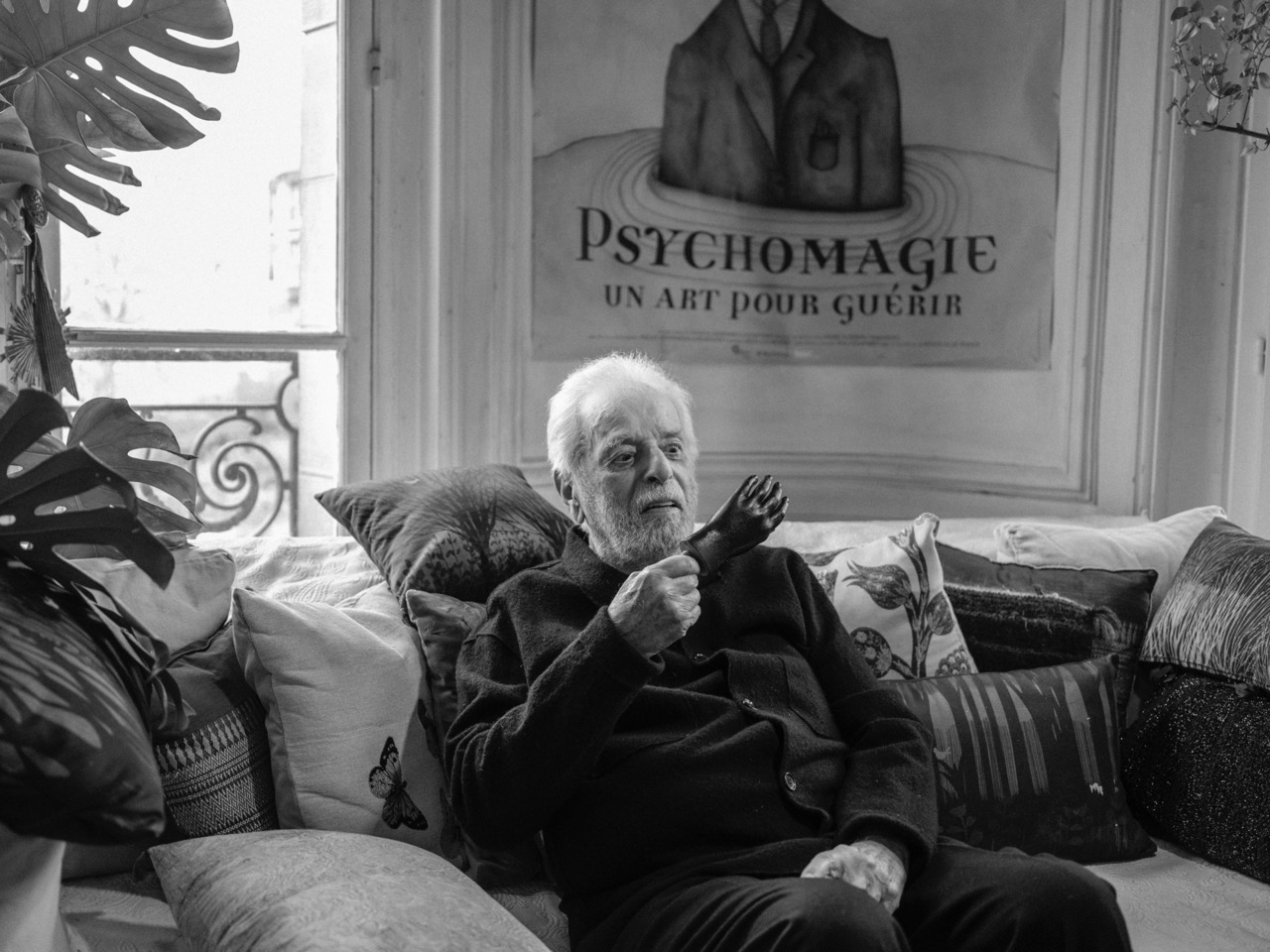

“The beauty of life is not intellect. It is in the heart… It is where truth lives.”
Alejandro Jodorowsky
Circling back to the hall, he shows me a long clothing rack with 10 of the same dapper black overcoat. Judging by the broad grin on his face, he finds it absurd. When it comes to his clothes, Jodorowsky is simple. Apart from his shoes, which are glossy, shimmering Repetto pumps. “Always wear shiny shoes,” he says, cheekily. “When you walk through the world, you’ll shine in turn.”
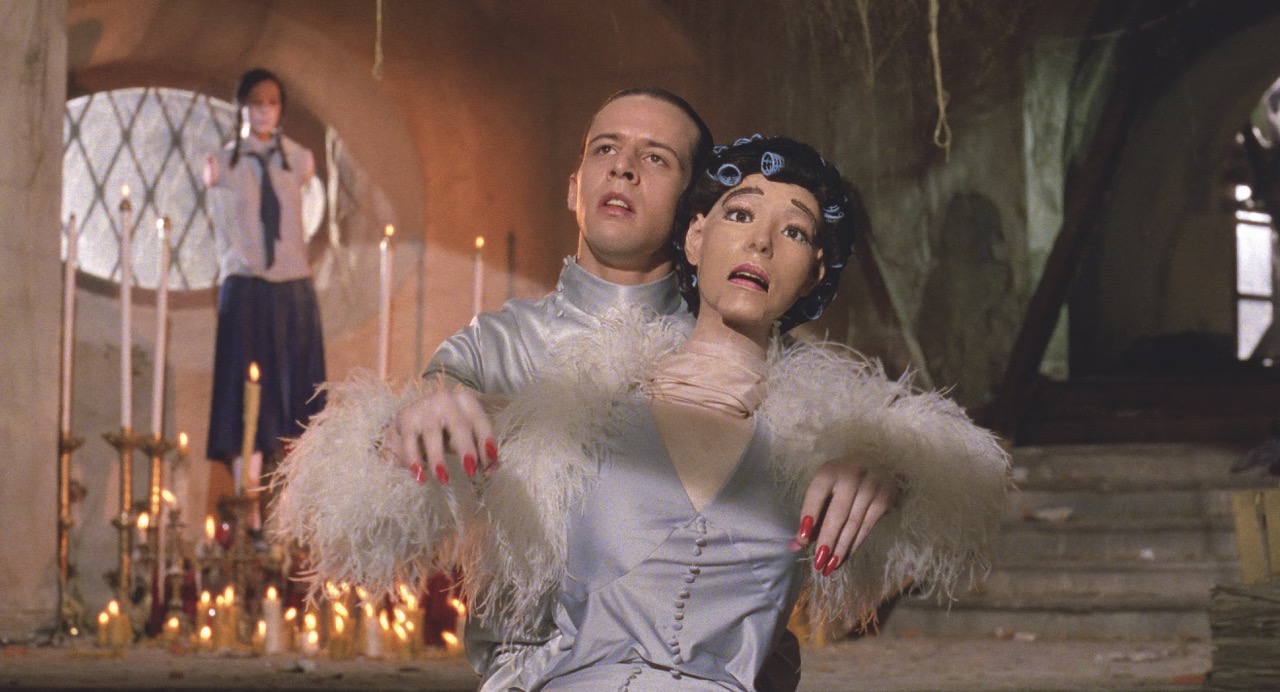
We’re here because of Jodorowsky’s latest collaboration with Taschen: Art Sin Fin (2026). Limited copies are available. It comes in two parts: the larger tome features photographs, film stills, comics, and newer illustrations, while the smaller book has quotes and maxims. They are made to be opened together at random. “The purpose was not to show my history. It is me. This is a life,” he insists. “You will not find something with this much honesty.” Considering his influence, and the high-profile people who revere him (including those who themselves have become spiritual leaders), I had expected someone at least slightly more pretentious. Jodorowsky is the opposite. Both he and Montandon-Jodorowsky treat us with disarming kindness. But his guru glamour masks an uneasy journey, starting in a rural Chilean village. He shows us photographs of his father and mother—both troubled souls. The events are recounted in Endless Poetry, the first of his planned five autobiographical films (only three are completed), and traumas related to his mother are alluded to, metaphorically, in the excellent thriller Santa Sangre.
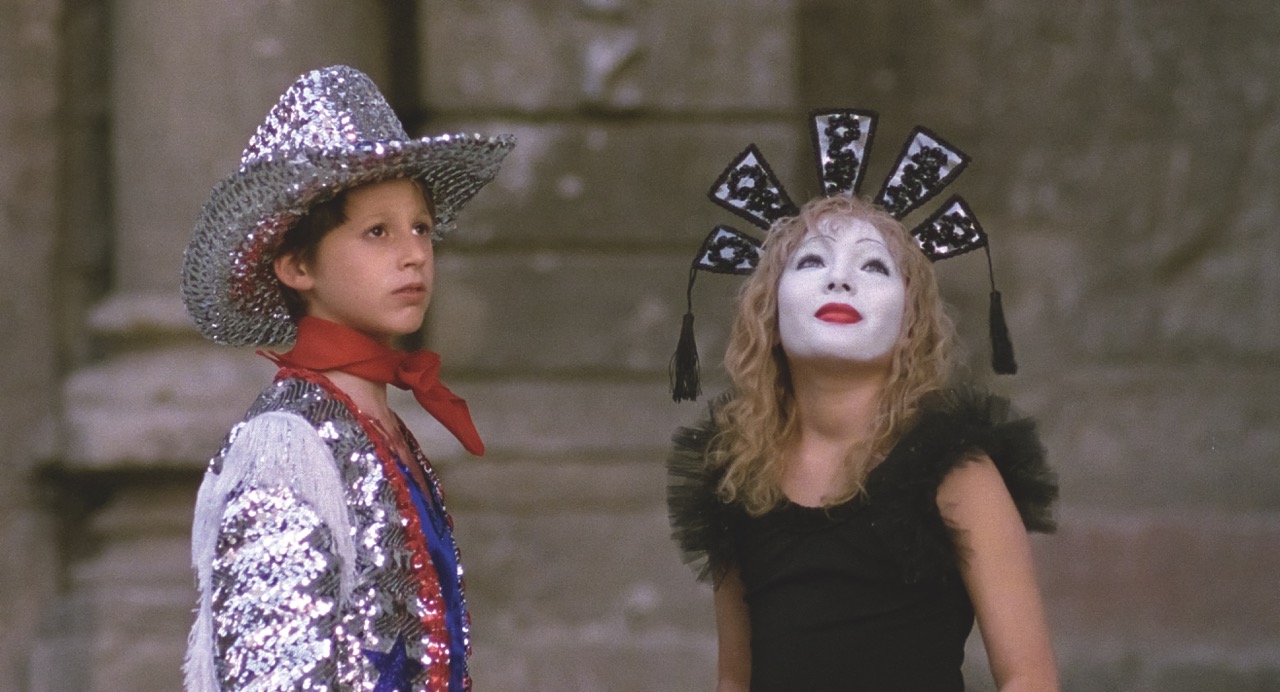
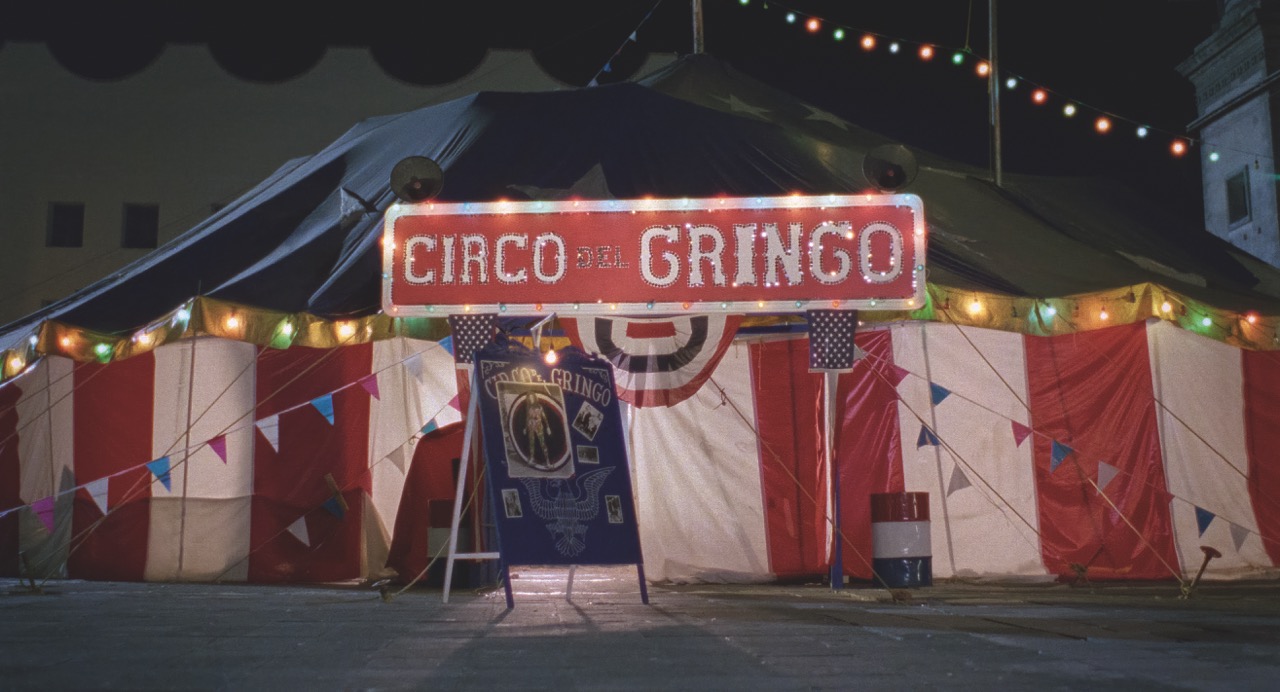
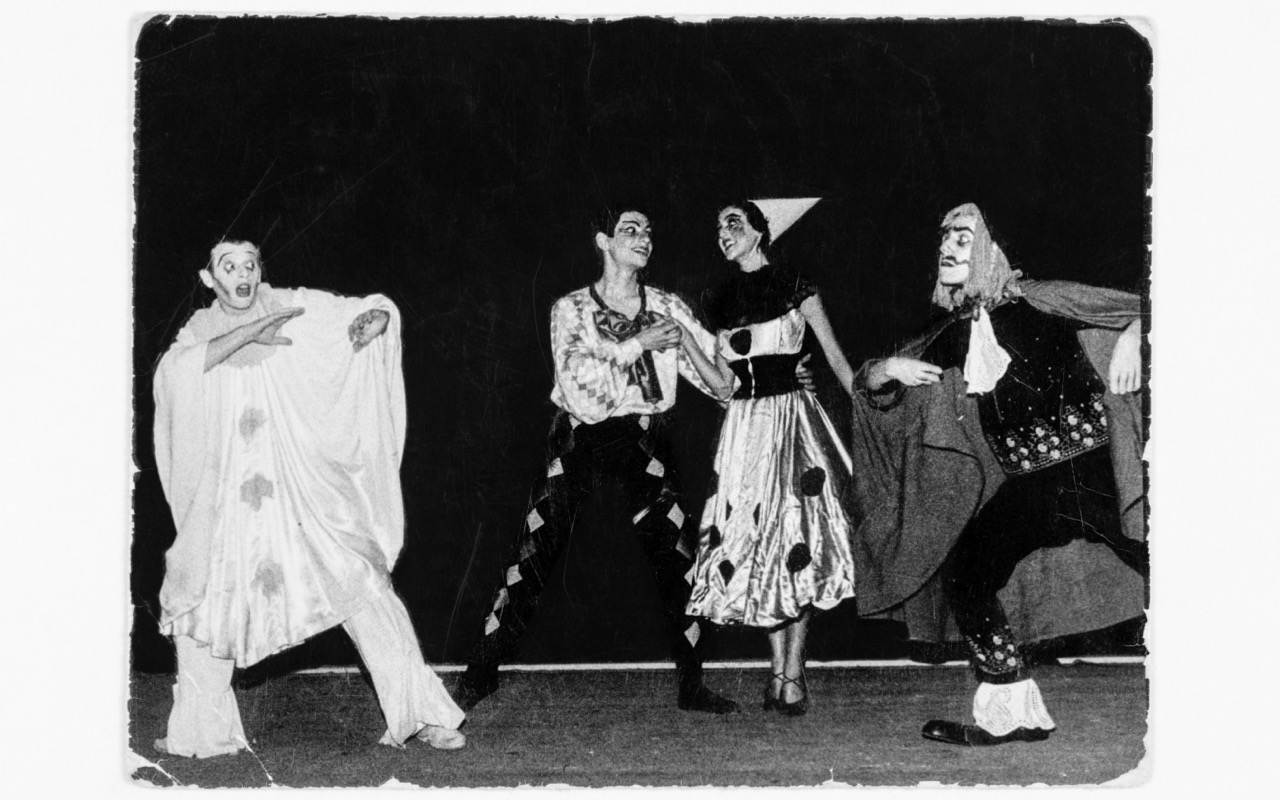
Santa Sangre is set in a Mexico City circus for good reason. It was there, performing as a clown in the Teatro Mimico, that Jodorowsky first understood what art could do to a crowd – and what a crowd could do to art. His first feature, Fando Y Lis (1968), provoked the respectable Mexican public into actual violence. He took it as a compliment, and left for Paris, where mime artist Marcel Marceau introduced the body as language, while surrealist André Breton helped him tap into the mind. As we speak, he erupts into mad, unprompted performances—barking, cackling in hysterics, or cradling one of his books like a new born. “When I came to Paris,” he explains, “I searched for people who could show me freedom through art.” Today, people pay homage to Jodorowsky for the same reasons.
One friend, hearing about my trip, suggested I allow “Jodorowsky to lead” but after weeks of research, I wanted answers. After four admittedly dull questions, spoken in a slightly self-conscious way, he stops me. “What you are asking is from the human world,” he says. “It’s like… you know the Cannes Film Festival? It’s all an illusion. It isn’t real.”
Suddenly, he stands up, reaching over to a statue of a Hindu Goddess, where a black wallet sits, digging inside for a wad of folded bank notes—thousands of euros—that he then waves to me. “Take it,” he says. I refuse. A crescent smile appears on his face. It’s an awkward pause, but I think I see his point. What the hell do I really want from this? To the amusement of our creative director Fatima, I disposed of my notebook, lent forward, and surrendered to the Jodorowsky experience. There was no use asking about Dune. Or American neo-colonialism. And certainly not artificial intelligence (lest the wallet get lobbed at my head). Jodorowsky would lead. For the following three hours, I was the student.
“When the artist arrives in the world of the heart, then they become an artist.”
Alejandro Jodorowsky
According to Jodorowsky: “I am sitting in a chair, thinking about how my mind is working me—not how I am working my mind. If I am disturbed, I move. I act. I seek new realities. The intellect asks: why am I here? Why is Pascale there? Why are you there? We don’t know anything.
“The name of the book is art with no end. Endless art. It is not my history—it is me. A life. A cycle of 97 years, and the creation of a new cycle. In the final pages, there is a photo of me at six-months old—not at the beginning. You see? There is no beginning. “As a young man, I was a prisoner of my mind. I could hear an endless barking—woofing, derangement. In Paris, I found liberty through intellect. It is heroic for a person to search outwards, to open doors to the mind. With the great artists, the poets, I could breathe. My mind blossomed.
“But at the end of my life, I have detached from it” The brain is set free—out to the sky—and sometimes it returns with ideas. But the beauty of life is not intellect. It is in the heart. This is what I believe now. The heart is alive, even after the body fades. It is formidable. It can exist without the senses. It is where truth lives. “When the artist arrives in the world of the heart, then they become an artist. “Love—companionship—” [he looks at Pascale] “—is the reunion of two intellects, two hearts. And sex, then, is an important act. In their coming together—in the orgasm—that split moment—is art.
“The churches, the religions—they closed themselves to artists. But the young, now—they understand. When I make events, it is young people who come. They are free of institutions. They understand symbols. They understand meaning. “If I am contemporary, it is because I am not fixed in a time. I worked with many great artists. I searched for them—for their intellect, their cerveau—but I never belonged to a community. Not surrealism, not anything. I have always invited new forms to exist. All my life, I have opened doors. [He opens his mouth, smiling.] “Even here—every tooth has its own significance. You take possession of your body—but you are not your body. And that is the moment you learn the possibility of who you are.”
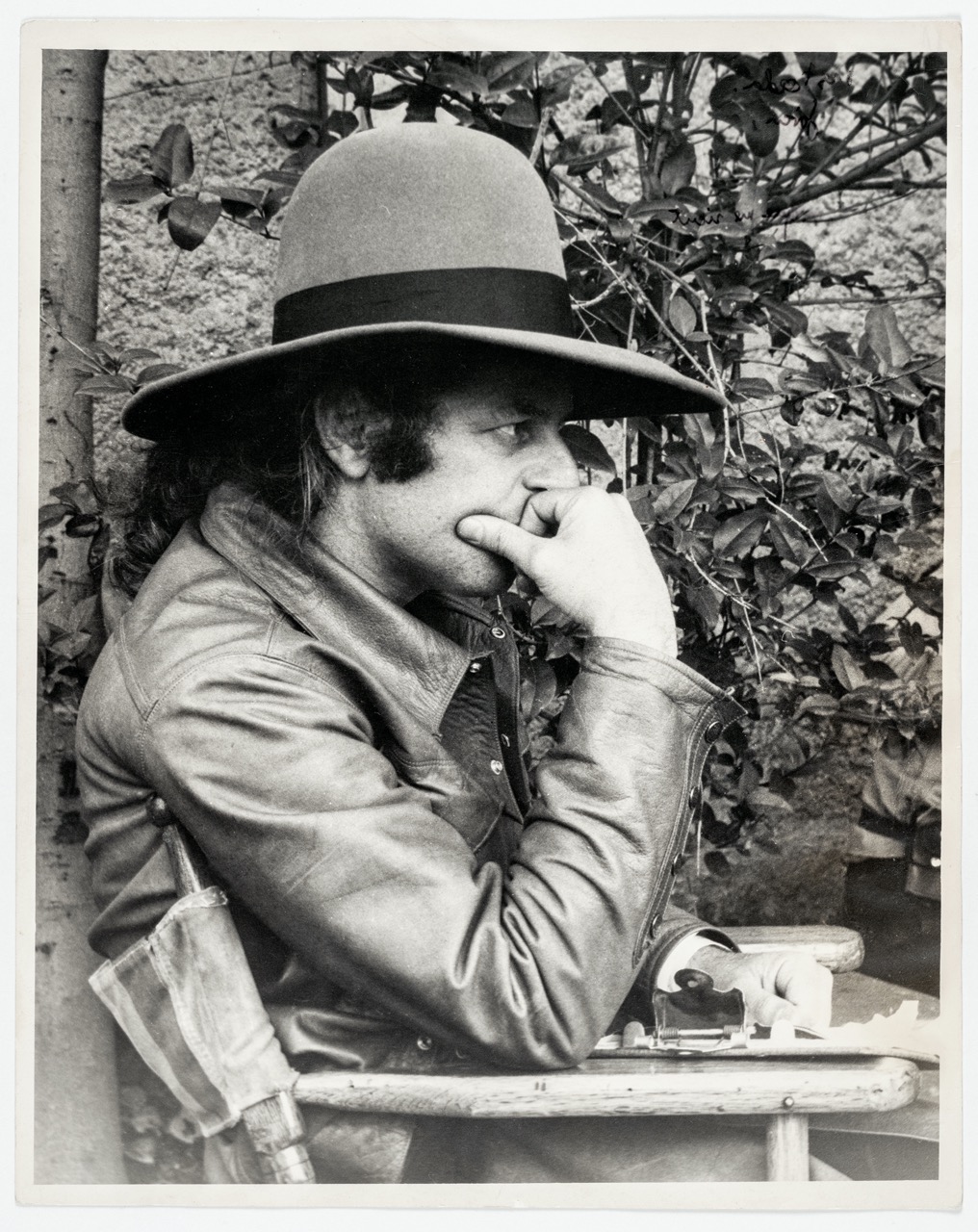
“I am thinking about how my mind is working me – not how I am working my mind.”
Alejandro Jodorowsky
“Bueno, is that OK?” He grins. The photographer has arrived to take some shots in the Jodo-tecque. His young assistant is smiling reverently at the man before me (perhaps tagging along so she can meet him). I wonder if she’s one of his young social media disciples; if she has read his books: the bestseller Psicomagia (1995);
The Way of the Tarot (2004); or even the graphic novel The Incal, which was as popular in France as Superman was in the US. He has, indeed, invited many forms into his practice. Consequently, it just depends on which one you’re into.
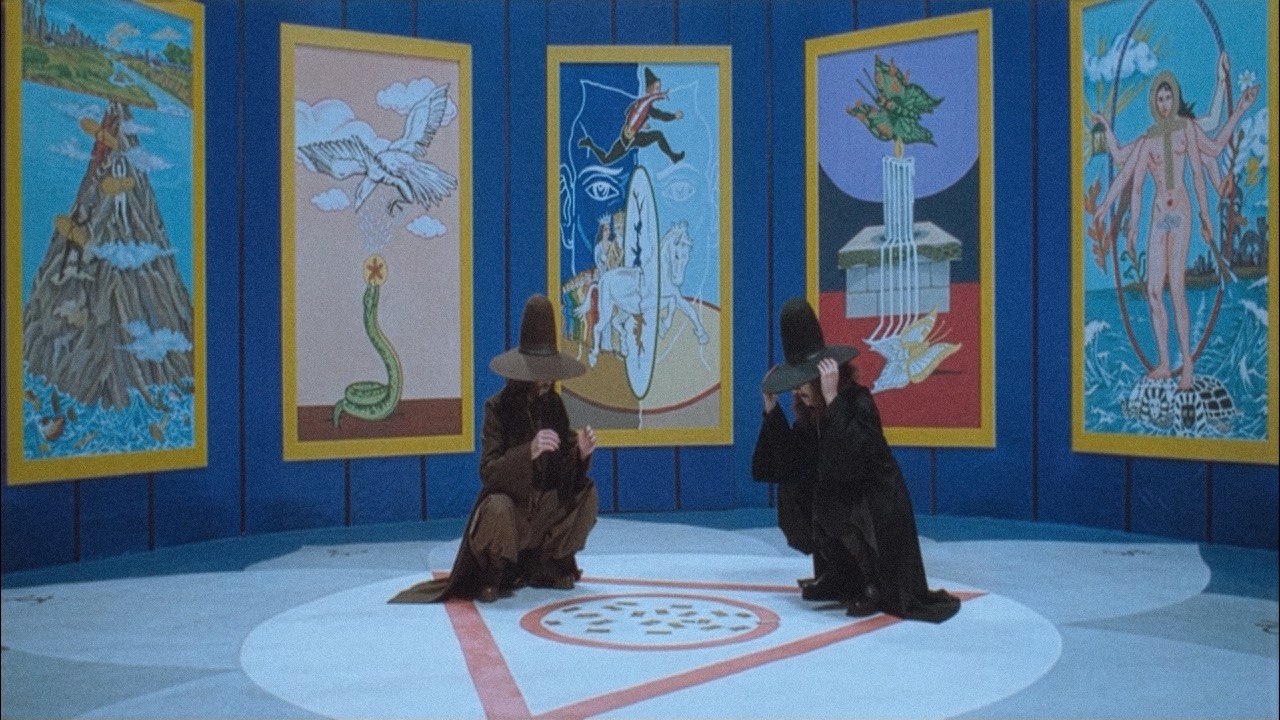
The spiritual side was new to me. The tarot aspect, I didn’t entirely understand until the first pages of The Way of the Tarot, where Jodorowsky describes discovering the esoteric deck in his Chilean outback town. The Chariot, a card that describes haste and movement, was the first he drew. Then he became obsessed with the archetypes, sleeping with each unique card under his pillow so that their meaning would interrupt his dreams. He exclusively uses the mysterious Tarot de Marseilles, the original deck on which all others are based (perhaps from the 14th century, with symbolism dating to ancient times). In 1997, he and Philippe Camoin, the heir of the last, true card makers in Marseille, joined to reconstruct the deck as close to the original as possible.
Days earlier, I had walked into Watkins Books near Charing Cross Road. This shop, specialising in crystals, witchcraft, and all other strange, supernatural interests as well as literature, dates back to 1893, and would be a smart place to learn about the tarot and Jodorowsky’s reputation regarding it. I was told to seek out an attendant named Hugh in the downstairs library, a raffish, spectacled man with expertise in the cards. “A tarot reading by Jodorowsky would be considered an honour,” he told me, unloading a Marseille deck, comparing it with a watercoloured Aleister Crowley set. “He uses his experience of energy and psychotherapy, applying the card’s symbols to the sitter. Jodorowsky often identifies with The Fool.” Hugh was interested to know whether, at 97 years old, Jodorowsky’s archetype had changed.
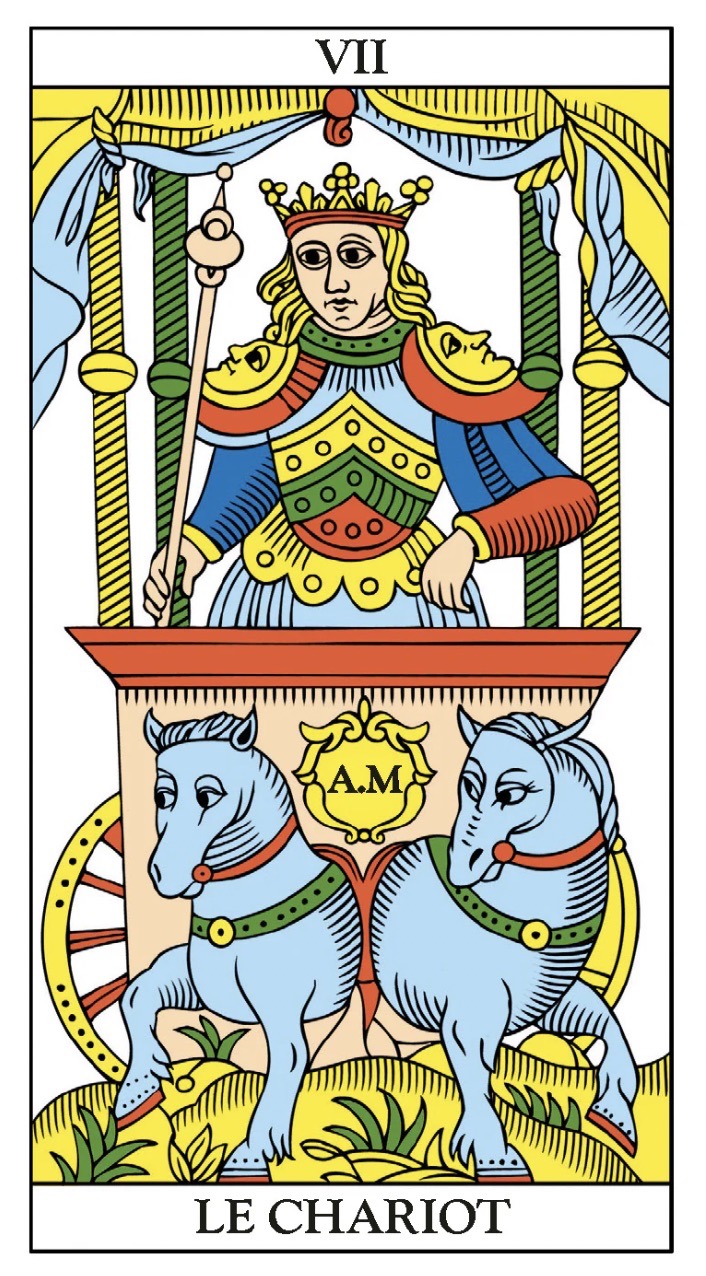
Le Chariot, a tarot card from the collaboration between Alejandro Jodorowsky and Philippe Camoin.
When the photographer had departed, Fatima politely asked if we could be read. The apartment was still, as though we were enclosed in a crystal. The last rays of sunlight poured in through the blinds. Jodorowsky, sitting on his favourite chair, grabbed a large piece of card and placed it across his lap.
Behind the black wallet was a smaller, weathered, and soiled purple purse, which he unzipped, showing, this time (and to my relief) a selection of his personal tarot cards. I was asked to shuffle the deck and pick seven; trusting in my instinct, not overthinking. Five of those were spread in a row closest to him. Finally, two cards were placed nearer to me. I won’t go into too much detail, but the cards resonated with my personal life. The first was, like Jodorowsky’s own first card 90 years previously, The Chariot. “Formidable,” he said, pointing at the Roman numerals above the illustration. Seven. This would affect every other card that was flipped over.
The last two, though, were especially interesting, given the cards that preceded them. The Fool represented the present moment—a leap of faith. Jodorowsky’s favourite, the sole archetype without a number: card sin fin. And then, he turned the last card. “Formidable,” again. Montandon-Jodorowsky leaned in as Jodorowsky pressed it against his chest. “This is Alejandro’s card,” she smiled. “Where he now ends. The Hermit, the searcher of truth.” The old man broadened his grin. I believed him.
The earlier moment—the money—made sense. The interview I came to conduct was never the point. I expected to profile Alejandro Jodorowsky and leave with answers—a portrait of an artist in his third act. By the time I reached the rattling lift, lit like a door to some other dimension, I had neither. Only new questions, and the strange feeling that this was exactly the point.