

Andrei Tarkovsky reimagined science fiction as a spiritual and psychological terrain—where the future is less about technology than the limits of human conscience, belief and imagination. Jonathan Romney explores his vision.
In the 1960s, JG Ballard and a new wave of science-fiction writers argued that the real action was to be found not in outer space but “inner space”. The new imaginative voyages would be as much psychological and sociological as intergalactic. If any filmmaker mapped inner space in cinema, it was Andrei Tarkovsky. The great Russian director made two films adapted from science-fiction novels: Solaris (1972) and Stalker (1979), set in space and on an Earth mysteriously transformed by alien pres- ence, respectively. In his final film, The Sacrifice (1986), his philosophical speculations on human spiritual destiny centred on visions of a near-future apocalypse.
Tarkovsky has contributed enormously to the way we now see the possibilities of science-fiction cinema, and cinema with other types of visionary reach. But he was only intermittently, and reluctantly, a crystal-gazer. His two science-fiction films were made partly in response to his difficulties launching other projects that were highly personal and poetic, in the mode of his autobiographical reverie Mirror (1975). He said of Solaris, the 1961 novel by Polish writer Stanisław Lem that inspired his later film: “My decision to film it does not denote any affection for the science-fiction genre. For me, the important thing is that Solaris poses a problem that means a lot to me: the problem of striving and achieving through your convictions; of moral transformation in the struggle of one man’s life…” We’re not talking the likes of Project Hail Mary (2026) then—although the spiritual dimension that has sneaked into some mainstream sci-fi cinema owes much to Tarkovsky (Christopher Nolan’s Interstellar (2014), James Gray’s Ad Astra (2019), and, of course, Steven Soderbergh’s 2002 Solaris, billed as an adaptation of Lem’s novel, rather than a Tarkovsky remake).
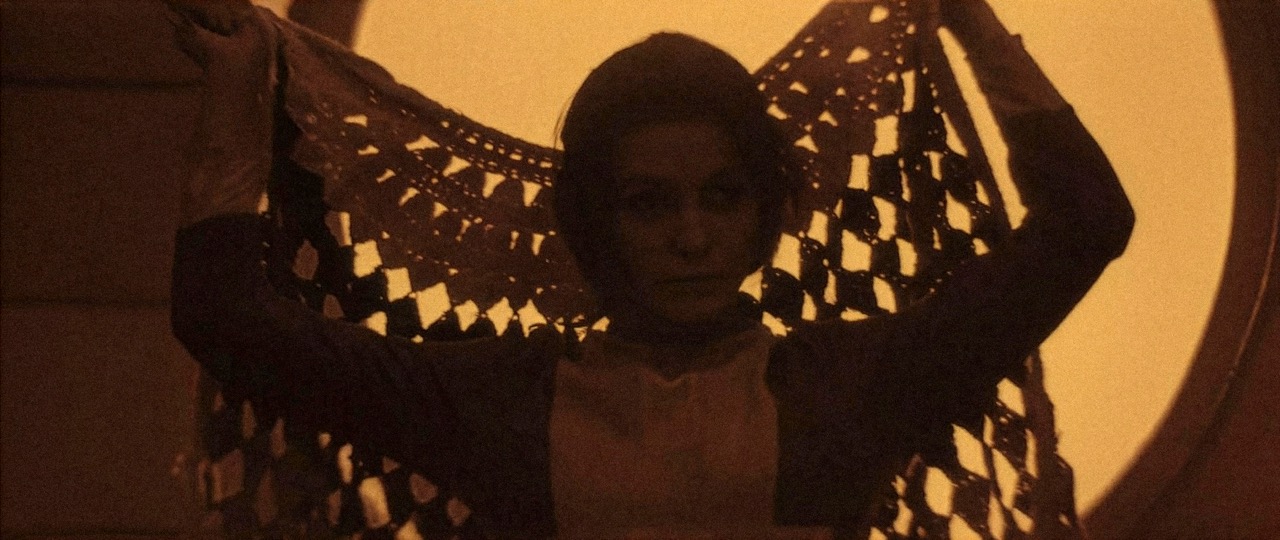
Science fiction was a way for Tarkovsky to get past the Soviet censors while still confronting the forbidden. The genre imagines the Unknown: in Solaris, a planet that is sentient, possibly telepathic; in Stalker a forbidden zone where, allegedly, the possible becomes real. In both films, the extraterrestrial Unknown very much resembles a version of the soul, or God, or similar concepts that might preoccupy a poetico-mystic thinker such as Tarkovsky. In this light, the future has little to do with new technologies or lifestyles. The future, instead, is entirely about goals; about the sublimities that humanity might aspire to (or, as Tarkovsky argued, should aspire to). Tarkovsky had seen 2001: A Space Odyssey (1968) and found it sterile, lacking “emotional strength”; Solaris is, to some degree, competing with Stanley Kubrick’s film. Solaris follows psychologist Kris Kelvin (Donatas Banionis) on a mission to the space station hovering over the planet Solaris, where strange things are happening. He arrives to find the station’s two surviving scientists seemingly crazy, and attended by mysterious, fleetingly glimpsed “visitors”—a child; a dwarf —that the planet has created in response to the humans’ thoughts. Kelvin himself is visited by his wife Hari (Natalya Bondarchuk), who killed herself years earlier. The film contains some dazzling images that easily rival Kubrick’s: the planet’s swirling brain-like surface, a shimmering golden ocean. But Solaris offers few sights quite as strange as the moment when Hari, or her simulacrum, bursts in agonised slow motion through a metal door, tearing herself and the door to shreds.
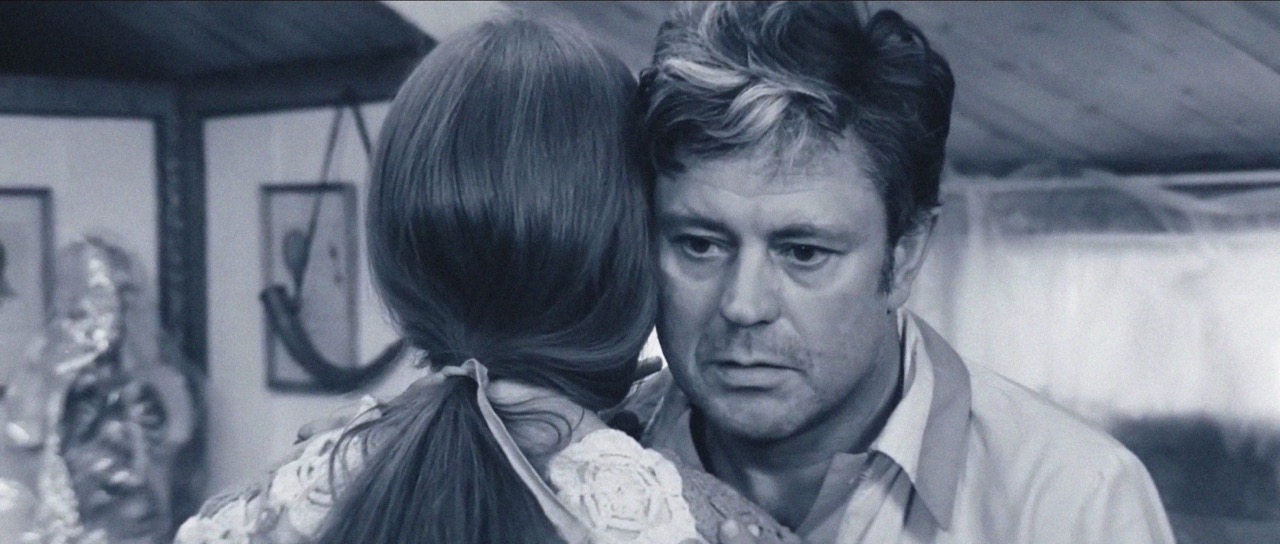
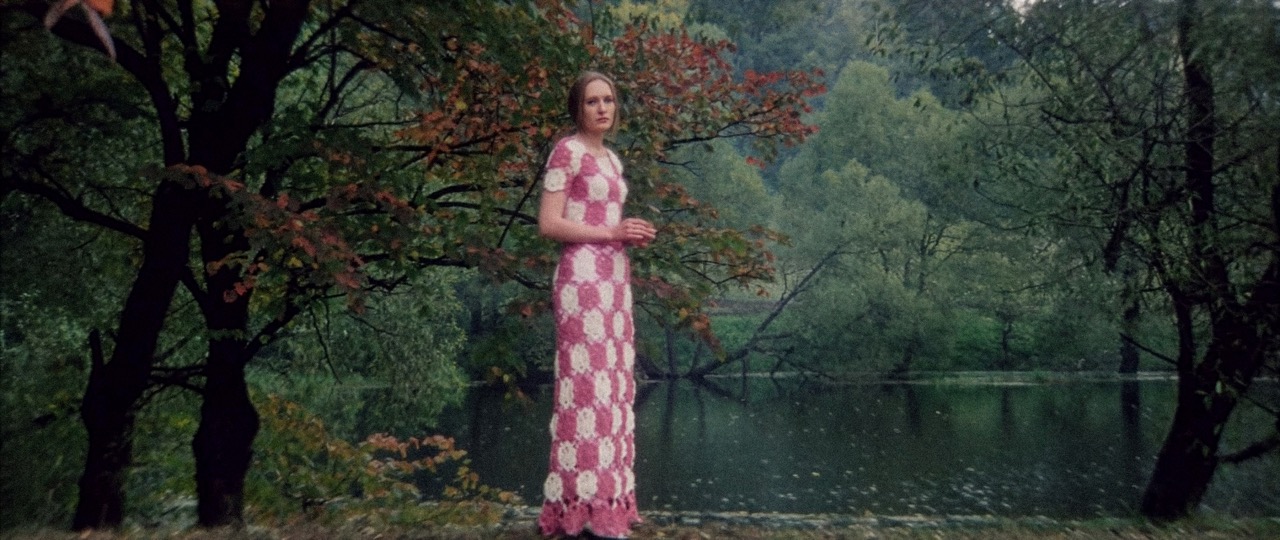
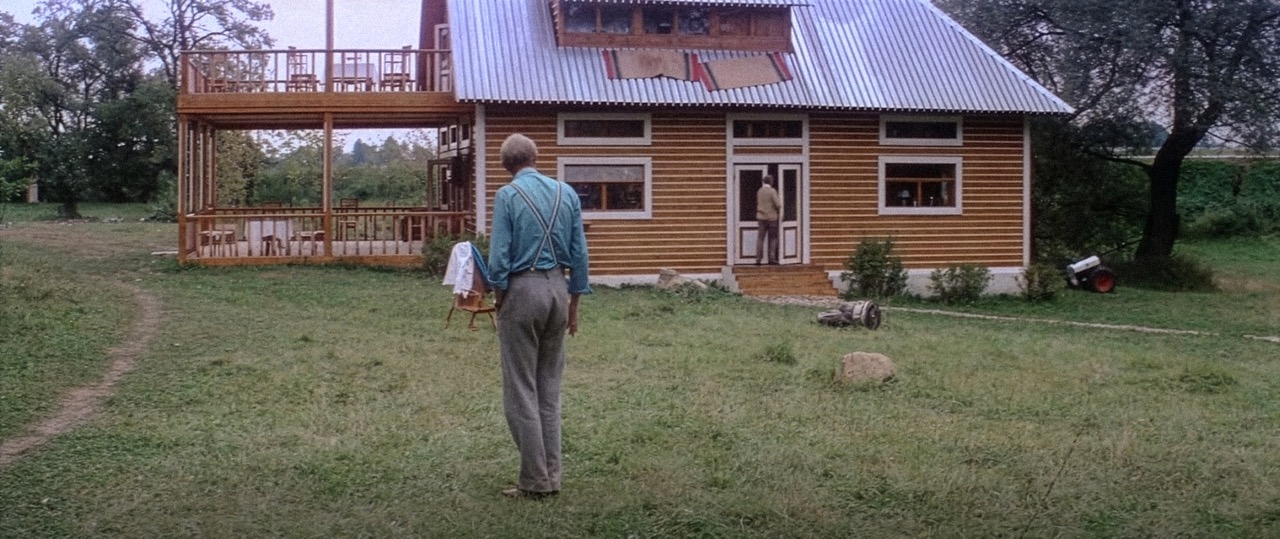
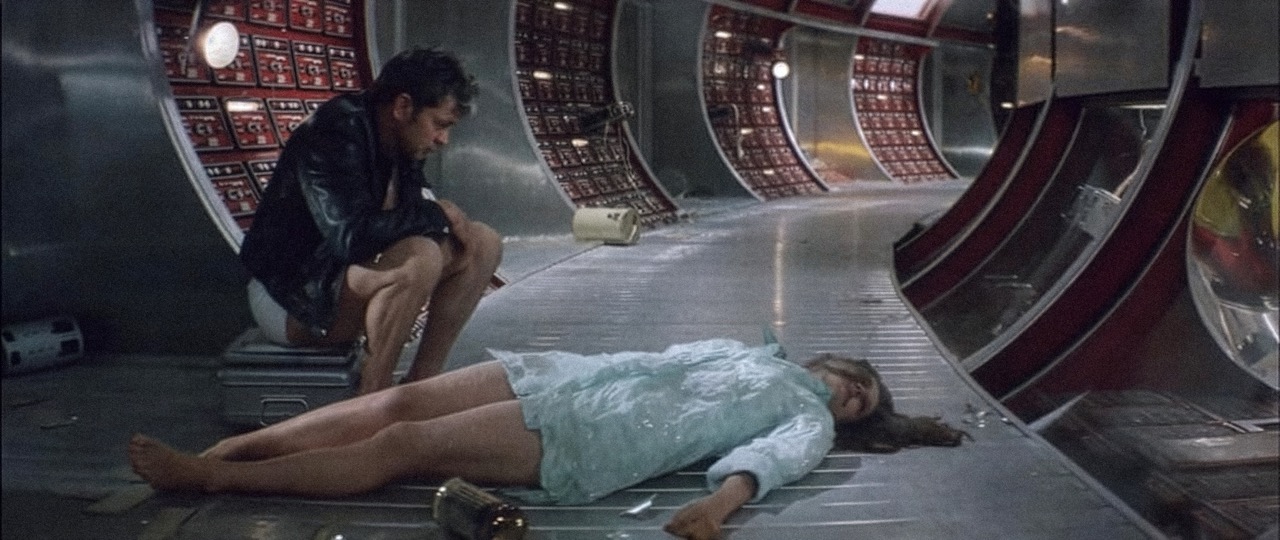
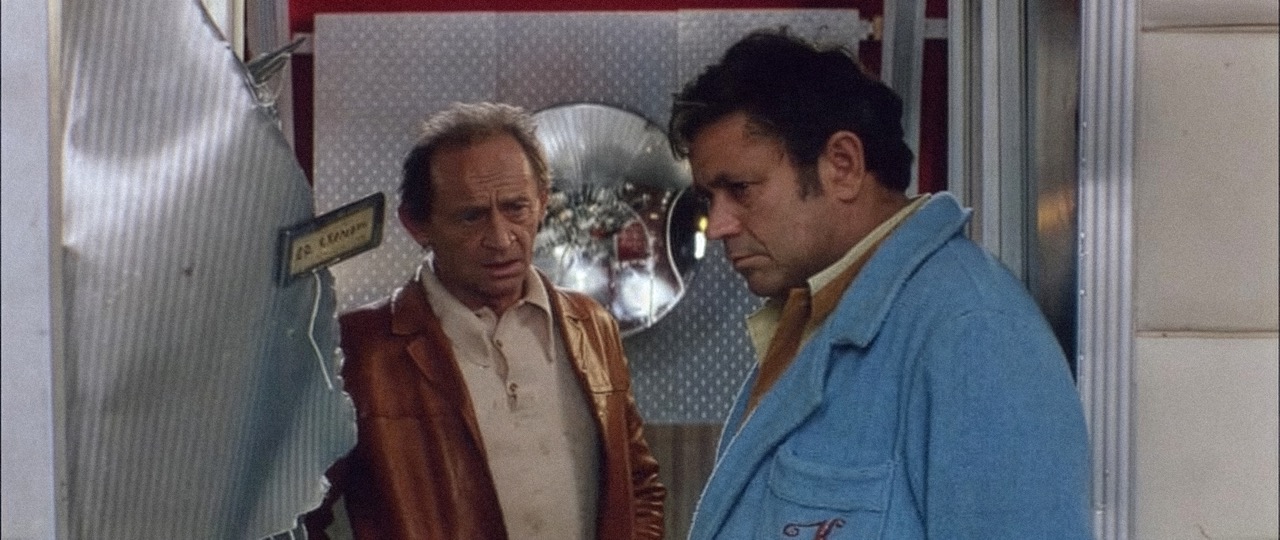


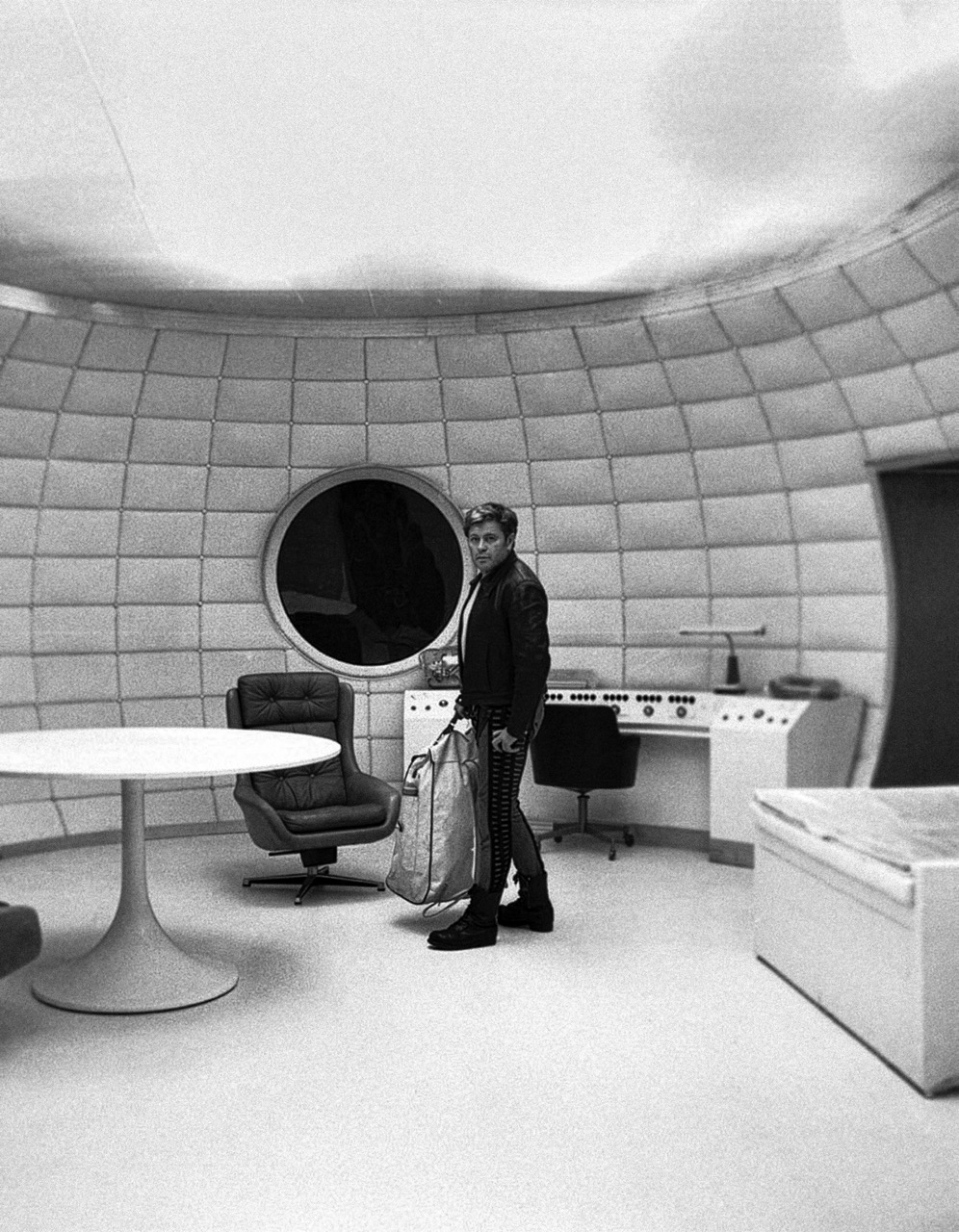
Elsewhere, Solaris, with production design by Mikhail Romadin, presents an evocative 1970s-style version of a technological future—although some of those images were rooted in the everyday, or would soon become commonplace. There are the scenes in a command HQ, which might have been shot in the corridors of an airport or one of the vast palace-like Houses of Culture that were a fixture of Soviet life. The Solaris station itself merges elegance and dilapidation, its brightly lit, curving corridors made all the stranger by those white monoliths (computer units?) tilted to one side, as if the whole system that created them were itself in advanced collapse. By contrast, the living conditions exude lifestyle cosiness: the meeting room suggests a literary gentlemen’s club, furnished with books and Brueghel paintings (just as well that Kelvin packed a suit and tie—a change from his arrival garb, which makes him resemble a gone-to-seed Flash Gordon).
Back on Earth, there are extra-large TV screens—everyday fixtures now but entirely futuristic back then, showing the massive anxious heads of people delivering ominous news. The TVs double as videophones, as in the call from an ex-astronaut, speaking from his car (his self-driving car!) on an endless stretch of motorway. Those roads are, again, a slice of 1970s reality—filmed in Japan—but even today, readable as an other-worldly vision of smoothly orchestrated yet frenzied dystopia. The sequence’s closing shot of criss-crossing traffic lines would be echoed in the earthly-hell visions of Godfrey Reggio’s bombastic “wherefore-humanity?” docu-tract Koyaanisqatsi (1982).
For Tarkovsky, the future is always the flip side of the past, the Beyond, the reverse of the familiar. Solaris begins at Kelvin’s home in the country, where he stands gazing at fronds waving in a river. The film’s mesmerising coda shows him at home again, although here, it is mysteriously raining in the house (Tarkovsky loves these indoor inundations, especially copious in Stalker). The camera draws ever further back in an aerial shot, finally revealing that Kelvin’s home is now an island on the surface of Solaris.
In Stalker, the Beyond really is to be found in the waving grass and the water. The source is the Russian science-fiction novel Roadside Picnic by Boris and Arkady Strugatsky (1972), who adapted it for the screen. In the film, time and location are unspecified, although the opening sequence, with its railway lines and distant chimneys, suggest a vision of a decayed, crumbling USSR (to deter viewers from reading it as such, the studio Mosfilm insisted on a caption referring to “our small country”).
In the novel, an alien visitation to Earth has left behind mysterious artefacts in now-dangerous spaces. Stalker explores one such space—a mysterious Zone that operates within its own laws of time and space. The Zone contains a mysterious room within which, reportedly, individuals can attain their utmost wish. “Reportedly”, because those venturing into the Zone must take the mirac- ulous on trust, as an article of faith. So must the film’s audience; and throughout Stalker, viewers and explorers alike may have cause to wonder whether they are being led up the garden path (and what a winding, overgrown path it is).
Two seekers, the Writer and the Professor, undertake a perilous journey into the Zone accompanied by an expert guide—a Stalker (Alexander Kaidanovsky) who, by the nature of his calling, is himself forbidden from entering the room. Those are the rules, but who or what makes those rules remains unclear. Indeed, little is clear, even the voyagers’ motivations: the Writer possibly wants to regain his lost literary mojo, while the Professor has a different goal, but how committed they are seems to fluctuate from moment to moment.
It’s the journey that matters, rather than the destination—and the delays and the pauses matter as much as the moving forwards. Before the film enters the Zone proper, we get a three-minute sequence of close-ups, as the three men, all with differing looks of apprehension or confusion, travel on a little rail car. This is one of cinema’s great sequences of apparent dead time—and one of the foundation stones of what would later be classified as slow cinema—set to a rhythmic sound, a mix of clangs, swooshes, and electronic twangs by composer Eduard Artemyev.
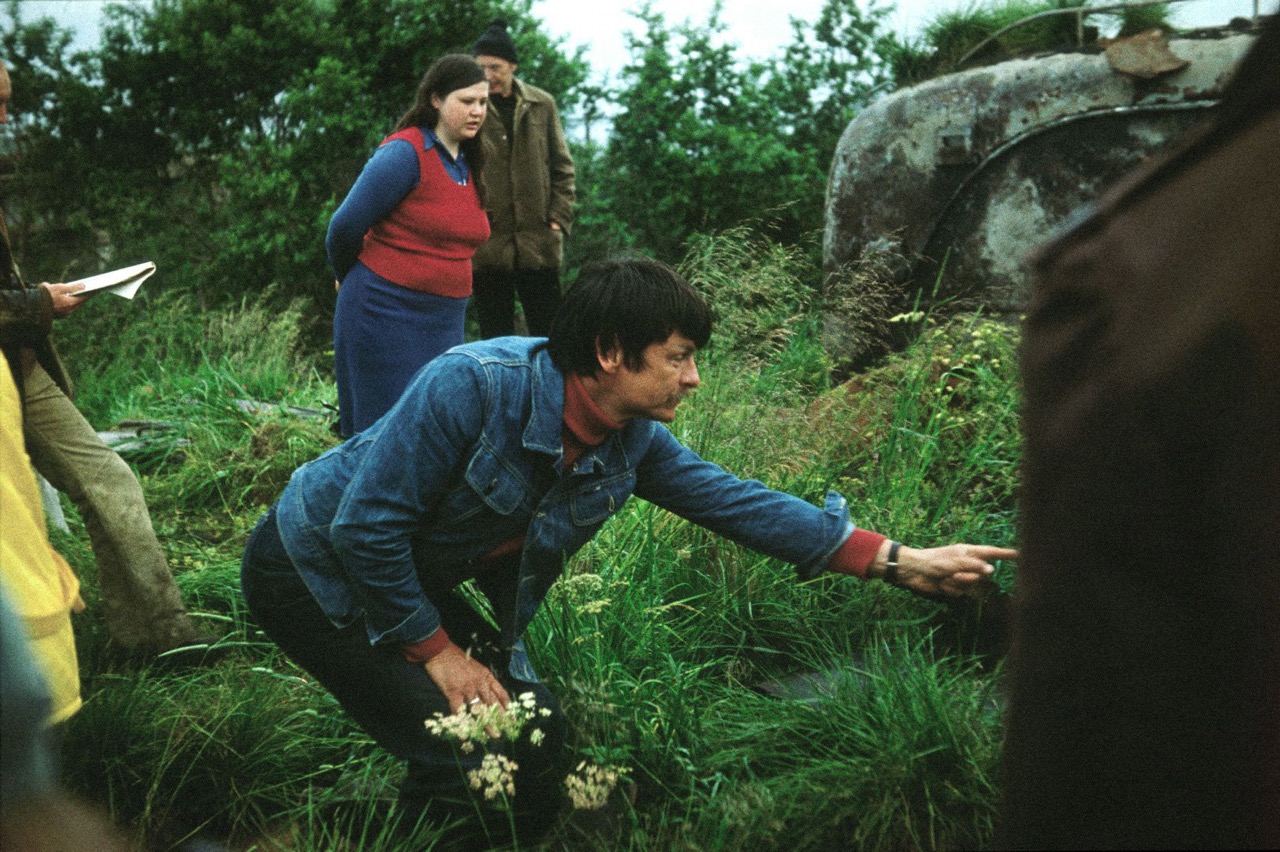
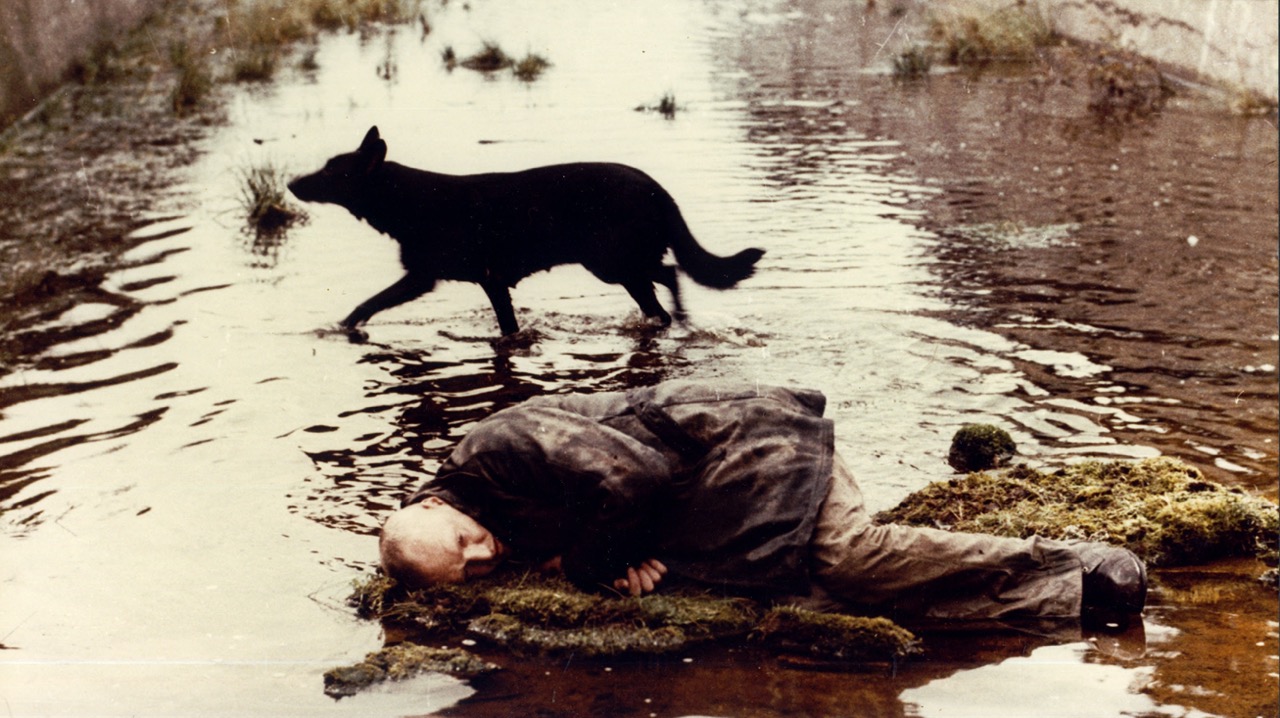
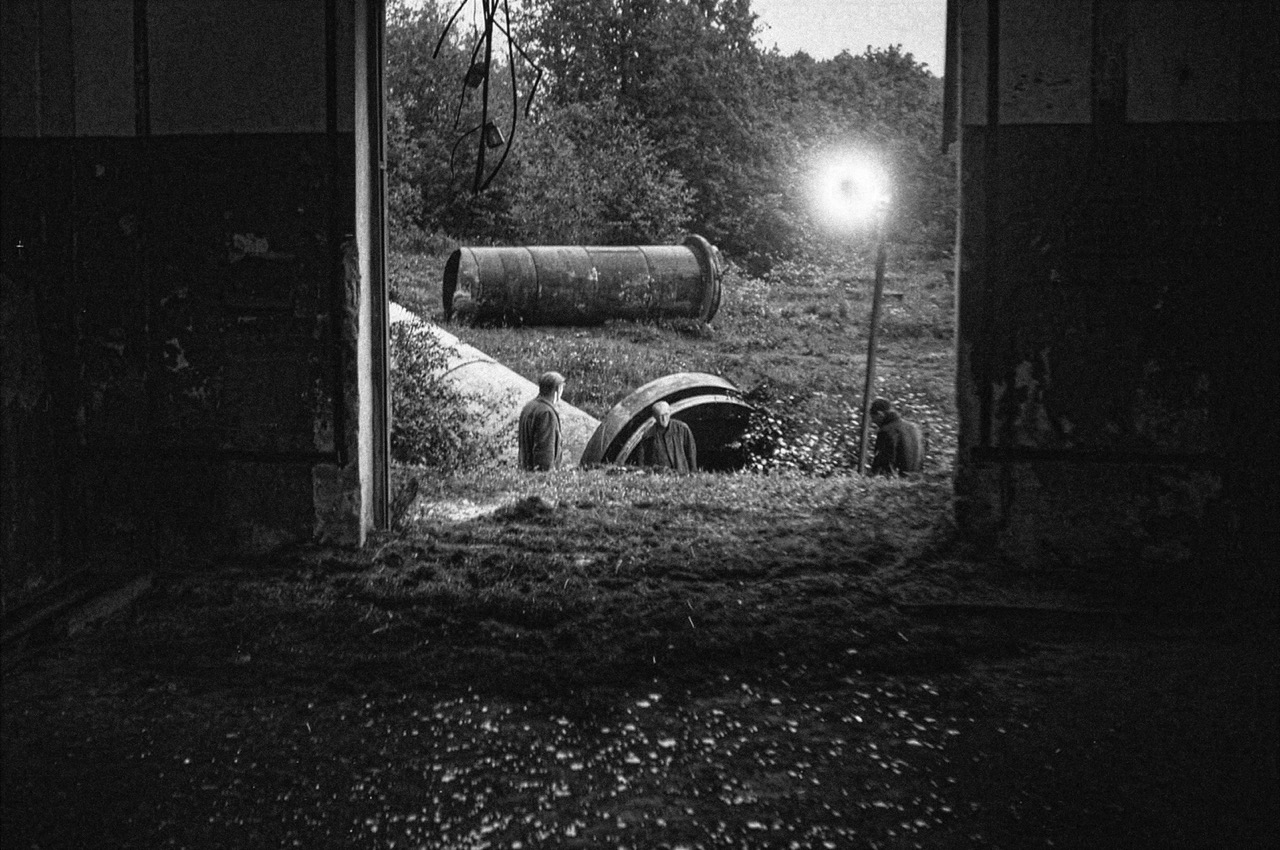
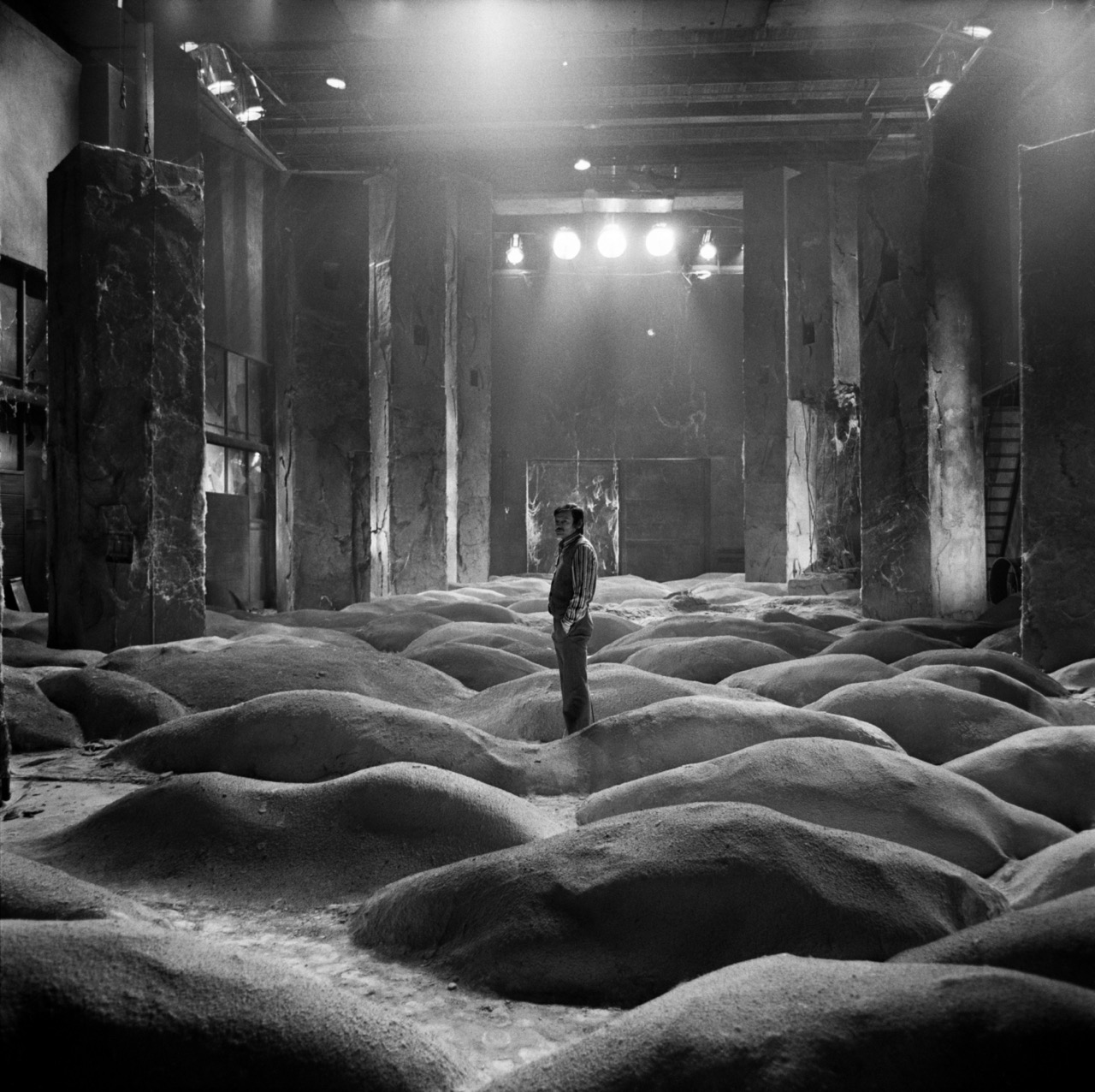
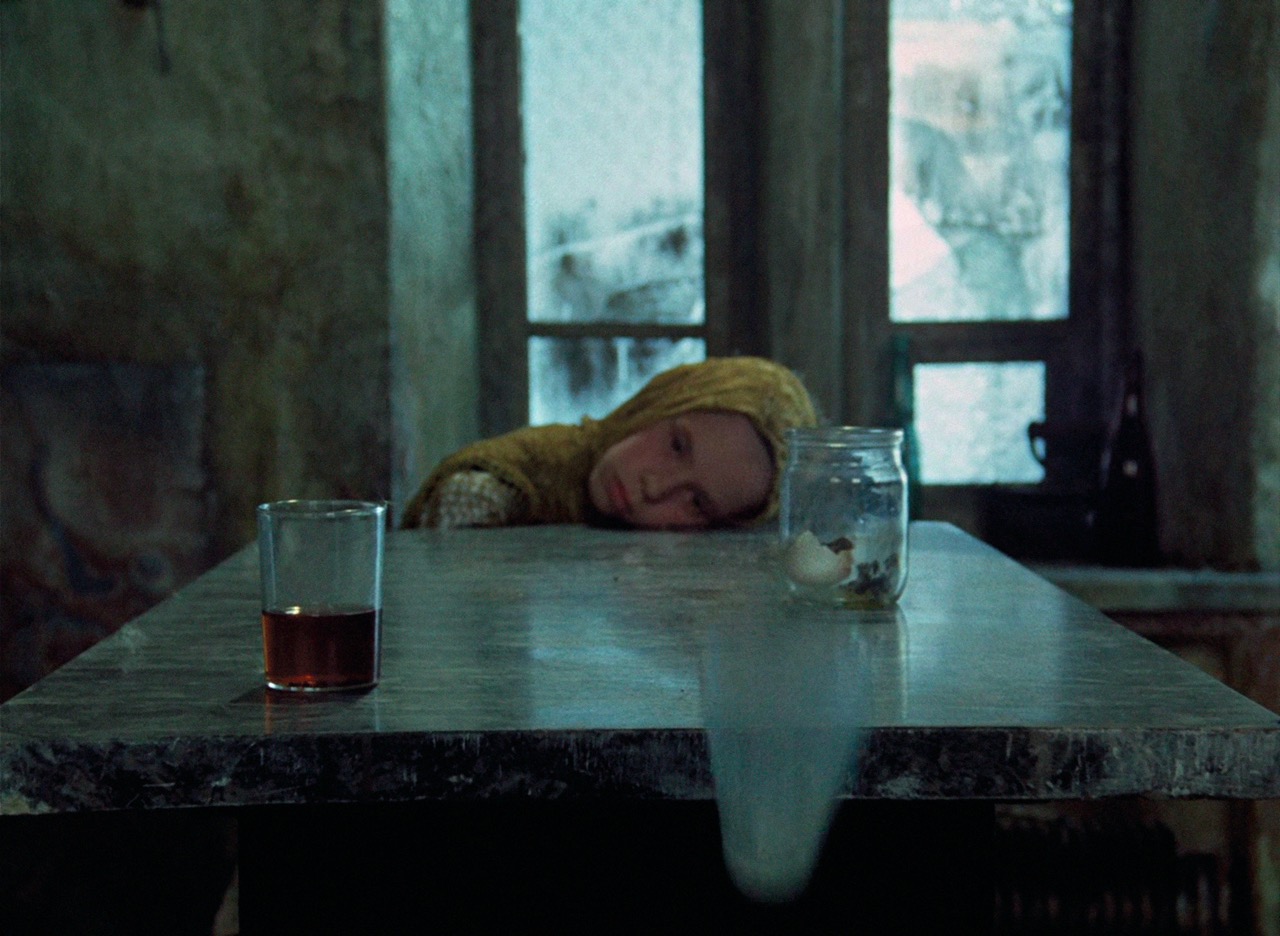
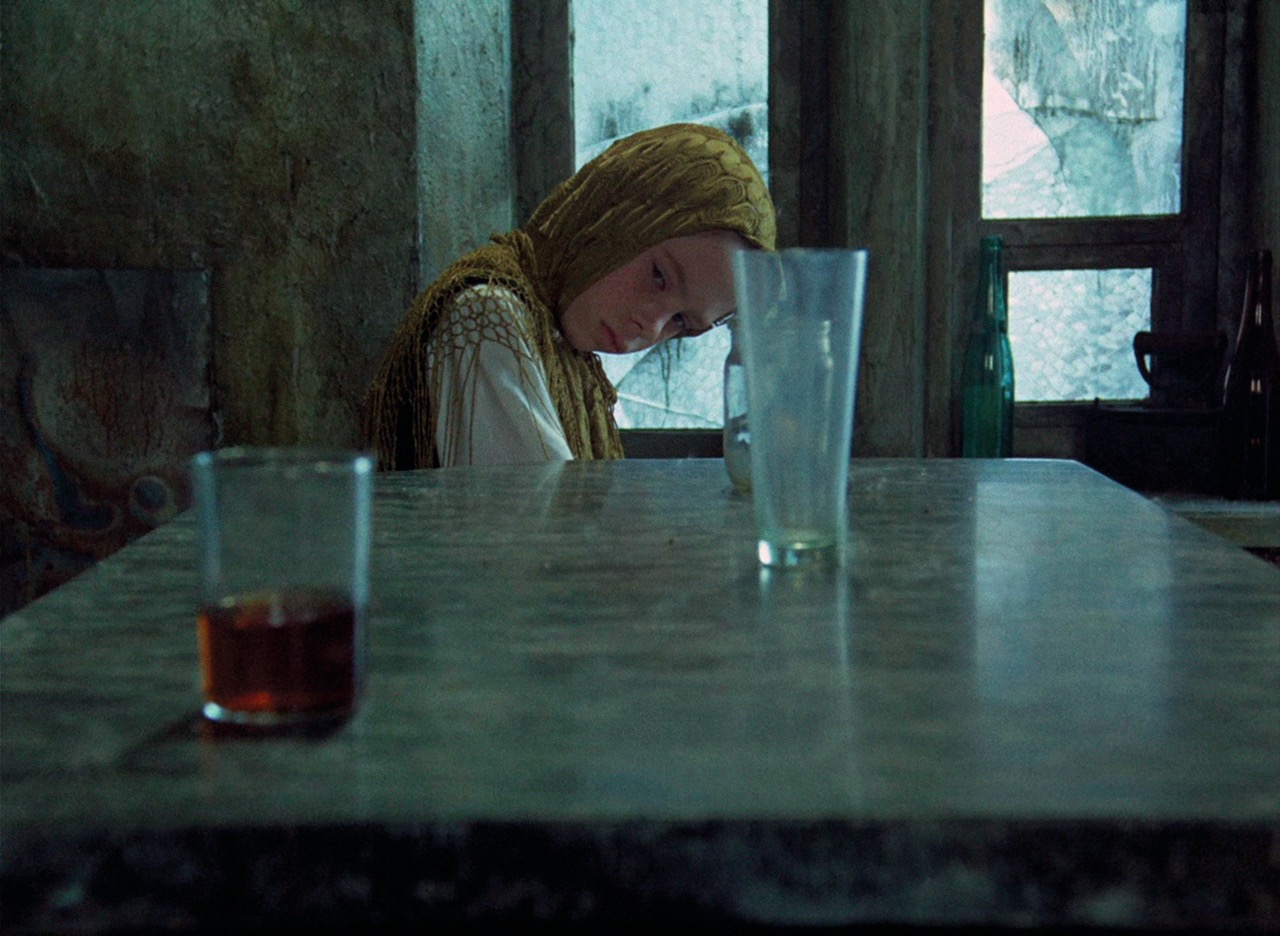
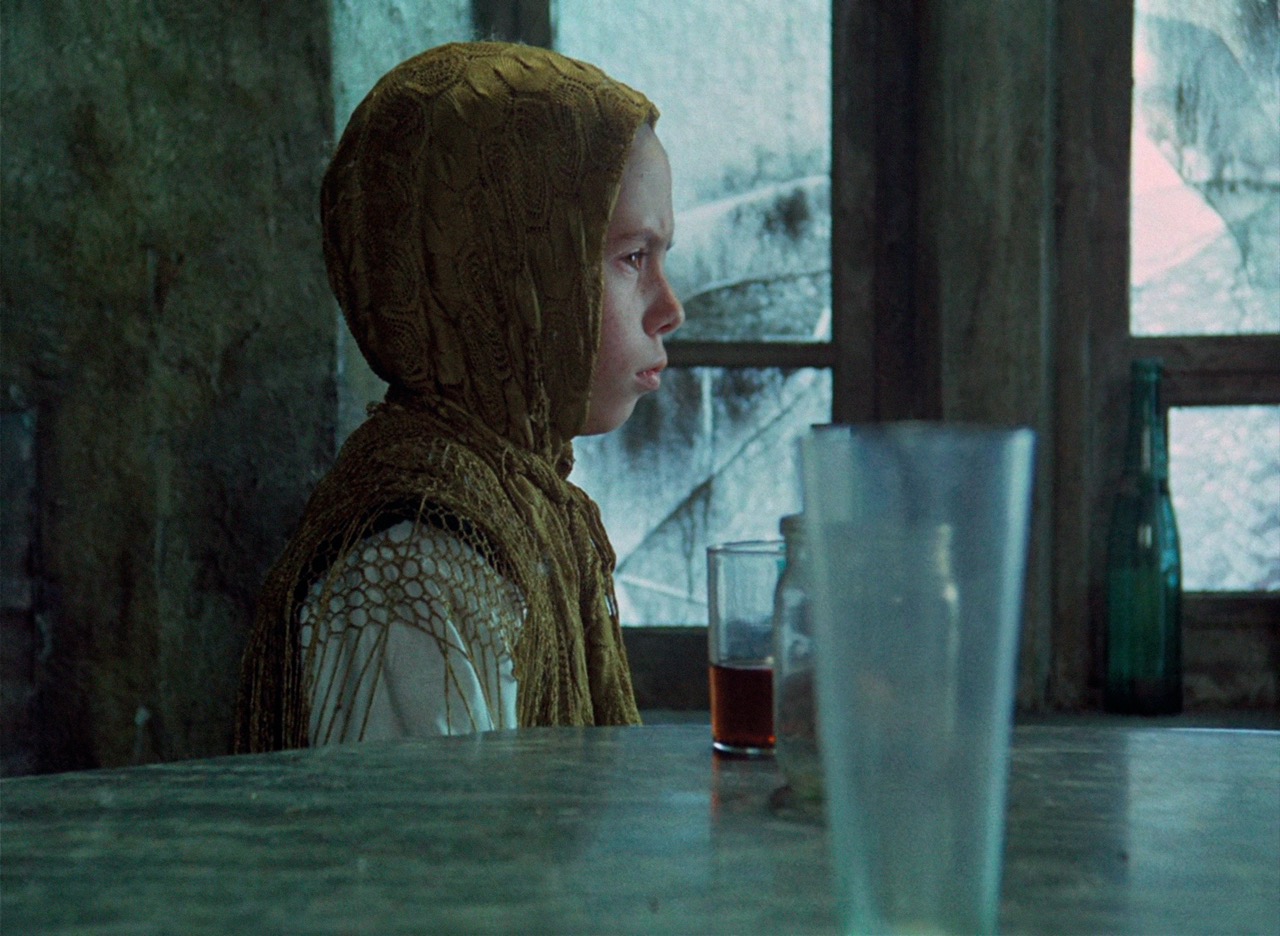
The film moves from dense, murky monochrome to faintly chemical colour as the travellers first behold the Zone. Its landscape doesn’t look that unearthly in conventional sci-fi terms: rather, it’s a lushly vegetated, rewilded expanse, littered with burned-out tanks. In it stand crumbling industrial ruins—buildings that give way to patches of marshland, or are subjected to torrential cascades. After a fraught initial production process, going through two cinematographers, the film was completed in Estonia with new cameraman Aleksandr Knyazhinsky, shooting in and around two disused power plants. Cast and crew were exposed to fumes and effluent from a nearby chemical factory, and it has been suggested that Tarkovsky’s eventual death from cancer, and the deaths of his wife Larisa Tarkovskaya, and Anatoly Solonitsyn who played the Writer, were related to this exposure.
Water is everywhere in Stalker, emblematic of a universal fluidity of time and space. Water flows over tiled floors strewn with debris from the past: strangely diverse detritus that includes guns, syringes, old documents, and also the 15th-century Ghent Altarpiece image of John the Baptist. Simple editing tricks make the Zone’s geography utterly confounding: a supposedly deadly tunnel known as the Meat Grinder leads to what looks like the inside of a submarine, then to a cavernous room filled with sand dunes. It’s these atmospheric locales, rather than events, that really tell the story—an effect echoed today in the site-specific experiences of immersive theatre as practised by Punchdrunk theatre company et al.
The film’s multiple ambiguities make it crackle, isotope-like, with possible meaning. Is the Stalker guiding his charges into the Zone or, rather, out of the world they inhabit? In the perspective of 1970s Russia, the film feels like a fantasy about leaving the USSR for the West (as Tarkovsky would soon do), but haunted by an awareness that exiles take their disappointments, and their imprisonment, with them. As well as carrying echoes of the Gulag system, known to its inmates as the Zone, Stalker’s Zone also comes to resemble the entire world, which is both prison and home, and from which there’s no escape either way.
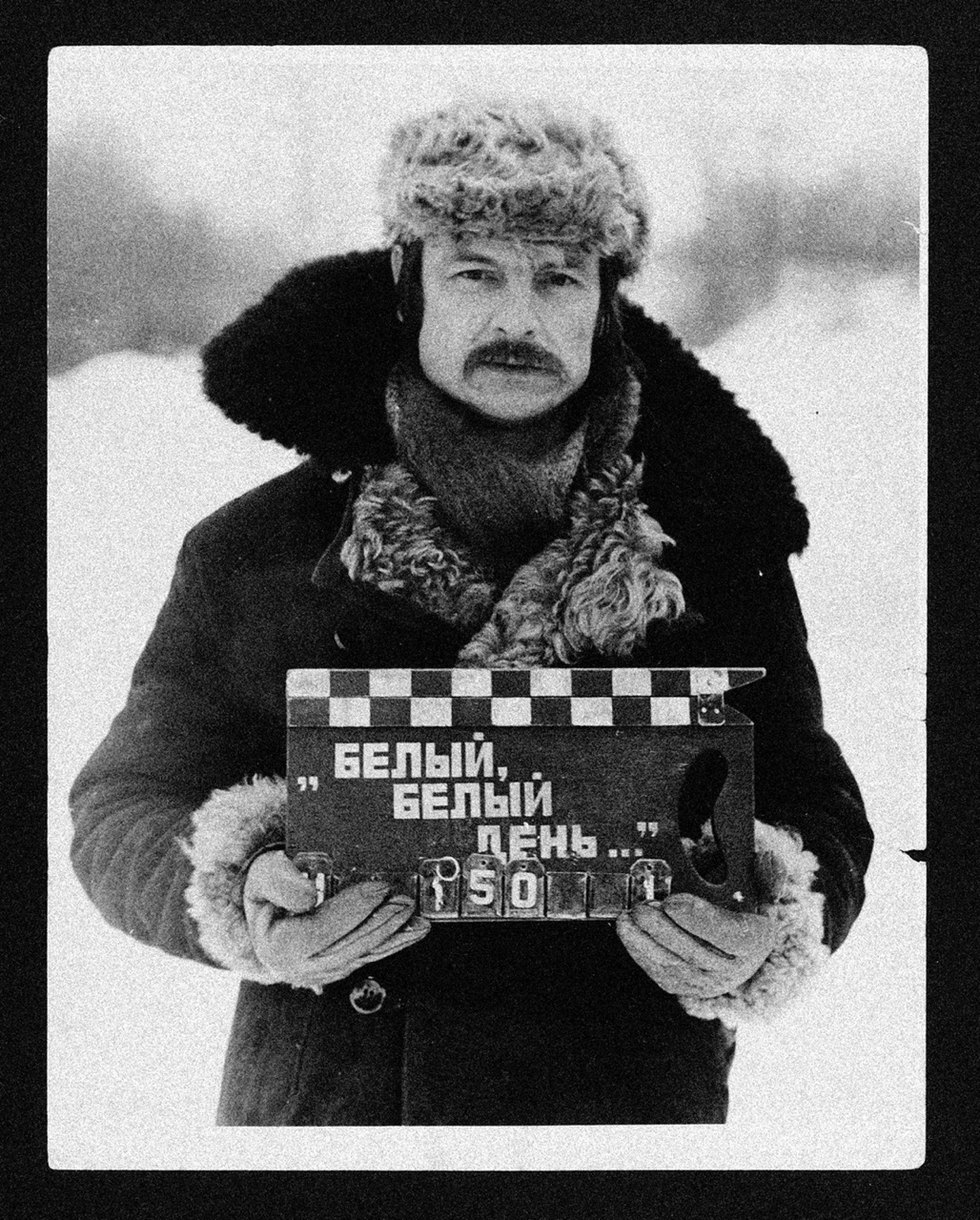
Andrei Tarkovsky directing The Sacrifice (1986)
A further layer of mystique surrounds Stalker: the idea that somehow it predicted the following decade’s Chernobyl disaster. After the reactor’s meltdown, the surrounding area would be cordoned off as an exclusion zone. Geoff Dyer, in his 2012 book Zona, suggested that if news photos of Chernobyl look so inescapably Tarkovskian, it was because the photographers’ imaginations were already coloured by the Stalker aesthetic. Rather less mystique surrounds Tarkovsky’s final film The Sacrifice, crammed with hyper-ventilating philosophical debate and, overall, less hypnotic visually than the earlier films; it also contains less of the future. It is set on a Swedish island, where jets soaring overhead are a portent of imminent nuclear war. Brief black-and-white sequences (dreams? prophecies?) show a panicking crowd from above, scurrying amid debris that could be left over from Stalker.
The Sacrifice premiered in Cannes in May 1986, seven months before Tarkovsky’s death from cancer. Five years later came a future even he might not have envisioned: the end of the USSR, followed by a brutally turbulent decade for the former Soviet nations, then by a newly dystopian 21st century. Tarkovsky’s true legacy may not be as a clear-sighted prophet so much as a magician capable of creating worlds of absolute otherness from the world in front of our eyes. As Dyer says of Stalker, “We are in another world that is no more than this world perceived with unprecedented attentiveness”.
That completely transformative attentiveness has since been inherited by numerous filmmakers of the contemplative kind, among them Alexander Sokurov (whom Tarkovsky identified as his artistic successor), Turkey’s Nuri Bilge Ceylan, and Georgia’s Dea Kulumbegashvili. Most recently, Tarkovsky’s trace is visible in Oliver Laxe’s Moroccan-shot Sirât (2025)—like Stalker, an implicitly mystical odyssey through a landscape of traps, towards a destination that can perhaps never be reached, because the journey is its own impossible goal, its own unreachable future.
But could Tarkovsky have imagined a future in which one part of the old USSR was bent on destroying another? Even before Putin’s full-scale invasion of Ukraine in 2022, the brilliant, underrated Ukrainian director Valentyn Vasyanovych made films—Atlantis (2019) and Reflection (2021)—whose nightmarish, war-scarred landscapes could be extensions of Tarkovsky’s Zone, but brutally stripped of any spiritual dimension. Tarkovsky imagined an alternative world, a future that was perhaps purgatory. In all too concrete terms, the Russia he never witnessed has engineered a landscape that is closer to hell.