

Fifty years after being founded by a group of revolutionary Parisian illustrators, Metal Hurlant remains one of the most influential sources of science fiction. Chris Cotonou speaks with Jean-Pierre Dionnet, Philippe Druillet, and others to discuss the magazine’s legacy.
1974 Paris. In a dusty, smoke-plumed office near the Seine, four young men—unremarkable in appearance, but sublime in their talent and vision—gathered to enact a revolution. Most Saturdays, up to that point, they would leave their employer, Pilote—a magazine specialising in bande dessinée comics—and talk about science fiction. Not the wholesome spacemen in Tintin and Marvel comics. They wanted to depict the psychedelic, the grotesque, erotic, and apocalyptic. They wanted to sketch the future.
There was Jean-Pierre Dionnet, Philippe Druillet, and, in the middle, the reserved, affable Jean Giraud—more Left Bank intellectual than left-wing reactionary. He would work under the name “Mœbius”. Beside them was another figure, dressed conservatively in a suit and tie, though no less important: Bernard Farkas, their chief financial officer (because every revolution needs a money man).
Together, they founded Les Humanoïdes Associés, a movement—and publishing house—that pushed the limits of illustrated science fiction, and continues to be the genre’s most pioneering reference half-a-century later. Mœbius immediately marked the occasion with an illustration of a gravestone bearing their names (foreboding, not quite clear). When the first issue of their pioneering magazine Metal Hurlant—Screaming Metal—hit the shelves, they had no idea how it would be received. Today it is the stuff of legend, adored by Hayao Miyazaki, Denis Villeneuve, Ridley Scott, Alan Moore, and Stephen King, to name just a few from the generations of artists who point to its influence. “We were a movement just like the surrealists and the dadaists,” Druillet tells me, as I begin a voyage into the mad, weird, and breathtakingly gorgeous world of Metal Hurlant.
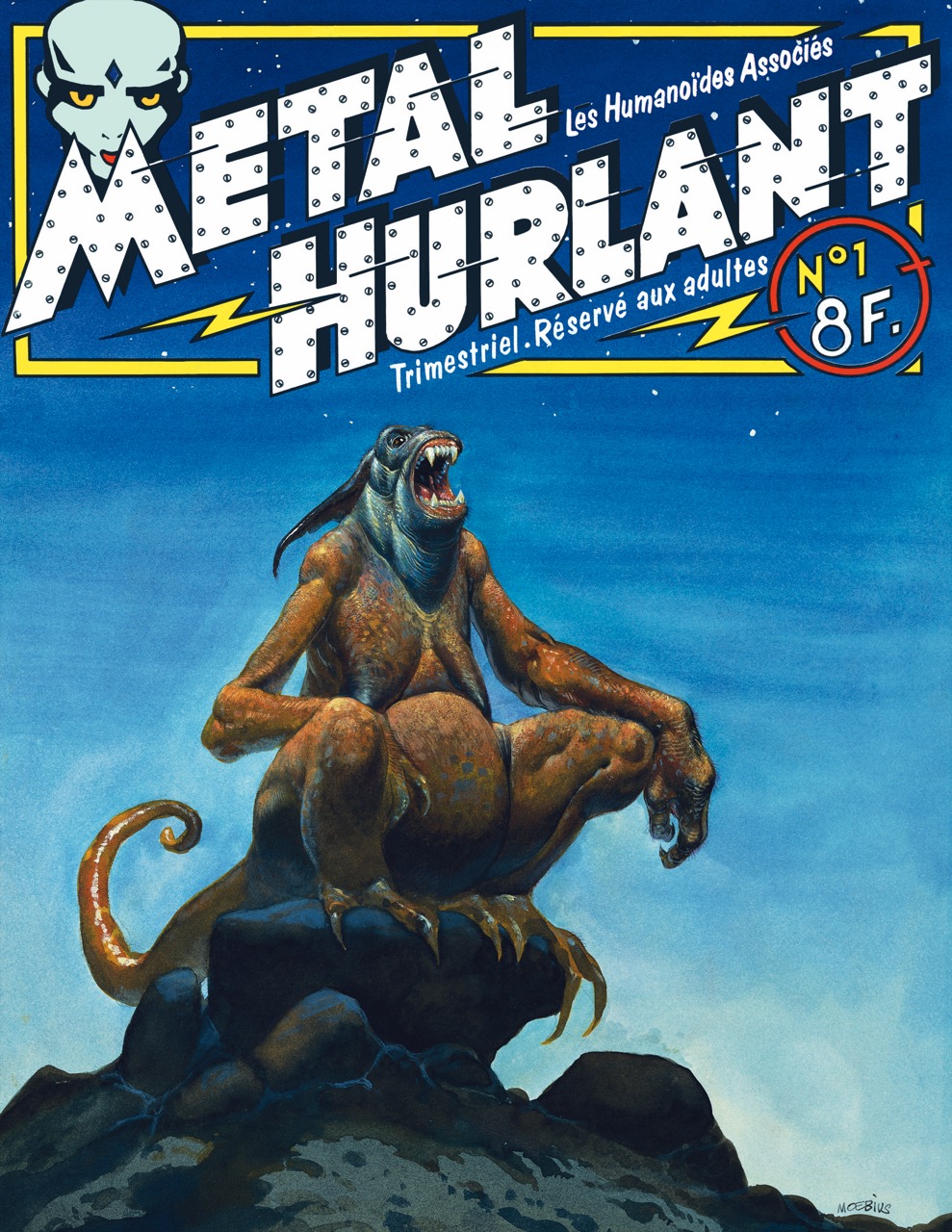
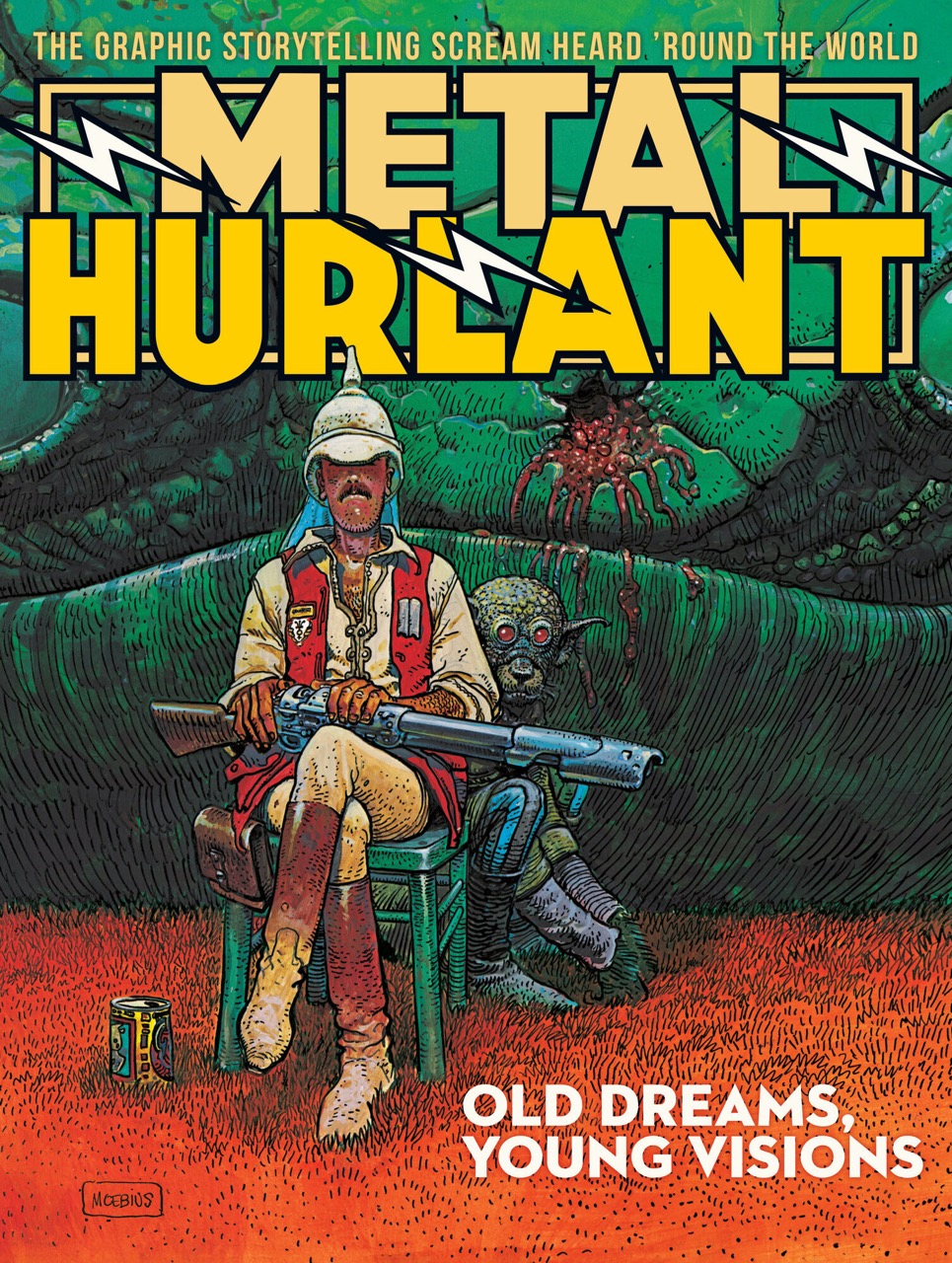
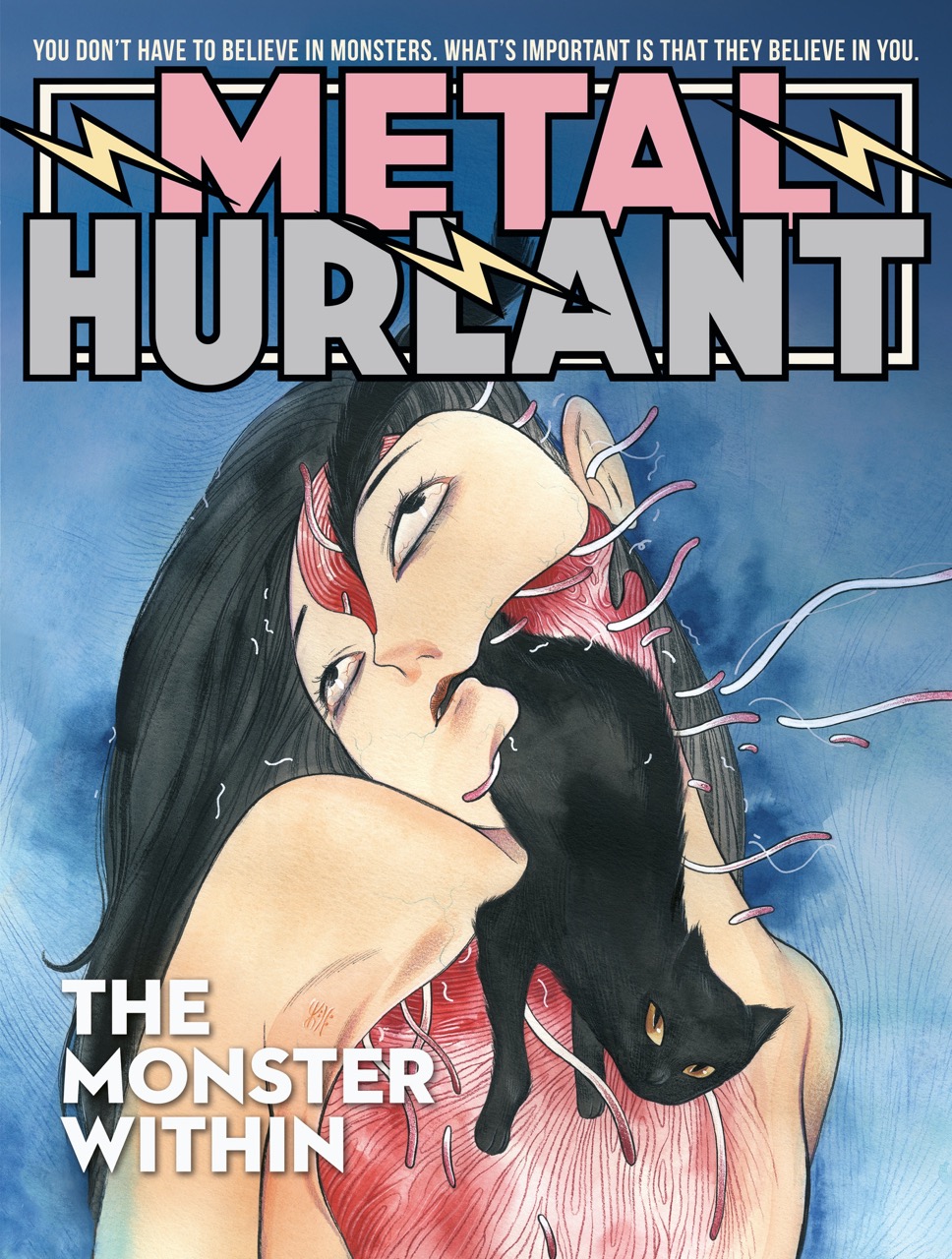
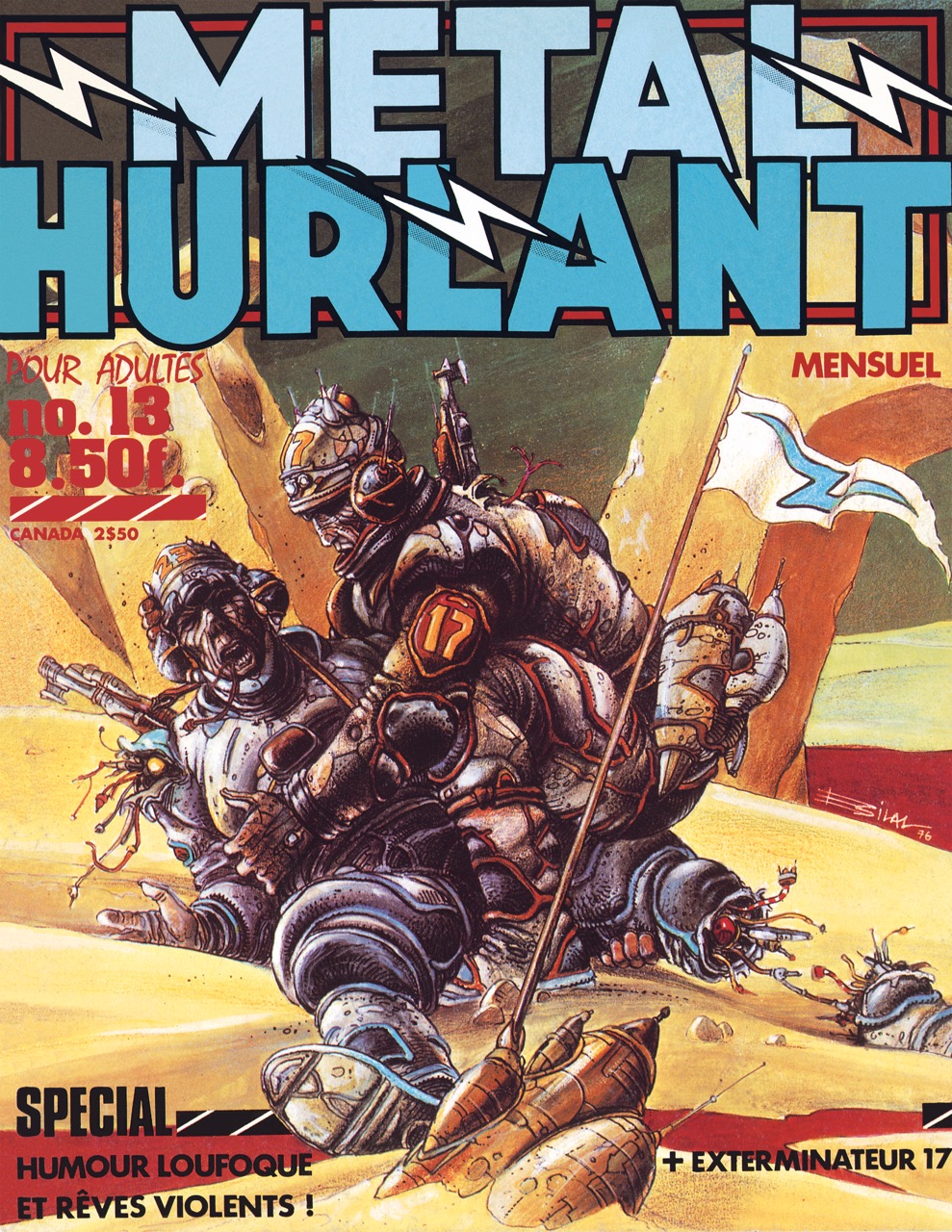
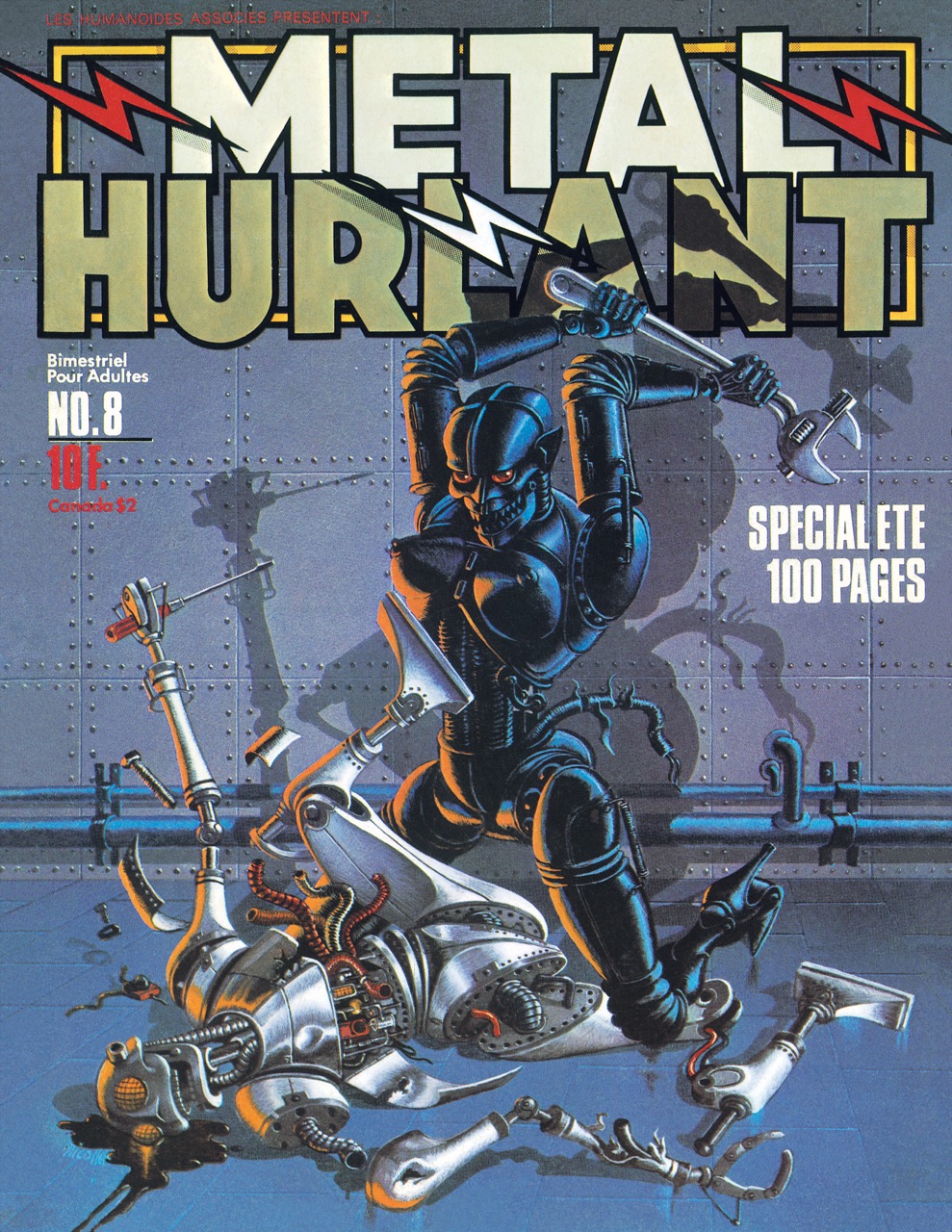


The world had never seen anything like Metal Hurlant in 1975. Comic books meant clean lines, clear morals, and rigid editorial expectations. While Marvel had begun experimenting off-world, in France, Asterix went only as far as America; Tintin to Congo. The very first story to appear in Metal Hurlant was a six-page sci-fi yarn by Mœbius and Druillet. Approaching Centauri was bold, experimental. Druillet recalls its effect: “In the comic book industry, I was a raging madman. A real atomic bomb!”
Before long, Metal Hurlant was a beacon for the most important illustrators of the generation. There were further defectors from Pilote, while now-legendary cartoonists Yves Chaland, Joost Swarte, Serge Clerc, and Ted Benoit completed their early work in the magazine. They also serialised classic material from abroad, such as the British Judge Dredd, and published lengthy essays from pioneers outside the comics field—Swiss artist HR Giger and director Alejandro Jodorowsky’s Dune illustrator Chris Foss among them. Metal Hurlant was not a comic. It was a touchpoint to a revolution in science fiction.
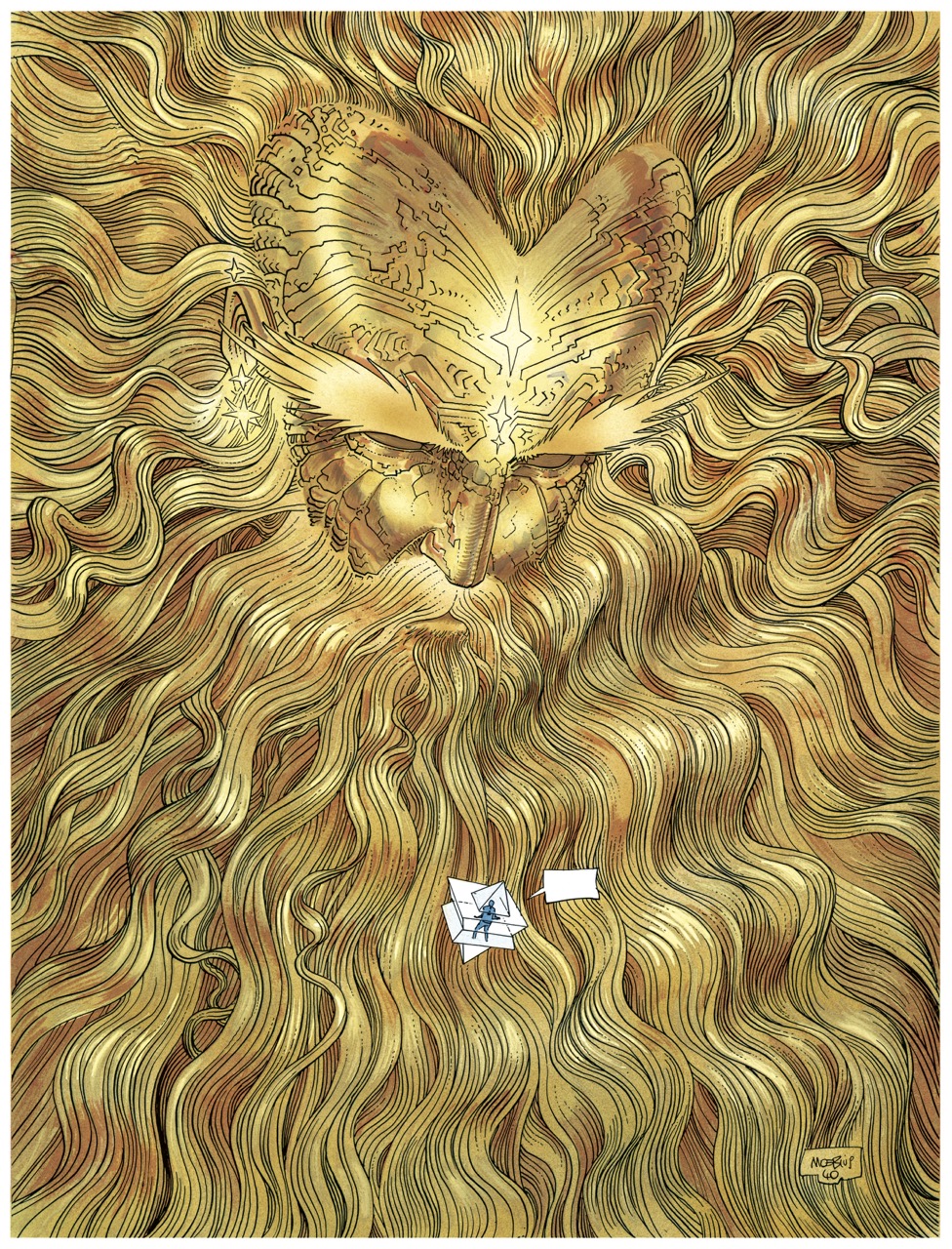
Each of the Humanoids brought a distinct vision. Mœbius, the most culturally imposing of them, was already known for his popular Western series Blueberry. “My intention was to see if I could express the same nightmarish visions that came so naturally to Philippe,” Mœbius said. “But I wanted to retain my own style.” His most famous, enduring characters made their debut in early editions of Metal Hurlant and are globally known today. There was Arzach, a stoic warrior who flies a pterodactyl-like creature, exploring strange, desolate landscapes. Miyazaki would homage Arzach in Studio Ghibli’s Nausicaä: Valley of the Wind (1984). “I only saw it in 1980, and it was a big shock,” Miyazaki said. “Not only for me. All manga authors were shaken by this work… I directed Nausicaä under Mœbius’s influence.”
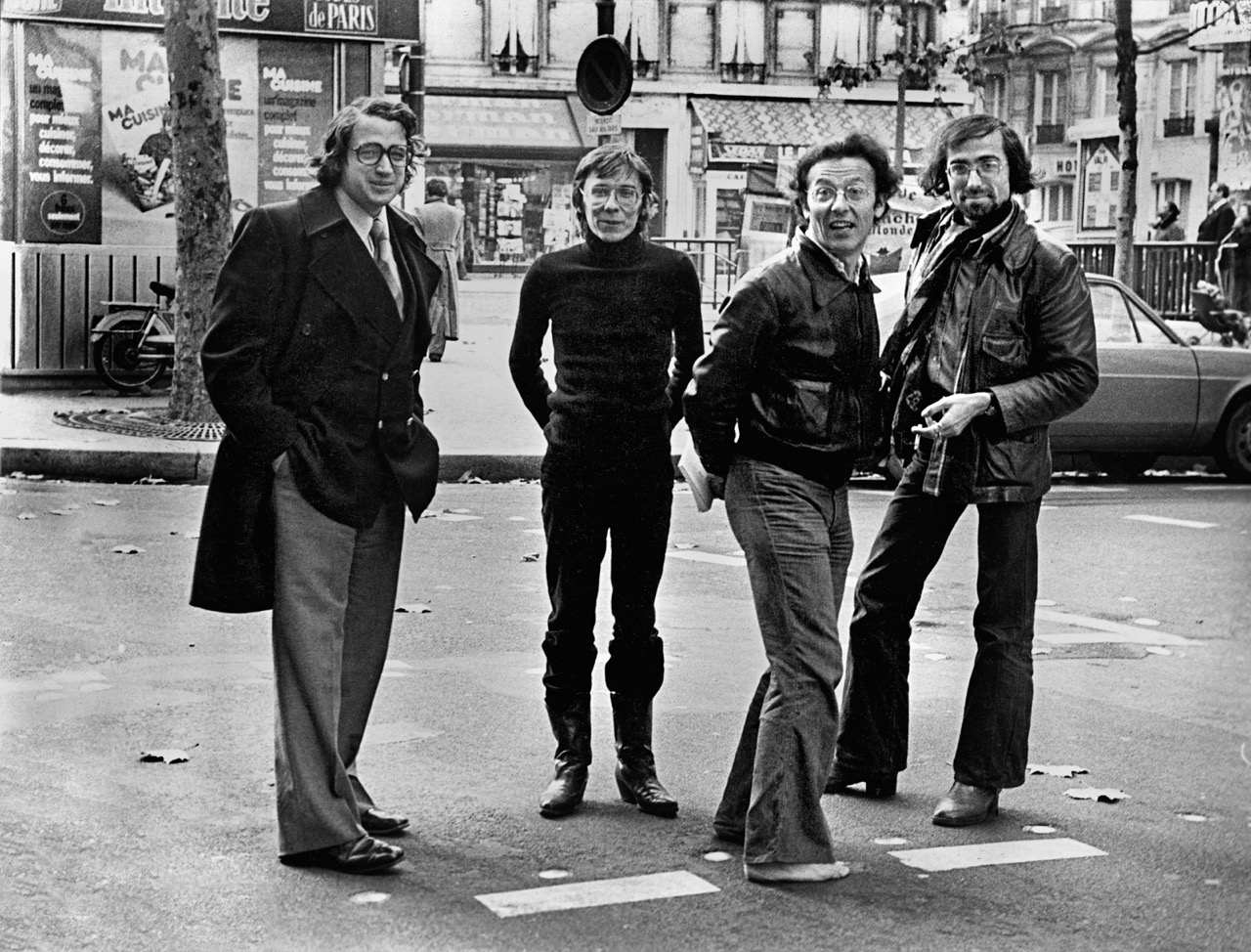
Founding members Bernard Farkas, Jean-Pierre Dionnet, Mœbius, and Philippe Druillet. Paris, mid-1970s.
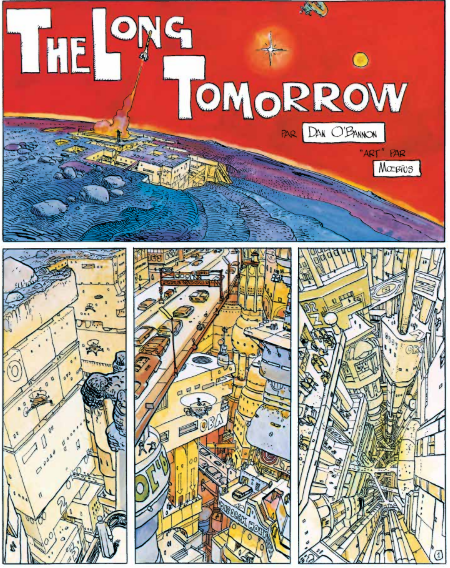
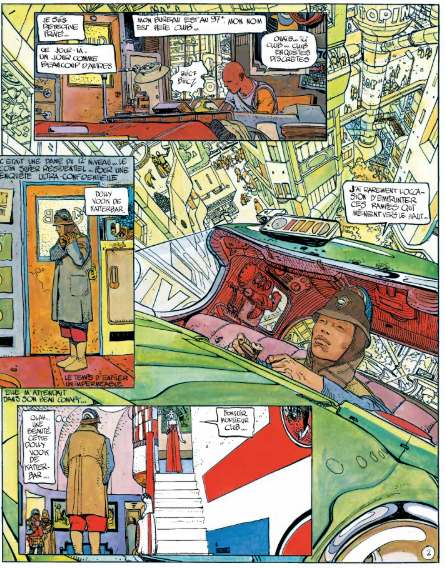
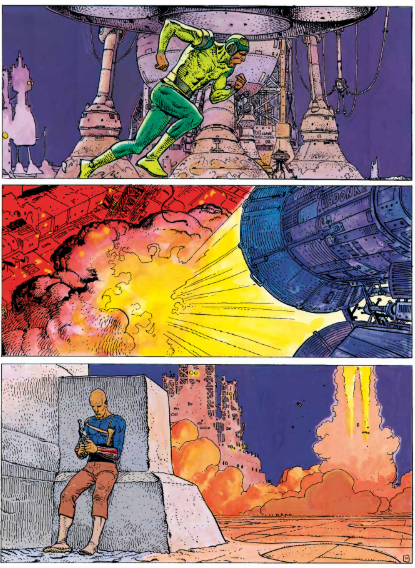
There was an abundance of short stories, too, such as The Long Tomorrow, in collaboration with Dan O’Bannon, the screenwriter behind Dark Star (1974) and Alien (1979). Ridley Scott credits The Long Tomorrow as a key part of his approach to the futuristic Los Angeles in Blade Runner (1982). “My concept of Blade Runner linked up to a comic script I’d seen Mœbius do a long time ago; it was called The Long Tomorrow,” Scott told Film Comment in 1982.
But it is the hugely influential The Incal, made with Jodorowsky (still working with the Humanoids on projects such as the 2026 Cosmopirates), which remains Mœbius’s masterpiece, an endless source of inspiration and reference for artists creating visions of the future. Luc Besson nodded to it in The Fifth Element (1997). Then there was the impresario, the writer Dionnet. He is mythologised by die-hard comic enthusiasts—followers of the terrific cyberpunk war series Exterminator 17. It was in collaboration with cult French (with Serbian roots) cartoonist Enki Bilal, who was also frustrated at Pilote. Bilal’s luscious, textured artwork has its fingerprints on contemporary Marvel stories, as well as in high fantasy universes such as Warhammer.
Druillet, on the other hand, was the eccentric visionary, endlessly experimenting, pushing the boundaries of his imagination to places that were—mostly—triumphant. His deranged, baroque classic Gail featured dimension hopping antihero Lone Sloane. An adaptation of Gustave Flaubert’s novel Salammbô (1862) was utterly bonkers. The Mad Max films (1979–2024) owe a debt to Druillet’s work, with the franchise’s logo appearing as a homage to the magazine. René Goscinny, who created Asterix, lavished praise: “For us professionals, Druillet blew up illustrated narration, liberating it from narrow prisons of small panels.” George Lucas has credited Druillet’s work for Star Wars.
But sometimes, even pioneers go too far. The drawn strips could be overly self-indulgent in their philosophical lecturing; lecherous in depictions of women—as was the case in those days. Male fantasies leaked off the page, famously in Richard Corben’s Den. Soon, it became a part of Metal Hurlant’s appeal. Yet in 1977, Les Humanoïdes Associés unveiled a sister publication entitled Ah! Nana, devoted to female cartoonists like the great Chantal Montellier, Nicole Claveloux, and Trina Robbins, who remains possibly the only comics creator ever to be namechecked in a Joni Mitchell song (Ladies of the Canyon, 1970).
Translated Metal Hurlant strips appeared in other European countries. The Italian comics magazine Linus published a mature readers spin-off, Alterlinus, which contained Metal Hurlant material thanks to a deal brokered by the acclaimed Italian filmmaker and Metal subscriber Federico Fellini. Yes, that Fellini.
Everyone had their favourite artists—an auteur system developed where cartoonists achieved the cultural esteem of filmmakers. You waited for Mœbius’s surreal worlds, Dionnet’s line-shaded heroes, and the operatic space battles of Druillet. Inspired by Cahiers du Cinéma, a Cahiers de la Bandes Dessinées was launched, subjecting comics to intellectual scrutiny. The revolution had paid off. Without Metal Hurlant, it wouldn’t have even begun.
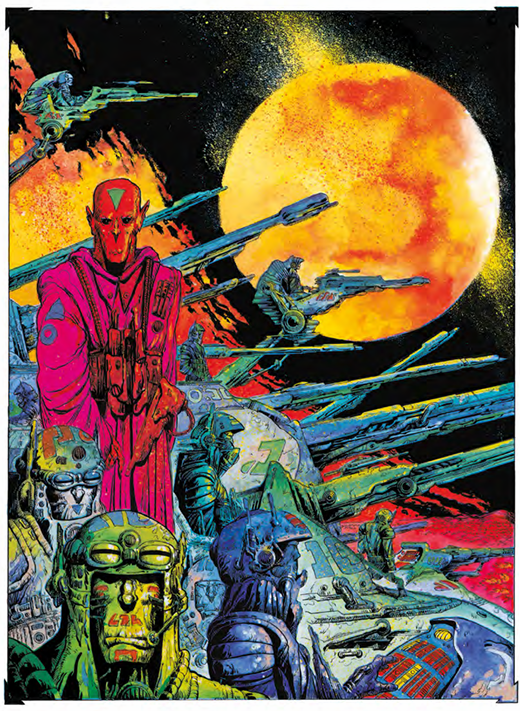
Excerpt from Gaïl by Philippe Druillet, Metal Hurlant #18 (1977). © Editions Glénat.
Eventually, what had been shocking became familiar by the end of the 1980s. More graphic novels—many inspired by Metal Hurlant—were being published with darker, more adult stories by American cartoonists. Financial struggles started to take their toll. The founders—once iconoclasts, now legends— started focusing on film and solo projects. An exhausted Dionnet left the magazine and began a successful career as a TV presenter and film producer.
The magazine did not so much fail as dissolve into the culture it had helped create. When Swiss entrepreneur Fabrice Giger bought Les Humanoïdes Associés in 1988 from the Hachette group (he was 23 at the time), he saw the importance of the graphic novel market. He founded Humanoids in Los Angeles as the American counterpart to the French and for decades he has continued to champion young artists, guided by the principles—if not the “spiritual forces” he tells me—of the founding fathers. Mœbius died in 2012—a legend, immortalised in science-fiction and illustrative art, and associated with Humanoids until the very end.
With Audiences rediscovering the magazine, mining old comic bins for rare issues, and thanks to larger volumes compiling work in both French and English, Metal Hurlant was not merely a relic. To celebrate its 50th anniversary, a half-century since four angry comic artists demanded revolution, Humanoids relaunched Metal Hurlant as a quarterly with newer strips alongside the classics. It continues to this day, a feat that seemed improbable in 1974.
Druillet was even given his place in the Will Eisner Comics Hall of Fame, in 2025. “The greatest thing about Metal Hurlant is that it became bigger than its founders,” says current editor in-chief Jerry Frissen. “I’m just passing through. But it is, without a doubt, the greatest thing that could ever happen to me.” When Denis Villeneuve claimed, “I am a child of Metal Hurlant,” it said as much about our society as it did the Dune director’s oeuvre. With visions of the future in cinema, art, literature, and even in our streets—we are all, whether we realise it or not, children of Metal Hurlant. We are all Humanoids.