

Mecha is the only sci‑fi genre where the machine is piloted, not autonomous—a fantasy of control coined by a country historically anxious about losing it. Sam Murphy explores what that means, one blueprint at a time.
Japan didn’t invent giant robots; it perfected them. Humanoid robotic creatures have long existed in seminal works such as Georges Méliès’s Gugusse and the Automaton (1897) or Osamu Tezuka’s Astro Boy manga series (1952–68), but it wasn’t until Go Nagai was stuck in a traffic jam in suburban Tokyo that the defining trait of piloting them occurred to him: wouldn’t it be nice if all the drivers in these shining cars could turn a key and fly off? He quickly sketched out the concept, and his manga Mazinger Z (1972) showed a hovercraft slotting into the head of a larger robot— transforming the vehicle into a cockpit. Powered directly by a human pilot, the robot was no longer an empty object but an extension of the user.
Coining the term mecha—short for “mechanical”—Nagai (who invented a new anime genre every few minutes) stumbled onto another hit. Mazinger Z was beloved by school‑age audiences. Powered, abstractly, by “Japanium” ore and nuclear fusion, it represented a new post‑war Japan: more economically developed and more optimistic than the difficult redevelopment of the 1950s and 60s. Since Japan’s 17th‑century karakuri dolls, Shinto traditions have held that objects could possess souls. Whatever Nagai’s creation possessed largely followed the rule‑of‑cool principle. That his robot was gigantic, larger than schools, able to melt foes, and, in a pinch, launch fists at Nazi‑coded scientists was no coincidence. It was the perfect power fantasy for a child—and a mangaka on the brink of road rage.
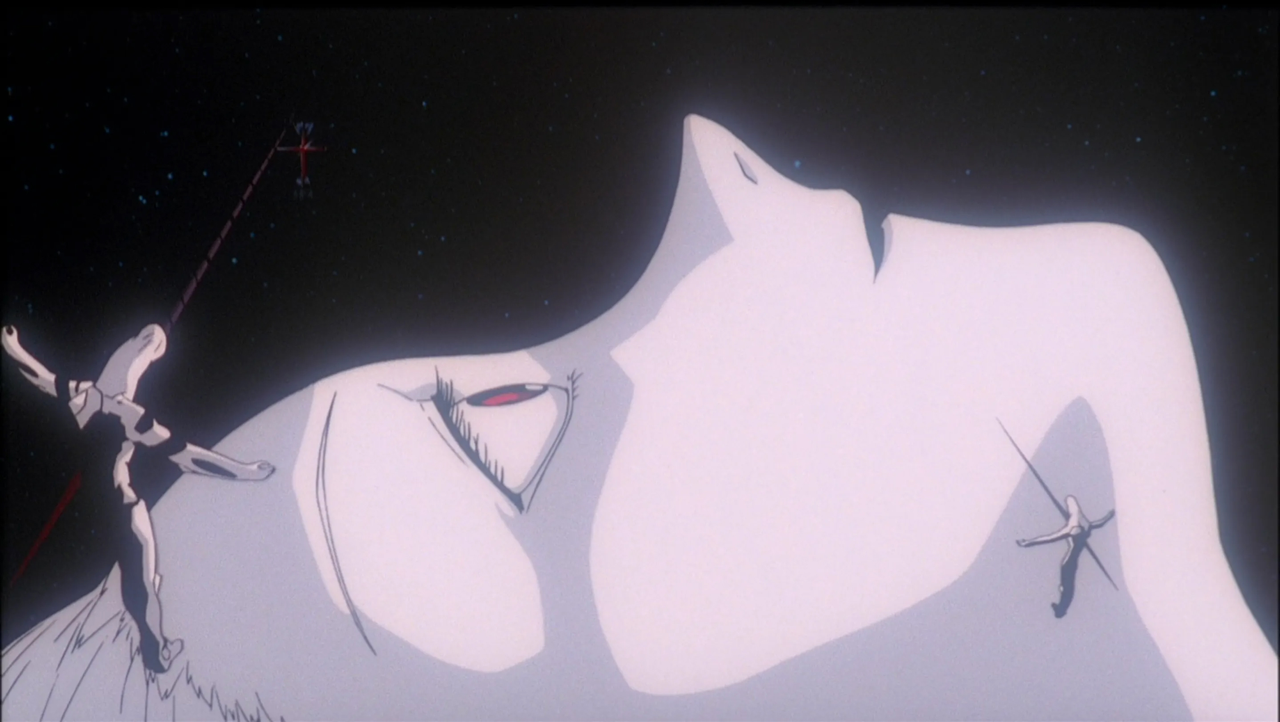
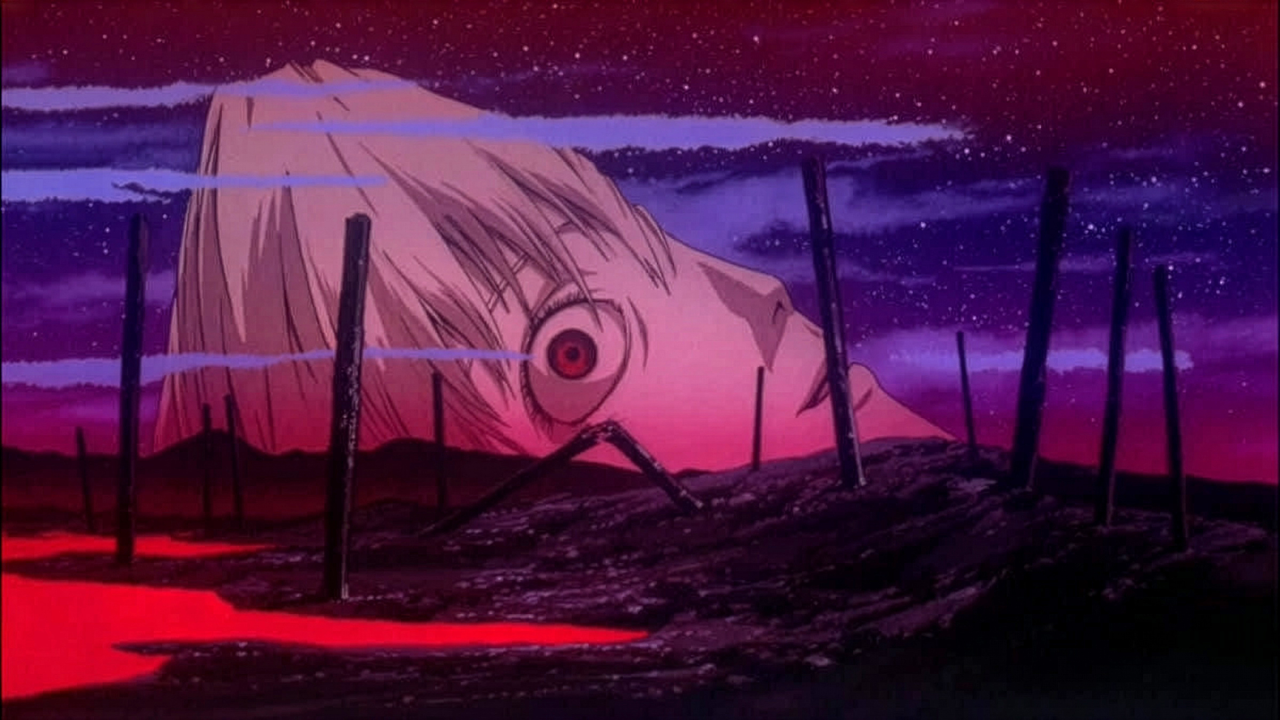
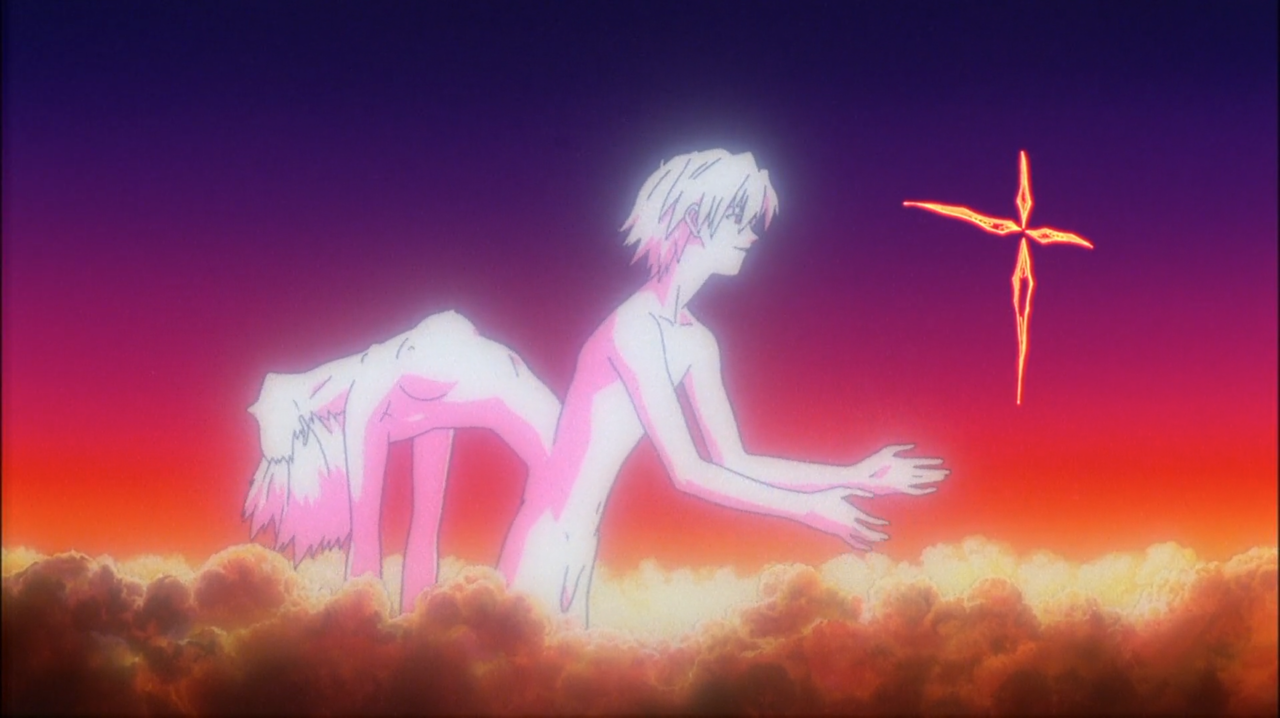
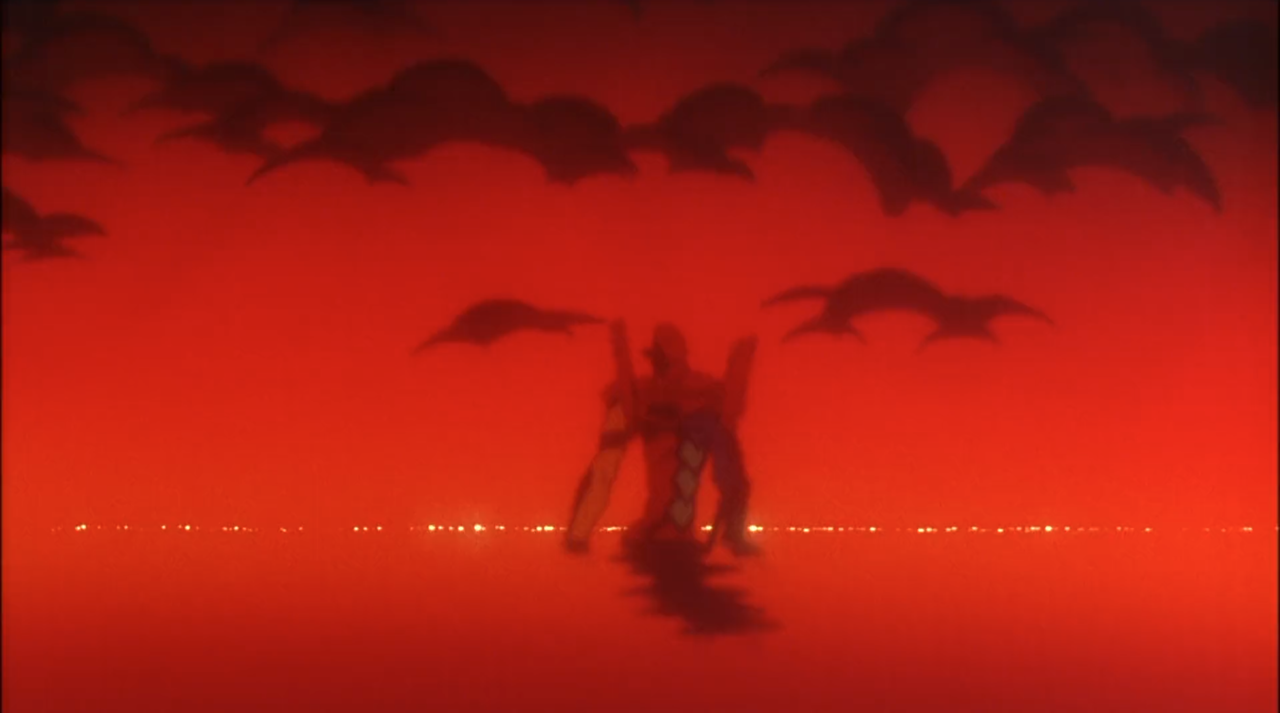
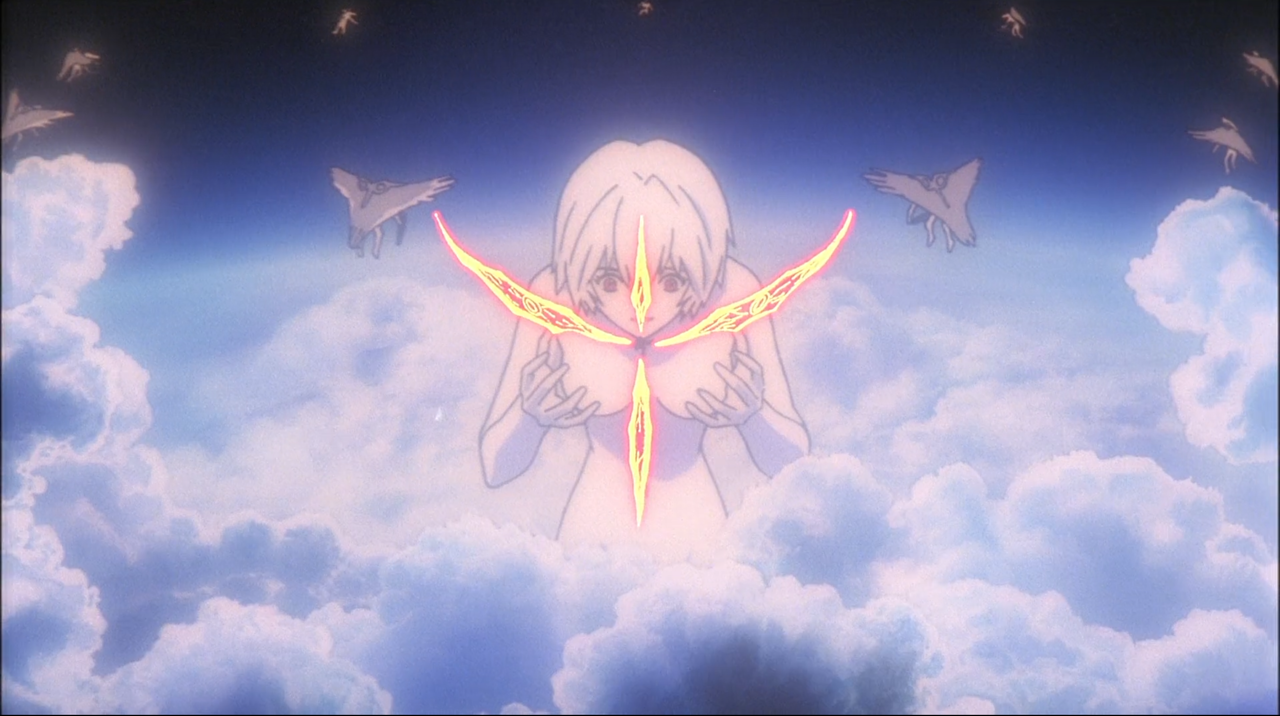
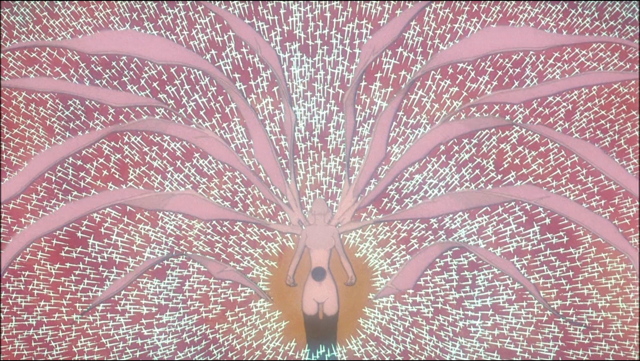
The End of Evangelion (1997). By Hideaki Anno.
It wasn’t until Mobile Suit Gundam (1979) entered the fray that the genre’s pivot from fantasy to realism was fully established. The series pitted the bureaucratic Earth Federation against the Germanic space colonists of the Principality of Zeon in a war that felt more like an industrial arms race than Nagai’s frantic cartoons. The “friendly” RX‑78‑2 Gundam wasn’t a magical totem; it was a high‑output prototype with a modular cockpit designed for pilot survivability and replaceable weaponry. Mirroring Cold War NATO doctrine, these “pro‑freedom” machines were elite, high‑cost vehicles—liberation through quality over quantity.
Even more grounded was the MS‑06 Zaku II—the mass‑produced workhorse of the rival forces. With an industrial mono‑eye sensor, exposed cooling pipes, and a low‑slung profile, the Zaku sat somewhere between robotic samurai and heavy construction equipment repurposed for war. While Gundam had no clear good guys (see the excellent War in the Pocket original video animation), its machines expressed distinct cultures, where pilot skill and tactics mattered as much as scale.
Gunpla (plastic model kits) literalised these designs with booklets listing engine output, armour composition, and thruster counts. By emphasising standardisation—swappable parts, dentable armour, weapons designed for specific counters—the next wave of mecha signalled to young viewers that these machines belonged to reality.
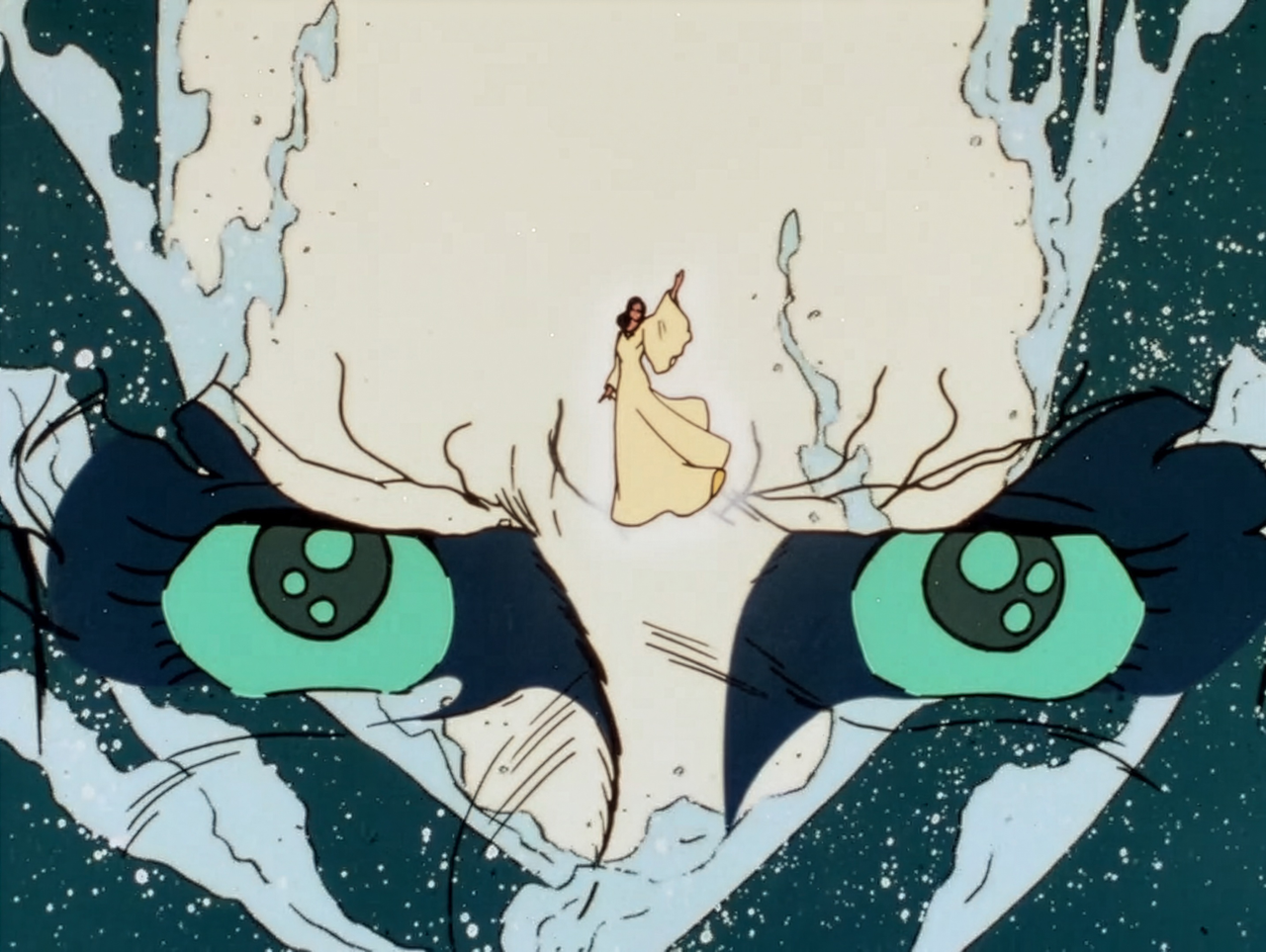
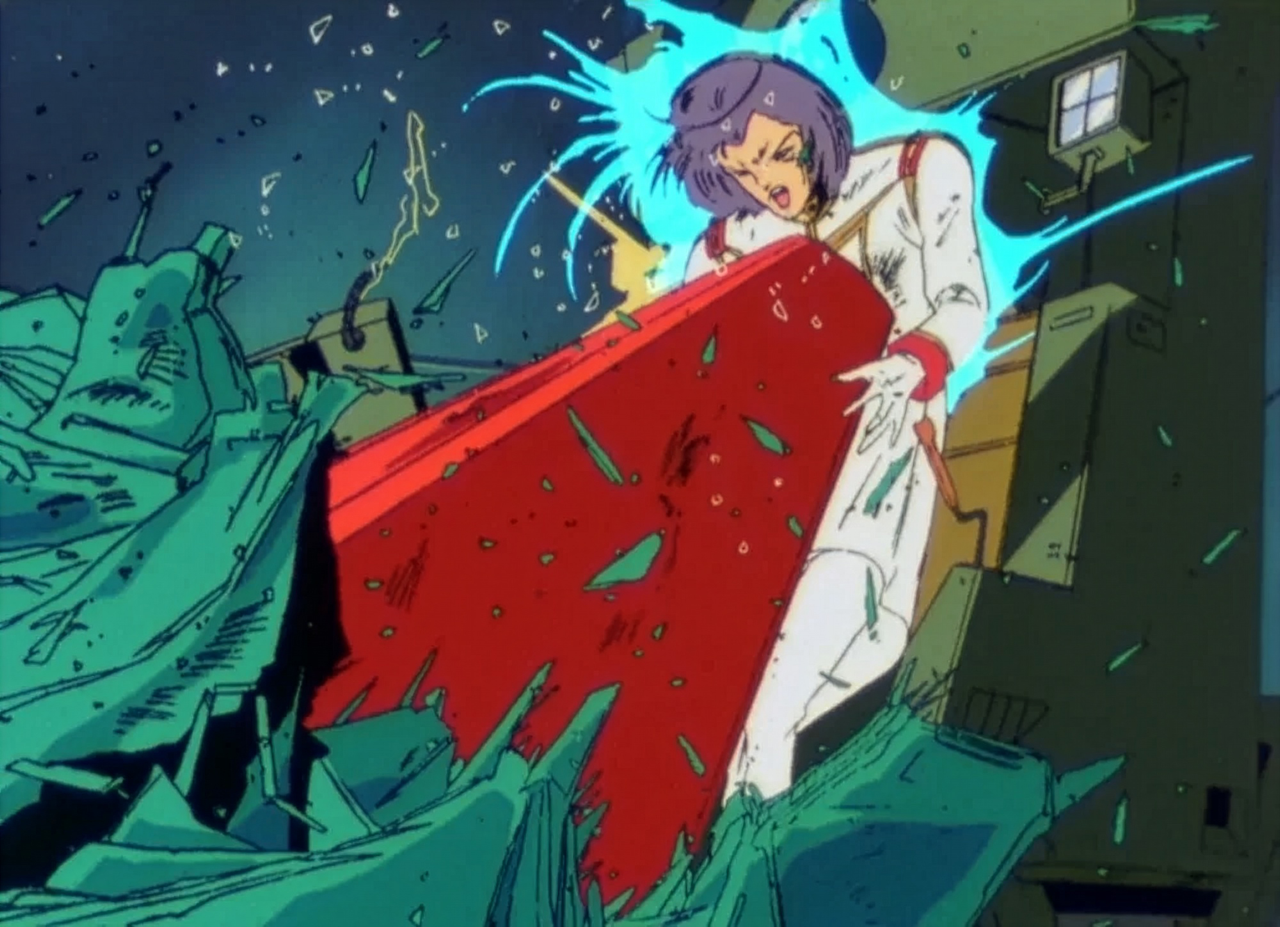
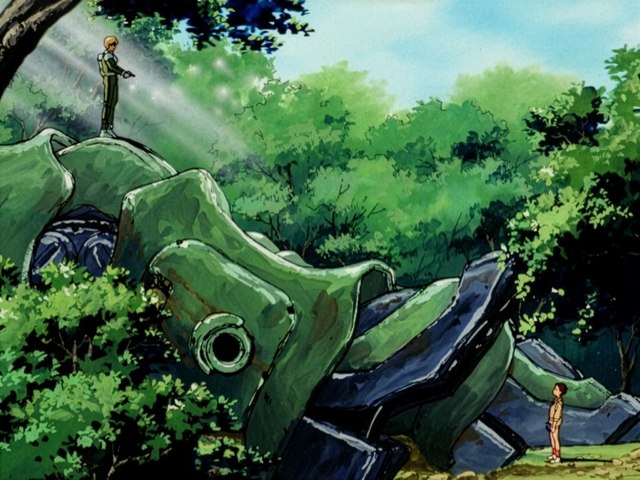


A few years on, this obsession with realism reached new heights under Shoji Kawamori, creator of the Macross franchise (1982– present), whose robots transitioned from humanoid to fighter jet. Kawamori refused “transformation magic”, instead building designs from LEGO first. If wings and landing gear couldn’t fold using real‑world hinges, the design was discarded. Mecha had moved from cartoons to something like a real blueprint. As the genre matured, realism gained psychological depth. In Patlabor (1988)— designed by Yutaka Izubuchi and written by Headgear, a five-person creative collective— the “Labor” robots were treated like police cruisers, complete with licence plates, insurance paperwork, and maintenance schedules. Gears, pistons, and undercarriages were painstakingly animated. With director Mamoru Oshii’s flair for the dramatic, Japan’s bureaucratic deep state, mired by an absurd military constitution, became the pilots’ main antagonist.
By the time mecha reached peak popularity, it had launched so many tropes it begged for a takedown. The cockpit had become a nursery for the pubescent and the traumatised—where the fate of a galaxy rested on the shaking shoulders of a 14‑year‑old. This set the stage for the ultimate deconstruction: Neon Genesis Evangelion (1995). Building on real concerns about the energy required to power a skyscraper‑sized machine, the “umbilical cable” introduced a network of underground power plants that turned Tokyo into a fortress. Once severed, the robots had only five minutes of battery. Designed to behave like humans, these machines pushed vulnerability to its zenith, dragging teenage pilots into episodic breakdowns.

Posters for Neon Genesis Evangelion: Death and Rebirth (1997).
This frailty mirrored the anxiety of Japan’s Lost Decade; as the economic miracle ran out of charge, the new mecha were powerful but exposed. If the old mecha was an extension of the pilot’s soul, the new machine had become a mother figure—an animist guardian for a generation raised via recession. Even as a takedown, Evangelion remains one of the genre’s most enduring works. Its realism didn’t stay on drafting boards; it leaked into industry. In the early 2000s, the Maeda Corporation—a $4.2bn civil‑engineering giant—launched a fantasy marketing department, treating the construction of the Evangelion GeoFront and the Mazinger Z hangar as legitimate engineering tenders, complete with a $72-billion price tag and a seven‑year excavation timeline. Because animator Hideaki Anno and Kawamori showed us the power cables and hinges—both onscreen and in technical blueprints—Maeda’s engineers could calculate the cubic metres of soil required.

“As Japan’s military budget balloons and regional tensions flare, the mecha has the allure of a childlike silver bullet— an act of imagination those in power take seriously.”
It’s inevitable that if you show a fantasy for long enough, it begins to repeat itself. Today, Japan’s political class treat mecha logic as a serious imaginative resource. Tarō Asō, a former prime minister and lifelong Gundam obsessive, once declared in the Diet (Japan’s parliament) that “Japan should be proud that we have Gundam”, calling anime a “diplomatic resource”. In 2012, the country’s Liberal Democratic Party held public meetings to discuss developing real‑life Gundam robots to stimulate the tech sector. Previously, in 2008, the Japanese Science Portal had specced out the material costs at $725 million. In 2020, in Yokohama, an 18‑metre, 25‑ton “life‑sized Gundam” began moving, its steel joints whirring under the gaze of government ministers.
Katsunobu Katō, then Chief Cabinet Secretary, called it a “big step toward the realisation of a real-life Gundam”, grinning at what was, ostensibly, an amusement‑park ride. Some politicians debate tariffs or housing. But not Shigeru Ishiba. In 2016, Ishiba, who would become the prime minister of Japan in 2024–25, walked out of Anno’s Shin Godzilla with a different problem: how can a pacifist nation fight a force of nature?
Article 9 of the Japanese Constitution renounces war and forbids Japan from maintaining “war potential”. The Japan Self-Defense Forces— which includes the Japan Air Self-Defense Force, responsible for scrambling jets—is still technically a high‑tech police force, not a military. Bombing a monster would be an act of war. Treating Godzilla as “pest control” became the only legal workaround for Ishiba—a bureaucratic fantasy that’s as strained as any anime plot device.
Framing Godzilla as a thought experiment, Ishiba’s viral blog nevertheless echoes the longing that birthed the mecha: the search for a figure powerful enough to protect Japan. It’s this constrained fantasy that has powered the genre for so long—the imaginary guardian for a country that has, outwardly, no real military capability.
Japan’s moving mecha remains stubbornly, beautifully human (even if it is, for now, a 25‑ton demonstration). Underscoring Ishiba’s blog is a real fear about Japan’s defence industry: in his eyes, “Chinese ships around the Senkaku Islands” and “North Korean submarine‑launched missiles” are the real monsters. Only a few years later, his own party leader, Shinzo Abe, would be assassinated with a futuristic zip‑gun in the streets of Nara. Nearly a decade on, the world feels more precarious; technology more frightening. As Japan’s military budget balloons and regional tensions flare, the mecha has the allure of a childlike silver bullet—an act of imagination those in power take seriously.
Art has always preceded engineering in Japan. And as faceless drones come to define modern warfare, the mecha—while superficially similar—is its antithesis: a machine shaped around a soul rather than stripped of one. Japan spent half a century perfecting that machine. And it’ll be the first to build it.