

From rediscovered dystopian classics to AI anxiety, climate collapse, pandemics, and hardening borders, contemporary sci-fi is less about distant worlds than the urgent pressures of our own. Writer Jessica White lists the five trends readers should know about.
For many decades, science fiction has had constant themes and motifs in all the formats that it appears in: books, film, television, radio shows, or games. These include (but are not limited to): exploration of the unknown (the final frontier of space, uninhabited areas); robots, spaceships, and other developed technologies; science experiments; superpowers; and time travel. While many of these remain constants in today’s newly released books, there are five distinct trends in sci-fi publishing right now that tell us about our current world, from concern about heightened border restrictions to living in a post-Covid world.
Ironically, one of these trends is republishing lost, forgotten, or simply underappreciated texts that first appeared in the 20th century. Rather than providing an indication that readers are not happy with sci-fi new releases, the books selected for reprint actually highlight our current concerns, from ecological disaster to gender relations.
Artificial intelligence (AI) is at the forefront of many sci-fi writers’ concerns, with both sympathetic and critical (many critical) representations of how far this technology could go if we continue on the trajectory of reliance on AI services. Intersecting and building off this fear is the emergence of the cli-fi subgenre; climate fiction that highlights the many possible apocalypses that we could be heading towards if drastic action is not taken.
A globalised perspective is taken by authors writing pandemic fiction, either before or after Covid-19 (with many scarily accurate predictions from before 2020 of how a pandemic of the same magnitude could look). Disease and infection feature heavily in many texts, showcasing our altered relationship with illness because of real-life events. Globalisation is also explored in many novels that mirror our own tightening borders and tensions between nations, on Earth or fictional planets.

Arthur C. Clarke at home, 1952.
1. Reprints
In the current landscape of literary science fiction, some publishers are looking back in order to look forward. Lost classics and new translations of texts are brought to the attention of contemporary audiences thanks to the efforts of Pushkin Press and Faber. Many of these are early- and mid-20th century conceptions of alternative realities or post-apocalyptic societies, highlighting the social disquietude of former eras.
Pushkin has recently reprinted Anna Kavan’s Ice (1967), a dream-like, surrealist novel that explores female agency during a climate apocalypse caused by nuclear war, while also acting as an allegory for Kavan’s struggles with heroin addiction. Other sci-fi reprints in the Pushkin Classics series bring Japanese classics to British readers, as in Ryu Murakami’s cyberpunk urban thriller Coin Locker Babies (1980), translated by Stephen Snyder, and Ryūnosuke Akutagawa’s hallucinatory Kappa (1927), translated by Geoffrey Bownas.
As part of the Faber Editions series, a collection of reprints from the archives headed by Ella Griffiths, Faber has recently republished the lost Danish dystopian classic Freezing Point by Anders Bodelson (1969), a novel that explores a future without death. Termush by Sven Holm (1967) is also part of this series. A post-nuclear apocalypse narrative, it focuses on a group of doomsday preppers who have taken refuge in a luxury resort.
2. AI
Thanks to the rise of AI services such as ChatGPT, Gemini, and Copilot, artificial intelligence is a subject that the average person can’t ignore, even if they want to. The 2021 short-story collection AI 2041 by tech executive Kai-Fu Lee and author Chen Qiufan pre-empted the current explosion of these services in its exploration of humans whose lives are impacted by them, usually through job losses.
Fiction also acts as a space in which AI systems seek to attain consciousness or abilities that expand beyond their original programming —a prescient concern for a small number of real tech workers such as Kyle Fish, who co-authored a 2024 report suggesting that AI consciousness is a real possibility in the future. In Justin C Key’s 2026 novel The Hospital at the End of the World, AI “shepherds” govern almost all aspects of society while seeking to expand into medicine and human healing, resulting in disaster for some. Martha Wells’s ongoing Murderbot Diaries series (2017–present) is imagined from the point of view of a robot that has gained consciousness while protecting humans on a research mission. A somewhat more sympathetic representer of AI than the authors of other texts mentioned, Wells nonetheless highlights the dangers of relying on such technology.
SB Divya’s Machinehood (2021) imagines war between humans and AI in a society in which humans are encouraged to compete with machines in an increasingly more intense gig economy. Panic erupts when machines attack a supplier of performance-enhancing pills, indicating a fear that AI could one day become protective of its own interests and abilities. AI consciousness has been imagined in a number of different ways, largely as a future threat. In any capacity, the rise of these technologies almost always correlates with disaster for the humans using it or working against it, indicating concern among authors regarding our current usage.
3. Climate
Although science fiction focused on the environment has been a theme for many of the genre’s writers throughout the 20th century (as in the previously mentioned Ice by Anna Kavan), the cli-fi sub-genre has only been established for two decades or so. Along with rising cultural and scientific concern about climate change has come a profusion of fiction about its possible (or even probable) end result.
The ushering in of cli fi as a sci-fi subgenre can largely be attributed to Jeff VanderMeer’s Southern Reach series, comprising Annihilation, Authority, Acceptance (all 2014) and Absolution (2024). At the series’ centre is the mysterious Area X, an abandoned coastal region closed off from the public that is being reclaimed by nature—but perhaps not nature as we know it.
Along with queerness, Julia Armfield’s entire oeuvre features water (and how we use and interact with it) in a vital capacity. It is in her most recent release Private Rites (2024) that the impact of a changed landscape is fully explored, as three sisters deal with the loss of their father against a backdrop of constant rain. While the city of Armfield’s novel remains anonymous, Eiren Caffall’s All The Water in the World (2025) presents a near-future New York ravaged by floods, set on the roof of the Museum of Natural History. Suyi Davies Okungbowa’s award-winning novella Lost Ark Dreaming (2024) is set in a futuristic Lagos ravaged by rising sea levels. Its inhabitants live in high rises that house the wealthy at the top and the impoverished on the dangerous lower floors.
It is not just rain that writers focus on as part of a damaged ecology. In Muriel Leung’s How To Fall in Love in a Time of Unnameable Disaster (2024), New York is transformed into a toxic wasteland, and in Kim Stanley Robinson’s Ministry for the Future (2020) one of the protagonists is struggling with PTSD after an extreme heatwave.
4. Disease
As might be expected, epidemics and pandemics have been a strong focus for writers in recent years. Even before Covid-19, however, the threat of mass disease had been explored by science-fiction writers in recent times. Naomi Booth’s Australia-set Sealed (2017) features an outbreak of a disease that sees people sealed within their own skin, incorporating body horror into a narrative about contagion. The immensely successful Station Eleven by Emily St John Mandel (2014) eerily predicted many aspects of Covid in a story about an influenza that wipes out 99% of humanity, as does Ling Ma’s (also wildly successful) Severance (2018). Margaret Atwood’s MaddAddam trilogy, which is made up of Oryx and Crake (2003), The Year of the Flood (2009), and MaddAddam (2013), is set after a plague in a future that has also been devastated by genetic engineering and corporate greed. Fernanda Trías’s Pink Slime was published in its original Spanish in 2020 and translated by Heather Cleary for publication in English in 2023. Trías’s novel tackles disease within an ecological disaster, with a mysterious illness inflicted upon those who come into contact with a strange mist.
Since 2020, viruses have been handled with slightly more caution than in these early iterations of pandemic fiction, with analogies and feelings taking centre stage. Sequoia Nagamatsu’s How High We Go in the Dark (2022) centres on a pandemic unearthed by a melting permafrost and has a strong emotional bend. The plot of 2021 novel Pedro the Vast by Simón López Trujillo, recently translated into English by Robin Myers, centres on eucalyptus workers who contract a fungal infection that then spreads—distancing the experiences of his characters from real life through ecology. In a compelling take on the attack of disease, qntm (the pen name of Sam Hughes) imagines a future in which “antimemes” (thoughts and ideas modelled on internet memes) can spread, attack, and immediately be forgotten in There Is no Antimemetics Division (2025). In Matt Greene’s The Definitions (2025), survivors of an unnamed disease relearn language and emotional concepts in an institutional facility, leaving the reader guessing about the details of this dystopian society.
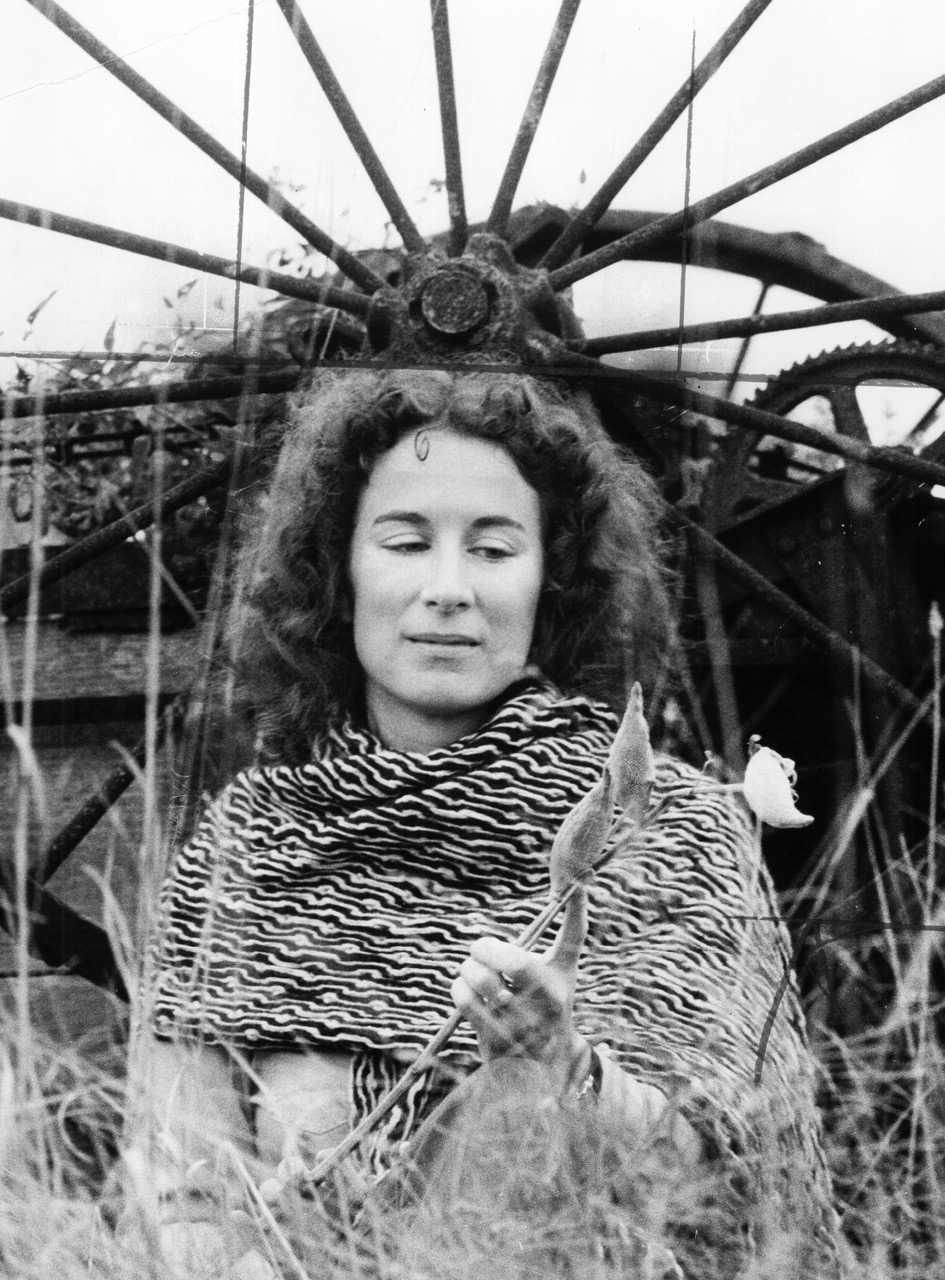
Sci-fi pioneer Margaret Atwood, 1979. By Ron Bull.

Since 2020, viruses have been handled with slightly more caution than in these early iterations of pandemic fiction, with analogies and feelings taking centre stage.
Jessica White
5. Borders
In a genre very often associated with space and time travel, a critical perspective on the borders between our real-life nations has been present for decades. In an age of tightening restrictions, war, and anti-immigrant rhetoric, however, this feature in science fiction has become even sharper.
Francis Spufford’s reality-bending Nonesuch (2026) looks back at World War II and highlights the British strain of fascism that existed then, highlighting the ways it manifests today. Big Time by Jordan Prosser (2025) imagines eastern Australia as a closed-off authoritarian state in which a unique drug allows its citizens to see the near future—but questions arise about whether this is another control tactic.
As space becomes the next colonisation project for the ultra-rich, representations of movement between planets have taken on new significance. Matt Dinniman’s Operation Bounce House (2026) critically looks at drone warfare when the residents of a colonised planet become victim to Earth-dwelling gamers who can pay to design and pilot war machines to evict its communities. Adrian Tchaikovsky’s Children of Time series, comprising Children of Time (2015), Children of Ruin (2019), Children of Memory (2022), and Children of Strife (2026), is a sprawling space opera that constantly revisits themes of alienness and regeneration on both colonised and hostile planets. Becky Chambers’s Wayfarers series, made up of The Long Way to a Small, Angry Planet (2014), A Closed and Common Orbit (2016), Record of a Spaceborn Few (2018), and The Galaxy, and Ground Within (2021), is a Firefly-esque space travel story focusing on the emotional bonds between species—human, artificial, and alien—as they travel together between planets.