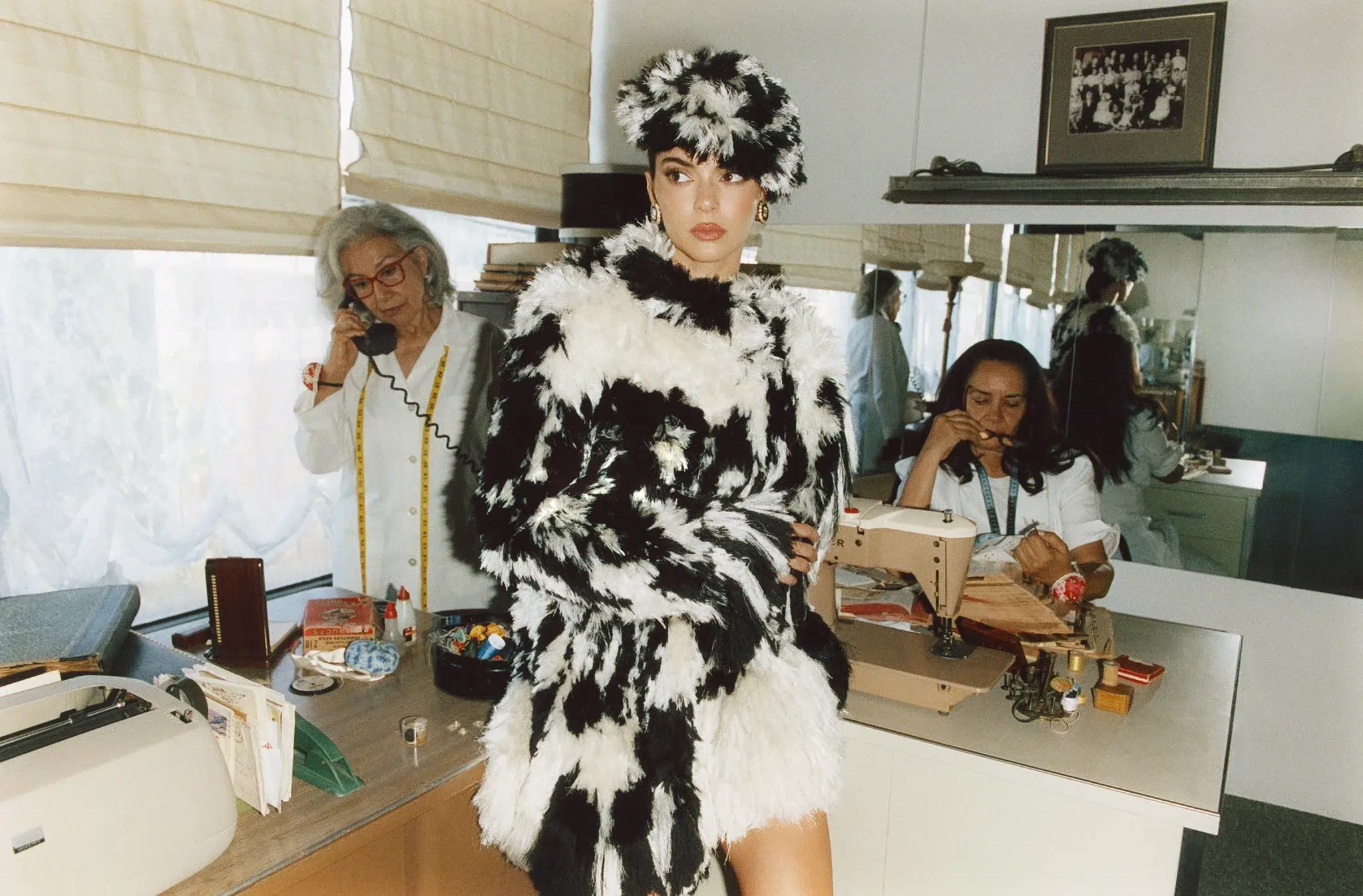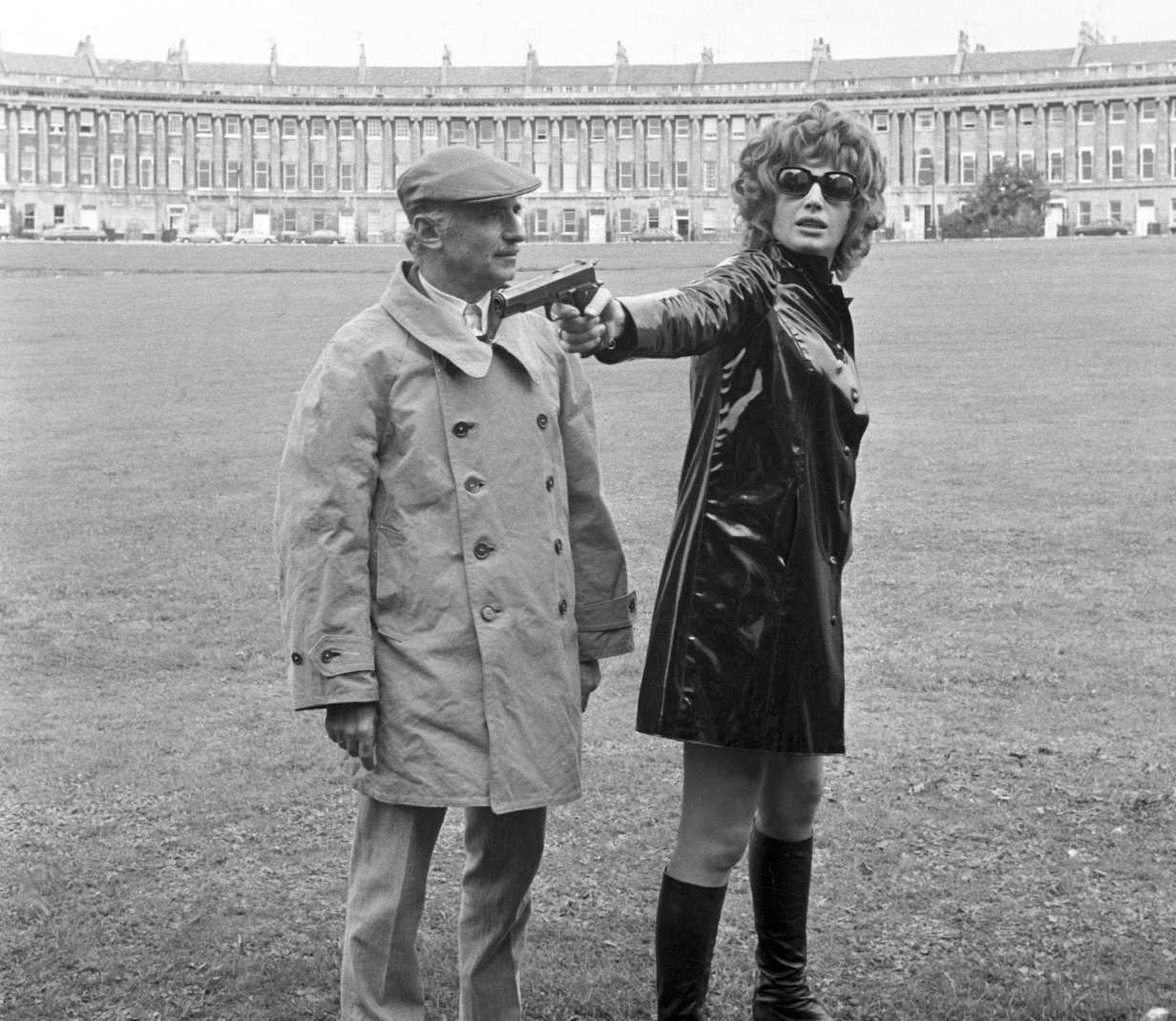



Drawing on emo masters such as The Cure and Courtney Love, Olivia Rodridgo positions herself as a musician who doesn’t invoke allusions flippantly. Following a personal encounter with Funkadelic’s LSD-laced Maggot Brain—referenced in Rodrigo’s latest album you seem pretty sad for a girl in love—critic Sarah Fletcher wonders if there is something a little too emotionally legible and polished about Rodrigo’s lyricism and babydoll posturing.
The first time I heard Maggot Brain by Funkadelic, I was lying on the grass in James’s garden in Finsbury Park. It was a rare sun-drenched London day, and after a few beers, conversation slowed in that nice familiar way where we could be quiet without explanation. We let the rare rays anoint us, and allowed ourselves to feel like empresses with our cigarettes and red-cup-warm gin and tonics, doing nothing as the weather tended to us.
The song came on through Sam’s tinny iPhone speaker. A voice intoned: “I have tasted the maggots in the mind of the universe, and was not offended”. I knew immediately it was a voice I wanted to follow. It was dreamlike rather than dreamy: the latter a word used for a teen heartthrob and former demanding a total commitment to its weird and overwhelming logic. “Maggot Brain” is essentially an 11 minute long guitar solo. In the garden, I closed my eyes and felt the trembling hands behind the vibrato. Tremolo after tremolo, each one more mournful than the last. I imagined the heart that was guiding those hands and I said to the air: “This might be my favourite song.” So James put it on again. The guitar thrummed through us until dark, on repeat. Eventually, one of us had to break the spell. The moon had cast its light blue blanket and began to release its spores of stars. “I guess we should go inside now,” Sam said. “Yeah.” No one dared mention what had happened; it was not significant enough to mention, and mentioning it would almost sully what passed.
I was almost superstitious about listening to the song again. Was it heat stroke, or the third pint hitting funny? But I played it on my commute to work. I played it at the gym. And every time, it continued to show that it was magic. Every time there was a new echo that snagged my ear, a new hiccup in the riff that seems intentional to almost Shakespearean levels. I learnt that an LSD-laced George Clinton told the guitarist Eddie Hazel, only twenty at the time, to play as if he had just learnt his mother had died. How would he feel, and how would he make sense of his life after, and how would he rise again? The first take was the final take.
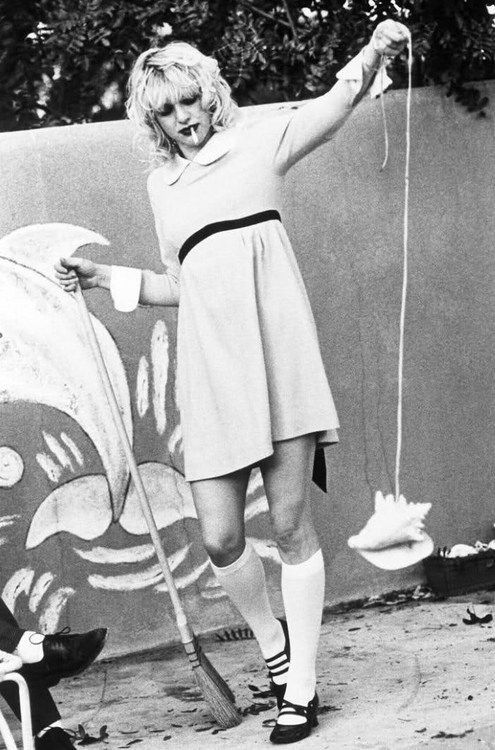
Courtney Love pictured wearing Bella Freud’s SS 1994 collection.
When Olivia Rodrigo dropped the tracklist of her recently released album, ‘You Seem Pretty Sad for a Girl So In Love’, the title Maggots for Brains immediately excited me. Because Olivia Rodrigo has positioned herself as someone who doesn’t invoke these allusions flippantly. Rodrigo has situated herself firmly as a student of rock history. And her credentials are rock solid, so to speak. She covered ‘The Book of Love’ by the Magnetic Fields; she collaborated with The Cure’s Robert Smith (who appears on the new album) and Talking Heads’ David Byrne. Byrne, apparently, credited his biggest hit, ‘Burning Down the House’, as being inspired by going to a Funkadelic concert. Of course a listener might assume it was an allusion; this assumption seems like much of the point of her recent marketing.
My expectations were not “perfect North London July day”, but I was disappointed by Rodrigo’s Maggots for Brains. The song opens with a New Order-ish bassline, before her honey-smooth and multi-layered voice opines the post-break-up malaise of being unable to write, and going to a party out of obligation. The malaise in which you feel you’re a “sad shell of a woman” who has “maggots for brains”. Perhaps the song was meant only as a wink at Funkadelic, or the reference is entirely accidental, but Rodrigo is someone who has encouraged her listeners to not believe in accidents.
The chasm between this bait and then its switch felt more demonstrative of my issues with Rodrigo than another arguable “bait and switch” that happened earlier a few weeks ago. In May, Rodrigo performed her new single ‘Drop Dead’ in a floral pastel babydoll dress, and lifted her dress to reveal her pink, ruffled bloomers beneath it. The outfit itself wouldn’t be seen as out of place on Sabrina Carpenter, who also channels high femme aesthetics through a more vaudeville, Betty Boop, or even drag queen sensibility. But for Rodrigo, it was the babydoll dress that birthed a thousand thinkpieces. Was it coquette? Was it a Lolita reference? Something else? Suddenly, the commentariat found the word for it: kinderwhore. It’s a strange experience to see the rest of the world learn a word that you’ve used as a style guide for fifteen years. “Kinderwhore” is a sarcastic styling associated with Courtney Love in the band Hole and Kat Bjelland in Babes in Toyland. It’s an early 1990s sensibility that emphasised infantile femininity signifiers, like Mary Janes, knee-high socks, and Peter Pan collar dresses, alongside signs of ruin: smeared lipstick, badly bleached hair, and bruises on the inner arm. In a 1992 Vanity Fair interview, Love said: “It’s a good look. It’s sexy, but you can sit down and say, ‘I read Camille Paglia.’”.
As the fire settled into embers, Olivia Rodrigo spoke out to clarify: “I just remember being younger and having pictures of Courtney Love and Kat Bjelland from all these riot grrrl punk bands in their babydoll dresses, just owning it.” So yes: she was referencing kinderwhore, more than wanting to dress like a sexy child. But something felt a bit lost in translation. Kinderwhore is intentionally uncomfortable because of the juxtaposition of girlishness with ugliness. Meanwhile, Rodrigo wore her babydoll dress with nay a stray hair nor eyelash out of place. Despite that, the tendency is to trust her.

Olivia Rodrigo album artwork for you seem pretty sad for a girl in love (2026)
But the influence isn’t there in the music, which is where the real justification lies. Rodrigo played anger with her pop-punk, Lavigne-esque hit ‘good 4 u’ in her 2021 debut SOUR. ‘Brutal’ also sung-chant frustrated teendom over crunchy guitars, and ‘All American Bitch’ from her 2023 sophomore album GUTS, ended with her first recorded attempt at a scream, which comes wonderfully and almost as involuntarily as a sneeze. But her new album promises an anger that never quite makes itself clear. And even more so, engaging deeply with these 1990s girl bands reveals that they aren’t solely angry. Or at least, not angry in the Rodrigo sense, which is aghast with the betrayal of being left. On ‘good 4 u’ she spits “you will never have to hurt the way you know that I do”, echoing Hole’s ‘Doll Parts’: “someday you will ache like I ache”. But Hole’s ‘Doll Parts’ is not channeling a break-up anger ala Olivia. Hole’s anger in this song is abject and self-debasing. The singer dismantles her body into arms, eyes, legs, and then taxidermies it up again into a doll that wants to be loved but is not able to be. Their anger is not the same as Rodrigo’s anger. Their anger is abject and self-debasing, or almost, an unconvincing masquerade for deeper emotions: vulnerability, revulsion, and disgust.
Hole is despairing and self-loathing; the self-loathing just is filtered by blaring guitar and demented wailing. Rodrigo borrows the font of her new album cover (the scrawl of a bratty 12 year old who has been told ‘he loves you not’ from a flower) from Hole’s debut Pretty on the Inside (1991). The Hole album is dark: Love screams about botched abortions, rape, and sex that might as well be rape in how bad it feels. It’s funeral music more than protest songs. Love’s screams, vulnerable and disquiet, have more in common with Funkadelic’s Maggot Brain than Rodrigo’s angst-ridden break-up anthems. Love uses her voice like a guitar to channel immense grief. These two feel they are in conversation with each other; they are part of a long lineage documenting the human impulse to prod at its own bruise. When Rodrigo invokes both, this heavy inheritance shows no resemblance in the music. They seem there to provide decorative indie cred, instead of illuminating her own songs.
Allusions can turn into illusions relatively easily. Rodrigo mentions the influence of The Cure on her work, and Pitchfork, desperate to be “down with the kids”, describes the album as “new romantic-era rock, post-punk, college rock, and just a touch of mall pop, somehow running the gamut from Gary Numan to R.E.M. without sounding like pastiche at any point.” The Guardian also noticed that she’d shed some of her pop-punk sensibilities, “replacing it with a take on 80s new wave in which you can variously detect hints of the B-52s, New Order and Devo.”
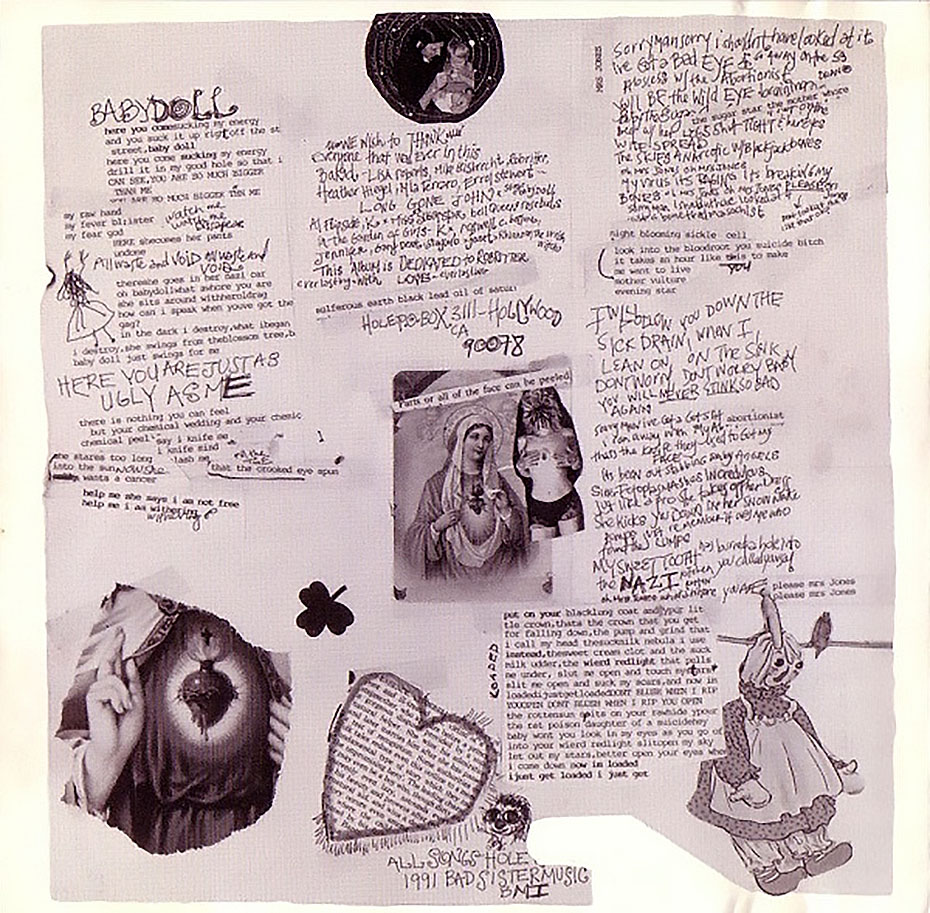
Album artwork for Hole’s Pretty on the Inside (1991)
We may trust Rodrigo to describe her songs, but surely we should trust the Critics more. Artists are famously lousy at describing their output. Yet I’ve noticed, increasingly, that critics might be even worse. Gone are the days in which the role of critic was to describe the music to a potential listener, and help her decide if she may or may not want to spend money on a record, a cassette tape, or CD. Streaming has meant everyone has access to the same songs, and music reviewers exist to interpret and contextualise music more so than describe it.
This technological shift coincided with the rise of poptimism, a mid-noughties outlook on music that reached its apex just before Obama left office. Poptimism was an ethos to take pop music as seriously as rock music. Poptimism sought to correct the hipster tendency to overvalue authenticity and obscurity; the hipster insistence that a voice couldn’t sing the blues unless it was a voodoo tuna reanimated from the mud of the Mississippi delta.
These two circumstances have led to, ultimately, false advertising. Rodrigo might have cited Hole as an influence, and maybe nodded towards Funkadelic in her titling. But critics upped her ante in emphasising Rodrigo’s references.
Sometimes music reviews feel like going to a wine tasting with an expert sommelier, where you’re not sure if they’re hoaxes, paranoid, geniuses or what. But you go along with it, and implicitly trust that you’ll enjoy the wine more with their guidance. So listening to the album, with all of this in mind, I felt disappointed. Listening to the reviewers had me disappointed, rather than simply confused, as I was earlier at Rodrigo’s insistences. Make no mistake: this is a pop album through and through, despite it seeming that some critics would have you believe she cut her teeth at legendary New York club CBGB. In terms of influence, Olivia Rodrigo’s songwriting sits with the blueprint of Taylor Swift. Taylor Swift’s back catalogue gives a listener a masterclass in verse-chorus-verse. It might not be very cool, but it is clearly a successful approach. It’s this approach I hear most in Rodrigo’s music.

“Rodrigo’s new album is montage music, written in a montage fashion, for our lives that are conducted increasingly as if they were montage themselves.”
Sarah Fletcher
In 2021, she called herself a “fangirl for life”, even after Swift’s litigators forced her to concede dual-writing credit on her song ‘Deja Vu’, for interpolating Swift’s ‘Cruel Summer’. But yes: Rodrigo still feels like a Swiftie who has gone to develop excellent taste. The structural, songwriting elements of her influences exist, but not enough to justify this reception. Many songs on ‘you seem pretty sad for a girl so in love’ sound like Taylor Swift songs processed through a 1980s karaoke machine.
And, yes, it takes two to tango. The artist and reviewer alike, for their own independent fortunes, might misrepresent an album, without realising they are particularly misrepresenting it. Olivia Rodrigo is incredibly earnest: this is something about her I admire. She seems committed to mastering songcraft, and has poured over the canon and tried to learn its tricks. She respects her elders. Hell, she’s even invited them on stage. But it still feels like they’re a kaleidoscope of references that lead to nowhere, or give little depth to the music itself. And I like the references. Maggots for Brains sounds cool; babydoll dresses look cool. Her earnestness might be precisely the issue. She wants to be taken seriously: “I want to be a songwriter. I don’t want to be the biggest pop star that ever lived.”. One gets the sense that she genuinely does love all the music she references, and perhaps takes it more seriously than the musicians who wrote it did. After all, Courtney Love was open about kinderwhore being a provocation into male audiences: sexualise me, I dare you, I’m only wearing a schoolgirl outfit and ripped tights and toddler hair accessories. Olivia Rodrigo, meanwhile, in response to the babydoll debacle, noticed “I think it shows how we really normalize pedophilia in our culture”, almost entirely missing the punchline of the original aesthetic. These ultimately shallow references are done without the postmodernist wink that justified such glue-on-the-edges collage. There was once a nihilism that there was ‘nothing new under the sun’; that artists are doomed to ventriloquise their influences while overexplaining the scrapbook. This new generation is made up of those who took the postmodern wink as a flirtatious invitation instead of an inside joke.
you seem pretty sad for a girl so in love is earnest music by a woman who has never lived through a proper subculture. She is constructing a museum for a house that has already been burnt down. She wasn’t there, so we cannot fault her for not noticing the scuffs in certain corners, nor being unable to recreate the musty carpet smell. Her music feels like a museum for these remnants, rather than a breathing part of it. I like the album. I can see myself sitting in a park, perhaps on a July afternoon like that of James’s barbeque, where the sun turns strangers into pharaohs, and getting excited when ‘Drop Dead’ comes on, declaring it a banger, in the way one does when they’ve only just remembered a song is, indeed, a banger. But ultimately, Rodrigo’s new album is montage music, written in a montage fashion, for our lives that are conducted increasingly as if they were montage themselves.