

Thirty years later, Nora Ephron’s legendary 1996 Wellesley College commencement speech still stands up, says writer Emma Firth.
There’s a line in Lena Dunham’s new memoir Famesick that cracks me up. From her mentor actually, the late and impossibly great Nora Ephron. Over lunch, the Girls creator starts to spiral into a state of panic over a slew of vitriolic emails from a male producer. “Honey,” Ephron says, “if Scott was a straight man, we’d all have fucked him and then wondered why we’d done it.” Over the years, in the private theatre of my mind, I’ve had similar conversations with the queen of romantic comedy and the only agony aunt I’ve ever known.
I’m not alone of course. During Ephron’s extensive career that saw her take on the roles of journalist, playwright, filmmaker, essayist and novelist, she served as an agony aunt to generations of young women. She still does. One of her greatest gifts was her ability to give advice, full of her distinctive wit, warmth and wisdom. And yet perhaps one of her most quoted lines of hers doesn’t come from one of her movies or books but from her now famous 1996 speech commencement speech at her own alma mater, Wellesley College (a private women’s liberal arts college in Massachusetts). Above all, whatever you do, be the heroine of your life, not the victim.
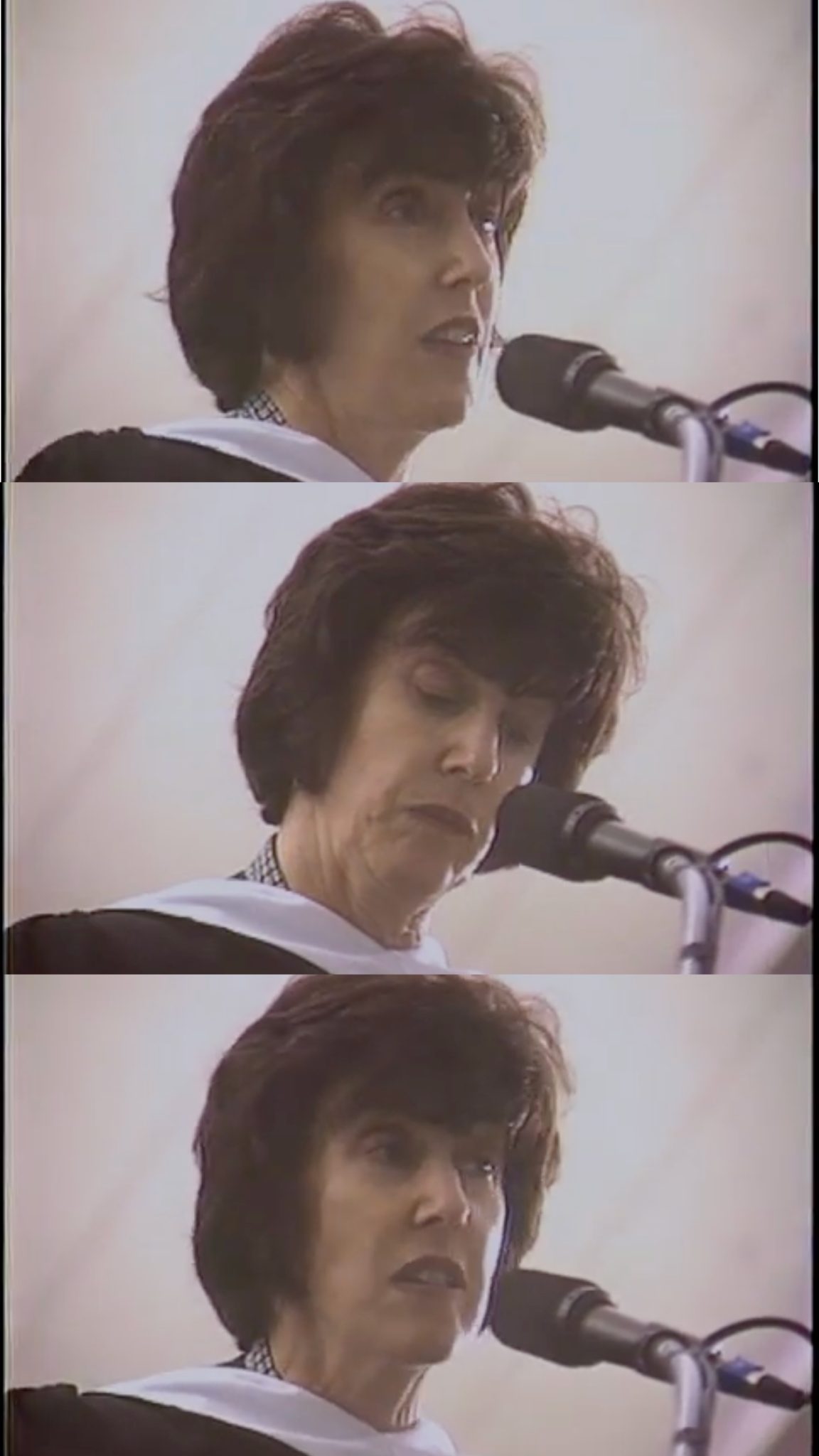
Nora Ephron making the 1996 commencement speech at Wellesley College
This was her love letter for young women everywhere. A new roadmap to a version of what their life, work, and future relationships could be. I wonder though, revisiting it thirty years later—now I’ve reached the same age as the speech itself—what still feels true, relatable, dated even, for women coming of age in 2026? What if Ephron were alive today, say, what advice would she be giving to this year’s graduates? What new pleasures, pains and societal pressures have seeped through the cracks over the years?
Ephron herself was all too aware of how time can change the way women move through the world. She opens her speech not-so-fondly reflecting on her arrival at Wellesley in the fall of 1958. It was so long ago, she says, that “if you needed an abortion you drove to a gas station in Union, New Jersey, with $500 in cash in an envelope and you were taken, blindfolded, to a motel room and operated on without an aesthetic.” On a “lighter side,” she mentions that there were speech therapy classes, “posture pictures” (a heinous and humiliating-in-retrospect practice, common at many elite colleges in the US between the 1920s and mid-1960s, where freshman students were forced to strip nude and have their photo taken in order to assess, and be graded, on their posture) and a course called “Fundamentals” (where she was taught how to get in and out of the back seat of the car). “We were girls then, by the way,” she says.
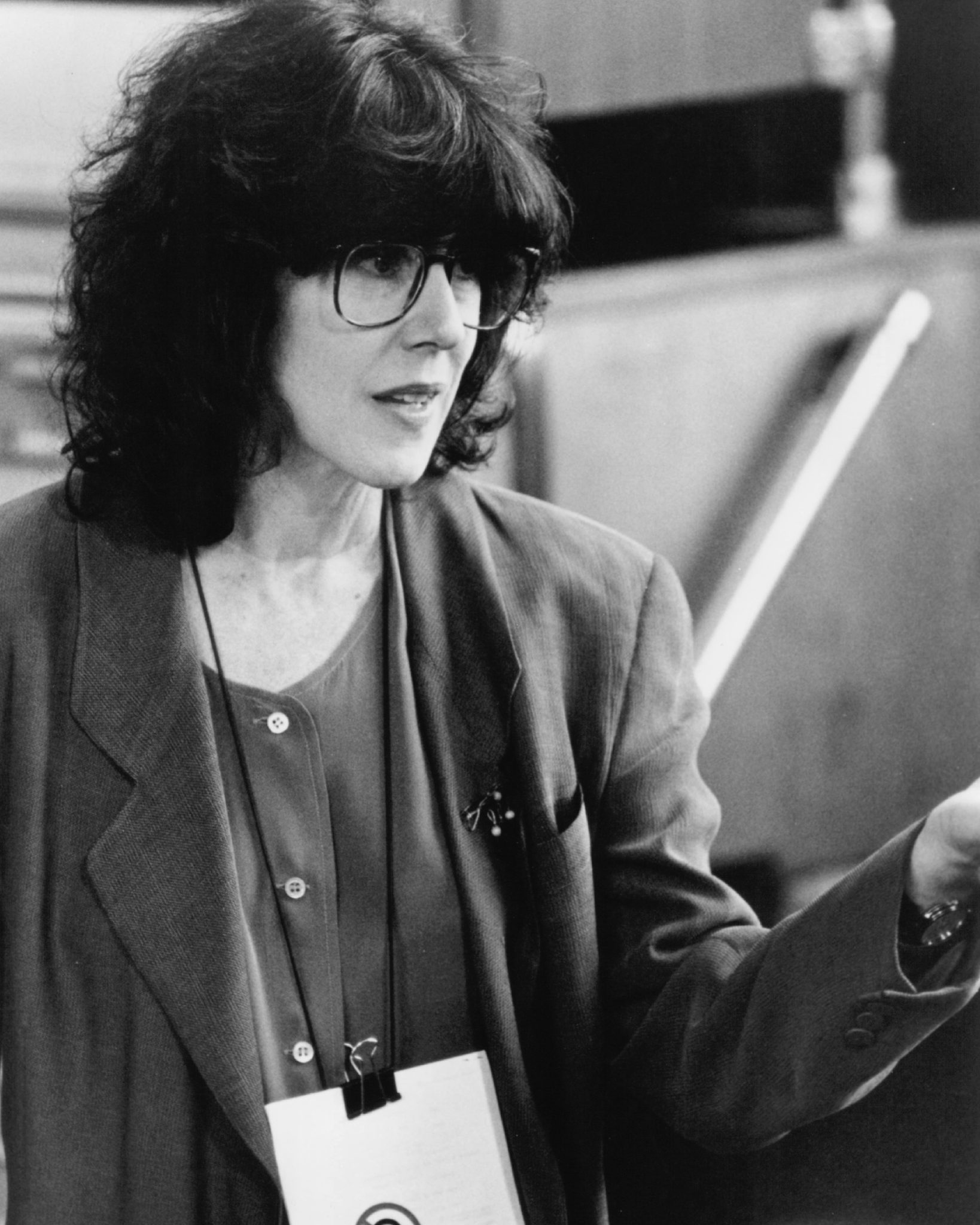
Nora Ephron, photographed in 1999
You get a sense that this title, girls, makes her recoil in hindsight, that it was something she was desperate to shake off. And yet here we are today, knee-deep in a girl-ification renaissance. Girl dinners! Girl math! Hot girl summers! Lazy girl jobs! Lit girls! Though rather than the term being bestowed upon us, or weaponised against us, it is being celebrated, reclaimed and moulded to suit one’s own identity agenda. Whether it’s a subtle fuck you to adulting or a nod to the fact that we are forever in a state of girlhood-like transition, trying to find our place in the world one TikTok trend at a time, there’s something kind of fun about embracing, rather than trying to deny or shame, our inner girldom.
She issues warnings, too. Both tender and tough in equal measure. About the state of Hollywood: “there are many more women directors, but it’s just as hard to make a movie about a woman as it ever was”. A reminder of just how far we still have not come, despite the women’s liberation movement: “Don’t let the number of women in the work force trick you—there are still lots of magazines devoted almost exclusively to making perfect casseroles.” Actually, the latter is still very much true, except now they come with a new moniker, #tradwives, and they create viral content for their millions of followers to consume on the internet.
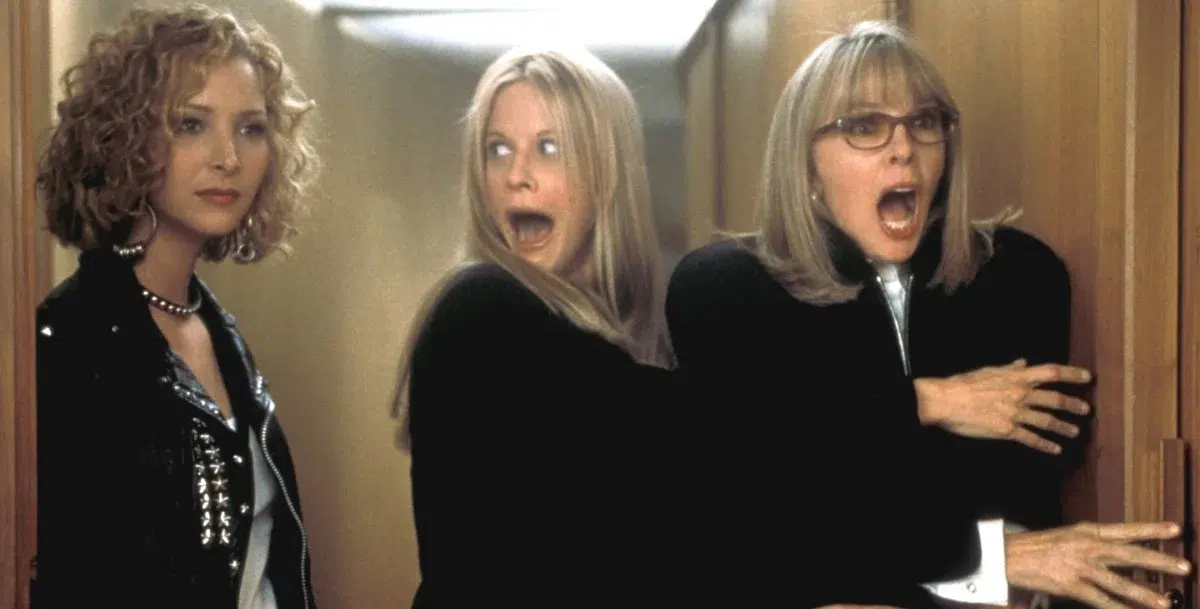
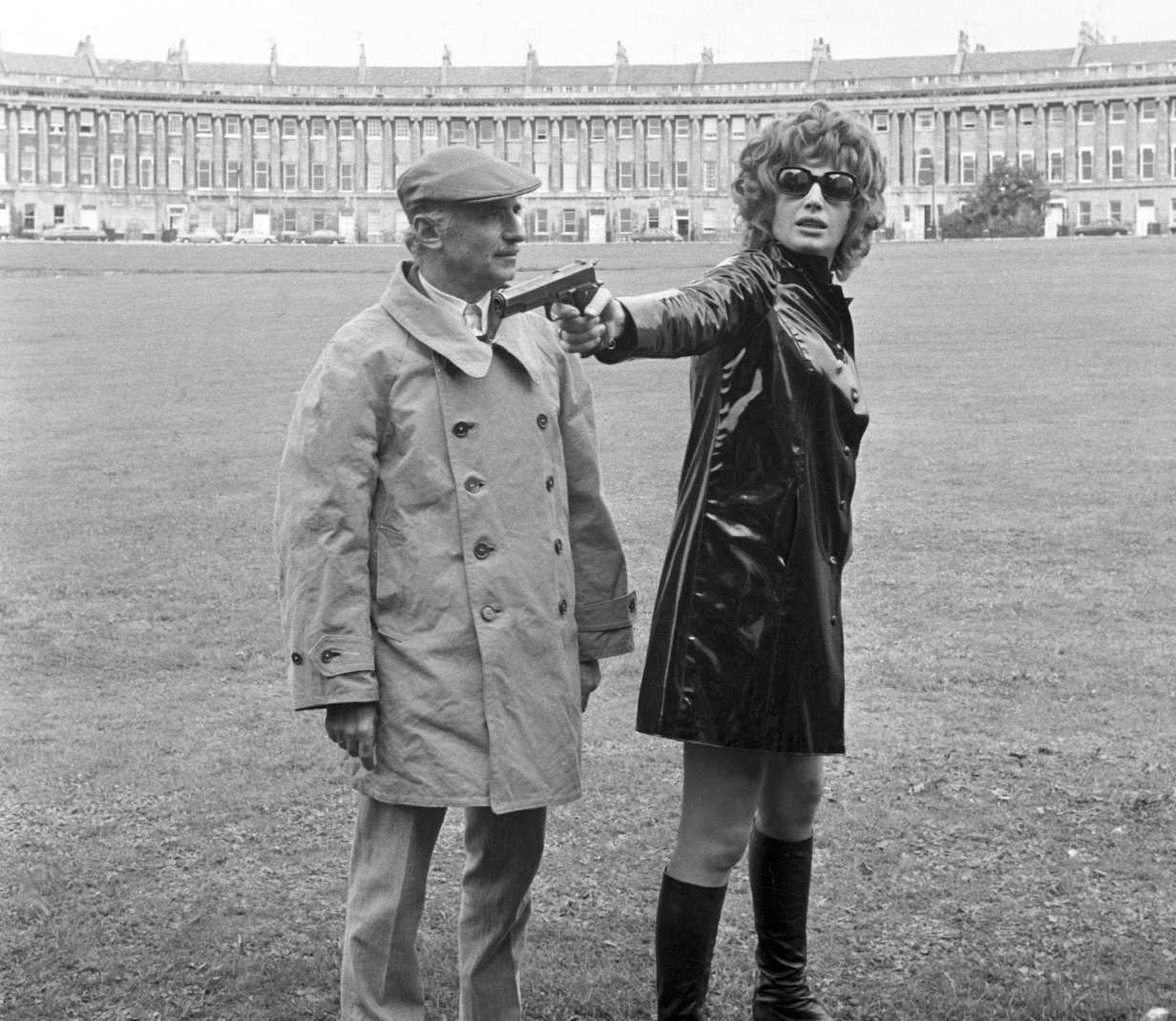
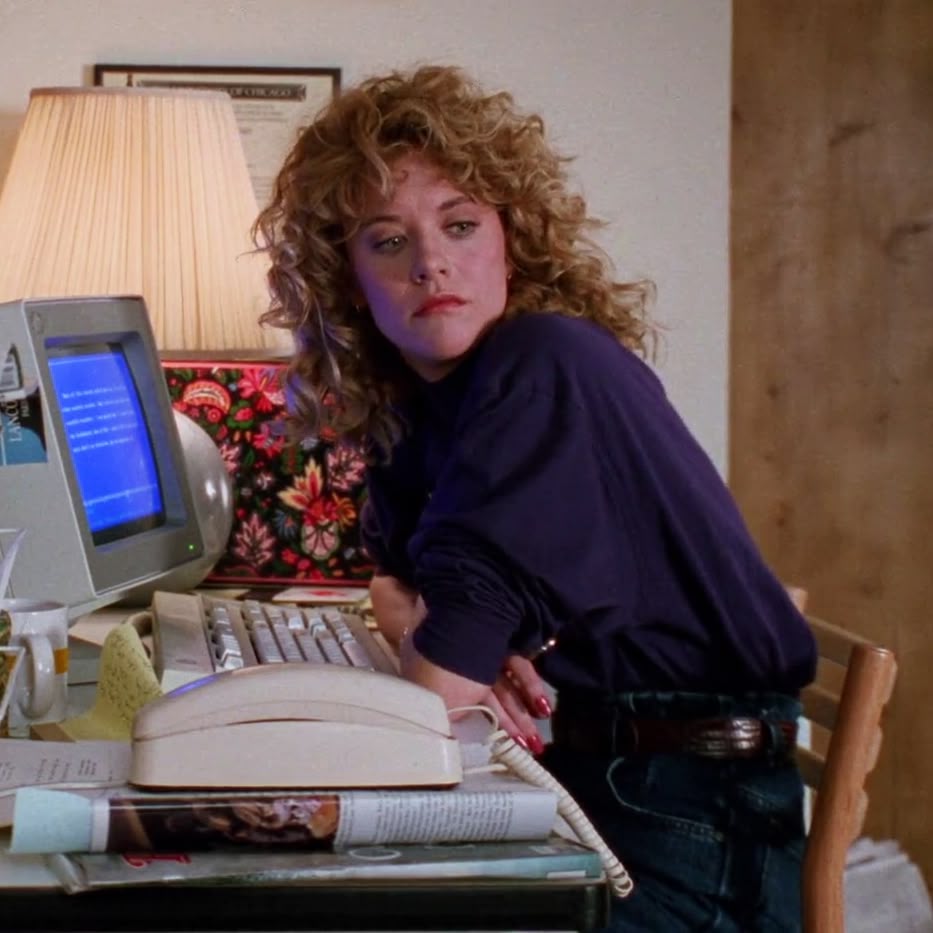
Diane Keaton’s Hanging Up (2000). Screenplay by Nora and Delia Ephron.
“It’s 1996,” Ephron says, “and you are graduating from Wellesley in the Year of the Wonderbra.” What world are female graduates walking into this summer? Well, many things at once. Some progressive, some poisonous. It’s 2026, and you are graduating in the Year of AI, dating app hellscapes, singlehood, economic instability, romantasy, OnlyFans, Trump 2.0, ‘Maxxing’, the manosphere, political divide, the female gaze, the fire horse, social media anxiety and on and on it goes. When (slash if) my daughter (currently doing somersaults in my belly) graduates college, the year will be almost 2050 and what will life look like for her and her cohort then? My guess is probably like it always does with the passing of years: better and worse in the same breath.
And yet, there are lessons we’ve inherited from Ephron that stand the test of time. Ones that are always worth striving for, holding onto and one of the reasons I return again and again to this speech. Nearing its end, she lands on a note that is the pulse of all great love stories: a sense of hope. Not in a schmaltzy, neatly wrapped up, happily-ever-after way, but the kind of way that gives you permission to rebel against other people’s expectations. Permission to take ownership, to try life out for yourself. Not for your partner, your teacher, your mother, your sister, your friends, for you. I mean really get stuck into it. And if you swap lanes at any point, so what? That’s entirely good and right. You give your heart to someone less deserving of it? Move on, thank you, next. You’ll laugh about it one day.

“In so many ways Nora’s legacy in film and literary form has offered me its own kind of blueprint of those “best years”. Of an adult life well lived and loved. A portrait of womanhood full of mess, magic, and unexpected detours.”
Emma Firth
“What are you going to do? Everything, is my guess,” Ephron says. “It will be a little messy, but embrace the mess. It will be complicated, but rejoice in the complications. It will not be anything like what you think it will be like, but surprises are good for you. And don’t be frightened: you can always change your mind. I know: I’ve had four careers and three husbands.” Concluding, that “whatever you choose, however many roads you travel, I hope that you choose not to be a lady. I hope you will find some way to break the rules and make a little trouble out there. And I hope that you will choose to make some of that trouble on behalf of women. Thank you. Good luck. The first act of your life is over. Welcome to the best years of your lives.”
In so many ways Nora’s legacy in film and literary form has offered me its own kind of blueprint of those “best years”. Of an adult life well lived and loved. A portrait of womanhood full of mess, magic, and unexpected detours.
Because if there was a cinematic world I had ever wanted to live out, it was Ephron’s. Finding humour in even the ugliest of heartbreaks. New York City in the fall. New York City in the spring. Love at third sight. Zabar’s deli coffee. Cosy cable knits. Crying in the car alone with the radio on, crying into someone’s sweater, crying tears of joy. Dinner parties. Apple pie with ice-cream on the side. Perfectly aimless phone calls in bed with Casablanca playing in the background. Bookshops. Re-reading Pride and Prejudice. Romantic friendship. Performing fake orgasms in public to prove a point. A walk in the park. Meeting the kind of person who rushes to your New Year’s Eve party simply and sentimentally because when you realise you want to spend the rest of your life with somebody, you want the rest of your life to start as soon as possible.