

From Sinatra to CAA, Academy-nominated Hollywood producer Bill Gerber recalls growing up backstage with movie star royalty—where agents ruled, dinner reservations mattered, and the family business meant putting stars on pedestals.
Growing up the son of an old-school talent agent was unconventional. By the time I was five, my father’s job at MCA had taken us from Las Vegas to New York and then Los Angeles. My mother took the Gerber kids back to New York soon after that, due to her lack of enthusiasm for Los Angeles, driving, and my father. Later, I moved back to Los Angeles to live with my dad after my mother had had enough of whatever mischief I was into. My brother and sister stayed behind, and I had a couple of years of being an only child. There wasn’t a lot of playing catch in the backyard, but there was a lot of Sinatra, Dino, The Beatles, Herb Alpert, and others. My father, who had more in common with Don Draper than Ozzie Nelson, didn’t know quite what to do with me and had no alternative but to take me to a lot of the shows and tapings he had to cover with his “acts”. The first weekend after I landed, we were at a Herb Alpert and The Tijuana Brass concert. I was a strict Beatles kid at that point but Herb was such a great musician and the band was so tight that I had a blast. I also got to see how much my father’s job had to do with “servicing” talent. What you need to know about agents is that they put their clients on a pedestal. When it comes to the agents of my dad’s generation, the client could do no wrong.
I remember once, when my dad was much later on in his career, hearing Sid Cesar yelling at him about something on the phone. When the call was over I offered to give my dad whatever he was making at that point, representing his small stable of performers, so he could take it easy and enjoy his life. Without hesitating for a second, he told me he “loved” it and had no intention of stopping.
One of the biggest advantages I had growing up in this environment was that I saw the “normal” side of very famous people’s lives. Whether it was seeing Milton Berle or Jan and Dean at my house or being introduced to Dean Martin, Don Adams, Adam West, and Sammy Davis Jr., I never felt scared or intimidated. These were just the people in my father’s life. I grew up alongside the kids of Dino, Marlon Brando, Debbie Reynolds and Eddie Fisher, Jerry Moss, and Mo Ostin. They were just people my dad dealt and hung out with. My dad and his buddies lived a life that was right out of Oceans 11 (1960) and, for better or worse, we all thought it was that way for everyone.
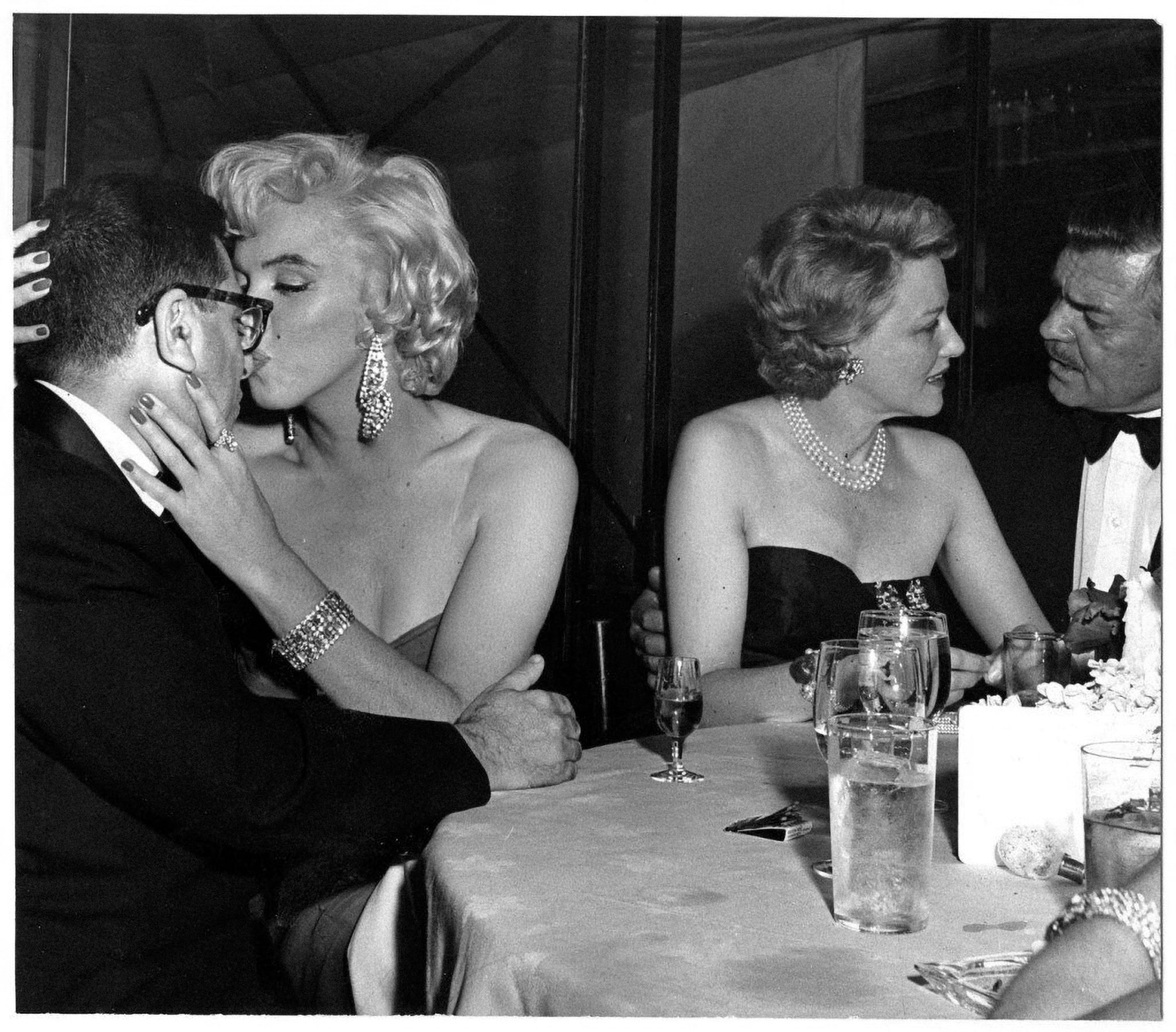
Marilyn Monroe and Sidney Skollsky at the wrap party for the Seven Year Itch (1954). By Sam Shaw.
My daycare was backstage at The Hollywood Palace, Shindig, and Hullabaloo; the mailrooms at General Amusement Corporation (GAC) and Creative Management Associates (CMA); and in the audience for Jimi Hendrix, The Mamas & The Papas, The Beatles, Richard Pryor, The Smothers Brothers, Bill Cosby, Crosby, Stills, Nash & Young, and more. The agents that worked at these companies—founded by legends such as David Begelman, Freddie Fields, Herb Siegel and Ted Ashley—handled almost every important name in town, in directing, acting, writing, and music. They were so gung-ho about their profession that most of them fielded license plates with their initials and those of their company. A new Cadillac or Lincoln was issued every two years. Very few German or British luxury vehicles existed here. People were paid conservatively but the expense accounts were lavish: dinners at Matteo’s, The Daisy, Chasen’s, The Candy Store, and Martoni’s were indulgent.
But business was business and every agent was working 24/7. Of course, all these companies were doing business based on the principles created by iconic businessmen such as Lew Wasserman, who created MCA, and Abe Lastfogel, who ran the William Morris Agency (WMA), which is where this story begins.
When A Rabbit’s Foot reached out to me, the “ask” was for an article about agents from California. Being British, the editors had no idea that no one is from California. Most important, agents, managers, executives, and artists are from somewhere else—predominately New York, and by New York, I mean Brooklyn and the Bronx. The most iconic agent was Lew Wasserman. Before the ascension of Wasserman and his partner Jules Stein, most agents resembled the vaudevillian period reps in Broadway Danny Rose (1984). Booking the Catskills was the penultimate job. Wasserman, who was commonly referred to as “the last of the legendary movie moguls” via Music Corporation of America (MCA), created the template for representation that has not changed since the 1940s. Over the years, MCA represented Bing Crosby, Bob Hope, Count Basie, Benny Goodman, George Burns, Mel Brooks, Alfred Hitchcock, Lucille Ball, and Warren Beatty. The concept of a star participating in the profit of a film or radio or television show began when Wasserman retained “points” for James Stewart’s appearance in Winchester ’73 (1950). Before then, everyone in the industry was a contract player and any bonus was discretionary. Wasserman was also the first to leverage his client base to get into production by buying Universal Pictures, where he ultimately had his greatest business successes after leaving the representation business. During his years commanding Universal’s film and television studios, he also created the Universal theme park, which revolutionised IP-driven attractions. In my opinion, however, Wasserman’s most important legacy was inciting an obligation to do good in the industry. With his political and philanthropic endeavours, he helped turn a strictly profit-driven business into one of the most generous institutions in the world.
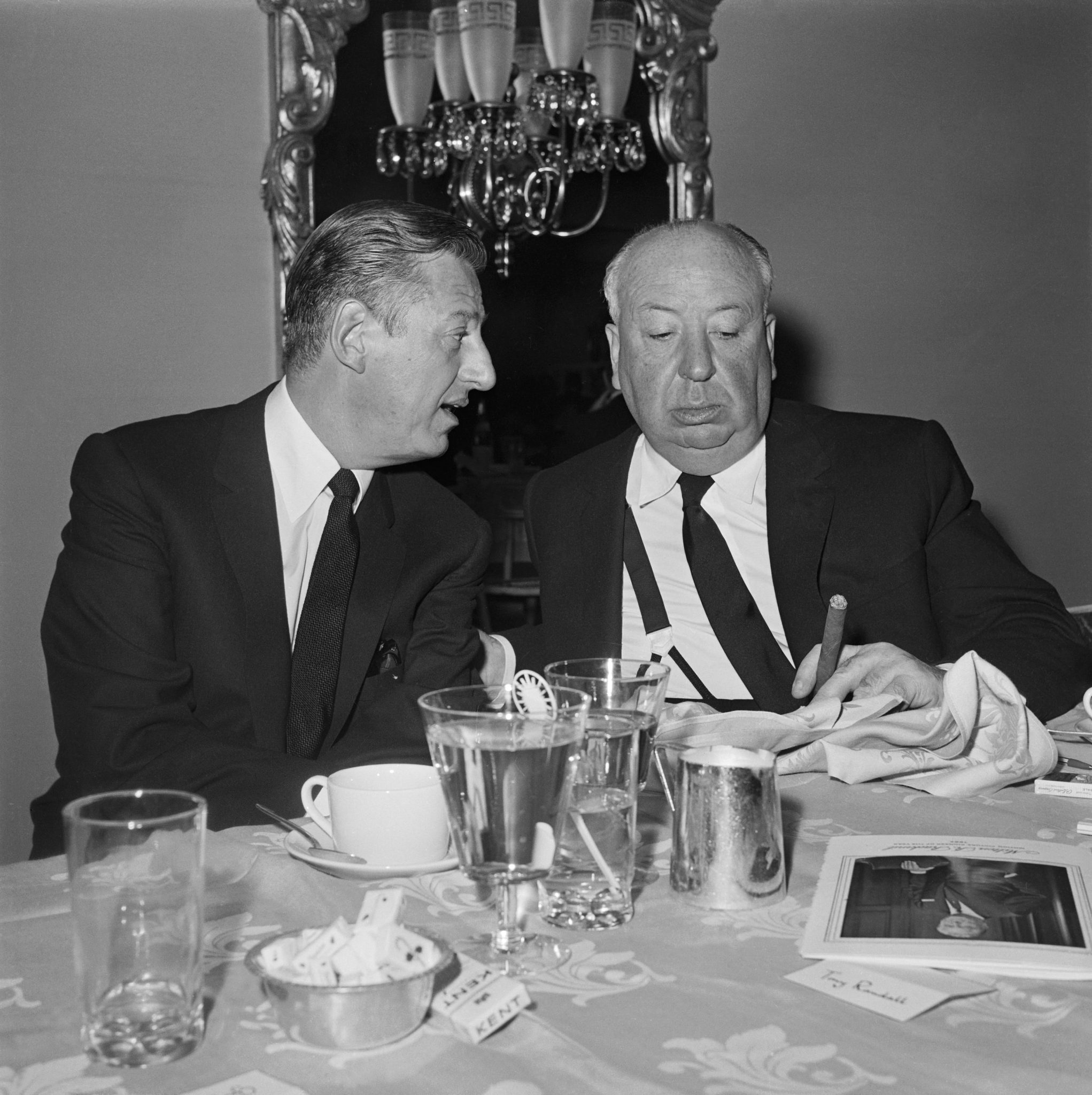
Lew Wasserman and Alfred Hitchcock, 1962.
Across town, WMA continued its steady growth. The older of the two empires, WMA was run bi-coastally by the hotel-dwelling Abe Lastfogel (Essex House in New York, and the Beverly Wilshire in Los Angeles), and was equally influential and fielded as impressive a list of agents and clients as any agency in history. Notable clients included Elvis Presley, James Dean, Marlon Brando, Clint Eastwood, Al Jolson, Fanny Brice, Henry Fonda, Ed Sullivan, Barbra Streisand, and Aretha Franklin. He also recognised the potential of young mailroom boy David Geffen, who went on to dominate show business as an agent, manager, record company owner, studio founder, and investor. The history of the WMA mailroom is legendary, with other graduates including Elliot Roberts, Barry Diller, Bernie Brillstein and Jeff Wald. WMA’s approach, thought to be more unassuming than the aggressive deal-making precision of MCA, was extremely effective in transitioning its expertise from Vaudeville to radio to film and television. It should also be noted that Lastfogel helped the United Service Organizations become an enormous success during WWII, bringing much-needed relief and joy to thousands of American servicemen and women. Quietly, WMA acquired incredibly valuable real estate and assets that contributed to the massive value of its privately held stock.
As the entertainment business grew and stars became everyone’s obsession, so too did certain agents—some through marrying clients, such as Jess Barker and Susan Hayward, and some just for their big personalities, which up to that point had been frowned upon… Los Angeles attracted some charismatic characters and the Greyhound bus arrived every day with the next herd of Sammy Glicks, beauty-contest winners, and everyone else who was dreaming hard. Agents such as Stan Kamen, Guy McElwaine, Ed Biondi, Sue Mengers, and Ed Limato became famous in their own right. Their client lists contained “go” picture names that everyone wanted to be in business with.
There were massive boutiques within the companies. Biondi at WMA, with Lena Horne, Dean Martin, Frank Sinatra, Tony Curtis, Ava Gardner, Nat King Cole, and Sammy Davis Jr. Mengers with Barbra Streisand, Ryan O’Neal, Faye Dunaway, Goldie Hawn, Michael Douglas, Candice Bergen, and Diane Keaton. Limato with Mel Gibson, Michelle Pfeiffer, Denzel Washington, and Tom Hanks. (Back before the ascension of the Vanity Fair, Charles Finch/Chanel, CAA, and WME Academy Award parties—and other than Swifty Lazaar’s parties—Limato’s was a must. Held at his home, these were special events attracting the best from film, music and television.) Freddie Fields with William Wyler, George Stevens, and, after forming CMA with David Begelman, Paul Newman, Steve McQueen, and Robert Redford. Paul Kohner with Sophia Loren, Billy Wilder, Liv Ullmann, William Wyler, Simone Signoret, and Christopher Isherwood (they absorbed the grand literary agency ICM). From an office building on Sunset Boulevard, designed by Paul R Williams, Kohner dealt with some of the most important filmmakers in history, and Lenny Hirshan with Clint Eastwood, Walter Matthau, and Elvis Presley.
In talking to some of my Hollywood veteran buddies, another agency, Chasin-Park-Citron, was mentioned as a quiet powerhouse in its own right, known for a unique consistency with clients who never left—among them were Neil Simon, Sidney Lumet, Paddy Chayefsky, William Goldman, George C. Scott, Anne Bancroft, and John Frankenheimer.
It was said that if you were dangerous, you hired Kamen or Limato, but if you were right, you hired Chasin-Park-Citron. But everything changed when Creative Artists Agency (CAA) was formed in 1975.
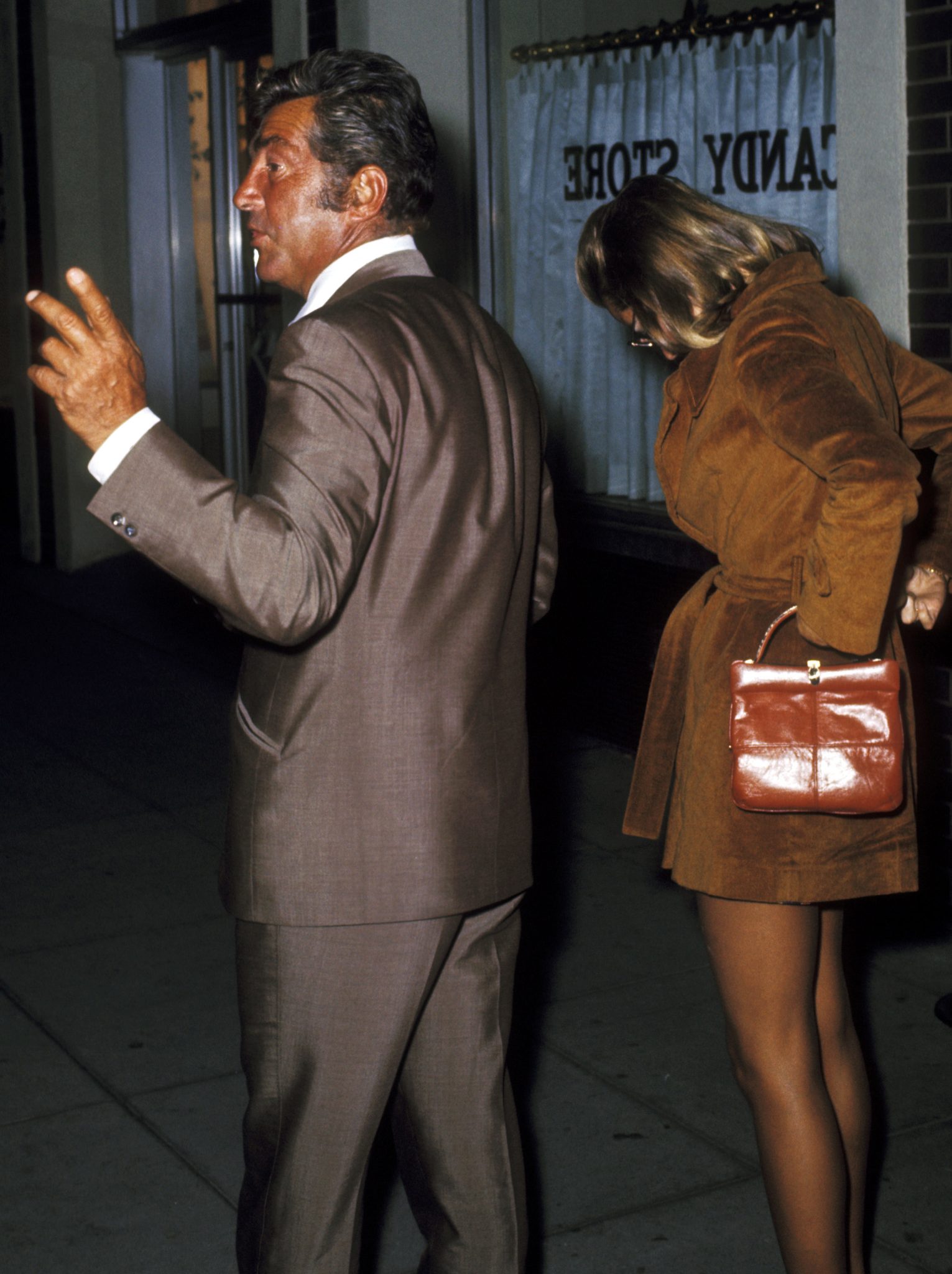
Dean Martin and Catherine Hawn leaving The Candy Store in Beverly Hills, 1970. By Ron Galella.
The incredibly devoted business practices of CAA revolutionised agenting. Never before had there been a team approach to taking care of clients. The sheer amount of information consumed by people at CAA was unprecedented. They knew what every studio, actor, writer, agency, and producer was doing, and what they were looking to do. Co-founder Ron Meyer would tell his clients that no matter where they were or what time it was, he would get on a plane instantly if they needed him—and he did. Everyone in the business had to up their game because of the expectations set by Meyer and his partners Mike Ovitz, William Haber, Rowland Perkins, and Michael Rosenfeld.
As a young movie executive at Warner Brothers, I was amazed at the way every person at CAA could represent any client, as there was a seamless flow of data coursing through the veins of the company. There had been “packaging” in the business previously but CAA would literally put a movie or show together and take it to market. It didn’t wait for a studio to buy a book or screenplay to get its clients involved. CAA agents took on the job themselves to be a creative force and put likeminded clients together to make many incredible projects. Ovitz, on behalf of the company, ventured into mergers and acquisitions, and put together deals that reshaped the business.
Another clever move on CAA’s part was being very generous with the new wave of restaurants that had taken over as the places to be spotted—Le Dome, Spago, Ma Maison, The Grill, The Ivy, and The Palm, where no CAA agent or client ever had to worry about getting a table.
Today CAA remains the gold standard and is led by the charismatic trio of Bryan Lourd, Richard Lovett, and Kevin Huvane, who somehow manage a vast enterprise composed of interests in film, film financing, television, streaming, sports, fashion, technology, and philanthropy with a joie de vivre that is irresistible.
Now that ethic has become the norm and other giants in the representation world are armed with every detail they would need. On the other side of the mean streets of Beverly Hills, the dynamic duo of Ari Emanuel and Patrick Whitesell have morphed into owners and built new empires on the value of the William Morris Endeavor (WME) agency in the tradition of Wasserman. In under 30 years, they created a masterpiece of an establishment that still ferociously guards its artists and businesses. By not only acquiring other representation firms such as IMG that dominated sports with original clients including Arnold Palmer, they also invested in film and television production and sports with a very unique vision. The next generation of leaders, Richard Weitz and Christian Muirhead, are taking WME to new heights. Gersh, too, remains a contender and is expanding rapidly into digital representation today.
United Talent Agency (UTA) has survived the private equity wars and emerged as a solid, growing business that represents some of the most interesting creators in a variety of areas. There are others such as Verve and IAG Group which are in the trenches, finding new talent and nurturing a new crop of talented reps, ready for what this brave new world of entertainment will bring.
Agents have defended artists for a century. They have innovated and been at the forefront of technology, figuring out ways to enrich their clients every step of the way. They have earned the suave stereotype—they used to be dressed in Armani; now it’s Prada, Cucinelli, and Zegna but this Hollywood tradition lives on despite streaming and AI.
Long live Broadway Danny Rose!