

We sat down with filmmaker and stunt choreographer Kenji Tanigaki to discuss The Furious, the electrifying new thriller that audiences and critics alike are calling the finest action film since The Raid. In the conversation below, Tanigaki speaks with features writer Luke Georgiades about crafting the film’s blistering action set pieces alongside fellow choreographer Kensuke Sonomura, the cinematic influences woven into every frame—from Jackie Chan to Charlie Chaplin—and the qualities that make a truly spectacular action film.
Talking to stunt co-ordinator and filmmaker Kenji Tanigaki, you’d never assume that this is the same man who has just made what critics and audiences alike are calling one of the great action movies of the decade.
Tanigaki is calling me from Hong Kong, on a quick lunch break from shooting the upcoming sequel to the 2024 action film Twilight of the Warriors: Walled In, in which he serves as the lead action choreographer for director Soi Cheang.
Twilight of the Warriors, set in the dense and lawless Kowloon Walled City, has already cemented itself as a modern action classic. The film he and I are here to discuss, however, is The Furious—a blood-soaked extravaganza of action cinema so creatively realised that it’s being hailed as a potential genre-defining work, much as Gareth Evans’ The Raid (2011) was before it.
Tanigaki almost cringes at the suggestion that his movie might be “revolutionising” anything. “I don’t know if it’s revolutionary or not,” he says, modestly. “We just did our best.”
There’s something refreshing about how the Osaka-born filmmaker talks about his work. Consistently placing his crew above himself, he quietly downplays his own clearly formidable talent in favour of praising others—whether that’s The Furious’ fight choreographer Kensuke Sonomura, his merry band of fist-flinging actors, or the filmmaking legends who came before him, from Jackie Chan and Bruce Lee to Sergio Leone and Charlie Chaplin, all of whom he seems eager to credit for shaping The Furious almost as much as he credits himself.
“I’m still learning,” he says. “I learnt that I must have patience. I must trust the people in every department. At the beginning of the shoot, I tried to lead the crew, and I felt the pressure that every answer had to be the right answer. But then I realised I don’t have to be the best guy in this team, because I have the best guys around me. I don’t have to have the right answer every time. I should ask them and then they will have the best answer for me, and then I will choose the best scenario at the moment. That was a very important realisation for me as a director.”
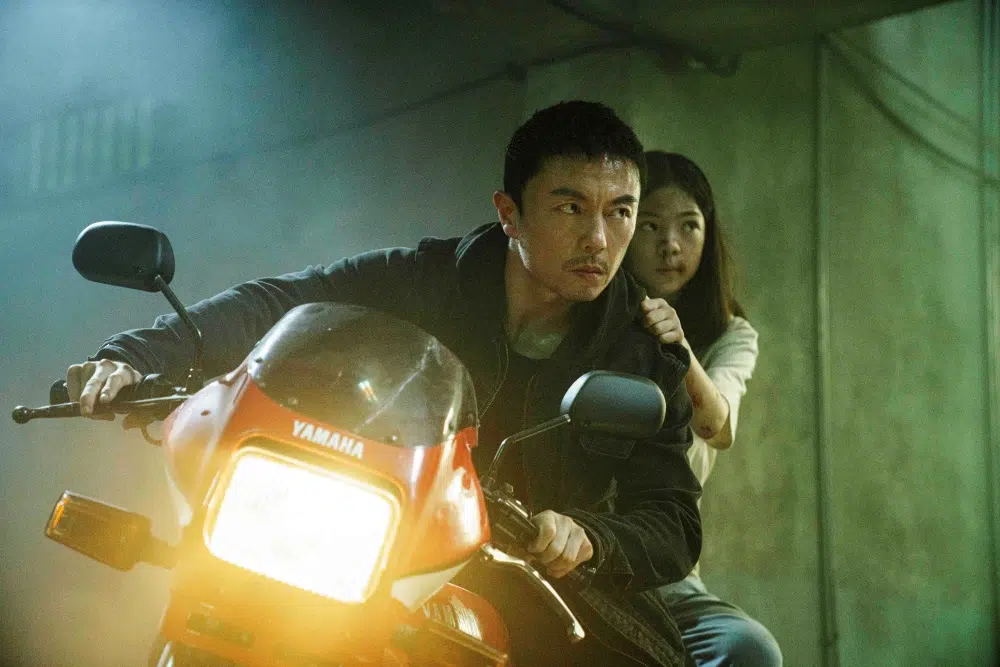
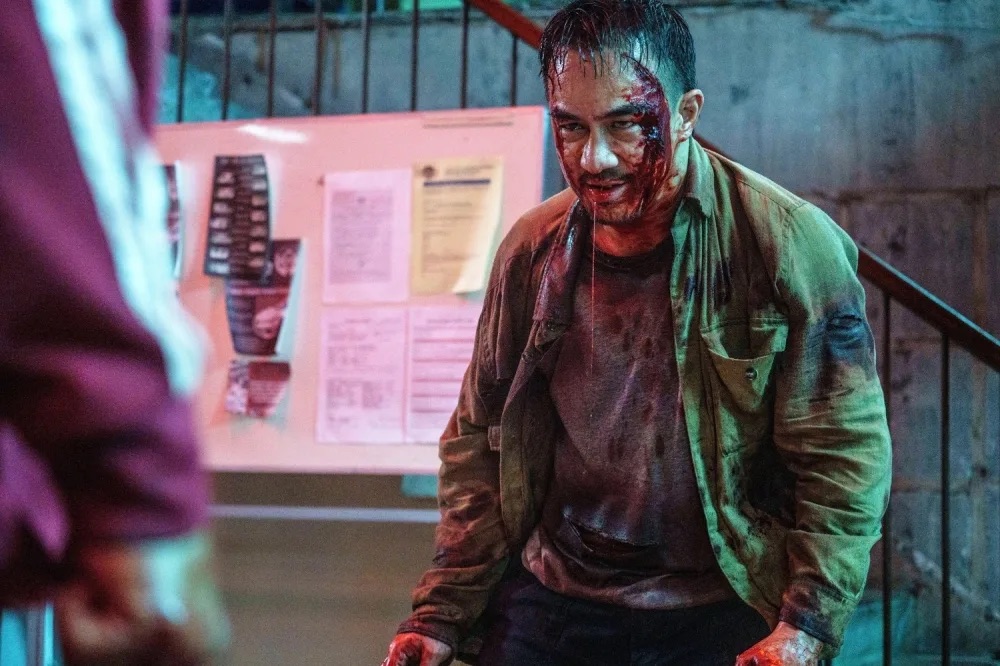
But try as he might to deflect the praise, the entire action-movie watching world seems determined to keep showering it upon him—and for good reason: The Furious truly is every bit the daring and inventive martial arts odyssey that its reputation suggests. Set in an anonymous country in Southeast Asia, the film follows mute father Wang Wei (Mo Tse) whose young daughter (Yang Enyou) is abducted by a ruthless human trafficking syndicate. When the authorities prove complicit, he embarks on a merciless crusade through the criminal underworld, joining forces with a journalist (Joe Taslim) searching for his own missing wife in a brutal, bone-crunching quest for justice.
In the conversation below, Tanigaki speaks with me about crafting the film’s blistering action set pieces alongside fellow choreographer Kensuke Sonomura, the cinematic influences woven into every frame, and the qualities that make The Furious a truly spectacular action film.
Luke Georgiades: What are you filming at the moment?
Kenji Tanigaki: I’m in Hong Kong right now shooting Twilight of the Warriors, the sequel. Twilight of the Warriors: Walled In was very successful in Southeast Asia and even America and Europe. The sequel is set in 1987, talking about what Kowloon’s Walled City was like back then. It’s like Gotham City in Hong Kong. A bunch of action.
LG: What’s the biggest directorial lesson that you learned from making The Furious?
KT: I’m still learning. I learnt that I must have patience. I must trust the people in every department. At the beginning of the shoot, I tried to lead the crew, and I felt the pressure that every answer had to be the right answer. But then I realised I don’t have to be the best guy in this team, because I have the best guys around me. I don’t have to have the right answer every time. I should ask them and then they will have the best answer for me, and then I will choose the best scenario at the moment. That was a very important realisation for me as a director.
LG: I read that with this movie, you made an effort to honour the classic Hong Kong action style. What defines that style for you?
KT: I don’t know what the Hong Kong classic means, but I just put my favourites in this movie. Bruce Lee, Jackie Chan…for example, the ice factory sequence comes straight from Bruce Lee’s The Big Boss. I pay a lot of homage, not only to the Hong Kong classics, but also to Japanese movies, Korean movies, Hollywood movies, and even some Spaghetti Westerns. In the film, I use a five-way split screen. This is, of course, an homage to Sergio Leone. I had the chance to direct this movie, so I put everything I love into it.
LG: You chose to make the lead here a silent character. What was the inspiration for that?
KT: In an action movie, all the protagonist needs is a lot of trouble. Trouble and trouble and more trouble. That’s the best possible situation for an action movie. Between the father and daughter, if the father cannot speak any chinese there is more misunderstanding. A good action movie can jump over the language barrier. I’m a big fan of silent filmmakers like Buster Keaton, Charlie Chaplin and Harvey Lloyd. If the leading actor is mute, we must rely on the visual. We must rely on more physicality. I believe that’s the better choice.
“I hope The Furious helps shape the destiny of future stuntmen.”
Kenji Tanigaki
LG: Do you feel that between you and choreographer Kensuke Sonomura, you’re revolutionising the martial arts genre with this movie?
KT: I don’t know if it’s revolutionary or not, but we just did our best. I hope this movie can have a longer life and many people will be influenced by it. In my childhood, I watched the Jackie Chan film Snake in The Eagle’s Shadow. Just one movie, but it changed my life. I shot one Japanese movie called Rurouni Kenshin and many stuntmen told me because they watched that movie in their childhood they wanted to become a stuntman. Some movies can change somebody’s life. So I hope The Furious also helps shape the destiny of future stuntmen.
LG: You are, of course, also an action choreographer. Why was it crucial to recruit Sonomura specifically to contribute to this project?
KT: My style is more entertainment. I’ve made a lot of live manga adaptations. So I’m very good at the manga approach to the screen. Sonomura is more grounded, with less wire, which was essential for this movie. Our styles are different but they complimented each other on this film.
“All a protagonist needs is a lot of trouble. Trouble, trouble and more trouble. That’s the best possible situation for any action movie.”
Kenji Tanigaki
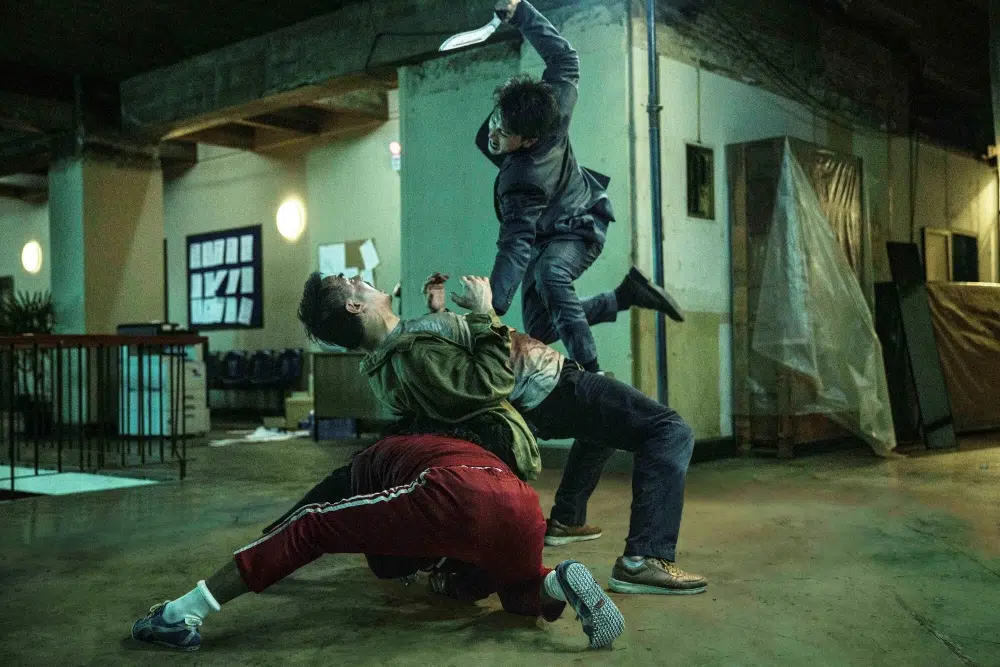
LG: How did you come up with the idea for the incredible five-person fight sequence in the movie?
KT: At the beginning it was just going to be two guys versus two guys. But I thought it wasn’t enough. It’s so normal now, I’ve watched this kind of sequence in 3,999 movies. I cannot say whom, but I really like one character who was supposed to die in the middle of the movie. I started to think, “oh, maybe if he comes back at the end, that’s the five guys. There are five guys from the three different parties!” At least to me, I have never watched this kind of sequence in an action movie. So I thought that would be nice because it then becomes “I beat you, but I beat you, too. And me and you can beat you.” [Laughs]. That’s a very interesting thing.
LG: What other action sequences in the movie are you particularly proud of pulling off in the movie?
KT: Every scene. Every scene. Because in every scene, our actors did their best. They really did a good job. So I love each of the scenes.
LG: What do you feel is key to pulling off a great action scene? Is it emotion? Is it the unpredictability?
KT: An action scene needs emotion, ability and luck. Why do people fight? It comes from the peak of emotion. For this movie, I needed more energy and emotion—the name of the movie is The Furious, after all. For example, during the ice factory sequence, the father thinks he has lost his daughter. He’s so angry and he throws a punch. This choreography is just a punch. It’s very simple, but it only looks good because he threw it with emotion. Sometimes without emotion, it’s just choreography and dancing. We can see many similar things on YouTube. Why should people go to the theatre to see this movie? Because they want to see the character’s emotion. It’s a motion picture, but we are shooting an emotion picture.