

Canadian film director Sophy Romvari graduated from a prolific run of short films with a buzzy first feature that explores the frailty of memory. Blue Heron is a crystalline retelling of her childhood, drawing on autobiographical experiences and mind-boggling metatextuality to craft a deeply personal debut that premiered to strong acclaim.
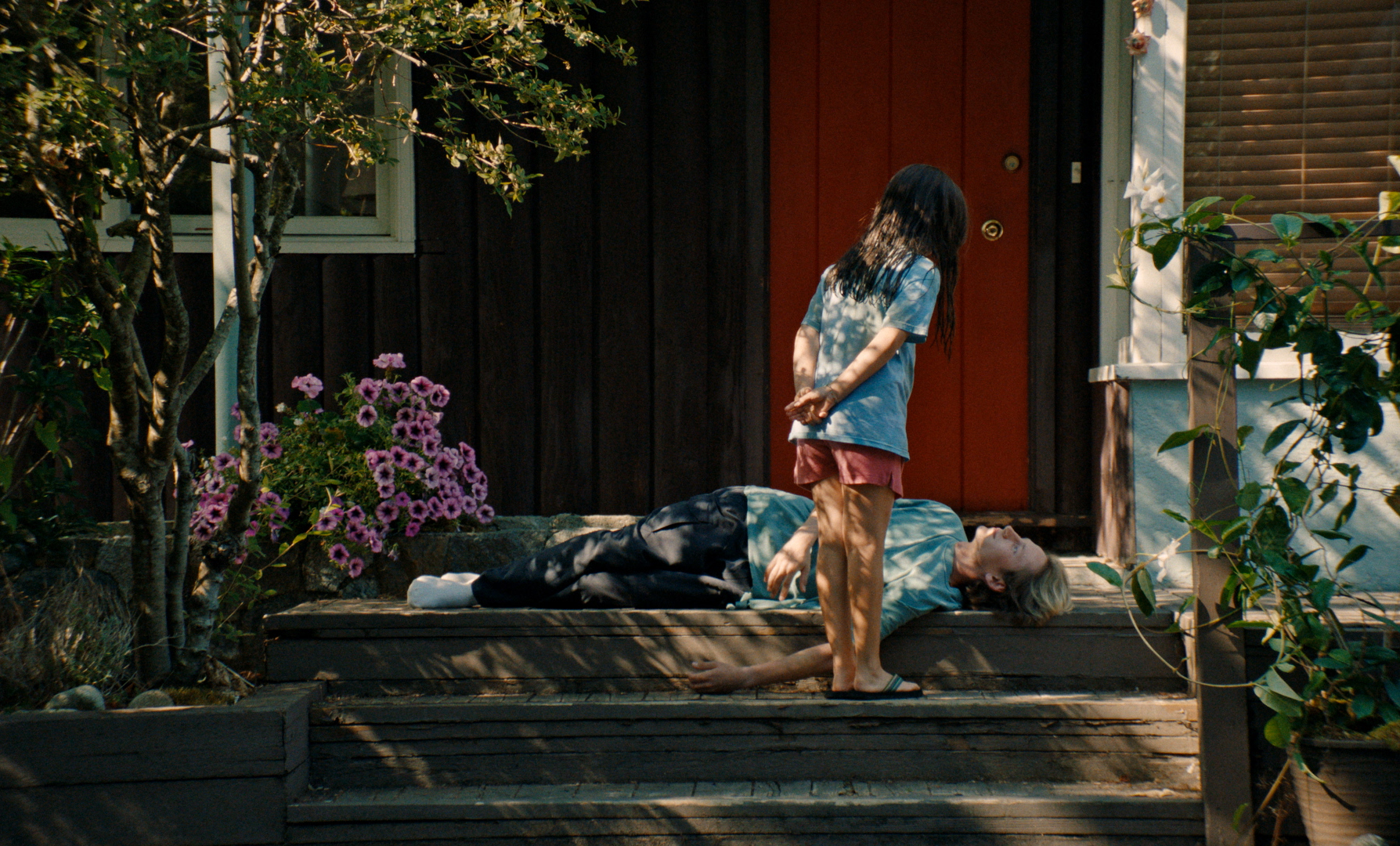
When giving a title to her first feature film, Sophy Romvari deliberately opted for something that wouldn’t give away too much. As we hear in a diegetic voiceover some way into the film, Blue Heron is named for a bird whose bond weakens with its offspring as they age. The first portion of the film has a relatively simple premise: an eight-year-old Sasha, experiences the summer as her teenage brother Jeremy’s behavioural issues (playing dead on the porch, shoplifting, disappearing) spiral out of control, causing her parents increasing distress and pain. In the film’s crystalline final third, a documentary filmmaker (Sasha as an adulthood) looks back at these events to make her own documentary.
“I didn’t have any desire to just tell a coming-of-age story from the past,” says Romvari, 35, who I speak to in a London hotel in June. “I wanted it to be retroactively exploring it from the present, because that’s what I’ve been doing, essentially, with all of my work.” Based on true events after her family emigrated from Hungary to the verdant Vancouver Island in Canada, Blue Heron has its origins in Still Processing. A 2020 short film, in this she processes the deaths of her two brothers while digitizing boxes of old photographs and negatives. “I am looking back at that period of my life and then Blue Heron is essentially that yeah it’s kind of like a fictional version of it that spirals out from that.”
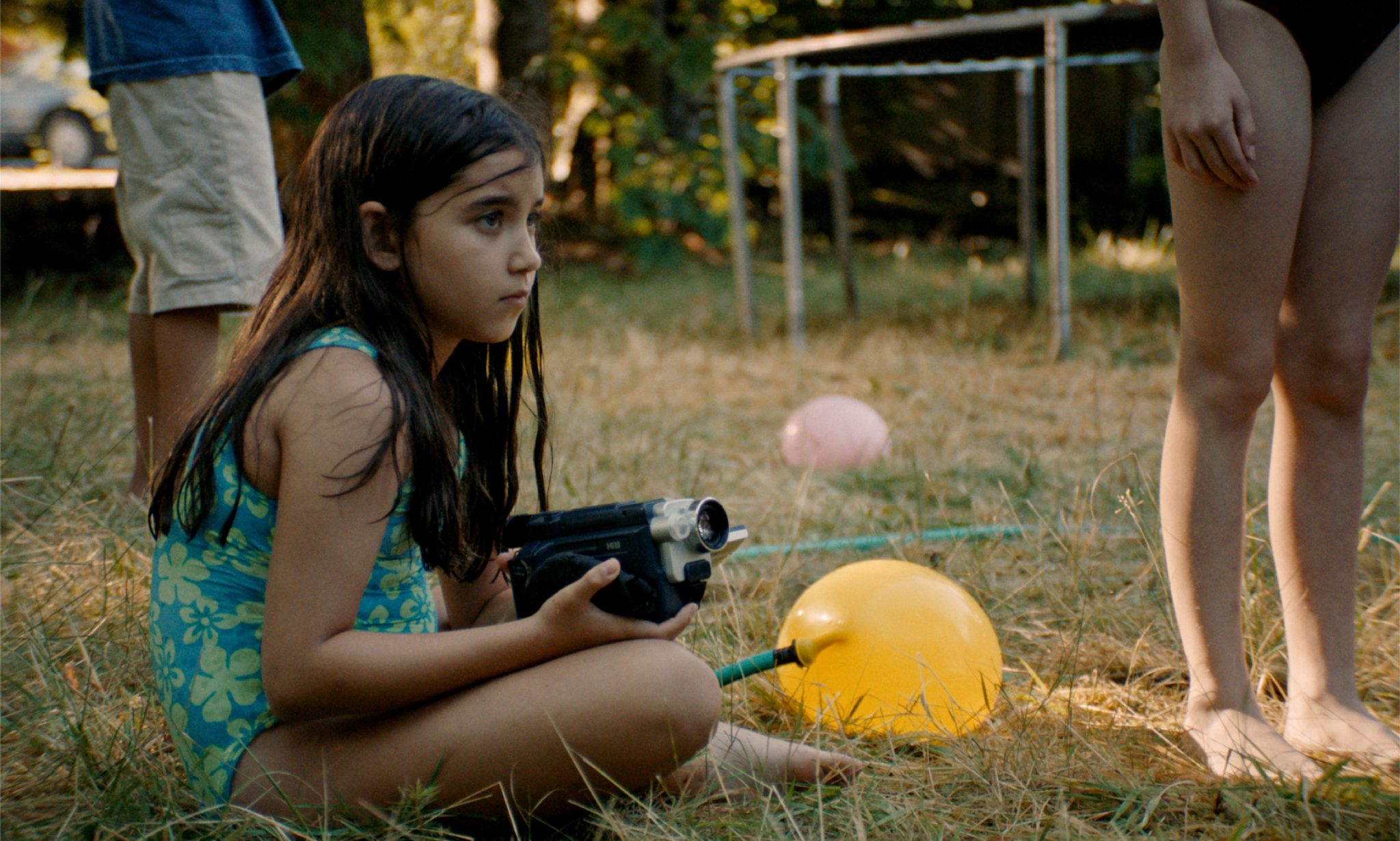
A still from Blue Heron. Directed by Sophy Romvari.
When I speak to Romvari, it is almost a year since the film premiered at Locarno and shortly after at TIFF, where the film was received with unanimous buzz. The director, who has been on the road for almost as long, admits to feeling low energy. “My cup is empty,” she says, whilst describing how she avoids the autopilot of press tours, each time approaching the film as if anew. “I try to always come back to what it actually was.”
Inspired by films such as Robert Altman’s Shortcuts (1993) as well as films by John Cassavete’s oeuvre and Terrence Malick’s Tree of Life (2011), the autobiographical Blue Heron is impressionistic and heartbreaking. In particular Romvari—who is wearing a Broadcast News (1987) t-shirt when we talk—paints her childhood with a distinctly millennial haze. “It was honestly a lot of fun to tap into that nostalgia—most of the people who worked on the film are also from a similar generation, so we were all transported back into that time,” she says. “Especially because it was set during the summer and when you’re a kid it’s the first time you experience freedom in the sense of joy.”
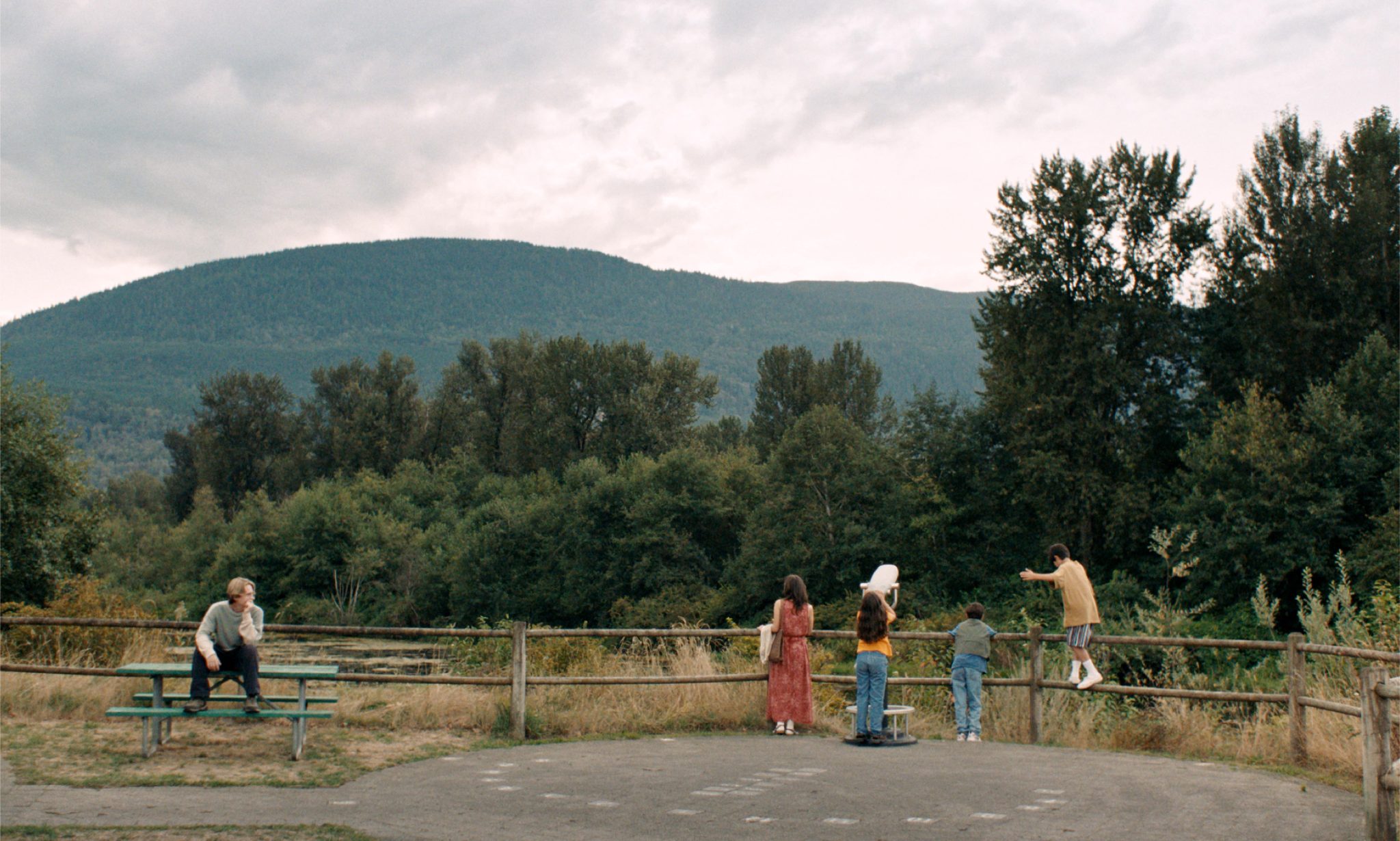
A still from Blue Heron (2026). Directed by Sophy Romvari.
Whilst Sasha is shown enjoying this liberty—a troubling undertone is never far away. In one scene, shot with the strange specificity of a memory, the young Sasha has jumped into a swimming pool, getting stuck in its cover, walking home covered in water. There is a sense in Blue Heron, of two perspectives happening at once. Her parents worry and pain at dealing with their son, Jeremy, and the younger daughter’s not-quite recognition of it. “I wanted to show the things that we observe, but we don’t fully absorb, the things we witnessed as children but don’t quite have the full understanding of what they mean,” explains Romvari.
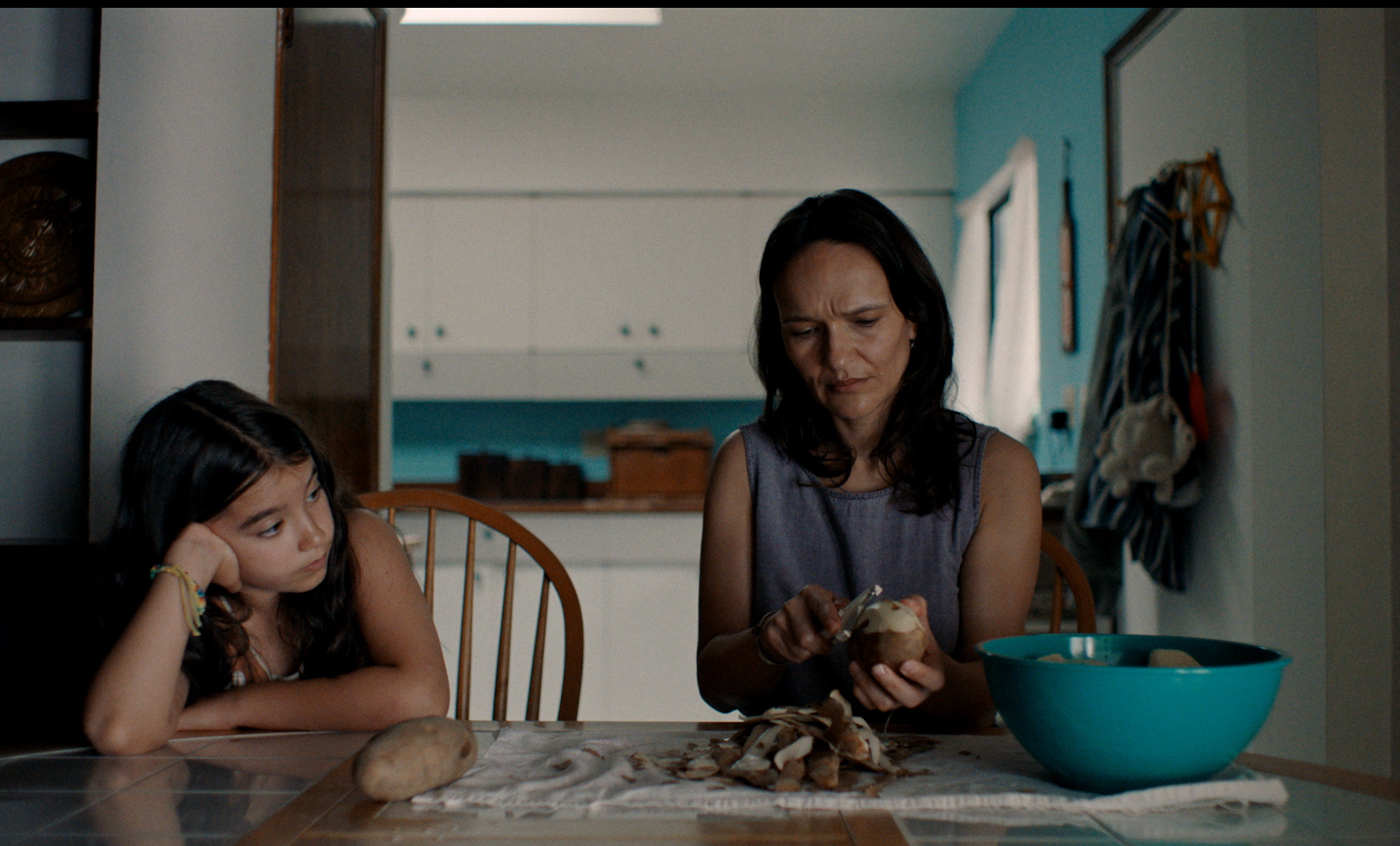
The idea of maternal lineage is a key theme. “”I wanted to explore the things that you inherit from your mother, this sense of concern and desire to get to the bottom of something,” says Romvari, whose Sasha, in the film’s latter portion becomes a kind of detective figure, inserting herself to play a social services worker who gets to explore her old home. In one memorable sequence we watch Sasha’s mother—à la Jeanne Dielman—peeling potatoes, her daughter by her side. “A visual expression of a child inheriting her mother’s concern. I’m trying to show visually the way we inherit and what we inherit from our parents.”
A still from Blue Heron. Directed by Sophy Romvari.
Romvari grew up in Victoria, British Columbia. Despite her cinematic DNA: her father, a graphic designer, was also a keen photographer and videographer (as depicted on screen), whilst her grandfather was a celebrated production designer (a subject she explored in her 2020 documentary Remembrance of József Romvári), Romvari insists she found her own way to film. “I didn’t grow up with a relationship with my grandpa. He wasn’t someone I was looking toward. My dad wasn’t working as a cinematographer either—he just photographed us a lot. But because my parents loved art and film I was surrounded by it, so I’m sure that had an impact. It just wasn’t obvious to me that I was going to become a filmmaker until I was in my twenties.”

“I think catharsis is a fake term… making the film was a true joy, but I did not find making it made me feel better about my brother.”
Sophy Romvari
Sophy Romvari. Photographer: Felix Rapp.
After an MFA in Toronto, Romvari carried out a prolific run of short films—directing up to 12 and being involved in several more. “There’s a lot of experimentation within a short film,” she says of the medium. Still Processing was a particular hit online, gaining popularity on film reviewing platform Letterboxd. Yet unlike other recent online-to-franchise hits such as Backrooms, Romvari insists this hype didn’t make it easier to get Blue Heron made. “I wish I could say it made it easier, it was still a struggle to get funding. It could have made it easier on the other end, because some people were aware of my work, so there was a sense of support for the film.”
When I ask if the film making processes provided her with a personal sense of catharsis, she is quick to respond. “I think catharsis is a fake term… making the film was a true joy, but I did not find making it made me feel better about my brother.” Catharsis is also denied to the viewer. “People ask why they don’t find out exactly how Jeremy died or what his diagnosis was, but that’s purposeful. That’s what it’s like to have someone in your life that you can’t fully understand. You don’t get neat answers in real life, so I’m not going to impose them on the film.” Yet with its temporal folding and mind-boggling meta story-telling, the result is far richer. “Most people who watch the film, just go along for the journey, you just have to lean in and surrender.”
Blue Heron is in cinemas now.