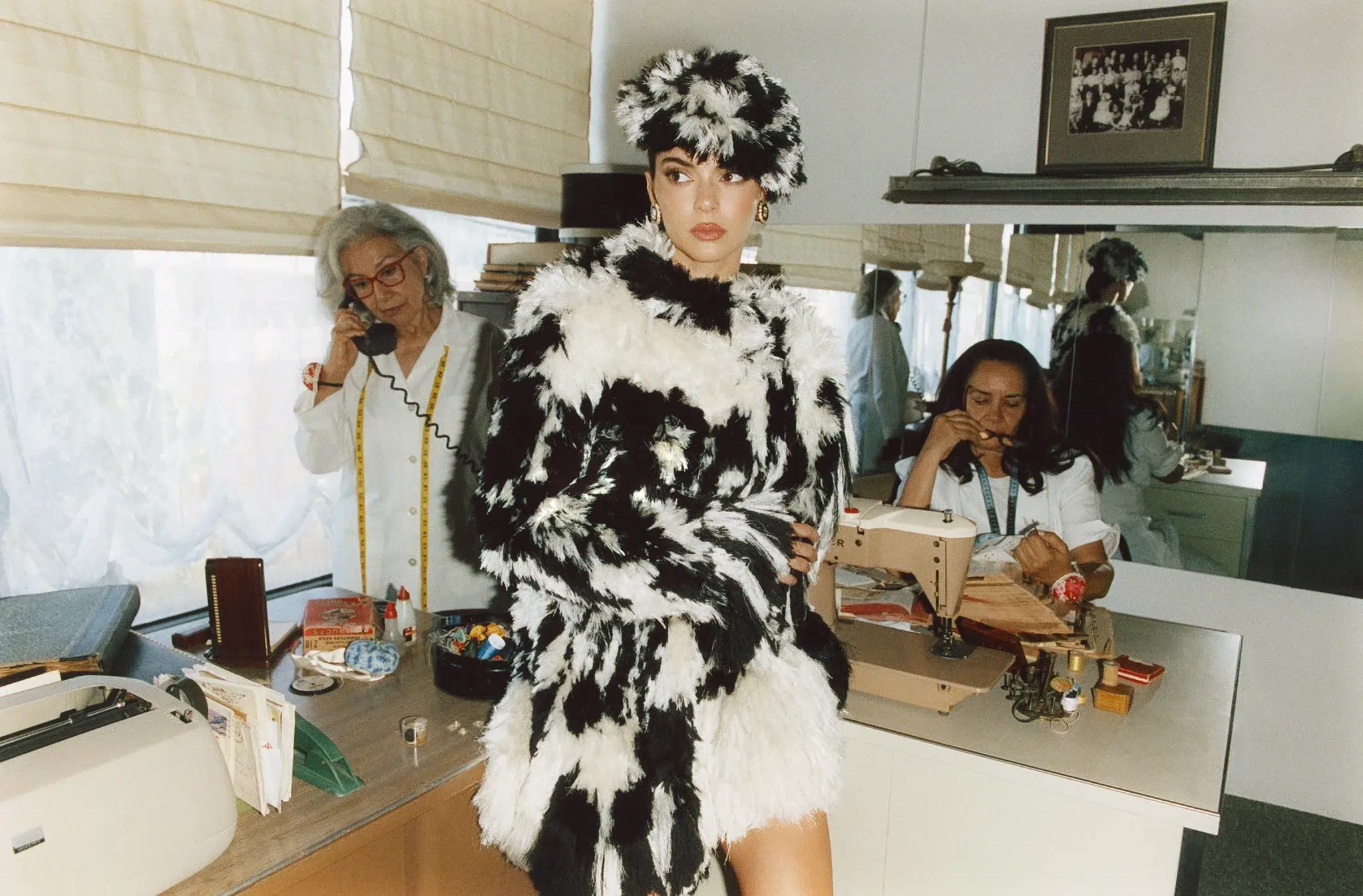


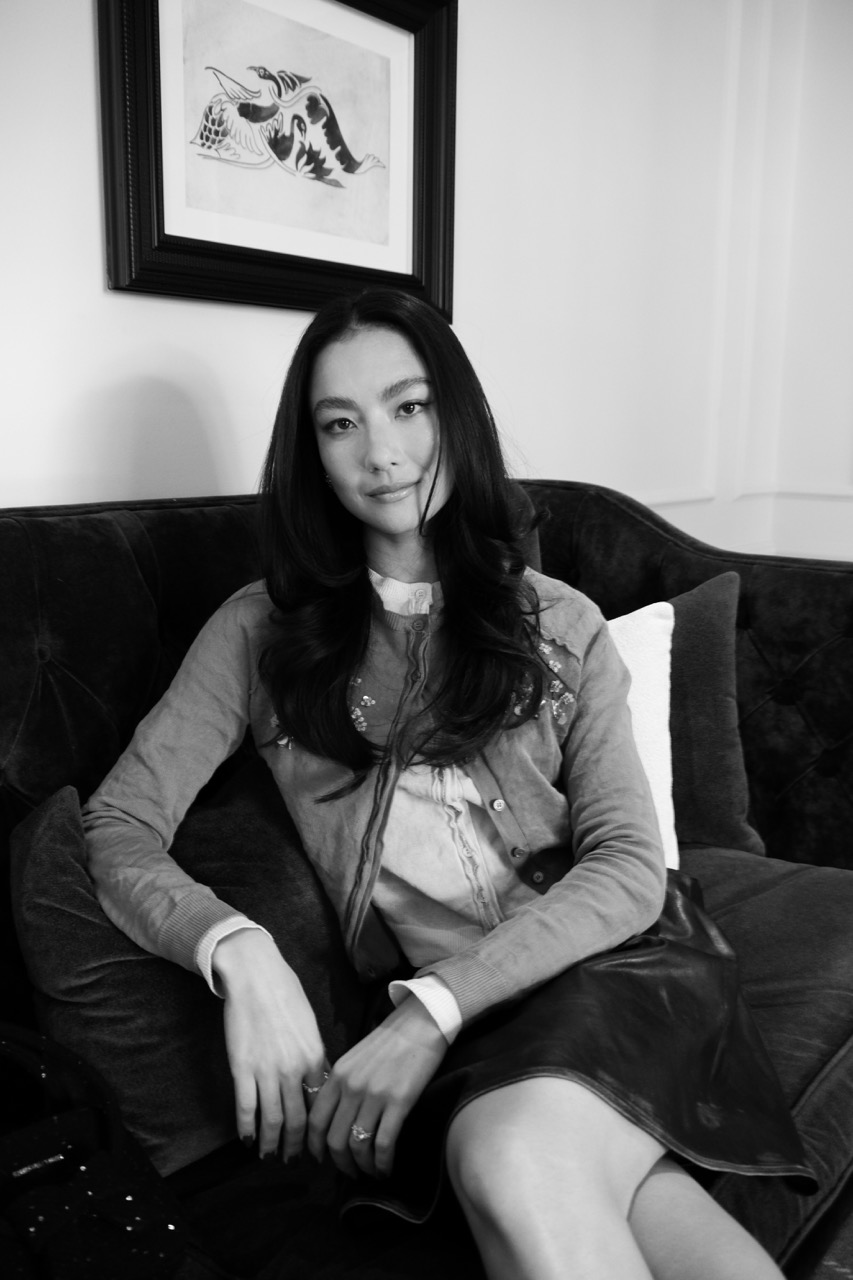
After a string of successes on television, Hong Kong-born German-Korean actress Adeline Rudolph is now making her mark on the big screen. We speak to her about family, identity, and what it was like delivering Mortal Kombat II’s most brutal fatality as warrior princess Kitana.
Performing wasn’t always on the cards for Adeline Rudolph. These days, you can find the German-Korean actress on the big screen in Mortal Kombat II, slicing off heads with brutal efficiency as warrior-princess Kitana. But as a child growing up in a conservative community in Hong Kong, aside from a scene-stealing turn as the Scarecrow in a school production of the Wizard of Oz, a career in the arts felt like a distant dream.
“I’ve always had an interest in performing,” Rudolph tells me on a bright morning in London. “But it never felt within the realm of possibility for me growing up, because Hong Kong is a very business-forward city.”
As it turned out, acting wasn’t finished with Rudolph just yet. Sure enough, despite moving to London to study politics and dabble in some part-time modelling, she eventually found her way into an acting class in Los Angeles—and fell head over heels. “That first acting class was the first time in my life that I felt a sense of true freedom, to the point where it is almost indescribable,” she says. “I decided, then and there, that I was going to give it a shot. I didn’t want to regret not taking that chance.”
The gamble paid off, with Rudolph quickly landing recurring roles in teen-TV favourites The Chilling Adventures of Sabrina and Riverdale, before starring in Netflix’s adaptation of Resident Evil (her first of now two video game adaptations). In 2024, she made the leap to film with the notoriously low-budget Hellboy: The Crooked Man. Now, with Mortal Kombat II, she’s stepping into blockbuster territory, her face plastered across buses in the same city where she once studied social sciences. “That is insane to see in London, by the way,” she says, laughing.
Below, Rudolph reflects on family, identity, and what it was like delivering Mortal Kombat II‘s most brutal fatality.
LG: Where were you in your life right before getting the role?
AR: I had a really tough period of not working in 2022. I was stepping into the new year unsure of what the it would look like. I ended up shooting in Bulgaria for Hellboy. I had already sent in a couple of tapes for Mortal Kombat, and landed a director session with Simon [Mcquoid], so I was sitting in the corner of this dark room in Bulgaria trying to portray this warrior princess in the most authentic way that I could. But yeah, I was in a place of readiness. I was feeling ready to do something of this calibre. Up until that point I had not stepped into film, I had never done a big budget movie. It’s definitely a different world.
The difference with Mortal Kombat was that the scale of the sets were unparalleled. Each sound stage was its own realm. A lot of what you see in the movie, believe it or not, is very practical. Most of the CGI is the expansion of locations. We weren’t acting in front of a green screen. We were fully in the real space that was created for us. Before scenes, I would sit on my mark while they were setting up cameras, just to be there and remind myself that this is my reality.
LG: Acting wasn’t a part of your original life plan.
AR: I went to university here in London. I studied politics, and was modeling part time. I took a gap year and moved out to the states. One day I walked into an acting class and literally fell in love. I decided, then and there, that I was going to give it a shot. I didn’t want to regret not taking that chance.
LG: Did you get any pushback on that choice by your family?
AR: There’s nuance in their reactions. Overall, my parents have always been very supportive of me shooting my shot. I did my acting class, I came back to Hong Kong for New Years, and that’s when I decided to tell them that this is what I was going to do. I told my dad on a hike in Hong Kong. He told me to go for it. My mum was also like…’sure, give it a go, see how it goes’, but to this day, she’s like, ‘are you going to go back and do your masters?’ [Laughs] I’m like, ‘Mother, I literally have a job!’
LG: [Laughs] “I’m in a massive studio movie. I’m on the side of a bus!”
AR: I’m on buses! That is insane to see in London by the way. But, no, genuinely, they’ve been very supportive. I’ve got a small family, but we’re very close. My parents are everything. My sister lives here in London. She’s two years younger than me. I would do anything for her.
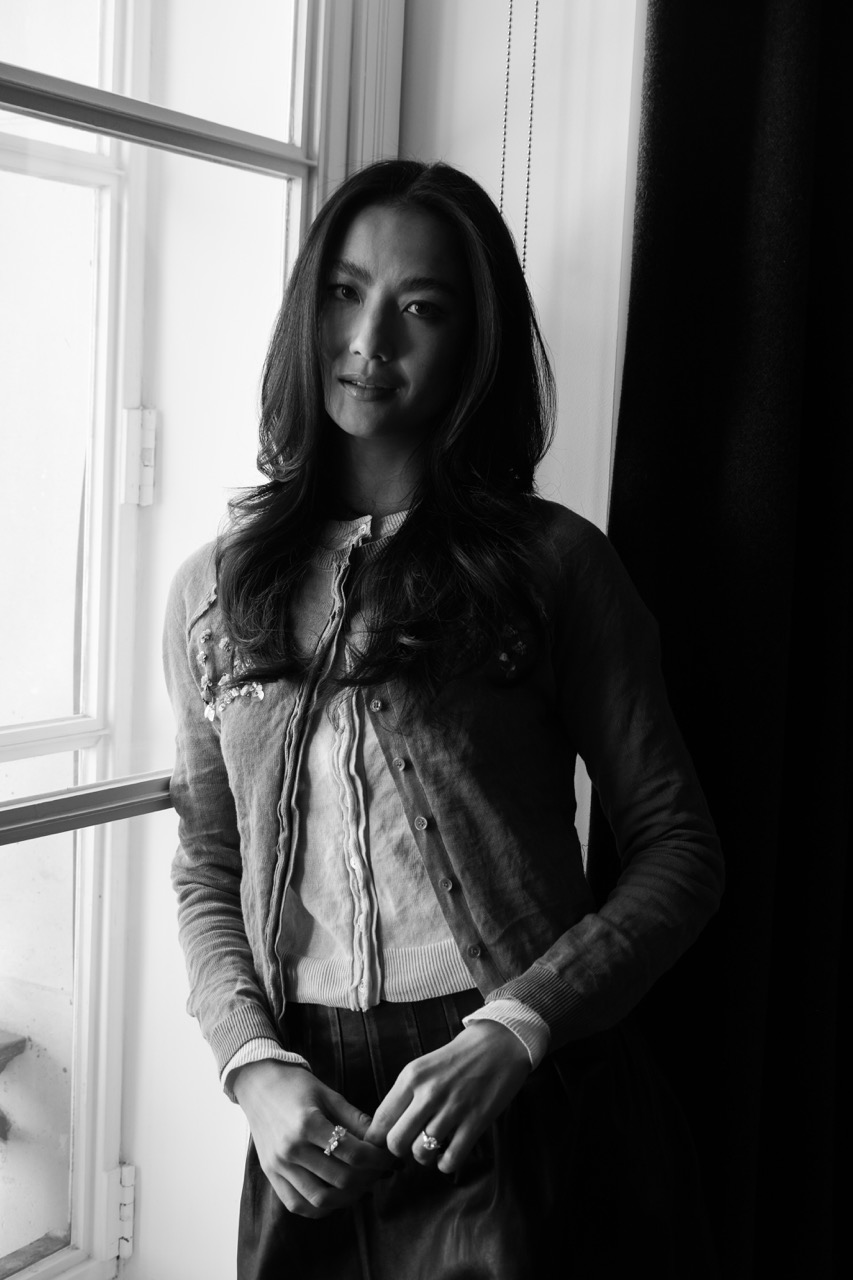
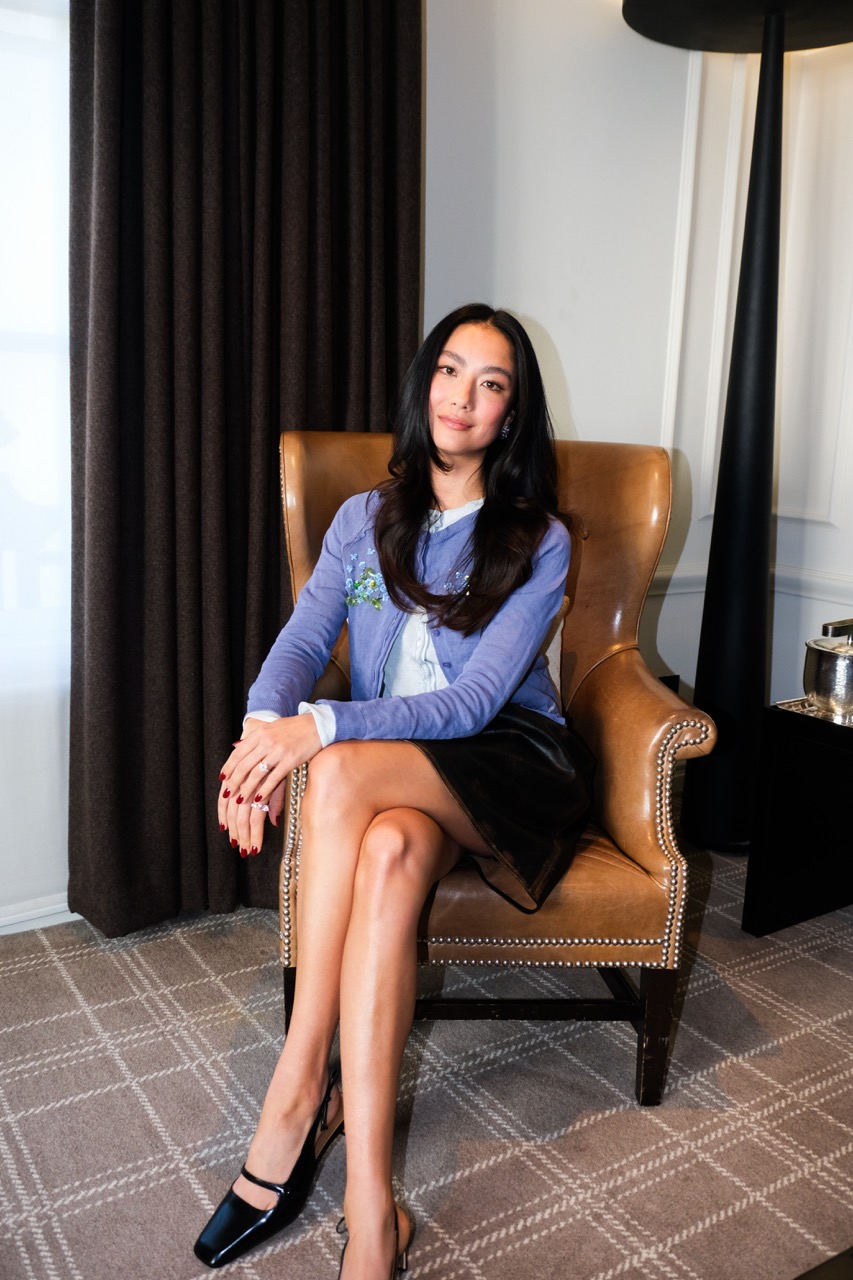


LG: You were born in Hong Kong, but you are German-Korean. You’ve spent a lot of time in London, and now you’re in Los Angeles. What was it like growing up, juggling all of these different cultures that each make up a part of you?
AR: I sat down and dove into my identity a lot over the years. I’ve gone through different phases in my life in terms of my culture, my ethnicity, what I look like on the outside, what languages I speak. I think when you grow up as a third-culture kid like I did in Hong Kong, but going to a German school, I inherently found a community that understood the dichotomy of growing up in a country that is not necessarily your inherited culture. I’m grateful for navigating that. It taught me empathy, how to come in with an open mind and receive people exactly how they want to show up. But the inner work that I’ve done over the years has been one of healing and reconciling—both with my German and Asian-ness. I’m still on that journey. I’m still trying to figure out where I fit into the equation.
LG: Have you ever felt as if that maturity and that effort you’ve put into understanding yourself has come into conflict with the industry?
AR: That definitely exists in Hollywood, but I stepped into the industry at a time where those doors were being opened by icons like Michelle Yeoh. They paved the way for me to step into this space.
LG: Were there any hints growing up that you might end up as a performer, or entertainer?
AR: I was in a school musical when I was 14. I played the scarecrow in The Wizard of Oz. I’ve always had an interest in performing, but it never felt within the realm of possibility for me growing up, because Hong Kong is a very business-forward city. It wasn’t on my radar until I felt like I had the time on my hands after my degree to play with and craft my own life.

“In another lifetime, I would have been a journalist, and in some ways, I’m a journalist to all of my characters. I get to interview them, and I get to dive into their stories, and then, even better, I get to take all of that, internalise it, and then bring it all to life.”
Adeline Rudolph
LG: I find it interesting that acting is something that wasn’t necessarily part of your original life plan, that it’s something you’ve almost been swept up in. What has been your learning curve because of that?
AR: Learning curve? Oh my gosh, I stepped on to set for the very first time not knowing what blocking was. My learning curve was exponential—even just being in the make-up chair and being able to speak up for myself and craft a character through hair and make-up and costume, and seeing how collaborative everyone is. Coming from a modelling background, you’re the canvas, whereas when you step into a character in a movie, you’re embodying a different persona, and you do have a say about how you want to craft that persona. It’s no longer them dictating how you should look. It’s in your hands.
I also learnt how to audition. After booking Sabrina I took a hiatus, and I didn’t get a single callback during that time. I didn’t know how to navigate an audition room. On set, you’re moving around, you have cameras. During a self-tape you’re restricted to this 4×4 box recording an action scene. You have to get creative. But I went back to acting class. I quickly learnt that if you don’t continue to work on your craft there’s no guarantee for another job in this industry. Just because you’ve booked one thing, it doesn’t indicate that you’re going to continue working. That is true for the biggest of roles. Even after Mortal Kombat, it’s ground zero. Then it’s like, ‘I hope I get a third movie—I would be grateful to do a third movie.’ But you can only rely on yourself to stay resilient.
LG: Had you played the Mortal Kombat games before?
AR: I didn’t play the games as a kid, but I definitely knew about Mortal Kombat. You can’t have grown up in the ‘90s and not know what a fatality is, or ‘finish him’, or ‘get over here!’ [laughs].
LG: You deliver the movie’s most brutal and satisfying Fatality.
AR: In the script a moment like that is a paragraph of dialogue, whereas in the movie, it lives for so much longer and becomes so much bigger. Seeing it come to life on screen is so much more brutal and gory. It was amazing to do it practically. There was a dummy head, of course, for me to stab into. It was very satisfying to let out this guttural scream as I murdered Shao Khan, played by Martin Ford, who may be a massive and intimidating physical presence but is the nicest human being ever [laughs].
LG: You can pretty much kick anyone’s arse now.
AR: [Laughs] yeah! There’s one part of it, which is learning the fight choreography. But then the other part is drilling specific martial arts over and over, to make sure the moves looked lived in. We practiced Wu Shu stances and Tai Chi moves for hours, to find the fluidity that Katana has in her fighting style. Incorporating feeling into the choreography was a big part for me. It’s one thing to know the steps, it’s another to feel the intention of each movement. The fight sequences aren’t just fights for the sake of a fight. Every blow is a line of dialogue.
LG: You’re still in the early stages of what will hopefully be a long and exciting career. How has the act of becoming other people, and exploring the depths of character, affected how you approach your life?
AR: It’s given me a lot of confidence. That first acting class was the first time in my life that I felt a sense of true freedom, to the point where it is almost indescribable. I grew up in a conservative community. I was very poised. I was afraid to be loud. So to be in a room full of fellow actors and to be able to express myself in a way that I never felt was possible before was liberating for me. To take up that space. As a person, I don’t often like to take up space, but to be able to channel whatever that is in me into my characters, and to take up space through them, is very rewarding. In another lifetime, I would have been a journalist, and in some ways, I’m a journalist to all of my characters. I get to interview them, and I get to dive into their stories, and then, even better, I get to take all of that, internalise it, and then bring it all to life.