

Game! Set! Match! As the 2026 Wimbledon Championship kicks off, here are ten racket-smashing depictions of tennis in film.
Ida Lupino, Hard, Fast and Beautiful! (1951)
Ida Lupino’s Hard, Fast and Beautiful! is a taut mother-daughter portrait that unfolds on the tennis court. The 1950s black-and-white sports melodrama follows a narcissistic mother (Sally Forrest) who views her tennis prodigy daughter, Millie (Claire Trevor), as the ticket to success. As Millie rises through the ranks of amateur tennis in hopes of going pro, the intensity of her extended rallies matches the back-and-forth between mother and daughter.
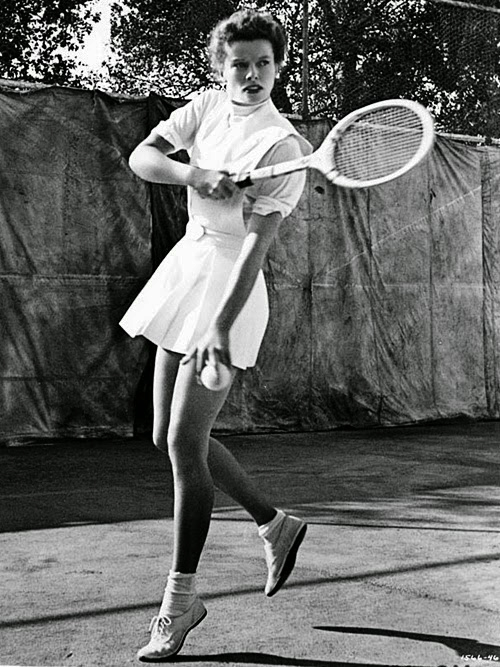
George Cukor, Pat and Mike (1952)
The eponymous Pat (Katharine Hepburn) lives and breathes golf and tennis, so when her fiancé, Collier (William Ching), encourages her to quit, she joins forces with shady sports promoter Mike (Spencer Tracy) to realise her sporting prowess. Pat and Mike’s quick-paced tennis matches showcase Hepburn’s real-life tennis skills (earning her her first Golden Globe nomination) alongside the scintillating excitement of watching a nail-biting rally. The film also features cameos from tennis royalty such as Alice Marble and Don Budge.
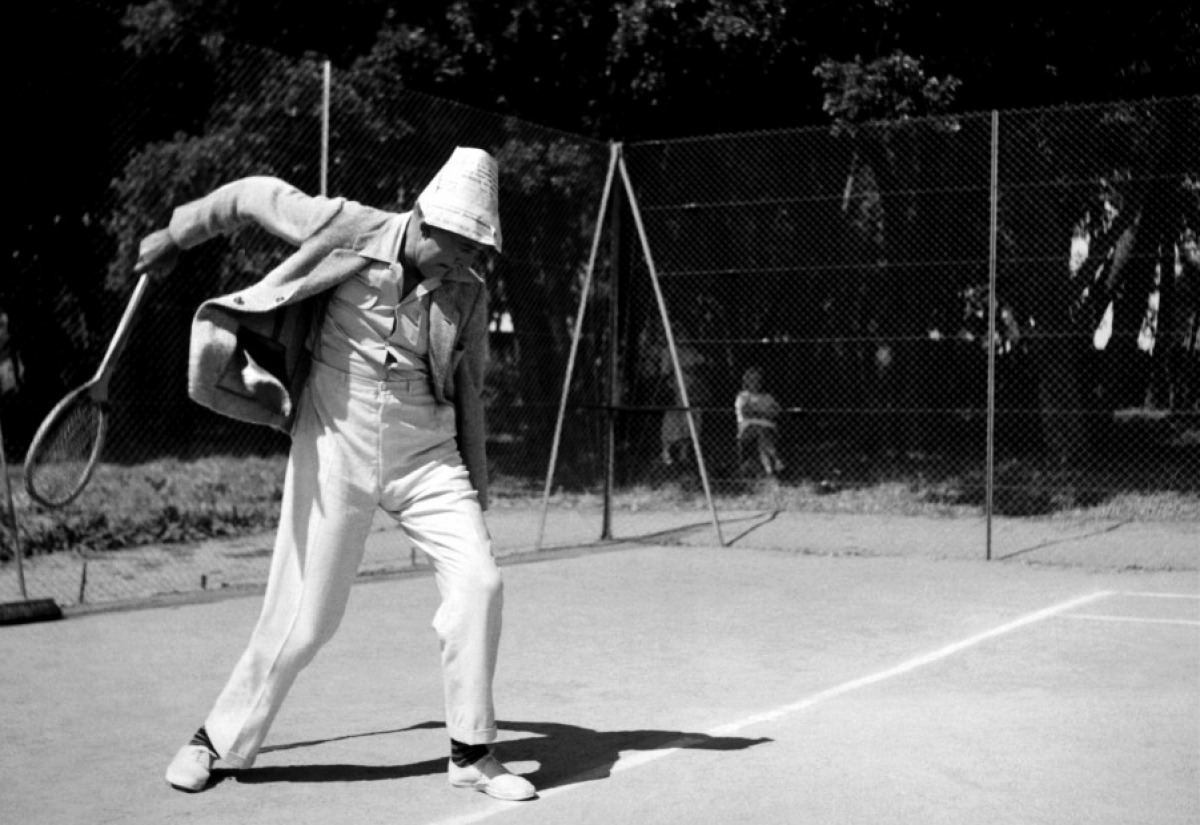
Jacques Tati, Les Vacances de Monsieur Hulot (1953)
In Jacques Tati’s Les Vacances de Monsieur Hulot (Monsieur Hulot’s Holiday), tennis is less of a high-adrenaline game and more of a sunny summer pastime. We follow the eponymous Monsieur Hulot (writer, director and star Jacques Tati), a bumbling but endearing gentleman, wandering onto the court by the Brittany coast. The slapstick comedy sees the underdog defeat every challenger with his unique serve, which resembles pulling a pizza from an oven before swatting an overarm strike.
Robert Hamer, School for Scoundrels (1960)
School for Scoundrels, based on Stephen Potter’s popular Gamesmanship series, charts ill-fated Henry (Ian Carmichael) as he tries to one-up his foe Raymond (Terry-Thomas) and impress his beau, April (Janette Scott). Tennis is Henry’s method to prove his worth, the court his battleground as April watches on. After countless failed serves and a missed shot that has Henry toppling over the net, tennis serves as an anxiety-inducing test of his worth as a man and partner.
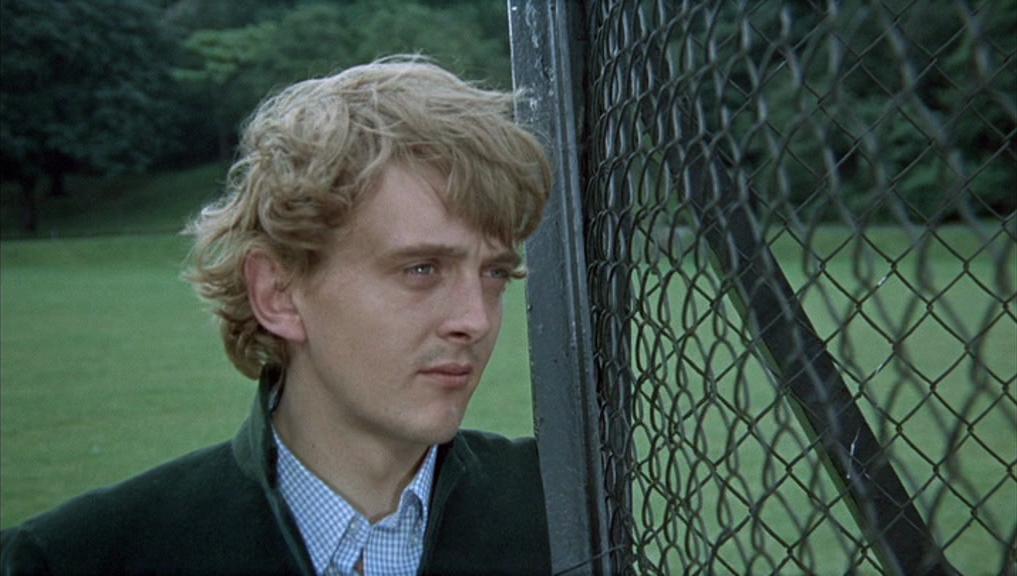
Michelangelo Antonioni, Blow Up (1966)
One of cinema’s most original tennis matches is Blow Up’s concluding sequence, where a group of mimes play an invisible game, observed by photographer Thomas (David Hemmings). Playing into the film’s exploration of fantasy versus reality, Michelangelo Antonioni’s swooping camera follows the ricocheting ‘ball’ as the meticulously cut sequence imitates the tension of a real match. Thomas is roped into the match, ‘returning’ the ball when it goes out of bounds. Antonioni’s camera then lingers on his face, turning side to side to watch the ‘match’, buying into his own imagination.
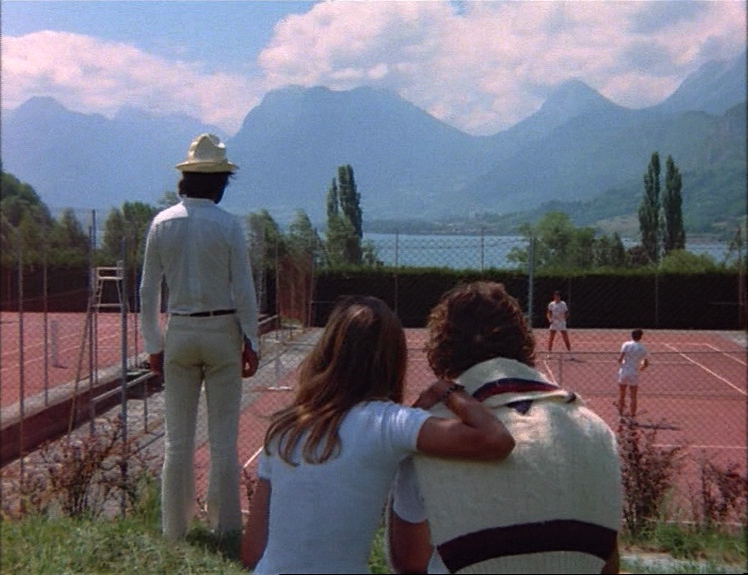
Éric Rohmer, Claire’s Knee (1970)
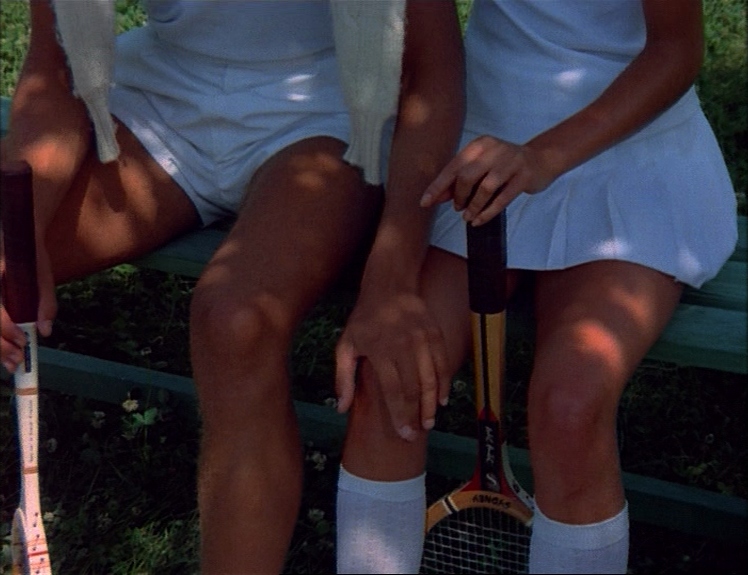
French director Éric Rohmer’s Claire’s Knee invests in the heady potential of tennis as a visualisation of desire. Flirtations with several women punctuate Jérôme’s (Jean-Claude Brialy) pre-wedding summer holiday. It’s on the clay tennis court, set against the picturesque French Alps, that Jérôme’s obsession with Claire’s (Laurence de Monaghan) titular knee begins. As skin contrasts with tennis whites, burgeoning desire is ignited not by play but the ogling gaze.
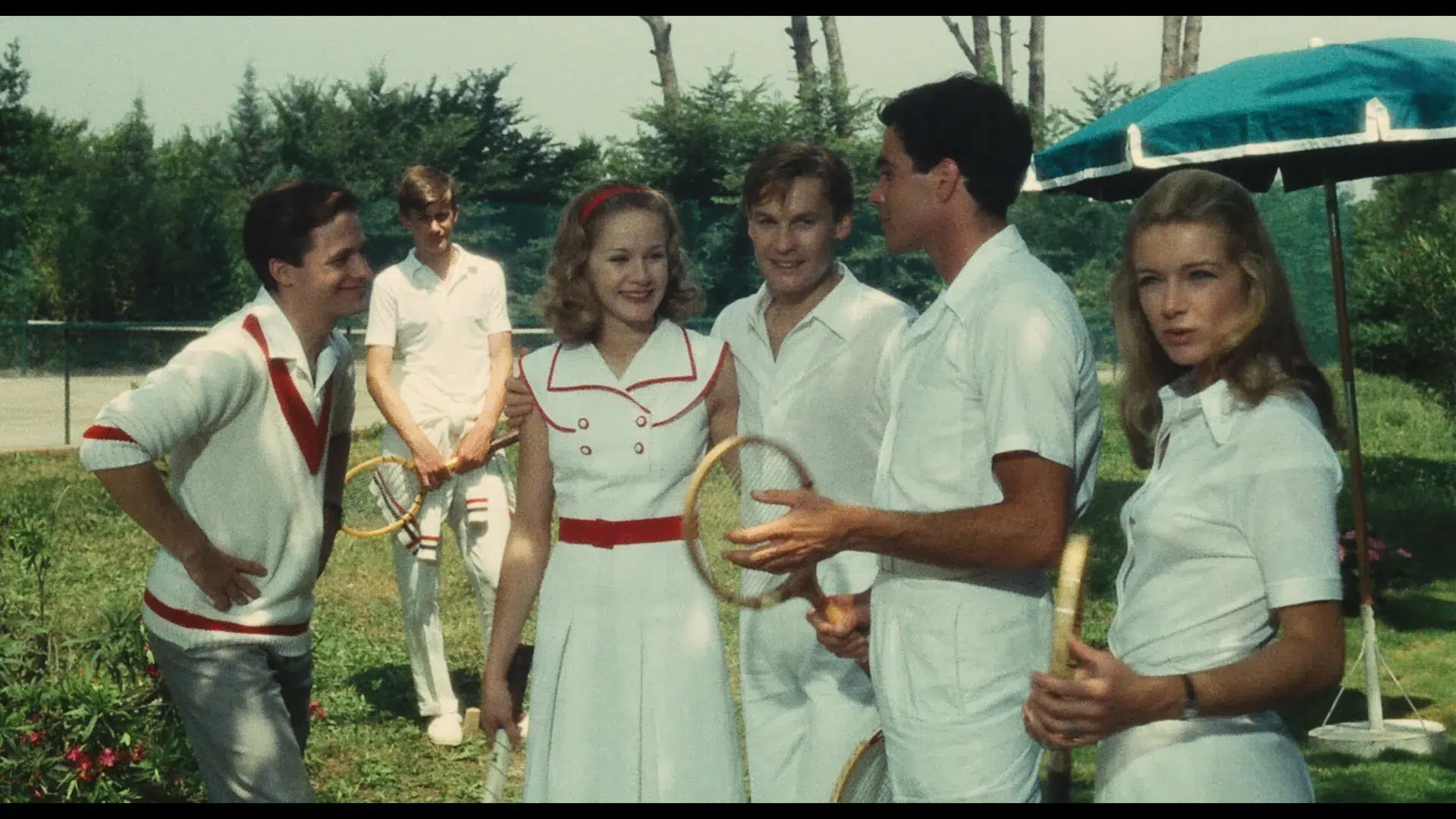
Vittorio De Sica, The Garden of the Finzi-Continis (1972)
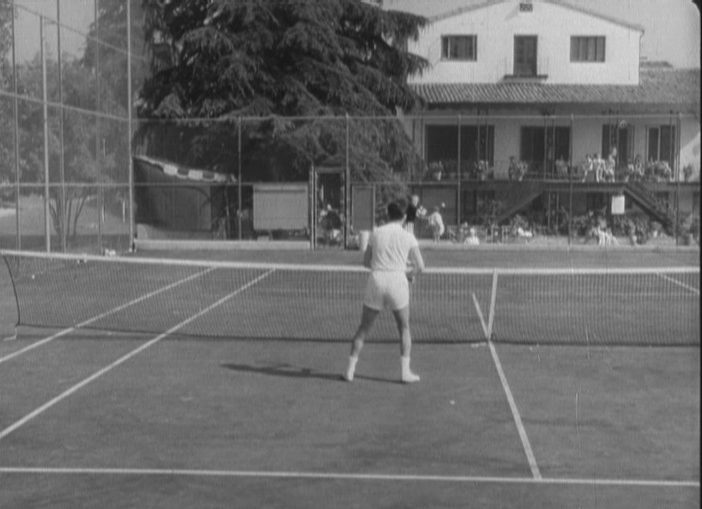
Tennis isn’t conventional for a historical war drama. Still, the court is a vital space that bookends Vittorio De Sica’s Oscar-winning portrait of Fascist Italy, The Garden of the Finzi-Continis. The film opens with a Jewish family opening up their private court when the Jewish community is banned from the city’s tennis clubs. The tree-lined tennis court becomes a recurring motif, a symbol of sanctuary and freedom that, by the end, comes crumbling down with the horrors of the Holocaust.
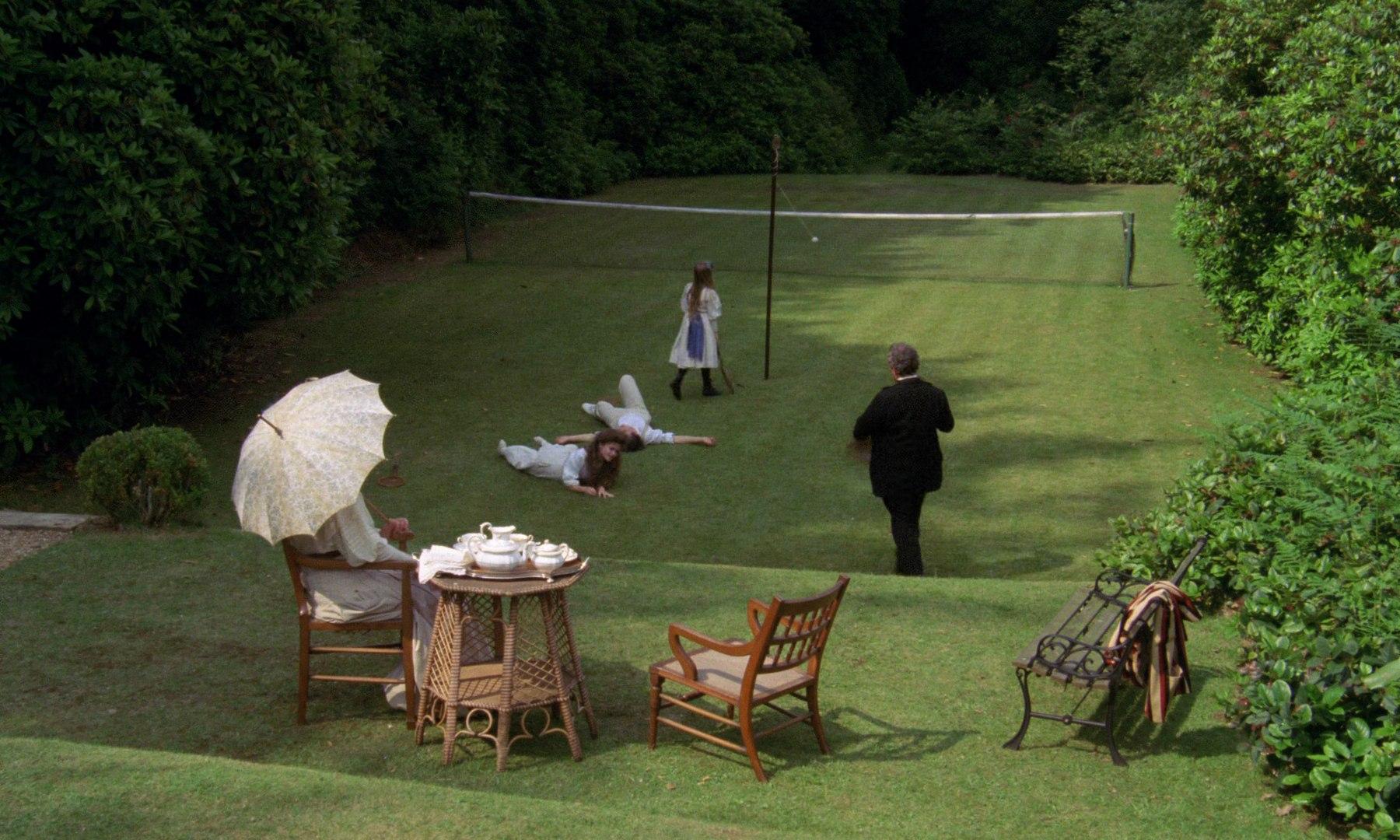
James Ivory, A Room With a View (1985)
There are not a lot of sporting moments in A Room With a View, James Ivory’s adaptation from E. M. Forster’s 1908 novel of the same name, but the tennis match between Freddy (Rupert Graves) and George (Julian Sands) is a pivotal moment in the classic Merchant Ivory production. The tennis game represents the discipline of repressed Edwardian society, which clashes with the free-spirited rebellion of George and Lucy’s (Helena Bonham Carter) passionate kiss.
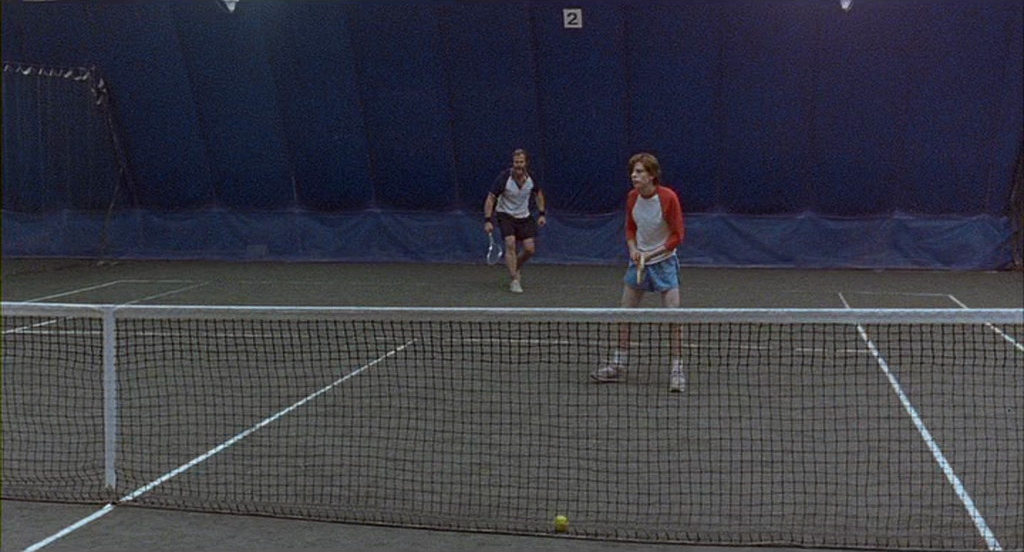
Noah Baumbach, The Squid and the Whale (2005)
The opening of Noah Baumbach’s The Squid and the Whale is a tennis rally, both figuratively and literally, between soon-to-be-divorced couple Bernard (Jeff Daniels) and Joan (Laura Linney). The mixed-doubles match with their two sons divides the family, foreshadowing the reality of their fractured dynamics. Baumbach uses the tennis framework to capture alliances and betrayals, such as when Bernard advises his older son, Walt (Jesse Eisenberg): “If you can, try and hit it at your mother’s backhand, it’s pretty weak.”
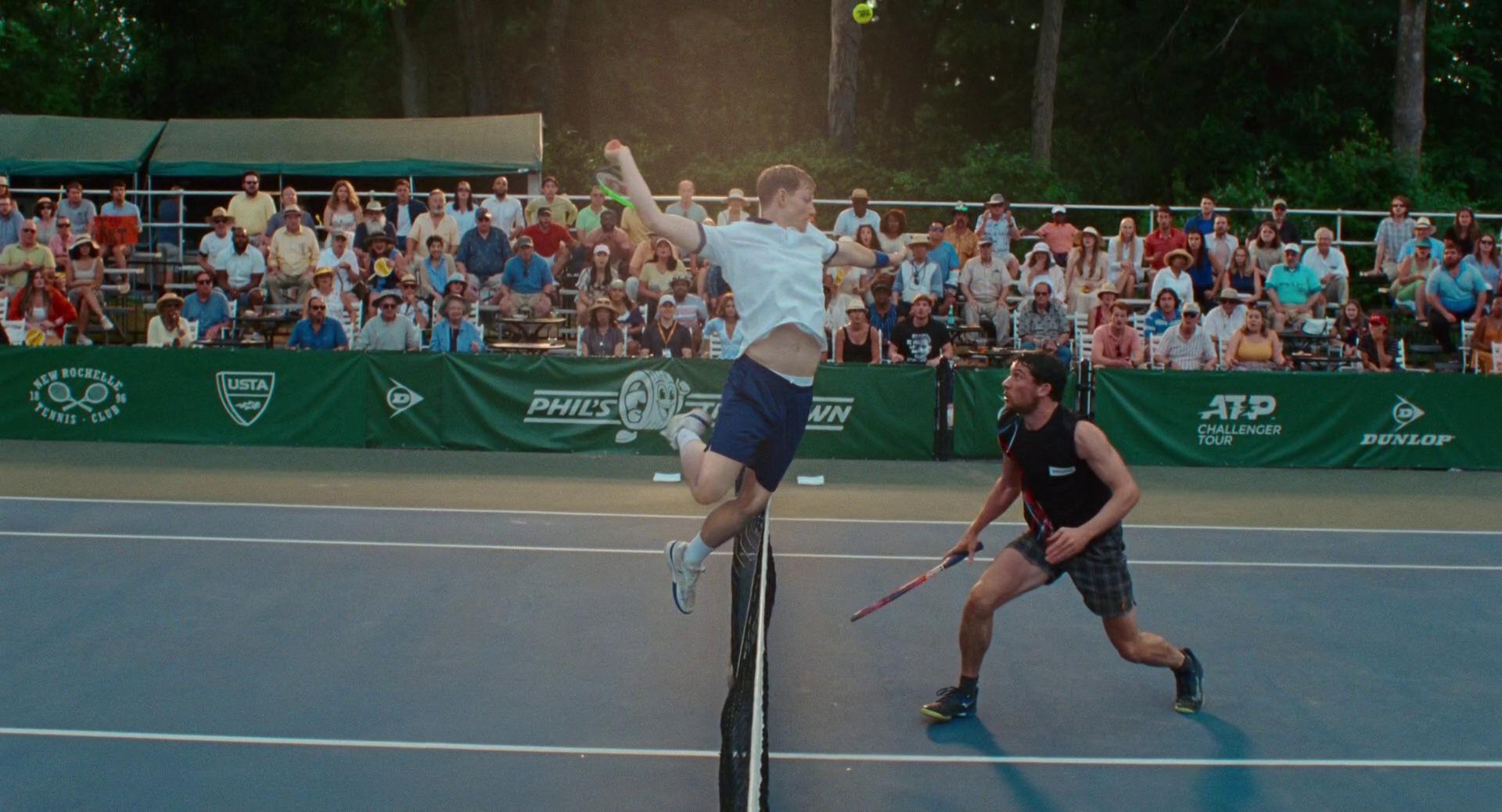
Luca Guadagnino, Challengers (2024)
In Challengers, tennis is a stand-in for sex. Screenwriter Justin Kuritzkes and director Luca Guadagnino’s steamy drama uses the sport as foreplay between three tennis stars (Josh O’Connor, Mike Faist and Zendaya). The sport’s back-and-forth rhythm also informs the structure of this trio’s high-adrenaline love triangle. Then, of course, there’s the film’s final moments that include a shot from the perspective of a boomeranging tennis ball.