

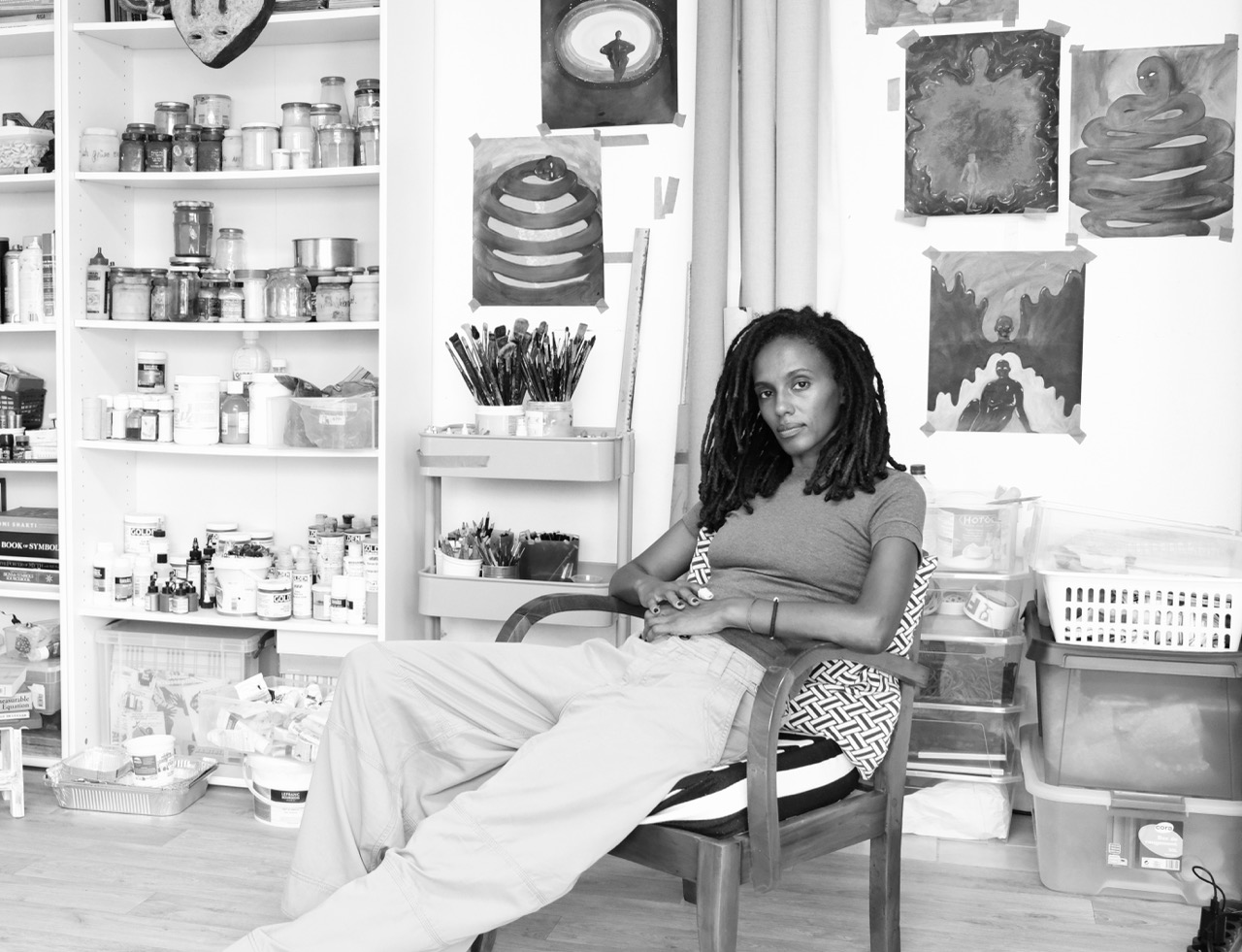
A painter, filmmaker, and visual artist whose work channels science-fiction visions, dreams, ancestral memory, and the free-radical abstraction of Sun Ra, Daniela Yohannes has collaborated with musicians Keith Jarrett, Shabaka Hutchings, and Nala Sinephro—and is currently building a sanctuary portal in her garden in Guadeloupe.
Below, Yohannes joined features writer Luke Georgiades at a coffee shop in London for a transparent conversation on dreams, identity, and magic scrolls.
Luke Georgiades: Musicians seem magnetically drawn to your work, particularly jazz artists in London. How did you get involved with the scene?
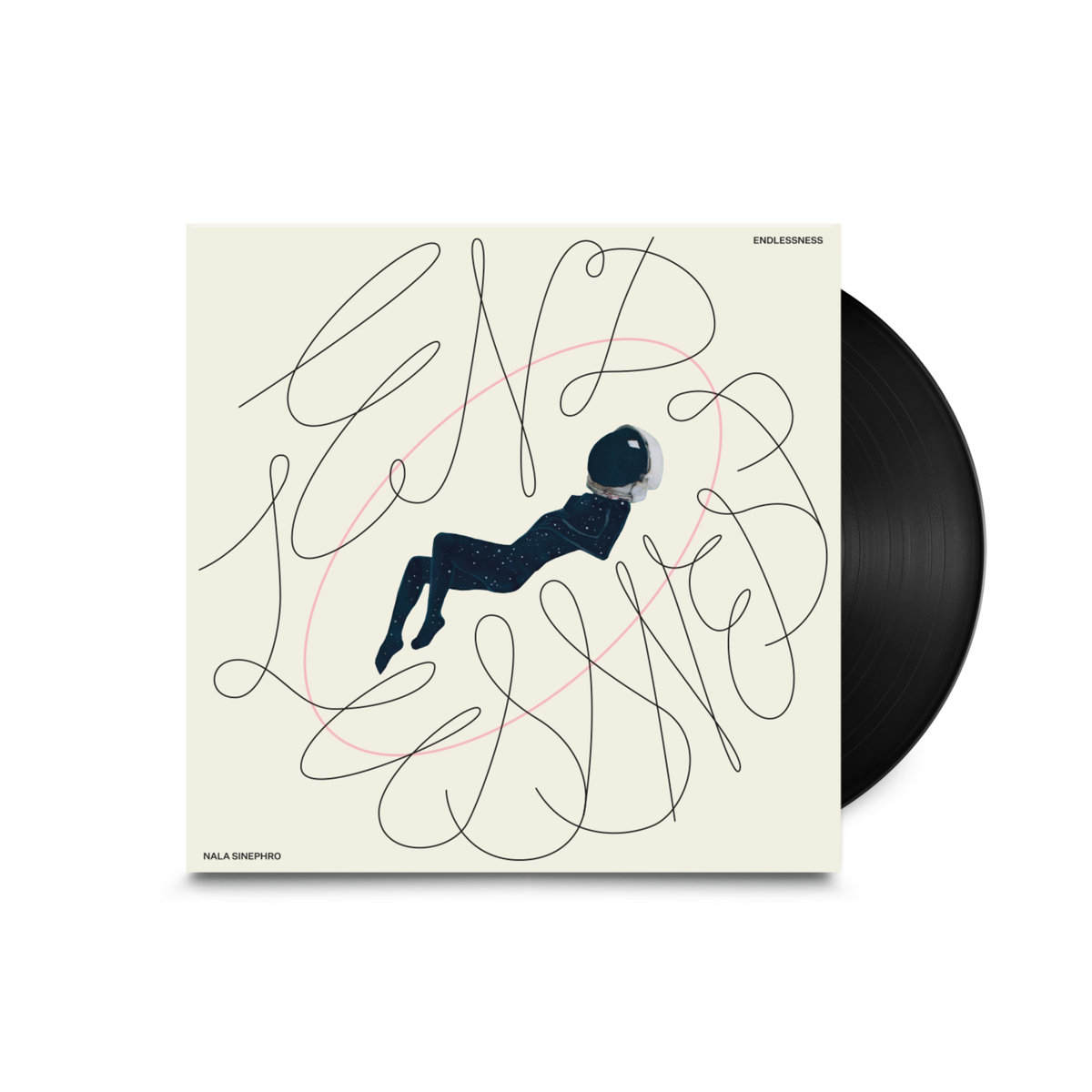
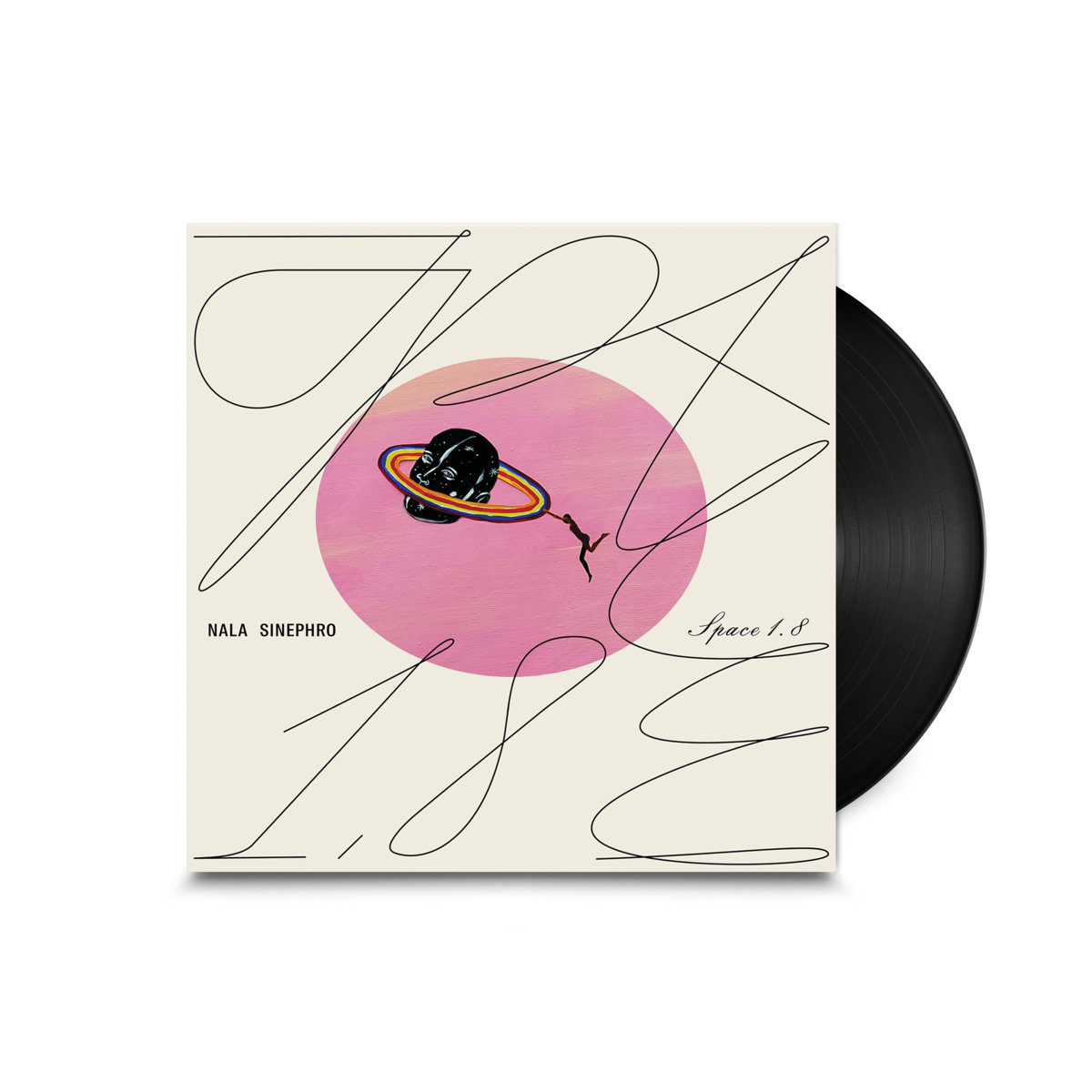
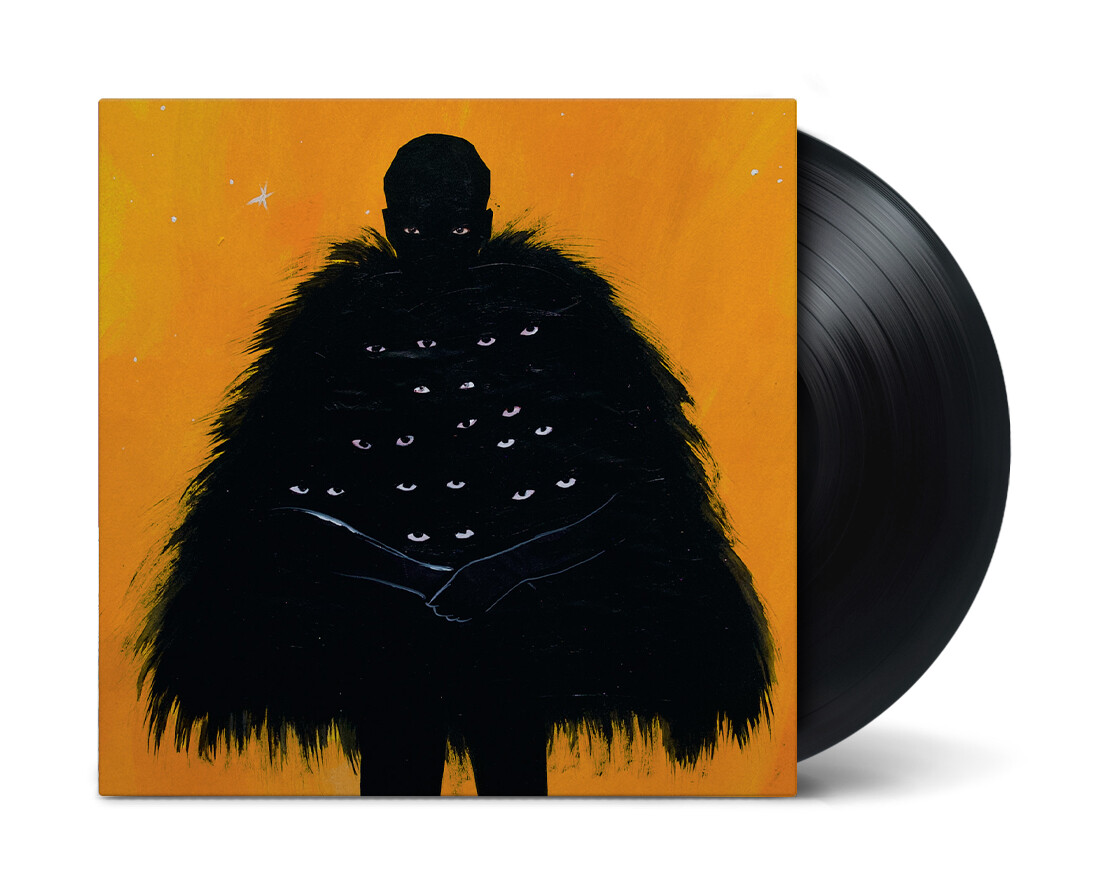
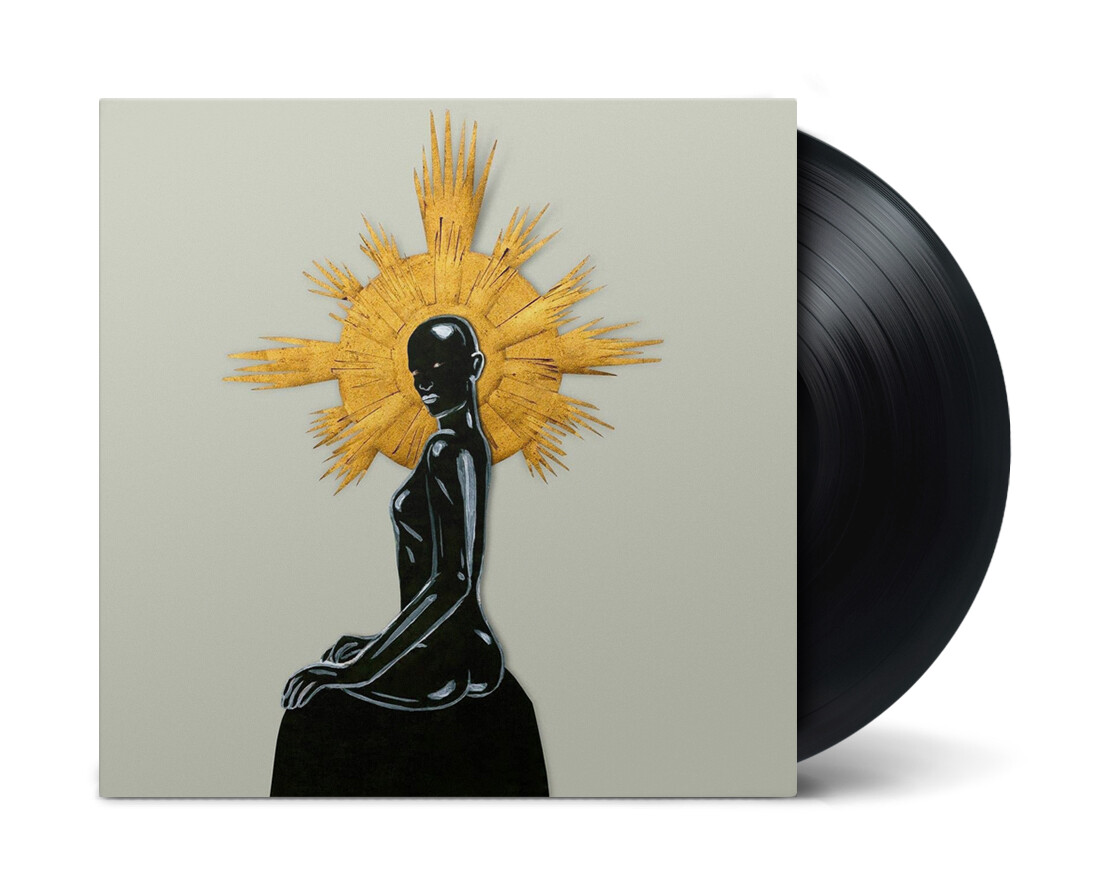
Daniela Yohannes: I discovered jazz for myself, buying albums— initially Louis Armstrong and Ella Fitzgerald— while at university I delved deeper, listening to Sketches of Spain (1960) and Weather Report (1971). I watched Mo’ Better Blues (1990). Curiosity and intuition guided me. I spent a lot of time in jazz clubs and had an unconventional education. After graduating, I began freelancing for jazz producers in London. I spent time with Shabaka Hutchings [of Sons of Kemet]. I ditched work to go to Glastonbury with him. I called in sick, and on Monday morning there was a giant picture of Shabaka and I dancing in The Guardian. I have it framed. At some point I pulled away from the scene, going to Bangkok for an art residency. I posted work online and Shabaka reached out. After working on the Sons of Kemet cover, people kept on finding me. I worked with Nala Sinephro [on her album covers for Space 1.8 (2021) and Endlessness (2024)]. Her music feels aligned to my inner journey in painting. My relationship with jazz feels like an Archimedean spiral looping in parallel with itself.


LG: Would you typically describe yourself as a lone wolf?
DY: That’s how I’ve worked for a long time. Paintings lonesome by nature. Sometimes that’s good; sometimes not so good. Then there’s filmmaking, which is inherently collaborative. It’s a whole other process that I was actively seeking. I had been cooped up alone for so long. It was healthy to be with others and out in the world. I don’t dare say I’m a filmmaker just yet. I’m still so new to it. Atopias (2019–2023) was a small, intimate team of four people, sharing the process—that was a supportive ecosystem. Painting can be lonely. I had taken a long break from it, but I’m going to be returning to it soon. It’s exciting.
LG: What’s bringing you back?
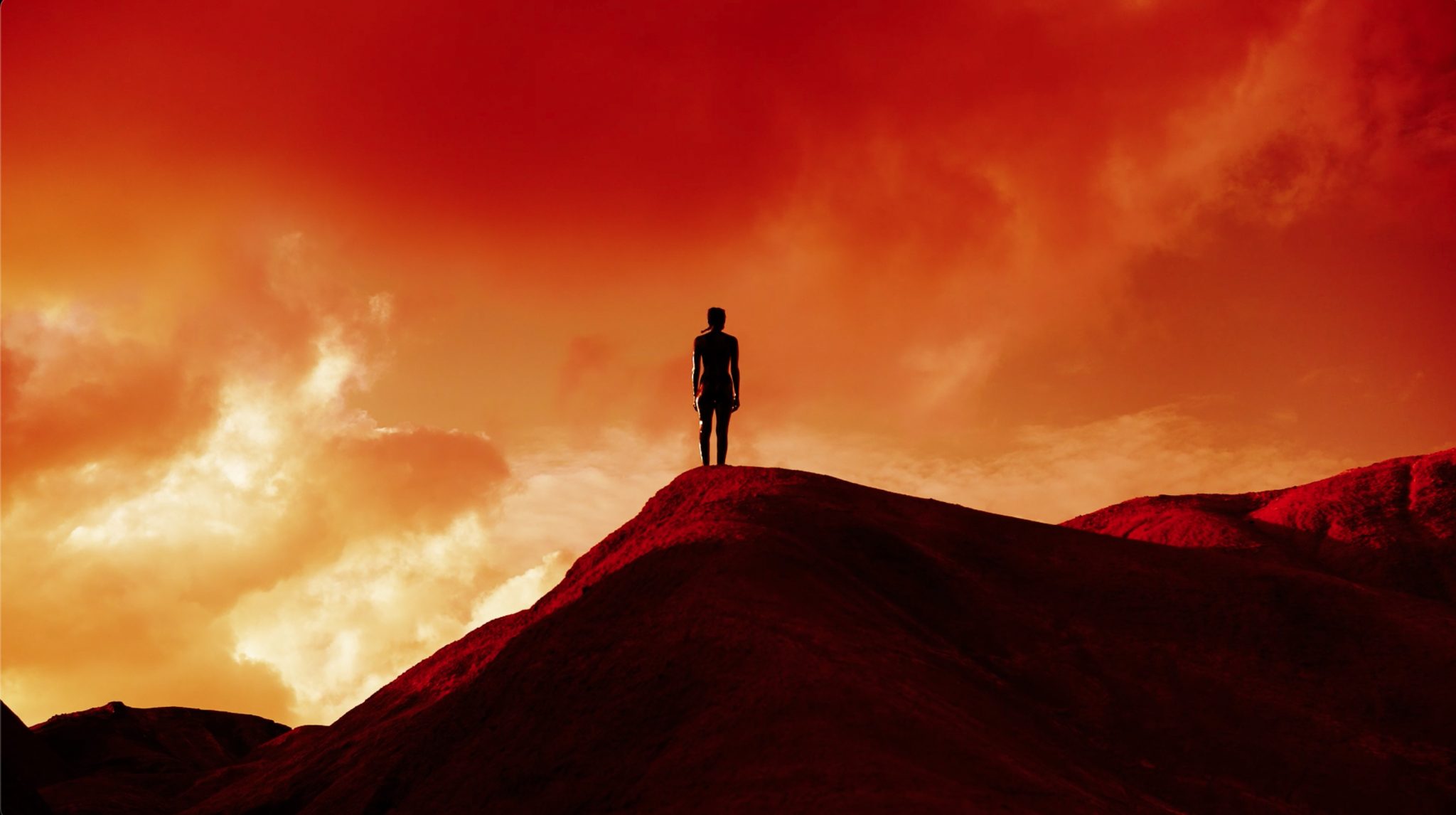
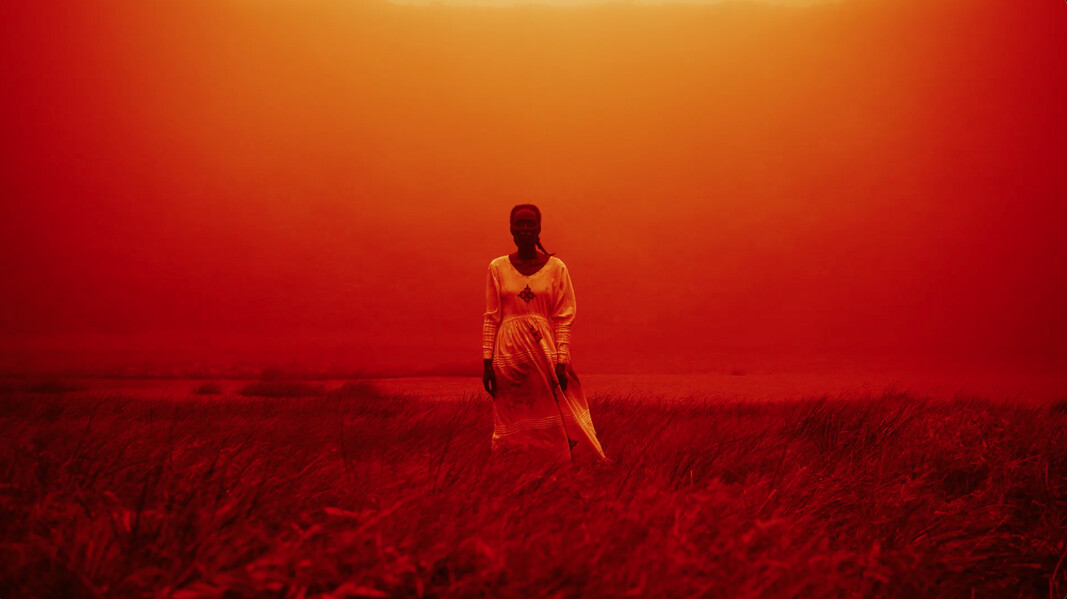
DY: I felt like I’ve been floating my entire life. Displacement, and the feeling that you don’t belong, created this disconnect. Maybe painting is a result of those feelings. I use filmmaking to ground myself. I enter reality through the body. In the film, I am naked, covered in gwo siwo, made from molasses mixed with charcoal, which is put over the body as a Carnival tradition in Guadeloupe. The myth behind it is that enslaved people used this to flee into nature. My film is a meditative walk about finding refuge. The experience was liberating for me because I was the protagonist. I was really walking through these spaces, and it took its toll on my body. But by the end of filming, I felt as if I could walk forever. So, the film stopped me from hovering. I stepped down onto the Earth, and that pivot dropped me inwards, into myself, my past, my traumas. It almost made me lose myself. But when I paint, it is to go outwards — to reconnect with the parts of me that are with the Source. I find myself more deeply in the vastness.
LG: Many filmmakers say that the process is like therapy to them.
DY: Had I spoken to you months ago, I would have described the process as therapeutic. It was, at the time, and for a time. It was a selfish endeav- our—instead of therapy, I made a film. But now I’m tired of looking at it. I’m not where that film was; I’m somewhere else. I’ve surpassed that moment—where I am today, I need to delve somewhere else. To return to painting feels like a readiness to meet myself again in a way I haven’t done in a long time. I look forward to sitting with myself and seeing what rises to the surface
LG: Did that deep dive into jazz teach you anything about how you wanted to approach painting going forwards?
DY: There’s a breaking of the rules; this free, radical aspect of jazz that I’m drawn to. I love Sun Ra: his writing is abstract, far-reaching, tender. It’s mythic. My artistic vocabulary leans into that same space.
LG: You spent three months painting in Thailand. Was your experience there formative?
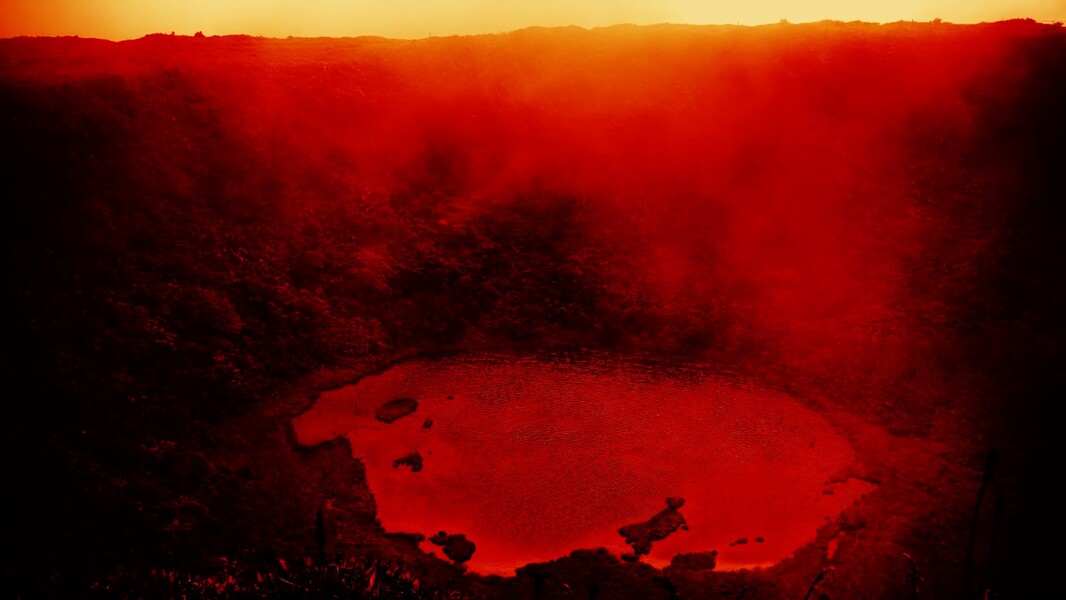
DY: It’s what initiated my practice. A friend created a space for me there at a time when I didn’t have many resources. A lot of the art I made in Thailand was rooted in escapism: how to imagine other realities, other ways of being, other beings themselves. At the same time there was the 2010 Haiti earthquake, and I remember looking at images of people in the rubble. I painted hands emerging, floating from the sky down towards them. It was the beginning of this way of seeing the unseen.
LG: Is that how you would describe yourself?
DY: A few years ago, somebody asked if I would call myself an Afrofuturist, and I thought that sounds quite nice. Maybe I will, but it’s not a word I am attached to right now. It’s not an identity that I claim. I think it implies future journeying, but I’m journeying inward. There’s a cosmic belonging that I’m seeking in myself.
LG: Are you critical of your past work?
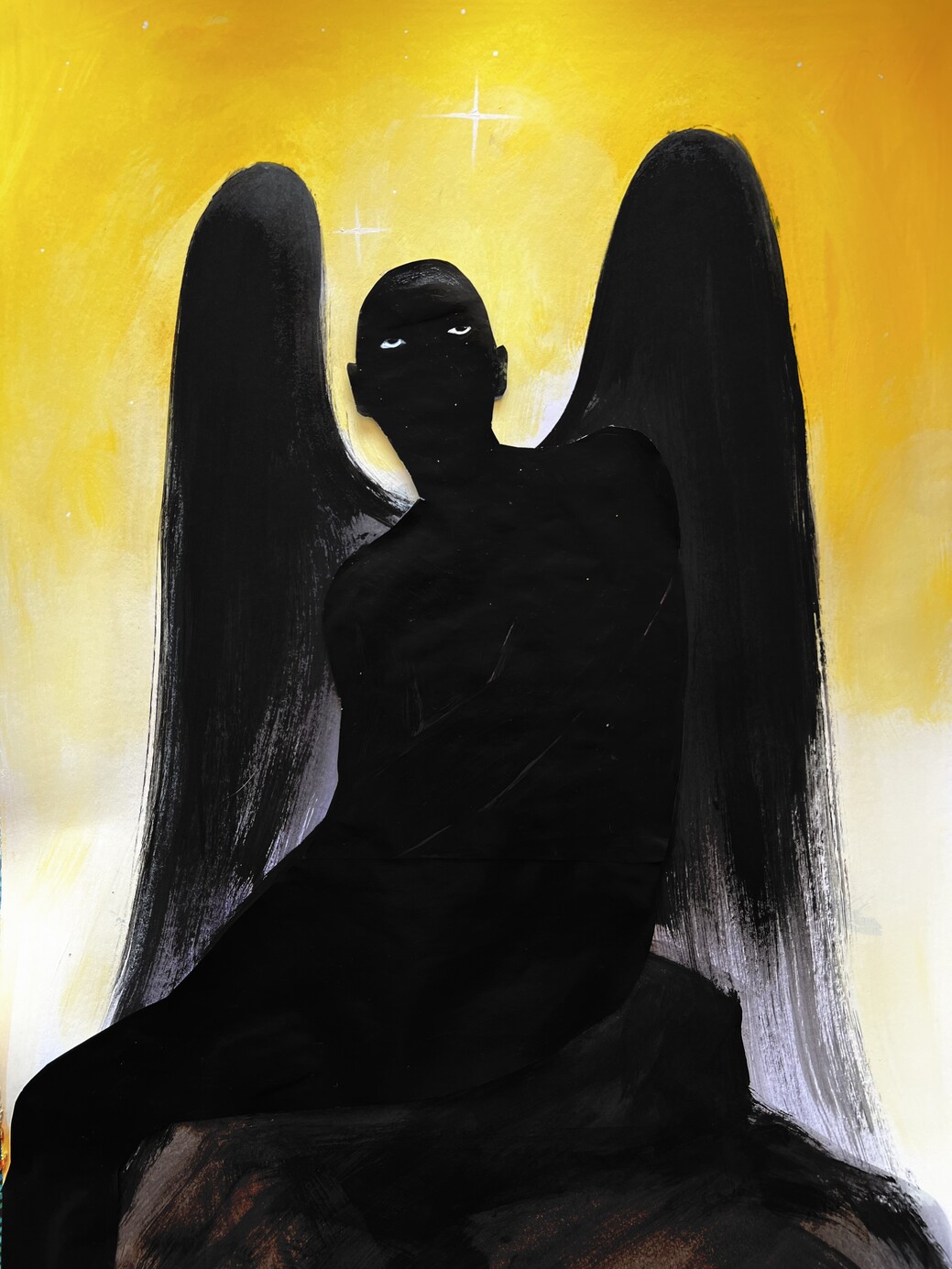
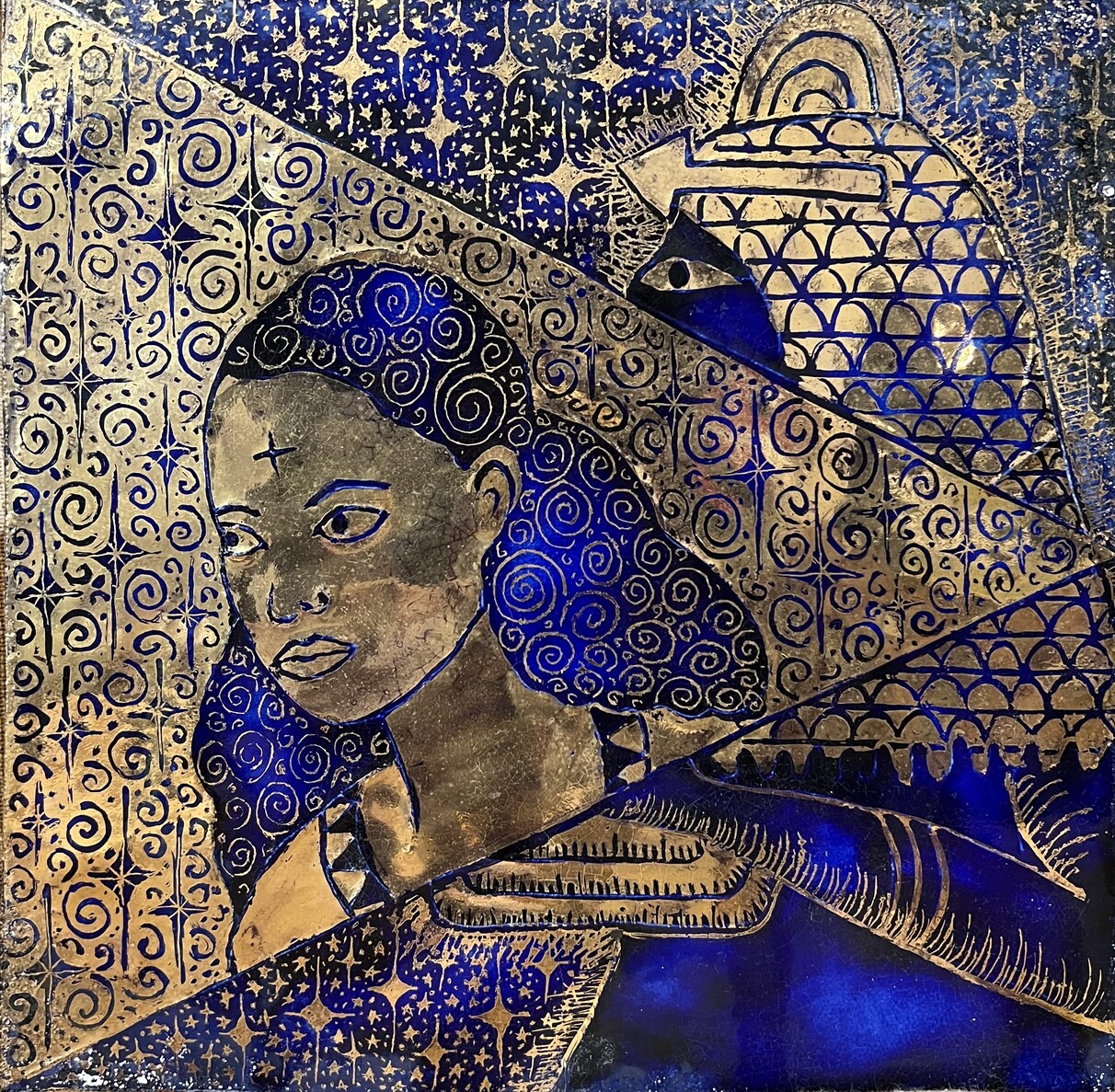
DY: I did a body of work called I Surrender My Body to Water and Fire (2021). I consider it bad work because I was in a lot of pain making it. It became very heavy for me. I don’t think I do good work in that kind of state. I need to float. Atopias: The Homeless Wanderer (2023) and I Surrender My Body to Water and Fire go together. I then worked on the paintings of Magic Scrolls (2023–2024): in Ethiopia, they’ve got these scrolls full of incantations, spells, and prayers, and images. I made Magic Scrolls as a way to return to something that felt more like myself. I serve best when I’m vibrating above despair.
LG: So much of your work is rooted in the unconscious. Do your paintings first manifest in your dreams?
DY: Dreaming is a recurring theme in my life and work. The paintings themselves don’t come directly from my dreams, but something close to it. When I paint, I get into a trance and these figures emerge from my imagination. I don’t fully know where they’re coming from, but they’re there and I’m happy to meet them. I miss them when I’m not painting. More than the other works I’ve done, the Magic Scrolls feel more tangible, with substance. They’re no longer mine. They’re there; they simply exist.
LG: There’s something both futuristic but also very ancient in your work.
DY: The futuristic and the ancients go together. Time—past, present, future—exists simultaneously. I already feel deeply connected to something ancient about myself. I have ancient bones. I carry the memory of my lineage, of every ancestor. I have an interest in the past, in discovering parts of myself that I don’t yet know. The Horn of Africa, therefore, was a good place to begin. While researching, I came across the ancient Land of Punt, a place where the ancient Egyptians traded and claimed to originate from. There’s evidence of Hatshepsut, the Egyptian female pharaoh, taking a fleet down the Red Sea to Punt. Ever since I was little, I always wanted to know who I was and where I came from, and that question only intensified with time.
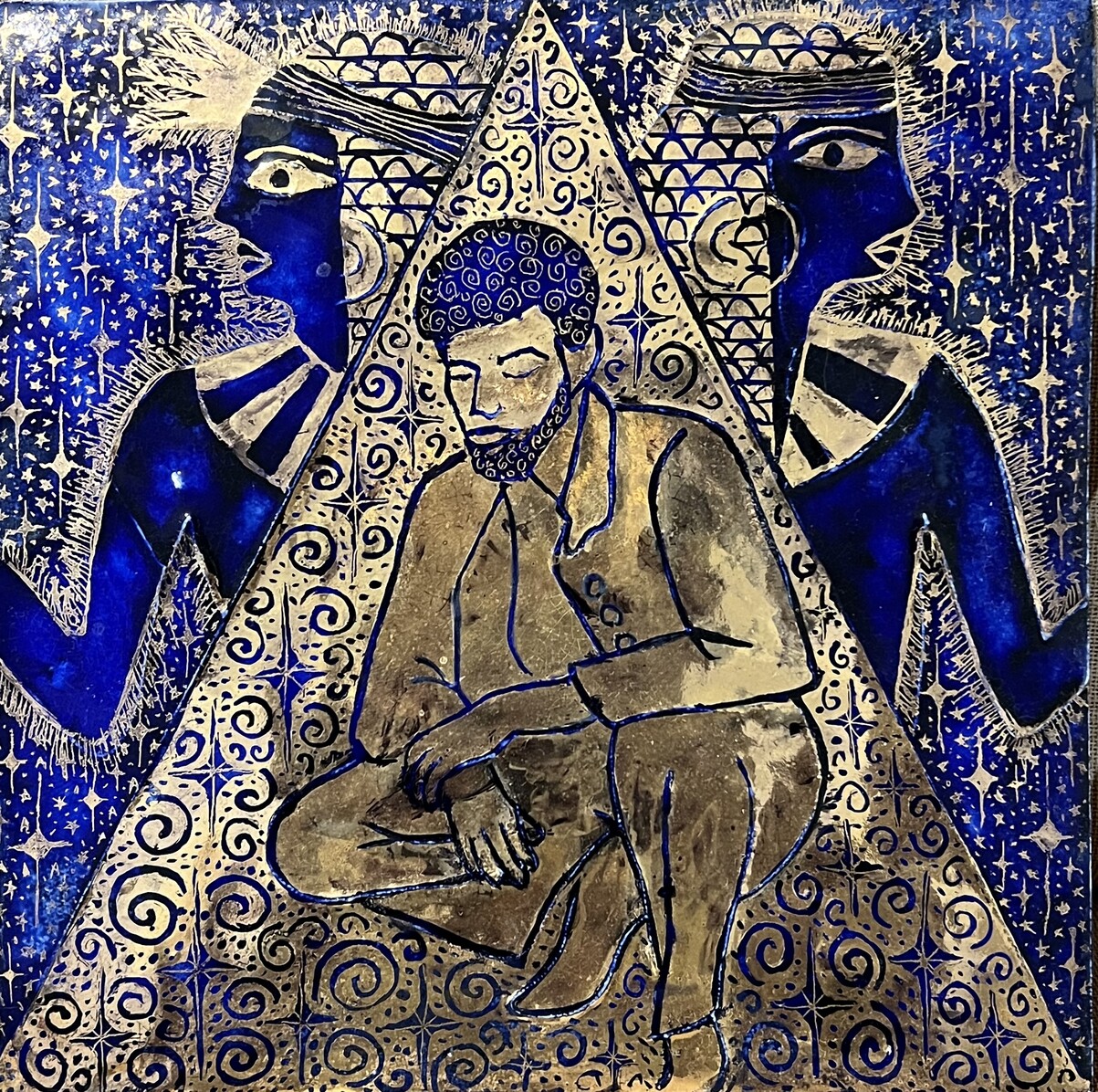
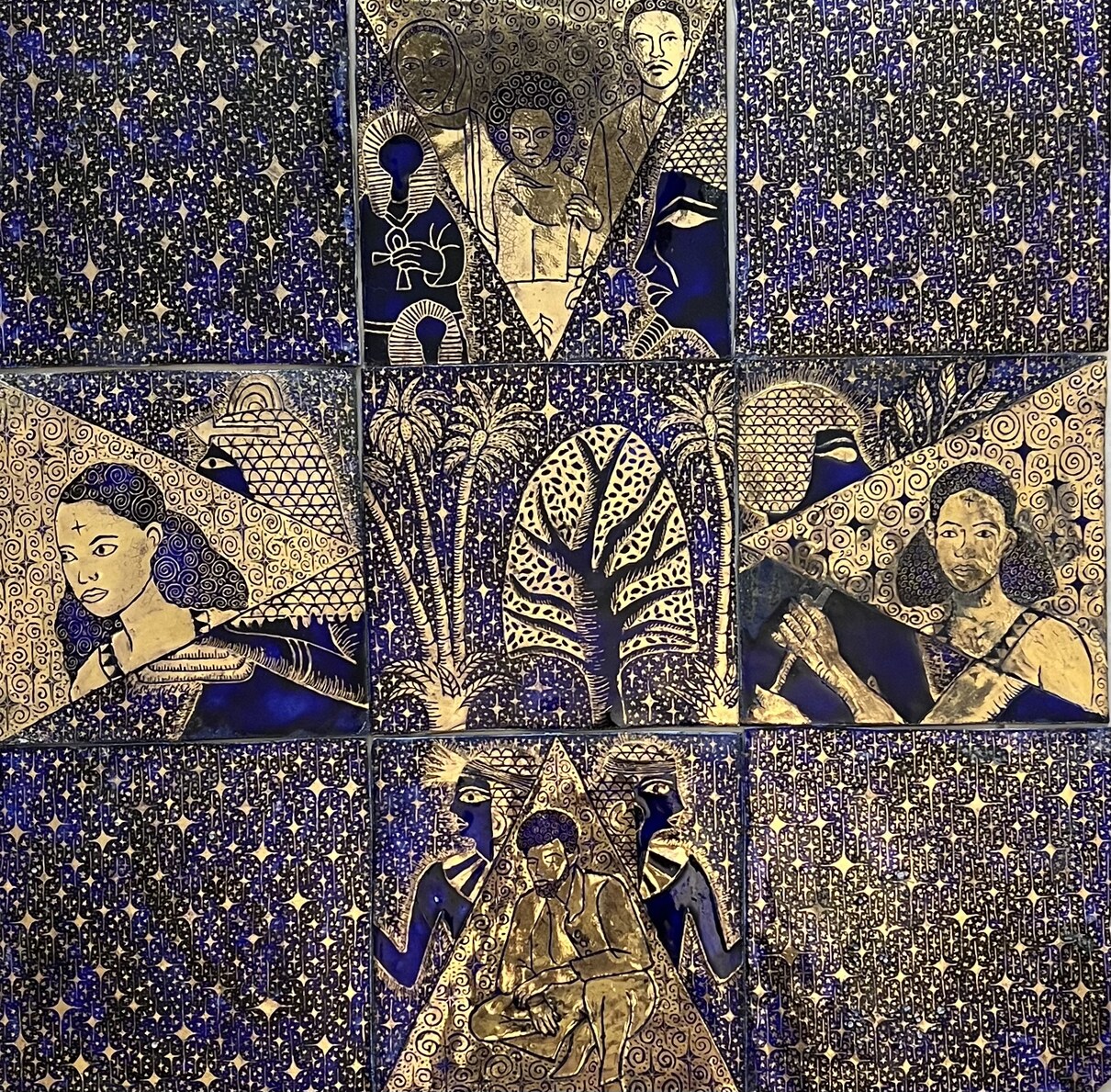
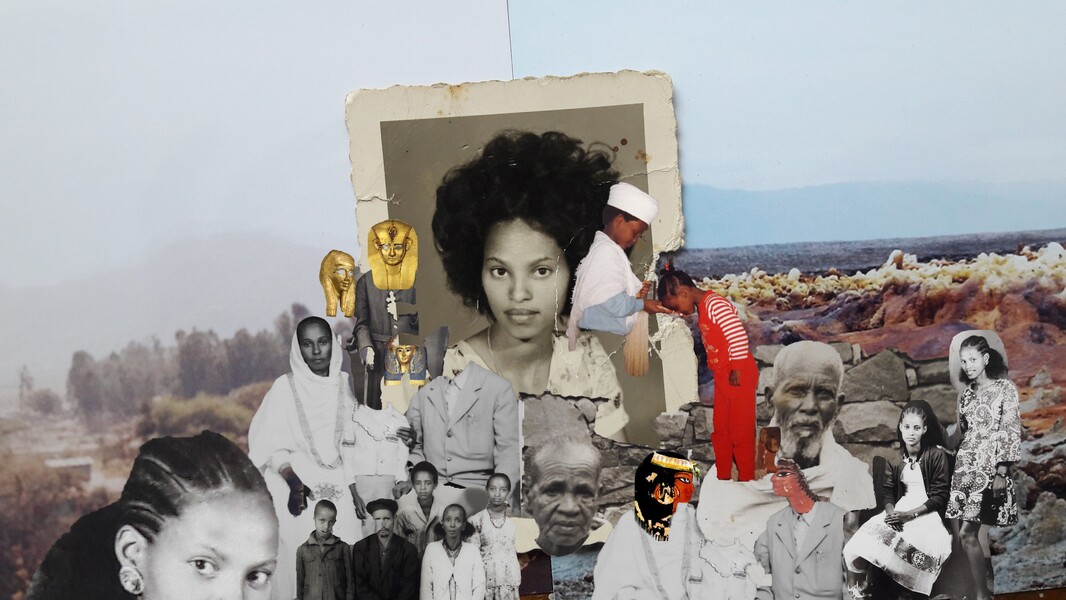
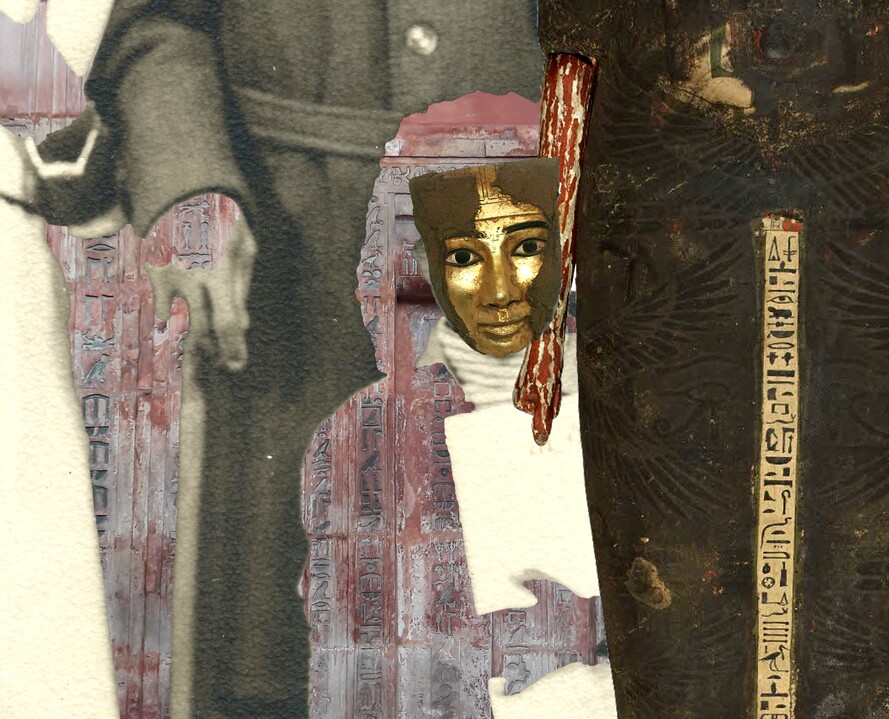
LG: You collaborated with ceramic artist Boris Aldridge to create a series of tiles that blended Egyptian iconography with photographic imagery from your family archives.
DY: This is an ongoing collaboration with Boris. We have been working off and on for many years. There is an idea to create a portal. I call it the “sanctuary portal”. It’s a space to invite people, musicians, and researchers into the space to activate it and share music, conversation, and rituals.
LG: Are you ritualistic in your practice?
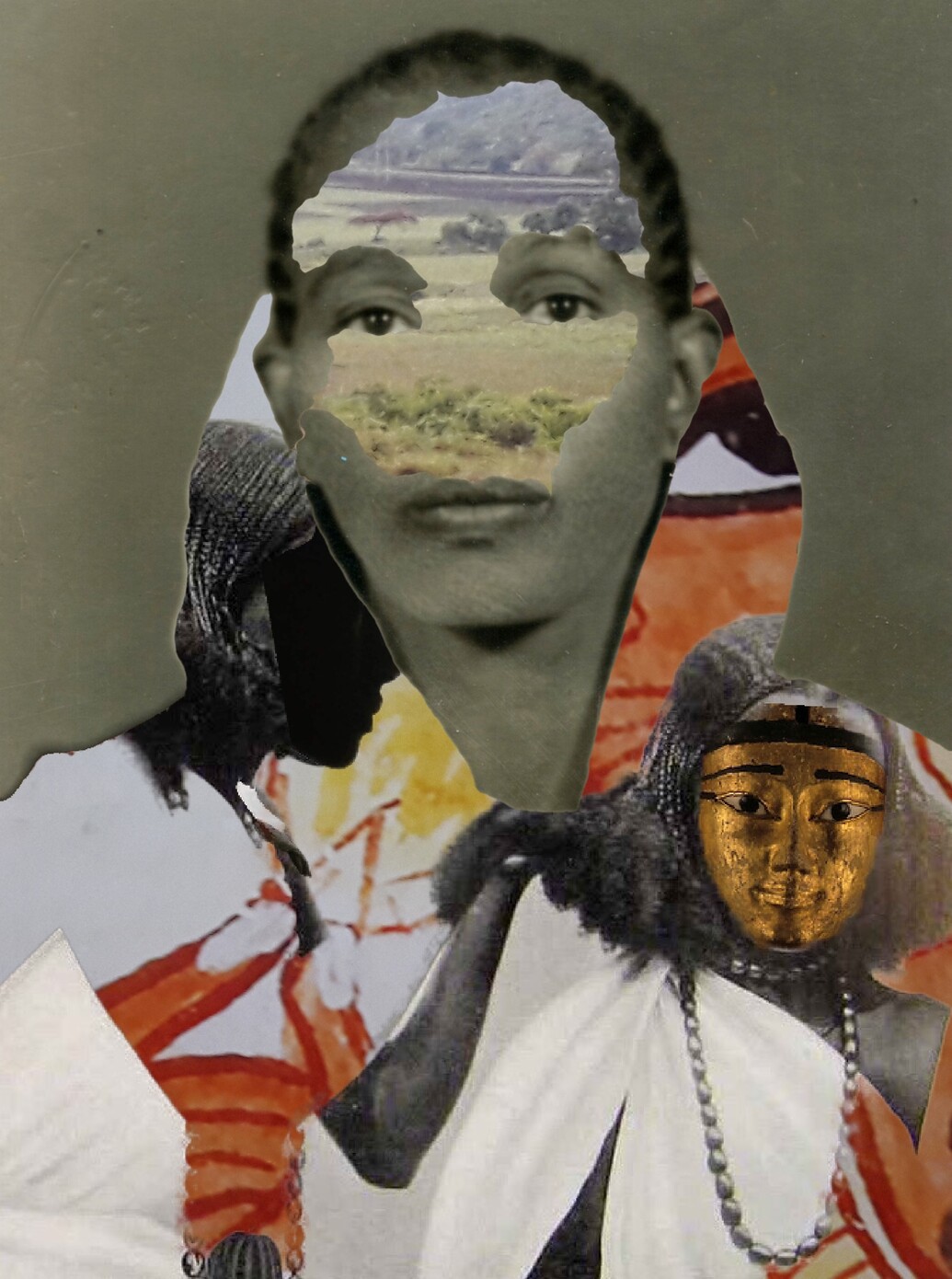
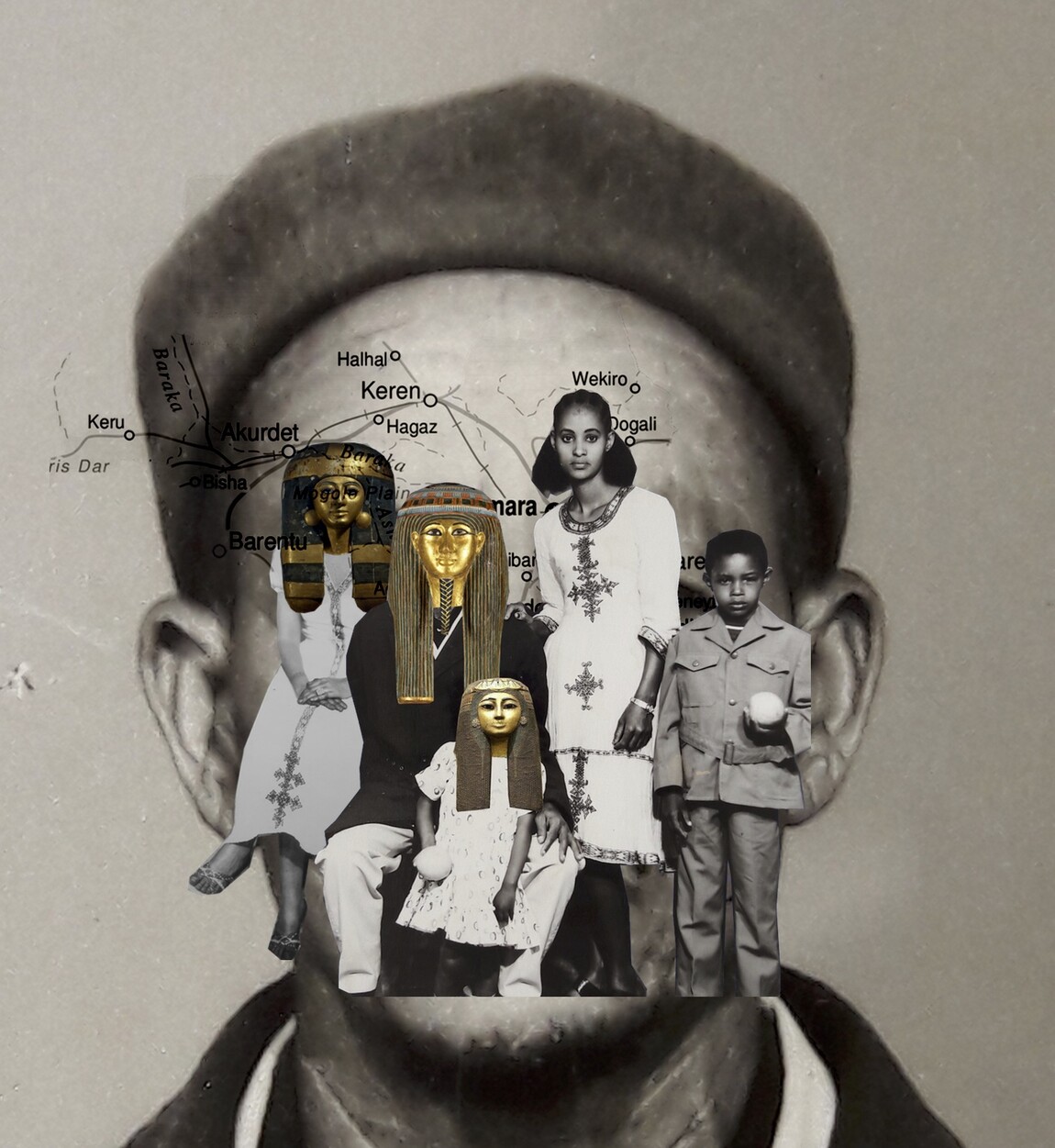
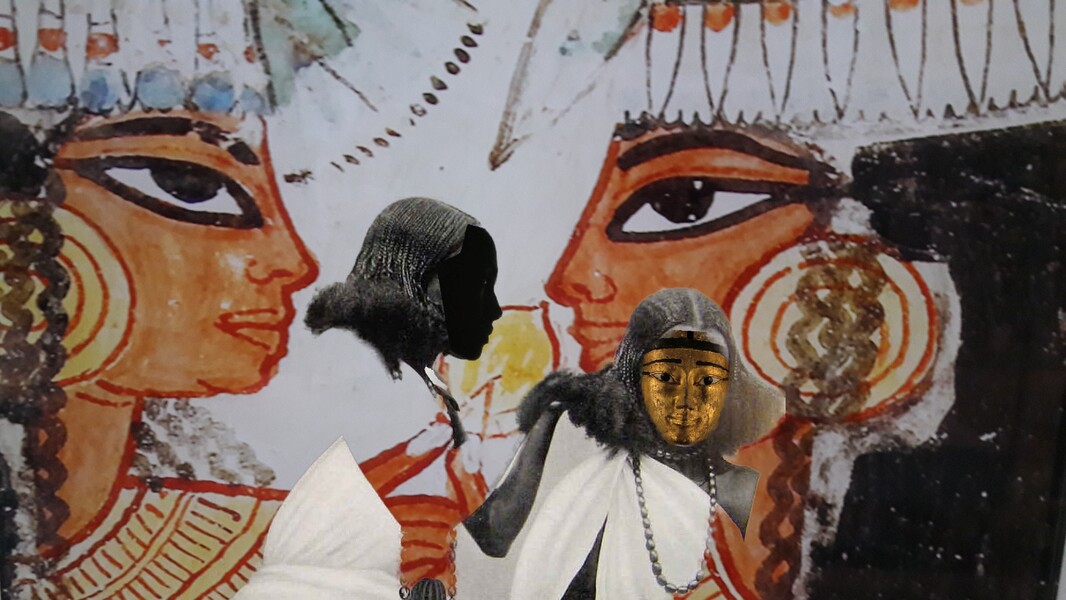
DY: Who I am and what I represent is constantly in conflict, so I’m breaking the rules and creating my own rituals. The portal is in my back garden. I’m building it to house all the cultural artifacts that have been passed down to me by my mother, and to activate them in this space. We’ll build the roof with palm leaves, under the guidance of a Rastaman. This isn’t painting, a collage, or filmmaking. It’s something else, and it’s necessary for me.
Rituals connect me and ground me. They offer peace and communion. They enrich my work, life and my state of being. I now live in Guadeloupe. My husband is from there, and I’ve seen him transform in the time since we moved there together. The way he walks has changed. The way he speaks. The way he breathes. The land and community have merged with him. It’s wonderful to witness. I want that for myself. I want a place where I can immerse myself in my homeland. The sanctuary portal is my mothership. It’s a teleportation device. I walk in, and I’m no longer in Guade- loupe. I’m in Ancient Ethiopia and Eritrea. There is a part of me that is desperately yearning for that connection.
LG: How does the expression of the tangible in your work reflect how you feel about the intangible?
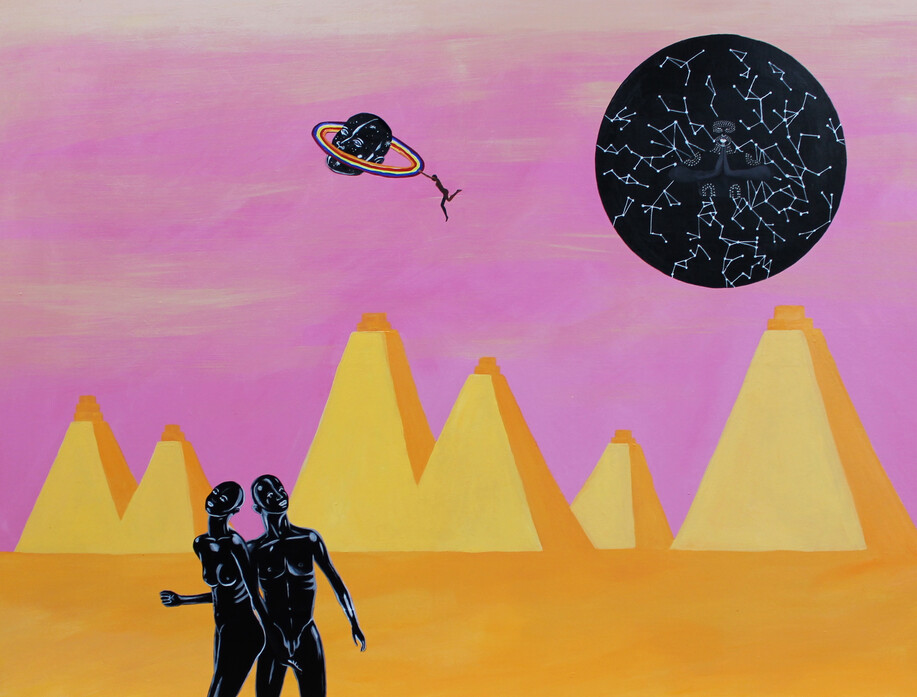
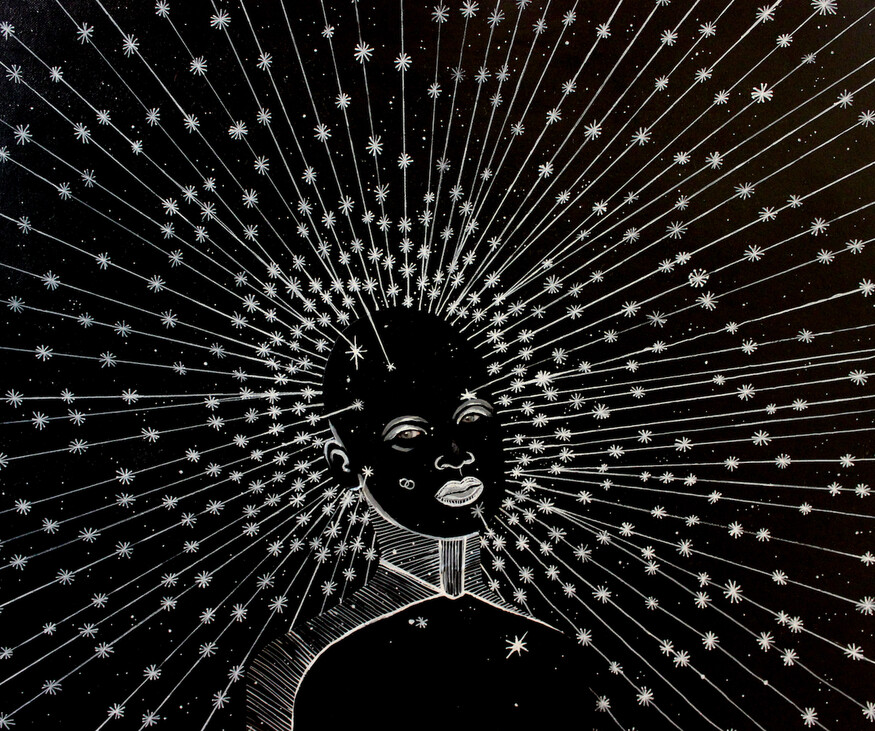
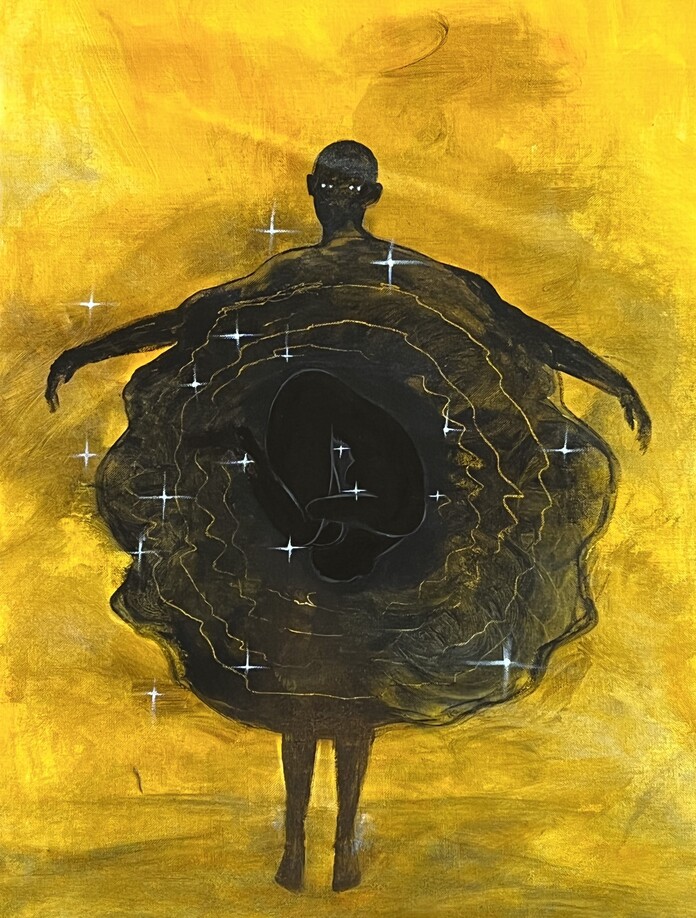
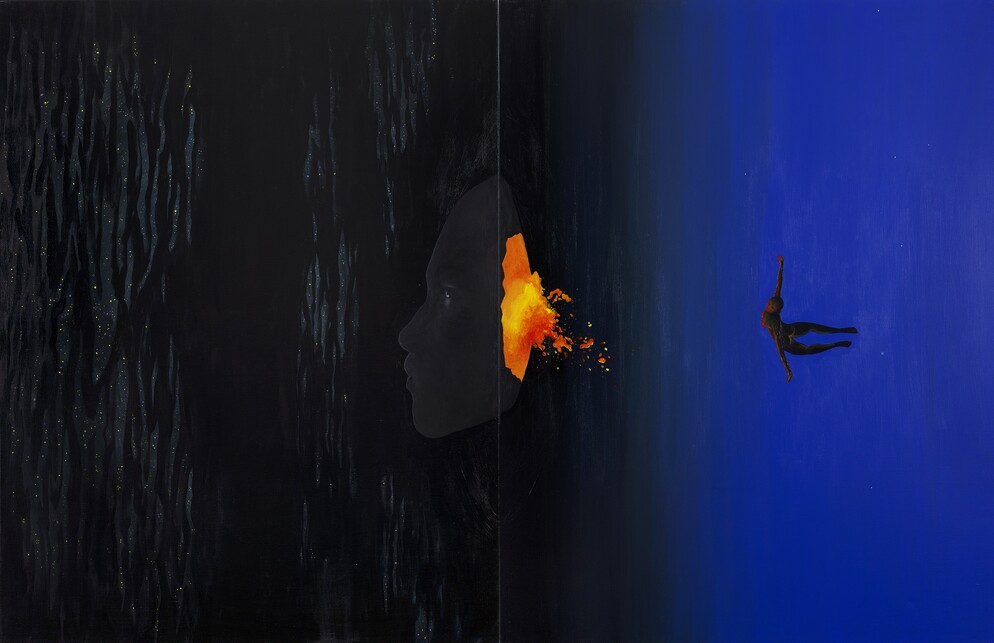
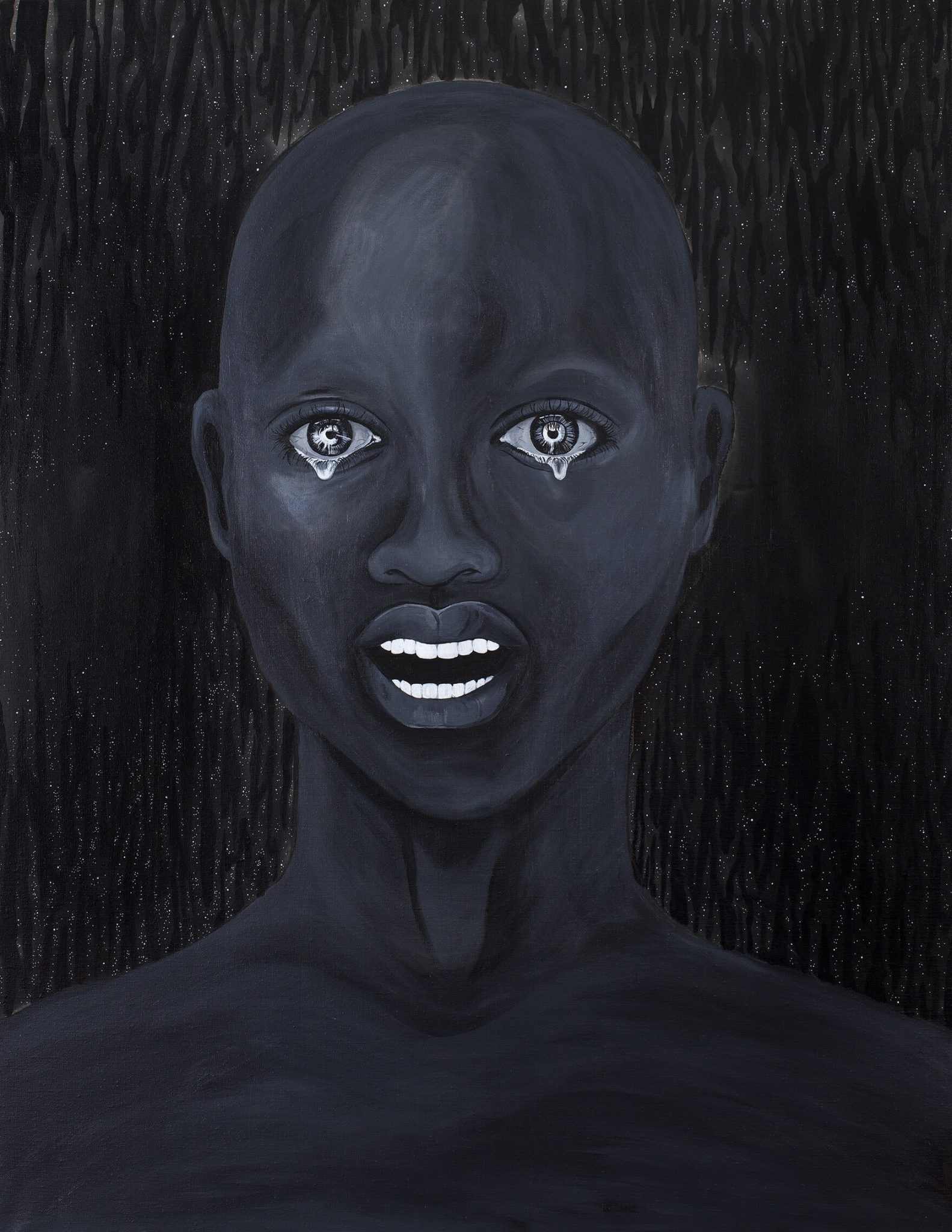
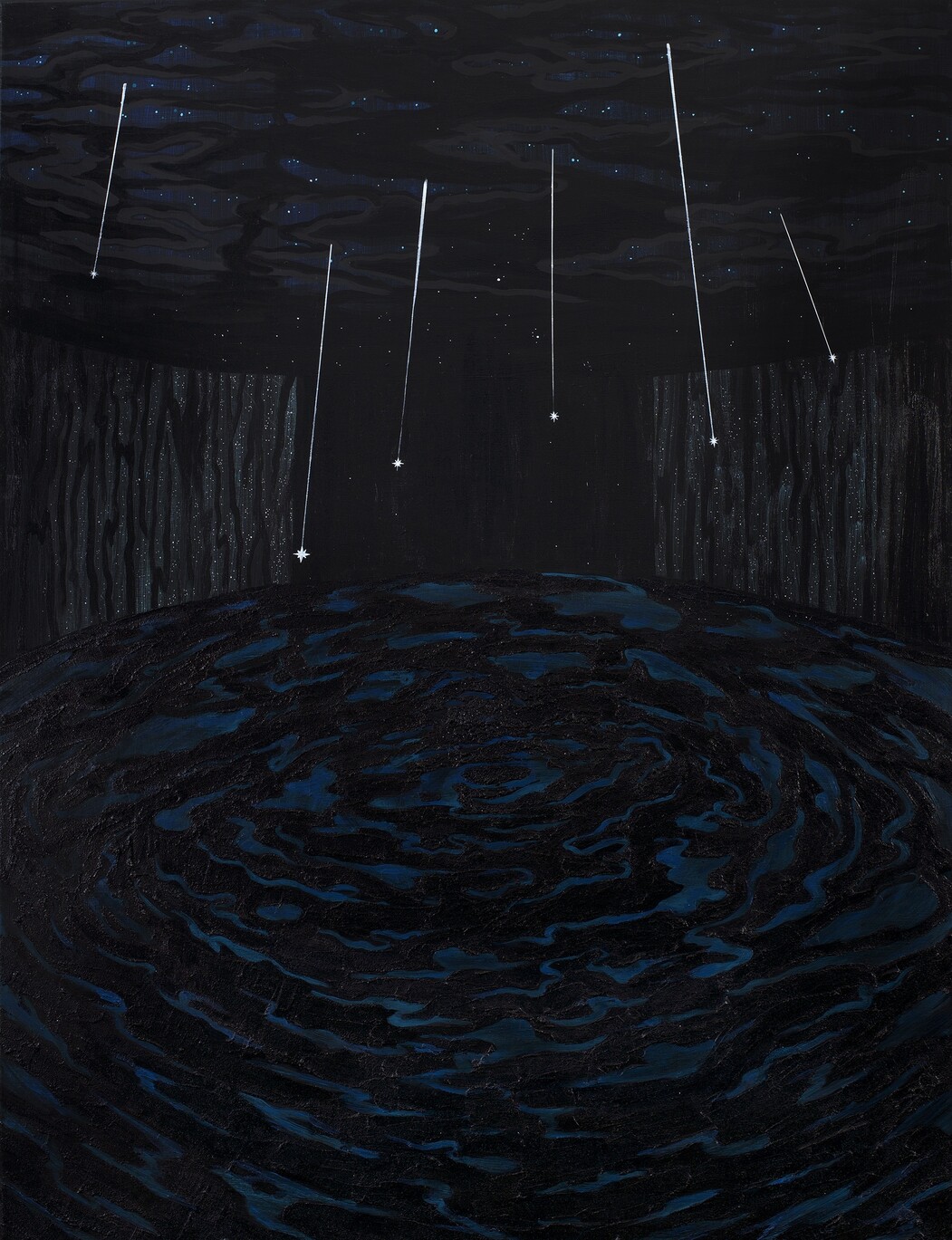
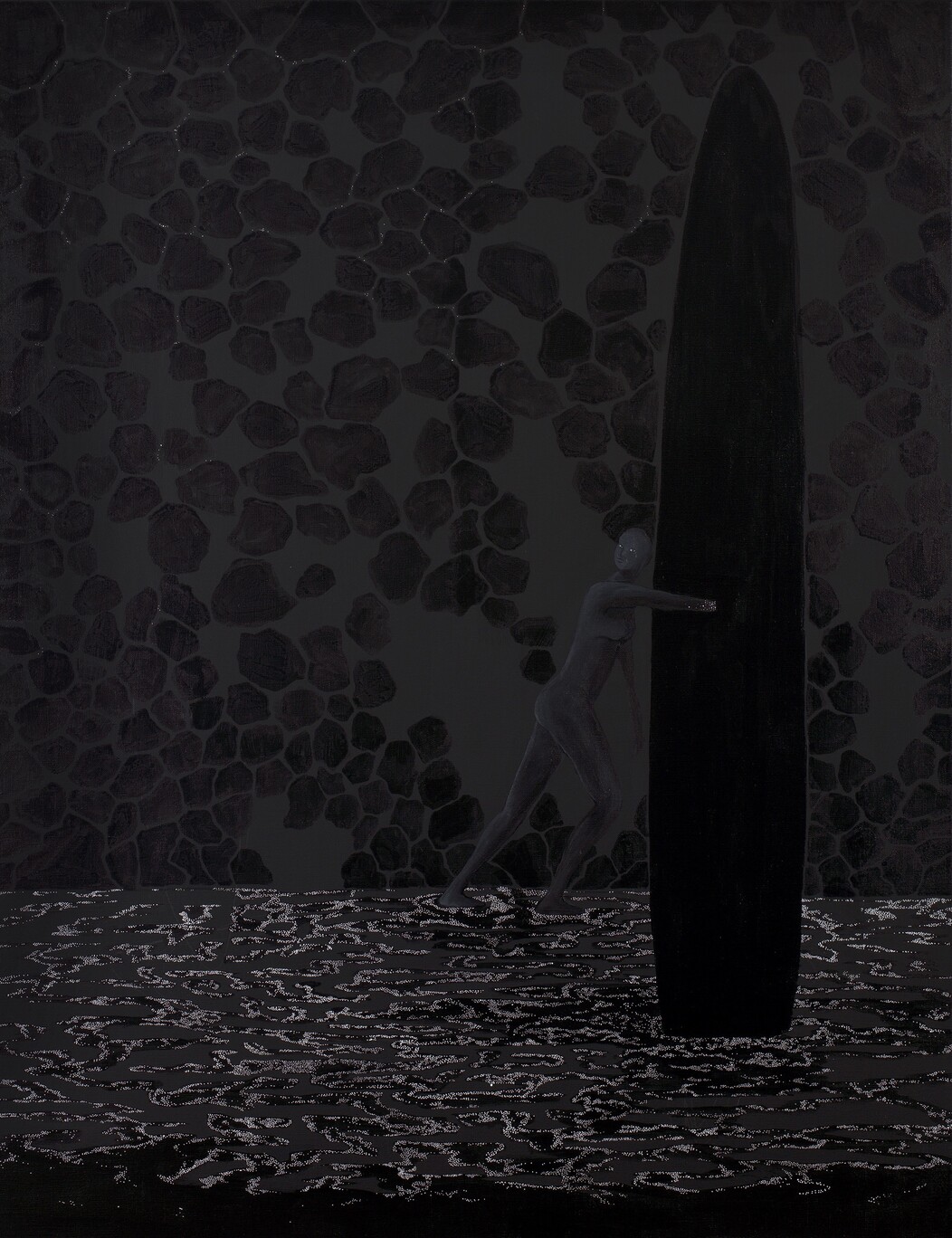
DY: In my older works, the figures portrayed are intentionally dark. They are black and silhouette-like. They represent the vastness of the soul. It was about stripping oneself of those ideas that we cling to about who we are. That’s how it started. The blackness was always about connecting to the primordial mother. I had a dream in which I met this black sphere made of organic matter. It moved hypnotically and spoke to me. I was afraid at the time, but it was the most amazing dream I’ve ever had—the most love I’ve ever experienced. The voice was so soothing. I’ve said since, in my waking life, “Please come back, I won’t be afraid next time.”
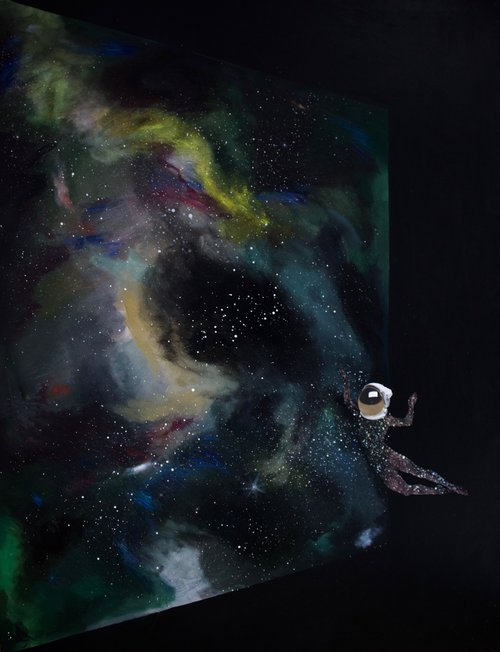
From there, I evolved The Fall: A Woman’s Descent into the Unconscious (2019). It maps the journey of a figure who is propelled through space and descends through the layers of the cosmos toward Earth. It’s a perpetual fall. She falls through the atmosphere. She eventually falls into the ocean, to the seafloor, and continues to fall to the centre of the Earth, landing in a black oily substance—that is dark energy and matter, the primordial mother, a black female consciousness. It’s a descent into the deepest part of the self—the fall from the head into the heart. For me, the figure is essential. She’s not a representation of me, but her emotional journey parallels my own.