

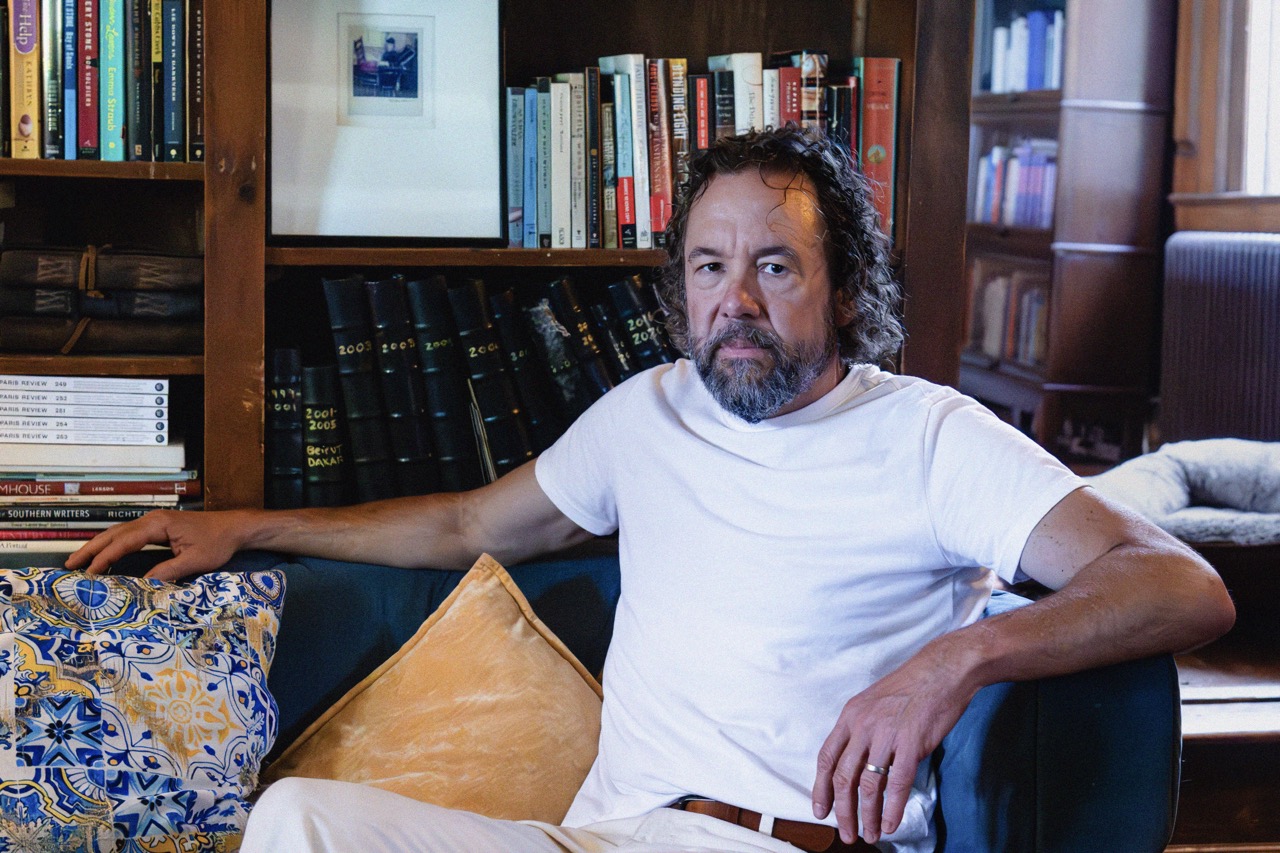
Jonathan Miles’ latest book sees a grieving man arrive on an island overpopulated by goats. At his home in New Jersey, we speak to the author to discuss Werner Herzog, the power of the short novel and why writing fiction is like fumbling around a dark room.
Jonathan Miles has spent much of his career moving between journalism and fiction, bringing a reporter’s eye for detail to novels preoccupied with the larger questions of belief, responsibility, and human frailty. A former columnist for The New York Times and the author of four novels published between 2008 and 2026 including Dear American Airlines, Want Not, and Anatomy of a Miracle, Miles has built a reputation for fiction that is intellectually restless, darkly funny and morally complex.
His latest novella, Eradication, published earlier this year begins with a deceptively straightforward premise: a grieving schoolteacher accepts a temporary conservation job on a remote Pacific island, where he is tasked with eliminating an invasive population of goats. What follows, however, is less an ecological adventure than a meditation on grief, guilt, loneliness, and the uneasy ethics of deciding which lives are worth preserving. Compact in length but expansive in its concerns, Eradication explores the fault lines between environmental stewardship and violence, while probing the language through which societies define outsiders, threats, and belonging.
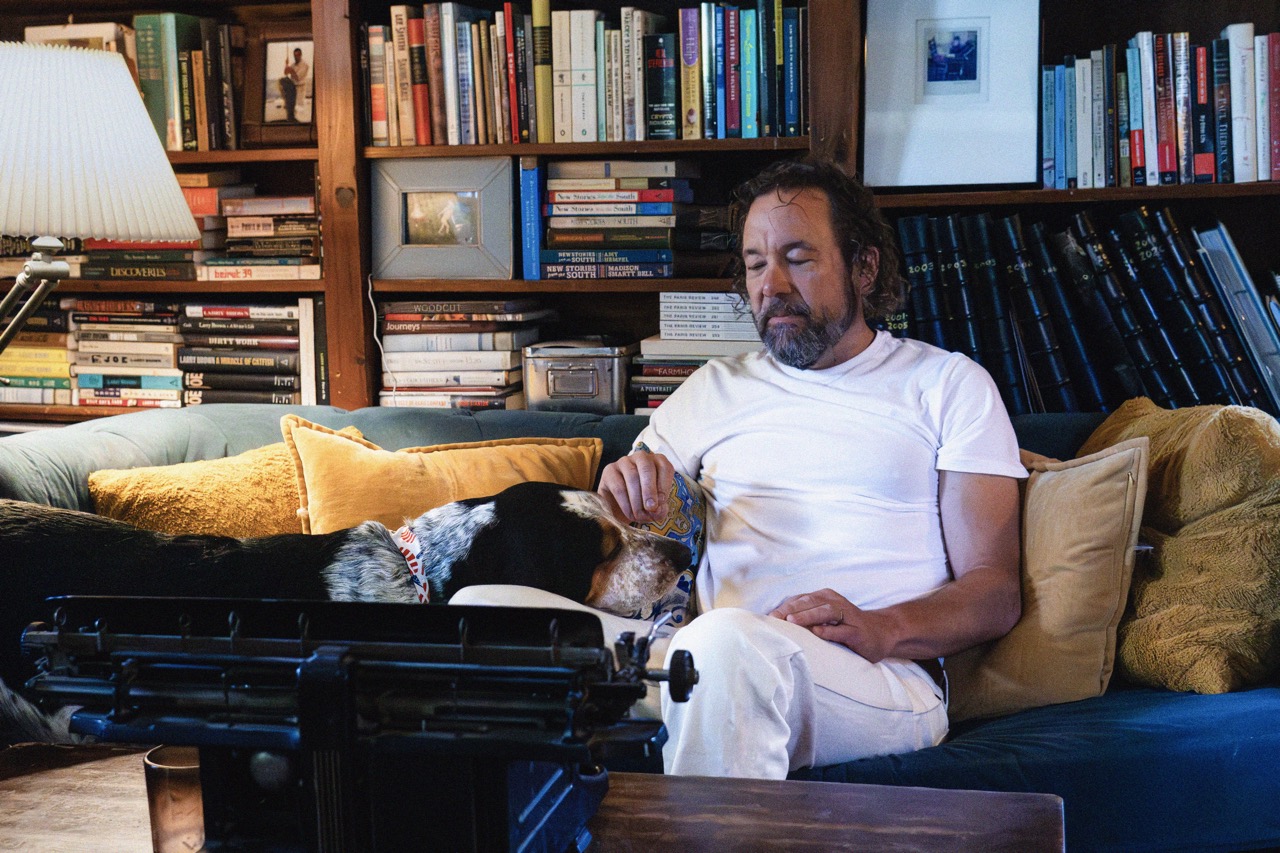
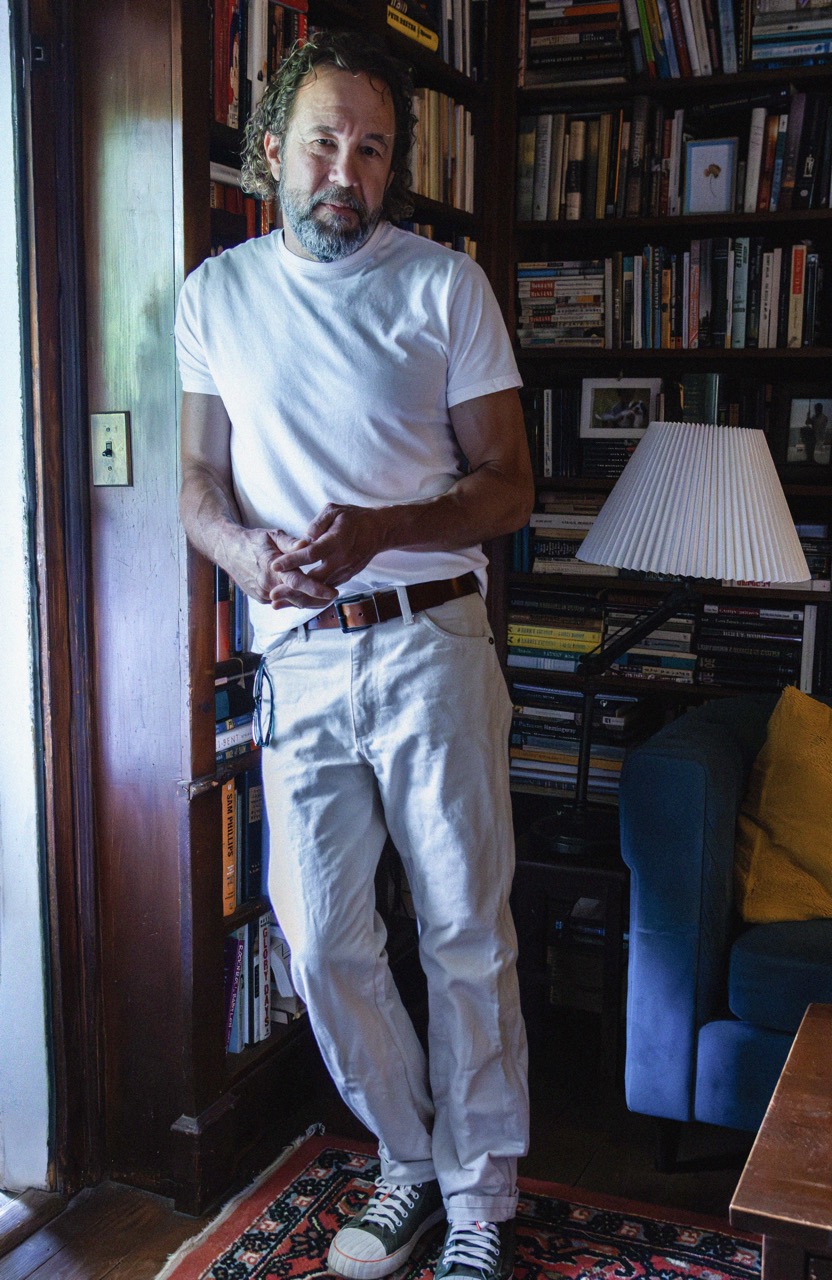
When Miles spoke to me from his idyllic, bookfilled home in New Jersey, our conversation ranged from the ecological and ethical tensions at the heart of Eradication to the ways grief and blame become entangled in fiction. We discussed the influence of journalism on his novels, his fascination with moral uncertainty, and the films that have stayed with him—from Werner Herzog’s Grizzly Man to Robert Zemeckis’s Cast Away—as well as his belief that fiction’s task is not to resolve questions, but to deepen them.
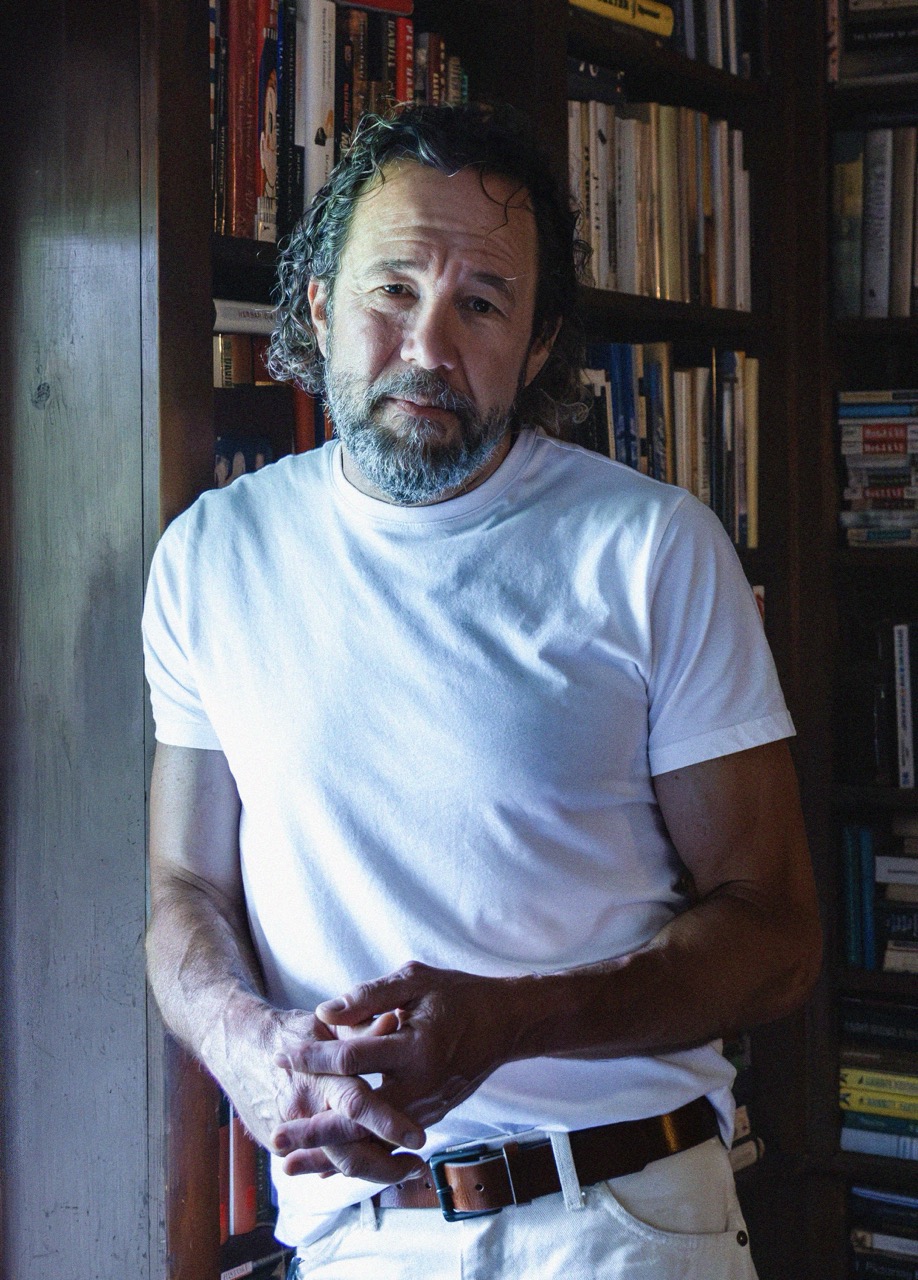
At home with Johnathan Miles. Credit: Tiffany Robinson.
Fatima Khan: Your new book Eradication has a premise that sounds quite simple, killing goats to save an ecosystem—but it becomes something much deeper. At what point did you realise it was really a story about grief?
Jonathan Miles: The novel-writing process is deeply opaque. Even when the story itself is clear to you, what it’s about is often murky. Harold Pinter said, “I can’t tell you how I write in the same way that I can’t tell you how I breathe.” You inhale with a word, exhale with another. How they all connect is often a mystery until the end.
I knew my main character, Adi, needed to accept this unusual job on a remote island, eradicating a so-called invasive species. What kind of person, with his background, would uproot his life for such an opportunity? Whatever drove him to take the job needed to be fairly radical, which is how I came to the idea of his grief, almost as an architectural element of the story.
Only later did it occur to me the island possessed its own grief—that the ecosystem itself was grieving. My original vision pointed the story toward our notions of blame: specifically, the ancient Israelites’ idea of the scapegoat, in which, through ritual, all of a community’s sins were transferred onto a single goat, all the guilt and moral grime dumped onto an innocent animal which was then banished to the wilderness.
And it is still about that. But it also became, as you say, a story about grief, and the ways grief and blame get twisted together. I didn’t realize that until the very end. That’s part of the magic, and, depending on the day, part of the terror.
Did you want readers to feel conflicted about the mission, or did that come naturally as you were taking us through the journey?
I wanted them conflicted because I was conflicted and I had been conflicted since the first time I heard about the real-life counterpart to the situation, which was twenty-five years ago.
I was in the Galápagos Islands reporting on an epidemic of illegal shark fishing when I happened to hear about the Ecuadorian government’s efforts to shoot and kill feral goats on some of the islands to protect endangered tortoise habitat. The moral friction struck me immediately: this ostensibly righteous ecological purpose chafing against mass slaughter, the fraught calculus of us killing one species to protect another.
When is killing righteous? Who gets to decide?
There’s a wonderful line by the painter and musician Terry Allen: “The shortest distance between two questions is art.”
This novella is slightly shorter than your other works that have been published. Did you set out with the intention of making it shorter, or did it simply feel right for the story?
As a reader, I find myself increasingly drawn to short novels and increasingly resistant to doorstop-sized ones, and I say that as someone who’s published a doorstop and happily consumed hundreds of them.
But we’re asking a great deal of readers nowadays, I think, when we hand them seven or eight hundred pages of literary fiction. The old model of reading—an hour a night, let’s say, with the bookmark slipped into page 110 so that you’ll pick it back up the next night at page 111—has been corroded. Because in those intervening hours, that reader has been bombarded with terabytes of information. And that reader is often being bombarded during the reading: by text messages, by breaking headlines, by offers for ten percent off dog toys or likes on a social media post.
What I set out to write, then, was a novel that a reader could conceivably finish in a single sitting. Because that’s what I found myself craving as a reader.


The book touches on control, responsibility, and consequences. Do you see that as a reflection on the world we live in today?
I must, because I wrote it. But those more abstract notions, if they’re present, were operating somewhere in the subconscious.
When I’m writing, I’m not exploring topics or ideas so much as questions. Milan Kundera said that novels teach us to comprehend the world as a question. What I try to do with those questions is not answer them—that’s an essayist’s job—but to deepen them, broaden them, multiply them, give them a voice and a face, and ultimately let the story itself be the answer.
Writing fiction is a lot like fumbling around a pitch-dark room, feeling along the walls, bumping into things, tripping, cursing, before finally finding the light switch. You turn it on and look around the room and think: yes, this all makes sense now. But then the next day you find yourself in another dark room.
Are there any films that have influenced you—not just in relation to this book, but films that have stayed with you or moved you in their depiction of isolation or moral uncertainty?
Instinctively, I could imagine Werner Herzog setting up his camera on Santa Flora. His attunement to nature’s indifference, his way of framing human endeavour as vaguely absurd against geological time. Herzog’s Grizzly Man in particular feels related, in the way it explored the moral and psychological dimensions of human-animal relations, and the unease it left behind.
Regarding isolation, I’m an unabashed fan of Robert Zemeckis’s Cast Away, starring Tom Hanks, primarily for one reason: the role of Wilson the volleyball. The scenes featuring Wilson are some of the most affecting and oblique depictions of loneliness I’ve seen.
As a child I found myself hypnotized by Carroll Ballard’s film adaptation of Farley Mowat’s Never Cry Wolf, and I suspect—though it’s been decades since I’ve seen it—there’s some kinship between Eradication and that film.
Cinema was a foundational influence on me as a storyteller, to the extent that I still compile soundtrack playlists to accompany my novels. But screenwriting itself never tempted me. Language became my chief intoxicant, the sound of scenes more than the look of them.
The book raises questions about who gets to decide who lives. Do you see that as an environmental issue or something bigger?
It’s the central question of the book. It’s certainly an environmental question. We see it playing out constantly with so-called invasive species and the ways governments have tried to manage non-native animals causing havoc in ecosystems.
But I always thought of that as a metaphorical framework for something larger: the idea of the other, and what to do with the other.
Consider the word invasive. It connotes agency, determination. It draws its energy from nativism and warfare. Vladimir Putin invaded Ukraine—that was an invasion. But my fictional goats didn’t invade Santa Flora. They were brought there by humans. Most plant and animal species that we label invasive didn’t migrate of their own accord. Intentionally or unintentionally, they’re delivered somewhere new. And in that unfamiliar place they do the only thing they can: they try to survive.
You see the word “invasive,” I’ll note, increasingly applied to human beings. Politicians speak about so-called invasions of their borders, and in doing so frame human beings—no different from them save the colour of their passports or the language they use to tell their children they love them—as a kind of invasive species, as human pathogens.
So part of what I sought to do with this novel was to deconstruct that framework of invasion, to fracture that metaphor.
You spent many years writing for The New York Times. What do you think journalism taught you about writing fiction?
It taught me a great deal, though I drifted into it accidentally. I was bartending at a Mexican restaurant in Mississippi, getting very weary of explaining what cilantro was, when I saw a help wanted ad for a six-dollar-an-hour reporter job at a small-town daily paper. I’d already been writing fiction, and I thought: that sounds easy. I can do that.
Journalism taught me two things very quickly. The first was the ruthlessness of deadlines. You learn to write even when you have limited material. There’s no waiting on the muse, no mulling a sentence for six weeks, no cosmic pondering about what it all means. You file the copy that day. It’s extraordinary physical training.
The second thing was more profound. With a reporter’s notebook in my hand I could walk up to people in the most fraught, dramatic moments of their lives and ask them questions. And remarkably, they’d answer. Reporting provided me a portal into endlessly different lives and experiences.
I’ve never been interested in writing about my own life. My own struggles bore me. Other people’s lives, however, I find infinitely fascinating, and journalism and fiction have allowed me to engage that fascination for years.
A reporting assignment seeded this novel. The one I’m working on now was seeded by my years doing celebrity journalism. I don’t keep a diary of my own thoughts. Instead I hoard notebooks filled with other people’s thoughts.
What’s one piece of advice you would give to young people embarking on their fiction-writing journey today?
Miles Davis said it best: “Don’t play what’s there, play what’s not there.”
The young artist’s healthy tendency is to imitate. We clock what moves or inspires us and we try to recreate it. That’s how we learn the craft. But eventually you have to move past playing what’s there to play what’s not there. That’s where the art is.
Young writers scanning bookstore shelves may find themselves discouraged because they don’t see the stories in their heads reflected there. The melancholy conclusion may be that those stories aren’t there because those stories aren’t wanted.
But that’s not it. Those stories aren’t there because no one knows they exist yet. My advice, then: be weird, be reckless, be honest. Write the stories that no one else but you can write. The stories that aren’t there, yet.
Eradication is out now