

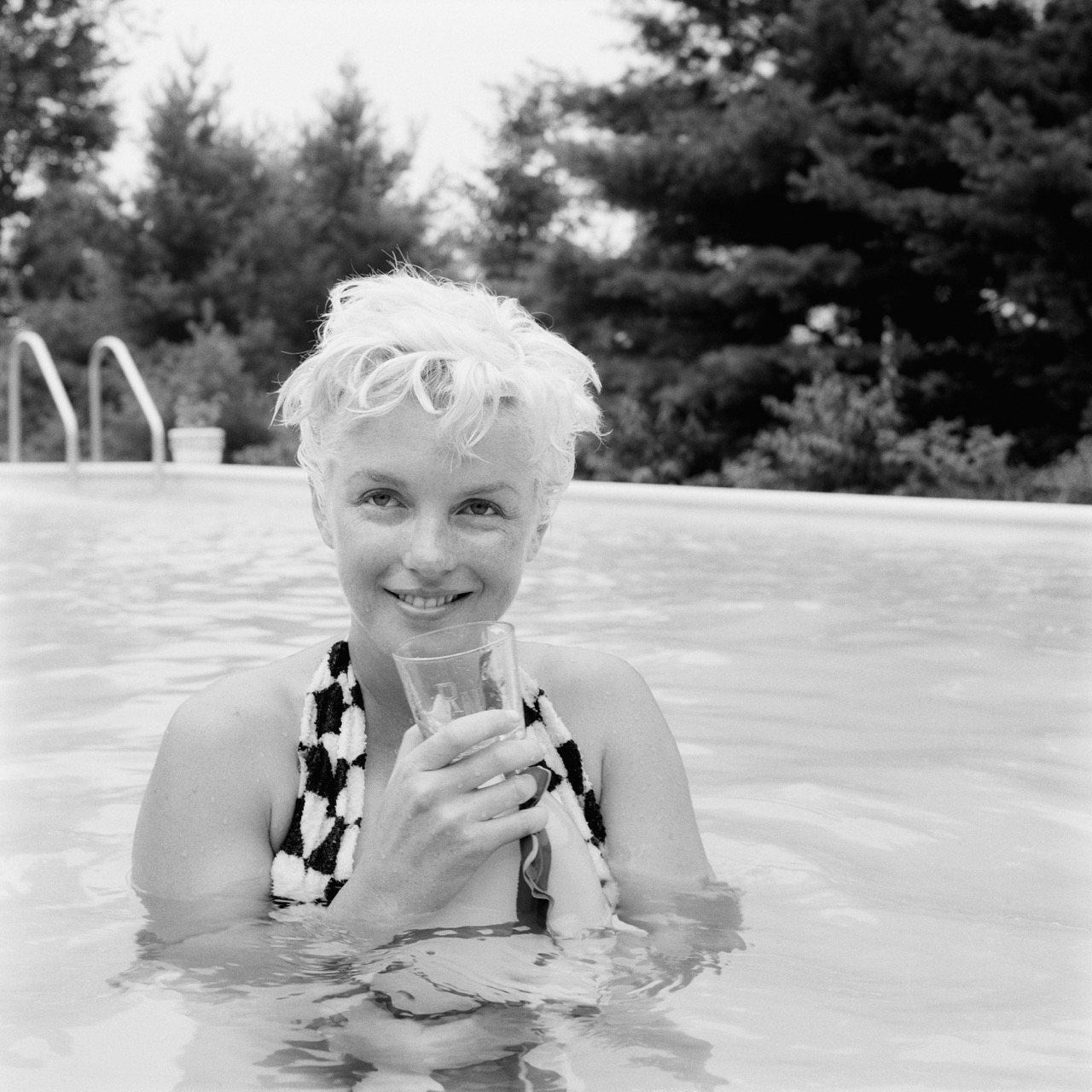
Amid the fading glamour of early 1960s Hollywood, photographers and artists captured Marilyn Monroe in her final years, revealing a figure suspended between self-invention and vulnerability—as seen in a new exhibition dedicated to the icon at the National Portrait Gallery.
1962 was a transformative year, marked by Cold War escalations and significant milestones in the Space Race. But as people looked skywards with awe and trepidation, the groundbreaking news of Marilyn Monroe’s death—from an overdose of sleeping pills at the age of 36—brought shocked audiences back down to earth. Only months before, she had famously performed Happy Birthday to President John F Kennedy, and had been named Favourite Female Star at the Golden Globes. The unexpected news of her death, the demise of “the world’s most photographed woman”, dominated the headlines and transcended into mythic narrative.
Commemorating 100 years since the birth of the Hollywood star, the National Portrait Gallery opens Marilyn Monroe: A Portrait, strengthening the notion that Monroe savvily cultivated her own fame and image. Foreshadowing the 21st century ‘influencer’, the icon understood the power of self-curation and self-promotion through photography. In collaboration with her estate, the exhibition brings together work by renowned photographers, Sam Shaw, Cecil Beaton, Eve Arnold, Richard Avedon, Henri Cartier-Bresson and Gordon Parks, alongside notable artists who, posthumously, found Monroe endlessly fascinating.
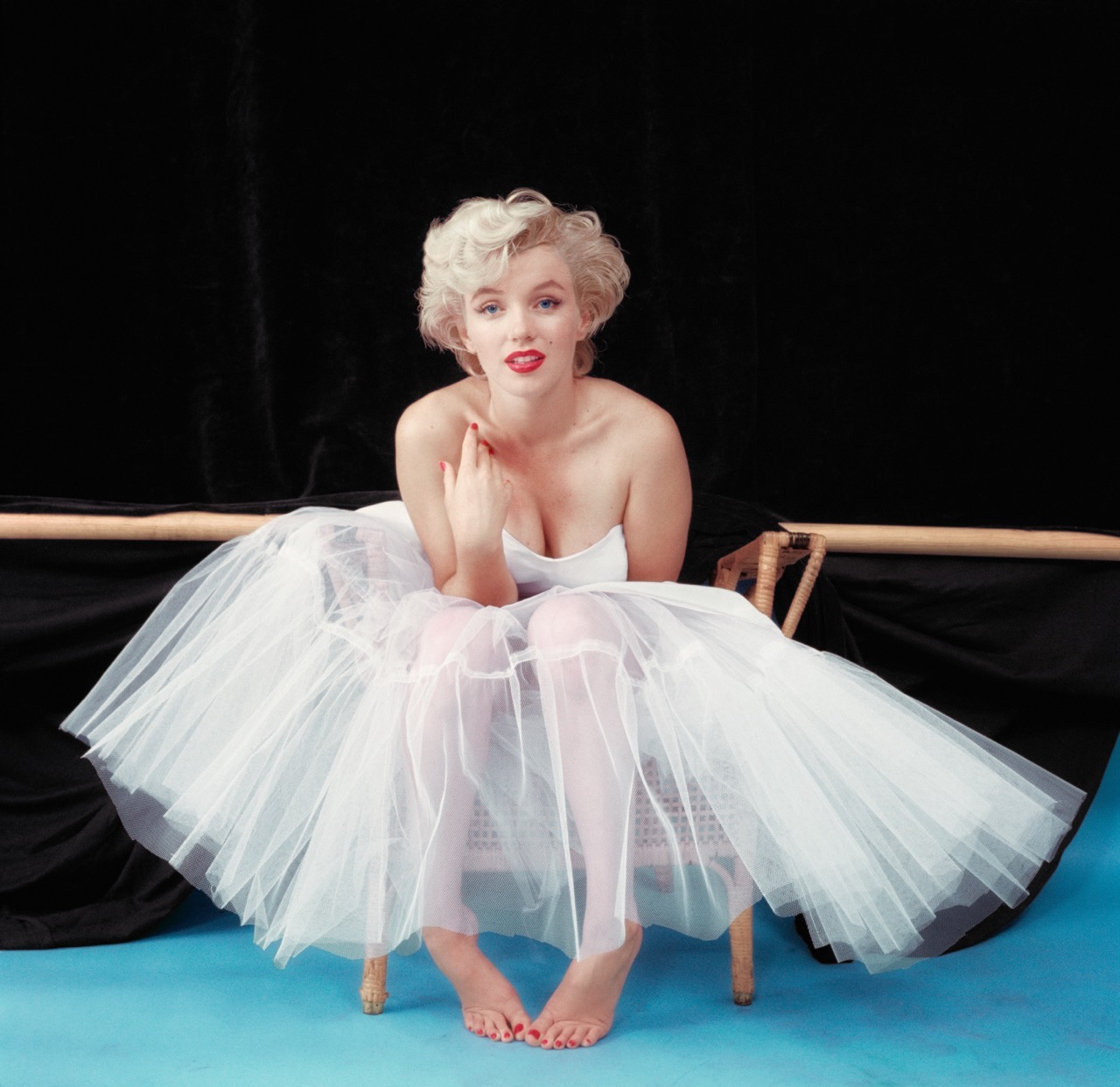
Milton H. Greene, Ballerina Sitting, 1954
Tracing her short life, particularly the months and even days before her death, the exhibition provides unique insight into the actresses’ interior and exterior world. She was found dead in her home on Helena Drive, Brentwood, Los Angeles on 5 August 1962, surrounded by barbiturates and allegedly holding the telephone in one hand. The actress had experienced immense personal hardship the year prior, as well as a lifelong struggle with her mental health from childhood trauma. In 1960, her third marriage – to the esteemed playwright Arthur Miller – had broken down irreconcilably, and she had spent time in a psychiatric and rehab clinic due to her barbiturate addiction. Miller went on to marry the photographer Inge Morath, whom he had met on the set of The Misfits, 1961, a film he’d written that starred Monroe. A striking shot taken by Inge Morath reveals Monroe and Miller during filming, standing in a hotel suite in Reno, Nevada. The chasm between the couple is palpable.
Monroe had reached spectacular heights as a Hollywood actress by the early 1960s. But she had also been stereotyped as the ‘dumb blonde’ – a label she resented and resisted. In spite of the dramatic vicissitudes of her personal life, on a professional basis, Monroe never turned down the opportunity to collaborate with photographers—smiling carefreely and seductively into their cameras. She befriended photographers quickly, allowing them exclusive access and to capture the many facets of her personality. In this way, the exhibition allows us to consider the subtle variations on display: why could some photographers successfully draw out Monroe’s quiet vulnerability? While others could only capture her opaque, famous façade?
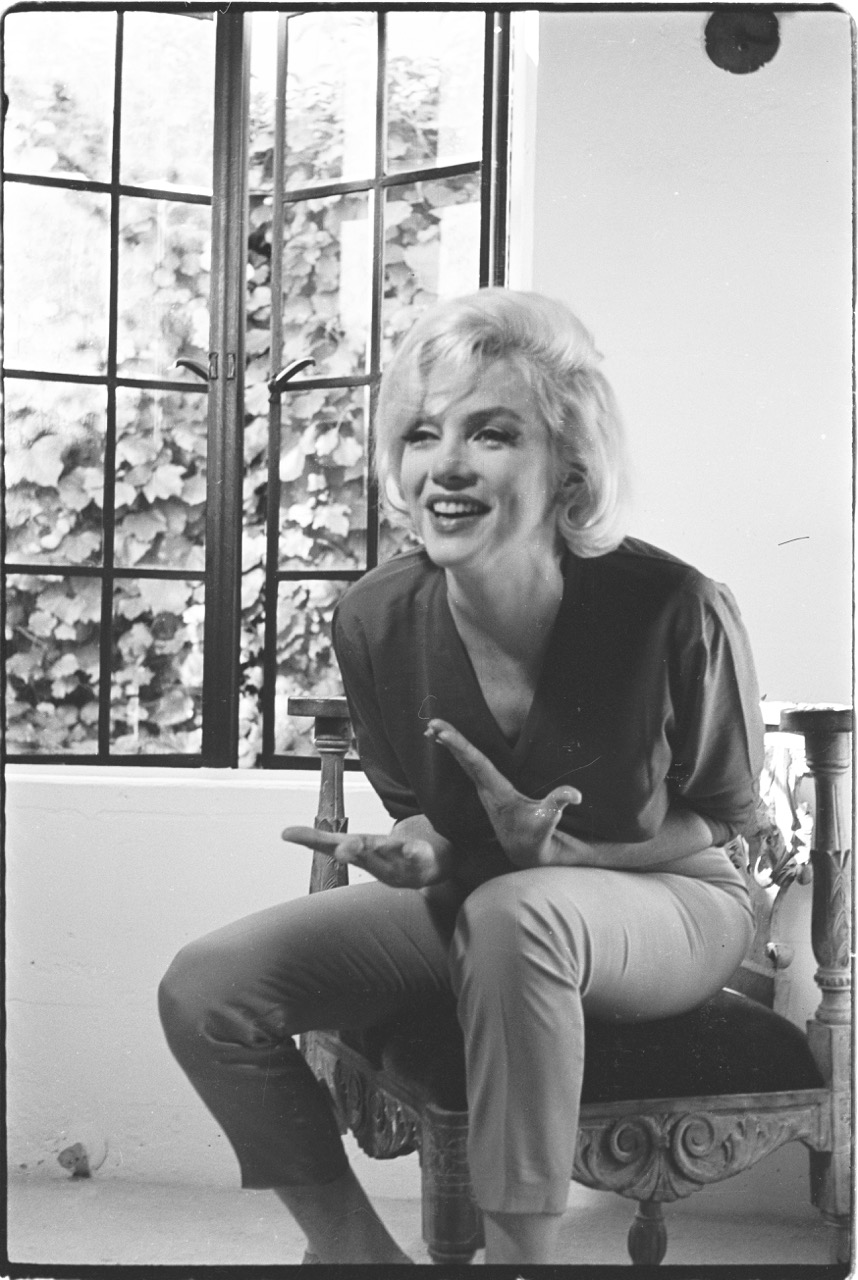
Marilyn Monroe, 1962, by Allan Grant, © 1962 MM LLC
The difficulty with any Monroe overview is that it risks slipping into cliché or contested interpretation. Half a century after Monroe’s death, we might question what else can be meaningfully deduced about the Hollywood icon that hasn’t already been exhausted, exploited or even embellished? The NPG exhibition navigates this reality carefully—avoiding reductive, trite narratives while acknowledging that the “Marilyn” image was, in part, a brand she deliberately created with her collaborators. “She created and honed her own public image and welcomed the creativity of her collaborators and observers, whilst also privately devoting herself to self-improvement,” explains the Gallery’s Director Victoria Siddall in the accompanying catalogue.
Yet, as the exhibition accentuates, her public persona wasn’t the only version of Monroe. One of her few surviving friends, James Haspiel, later admitted: “Marilyn Monroe was her invention. It gave her success, but in real life, she was Norma Jeane.” A striking shot by Richard Avedon taken in his Madison Avenue studio in 1957 offers a fleeting glimpse into this truth. “For hours she danced and sang and flirted, she did Marilyn Monroe” Avedon recalled. “And then there was the inevitable drop…I saw her sitting quietly without expression on her face…”
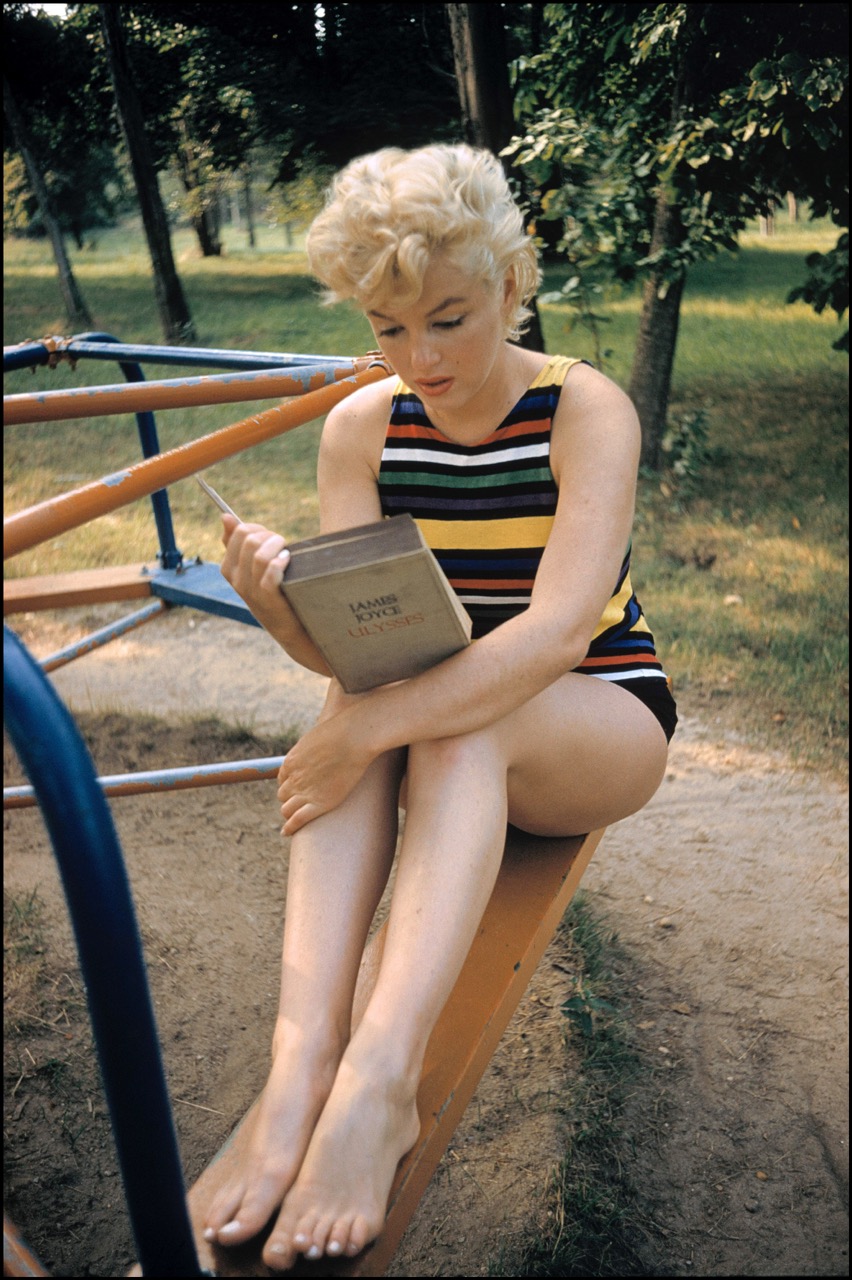
Marilyn Monroe, Mount Sinai by Eve Arnold, 1955
The mid-1950s was a turning point for Monroe’s career, having completed major films such as Niagara and Gentleman Prefer Blondes. The actress collaborated closely with the photographer Milton H. Greene, who became a lifelong friend, co-founder of her production company Marilyn Monroe Productions Ltd, and captured Monroe in the portrait Ballerina Sitting, 1954. Throughout the decade, she also worked with the British photographer Cecil Beaton and photojournalist Sam Shaw, who introduced Monroe to the photographer Eve Arnold. Perhaps because she was a woman, Arnold managed to portray Monroe in a different light – one that belied her role as a sex symbol. Instead, Arnold offered something more human, something less glamorised, more demure. In one famous Arnold portrait, Monroe is seen reading James Joyce’s Ulysses – an attempt to denounce her dumb blonde persona.
By the early 1960s, Monroe’s life had taken a dark turn. Following a miscarriage after the filming of Some Like It Hot and the breakdown of her marriage, she became increasingly vulnerable and addicted to pharmaceuticals. In June 1962, she was fired from what would be her last film, Something’s Got to Give—a name that ironically spoke to the precarity of her own life. Though the contract was eventually rewritten, giving Monroe back her part, she died before its completion.
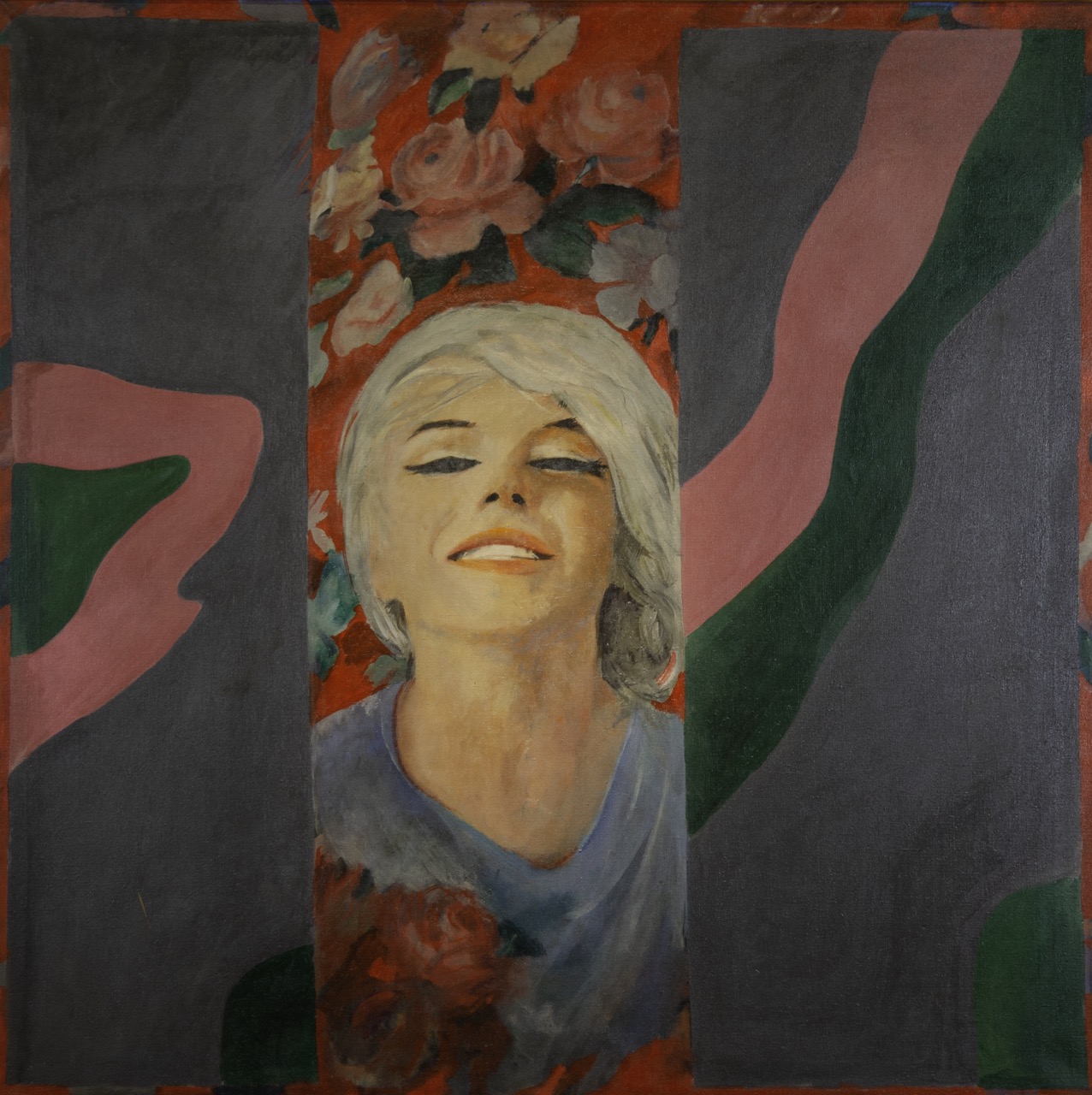
Colour Her Gone, 1962, by Pauline Boty. © Pauline Boty Estate
The summer of her death, she had worked with her close friend, the photographer George Barris, who captured the star in her home Brentwood, Los Angeles. Known as “the last photos”, the now haunting shots were captured away from the studio lights and in the privacy of her Hacienda-style home and along the shoreline of Santa Monica Beach. Walking barefoot, with tousled hair and wrapped in a green towel and a fisherman sweater, Monroe smiles carefreely, blowing kisses into the camera. “I felt that she trusted me that day” Barris recalled in a 1962 interview. “There was a great rapport, like a magnet had thrown us together”. Stern had also proposed a Vogue shoot with Monroe, marking the first time she was to be featured in the prestigious magazine (the shots were published posthumously in September 1962). Dressed in a black Dior dress, in hindsight, Monroe eerily appeared to be dressed for her own memorial.

“Andy Warhol, a fellow platinum blonde who was perhaps even more fame obsessed than Monroe herself, jumped on the opportunity to respond to her death, turning his grief into art.”
One day before her death, Monroe’s final and most intimate interview with Richard Meryman for LIFE magazine was issued, with accompanying photos by Allan Grant who had spent time with the actress at her home in July 1962. Taking over 400 shots of Monroe, some of Grant’s never-before-seen portraits of the actress—smiling and seducing the camera—are featured in the NPG exhibition. In the interview, Monroe spoke openly about the trials and tribulations of living in the spotlight and the exploitation of the media. “But when you’re famous you kind of run into human nature in a raw kind of way. It stirs up envy, fame does. People you run into feel that, well, who is she– who does she think she is, Marilyn Monroe?”
Initially ruled to be suicide, the strange circumstances of Monroe’s death continue to spark speculation, especially as her romantic relationships with the both of the Kennedy brothers—JFK and Bobby Kennedy—prompted FBI interference. Some friends of Monroe claimed her death was inevitable, a result of her trauma and drug addictions, while others argue she had been looking forward to the future, with plans to reinvent herself.
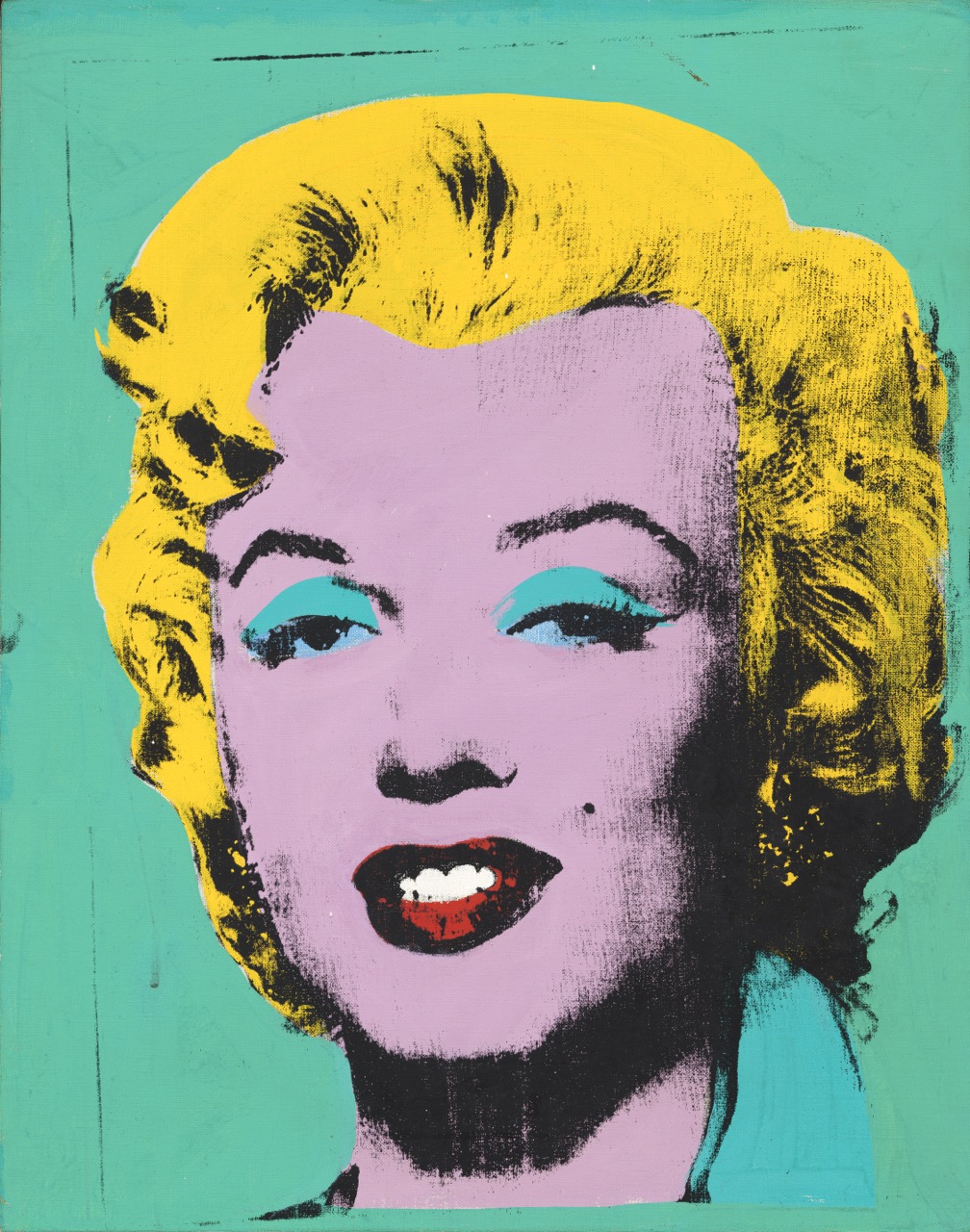
Green Marilyn, 1962, by Andy Warhol, © 2026 The Andy Warhol Foundation for the Visual Arts
Andy Warhol, a fellow platinum blonde who was perhaps even more fame obsessed than Monroe herself, jumped on the opportunity to respond to her death, turning his grief into art. He immortalised the actress in his trademark silkscreens, transforming her face into a product of kitsch ephemera, which will stand forever alongside his Campbell’s soup cans. Across the Atlantic, the British artist Pauline Boty (another famous blonde) responded to the news of Monroe’s death through painting. Distraught by the news of her death, she created the works Colour her Gone, 1962, and The Only Blonde in the World, 1963.
Monroe is a ghost we cannot lay to rest, returning again and again to our imaginations and our screens. In death, her iconic role in western culture only grows stronger, haunting us in the wake of her unfinished business, the fact that she was wronged by many of the men in her life, and the Hollywood industrial complex as a whole. Against the tide of reductive tropes, the exhibition lays bare her involvement in her own creation, whilst serving as a kind of celebratory correction: recognising Monroe as an agent in control of her own image, her destiny and most probably, her own death. But most of all, recognizing that she was an artist in her own right.
Marilyn Monroe: A Portrait at the National Portrait Gallery, London will run from 4 June – 6 September 2026.
Continue Reading