Backrooms: Kane Parsons brings Gen-Z dread to the big screen



A box office hit, the A24-produced Backrooms sees 20 year-old Kane Parsons adapting his viral “creepypasta” YouTube series into a narrative feature. Marking a new era in which Hollywood studios are increasingly mining internet IP for movie ideas, even on the big screen he retains the digital native textures that birthed him, writes Sam Murphy.
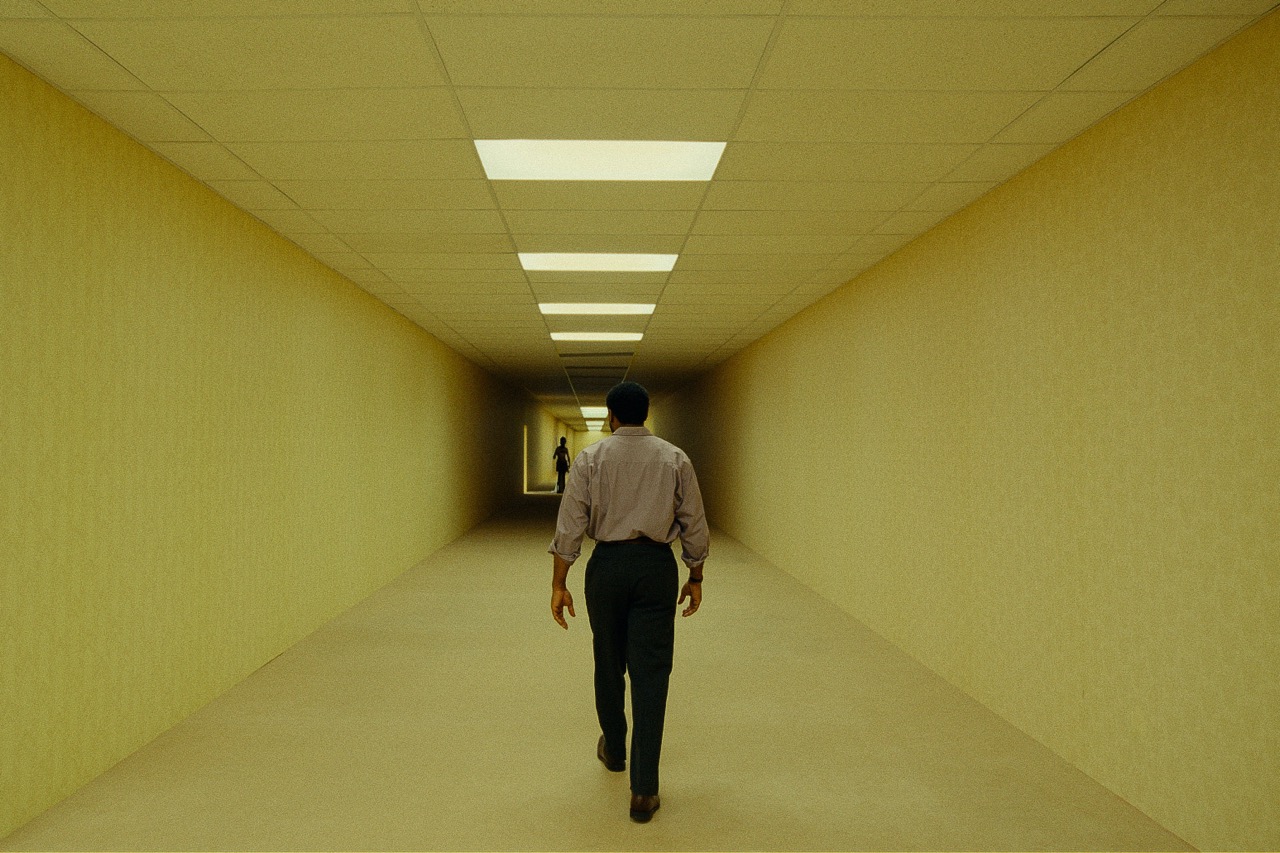
You only need a short walk through any city to feel it: the loneliness of modern space. Long before studios recognized this mood, sixteen‑year‑old Kane Parsons understood that the internet had found an audience for this new form of spatial dread. Working from his bedroom, he built sterile digital corridors in Blender, wrapped them in the yellowed grain of 1990s camcorder footage, and uploaded them to YouTube. The premise—mutated from a paranoid 4chan text post—is pure internet folklore: unlucky souls “no‑clip” out of reality and fall into an infinite maze of beige carpets and humming fluorescents. “Backrooms” quickly became Gen-Z’s internet‑native psychological haunt, taking on the terror of being trapped inside a bad rendering of The Matrix.
Parsons wasn’t the architect of this fear so much as its most visible cartographer. The moment his videos went viral, digital doppelgängers, wiki databases, and countless creepypastas fractured the original idea into a sprawling, decentralized mythology, with thousands of amateur filmmakers and artists creating their own footage, games and imagery. That collective authorship is its power. Backrooms—which has reached 30 billion views on TikTok alone—behaves less like a story and more like a self‑propagating meme, a shared psychic glitch open to anyone with basic digital tools. For a studio like A24, the challenge isn’t simply adaptation; it’s whether a single‑author film can capture the anarchic energy of a myth built by anonymous internet dwellers. To impose order risks losing the disorientation that made the original so compelling as a foray into the liminal spaces of Americana.
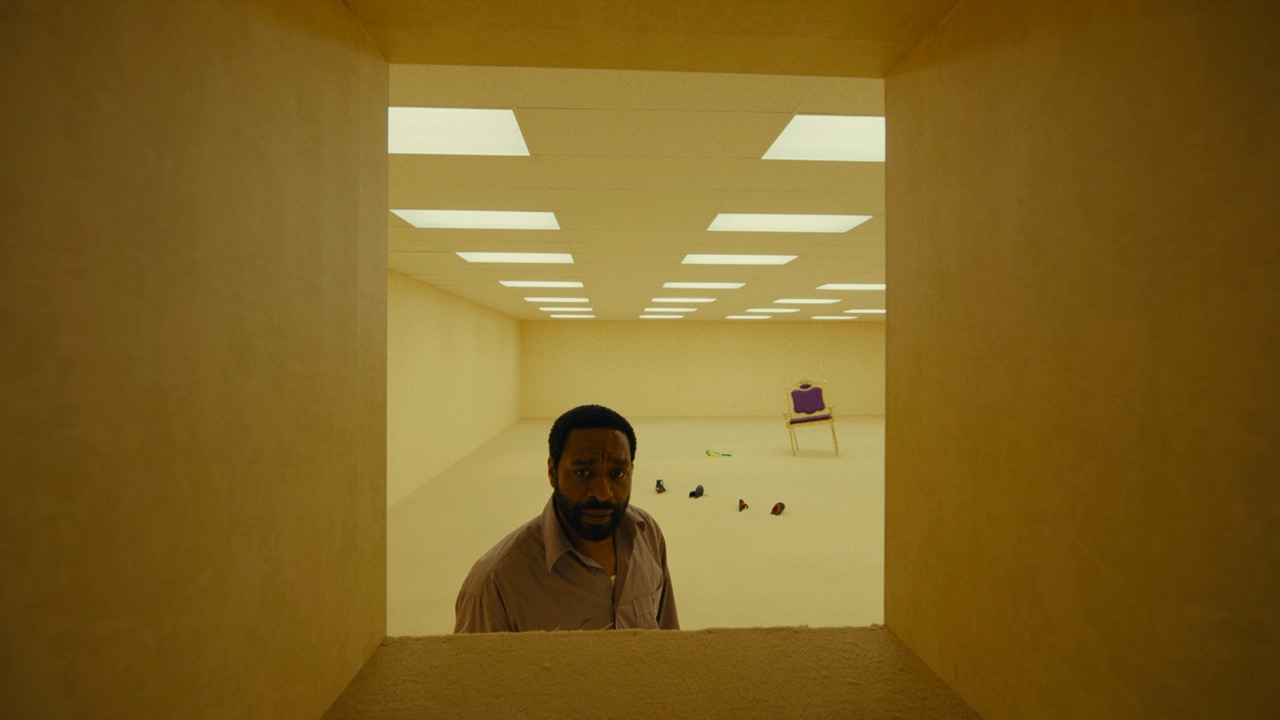
Chiwetel Ejiofor as Clark in Backrooms (2026). Image courtesy A24.
On the big screen, Parsons refuses to abandon the textures that birthed him. The film stars Chiwetel Ejiofor as Clark—a middle‑aged architect turned failing furniture salesman—having been kicked out by his wife, lives in a furniture shop, from where he gets access to a portal opening to the Backrooms, which we explore from POV. The second part is taken over by his therapist Mary (Renate Reinsve), who has her own generational connections to the rooms.
The result is surreal: a tripod lurks like a predator in an empty corner; a backwards stop sign is tucked around a bend; a floppy disk lies half‑spooled from a desk like a relic of Gen Z nostalgia. The suffocating VHS grain remains intact, but contrasted with the scale of a theatrical budget and HD footage. It is a world where physical reality is remixed with the agnostic, strained logic of a digital file—the very definition of the digital uncanny.
It is within this high‑definition big screen treatment that the true horror of the aesthetic manifests, transforming the film’s visual effects into a masterclass in internet‑era anxiety. The terror here is not a faithful imitation of our world, but the environment’s ability to naively distort the familiar, operating with the eerie, unsettling logic of a badly trained AI model given a handheld camera and asked to draw a dog. Nearly three decades after The Blair Witch Project tried to prank the world with found footage posing as fake reality, this approach moves entirely past the old tricks of the genre. We are no longer simply less gullible—in an online era, we are exhausted by the flimsy distinctions between true and false. Backrooms turns that fatigue into a collage of fear spliced with curiosity.
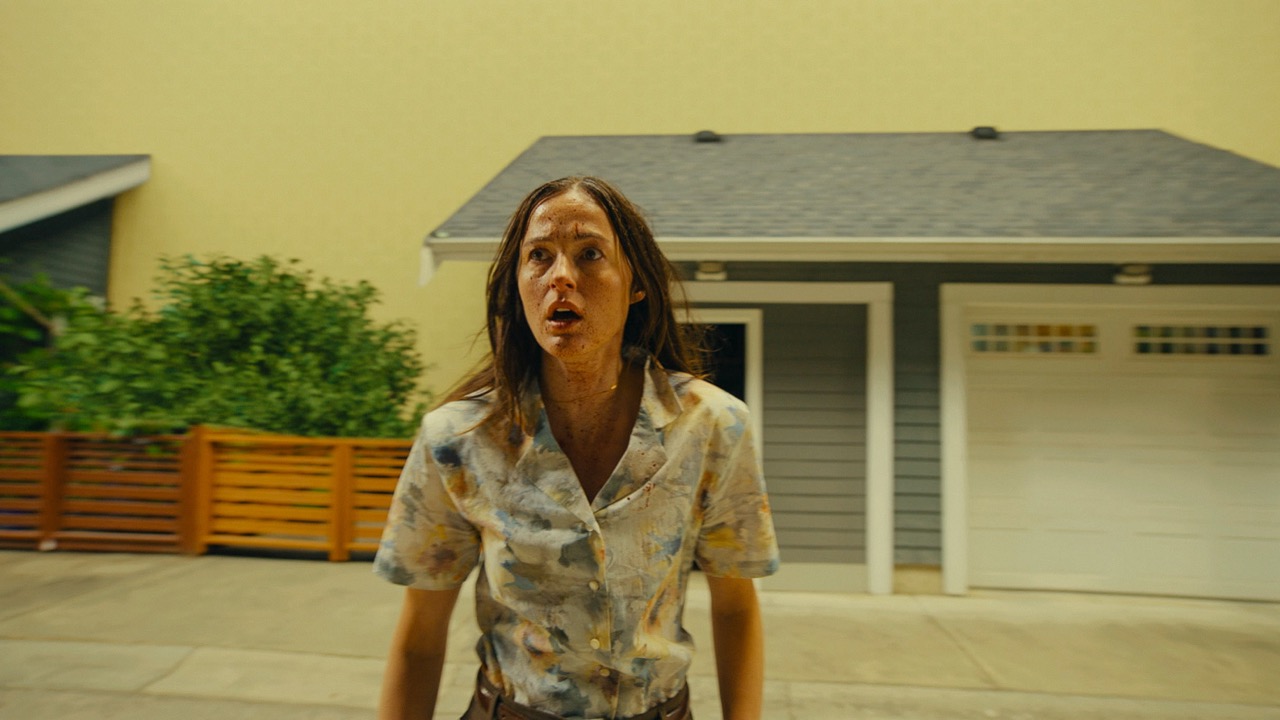
Renate Reinsve as Mary in Backrooms (2026). Image courtesy A24.
Credit for this unsettling atmosphere belongs not just to a young director, but to A24’s experienced SFX team. At its most chilling, human strangers in the rooms are warped into a shifting kaleidoscope of molten eyes, mismatched fingers, and displaced mouths that resemble the very worst of AI slop. Blending professional physical prosthetics with a careful degree of CGI distortion, Parsons reflects the digital‑native world where memory itself has been corrupted—forcing the viewer to desperately, and unsuccessfully, separate the intimate from the simulated in every frame these ghouls inhabit. If the golden rule of horror is to never show your monsters, Backrooms breaks it gracefully.
Clark embodies a modern anxiety with his stagnant masculine living spaces with their bad décor. But the narrative slackens the moment the film pauses its uncanny architecture to find space to explain why these characters might want to explore Lovecraftian living rooms. The original shorts were never about character; their thrill came from the pure unpredictability of what strange visual remix might lurk behind the next door. Instead, Parsons ties himself into knots trying to rationalise his characters’ motives. Even with psychological trauma stitched into the plot, the uncanny setting by itself is the more compelling presence.
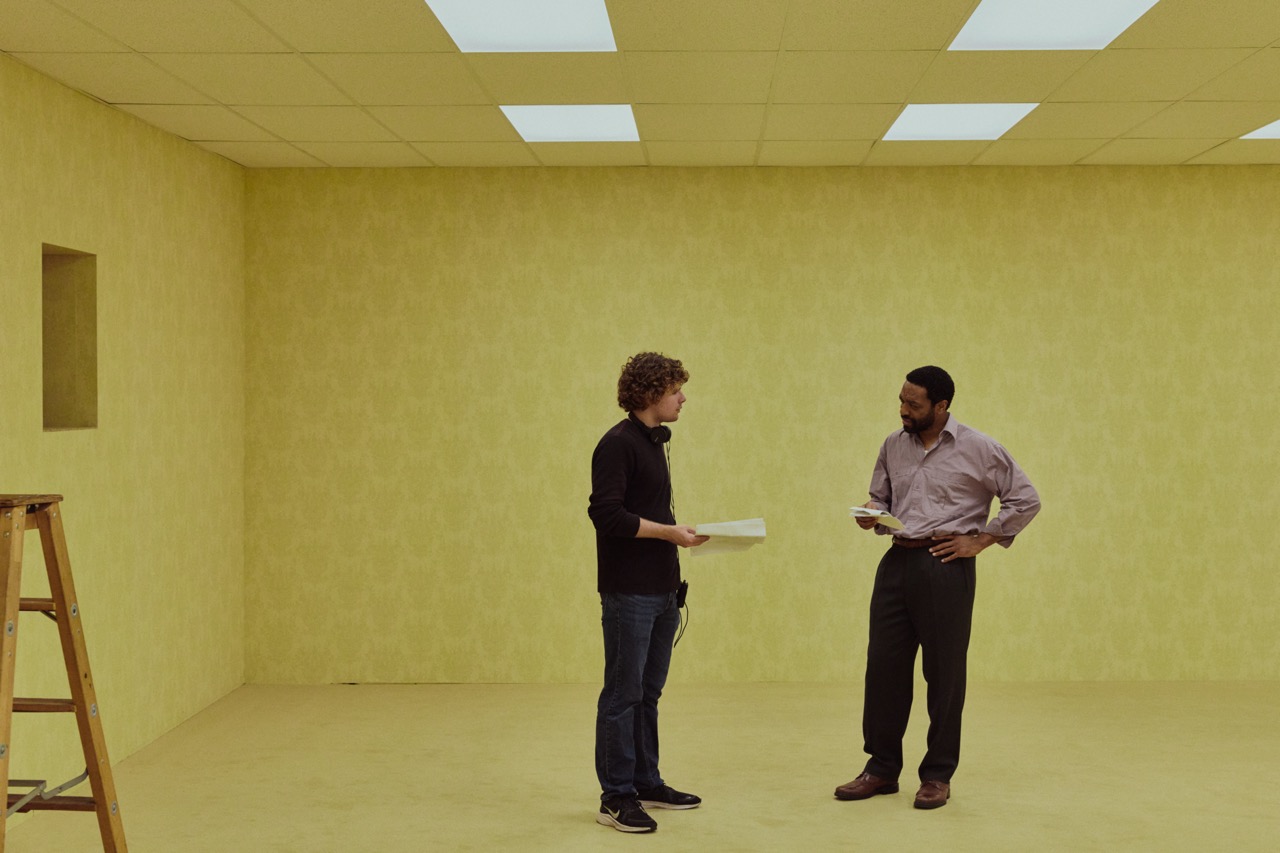
Kane Parsons on the set of Backrooms (2026). Image courtesy A24.
If the film struggles to justify its 100‑minute runtime, it’s also because an anarchic internet meme resists the tidy arcs of big‑screen storytelling. Parsons is not alone in this migration from open‑source folklore to studio IP. Hollywood increasingly bypasses indie festivals to mine YouTube for ready‑made horror audiences, rewriting the rules of ownership over the digital commons. Parsons’ path to A24 mirrors the ascent of Curry Barker, whose breakout thriller Obsession also leapt from online buzz to studio backing.
Both filmmakers deploy a distinct derealization effect, using the camera for claustrophobic dread. Where Backrooms finds this unsettling detachment in dead architecture, Obsession locates it in the sudden distortion of human autonomy. Where Backrooms externalises dread through looping architecture, Obsession internalises it through algorithmic repetition—a horror of behaviour caught in its own feedback loop. Barker’s off‑kilter, center‑composed framing mimics the exact geometry of a smartphone screen—proof that Gen-Z’s internet‑trained eyes know exactly how to make familiar spaces feel unmoored.
“Whether the industry genuinely elevates these internet subcultures or simply strips them for built‑in IP, the creative boundary between the laptop and the theatre has dissolved.”
What ultimately drives the digital uncanny is a modern psychological loop: the simultaneous fear of, and desire for, endless copies. In an era of remakes, remasters, and algorithmic slop triggered by a thumb‑swipe, what comes next is a mode of cinema dictated entirely by a screen we carry in our pockets. Whether Hollywood genuinely elevates these internet subcultures or simply strip‑mines them for built‑in IP, the creative boundary between the laptop and the theater has dissolved. What’s left, bizarrely, is a nostalgia for a nineties period Parsons never lived through, remembered now only through an artificial, fuzzy‑toned aesthetic. That discord is where the digital uncanny bares its darkest teeth—that sinking feeling, when you step outside to touch grass, that the mirrored office blocks around you reflect a world that’s less than real.
Backrooms is in cinemas now