

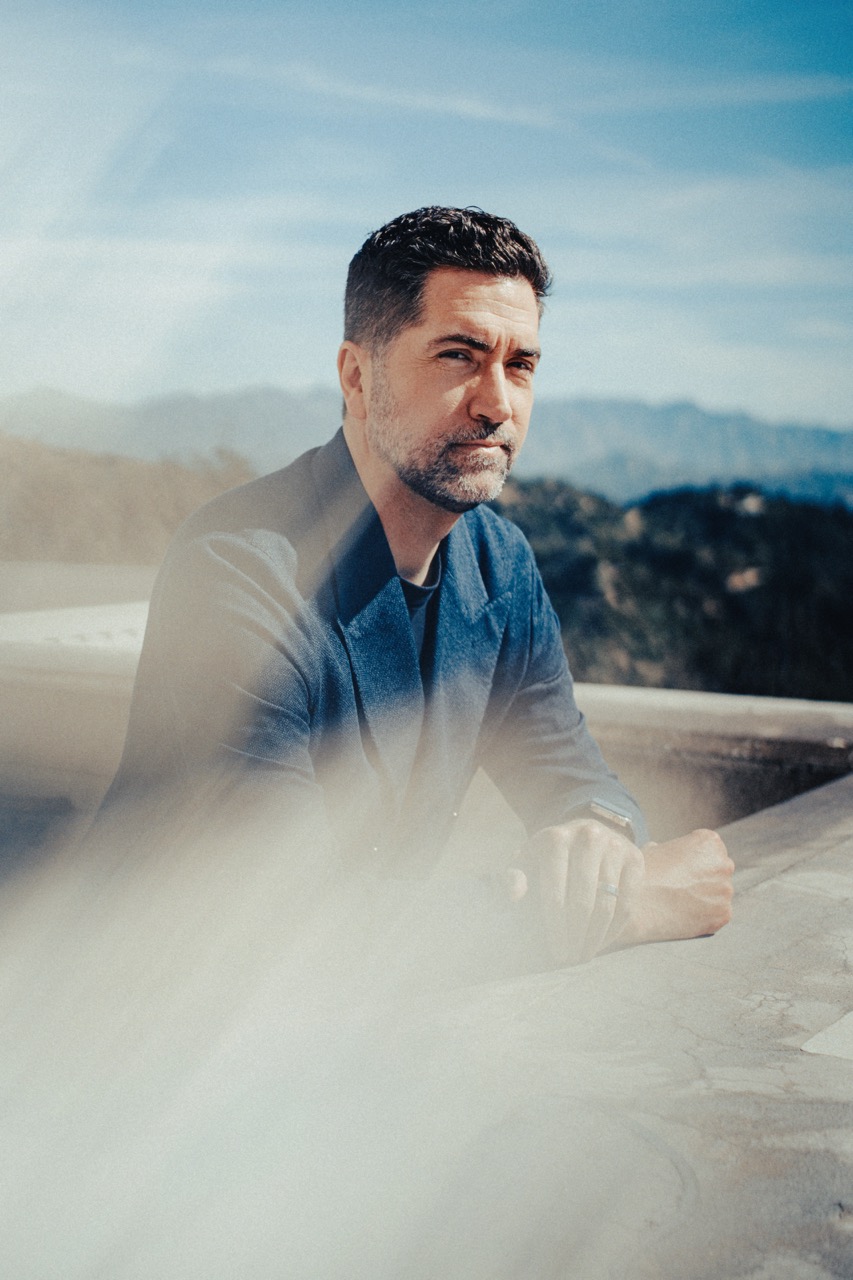
From The Cabin in the Woods to Project Hail Mary and a new chapter in The Matrix, Drew Goddard explains why the best science fiction isn’t about the future at all—but about finding empathy, connection and meaning at the edge of the unknown.
For renowned filmmaker Drew Goddard, the secret to writing great science fiction lies closer to home than it first appears. Humanity has been the lighthouse on the shore for Goddard—and it is one that has guided him even from space. From his directorial debut with The Cabin in the Woods (2011) to the new Matrix film he is writing with the blessing of franchise creator Lana Wachowski herself, the instinct that has drawn Goddard to each of his projects has been love of the genre he is working in—a genre, he explains, that is placed to make sense of our situation precisely because it feels so far away.
I speak to Goddard after a weekend of record-breaking success for his latest film, Project Hail Mary (2026), in which Ryan Gosling stars as schoolteacher-turned-astronaut Ryland Grace, who must learn to communicate with an alien lifeform, Rocky, in order to save their planets. Not exactly a sci-fi buff, I found the film surprisingly moving—and with Gosling centre-stage, the introduction was an easy one.
Goddard takes me through the earliest experiences with sci fi that left him wide-eyed as a boy, paying his respects to the great masters who paved the way for his successes—from Douglas Adams’s TV adaptation of his novel The Hitchhiker’s Guide to the Galaxy (1981) to Steven Spielberg’s ET (1982), and Rod Serling’s The Twilight Zone (1959).
Goddard’s vision for sci-fi is singularly hopeful, and what is endearing is the way he admits he never really knows which dilemmas he is working through as a filmmaker, holding on instead to a hope that the process of writing will lead to some kind of answer.
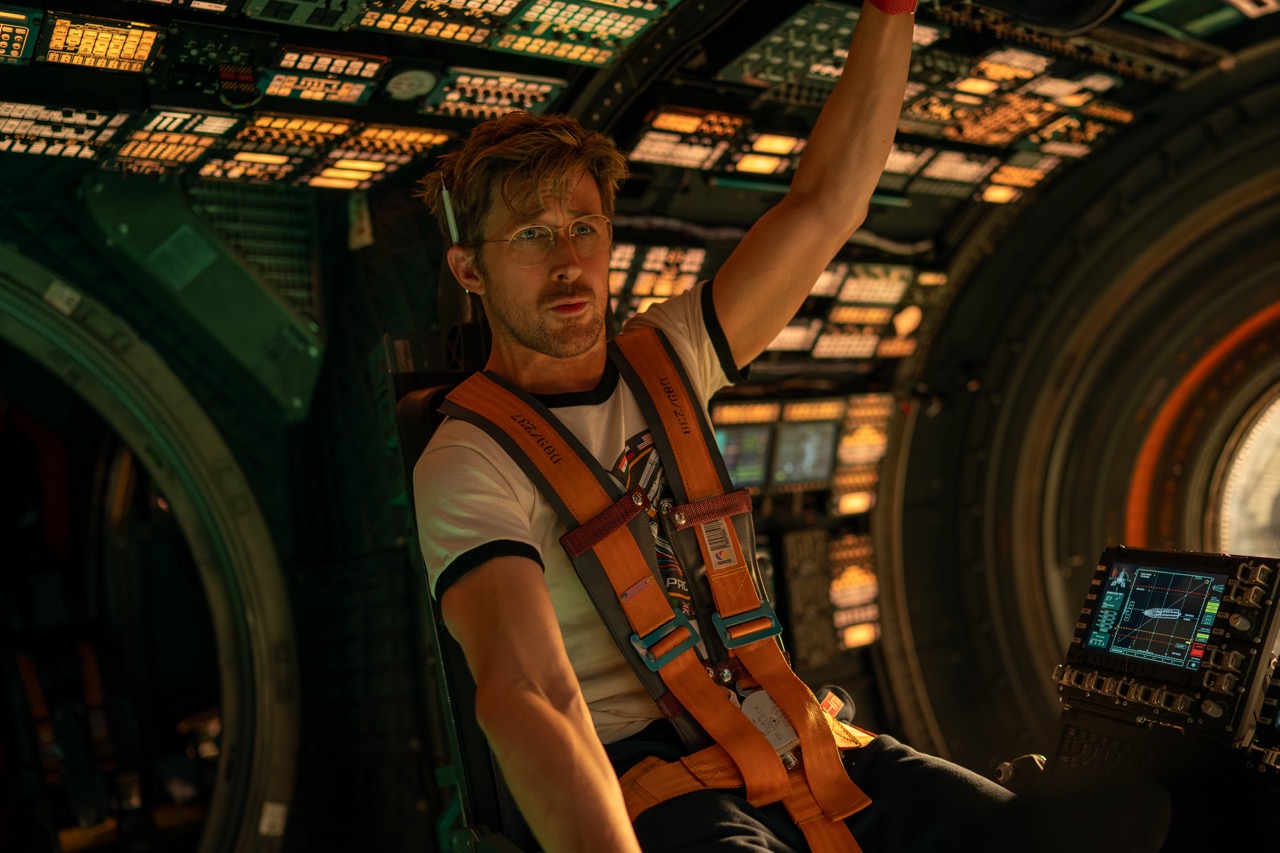
Carolina Julius: When writing big sci-fi films, you have the task of constructing whole new lived experiences—sometimes literally in another universe. How do you make sure that the human moments still land?
Drew Goddard: I always start with the human moments. I always start with character. Now character doesn’t always have to be human—some of my favourite sci-fi stories involve robots and androids—but they’re all vessels to explore existential questions of humanity. For me, it’s always about character and emotion; the rest of it—the world-building—is all in service of that.
CJ: Your work has a sharp sense of humour. When you’re writing sci-fi, is that something you are thinking about, or does it happen instinctively?
DG: I think it happens instinctively. My love of sci-fi begins and ends with Douglas Adams—The Hitchhiker’s Guide to the Galaxy was how I discovered the genre as an 11-year-old boy. So, for me, humour is just inherent to the medium.
CJ: You have described the soul of Project Hail Mary as empathy and compassion—yet it takes a non-human creature to reveal something essential about being human. Why did you choose to explore that paradox?
DG: I think that empathy is inherently interesting to writers. We took that to its extreme with Project Hail Mary. Part of what resonated with me about Andy Weir’s book was the way he treated a first-contact situation with an alien in a way I had not seen before. Andy had really thought through how different it would be to communicate with this creature. I was excited by the idea of “forced empathy”—being forced to empathise in order to survive. That felt like a story that was relevant and worthy of exploration, especially right now.
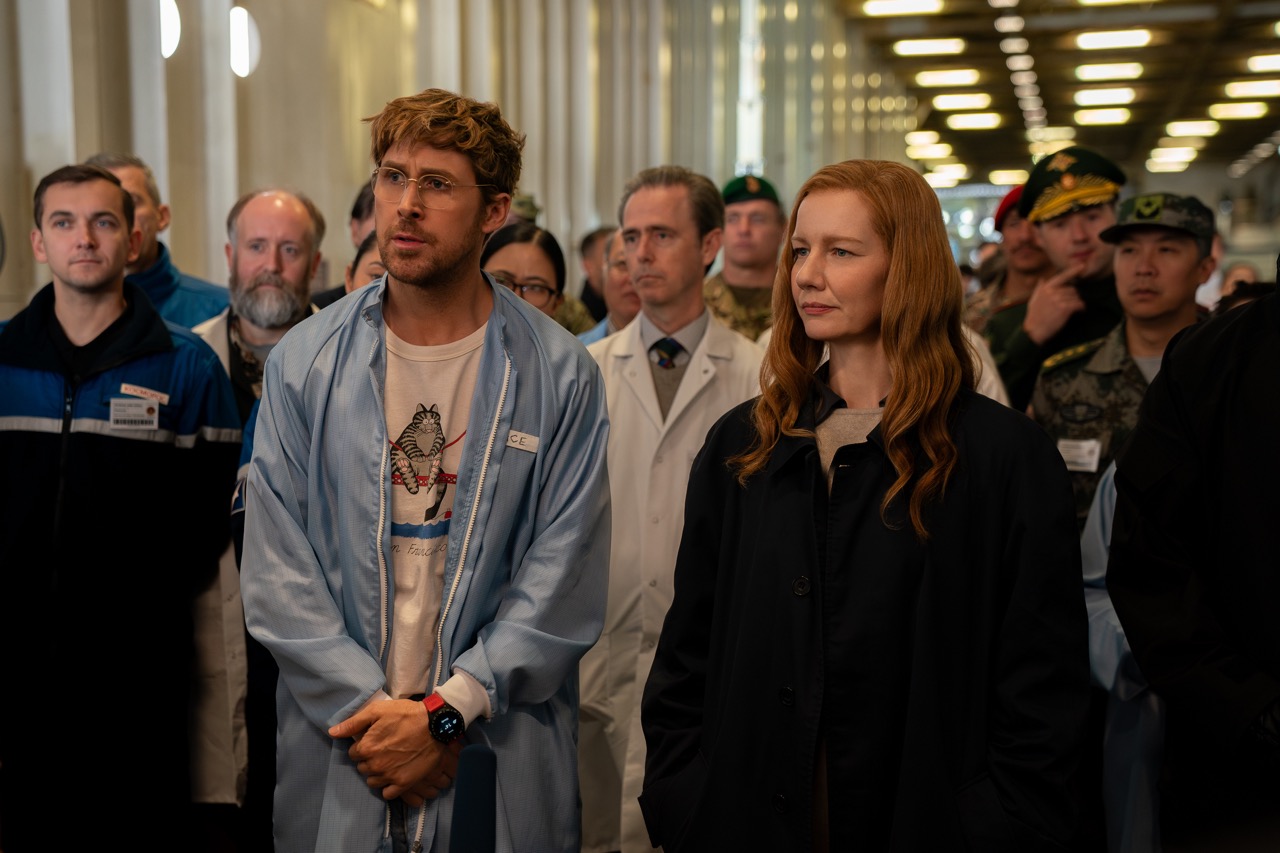
“I always start with the human moments. I always start with character. Now character doesn’t always have to be human—some of my favourite sci-fi stories involve robots and androids—but they’re all vessels to explore existential questions of humanity. For me, it’s always about character and emotion; the rest of it—the world-building—is all in service of that.”
Drew Goddard
CJ: In Project Hail Mary, Rocky essentially speaks in whale sounds. How did you approach writing a character who engages in a relationship without shared language?
DG: Our directors, Chris [Miller] and Phil [Lord], were key to this. In the early drafts of the script, I think I was falling back on old tricks and making it a little too easy. They said, “Let’s take our time with this—the difficulty in communication is the point.” We would sit and think about what it would actually look like to communicate with a spider-rock. That’s what you see on screen: it’s clumsy and messy at first—it’s full of miscommunication. Once we cracked that the difficulty of communication was something to embrace, the movie really opened up for us.
CJ: I love that scene where Grace and Rocky dance in tandem. Was that written in the script?
DG: I’ve got to give credit to Chris and Phil—they’re just geniuses. Rocky was a puppet—he was really there. In those scenes, the directors were calling out to Ryan on a headset and suggesting dances, and the puppet was reacting. They didn’t know what Ryan was going to do, so it really feels like what would happen in real life. You can feel that—the rough edges of performance really come through.
CJ: What is the secret to writing great sci-fi? How do you make it all feel real?
DG: I think the secret to any great writing is love of the genre you’re writing in. Sci-fi deals with things outside of our reality, so it requires tremendous care and passion to do well. The truth is that this is what I do for fun. I like thinking about robots; I like thinking about spaceships. I think that’s a key part of it.
CJ: You mentioned social commentary. Is that what you are trying to do through your films?
DG: I don’t think I’m trying to do it, but I trust that the times I’m writing in will creep into my work—and I think that’s a positive.
Part of why I’m attracted to writing anything is to try to make sense of the world around me. I can look at all of my work and spot what I was going through personally at the time, as well as what the wider moment was like. The Cabin in the Woods, for instance—we were in one of the Iraq wars, and I was watching kids roughly my age being sent to die needlessly. It’s not obvious that that’s what the film is about, and if you’d asked me while I was writing or shooting it, I wouldn’t have known that.
Cloverfield (2008) was me trying to make sense of 9/11—and falling in love with my wife. The Martian (2015) came at the end of the Obama years, when we had this hopeful feeling, and I was also becoming a parent and trying to make sense of the bigger things we were reaching for. I’m certain that Project Hail Mary has similar things about it, but they’re not at the forefront. There is joy in that. If I knew all the answers, I wouldn’t be searching for them.
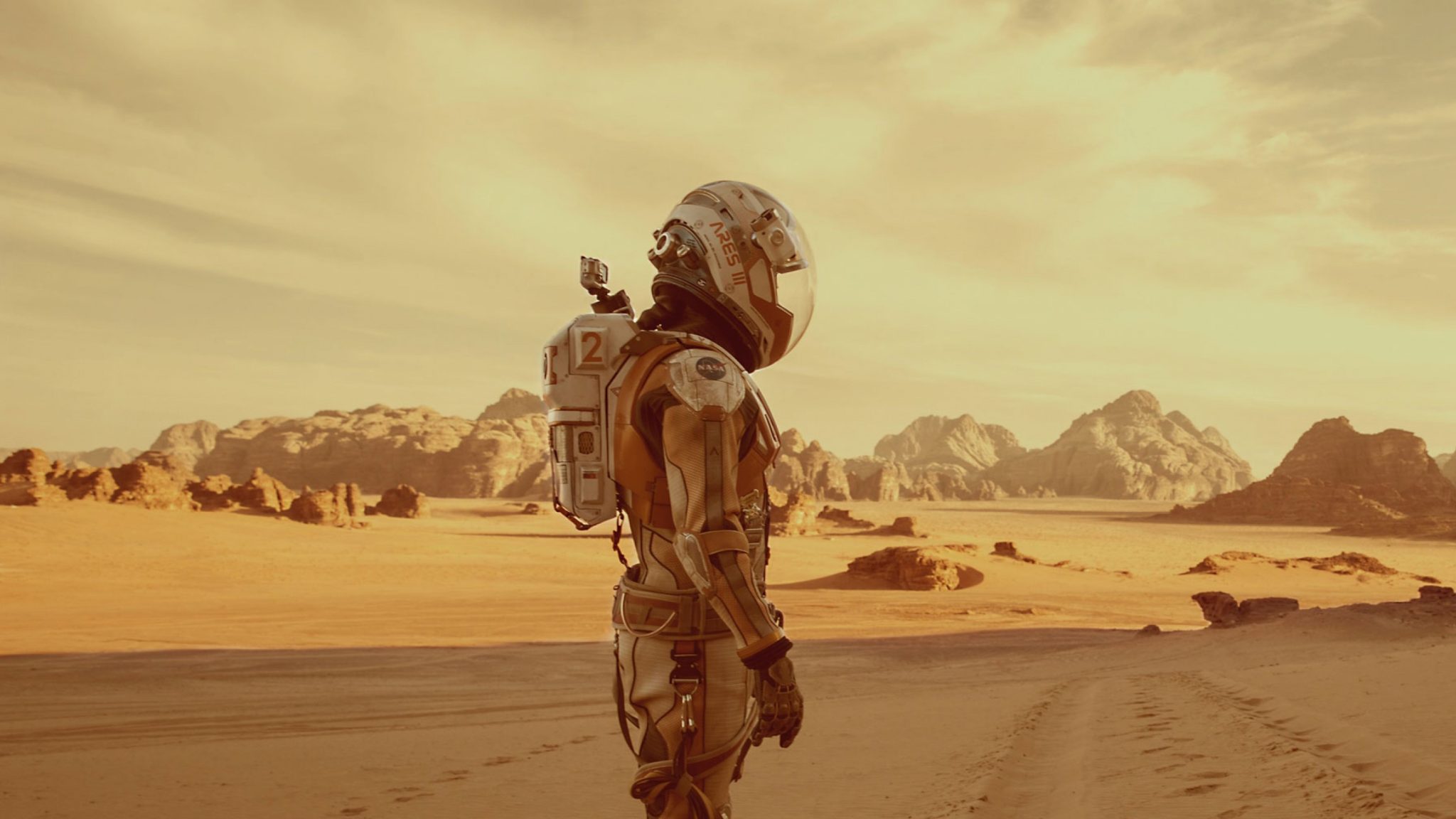
“Part of why I’m attracted to writing anything is to try to make sense of the world around me. I can look at all of my work and spot what I was going through personally at the time, as well as what the wider moment was like.“
Drew Goddard
CJ: What do you think it is about sci-fi as a genre that’s uniquely placed to do that kind of searching?
DG: I think it’s something to do with the “fiction” part of science fiction. It gives you a bit of distance, where you can explore complicated issues without the front-and-centre pain of humanity.
When I read the science-fiction masters as a kid, they blew my mind with their sheer imagination. When I go back and read those same stories now, I realise they are really about the human condition. Weirdly, that makes them more powerful—that I didn’t realise that’s what they were about.
I rewatched ET as an adult and was blown away by how much it’s a story about a boy processing divorce. If Spielberg had made a movie that was just about a boy processing divorce, I wouldn’t have seen it as an eight-year-old—it might have been too hard, too front and centre. Science fiction gives you that distance.
CJ: You have both co-written and adapted—two very different kinds of collaboration. Are there any overlaps between the two processes?
DG: The reason I’ve chosen this form of art is that it’s collaborative. Film doesn’t just stop with the script. Half of the job of a screenwriter is writing, and the second half I call “getting bills through Congress”—you have to defend, adapt, change, and work with people.
At the beginning of my career, I was very protective of the script. I would grip so tightly that I would fail to see how people would be making it better around me. As I get older and do this more, I realise that’s part of the joy. When a film crew is functioning well, the sum is greater than the individual parts. So whether it’s co-writing or adapting, it’s all the same—its all just artists bouncing off each other.
CJ: You have moved between sci-fi, horror, thriller, television drama. Is there a single instinct that has drawn you to the projects that you have taken on?
DG: The thing that connects all the crazy different things I’ve done is that they’re humanist—they’re not misanthropic. Even something like The Cabin in the Woods, which has monsters eating everyone by the end, still ends with two people holding hands. So much of what I do is about people trying to find one another. That’s probably the subtitle to everything I’ve done. I don’t know that it was ever the plan, but clearly that’s what I want to write about.
CJ: You’re writing a new Matrix film with Lana Wachowski’s blessing. What did those early conversations look like, and how are you approaching stepping into a world with such a great legacy?
DG:. When Warner Bros first asked if I’d be interested in writing a Matrix film, I knew it was going to be really hard. Frankly, that’s what excited me. But I also knew I didn’t want to do it unless I felt I could be respectful—not just to Lana and Lilly [Wachowski], but to their legacy.
A lot of those early conversations were about the fact that this would take time. There’s no version of a quick Matrix script. The goal isn’t just to continue somebody’s IP. It’s similar to adaptation or coming aboard television shows that were created by somebody else. I treated all of those things with such care and I’m trying to do that here.
CJ: How are you approaching the challenge of introducing The Matrix to a new audience?
DG: Right now I’m not worrying about it. I’m just trying to write the best story. Once we have that, we’ll see if there’s a way to introduce it to a new audience. If not, then maybe I’m not the right person for this. I don’t mean that to be difficult—I just don’t know how else to do it. I just know I need to try to tell a good story and hope that works out.
Continue Reading