

Catalina Island, 29 miles off the coast of Los Angeles, is famous for its glamorous hotels and mountain-side villas. But it’s never been able to shake off the reputation of its haunted past…
Nobody can agree where the bison came from. But like so much on the island of Santa Catalina, it’s near certain that Hollywood is to blame. In 1924, the production for the film The Vanishing American (1925) (or was it The Thundering Herd (1925)?) is said to have loaded a rabble of 14 bison onto a boat in Los Angeles, before sailing them 22 miles across the channel to Catalina for some ruminatory background work. When filming wrapped, the beasts were left behind—an unlikely invasive species on the 75-square-mile island, which hovers off the coastal sprawl of Los Angeles like a second cousin: not distant enough to feel particularly intriguing; not close enough to encourage regular contact. By the 1960s there were 400 bison inhabiting the rocky scrub above Avalon, the island’s capital—though conservancy efforts have since whittled the herd down to about 80. And yet their legend permeates this legendarily snoozy place: visitors can still enjoy a buffalo burger (no actual bison involved) at both Eric’s on the Pier and Steve’s Steakhouse & Seafood, while “buffalo milk” cocktails (a sort of White Russian involving crème de banane) are firm favourites at the Marlin Club, the Lobster Trap and The Naughty Fox, as you know. And yet an oddity remains around the animals’ presence that no local seems inclined to answer: the fact that not a single bison is featured in some of the movies that are said to have brought them here.
Legends and eccentricities hang low over Santa Catalina like morning fog. It’s something to talk about, at least. A happily laidback melting-pot of hungover scuba guides, cruise ship flotsam, and salty-dog retirees, Catalina (it’s always just Catalina here) is the sort of place you visit in order to immediately leave: to dive into its seas; to head out on little fishing boats around its blue coves; to paddleboard, kayak, jet-ski, or parasail away from its little jetties. The 4,000 or so permanent residents have that eager, ruddy air of all other island-dwellers you’ll have met, from Cayman to Capri: slightly hot-housed by their merry isolation; disarmingly keen to tell you the yarns and mysteries of the place. Hitch a golf cart (the main form of transport) from the wooden pier at Avalon up to the strip containing Luau Larry’s (now serving breakfast) and you’ll no doubt be told that this was once the hometown of Marilyn Monroe—and long before she went by that name. Norma Jeane Baker came to Catalina in 1944 as the 16-year-old new bride of merchant marine James Dougherty, who found himself posted to the island during the war. She left a few months later to work in an armament factory in Van Nuys, Los Angeles, where she was spotted by a photographer (“You’re a real morale booster!”, he told her) and promptly signed to an agency. Dougherty and Baker divorced in 1946 (shortly before she became Marilyn Monroe), and the burgeoning star never returned to Catalina. But the island will always know that it had her first.
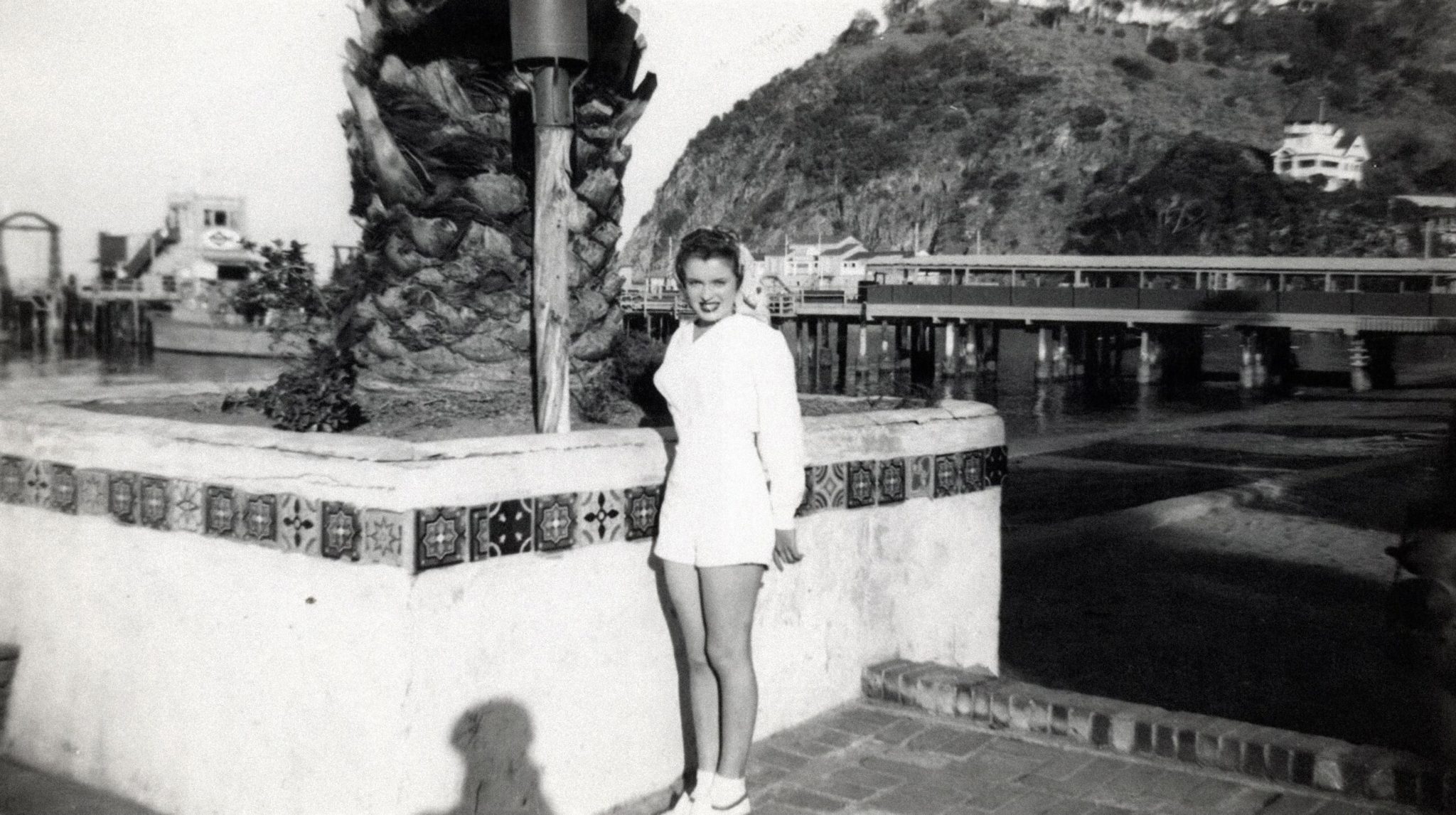
Marilyn Monroe (then Norma Jeane Baker) on Catalina Island, 1945.

“Monroe’s is not the only lingering spirit. Catalina is perhaps most famous for its multitude of ghost sightings and phantom presences, which seem to chime with the slightly shadowy past of the island: a place at first for smugglers and pirates…”
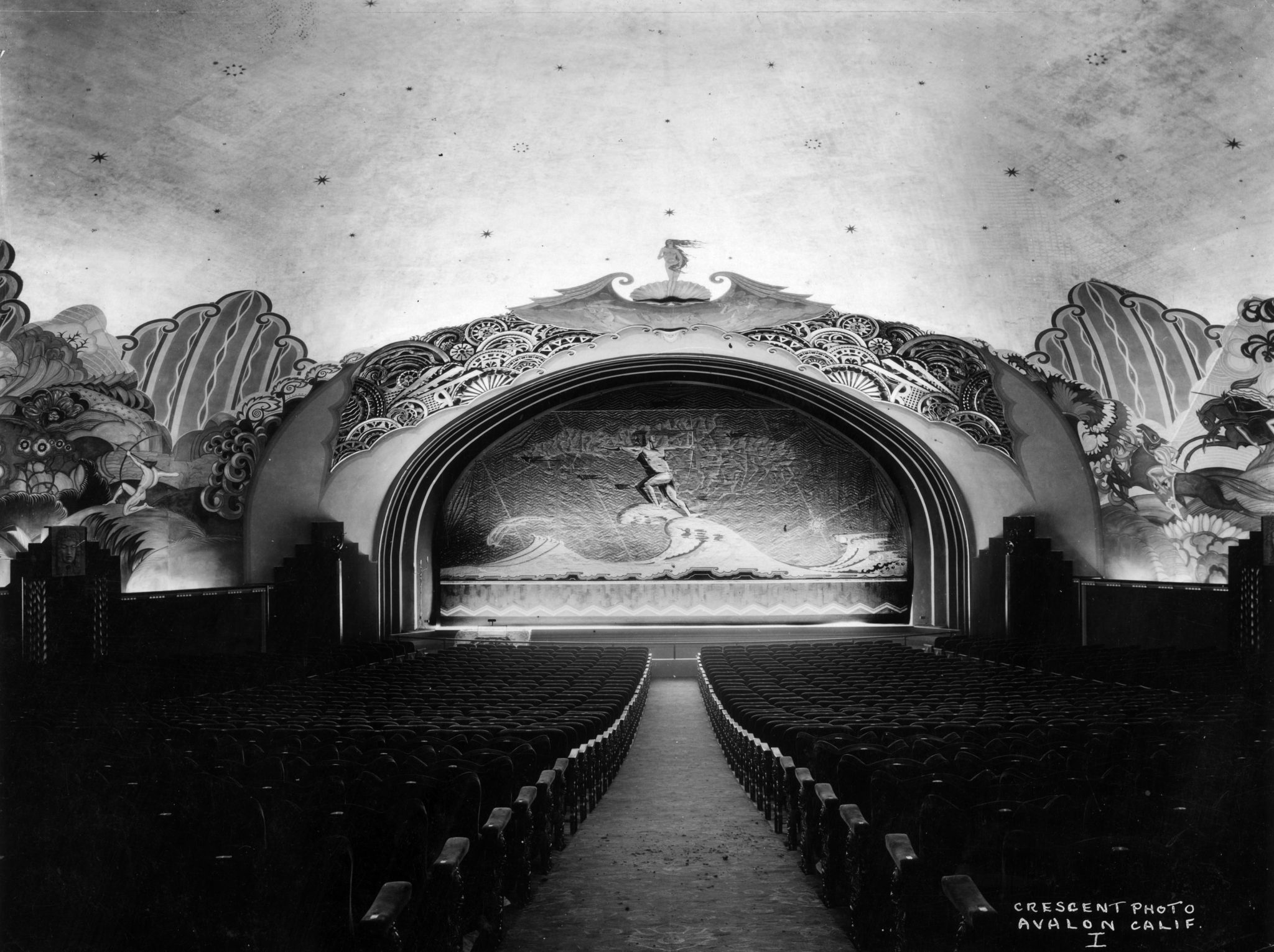
Monroe’s is not the only lingering spirit. Catalina is perhaps most famous for its multitude of ghost sightings and phantom presences, which seem to chime with the slightly shadowy past of the island: a place at first for smugglers and pirates who appreciated its rocky caves and hiding spots, and later for dollar-eyed gold prospectors, who dug out its hill in search of precious metals that scarcely materialised. “The Island doesn’t give up her secrets easily,” writes Jim Watson, the former filmmaker and long-time chronicler of life here via the Catalina Islander newspaper, as well as author of Mysterious Island: The Strange Side of Catalina (2012). But the local ghosts do seem more extroverted than most. Many of them gather around the Catalina Casino (and presumably not just because that’s where most of the living tend to gather, too). They’re especially fond of the mezzanine area between the downstairs theatre and the grand, rotunda-like ballroom above. A tour guide remembers a male straggler at the back of one group dressed in curious 1950s garb: a Hawaiian shirt, Bermuda shorts, and sandals with socks. As the tour ended, the man slipped silently into the women’s loos, which had only one entrance or exit. After waiting 20 minutes for him to leave, the disgruntled tour guide followed the figure into the bathroom—only to find no trace of him inside. Perhaps the ghostly tourist headed in in pursuit of the famous “white lady” who has been spotted many times in the casino—a “translucent” elderly figure in a long white robe who has been spotted floating through the walls. Locals say she is sometimes heard to ask, “Where is my husband?”
Up at Machine Gun Park, meanwhile (so named because of the old World War I German machine gun mounted there for display), a “well-respected member of the local community”, according to Watson, remembers one night encountering a beautiful mysterious woman many years ago. The woman, dressed all in black, kept referring to herself as “the princess”, and declared that she wanted desperately to sing for the man and his friends. “So she started to sing in the most angelic and haunting voice any of us had ever heard,” recalled the islander. “It was mesmerising.”
“Right at the end, she looked at my friend and said something,” he continued. “We don’t know what it was, like it was in tongues or something—and my friend just started vomiting.” The three friends took off pretty swiftly back to their apartment after that. “But all night long,” the islander remembered, “we could hear on the wind or in the background a combination of that singing voice and the laugh.”
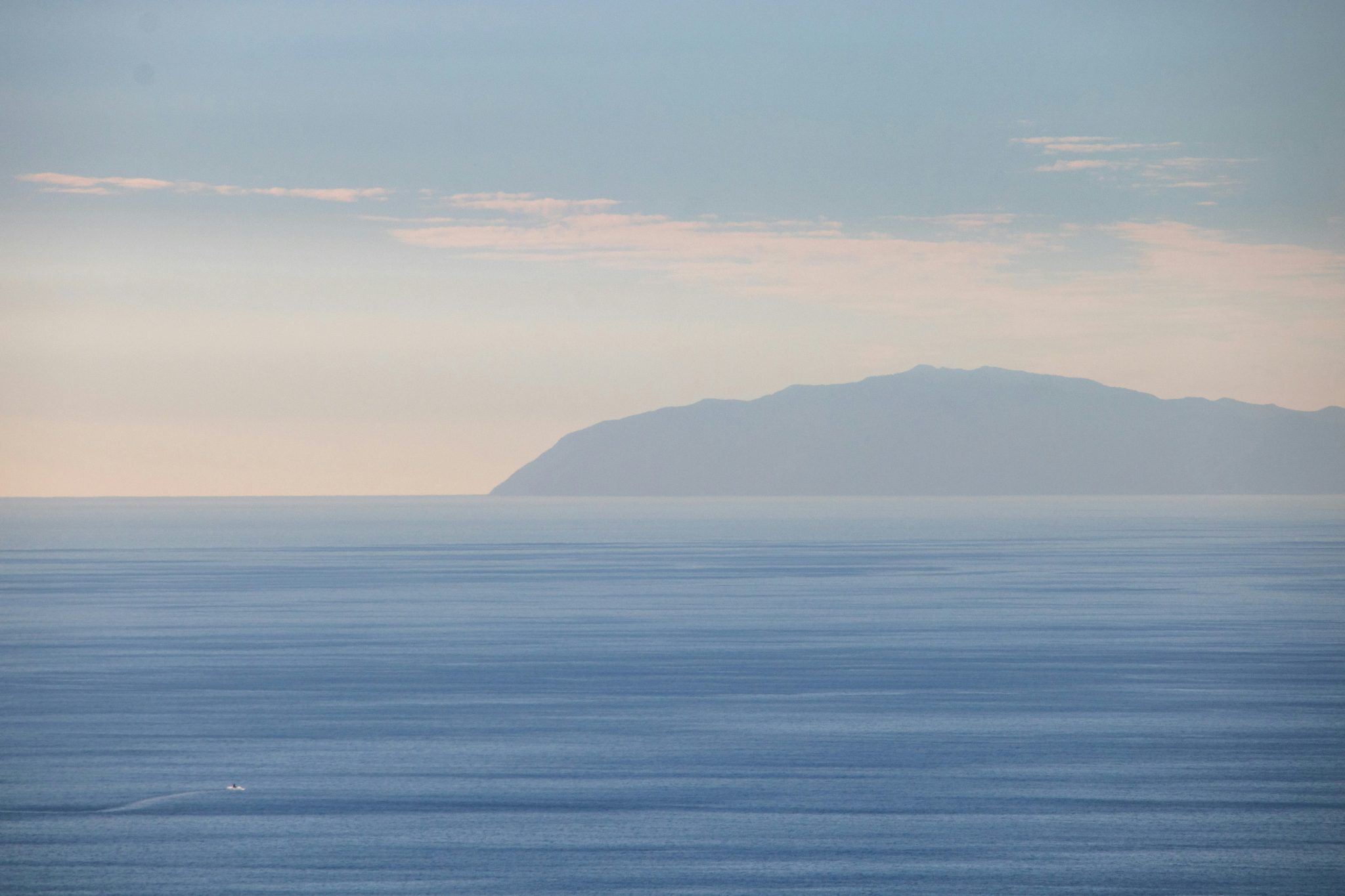
View of Catalina Island from Laguna Beach, California.
Along the gently undulating bends of Whittley Avenue in Avalon, tales abound of ghostly presences. Watson recalls how a friend of his and a roommate were stuck in a hotel room on Whittley on a rainy day when they heard the distinct sound of a chair falling and hitting the floor directly above them. Knowing they were the only guests in the hotel, they ventured upstairs to see what had caused the noise—and discovered a lone chair lying on its back in the centre of the room. Only later, when talking to the hotel’s owner, did they learn of its significance: a young man had committed suicide in that very room 50 years earlier, kicking a wooden chair out from under him with a noose around his neck. Another resident recalls passing an old church on the street almost daily with her young daughter. As they passed the empty, silent spot, the three-year-old would say, “I can’t stand this screaming man. We have to go!”, describing an invisible “man in a suit” wailing in an indistinct language. “He just seemed mad,” the little girl later recalled.
Other voices are clearer. In 1947, an amphibious plane was making its way towards Catalina Island with a full cabin of passengers, when it unexpectedly hit a squall of impenetrable cloud cover. At the same time, ice build-up rendered the plane’s radio antenna completely useless, meaning the pilot was essentially flying blind. Suddenly, over the headphones of the dead radio, came a voice commanding the pilot to “turn to nine-zero degrees. Turn now!” The pilot did so, and almost immediately emerged from the cloud cover—to see that he had narrowly missed crashing into the 2,000-foot peak of the island’s towering Mount Orizaba, a fatal collision only averted by the sharp 90-degree turn ordered by the phantom voice.
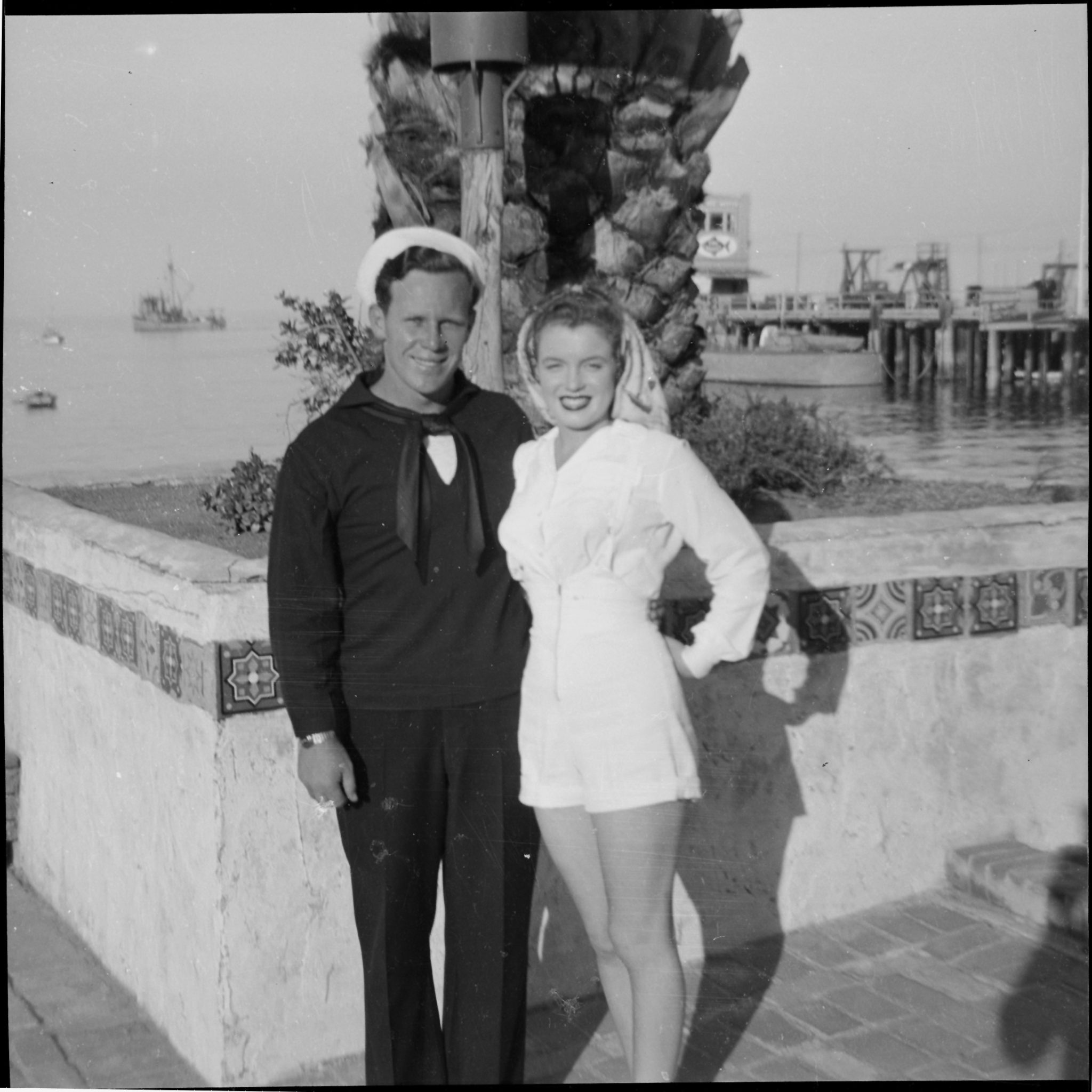
Marilyn Monroe (then Norma Jeane Baker) on Catalina Island with first husband Jim Dougherty, 1945.
To many people of my generation, however, Catalina is most closely associated with the 2008 film Step Brothers, in which the vaunted Catalina Wine Mixer (“the biggest helicopter leasing event in the western hemisphere since 1997”) forms the dramatic finale of the plot. Those three words in combination always seemed an exquisite send-up of the exact sort of polyester-shirted, lanyard-wearing, white-toothed, chardonnay-sipping type who would actually think about leasing a helicopter (“Pow!”). But Hollywood’s affectionate skewering has since been entirely embraced by the islanders themselves, who since 2015 have put on an annual party weekend where thousands of guests, paying between $140 to $500 for tickets, drink rosé wine and board floating plastic swans wearing Argyll sweaters and sailors’ hats. It’s a conjuring of a sort.
Many of the inbound tourists find time to enjoy the island’s wider pleasures, too, with a big contingent of the more film-literate heading up to 310 Metropole Avenue in Avalon, where Marilyn Monroe’s old house was said to sit. Nothing, however, can persuade the flocks of the mundane truth long acknowledged by Catalina Island Museum spokesperson Gail Fornasiere and others, who maintain that the location of the actual residence has long been lost to history. In this way, the sightseers are sort of inverted ghosts—anti-phantoms. Whereas the spectres of the island glide through walls that had not been there before, the tourists search for walls that have long since departed.