


Few filmmakers seek to unearth the truth as much as the California-born Kathryn Bigelow. With the release of A House of Dynamite, it is a continuation of a career that presents urgent questions, with no easy answers, discovers Charles Finch in this insightful conversation.
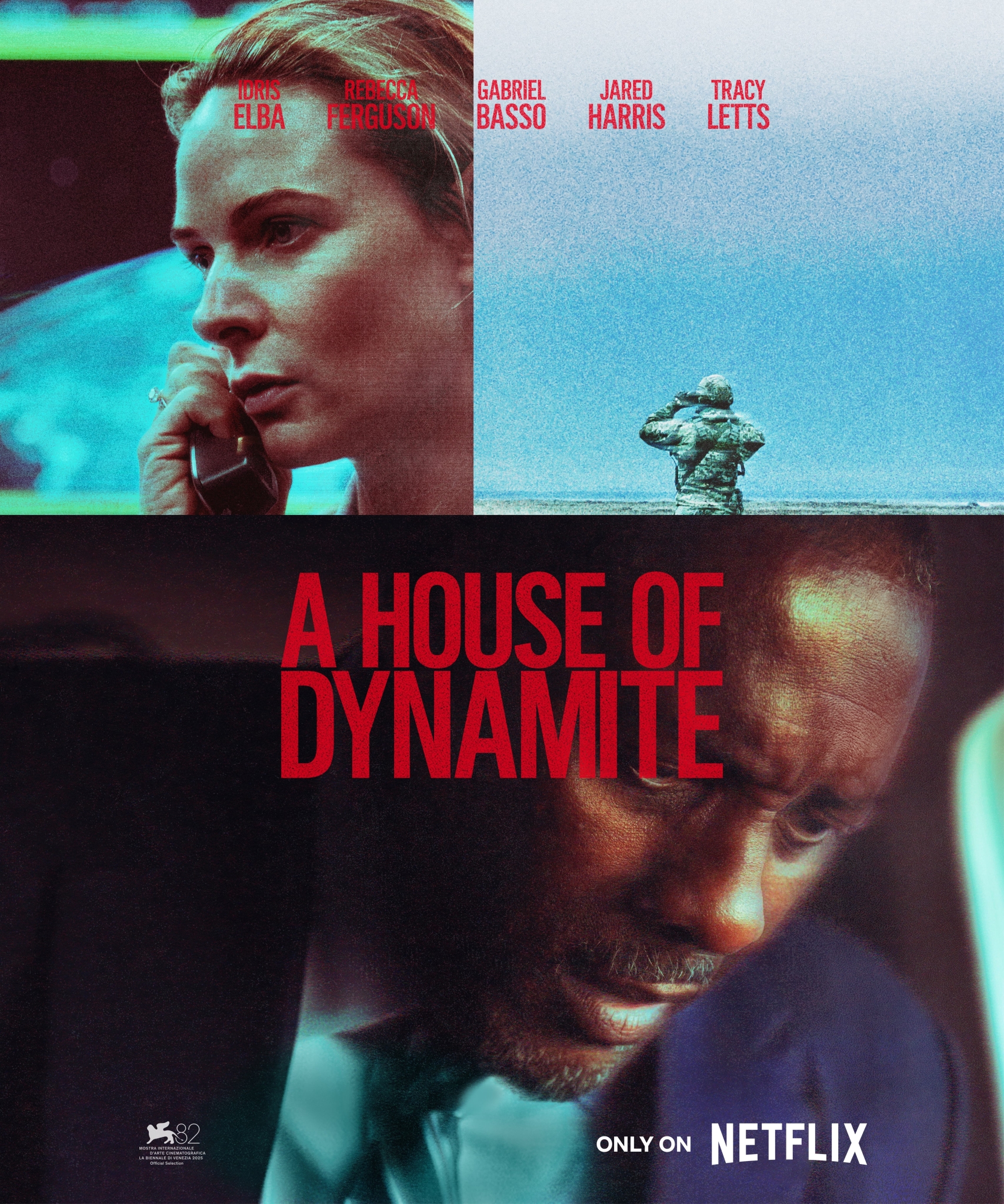
The following is a transcript from a conversation between our editor-in-chief Charles Finch and Kathryn Bigelow. Born in San Carlos, California, Charles first met Kathryn when she was a promising painter in Los Angeles. Their mutual friend Willem Dafoe would go on to star in her debut film The Loveless (1981), co-directed with Monty Montgomery. It would be the beginning of a philosophically-minded—yet commercially successful—run of work that continued with Near Dark (1987), Blue Steel (1990), the cult California surf thriller Point Break (1991), and Strange Days (1995), signifying Bigelow as one of America’s greatest directors. In more recent years, she has become known for a series of films that deal with the injustices of the American war machine: The Hurt Locker (2008) and Zero Dark Thirty (2012). And her most recent work, the Netflix drama A House of Dynamite—for which Charles and Kathryn met to discuss one rainy afternoon in London’s West End—is having very real effects in the halls of power. Told from three perspectives, it’s an urgent warning on nuclear warfare: both in the banal administrative processes and the human drama of what we lose when we give ourselves to hate.
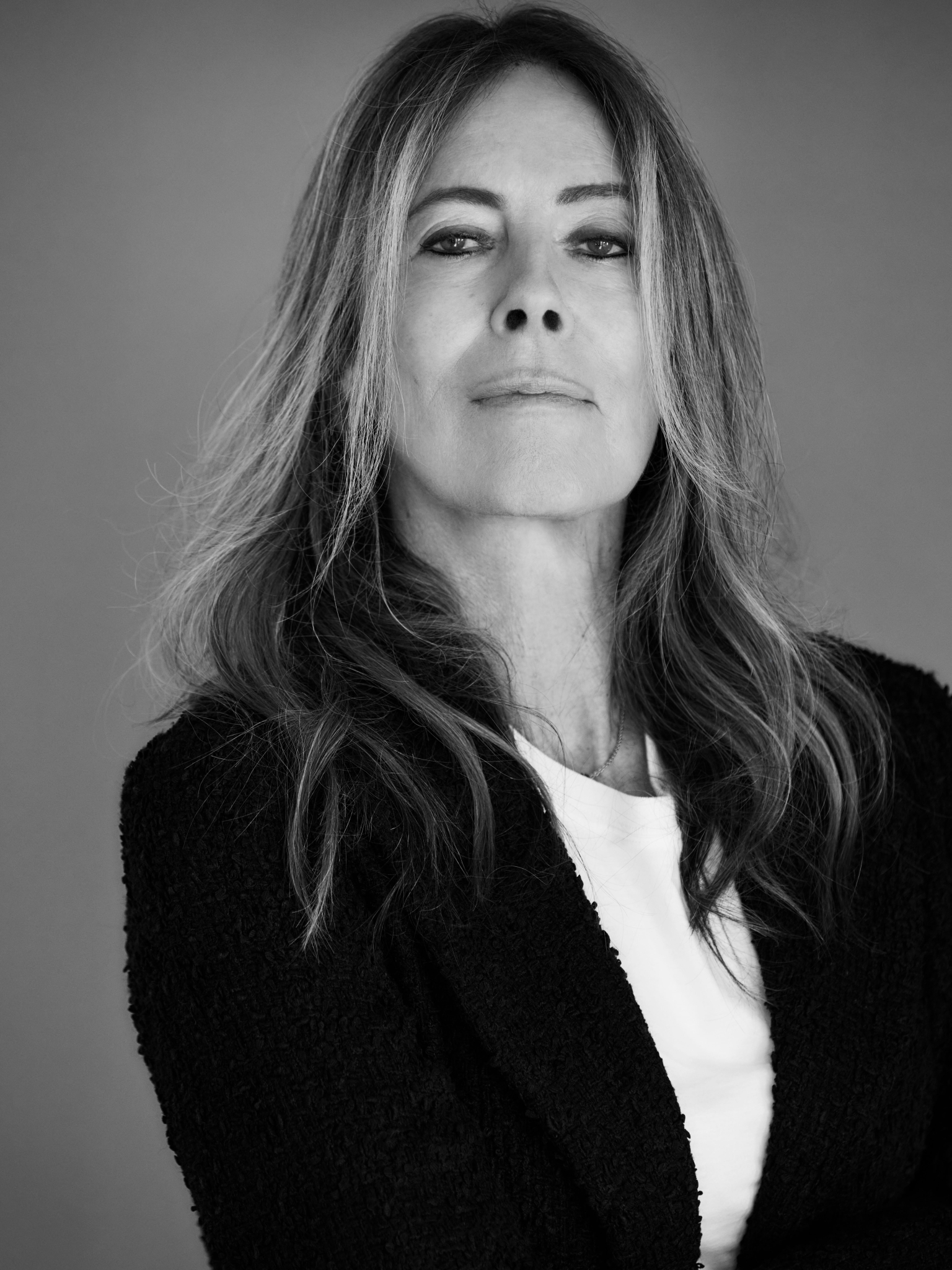
Kathryn Bigelow, 2025. Courtesy of Netflix.
Charles Finch: Why tell this story now?
Kathryn Bigelow: Why not now? We are certainly in a more volatile environment than I’ve ever experienced. It feels like every five minutes there’s another war for nebulous reasons and that we’ve normalised the prospect of nuclear weapons. I grew up at a time when we had to duck under school desks in the event of an atomic blast. That’s insane in and of itself. I did K-19: The Widowmaker (2002), about events which were a harbinger to the Cold War period. And then The Hurt Locker (2008) and Zero Dark Thirty (2012). They all start with a question: what if? Well, what if a nuclear ICBM [intercontinental ballistic missile] was launched towards North America? What happens in our halls of power? I was talking to a friend of mine, journalist and now screenwriter Noah Oppenheim. He started creating this narrative, which was the logical, credible extrapolation of what would happen. I insisted we write it down. That’s how it began.
CF: Do you feel that audiences, especially younger people, are aware of this real house of dynamite?
KB: No, so it becomes a cautionary tale for them. There’s whole decades that know nothing about the dangers of nuclear weapons. This is an incredibly combustible world. And the film asks: do you want to live in this world?
CF: Have you got a sense of that working?
KB: I’ve met with senators who are very excited by the film because it gives them another opportunity to discuss nuclear weapons. Then, just last week, I was speaking to this atomic scientist who manages the Doomsday Clock. Apparently on January 27th, they’re going to reset it to nearer to midnight than it has ever been. So we’re in a volatile situation.
CF: Has the White House screened the film?
KB: I don’t know. They have mentioned a 100% accuracy rate in terms of the Ground-Based Interceptor but, according to all our advisors, that is a fallacy. I mean, this has been researched to within an inch of its life. We had a three-star general, a four-star general, the former head of NATO—all consulted with us. But nothing is 100%.
CF: All the performances are spectacularly grounded.
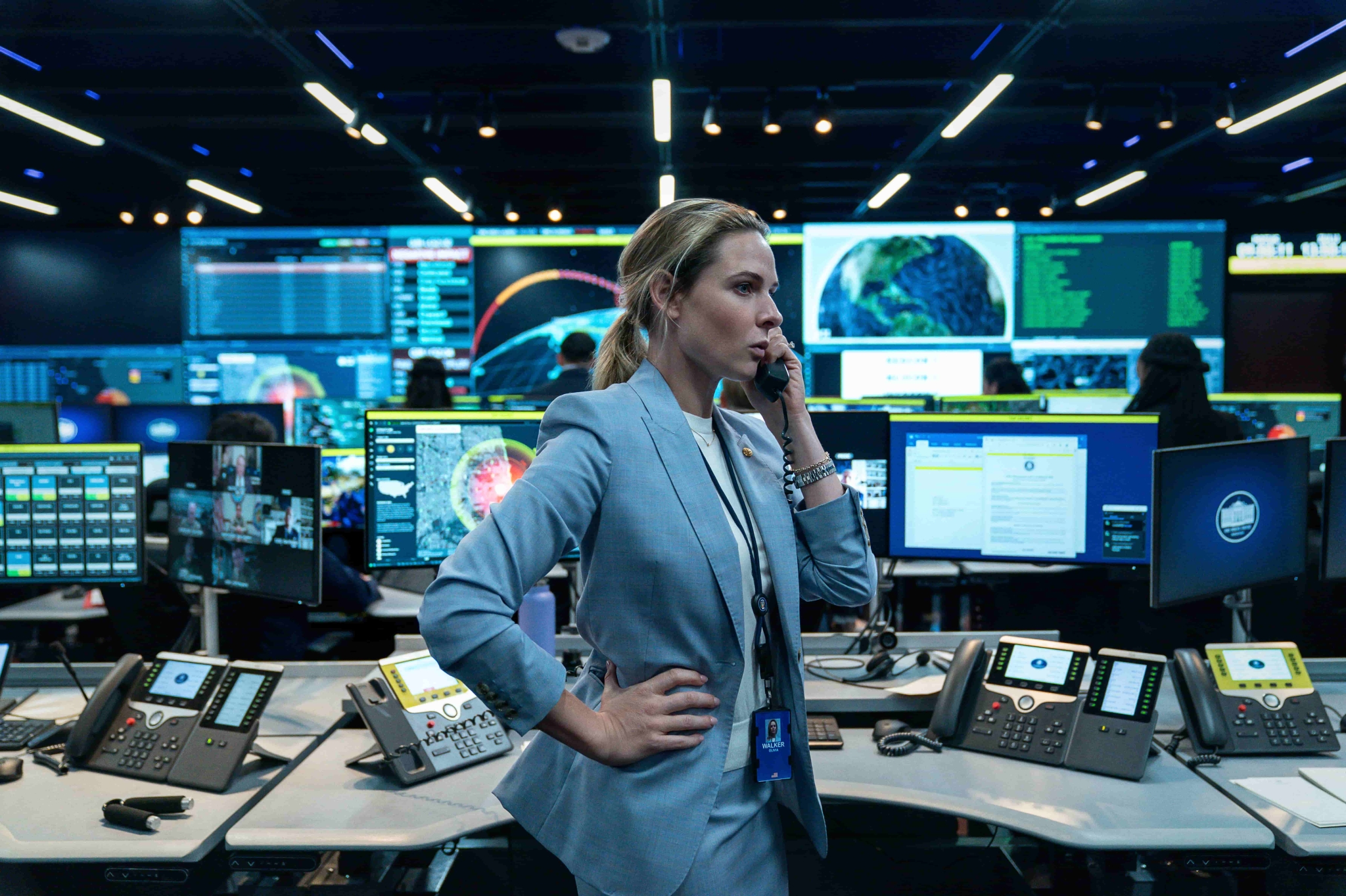
KB: I’ve been fortunate with the cast. Rebecca Ferguson, Idris Elba, Jared Harris—they’re extraordinary. My goal was to make it as real as possible, and they added a sense of credibility through their performances. I wanted the actors to spend significant time with the generals we had consulting. Our advisors were on set at all times. The actors were able to really get into their heads to understand their motives in each situation. That was the most important element about telling a story like this one.
CF: You do it brilliantly.
KB: I have a tremendous ally in Barry Ackroyd, our cinematographer. He’s just a genius. He’ll light an entire space so an actor is not having to overthink the set around them; they can just do their job. And so there’s a level of freedom they have.
CF: How dedicated are you to the screenplay’s dialogue? Or do you allow for leeway?
KB: Actually, both. If the actors choose to go off script, I trust them completely. I cast for people who will be able to understand and own the performance, embody the character, and inhabit them. They’re just themselves. Rebecca [Ferguson] in the room with her son. That’s her. It really is.
CF: The scene with the death of Reid Baker (played by Harris) is devastating. Why did you choose not to explicitly show the final moments?
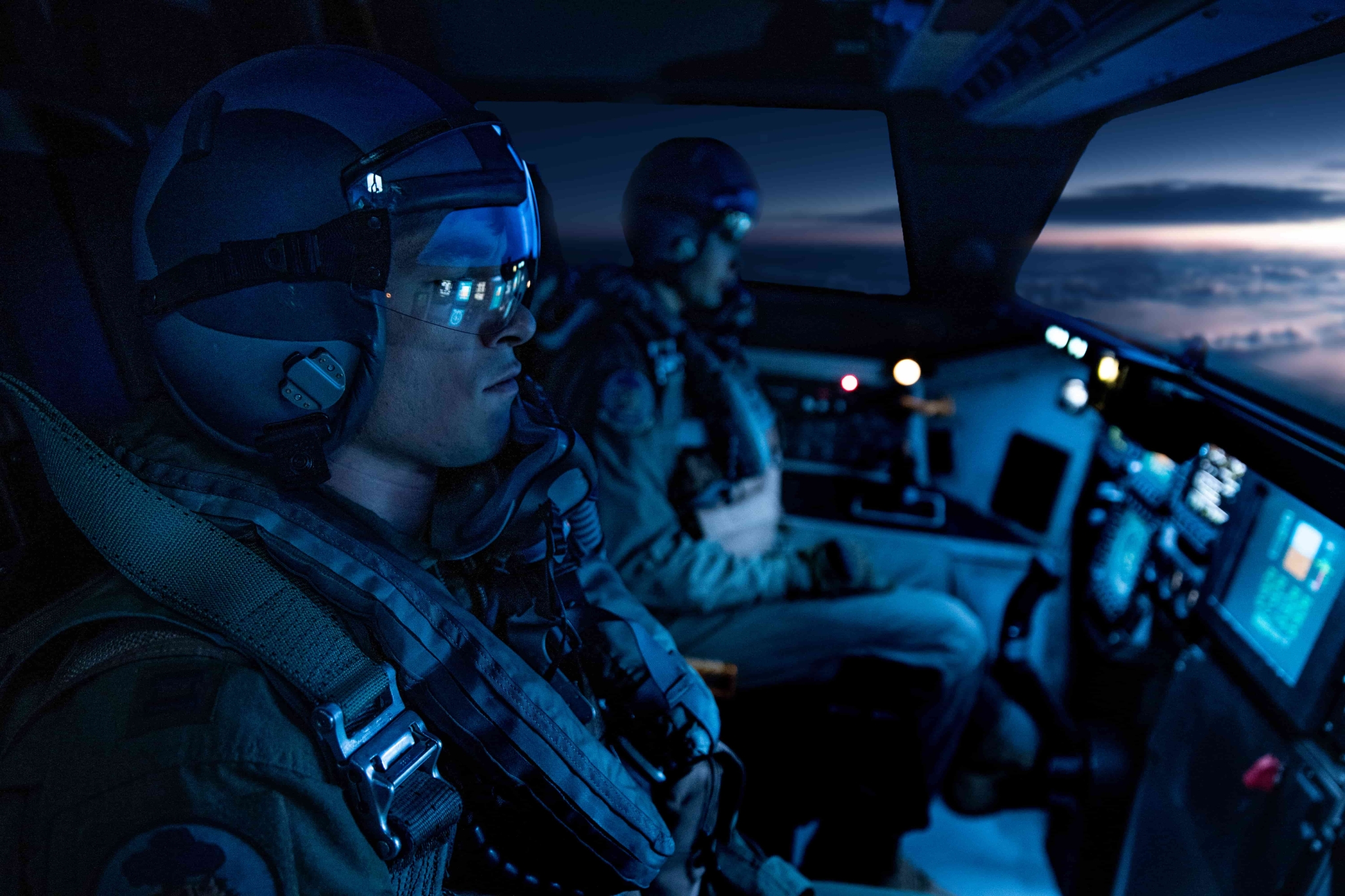
KB: It’s tempting to try and observe everyone as closely as possible, but I wanted to take a neutral vantage point: objective. An omniscient perspective, as important as the pilot in the plane or the man ushering the Secretary of Defense into the helicopter.



CF: There’s a sense in the movie that we humans are hell-bent on self-destruction.
KB: Animals don’t behave this way. Raven Rock is a good example of why we need to denuclearise. I mean, that’s the best offer there is and that’s spending the next 90 years in a cave. When the oxygen runs out, what do you do?
CF: Did you consult any advisors from Russia?
KB: I did when making K-19. But our tech advisors, specifically the ones with experience in NATO, had a lot of awareness and knowledge of how everyone would approach this scenario. We had a gentleman who is a part of the START treaty negotiation in February, which will hopefully keep all parties in check. But everyone has to be at the negotiating table. He saw A House of Dynamite twice. He said, and I quote: “It’s intense and riveting and should lead us all to consider what we can do now and what must change to avoid such a nuclear scenario.” That gave me a lot of hope.
CF: Should we have hope?
KB: We must. We can’t lose that.
CF: Did you have fun making this movie?
KB: The hard part was that the shooting was like playing three-dimensional chess. We shot it all live. Those scenes on the teleconference: people think it’s on a green screen. No—we had Tracy Letts [General Brady] about 50 feet away from the Strategic Command (STRATCOM) set. It’s live. That’s important for the performances. Tracy spoke about that; how he couldn’t do the scene if it was a green screen.
CF: This is really enforced by the natural situations some of the characters find themselves in. The young man who gets stuck in traffic, for instance.
KB: Both Jeremy Hindle, the production designer, and myself visited STRATCOM in Omaha, Nebraska. In the building, you take an elevator that goes underground but you don’t know how many floors. That’s classified. And then you come out into the battle deck. And what’s interesting is that they practise the nuclear protocol 400 times a year. That’s more than once a day. But what they can’t practice are human accidents. Someone’s having a colonoscopy or they’re late… His bike is broken.
CF: When you sit in the editing room, do you ever have a moment where you doubt yourself?
KB: Seldom. That’s because I work with people such as Barry Ackroyd and editor Kirk Baxter who stay extremely focused. What is most important to me is collaboration. I love the consortium of people who deeply care about what they’re doing. The end result speaks for itself.
CF: Do you think it takes a studio like Netflix to get this made in some way?
KB: I never tested it other than Netflix. The producer, Greg Shapiro, who is very close to some of the people at Netflix said, “Why don’t we give it to them?”
CF: It’s terrifying that not more films like this are being made today.
KB: There used to be a whole slew of geo-political and nuclear films: Fail Safe (1964), Dr. Strangelove (1964). But they stopped happening.
CF: What draws you to these stories of heightened drama?
KB: Relevance, I suppose. It’s wonderful to be entertained but better to find that inflection point between entertainment and relevance. I think: as filmmakers, how do we use these incredible tools to inform people?
CF: Did you know back when you were a painter in Los Angeles that one day you would be a filmmaker?
KB: I had no idea. Chance always plays a certain part but then so does intention. That’s perhaps the point where it happens.
CF: Which part of being a filmmaker still interests and amazes you most?
KB: Finding a story that makes me passionate. Uncovering an issue or a problem that absorbs me and then bringing it to life.
Continue Reading