

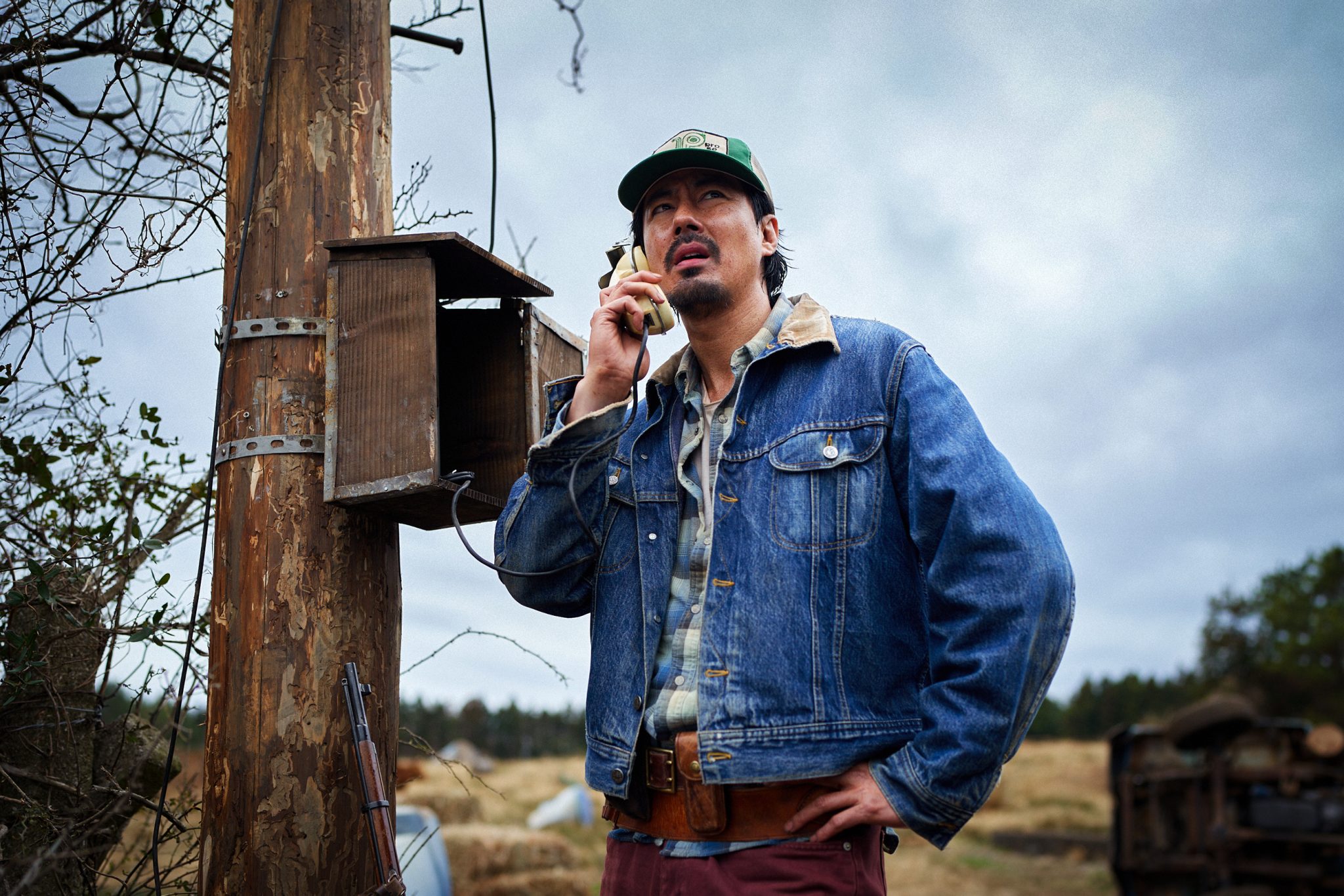
We speak to the South Korean director behind one of the most thrilling—and polarising—blockbuster films of the year.
As far as blockbusters go, nothing about Hope is conventional.
The first act of Na Hong-jin’s balls-to-the-wall sci-fi creature feature is one long chase sequence through a crumbling Korean fishing village that doesn’t reveal what we’re chasing (or is chasing us) until an hour in. Later in the movie, the perspective abruptly shifts from the humans to the aliens, who reveal themselves to operate under a complex class and language system. And about halfway through the film comes one of its centrepieces—a hilarious near-seven-minute anecdote about taking a poo in the wrong place at the wrong time.
“When a human eats, of course, it must come out,” laughs Na, calling me from his native South Korea ahead of the film’s release in the UK. “That’s a very natural thing.”
The sequence got a rambunctious round of applause when Hope premiered in Competition at Cannes last May, as did a handful of other fun, thrilling and bizarre moments throughout its two-and-a-half-hour runtime. The film—which follows the residents of a tiny Korean fishing village fighting against a potential alien invasion—had critics divided: some laughed with it, praising its unpredictable humour and meticulously crafted action sequences, others laughed at it, lambasting its logical inconsistencies and dodgy CGI, while many found themselves at an awkward crossroads between the two (despite a few glaring flaws, I maintain that it was exactly the kick up the arse this year’s dour festival lineup needed.) Sitting calmly somewhere in the midst of the noise is director Na, who saw all of this coming from a mile away.
“I really kind of predicted that it might have a polarising response,” he says. “When you watch Hope, it seems as if something is insufficient, something’s missing, and that was because I was thinking of the sequel. When we were releasing it in Korea, the marketing team actually gave me a mission not to talk about a sequel or series or anything about it. And so that gave the audience mixed feelings and some people possibly thought, what’s this film about?”
Still, this bonkers blend of action, comedy and science-fiction has found its audience. The most expensive Korean film ever made, Hope has grossed more than $45 million worldwide, including more than $35 million in South Korea, with some hailing it as the best blockbuster filmmaking of the year so far—no small feat, considering we got a Spielberg film this year.
We sat down with Na, who touches on the problem with the Korean film industry right now, why the poo scene in Hope is integral to the film’s themes, and what it was like having Possible Love director Lee Chang-dong as a university professor.
Luke Georgiades: This was one of the best cinema experiences I had at Cannes this year, and also one of the most polarizing at the festival. Was that something you had been anticipating?
Na Hong-jin: It was expected because it isn’t designed to be a standalone film. When you watch Hope, it seems as if something is insufficient, something’s missing, and that was because I was thinking of the sequel. When we were releasing it in Korea, the marketing team actually gave me a mission not to talk about a sequel or series or anything about it. And so that gave the audience mixed feelings and some people possibly thought, what’s this film about? Others may have thought that even within this first installment, there was a completeness there. The message is there. However, I really kind of predicted that it might have a polarising response. Whatever happens, I’m really thankful for the audiences, thankful for the people who received it well.
LG: You’ve mentioned that you realised while developing the narrative that it was going to take 3 or 4 films to fully tell this story. Why do you think this movie world in particular became so expansive for you compared to others you’ve done in the past?
NH: Initially I thought that I wanted to compress all my story into one film. But then I felt the pressure of trying to just say storylines rather than express them.I wanted to truly express each storyline, which is why, in the final film, I expand on each and every scene as much as possible, regardless of how the storyline gets longer. If it’s gotta be long, then it’s gotta be long. That’s how it turned out to be. I wanted to keep the density of each scene intact.
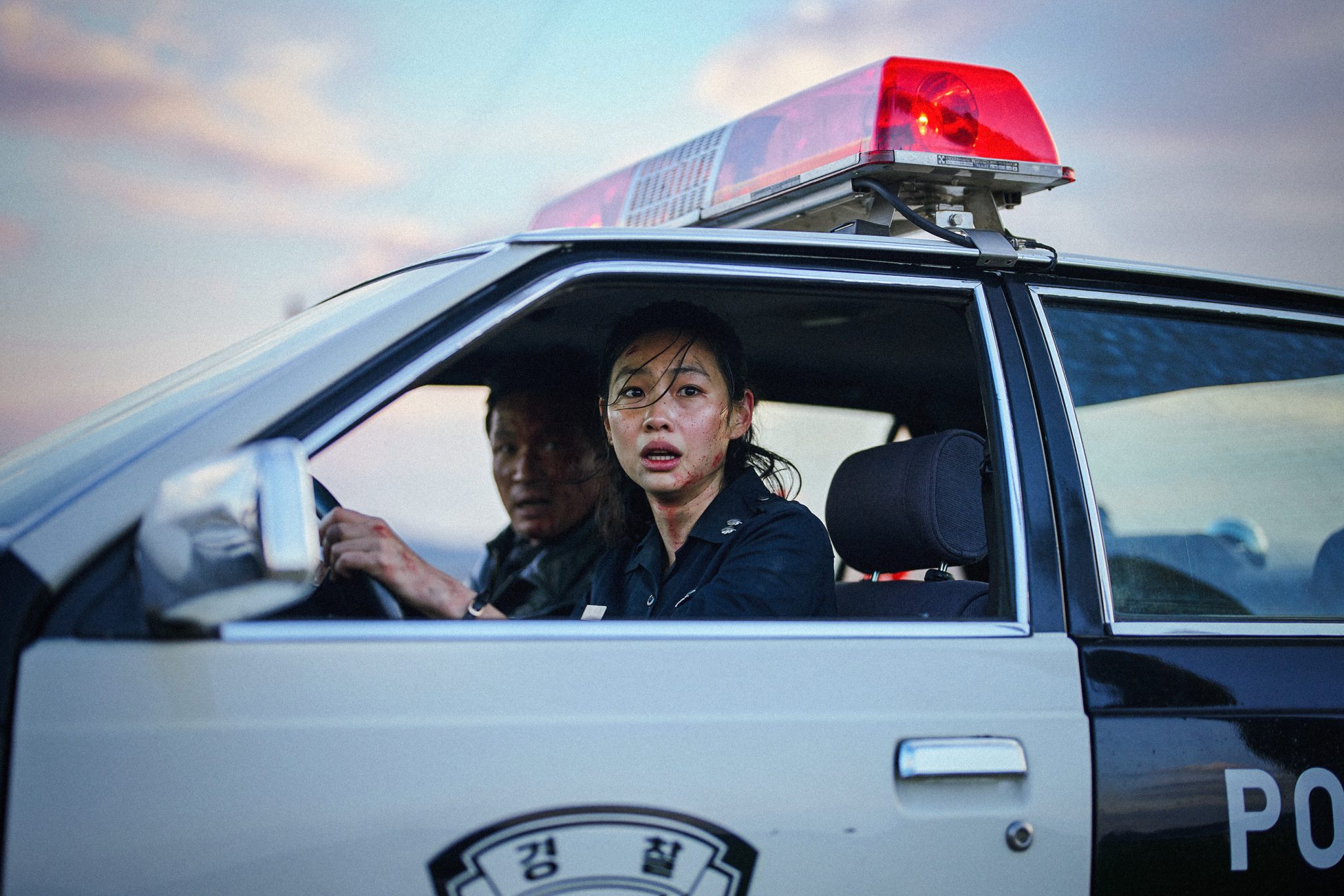
LG: The crowd at my Cannes screening cheered when Hoyeon entered the screen. She’s said that you made her shoot that scene 20 times. What was so integral about getting that moment right—did you know the audience would be anticipating Hoyeon’s arrival?
NH: I thought a lot about when the most impactful time would be for Hoyeon to appear on screen for the first time. She comes on the screen for the first time around one hour into the film. I don’t think I actually thought too much about how the scene itself is designed. I simply wanted it to be impactful. I didn’t expect people to love it so much. When Hoyeon was shooting, I thought she could bring out a little bit more feeling—that she might be able to express softness and power at the same time. And so I thought, give her a lot of takes so that her emotions come out naturally. And as you can see, the result of all the hard work came out well.

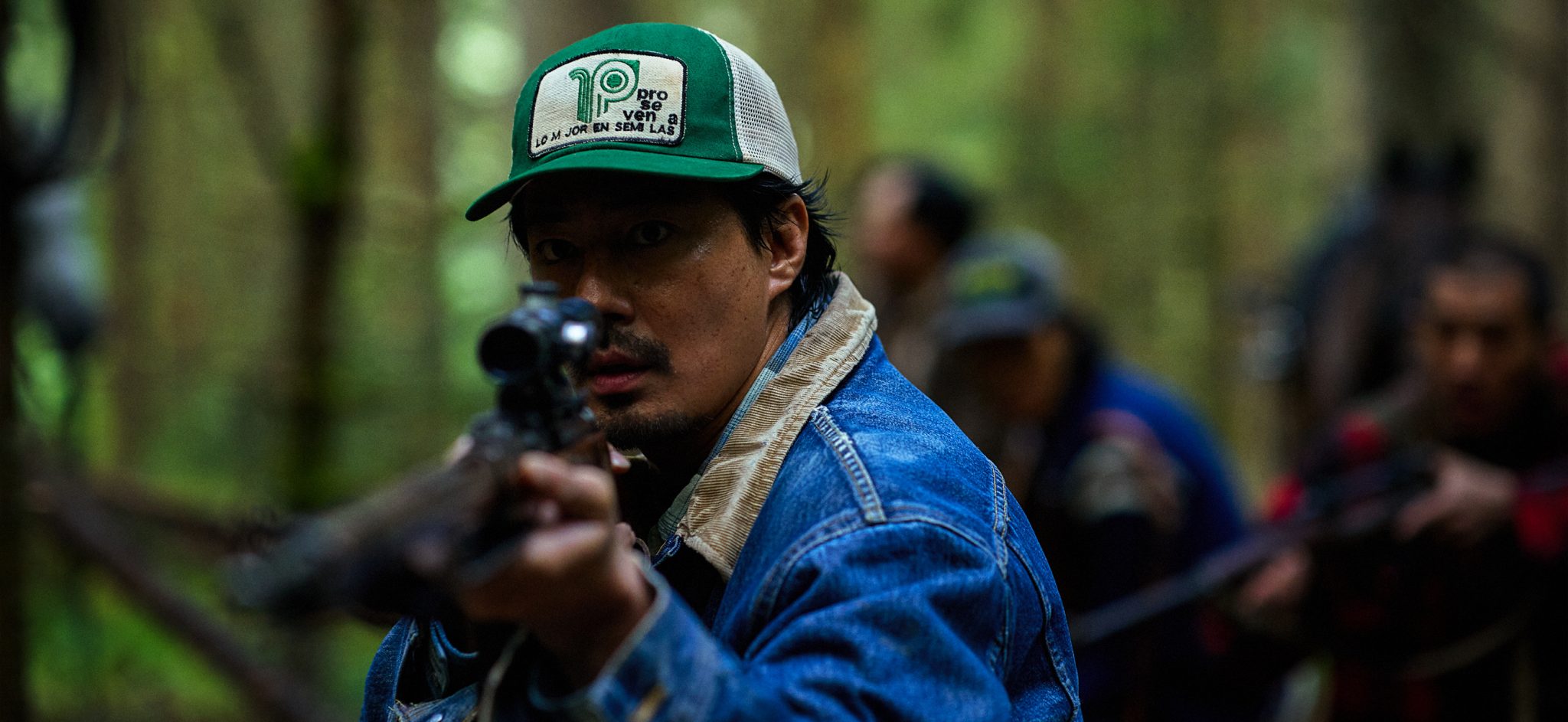
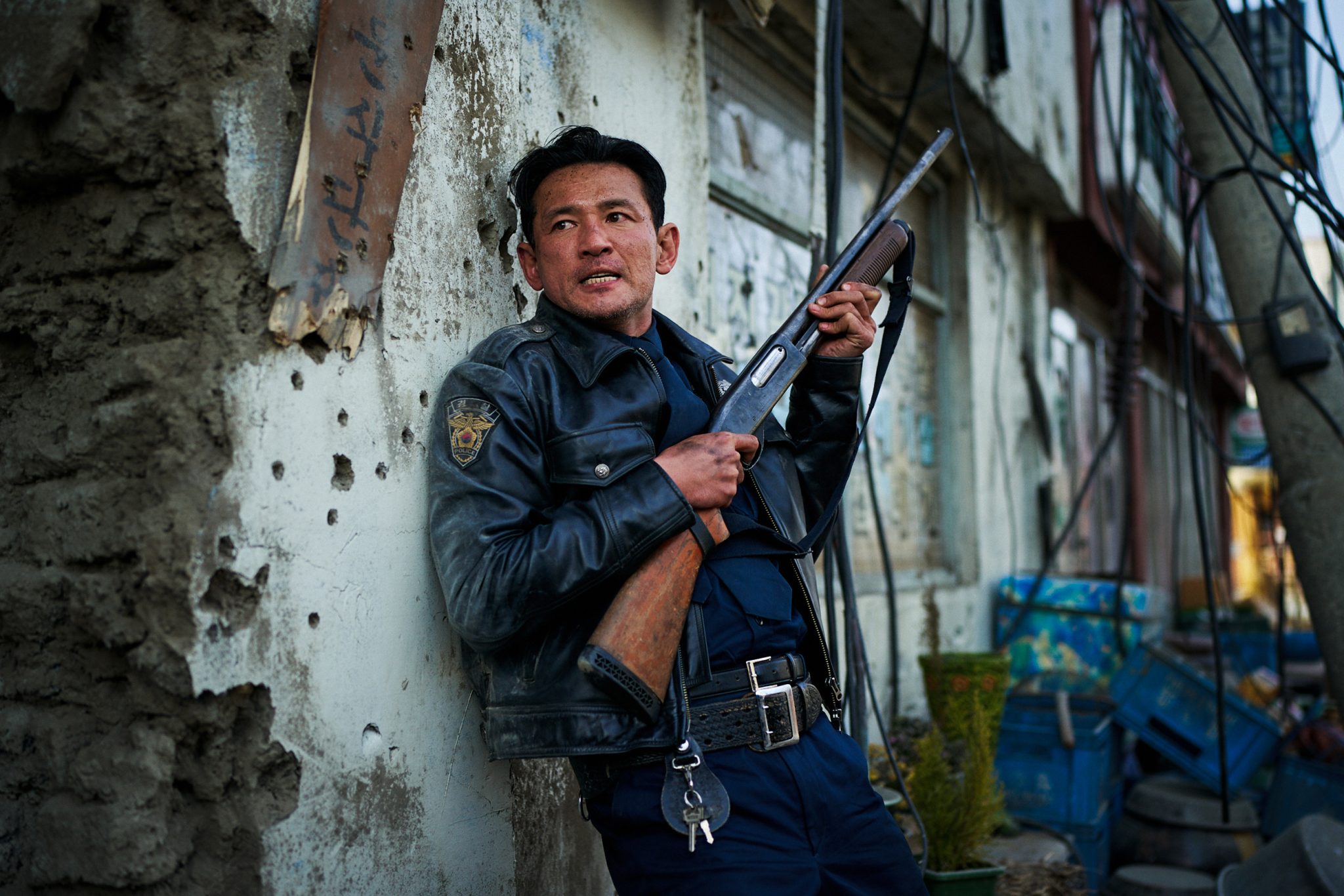


LG: Another scene that I think a lot of people really have gravitated towards and really love is the poop scene, which is one of the centerpieces of the movie in a strange and interesting way. Why did you want to drag that sequence out for as long as you did?
NH: This is a story about humanity. I wanted to talk about humans. The film includes characters that are very primitive and instinctive. They’re not high-class intellects. Through those people, I really thought, I wanted to talk about something that was very lowly and at the bottom level of human nature. And this was a scene I was obsessed with from the beginning of the writing process. It’s a really long scene, and I really didn’t want to lose it. As you could possibly remember, there’s about seven minutes of dialogue. It’s not easy in a film to keep all seven minutes of dialogue in it. I’m proud that I was able to keep it. Some people find it funny, some people not. In the US and Canada, there were massive audience reactions. They quite liked it. However, in Korea, they seem to think that if you’re laughing then you’re losing. I don’t know. But ultimately I wanted to talk about our natural instinct. When a human eats, of course, it must come out. That’s a very natural thing.
LG: I wonder how you hope that this will shake up how the Korean film industry has been approaching their filmmaking?
NH: Well my film wasn’t that successful in comparison to other films in South Korea. In terms of the Korean film industry, whether that’s getting better, I’m not quite sure. I’m very serious about this current situation. I was releasing this film after many years since my last film, and I noticed that 9 out of the 12 top ranked films in the market at the time were Hollywood films. I couldn’t really see any Korean films there. And I just thought, are we in the US? There is a Korean market. And 90% of the films that we see in the peak time were from America. It was shocking to see that. This is a time when the audience is actually looking to watch more films, it’s a big time for cinema, but much of the Korean market’s focus is on Hollywood. I don’t know how this will get resolved. This is not something that I can change on my own. It requires some time.
LG: As well as your film, there is another South Korean film creating a lot of international buzz RIGHT NOW. Lee Chang-dong’s Possible Love. I know director Lee taught you for one year at film school. Can you tell me about your relationship with his films and if there’s something you learnt in his class back then that you’ve now taken with you into your career?
NH: Yes, Director Lee Chang-dong was my professor when I was at university. At the time, he only had about four to five students in his class, so he often used his office for teaching us. When I was having a conversation with him, I really felt that he was very closely analyzing me, dissecting me, trying to understand and complete me like a riddle. That gave me a slight discomfort. I really felt as though I wasn’t mature enough to go through that process, and I wanted to run away from it. And I actually did, because I interrupted my study and then went off to make my first film, The Chaser. But in retrospect, director Lee is one of the great filmmakers. He knows the power of the movies, and he knows the positivity, naivety and the power of the senses. He can put it all into his films. I sincerely respect him. Me and my fellow filmmakers call him “the God of cinema”.
Hope is in cinemas across the UK and Ireland now. Get tickets here: https://www.hopemovie.co.uk/