

A new encyclopedia from A24 uncovers a world of human desires behind cinema’s feline companions.
In 1951, a red shorthair tabby named Orangey starred in Arthur Lubin’s Rhubarb as a pugnacious stray who inherits his wealthy owner’s fortune and Brooklyn baseball team. A decade later, he was sharing the silver screen with Audrey Hepburn in Blake Edwards’s 1961 Breakfast at Tiffany’s, playing the “poor slob without a name” whose unceremonious presence offsets Holly Golightly’s glamour. By then, Orangey was a Hollywood celebrity, although his range concealed a casting sleight of hand. Animal trainer Frank Inn marshalled an ensemble of similar-looking tabbies, selecting each for the temperament or trick required by a scene—sustaining the illusion of a single, remarkably accomplished actor.
If cats do in fact have nine lives, cinema has certainly found plenty of uses for them. Homebodies, space companions, psycho killers and villains’ confidants, felines are among the screen’s most versatile performers, even if they rarely allow direction. “They’re reluctant, but they’re still nonetheless very present in the history of cinema,” says Madeleine Morley, editor of A24’s new book title: The Encyclopedia of Movie Cats: An A–Z of Felines on Screen. Gathering over 1,000 cats from films spanning 1894 to 2026, the volume surveys an improbably elastic screen presence.
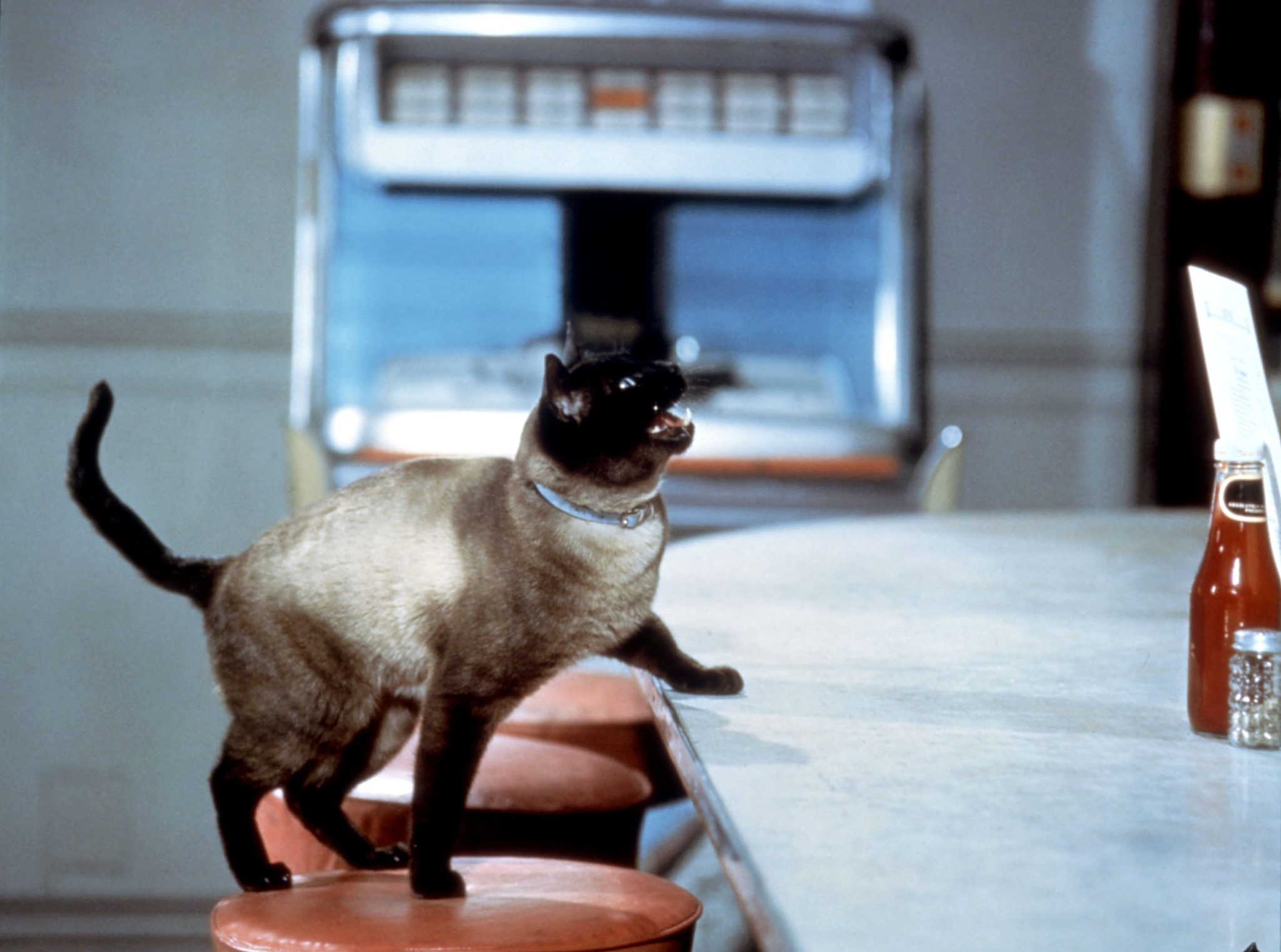
That Darn Cat, 1965 © Walt Disney StudiosCourtesy Everett Collection
From alley cats and bad omens to sex kittens and writers’ companions, the book orders this sprawling troupe alphabetically. According to Morley, the project began with a modest suggestion from A24’s creative director Zoe Beyer and as sightings accumulated, the playful premise acquired encyclopedic proportions. Months of viewing followed, with visits to the DVD library and forays into promising genres. While occasionally an entire film yielded not one whisker—an uncertainty which suited the subject matter. “You never know what it’s going to do,” says Morley, citing film scholar Daisuke Miyao’s 2019 book Cinema Is a Cat which draws parallels between the animal and the medium.
Certain patterns nevertheless emerged. Morley repeatedly found felines beside elderly women, femmes fatales and sex workers; characters whose independence might be framed as seductive, dangerous or pitiable. “They’re really gendered towards women,” she says. Romantic comedies frequently assign a woman a cat and a man a dog, announcing through their pets the incompatibility that courtship must overcome. The association extends to Danny DeVito’s The War of the Roses (1989), in which the pairing becomes an emblem of marital rancour, and Joe Camp’s Oh! Heavenly Dog (1980), which carries these gender associations into its vision of reincarnation. The censorious treatment of solitary women with cats in early cinema finds an echo in the anxieties about spinsterhood that recur in romantic comedies of the 1990s and early 2000s, such as My Big Fat Greek Wedding (2002) and Bridget Jones’s Diary (2001).

“If cats do in fact have nine lives, cinema has certainly found plenty of uses for them. Homebodies, space companions, psycho killers and villains’ confidants, felines are among the screen’s most versatile performers, even if they rarely allow direction.”
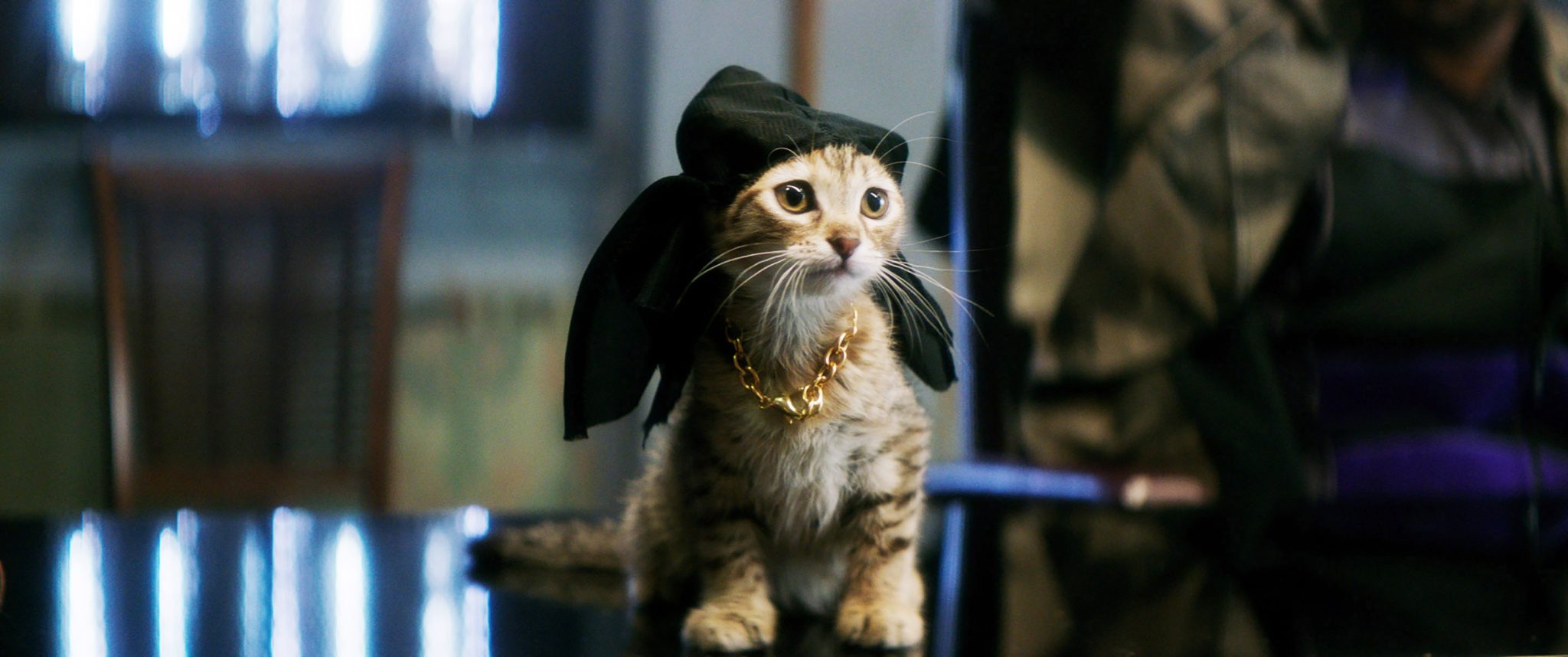
Keanu, 2016 © Warner Bros. / courtesy Everett Collection
In Japanese horror, intimacy can become a blood pact. Drawing on folklore about supernatural felines, bakeneko films often feature a cat that drinks a murdered woman’s blood and merges with her to avenge her death (Blind Woman’s Curse, 1970). The book states that over 100 ghost-cat films were released between the 1920s and 1970s, their spectral transformations giving loyalty a ferocious expression. “They’re so loyal that they will kill for that owner,” Morley says. That proximity between devotion and danger also haunts the Stephen King adaptations featured in the book, where the familiar companion harbours an unknowable side: the creature asleep in the house is also a hunter with an unsupervised life outdoors.
Among Morley’s favourite discoveries are two Czech films that use a cat’s gaze to experiment with how we see the human world. In Vojtěch Jasný’s The Cassandra Cat (1963), the people Mourek looks at change colour, revealing their true natures. Juraj Herz’s Morgiana (1972) places the audience at feline eye level, using an ultra-wide lens to show the world from a Siamese cat’s perspective. “I find it very interesting that Czech New Wave directors landed on the cat as a way to explore new cinema and what it could do,” she says.
Cats can also become part of a filmmaker’s public identity, as they did for France’s Left Bank directors. Chris Marker sent journalists photographs of his cat in place of a headshot, while Agnès Varda featured her own cat, Zgougou, in her films and made her the mascot of her production company, Ciné-Tamaris. In The Vanishing Lion (2003), the tabby replaces a Parisian monument, and in Homage to Zgougou the Cat (2002), she wanders into shot and sleeps on Varda’s computer. These appearances bring Varda’s domestic life into her filmmaking, conveying what Morley describes as “a sense of playfulness, silliness, love, homeiness”. The encyclopaedia’s affections extend beyond the arthouse: Butthole, from Dumb and Dumber To (2014), gets his entry too. “We didn’t want to be elitist,” Morley says.
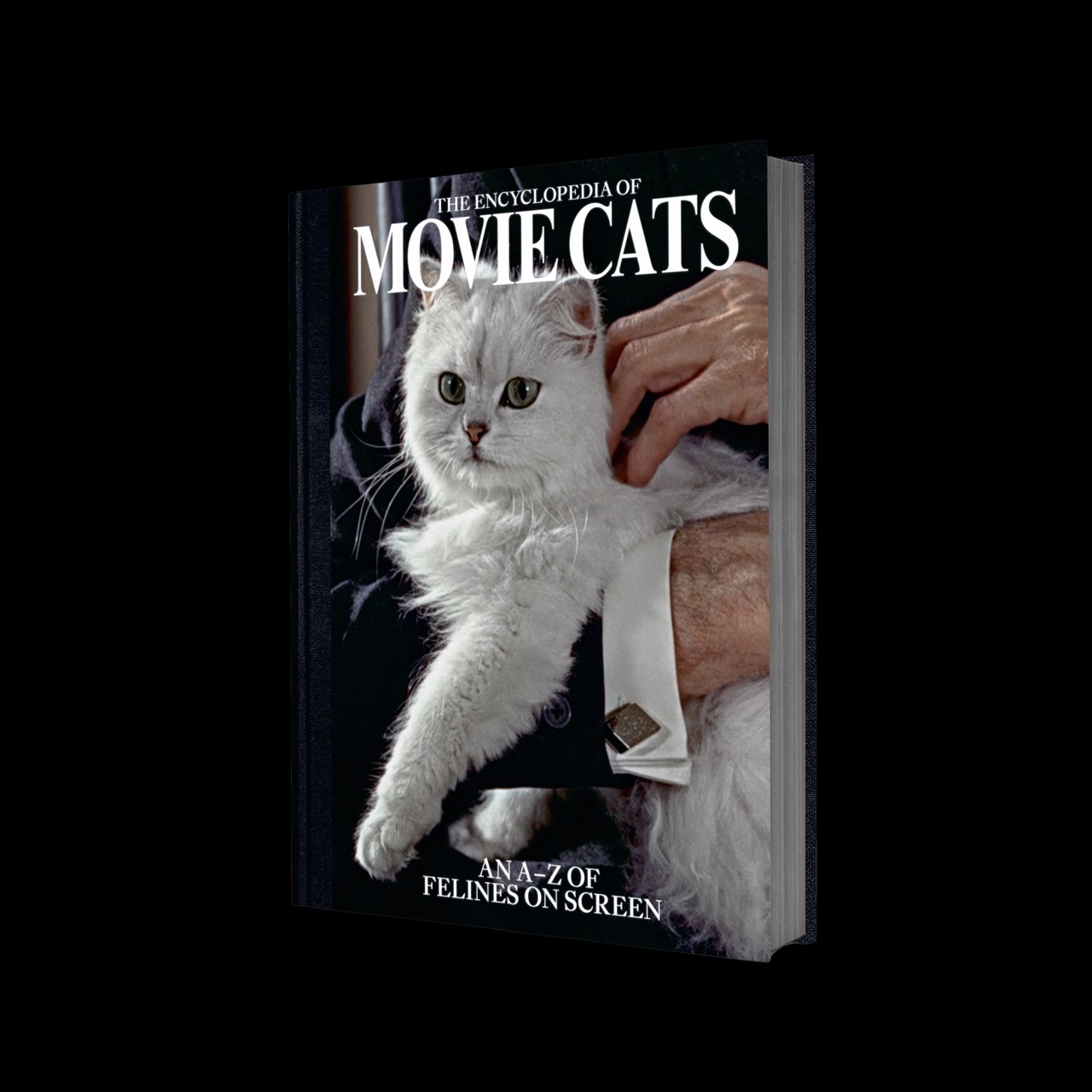
The Encyclopedia of Movie Cats: An A–Z of Felines on Screen, published by A24
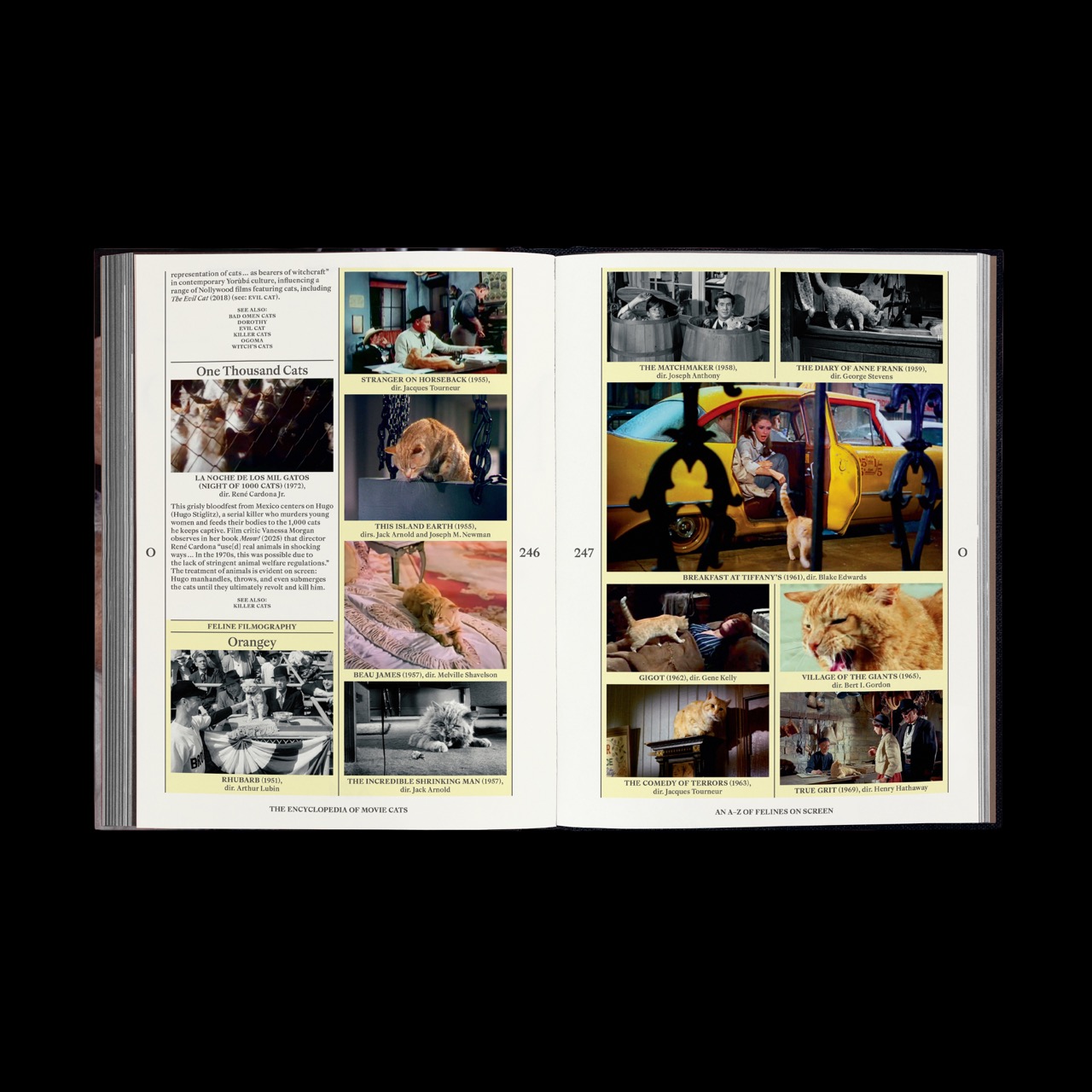
The Encyclopedia of Movie Cats: An A–Z of Felines on Screen, published by A24
Across a century of feline appearances, Morley is reluctant to trace a single evolutionary arc. “I don’t know how much the cats are changing; it’s more how we project onto them.” What she does observe is a growing tenderness: “You do see the companionship of animals in films today is really way more empathetic.” Morley points to the cats in successive versions of Nosferatu as an example of the nuances that emerge when a story is retold. In F.W. Murnau’s 1922 original, Ellen plays with a cat, establishing the home life the vampire will threaten. Werner Herzog reprises the image with kittens in his 1979 remake, while Robert Eggers’ 2024 adaptation gives Ellen’s tabby a name: Greta, after Greta Schröder, who played Ellen in the original.
Morley’s own affections may be shifting too. After months spent examining cinema’s cats, she is considering introducing one to her household. “I really respect cats,” she says. Her miniature poodle has yet to be consulted.
The Encyclopedia of Movie Cats by A24 is out now.
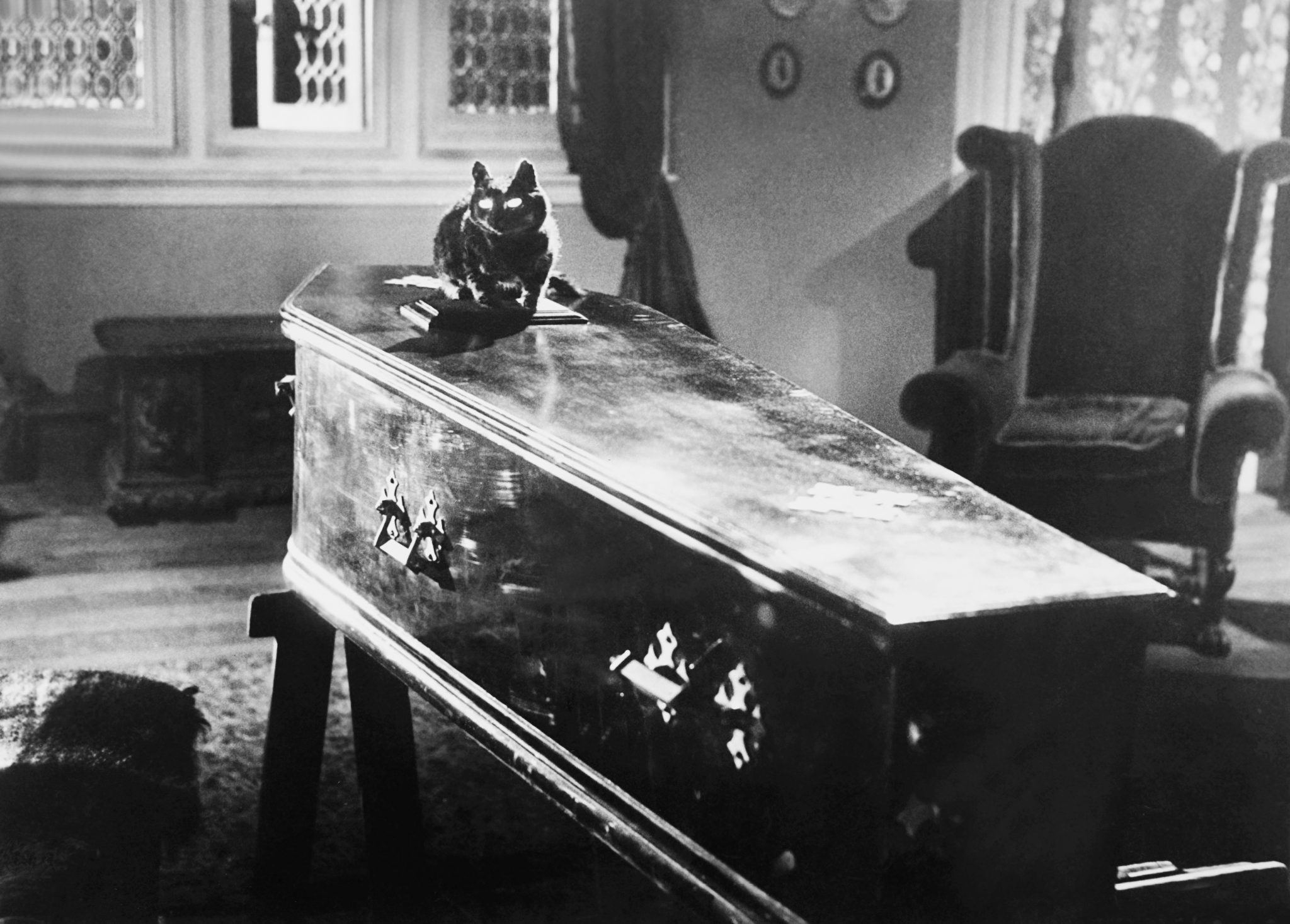
Main image: The Shadow of the Cat, 1961. Courtesy Everett Collection