


Two of the year’s most compelling films, Lee Chang-dong’s Possible Love and Nathan Fielder and Lance Oppenheim’s You Can See Everything, explore the complex dynamics of a documentary maker and their subject.
One of the most memorable moments in the nearly three hours of You Can See Everything involves a bowl of eggs. During the 34 days before she is sent to federal prison for defrauding Theranos investors, disgraced biotech entrepreneur Elizabeth Holmes and her partner Billy Evans invite Nathan Fielder and Lance Oppenheim into their rented beach house in Del Mar, California to film their lives, warts (plus other body parts) and all. “The best way for people to see who she is,” Evans says in the film’s opening scene, “is to give as much access as possible into our daily lives.” They want to show the world that Holmes has been misrepresented in the media, that the public narrative around her is false, and that the future of Theranos is very real and viable. They want, in short, to come across as normal people. Then comes the scene with the eggs.
Only a few minutes into the film, Holmes is whisking eggs, gently and lazily as she talks to Fielder in the kitchen. He’s asking her questions, but the camera is focused on the bowl and her absent-minded stirring. Evans suddenly appears, takes the bowl from her hands and starts whisking frantically. Fielder, slightly aghast, asks him why he did this. “I just wanted to help her,” Evans says, “so she could focus on talking to you.” Holmes refutes this, claiming Evans doesn’t like the way she whisks eggs. What makes Evan’s behavior all the more remarkable is that he does it in the presence of a camera crew and Nathan Fielder’s deadpan stare. What makes You Can See Everything so memorable is its insistence that every action is questionable and nothing can be taken at face value. Documentaries are often presented as objective representations of reality, but the relationship between the subject and the filmmaker (and the subject and the camera itself) influences what ends up in the final cut.
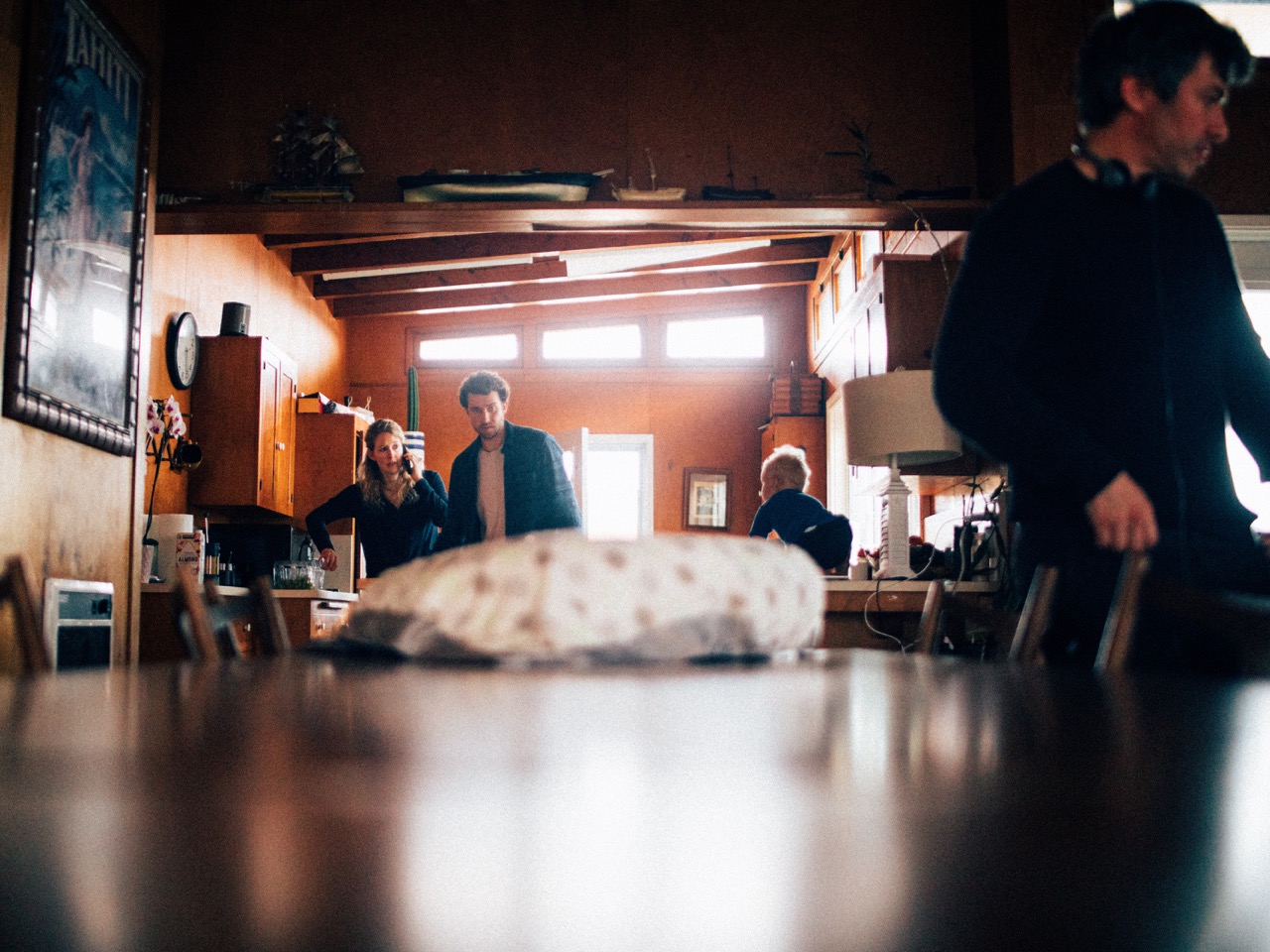
You Can See Everything, directed by Nathan Fielder & Lance Oppenheim
In South Korea, a different couple’s altercation was captured by a documentarian—sort of. Lee Chang-dong’s Possible Love is a fictional film about a wealthy documentary filmmaker, Ye-ji (Cho Yeo-jeong), who is directing a project about laid-off workers of a heavy industries plant. One of them is Ho-seok (Sul Kyung-gu) who, at the start of the film, is taciturn and bitter, harbouring painful memories and a drinking problem. At the funeral of a former co-worker who has died by suicide, Ho-seok wants to drink. His wife Mi-ok (Jeon Do-yeon) gently admonishes him and tries to take the glass away. Unlike Holmes and her bowl of eggs, he does not acquiesce. Instead, he lashes out at Mi-ok, in front of the mourners as well as Ye-ji, who is lingering in the corner filming the scene from afar. When she realises there’s drama unfolding, she gets closer and closer until Ho-seok snaps. She apologises and sheepishly lowers the camera.
In quantum mechanics, the act of observing a particle can alter the way it behaves. The same can perhaps be said about people in documentaries. Both You Can See Everything and Possible Love examine how the external gaze of a camera affects how people behave. It quickly becomes clear in You Can See Everything that Elizabeth Holmes is not the real subject of the film. Rather, it’s a film about Nathan Fielder looking at Holmes, a convicted fraudster lest we forget, and trying to figure out whether she’s ever presenting her authentic self. We’re even left wondering whether that scene with the eggs was a deliberate power move by Holmes and not Evans. Most documentaries trust what participants are saying or try to fact-check them. Fielder, as in his previous works Nathan for You and The Rehearsal, uses reenactment and role play to try to make sense of a subject whose reliability is always in doubt. The publicists are keen to keep spoilers under wraps, but suffice it to say that the film’s staggering success has less to do with what it reveals about Holmes than how it deconstructs the documentary as a recognisable cinematic form.

Possible Love, directed by Lee Chang-dong
But whilst You Can See Everything suggests people use filmmakers for their own ends, an interview scene towards the end of Possible Love suggests that engaging with a documentarian can be a cathartic experience. After refusing an interview (and therapy) throughout the film, Ho-seok finally agrees to sit down in front of Ye-ji’s camera. He tells his story about being laid off, his participation in a strike, and being beaten by strike-breakers. He also reveals that he was abandoned by his former union members during that beating. Suddenly, the reticent Ho-seok starts to sob. “Solidarity, resistance, unity… Those words give people hope,” he says as his breathing gets heavier. “It’s all a scam… All nice words are bullshit.” It takes a camera, lights and an interviewer for Ho-seok to finally open up.
Both films interrogate the relationships that develop between filmmakers and their subjects—professional, economic, emotional—and question whether impartiality can ever exist in this dynamic. In Possible Love, Ye-ji develops a friendship with Mi-ok, and cajoles her to get her husband to agree to an interview. The transactional nature of their relationship is obvious; they call each other ‘sis’ and appear to be chummy. But friendship is never sincere when one has a camera and an idea for a movie. Ye-ji’s husband Sang-woo (Zo In-sung) describes his wife’s actions as “great method acting.” She pushes back, claiming “I’m a documentary filmmaker. A documentary’s strength comes from the people it depicts. So I should love them.”
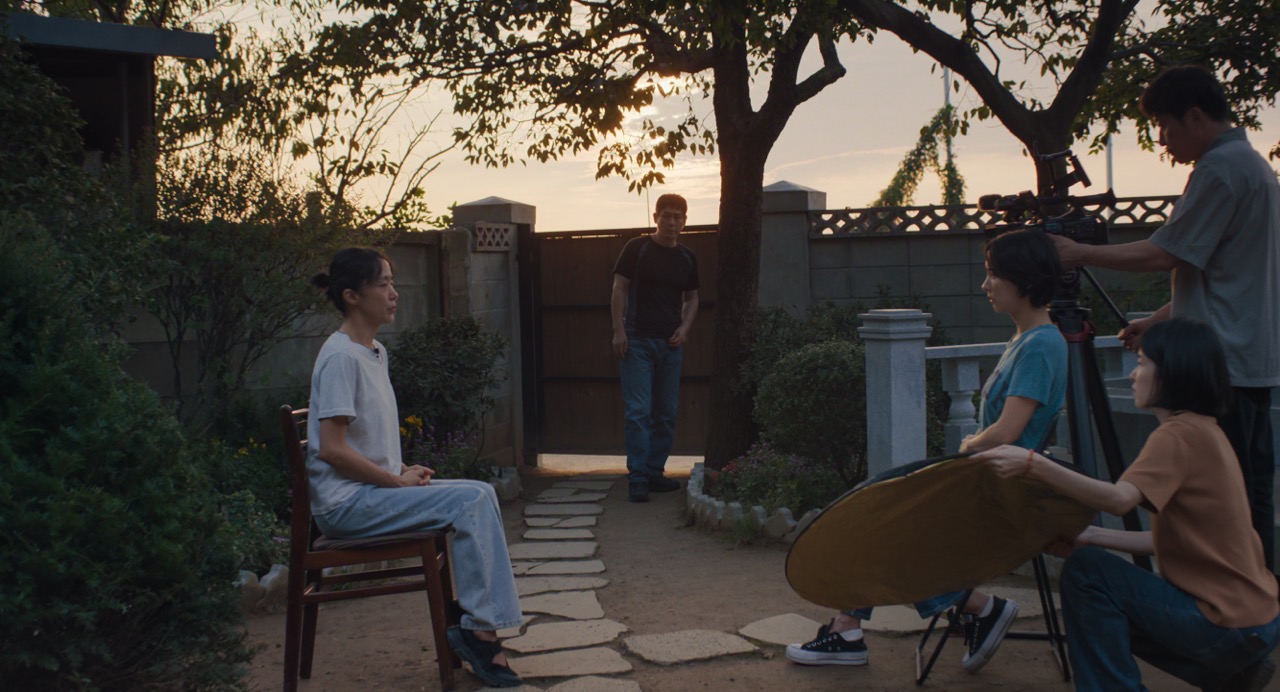
Possible Love, directed by Lee Chang-dong
Likewise, in You Can See Everything’s labyrinthine second half, Fielder’s prudence is questioned, and it’s hinted that his personal feelings towards Holmes may be affecting his judgement. Making a documentary will always invite a power struggle between the filmmaker and the person being filmed. In You Can See Everything, that struggle is front and centre, as Evans tries to control who Fielder interviews and intervenes when anything is raised that might make him or Holmes look bad. If Fielder is a fly on the wall, Evans repeatedly tries to squash him. But it’s unusual to see such interventions play out on screen, and one can’t help but wonder what other documentaries have been influenced by participants strong-arming more timid filmmakers in behind-the-scenes moments audiences never see.

It’s unusual to see such interventions play out on screen, and one can’t help but wonder what other documentaries have been influenced by participants strong-arming more timid filmmakers in behind-the-scenes moments audiences never see.
Henry Roberts
Lee Chang-dong may himself be one of the most sensitive directors working today, but in his newest film, he presents a filmmaker who is extractive and self-serving. Ye-ji and her cameraman respectfully put down their cameras when asked, like during Ho-seok and Mi-ok’s son Cheol’s lacklustre taekwondo performance. But just a few scenes later in the family’s house, Ye-ji’s cameraman follows Cheol as he hides in a cupboard. He clearly doesn’t want to be filmed, but he’s followed regardless, the camera peering through the crack in the cupboard door. With Possible Love, Lee is using filmmaking to critique our appetite to adopt other people’s stories as our own. There’s vérité and then there’s violation, and Ye-ji doesn’t always want to recognise the difference.
It’s a fortunate coincidence of scheduling that both You Can See Everything and Possible Love were released this year. Both contain extended sequences at beach houses, plus pivotal late scenes involving swimming. Though representing different genres, each film unravels the documentary process, suggesting it to be less a recording of reality than a constant negotiation of competing interests. We may like to think of documentaries as objective, but the two films complicate our notions of journalistic neutrality. In Possible Love, it’s because the relationship between filmmaker and subject is so clearly performative. You Can See Everything, on the other hand, questions the idea of truth in cinema altogether. Taken together, they make excellent companion films, each in its own way questioning why filmmakers pursue subjects and why subjects agree to be filmed. Everybody wants something from someone else, and people will say whatever they need to in order to get it. Pay attention and the nice words start to sound like bullshit.