

With the new film I Want Your Sex hitting cinemas, after a 12 year hiatus, Gregg Araki is back. To commemorate this milestone, A Rabbit’s Foot speaks to his longtime fans about the importance of his work, which since the 1990s has celebrated queer sexuality, and provided a place of acceptance for those who don’t fit in.
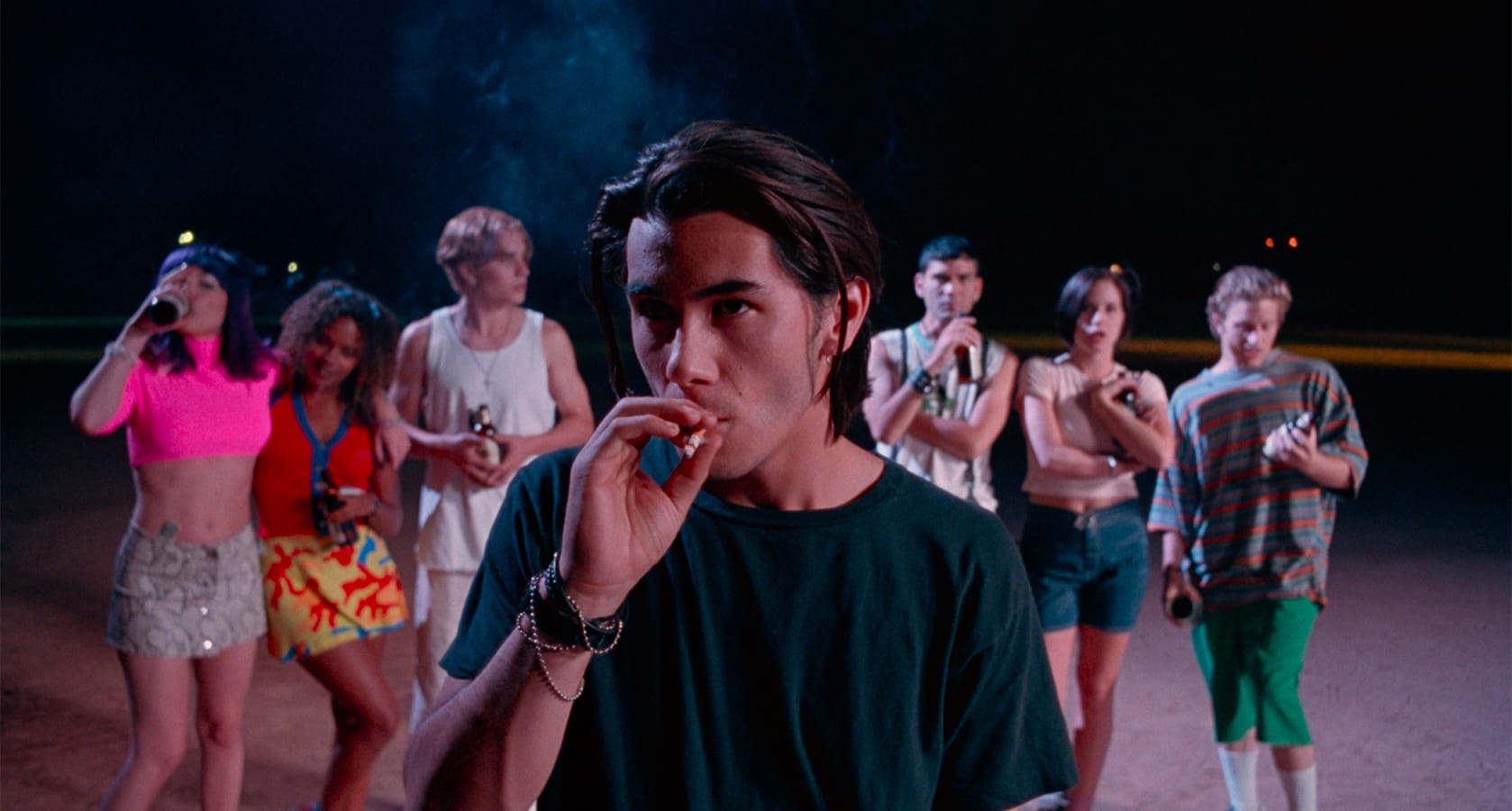
Gregg Araki is a filmmaker whose work is best discovered at a sleepover, on a tape your older cousin or sibling has smuggled for you. His films—brash, fast, phantasmagoric, American, camp—made him the Gen-X pied piper of bored, restless, punk teenagers. For an adolescent like me, in grey and rainy South Wales, his Teenage Apocalypse trilogy: Totally F***ed up (1993), The Doom Generation (1995), Nowhere (1997), were obscenely lurid and appealing, depicting a bright bubblegum world where the people are young and beautiful, and yet perennially bored, and chronically uncertain. A world where sexual orientation is a non judgemental “whatever” and where discovery and exploration reigns supreme.
“I was fascinated by their boredom and nihilistic bottomlessness [in the Teen Apocalypse trilogy] and yet simultaneously Araki also made these super horny movies that had a tone in the end of being preciously hopeful,” says Tim Evans, a British casting director. Araki’s new film I Want Your Sex is out at the end of this month, after a 12 year hiatus from making films (since 2014’s thriller-y White Bird in a Blizzard), and it’s the usual Araki fayre, made for the identity politics and self-curation generation. I wanted to talk to Araki fans who had been inspired in their creative careers and personal lives about their Araki awakenings. In discussing Araki, Tim and I ended up talking about everything from sadomasochism to metal music to intersex experiences. I imagine Araki would love it.
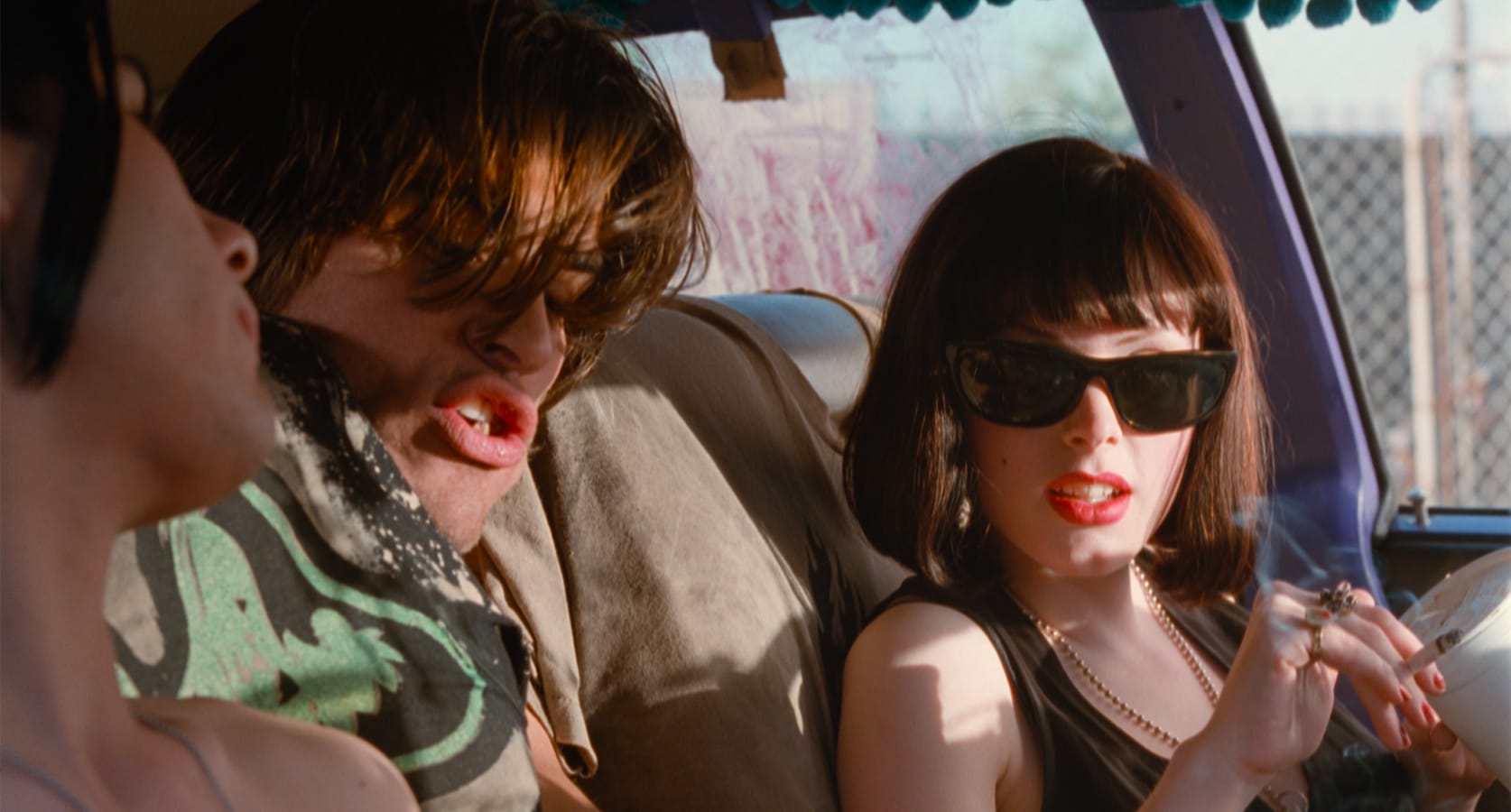
Gregg Araki, The Doom Generation (1995)
Nowhere (1997), a tale of horned-up doom and end-of-the-world shenanigans—a recurring theme in Araki’s work—came out at a time where Tim was moving into the kink space of his own accord. As someone with a disability (Tim has cerebral palsy and grew up on hospital wards,) Araki’s films opened up the idea of sexual possibility for him. “The idea of having physical connectivity seemed really really impossible, and because of the areas in which you can make those romantic connections feel smaller and smaller we sort of find ourselves drifting into spaces like that. But I blame it all squarely on that movie because it wasn’t just gender fluid but just… fluid. It wasn’t just people hopping into bed—it was men, women, aliens”.
Canadian filmmaker Julia Jackman (director of 100 Nights of Hero), also had a formative experience watching Nowhere– her first Araki experience. “Nowhere and Velvet Goldmine were two films that I actually saw for the first time with a pink haired babysitter I really looked up to, who made me put a crochet blanket in front of my eyes when she deemed things too mature” she says. “That mix of desire and discomfort always stuck with me.” And as a filmmaker herself, his ability to roll with chaos is what stands out to her. “He wouldn’t be pigeonholed into one genre.”
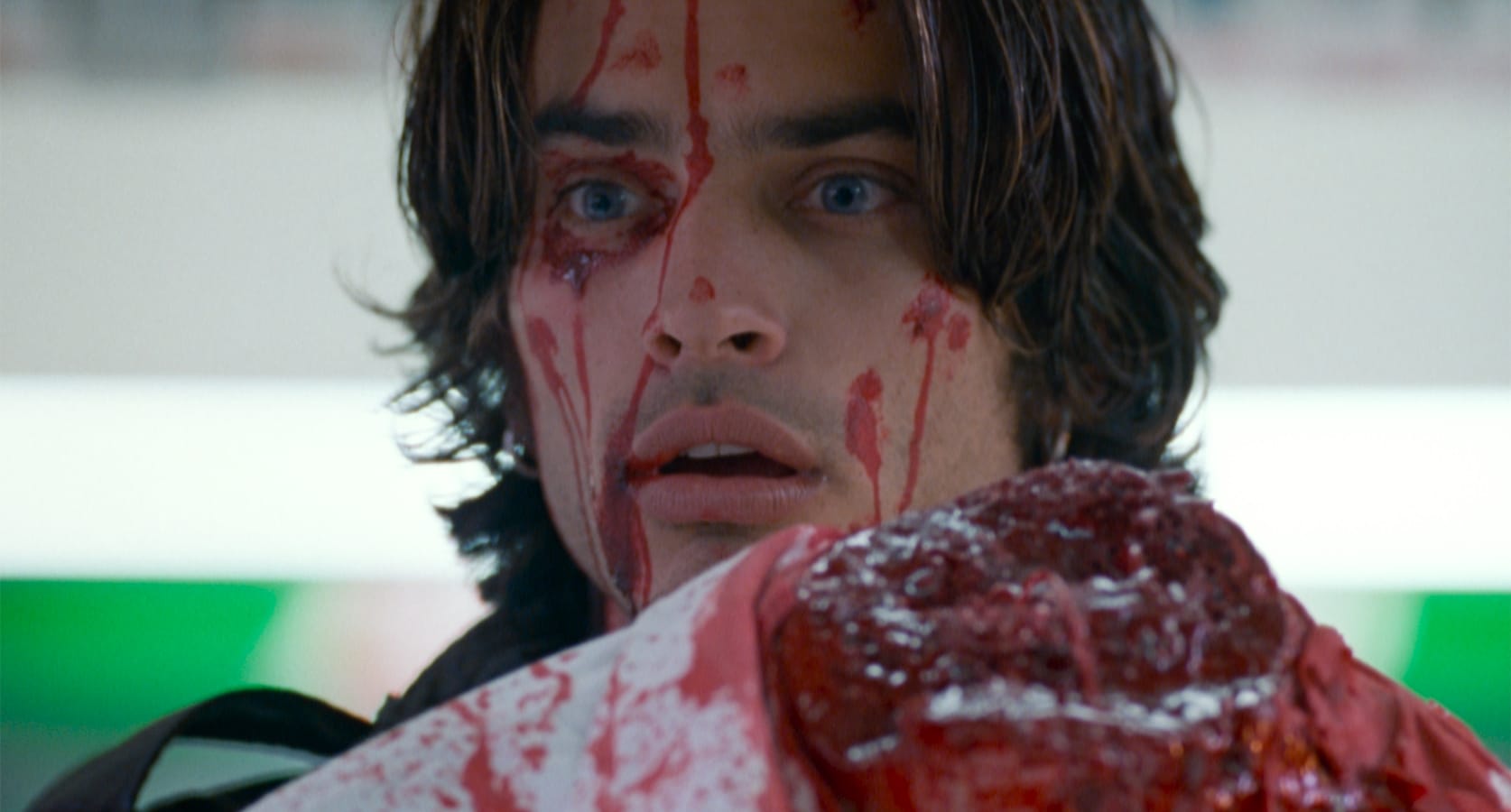
Gregg Araki, The Doom Generation (1995)
Desire and discomfort are two words that summarise Araki’s oeuvre. In our more queer-affirming, gender fluid world, it’s easy to forget that in 1995, when Araki was making films, bisexuality was seen as a novel cultural phenomenon and seen by many as a “phase” as evidenced by 1995’s Newsweek cover. Araki’s films helped legitimize and normalise bisexuality, which had a profound effect on Adam Burton, a queer social media creative for UK music festivals who had a poster of Nowhere on his bedroom wall “scored from the local video shop when renting a copy of it”.
“He didn’t just show that bisexuality was valid, he made it cool and anarchic. His films embraced bisexuality, and its reputation for chaos. Showing it as legitimate and putting it front and centre in his films, weaving it into the landscape of them and setting it to an iconic soundtrack, he showed horny, traumatised, and deeply lost teenagers, like me—a bullied, awkward nerdy kid from a grey Midlands former mining town—and made me feel less lost. Even reading that around the time Nowhere came out Araki himself started dating as a woman, helped validate my early thoughts and fears about my sexuality”. [Araki, who labels himself as gay, dated actress Kathleen Robertson for two years, who played Lucifer in Nowhere].

“He didn’t just show that bisexuality was valid, he made it cool and anarchic. His films embraced bisexuality, and its reputation for chaos.”
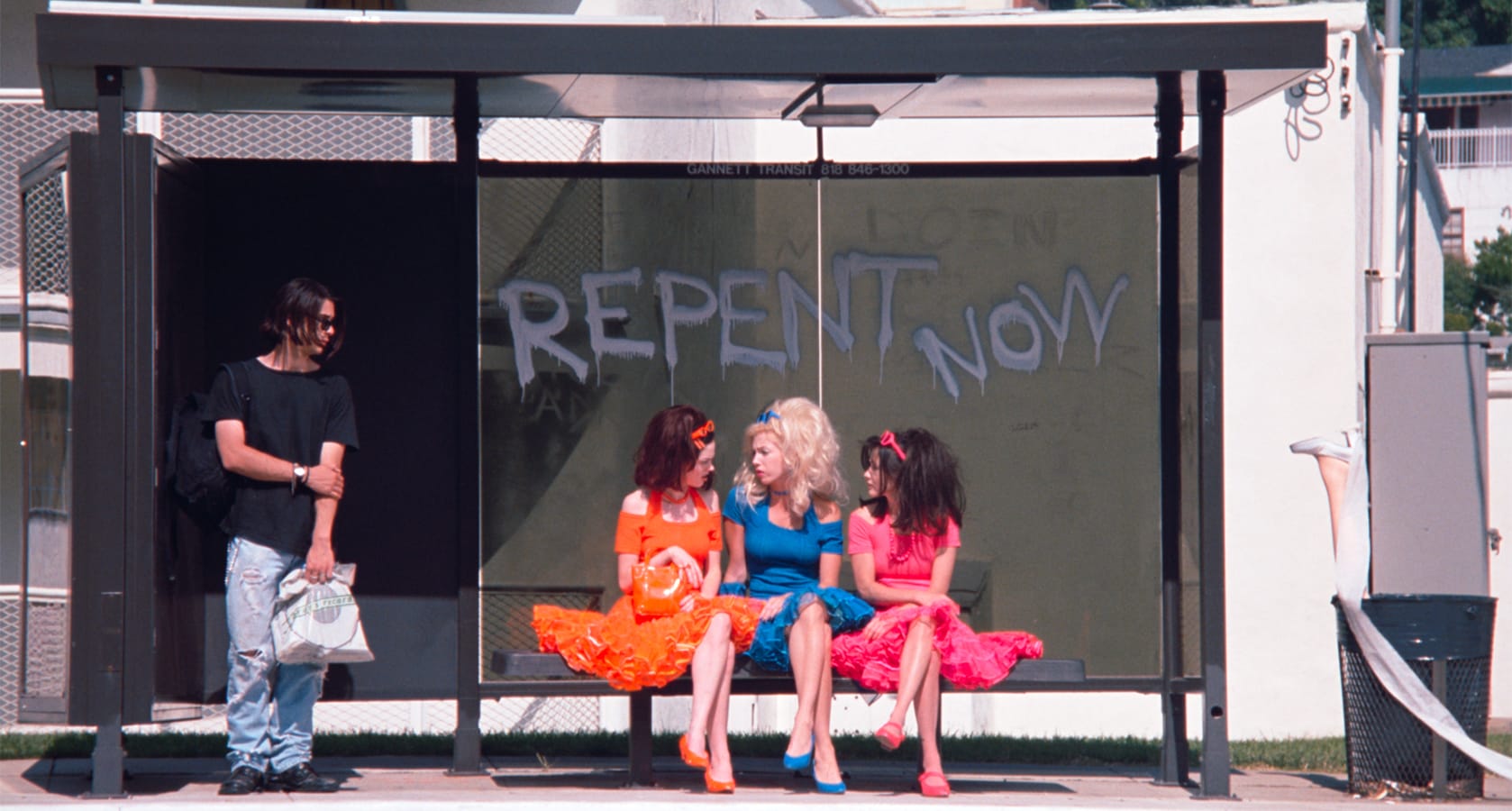
Gregg Araki, Nowhere (1997)
This whatever, anything goes approach to sex and death didn’t begin with Nowhere, but with 1992’s The Living End. Made at the height of the AIDs epidemic, it’s a furious, punk, gay version of Thelma and Louise (1991), following two HIV-positive lovers and murderers on the run against the clock from the world and the disease that is slowly closing in on them. The threat of danger keeps the pulse of sexual freedom alive; their love scenes are as provocative as they are tender, a refusal to sanitise themselves in the face of hatred- on the wall of one restroom is scrawled KILL ALL FAGS. “Along with discovering the films of John Waters via late-night Channel 4, watching my first Araki became a neon-soaked, queer maximalist lifeline to hold onto, and my realisation that queerness could be this exciting, radical provocation” Burton tells me, stating that his films helped him as a “disillusioned and alienated sixteen year old”.
Chay Collins, a non-binary and bisexual writer and video essayist, grew up in rural Devon in the 90s “where queerness wasn’t really advertised in a loud, proud, or even just a nonchalant way. It just wasn’t there. The AIDs crisis wasn’t spoken about except maybe I saw the odd fear mongering tabloid headlines, all that was ever heard was in the context of an edgy joke and it was a gay disease”. When they finally watched The Living End in the 2010s “it finally felt like an ownership of this black spot of history. An absolute angry fuck you. A plague should never have made a culture silent, Araki made me scream out.”

Gregg Araki, Nowhere (1997)
Araki’s films may seem scandalous because of their content: masculine straight men who enjoy being tied up and spanked, bisexual threesomes, the joy of lone gooning, polyamorous love affairs. But what makes them feel provocative is the unusual hope and joy that they radiate, in a cinematic landscape of po-faced moralising or self-serious shock value (films like Halina Reijn’s 2024 Babygirl), “his work flipped the script and framed outcasts as cool even though they’re quite hopeless” Burton mused, “He made being hopeless seem cool”. Evans was also similarly buoyed by the positivity of Araki’s films, regardless of dark subject matter. “The characters in Araki’s films are the least judgmental. If you think about mainstream teen movies, the storylines pivot on somebody is being judged, in one way or another, by not measuring up. Not here”. Evans went on to carry the emotional logic of the films into his own personal relationships. “In his movies, there seems to be something strangely meaningful, even if it’s only a fleeting situationship -which sounds like an oxymoron- in all of these interactions. The characters take something from their sexual experiences, however short, and they grow.”
“I’m not into labels. I’m just open to whatever. Whereas sexuality now seems to have been co-opted by grind culture. Productivity is the new sexuality. Watching Gregg Araki, I’m like, that’s what my sexuality is: whatever. His films instilled in me the idea that all of these relationships, situationships, all of the whatever—they all matter.”
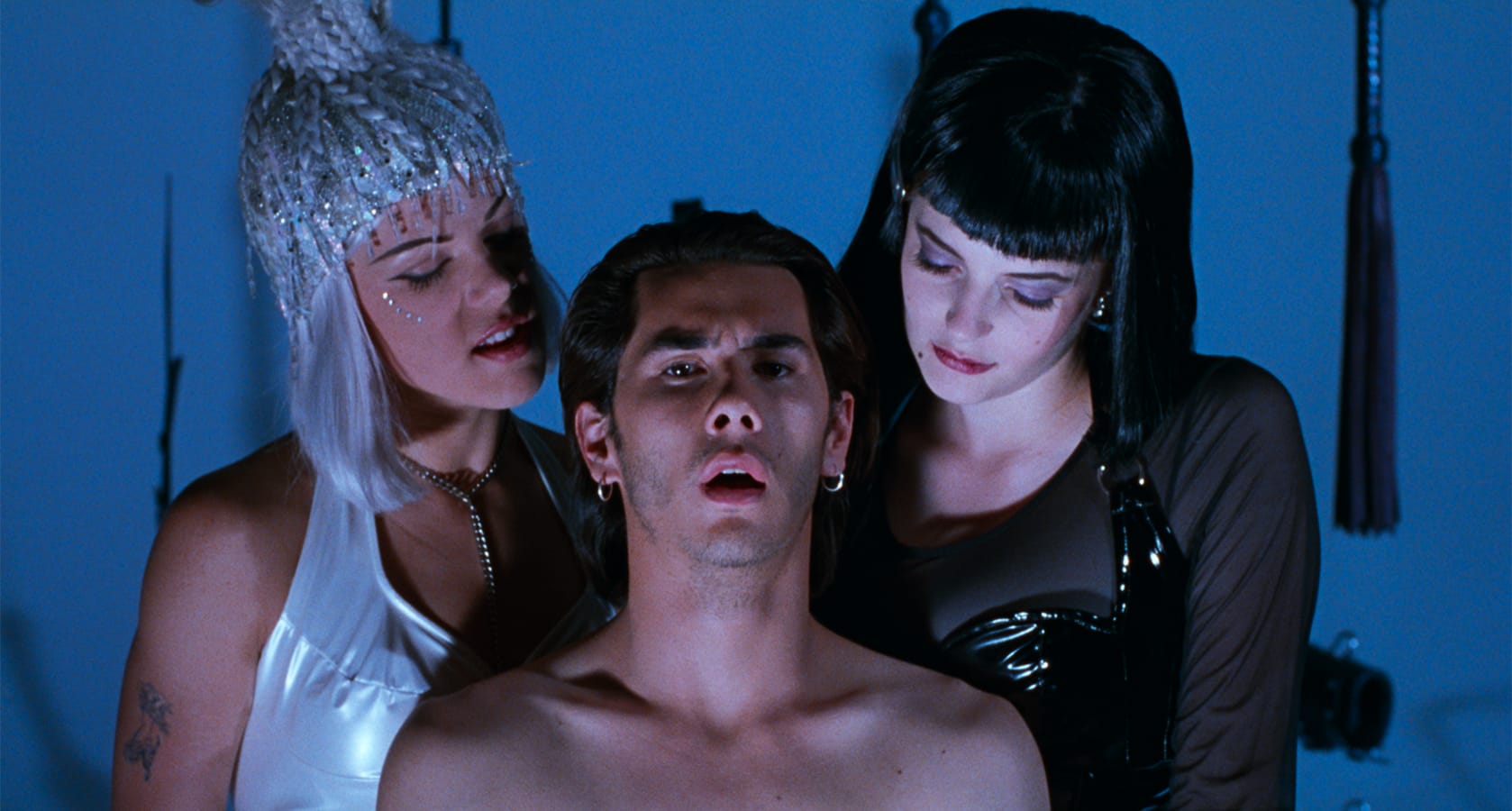
Gregg Araki, Nowhere (1997)
“In Lebanon we didn’t have art house cinemas. I didn’t grow up watching his films because I didn’t know who he was until I moved to the UK” Abdallah Dannaoui, a Lebanese filmmaker based in London, tells me. ” I come from Southwest Asia and he’s from an East Asian background [Araki is Japanese American], and in those cultures, traditionality goes over sexuality, like we don’t explore sexuality or the experience of sex in our films. It’s just not celebrated. So when you see his films, it’s like whoa, this is completely new and celebratory of not just sex, but human life!”
“A lot of disabled people have self loathing over what I’ve always referred to as our “ruined” bodies, bodies that don’t work the way we want them to. BDSM and kink were a way of exerting mental control over what I couldn’t control physically” Evans tells me. “In Araki’s films, there’s almost a sort of astral projection, which is a form of mental strength. You walk out of these kink spaces back into the normie world with a new strength, and it’s the same leaving an Araki film,” he continues. “When you emerge back into the world where you don’t fit in, you don’t walk out with just a sense of enormous pleasure, but deep emotional catharsis.”
“They gave me hope I was going to be okay,” Burton says, with a chuckle. “That l’d eventually find my people.”