


From Fjord and Primetime to Josephine, a new wave of films is boldly confronting cinema’s most unsettling subject: children in peril. But these stories are about more than threatened innocence: they probe our capacity for cruelty and the limits of moral certainty. Writing from San Sebastián Film Festival, Critic Sophie Monks Kaufman draws on a range of new titles—from Marlene Emilie Lyngstad Cute to Jordan Firstman’s Club Kid, to ask what these films reveal about us.
Children in peril link many of 2026’s big arthouse movies. Cristian Mungui won the Palme d’Or in May with Fjord, an icy moral tale that hinges on the credibility of abuse allegations brought by Norwegian Child Protection Services against a family of evangelical Christians. The same Cannes competition line-up featured Marie Kreutzer’s Gentle Monster, in which Léa Seydoux’s concert pianist contends with the police seizing her husband’s computer in search of child sexual exploitation material. This drama echoed a real one: in 2023, an actor in Kretzer’s previous film, Corsage, Florian Teichtmeister was found guilty of the same crime.
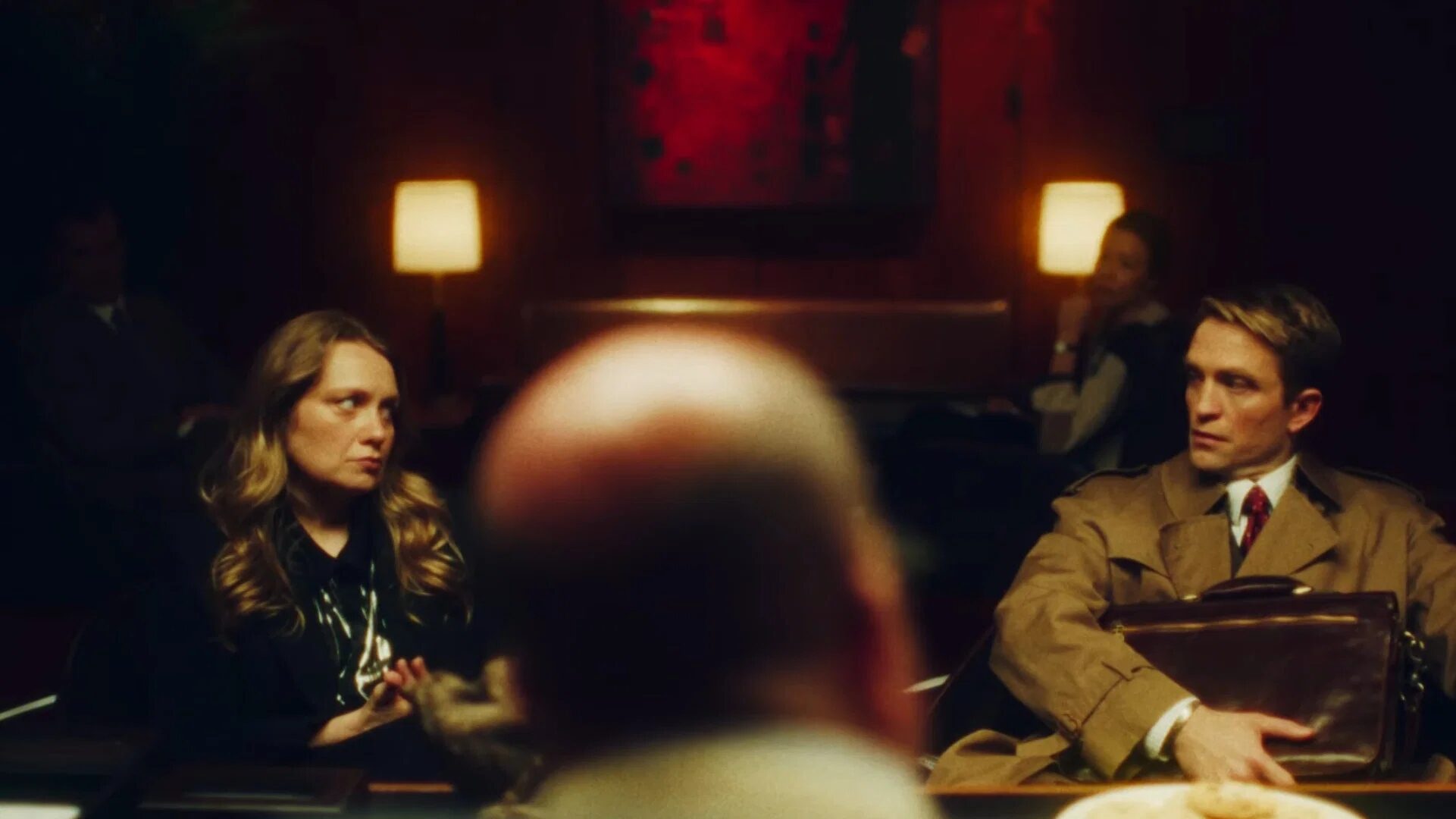
At Venice Film Festival, Lance Oppenheim premiered his headline-grabbing Primetime, a Robert Pattinson-led docufiction about the American reality show To Catch A Predator (2004-2007), and Paul Schrader presented The Basics of Philosophy, which follows a philosophy professor wrestling with whether he committed child abuse many years ago. This plot puts it in line with the recent UK release of Blue Film, a two-hander between a camboy and a client revealed to be his former teacher. Completing this micro-trend of Bad Teacher movies is the dark comedy, Bad Apples, starring Saoirse Ronan as a teacher who does something irredeemable to a disruptive pupil.
What is happening?
This glut of pictures feels particularly intense, yet children in peril are not a new cinematic fixation. In 2003, Emma Wilson published the book ‘Cinema’s Missing Children’ focusing on films such as Todd Solondz’s Happiness (1998) and Jane Campion’s The Portrait of a Lady (1996). She argued that the depiction of missing or endangered children was not just a literal plot device but a means of representing and responding to the most extreme forms of pain and horror imaginable.
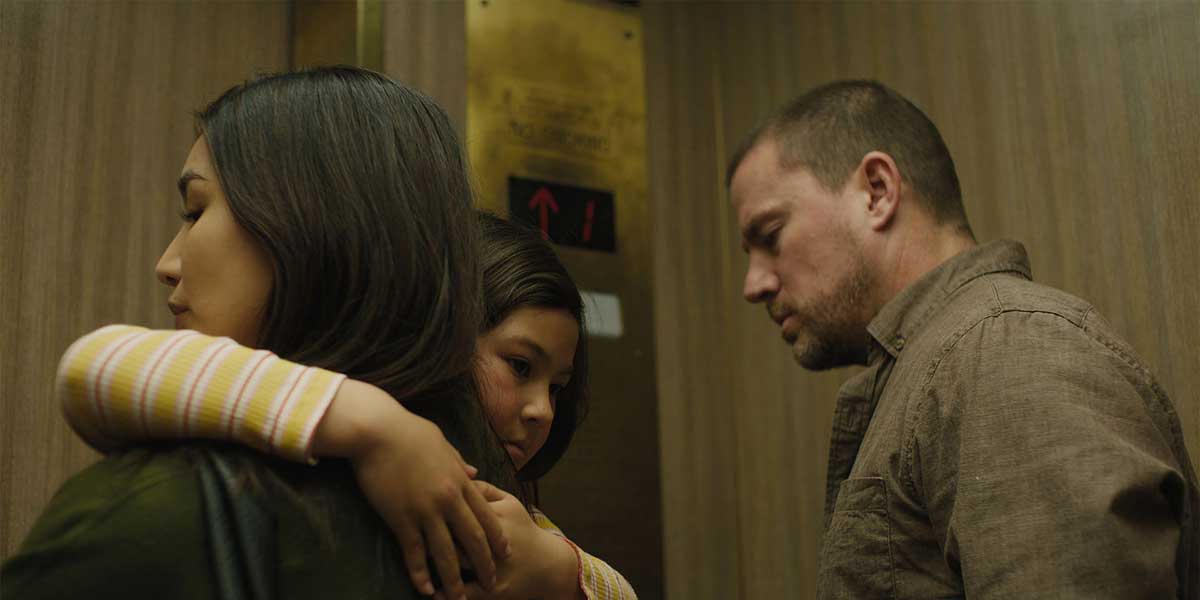
Josephine, directed by Beth de Araújo
“They’re the most formative years and we’re in a global moment where we’re seeing children being killed in front of us,” says Beth de Araújo. Her second feature film, Josephine won two awards when it premiered at Sundance Film Festival in January. Detailing the emotional and psychological fallout for a family of three after an 8-year-old girl witness a brutal rape, Josephine reckons with a personal trauma from de Araújo’s own childhood as well as the queasy existential questions left in its wake. How do you convince a child that the world is safe when they prematurely know that it’s not?
The confrontational power of Josephine poses a direct challenge to the adult tendency to reassure children with platitudes until they are old enough to handle the truth. On the trend of films in this vein, de Araújo says, “This is the darkness that we’re all faced with every day, and for some it’s very close to home. We’re trying to grapple with how this is permeating into our own lives, how we’re culpable, what is lost in this innocence, and what is lost when we no longer value a child’s life.”
Some of the artists grappling with this area are looking at this subject from the other side, representing the boogeymen that pose a threat to child safety. In the process they explore not just the obvious darkness of those that would hurt a child but the more slippery matter of what our kneejerk responses to these would-be violators reveal of our own shadow selves.
“There’s no clean way of understanding the morality of this in any direction,” says Sean Hennessy in an episode of The Big Picture podcast dedicated to unpacking Lance Oppenheim’s Primetime. The aughts show To Catch a Predator presupposed that we owe no moral duty to men who would leave their homes for a sexual encounter with a child. Host Chris Hansen enjoyed the cultural position of a vigilante hero for entrapping and exposing these men on TV. The movie takes a more ambivalent view on everyone involved in making the show.
“The movie drew this out of me while I was watching it:” says Hennessy, “The men who are coming over to do these things are disturbed, right? There’s something very sad and dark and painful about those desires and the things that they would do to helpless children. But the movie also keeps suggesting that… actually making an effort to draw them out of their privacy is its own form of destruction that is very unhealthy and dark.”
This idea that there are some people to whom we are allowed to do anything echoes a scene in Josephine. Dad Damien (played by Channing Tatum) tells her that if anyone tries to hurt her, violence is an appropriate response. While this a well-meaning piece of advice from a desperate parent who wants his daughter to protect herself, he does not understand that to her young, addled, traumatised mind, danger is now coming from everywhere and, indeed, she acts out violently at school and at home.
A touchstone for de Araújo was the seminal Martin Scorsese film, Taxi Driver. Travis Bickle (Robert De Niro), having convinced himself that he is responsible for saving 12-year-old sex worker Iris (a young Jodie Foster), crosses over into violent madness. To extrapolate: By appointing ourselves as an arbiter of goodness, we have a fig leaf for acting out any kind of impulse. Children in cinema represent an innocent ideal, just as their imperilment is used to draw out the unresolved fury in our unconscious depths. In the words of the psychoanalytic forefather of shadow work, Carl Jung, “Until you make the unconscious conscious, it will direct your life and you will call it fate.”
Primetime, directed by Lance Oppenheim
The stunningly romantic Basque coastal city of San Sebastián might seem like an unlikely place for such a shadow to emerge. At the first press screening of Norwegian filmmaker Marlene Emilie Lyngstad’s debut feature, Cute, the audience trooped out afterwards into the sunny Plaza Zuloaga in a daze. Set in Copenhagen, Cute is an ethically daring, humanistically curious exploration of whether a non-practising paedophile named Richard (Jan Gunnar Røise) has the right to love and happiness.
Richard tries to control his harmful desires. Early in the film, he breaks up with an adult partner after experiencing attraction to her seven-year-old daughter, Ea (Molly Kirk Rasmussen) and he goes to the doctor to explore going on prostap, effectively a chemical castration.
Most of the film takes place once Richard is out of Ea’s life, and it explores a ‘match your freak’ romance with his mother’s carer. Stella (Gina Jacqeline), who also happens to be Lolita-style camgirl. Lyngstad relishes styling her in an OTT Kawaii fashion, every costume and production design choice is an opportunity for cute maximalism. Stella wears her hair in bunches, sports Hello Kitty tees and sleeps in a powder puff bedroom with a giant pink teddy. A tiny frilly sock that she buys in the opening scene is effectively Chekhov’s Gun.
Once Stella figures out what turns Richard on, she ramps up her self-infantalisation until a scene when they consummate their relationship in an imaginative, ethically confusing scenario. It left me not knowing what to think or how to feel. Although one question loomed supreme: why did 29-year-old Lyngstad want to make this the subject of her first film?
“The subjects that are not easily answered are the ones that stimulate me the most,” she tells me on the day of Cute’s world premiere in San Sebastián. We are talking in a spartan press cubicle within the otherwise glamorous Hotel Maria Cristina. Lyngstad looks like a movie star and talks like a friend destined for greatness. “Making a film, you use three years and it’s important for me that there is something I am trying to figure out for the whole process. If I knew the answer from the beginning, it would be very boring to state that same answer again and again. Subjects that make me uncomfortable are very intriguing to investigate.”
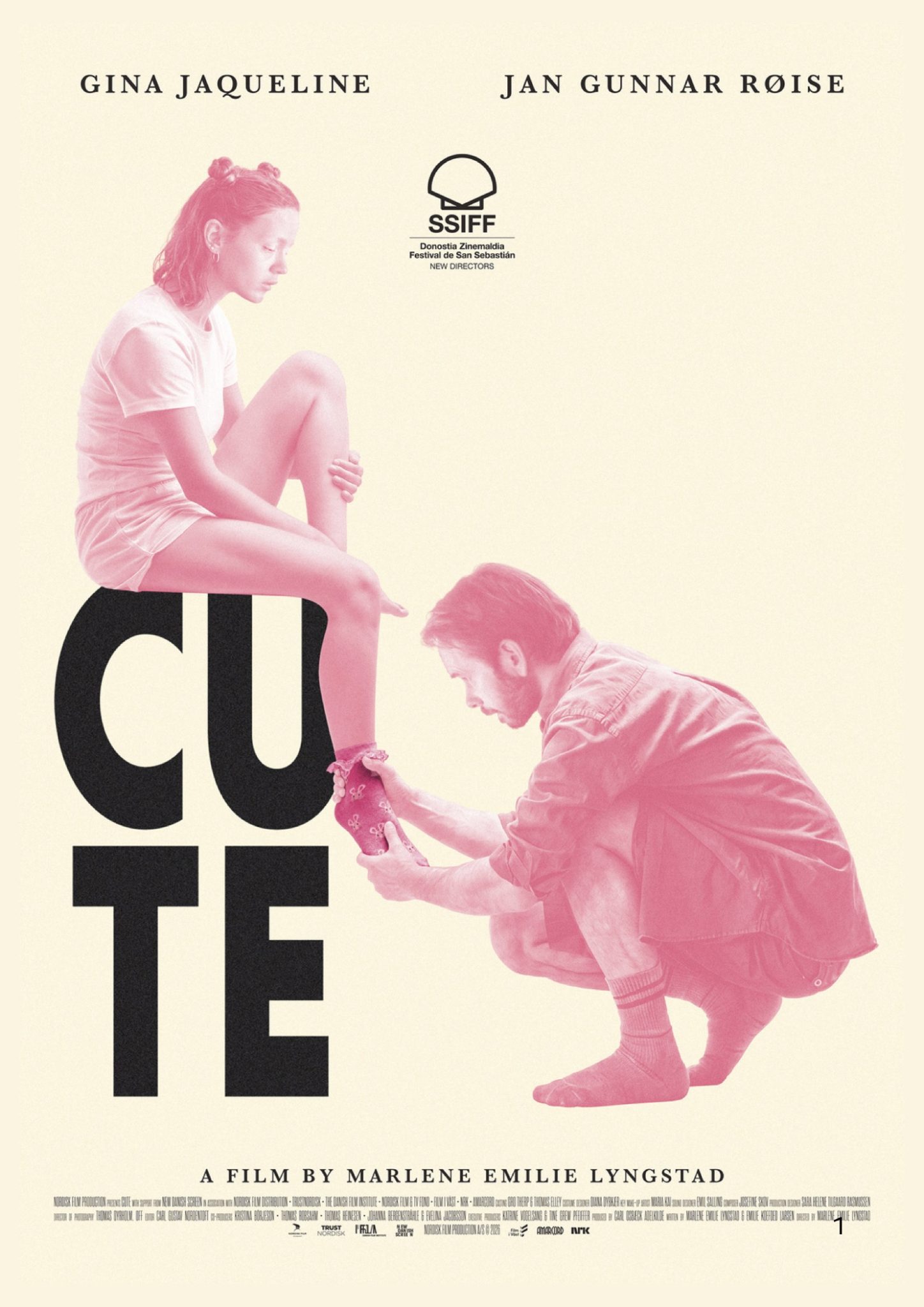
A poster for Cute, directed by Marlene Emilie Lyngstad
Although Lyngstad is sympathetic to Richard’s battle to control himself, she does not sanitise the more ambiguous moments that arise when he cannot. There is one formidably disturbing scene in which he masturbates in his car to a voice note left by Ea. This leaves him a morass of self-loathing, engaging with suicide notes left by people in the same shoes. My own inner Travis Bickle, thinking of the children I love, thought: well yeah maybe that would be for the best.
“It is a complicated thing but for me, he has the right to live. I’m not for no death penalty for anyone,” says Lyngstad. Over the course of making her film she consulted with members of an anonymous online community named VirPed (Virtuous Paedophiles), logline, “We are pedophiles against adult-child sexual contact and online child exploitation. We support others like us.”
Lyngstad even met with members once trust had been established. From these conversations, she pulled details like an attempted relationship with an adult woman, as well the anguished dilemma of whether or not to share their secret with family members. On the one hand, this can create support in the goal of abstinence, on the other hand, their burden becomes the burden of a loved one. I felt ashamed of my own reactivity and realised it’s not for me to decide if people who already exist have a right to exist, being that they already do. Social responsibility looks like trying to understand a condition, understood variously as paraphilia or illness, in the name of harm reduction.
This was reportedly a view shared by Molly Kirk Rasmussen’s parents. On the subject of safeguarding her young actress, Lyngstad explains,“It was about casting a child and parents at the same time.” The child was not told the whole story, nor did she read the script and, as the scenes that she shares with Gunnar Røise are wholesome, there was no need to provide an alternate child-appropriate context (as de Araújo did for Mason Reeves’ emotionally explosive scenes in Josephine). It remains to be seen what kind of experiences Reeves and Rasmussen have now that they have been introduced to cinema audiences in these kinds of narrative contexts. We can hope for the best, while acknowledging that cinema history is full of cautionary tales about the poisoned chalice of child stardom. [I explored this here for BBC Culture in 2021]

“There is fear of monstrousness in ourselves, as well as in the other, and an uncertainty over what hope there is for the next generation if we have no certainties to hand them?”
Sophie Monks Kaufman
Rasmussen’s parents read the script before she got the role. “It was very important for me that these parents were on board with why we wanted to make the film,” says Lyngstad, explaining that they believed in the wider good that would come from demystifying the psyche of a non-abusive paedophile. “They also wanted to understand the character of Richard, and thought it’s better to have a conversation about these issues because that can prevent repression. If you’re never able to talk about your shame, it can build up and it gets more potent and more dangerous. So talking can maybe save some children.”
Cute is a dual character study and while Richard’s holds the most power to shock, Stella’s is no less intriguing. When Ea’s unsuspecting mother allows her daughter to visit him, Stella—now wise to Richard’s sexuality—is not protective of the child, she is jealous of her. By this point, we have observed the parental role Richard assumes with Stella, chiding her to finish her ice-cream before it melts, teaching her how to brush her teeth properly. On the imminent arrival of an actual child, Stella pouts, “You’re not supposed to take care of her, you’re supposed to take care of me!” Lyngstad wanted to create, “an emotional core where you can identify with this longing to be a child or to be in this easier state where you are unconditionally loved by a parent.”
Elsewhere in the San Sebastián line-up, The Bad Son (El mal hijo) a directorial debut by Jaime Lorente follows eleven-year-old Ruben who moves in with his grandmother in rural Spain after his father suddenly disappears. The second half of the film shows his tawdry, tortured adulthood, evoking the cycles of addiction, violence and despair that play out without parental role models. This is what hangs in the balance for all the children in peril. What kind of adulthood awaits the child that didn’t get to be a child? The younger Ruben was played by the luminous child actor Abel de la Fuente. As he took to the stage with the film team for the premiere, I saw this tiny person take the deepest breath.
Jordan Firstman’s Club Kid (a breakout hit from Cannes) also played in San Sebastián. The story pivots around the Road To Damascus style transformation of Peter, an aging gay NYC party promoter, upon having a ten-year-old boy airdropped into his care. He discovers in rapid succession that in a dark room a decade ago, he sired Arlo (Reggie Absolom) and that Arlo’s mother has recently died while his stepfather is abusive. After initial resistance, it dawns that Arlo is the key to the life that Peter wants. He is powered by protective parental love for Arlo otherwise risks living with a man with arrests for child abuse on his criminal record. Peter has also in a profound, personal way been freed by his own child. As he says in a climactic court speech, “he [Arlo] was the first person to look at me and see something good and sweet.”
This is the slippery condition of adulthood after an incomplete childhood. You yearn for your own lost innocence—trying to rediscover it in a starburst of possibility—while trying to avoid making your problems the problems of the next generation, holding space for the unknown while doing the best with the convictions you can get behind. There is a fear of monstrousness in ourselves, as well as in the other, and an uncertainty over what hope there is for the next generation if we have no certainties to hand them? What do all these films mean? It’s time to play in the shadows and time to treasure beauty. In San Sebastián, you can follow the river to the sea. I did this walk many times a day, rolling between the Amara Plaza and the coastal strips and squares that hold the main festival venues. As the hubbub came in and out of touching distance, in and out like the sea, I wrestled with the themes of this essay, looking to a horizon that made peril seem less than the sum of our natural dignity.