

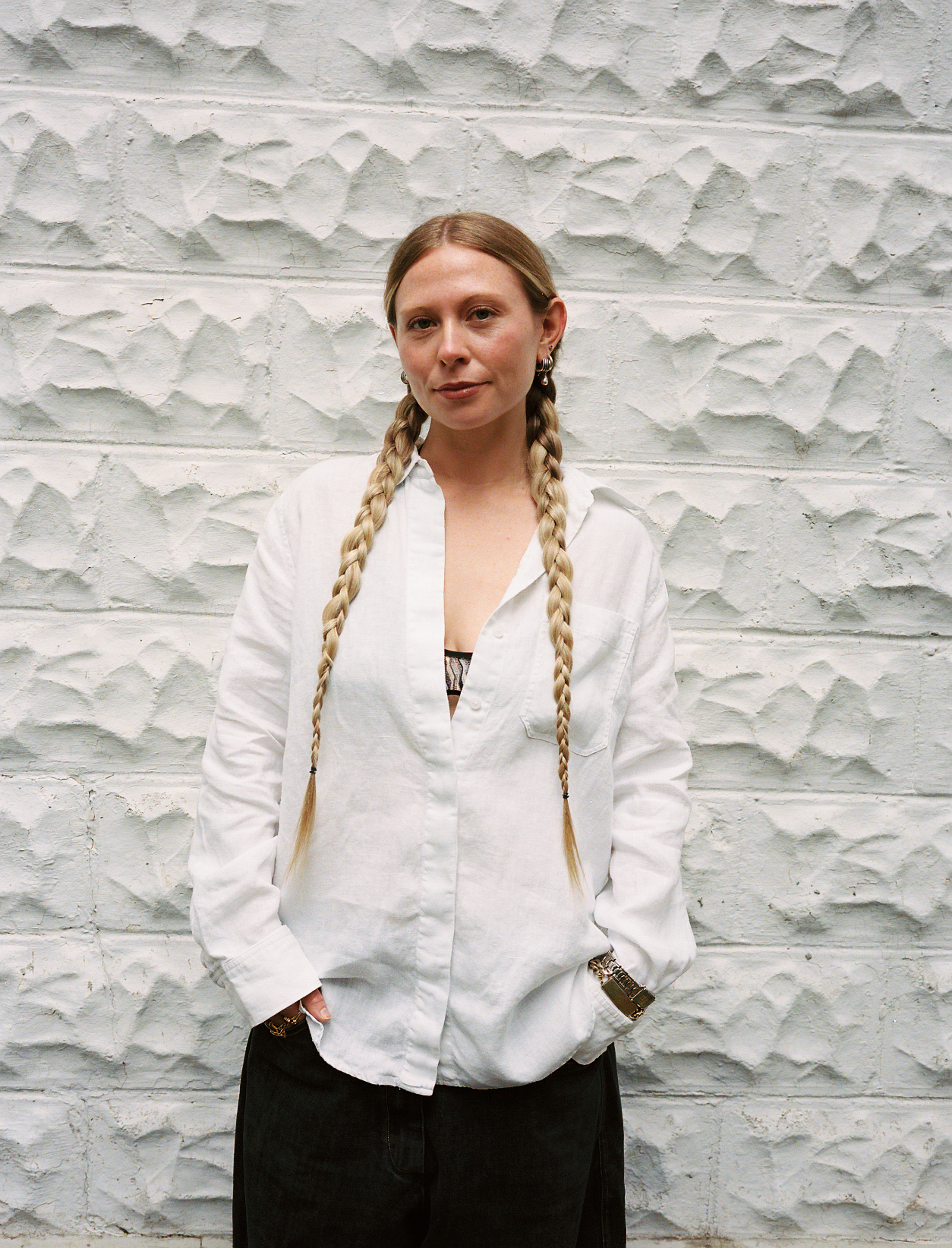
The creator of costumes for films such as Longlegs, The Monkey and Backrooms, costume designer Mica Kayde is quickly establishing herself as a go-to name in contemporary horror.
Mica Kayde has never really been a fan of horror movies. Which is news, considering her costume design credits have only consisted of them. What was holding her back? “My sleep paralysis demon,” she admits. “Usually it feels like a spirit talking behind me. I don’t believe in ghosts or spirits, but I’m trying to maybe get into believing in them so that I feel better about it? But I don’t know; it’s a funny thing. Maybe I’m a spiritual portal.”
The directors she’s worked with so far, and the films that populate their reference boards, have acted as a sort of curriculum making up for lost time; her three feature-length films are also her three collaborations with Osgood Perkins: Longlegs (2024), The Monkey (2025), and Keeper (2025). A portal to the supernatural, indeed, what’s manifested already makes up for some of this decade’s most memorable horror looks, and, more crucially, the internet’s favourite Halloween costumes.
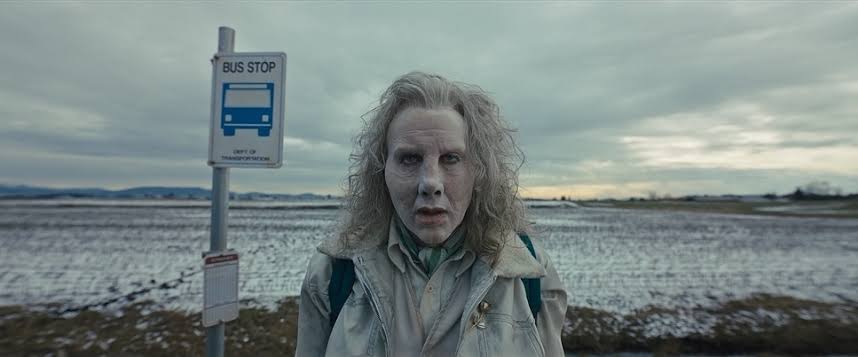
A still from Osgood Perkins’s Longlegs (2024), costume by Mica Kayde.
Now, Kayde is further entrenched in the genre’s in-crowd with the release of Backrooms directed by Kane Parsons, based on the 21-year-old’s original YouTube series of eerie computer-generated liminal spaces. Working within the conventions of horror has been the most creatively fulfilling, Kayde finds, particularly when it came to adapting Parsons’ series, which has only been depicted from a found footage POV, where she gets to shape its sartorial universe—for its visitors and its inhabitants.
Below, she discusses the sun-bleached ’90s Californian mood that informed her aesthetic, creating a new sartorial language for heroines in horror, designing vintage graphic tees, and the surrealist clothes of the Still Forms.
Tyler Dane Wingco: Did you know much about the Backrooms world before working on the film?
Mica Kayde: No, that made me feel so old. I knew nothing about the lore, and then when I got pitched to interview for it, I obviously dove really deep into it and was like, “Holy shit, this is crazy internet culture”. It’s also interesting because I find that with liminal spaces, everyone has one in the back of their minds. I was born in 1995 and I remember going to our mall in Kelowna where there was this hallway in between, and my sister and I would go through it on our Heeleys. There was no one in there and you sort of remember that feeling of liminal space, so I found it interesting that everyone can connect with it easily.
TDW: You mentioned before that you would watch the horror films that the director you were working with was referencing. What were you and Kane looking at?
MK: He didn’t reference a lot of horror movies. His reference was more lighting in an office space. Because Kane was so in-depth with his own world and how he wanted this to look, how it was developed, he actually didn’t have a lot of references with costumes. So we pretty much got free reign on what we wanted to reference and how we were seeing the film, which was nice, because the other departments were so incredibly specific on what they could do with the Backrooms.
TDW: The film being set in 1990 became your only reference, then. Did you source vintage pieces?
MK: The general look that I really wanted was a sun-bleached tone, like you can tell that it’s summer. We looked up street photography from 1990 in San Jose from that time and we really wanted to make sure that it seemed hot and light. We wanted to keep that at the forefront of the costumes. We sourced as much vintage as possible where we didn’t have to do insane amounts of [multiples]. So it was a balance of what you can build versus what you have to buy for what everyone dies in. But yeah, we’re huge vintage fans. We were very specific on anything we would look up, we would be like, “Okay, would they actually wear that then?”. We were being very intense about it.
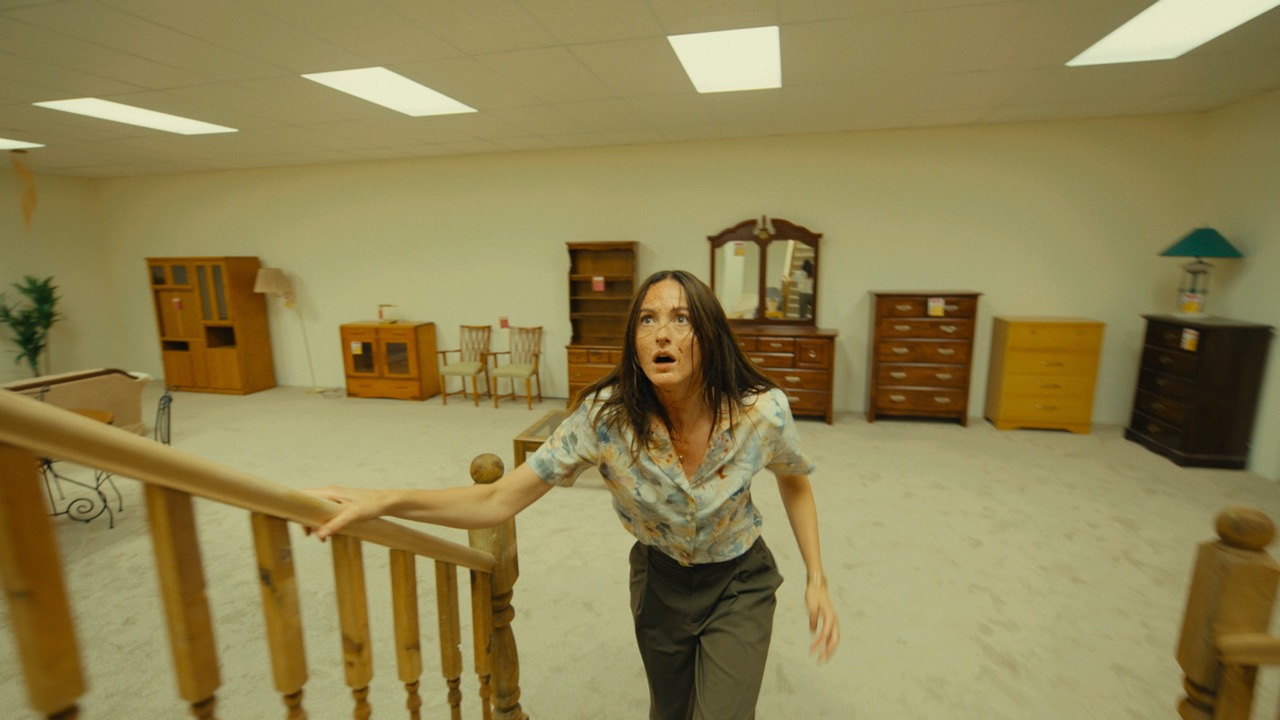
Renate Reinsve in Backrooms (2026), directed by Kane Parsons
TDW: I’m kind of in love with the palette you chose for Clark [played by Chiwetel Ejiofor]—a lot of purple. What was the colour story there?
MK: Genuinely, I felt like I hadn’t seen a lot of purple in horror or in hero looks. This was also the first movie that I’ve worked on where we have this palette built in, the yellow of the Backrooms is such an integral part, so we had to work around that. Because we wanted him to look like he was almost meant to be there, so the purple is incredibly complimentary in there. We didn’t want it to seem like a scary place to be either, it’s just this other world that exists within our world. We didn’t want it to be a jarring colour story, so we felt like the purple just let him in there.
During Chiwetel’s fittings, we talked a lot about how you could take his character and you can interpret him in different ways. It could either be he’s really depressed and upset with his life choices and he could be really sloppy, but he was very much wanting to still present himself. Even though he’s going through all this emotional turmoil with his wife and not having the job that he wants, yet he’s still put together, he’s still a hard worker.
TDW: I want to talk about Dr Kline’s [Renate Reinsve] clothes, like the blouses, the batik print and that awesome suit. What were you referencing for her?
MK: I love A Tale of Springtime, and that came up a lot as a reference. One of the characters in that has this incredible blouse on and the tones there were exactly what I wanted to exude with Mary. She has this effortlessness that I wanted to make sure was sort of there, and all the hurt was an internal struggle. So her outward appearance needed to look effortless, but also that she has a point of view. Using the tones and the patterns for her were really important to me, that we could have some sort of pattern work to create this softness and lightness with the blouses.
And that sheer printed blouse, which we built, was such an important thing for me to have as her final look. I really wanted to make sure the blood showed up on her in this way that was quite jarring and shocking, but still having that lightness to her. Renate and I talked about her having an innocence, but also having the stability of wearing pants because you get a lot in horror movies that women are in clothes they can’t run in or are not wearing very much in the end.
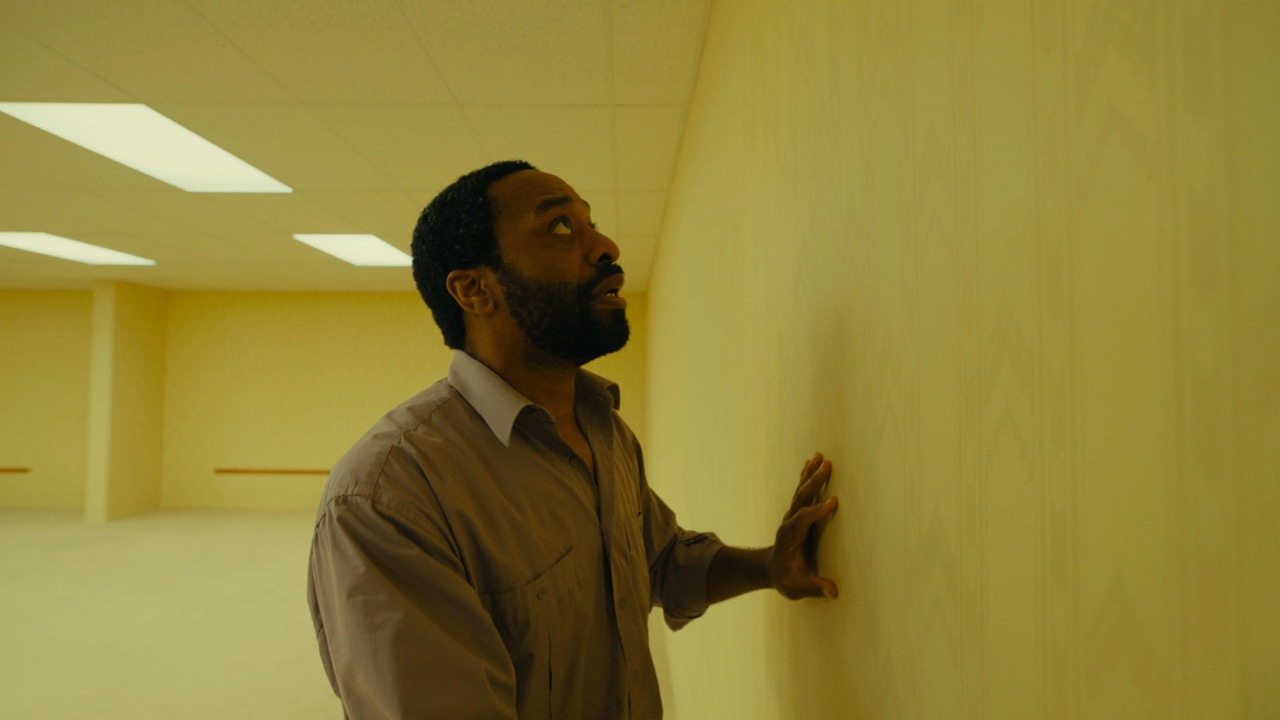
Chiwetel Ejiofor in Backrooms (2026), directed by Kane Parsons
TDW: And how did the California setting influence the costumes, particularly for Bobby [Finn Bennett] and Kat [Lukita Maxwell]?
MK: We wanted them to sort of have their fingers on the pulse of moving into the ’90s. Because we have this therapist in Mary, and then Clark is in a suit and tie, same with Phil [Mark Duplass]. So Bobby and Kat were our opportunity to show any sort of kid culture. We wanted them to bring in more colour tones and shorter silhouettes, like they’re shorts and the ’80s crop-tops, and wanting to accessorise more. There’s a lot more outfits that they had that weren’t shown, which makes me sad. We wanted their costumes to be completely different and to showcase the other world around them that’s not just sort of the adult section of the ’90s in San Jose.
TDW: The graphic tees, in particular, do so much of the talking. How did you come across those?
MK: Kane was really specific about graphic tees. We had a lot of conversations around getting clearance to use graphic tees. So we actually built the design for Clark’s [“Modernist Design Forum Santa Cruz 1970”] shirt. We had other options of universities he would’ve gone to, but we ended up with that shirt because there aren’t a lot of beats where we know Clark’s past, so that was important to show-and-not-tell where he was before this.
And then for Bobby’s [“End Apartheid”] shirt, that was actually a different shirt when we shot it. They changed it when they were editing. It wasn’t a completely different graphic, but it wasn’t an “End Apartheid” shirt, it was this vintage graphic that we found. It was just a goofy, very Bobby laissez-faire graphic. But I guess it was hard [to see] because it was like scribbled on. So when they were editing it, Kane was like, “No, I want him to wear an ‘End Apartheid’ shirt”. And so they digitally put that in, which is insane because you can’t tell at all.
TDW: That’s crazy. Did you know they changed it?
MK: No, they didn’t tell me [laughs]. It wasn’t until I saw stills of the shirt come up on Instagram, then I asked Kane at the premiere, “Is that a different shirt?” And he was like, “Oh, yeah, yeah. We changed it.” Slay.
TDW: You said you had free rein to create the sartorial universe of the Backrooms, and part of that are the Still Forms where you were able to push the proportions of these very familiar clothes to create that uneasiness. How did those looks come together?
MK: Those were my favourite to design because it was just such a fun concept to have something that’s almost multiplying itself and having to figure out where that would go. For the red-headed woman’s dress I was referencing my mum’s, who’s a seamstress, clothes she would make for herself of very sculptural ’80s Claude Montana designs. When I was in high school, I would try them on and I’ve always been very in love with that shape and those incredible shoulder pads. So I pitched that look as an ’80s business woman that had these buttons cascade down and they were happy to have us make that.
For the guy with all the eyes, it was scripted that he was wearing a Hawaiian shirt, but when we went to the fabric store and got inspiration there, we found this really great fabric that worked better to have the double collar showing when Clark rips open the shirt. I loved that shirt and my seamster, Josh [Knight], worked so hard on that because that fabric was so thick, and the weave is quite loose, so any sort of top stitching is just hell, but he made it look incredible.
And then for the other man, I don’t know if you can really tell, but the concept was that he’s fused into the wheelchair. We wanted him to look like he’s from the 1800s. So we got to do this insane collaboration with props, and his builder gave him three legs—I don’t know if you can tell in the movie, but he has three legs coming out of these three pant legs. So it all became this game of creating how someone would remember them and what would multiply on them and what would look good. It was really fun to make human monsters that are all different from each other, but are still complementary to the space with that through line concept.
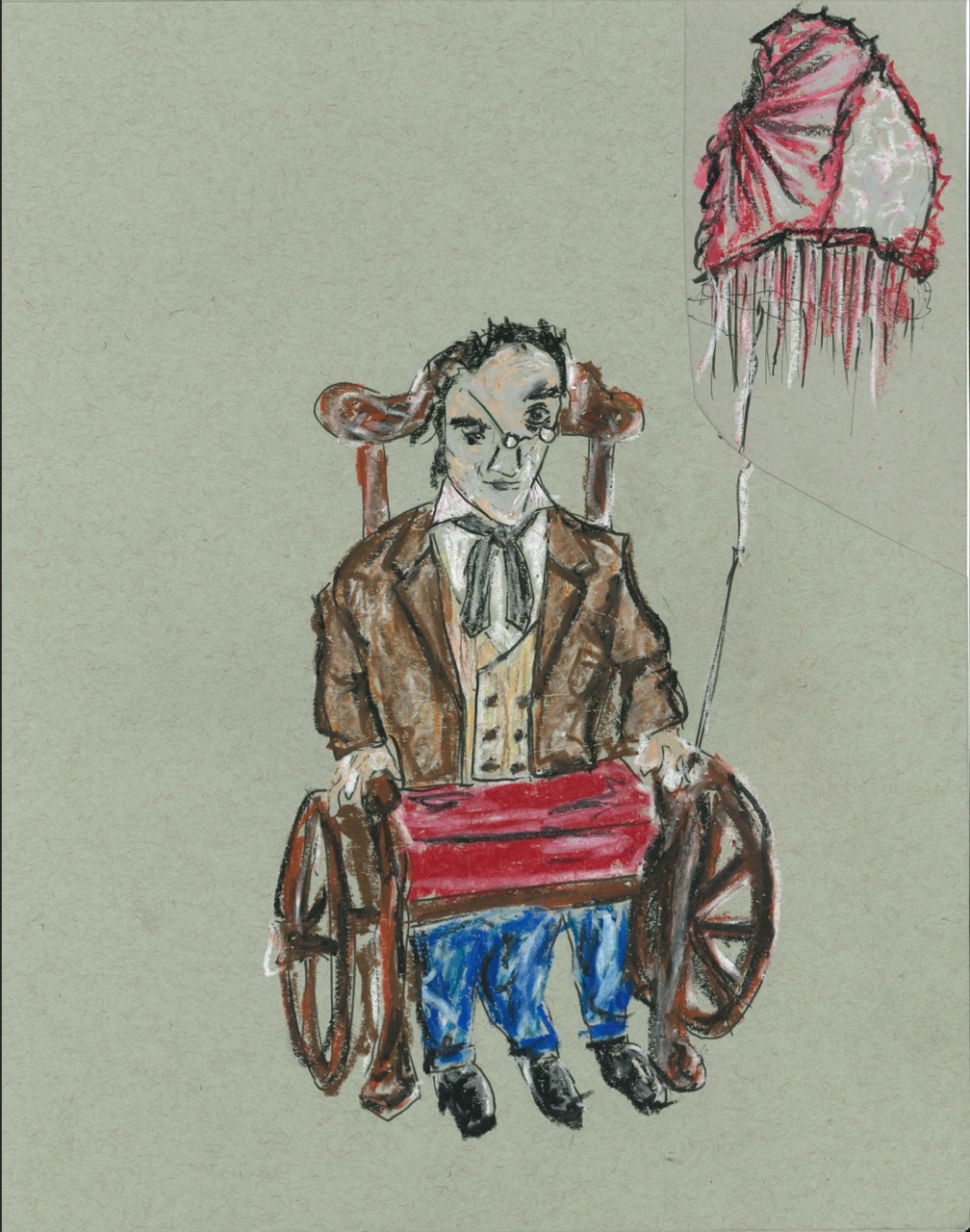
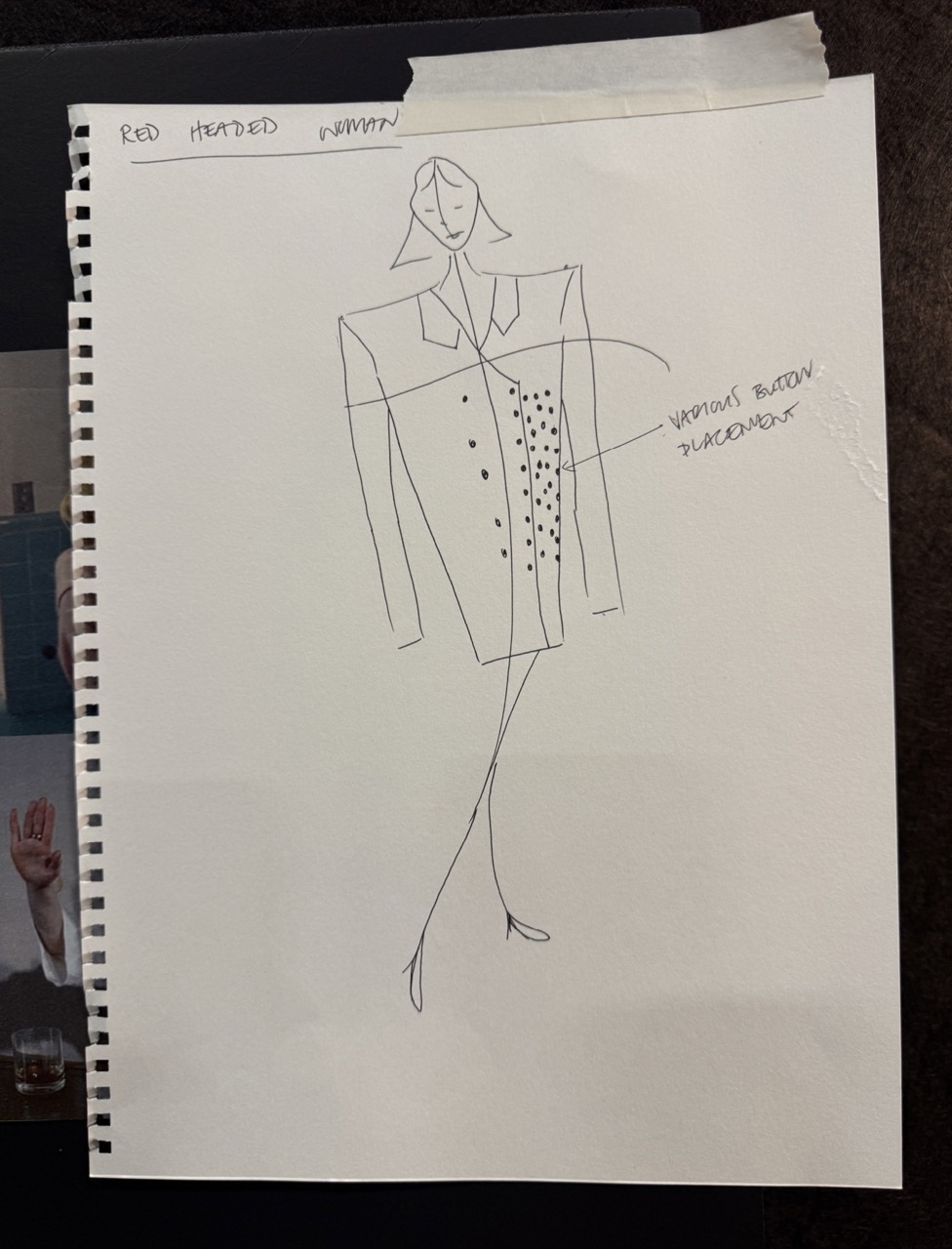
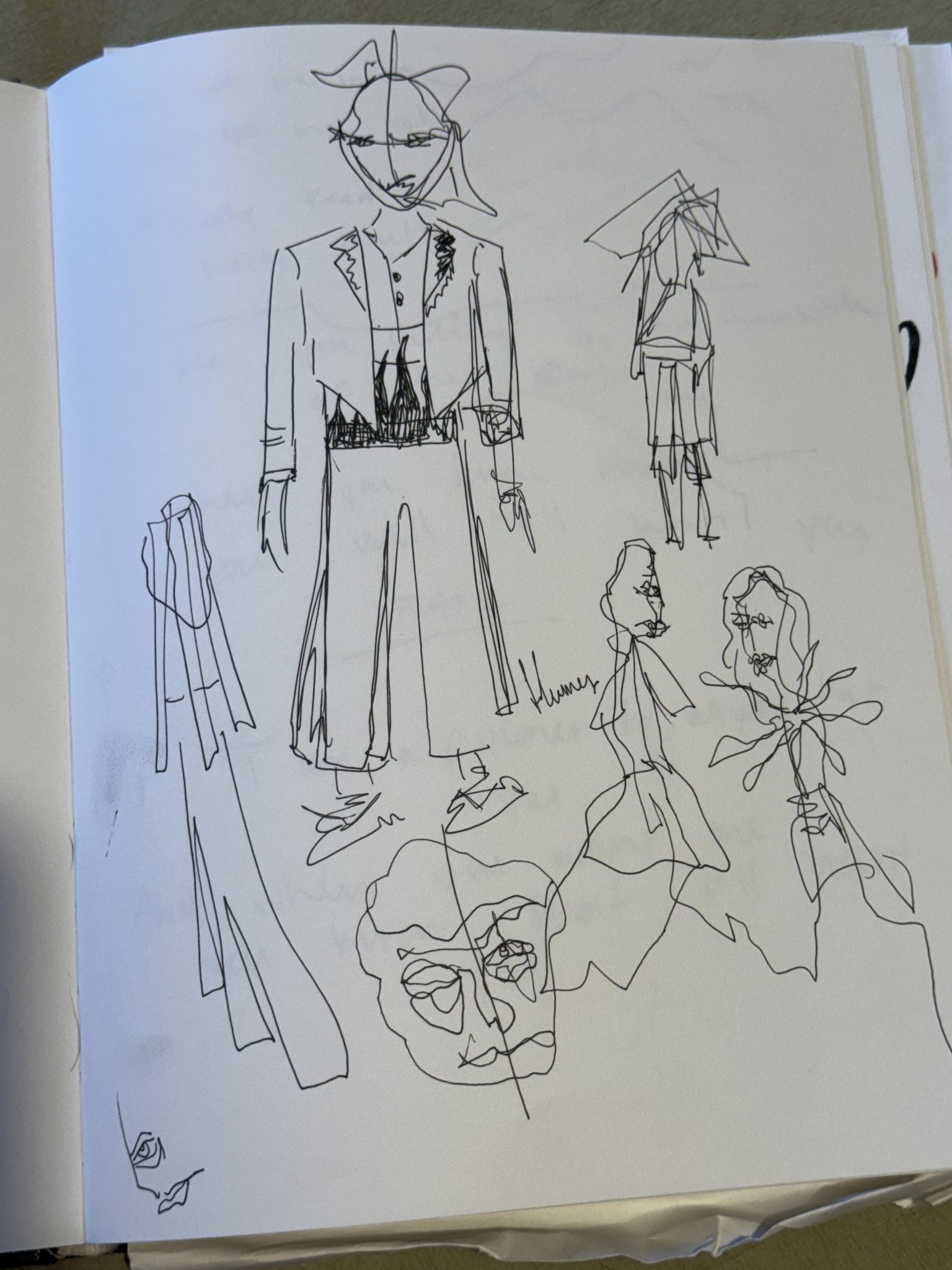
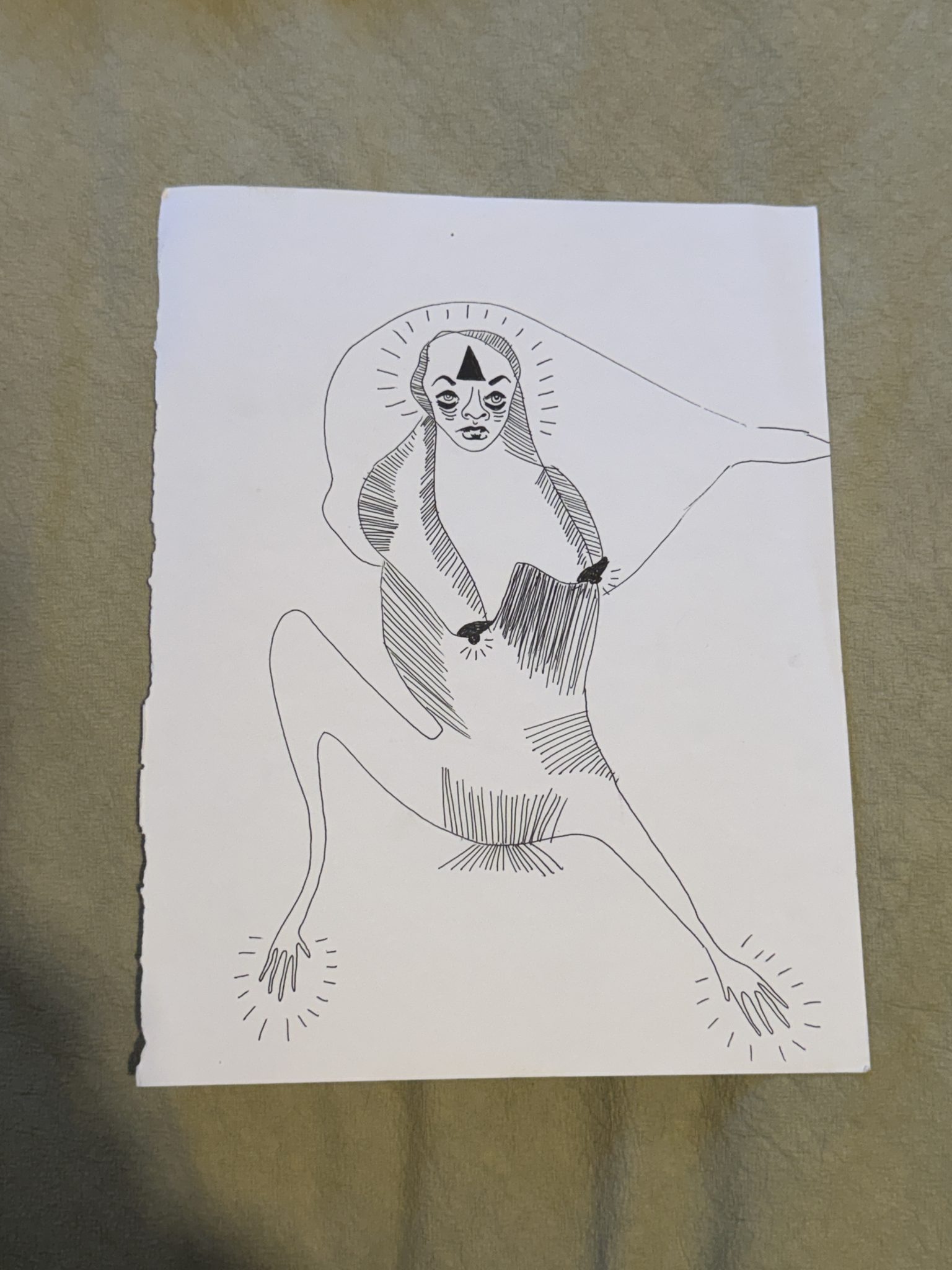
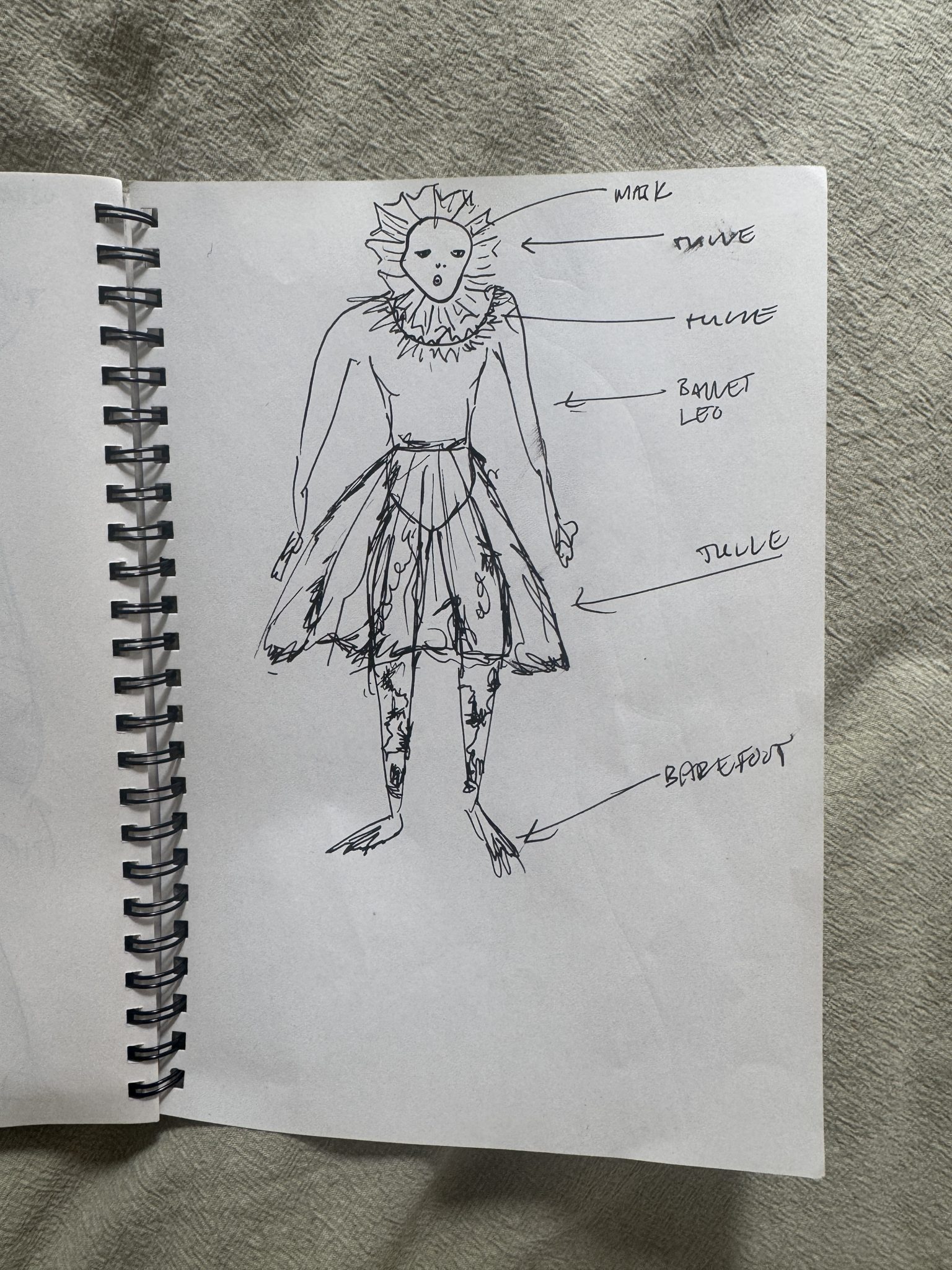
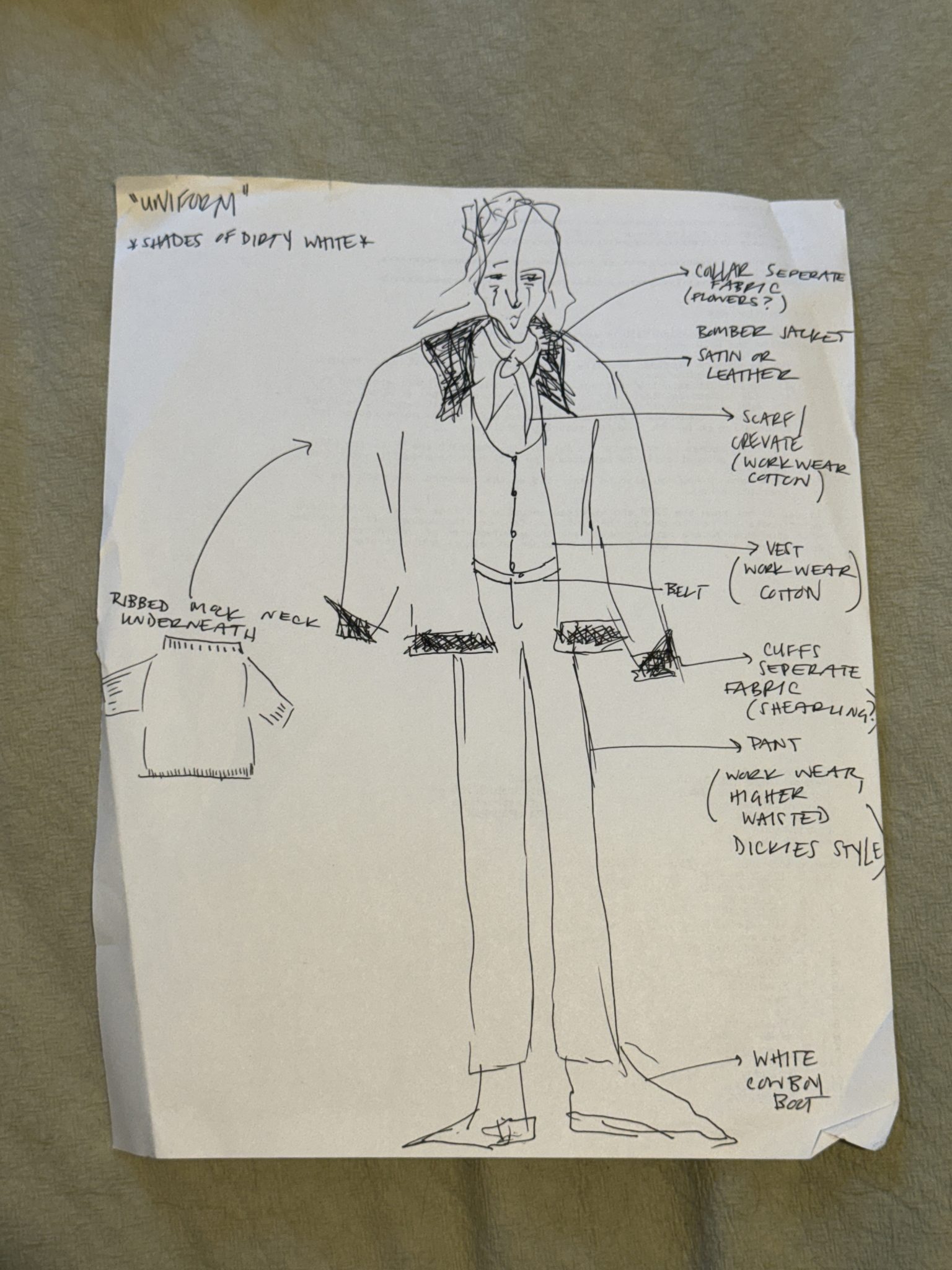


TDW: How about Captain Clark’s look? Or was that more visual effects?
MK: No, that was all practical. That was insane. In the first script, it was the same as the YouTube series where the entity is this dark, CG figure. And we were like, “Okay, this is great, we can focus on our moving cast. We’re going to be fine”. And then in the rewrite, they said, “We’re going to do this practical giant pirate and it’s going to be played by a guy who’s nearly eight feet tall [Robert Bobroczkyi]”. And we were like, “Whoa, that’s a lot of work” [laughs].
TDW: It’s also a lot of fabric.
MK: It was a lot of fabric. And we also had to have him match Clark’s pirate look too. We did a lot of iterations of how we wanted that to be done and what colour tones we wanted. Then we really landed on the original complementary tones that Kane really liked, the gold and the green. All of that was handmade, hand dyed, hand patinated. That was our whole team really banding together to make that happen. And we had to make a lot of multiples. So that was an incredible journey.
TDW: What are some horror films that have been formative to your work in the genre?
MK: As a kid I was a huge fan of Tim Burton films and The Nightmare Before Christmas in particular. I wore a rabbit’s foot around my neck and was obsessed with drawing eyes and oddly shaped naked bodies—I was intrigued by a more artful darkness [laughs]. I then became enamoured with Pan’s Labyrinth and Donnie Darko. I can see a through line of horror and my draw to ‘creatures’ and fantasy.
This truly does stand true now for me as a designer of horror. I love the undefined fantasy of horror—how conceptual and endless it is. In my adulthood, the horrors I connect with are films like Under the Skin, Possession and Suspiria. Again, these have an element of fantasy and ‘art house’ about them which I love. For Longlegs, a huge inspiration for me was the movie The Man Who Fell to Earth—this had wild costumes and alien concepts I’m always drawn to…
TDW: I want to go back to your mum, who was a seamstress, because I was listening to a podcast you did a while ago where you were talking about her and how she used to say, “Leave the house looking like—
MK: —a walking art piece.”
TDW: Obviously it’s stuck with you, but how has that influenced your work? Especially when working in horror where you have to make it iconic.
MK: That definitely makes me want to just push the boundaries a bit with my own self and pitch the ideas that you have that might seem out there and quite weird, but it’s worth seeing it come to life. I think a lot of times with styling and costume designing, you get in your own way a bit because everyone has an idea of what they think the character’s gonna look like, and you do have to collaborate and bend, but I think with those iconic moments where you really want this character to look a certain way, you have to fight for them looking artful and interesting, because you do want it to be different every time. There’s so much media and film out there that I think that pushing the boundaries within yourself and to follow what you think is different and unique. And definitely the boundary push of horror is fun because it does make you do things that are quite unconventional.
TDW: And I guess the litmus test, especially for horror movies, is if someone dresses up as your character for Halloween.
MK: It’s true. I guess we’ll see.