

Since Studio 54, Ian Schrager has repeatedly reinvented the hotel business. Now, with PUBLIC West Hollywood, he’s continuing to democratize luxury hotels, and bringing the party back.
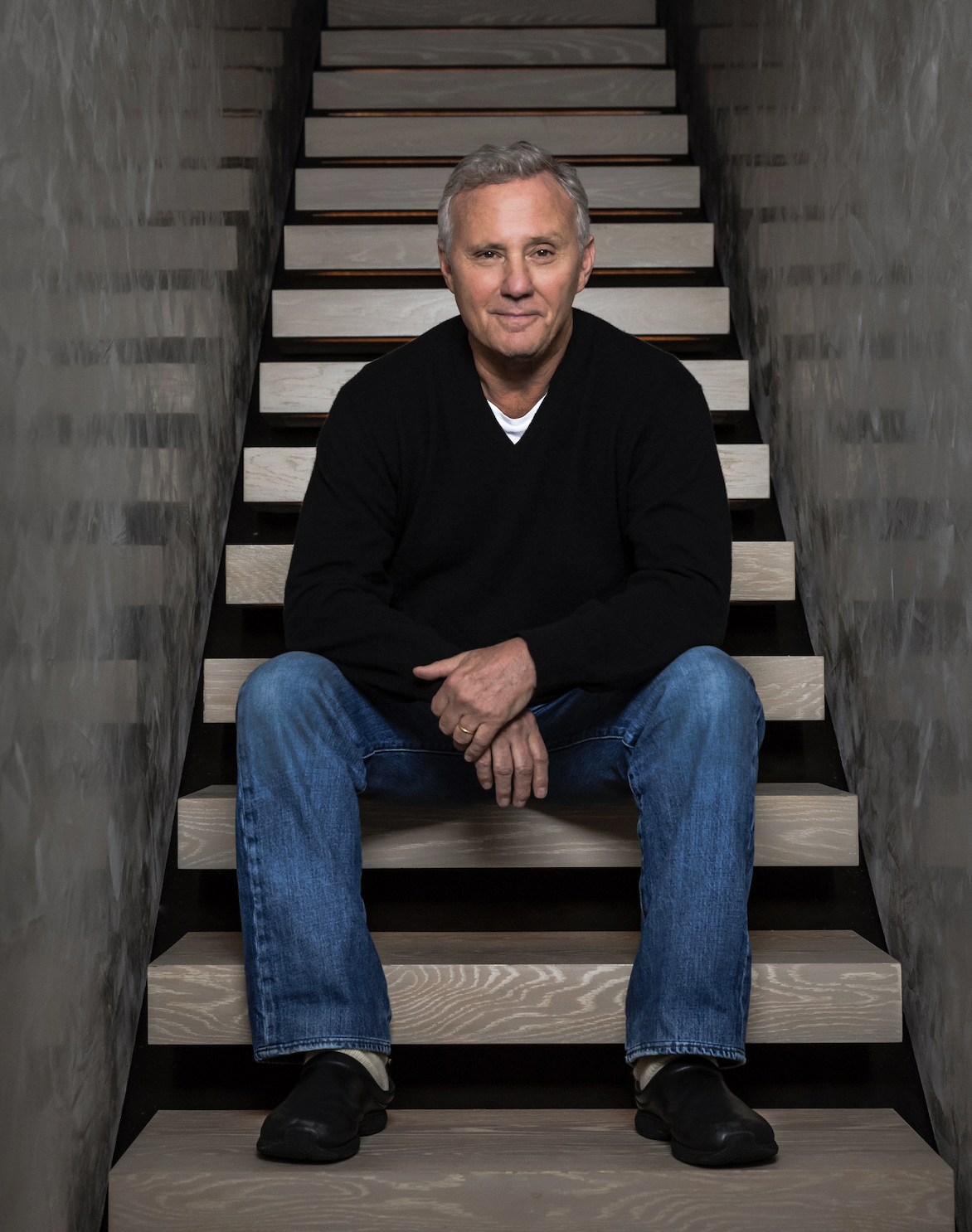
“It’s like giving birth to a baby,” says the American entrepreneur and hotelier Ian Schrager. He is standing in the lobby of Public West Hollywood, his latest hotel project, a 127-room hotel located on Sunset Boulevard, just between the Chateau Marmont and the Sunset Tower (where Marilyn Monroe allegedly drank martinis). “It’s quintessentially LA—very casual, sophisticated and refined,” he says.
Schrager, who speaks in a breathless Brooklyn accent, is best known as the proprietor of Studio 54, the wildly zeitgeisty New York nightclub, which he ran with the late Steve Rubell from 1977 to 1980. He went on to pioneer the boutique hotel concept, creating design-led, intimate spaces that combined social life with accomodation, from Morgans Hotel in New York to the Delano and Mondrian. He has also collaborated with Marriott on EDITION hotels, which have properties across the globe.
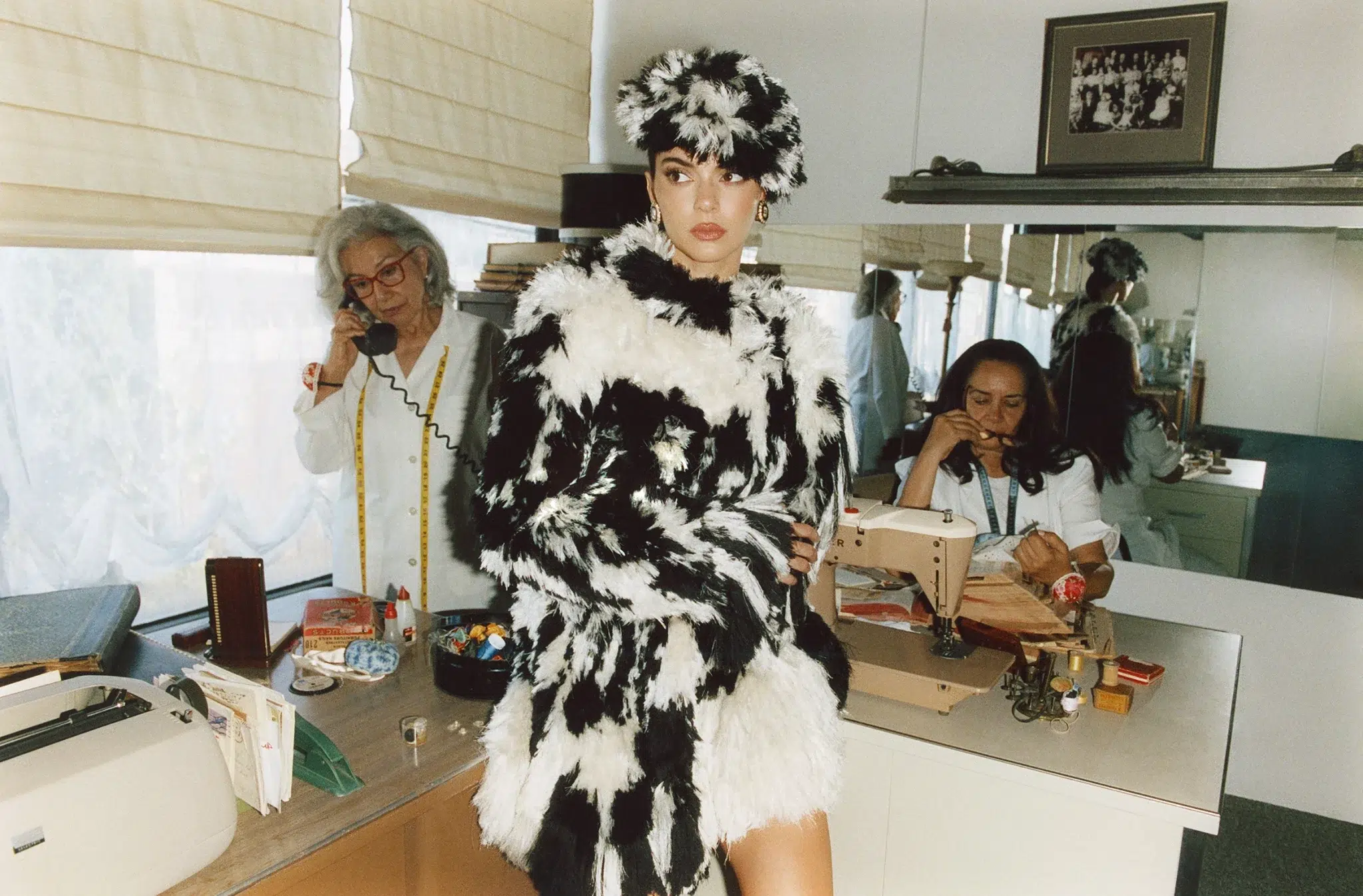
Following a location on Manhattan’s Lower East Side, the West Hollywood hotel (formerly the site of The Standard) is the second property within Schrager’s PUBLIC group, which aims to democratize luxury hotels and further his mission of creating spaces to see and be seen. Case in point: the lobby—a space organised around distinct seating zones with gloriously impractical shiny white floors. “To me a lobby is not really a functional area,” he argues, “It’s about socialising, interacting. And it’s not only for hotel guests, but for everybody.” Later that week, the same lobby is the centre of the hotel’s buzzy Halloween party. Hosted by New York fashion brand Ekhaus Latta, the night affirms Schrager’s ability to throw a fabulous party, and an impeccable Marge Simpson takes home the top prize.
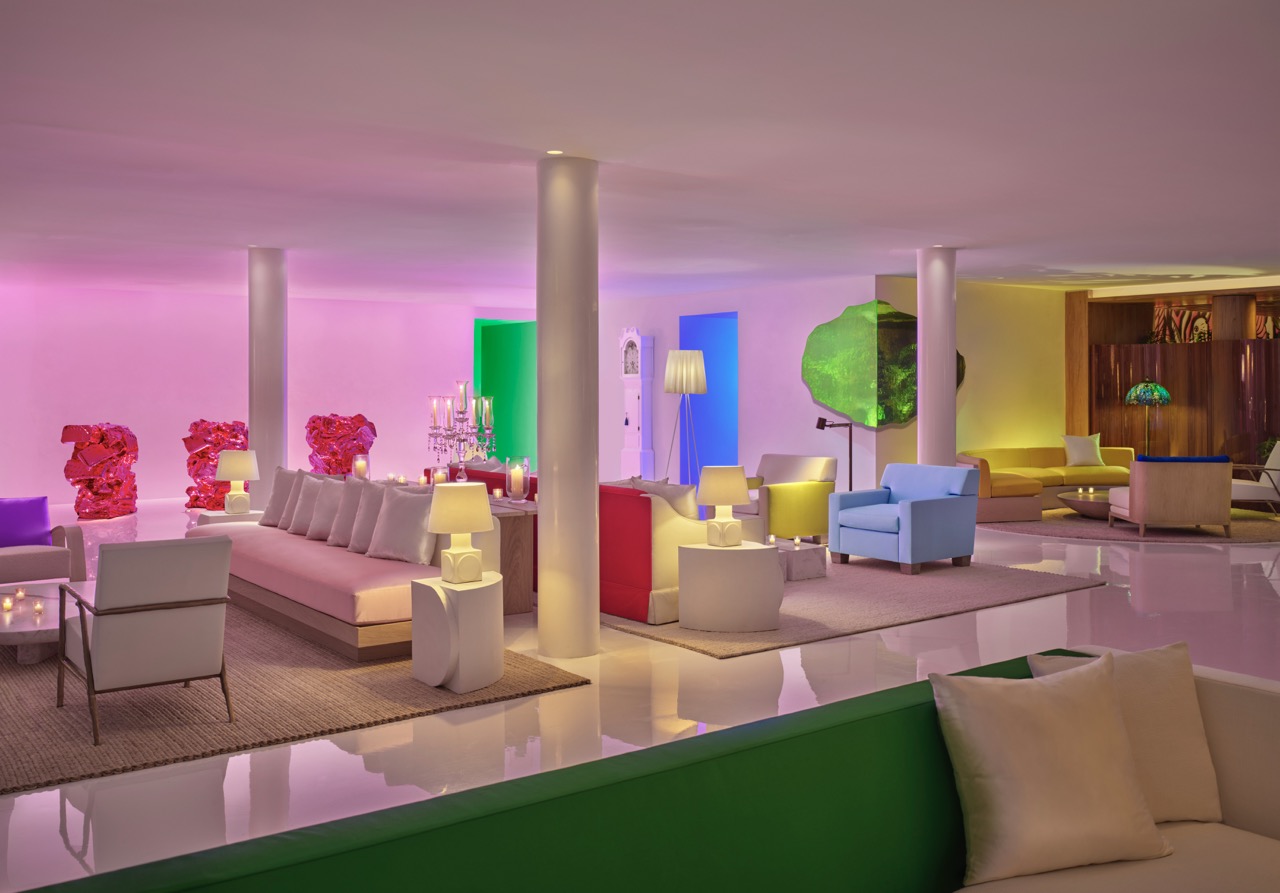
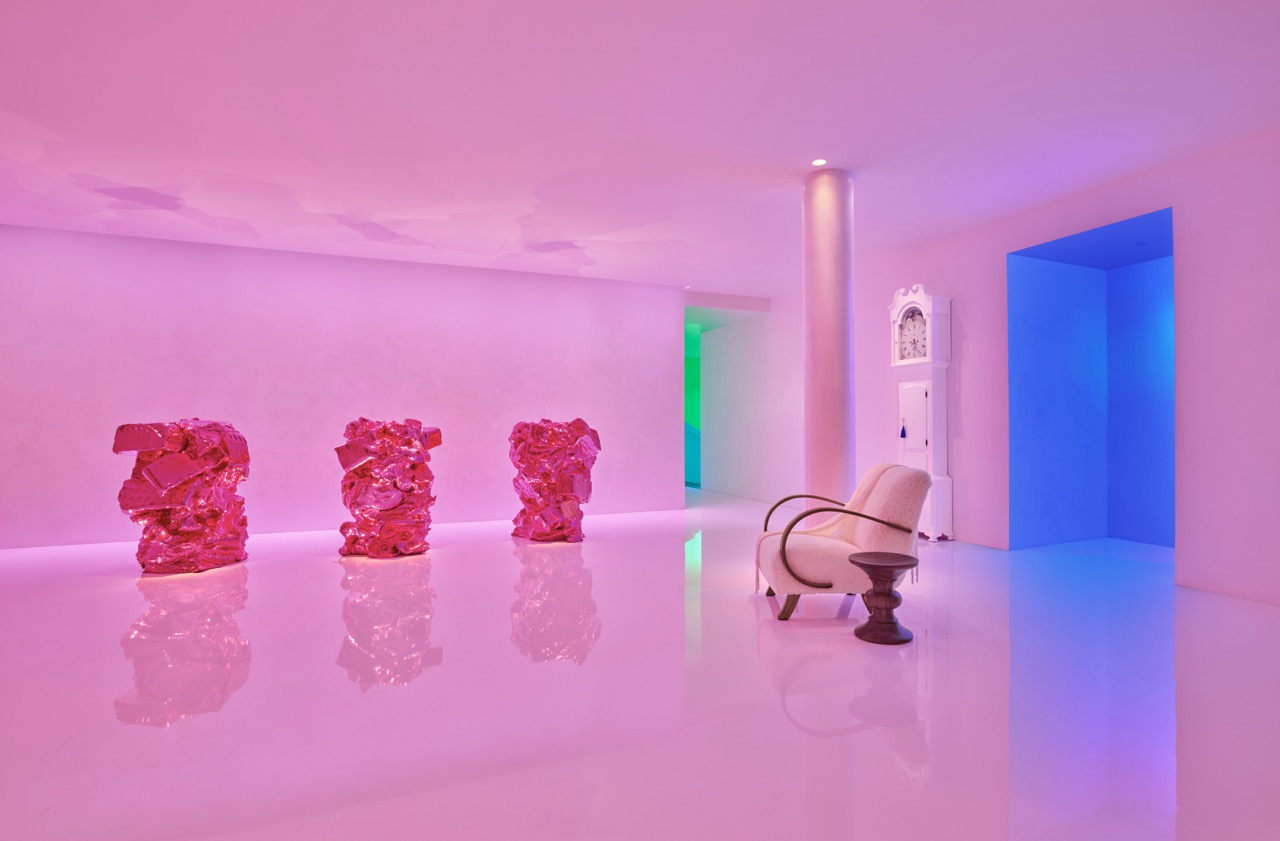
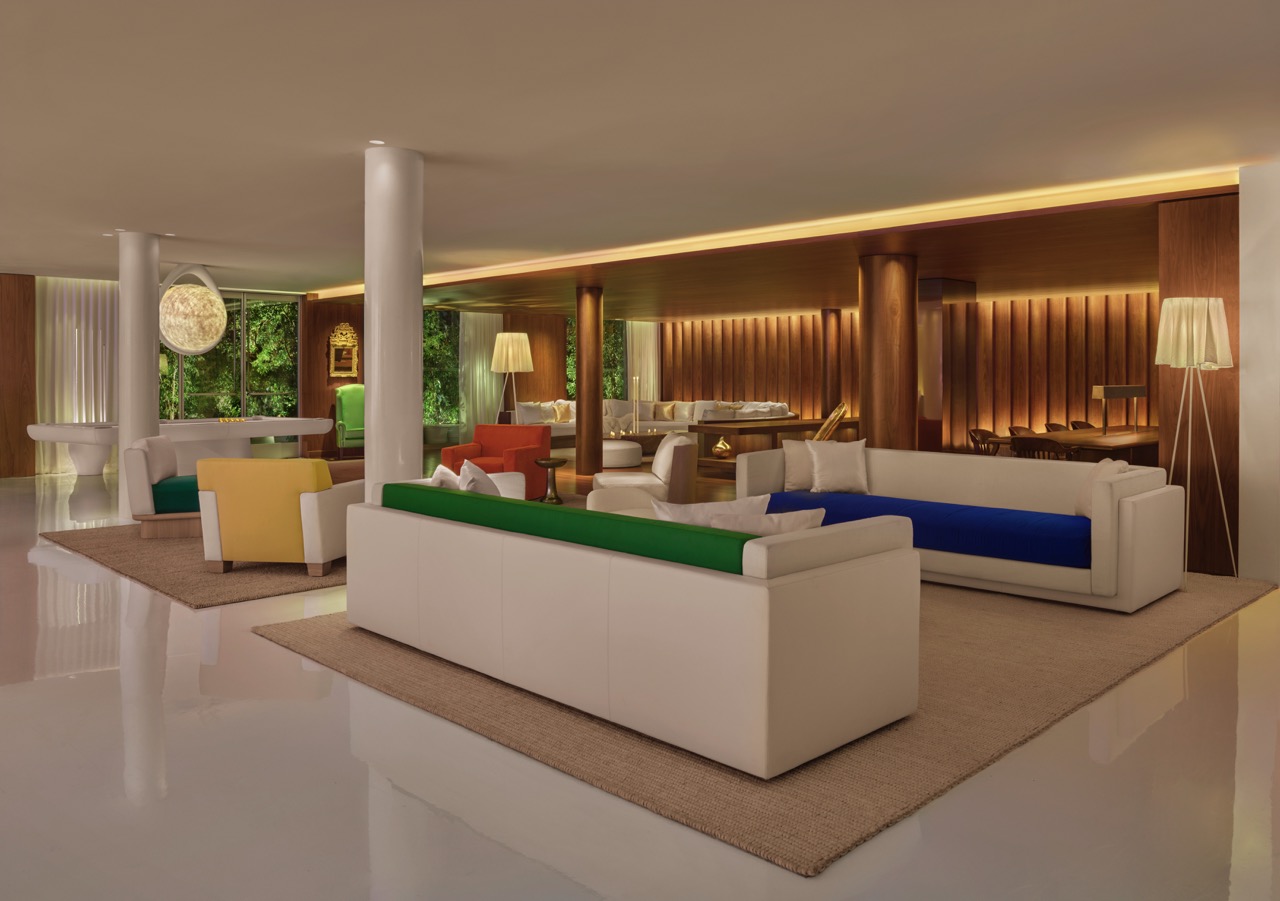
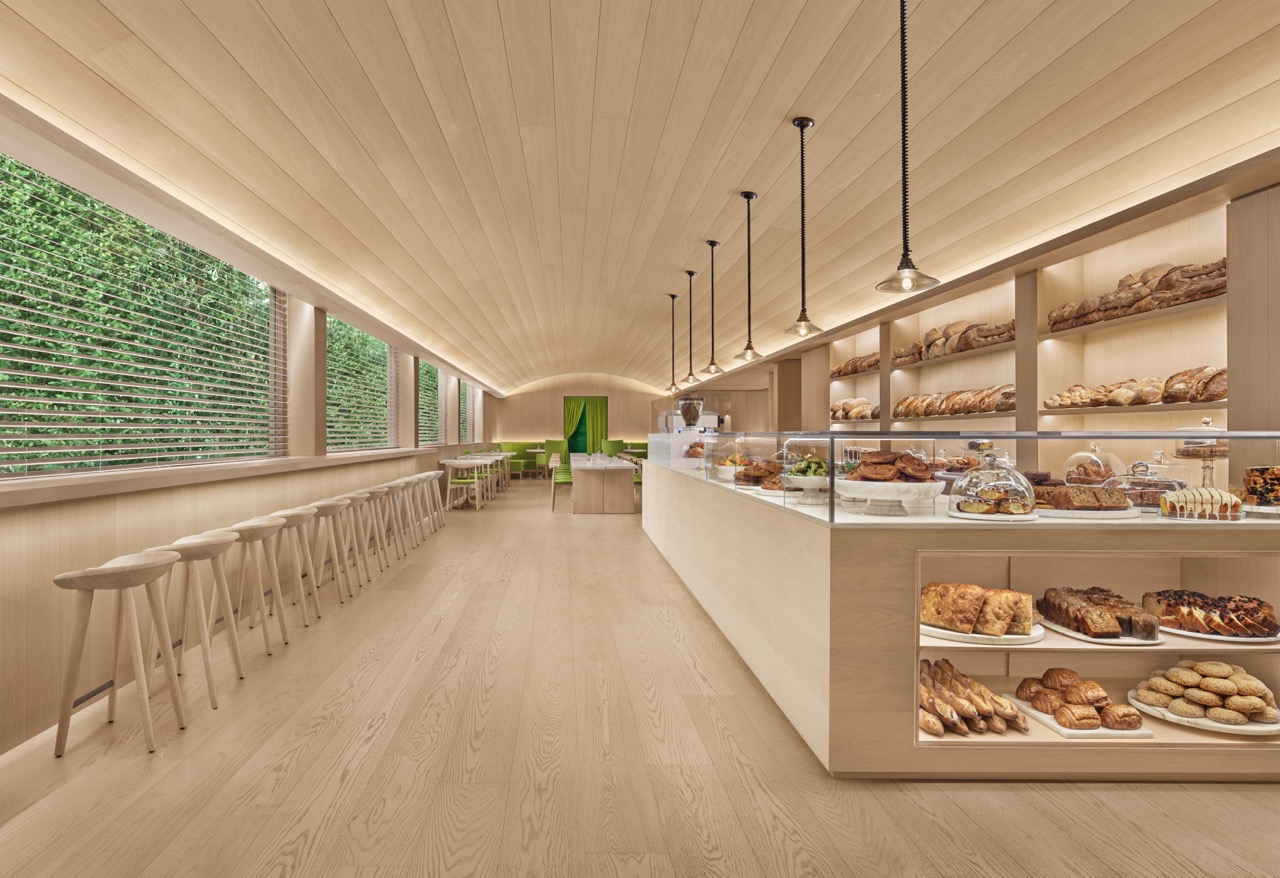
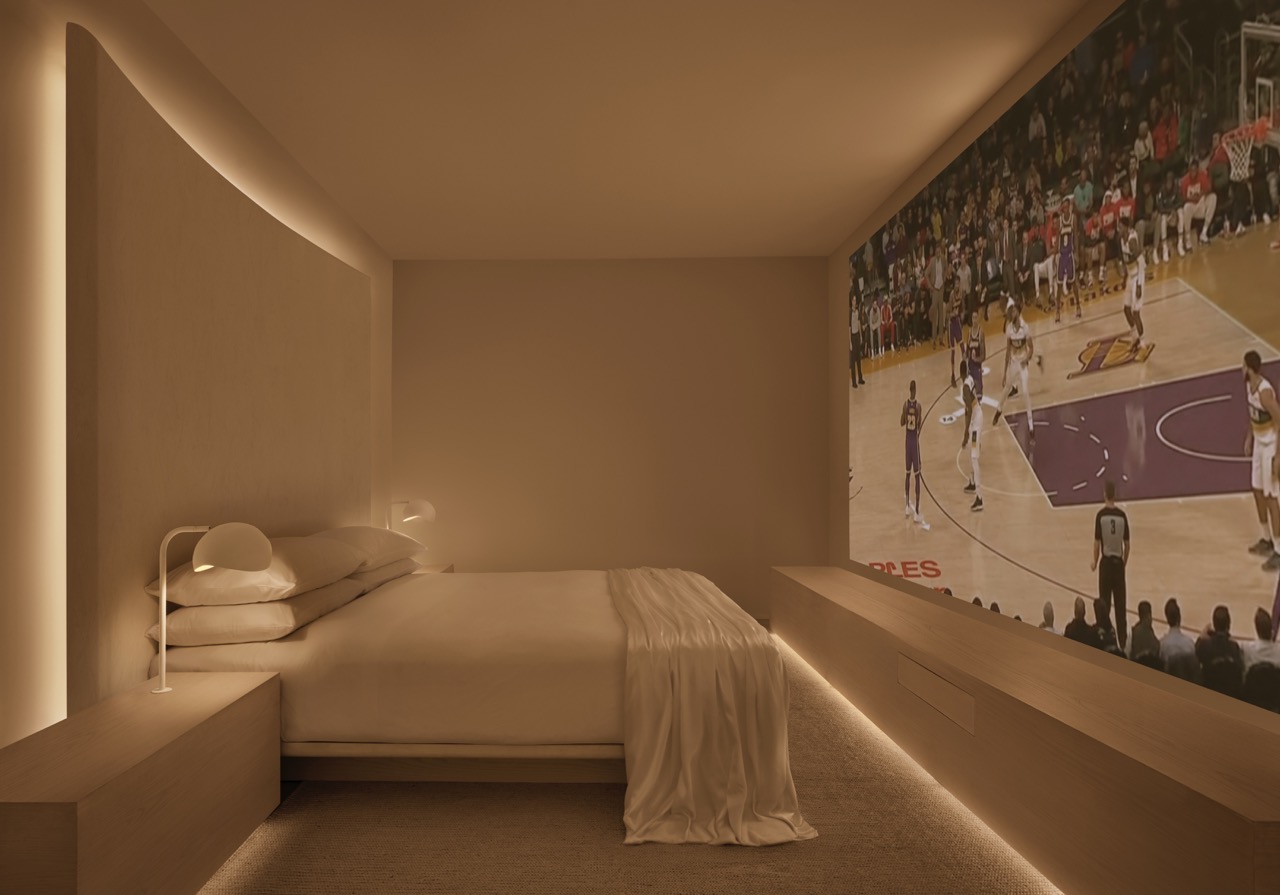


The architecture has been envisioned by John Pawson, Schrager’s long-term collaborator who he first met in the early 1990s. Schrager introduced the Halifax-born Pawson—a pioneer of minimalism—to Calvin Klein, and went on to design his stores. (“It changed my life,” reflects Pawson). It is also his second collaboration with French interior designer François Champsaur. “I’ve always been attracted to the French aesthetic,” says Schrager. “I had a French girlfriend once.” “He’s a chef d’orchestre,” Champsaur says of Schrager. “Everybody plays a role. It’s all about layers, layers of architecture, layers of furniture, layers of lighting, layers of colour.”
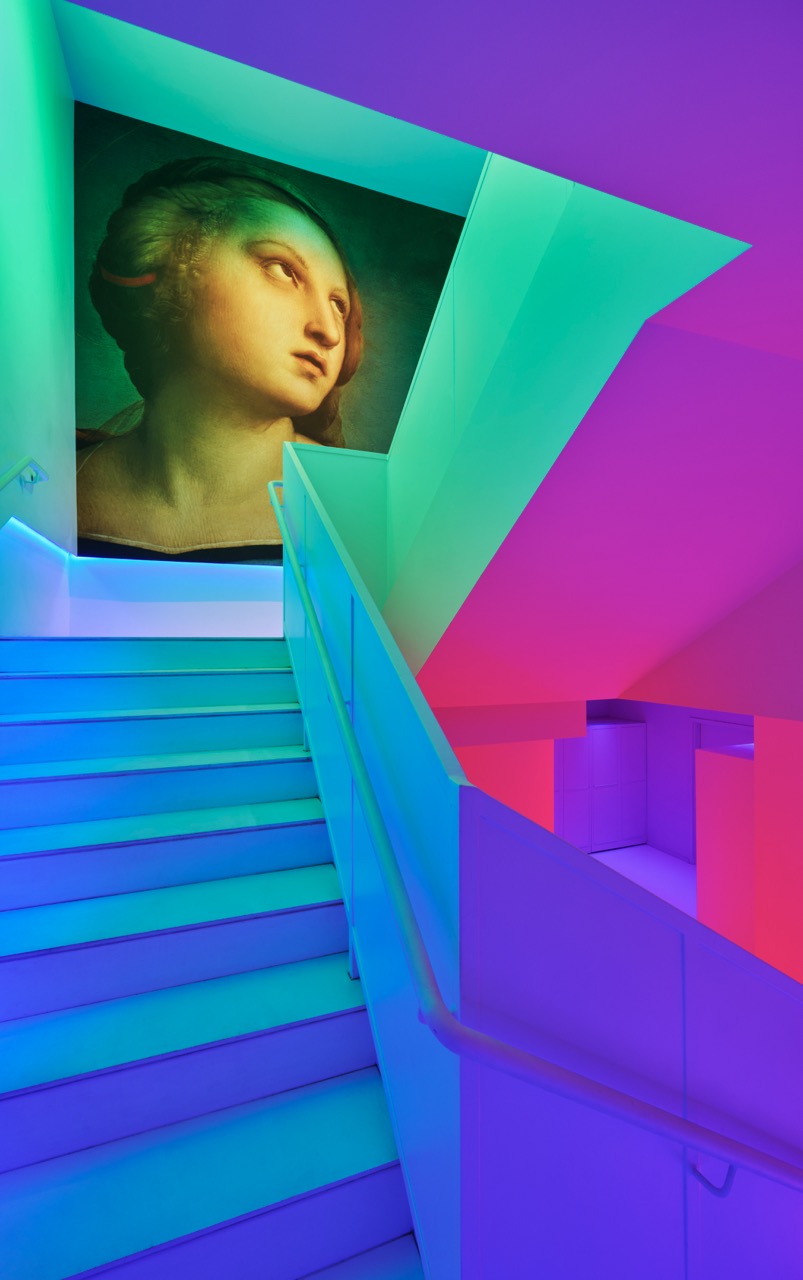
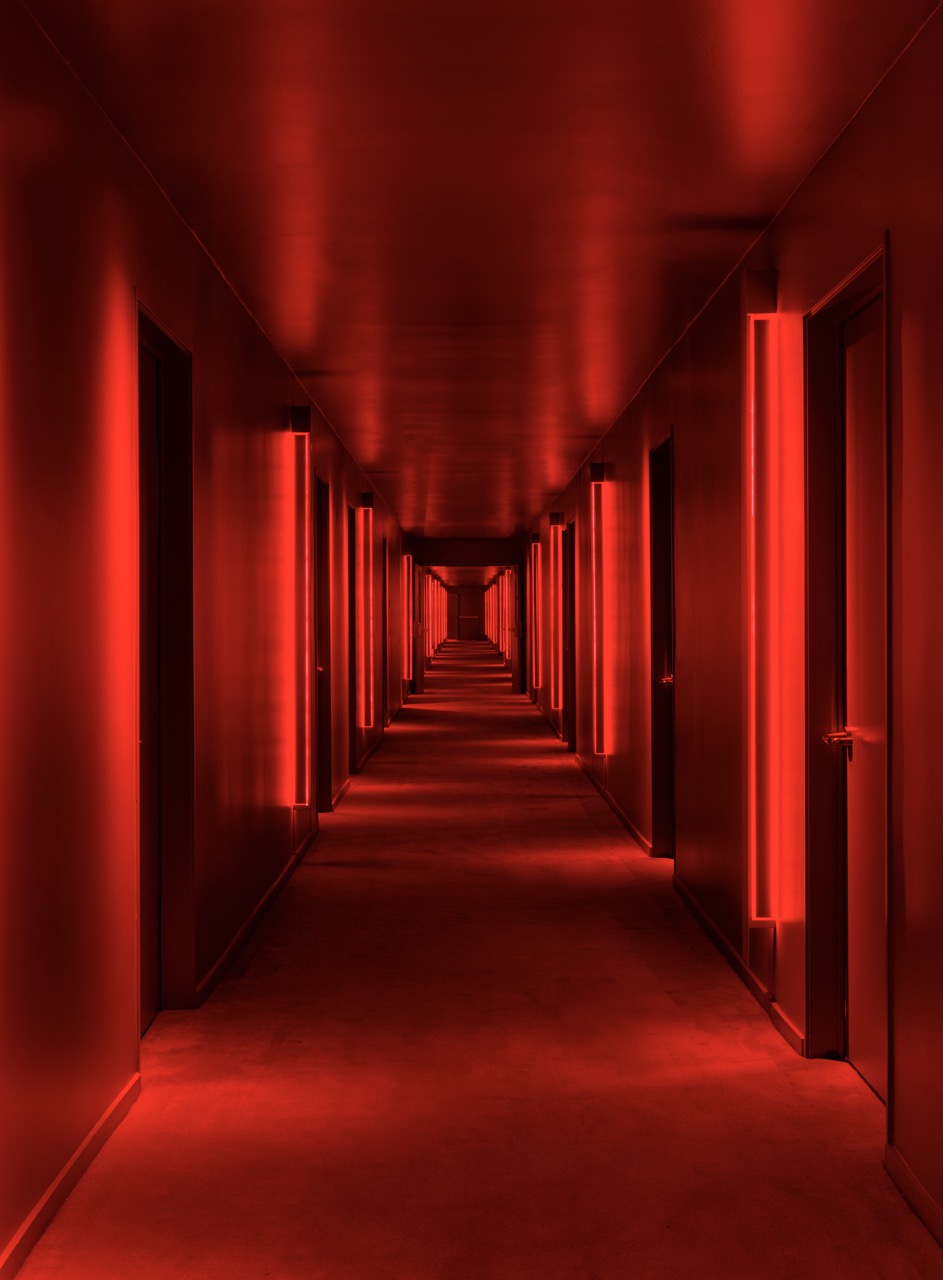
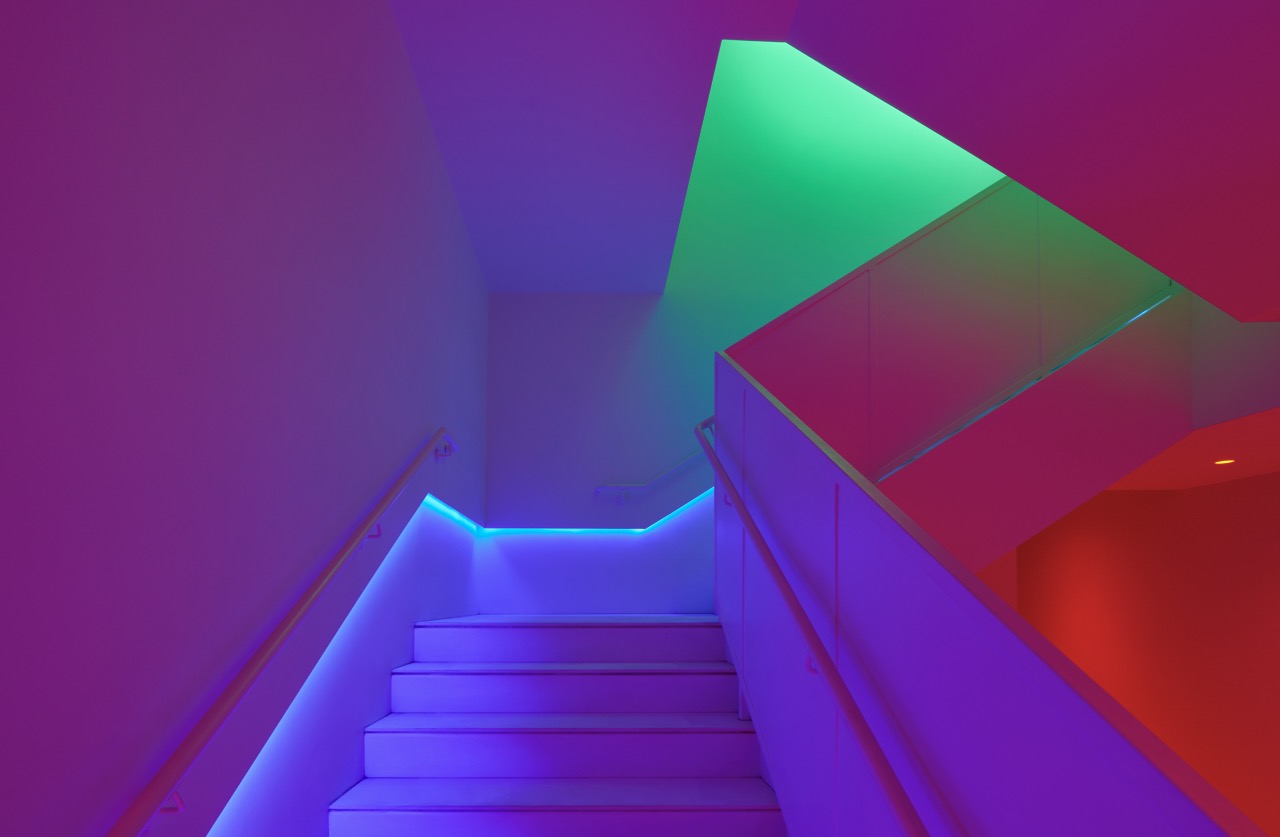
The hotel is filled with whimsical design details: from pink metallic check-in desks to the neon-drenched corridors that nod to the California-born artist James Turrell. Each of the three guestroom floors is lit up in a different primary colour, to help guide guests back home after boozy nights. (“Design is like special effects in a movie,” reflects Schrager.) For the bedrooms, Schrager wanted a contrast to the extroversion of the public areas: all-white bedrooms, each about 330 sq ft, with “residential quality” beds and a moon-shaped light feature anchoring the space. Schrager is particularly proud of the built-in projectors. “Your own private screening room,” he says.

“It’s for everybody. It’s just a sensibility we go after. I’m 80 years old. This is a hotel that I would go to. I have a 15-year-old son and he would come here with his friends.”
Ian Schrager
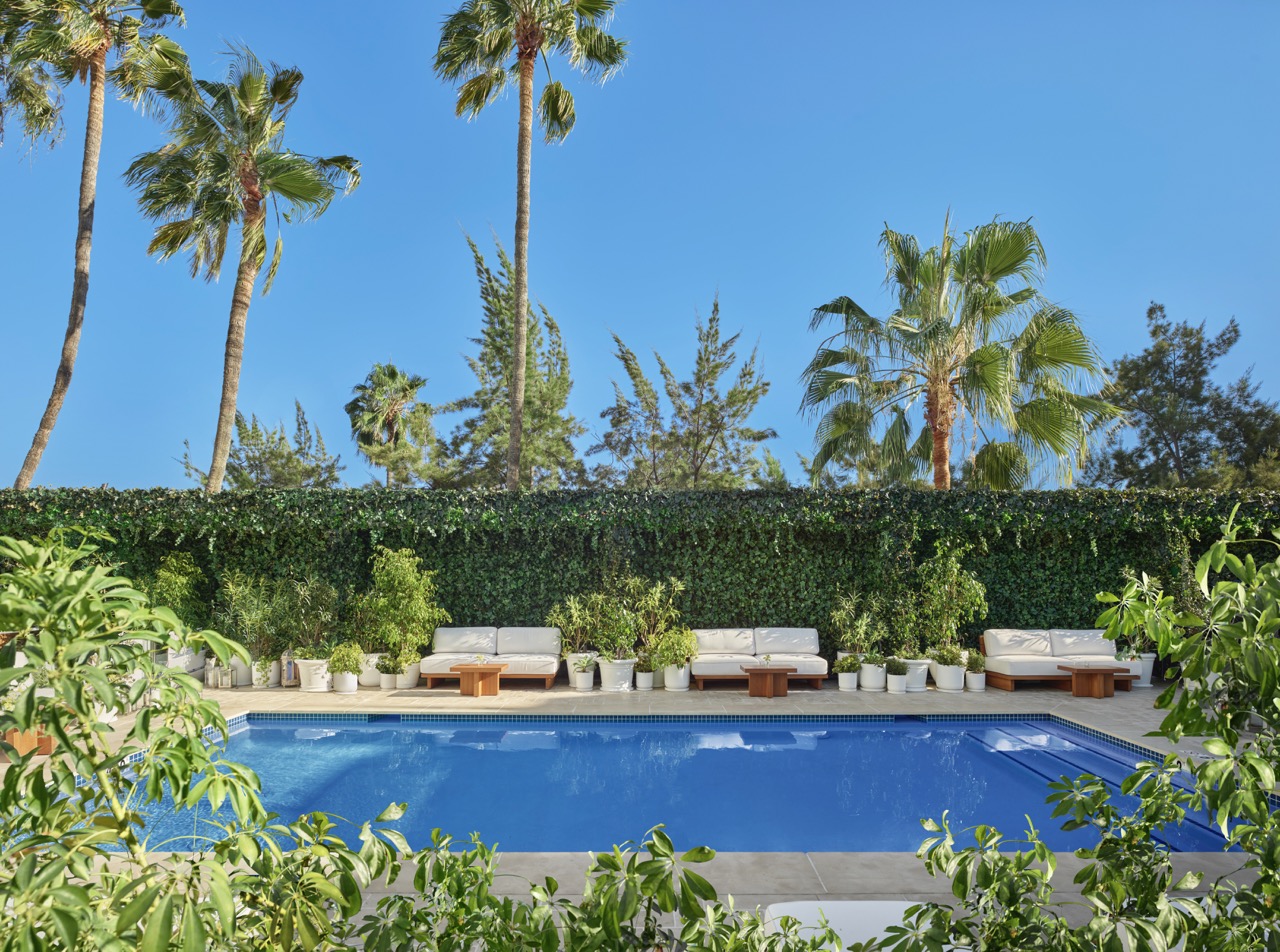
Getting creative with the hotel culinary experience has also been a priority. Next to the lobby is Louis, a farm-to-table café serving brunch and fresh pastries. “I don’t think there’s any other hotel that has a dedicated bakery,” he says. The pool bar is stuffed to the brim with plants and serves a range of salads, sandwiches and mezze plates. A replica of a Fernand Léger painting as a mural pays homage to La Colombe D’Or, the storied hotel on the French riviera. “It’s a very inside-outside space, which was the inspiration here.”
Also true to LA living, 75 per cent of the hotel’s public areas are outside. In the pool area, where more plants create privacy for sunbathers, Schrager wanted to create the feel of an “ampitheatre” (premium rooms look over the space). The biggest development has been creating an expansive roof terrace—formerly just a roof—an expansive space with firepits, gym, outdoor cinema and views over the city. “The sky in Los Angeles is fantastic,” reflects Champsaur. “It puts the hotel in contact with the sky and mountains.”
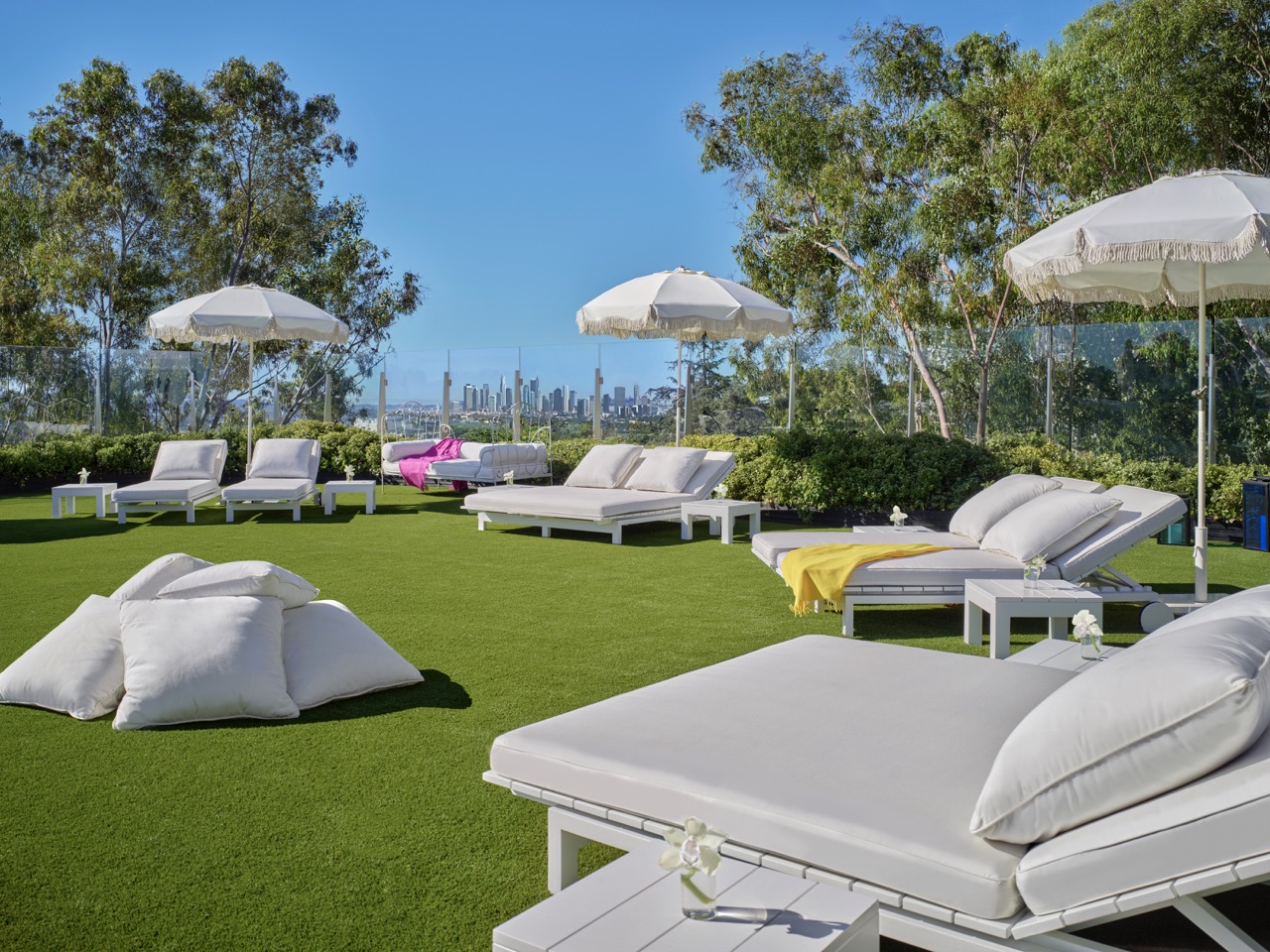
The roof at PUBLIC West Hollywood.
Schrager likes to reiterate the idea that people will decide what it is going to be. In particular, he wonders whether the gravitational pull of the space will be around the pool, or the rooftop. “It’s what we’ll have to figure out. Is it down here or is it up there? And the people have to tell us that,” he says. Schrager is similarly democratic in who his clientele can be. Demographic is, he says, “a trap” and hopes that the space will appeal to Angelenos as much as out-of-towners. “It’s for everybody. It’s just a sensibility we go after. I’m 80 years old. This is a hotel that I would go to. I have a 15-year-old son and he would come here with his friends.”
Significantly, PUBLIC West Hollywood is the first time Schrager has referenced Studio 54 in his projects (a tax evasion scandal shut down the nightclub, and led to a short prison sentence for Schrager). “It’s the first time in 50 years I’ve used tht name, it has a lot of great memories, but also not so great, [but I want] the same kind of reverie or abandon that happened there, whilst staying away from crass efforts to replicate it,” he says.
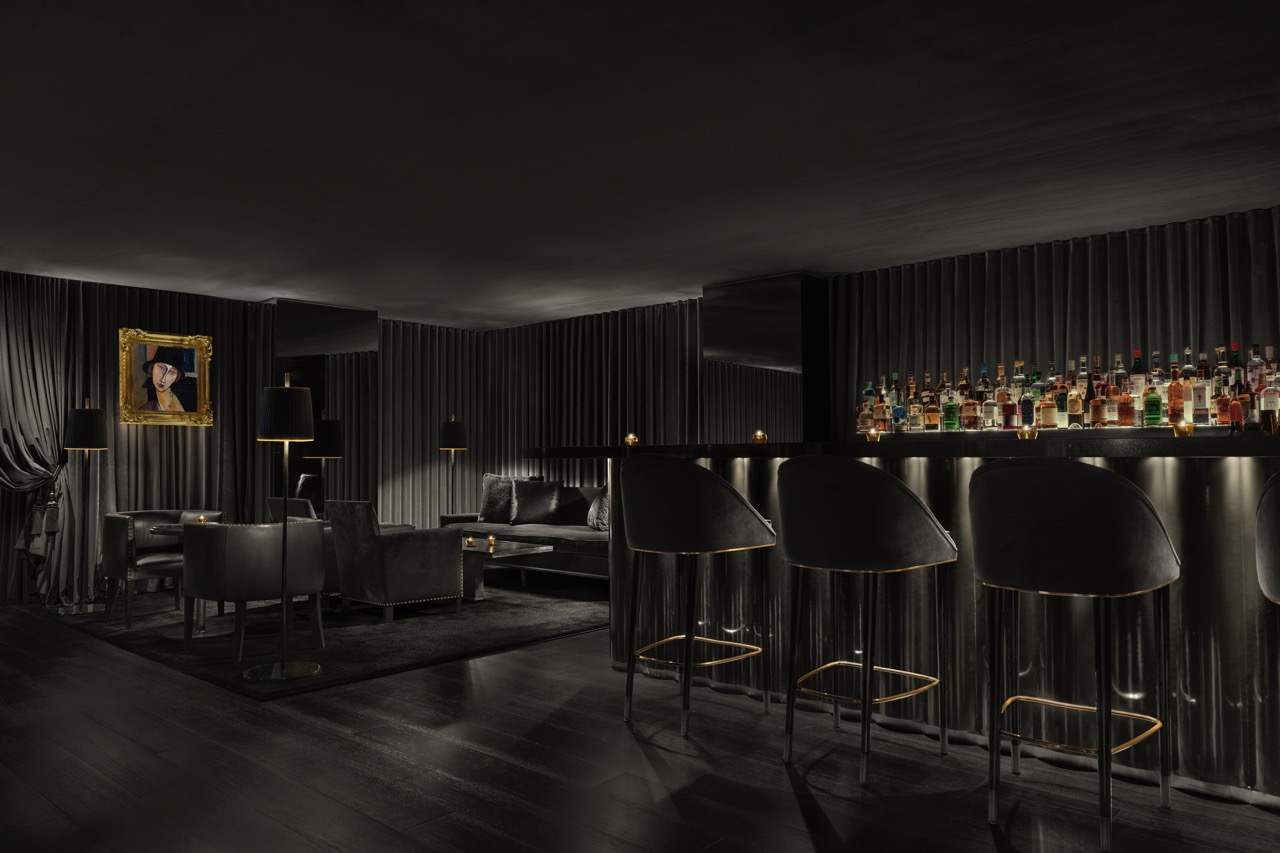
The Studio, where the Halloween party crescendos with a DJ set by Karen O of the Yeah Yeah Yeahs, features moving Renaissance paintings recreated on television screens. “They might throw a kiss or a blink, you’ll know it’s time to go home,” says Schrager, who describes new plans to create a third PUBLIC in Midtown Manhattan. “What they call a big box hotel, with more than 1000 rooms.” For now though, West Hollywood has been a significant milestone that he his taking time to soak in and appreciate. “My kids are, of course, the most important thing in the world to me,” he says. “But this is up there.”