

How do you make a basket sexy? Wētā Workshop’s Joe Dunckley and Sarah Rubano reveal how they turned one of the hottest actors alive into a flirty piece of furniture.
Joe Dunckley and Sarah Rubano hardly look like the architects of a wicker-based sex symbol. Instead, their wooden living room is bathed in golden Kiwi sunshine: Joe relaxing in a tracksuit, black curls spilling over a salt-and-pepper beard, wrestling with a dog under the table, while Sarah sits straight, sharply turned out in a pinstripe suit.
But as the creature creators at the legendary Wētā Workshop, they’ve spent the last 18 months executing a cinematic impossibility for directors Eleanor Wilson and Alex Fischer. For their upcoming rom-com, Wicker, Joe and Sarah have been given the task of turning Alexander Skarsgård into furniture that can flirt; a six foot tall Wicker Husband ordered by Fisherwoman (Olivia Colman) in a fit of loneliness.
It’s all a little gender-flipped Stepford Wives—only set in a feudal world where a job title is your name. Beyond the inevitable wicker puns (critics have been having a field day) is a unique practical-effects challenge: the task of making a wooden bodysuit for Skarsgård that feels tactile, alien, and even sexy.
“Before they even cast their actors, they came to Wētā,” Sarah explains. “We got 18 months to create it. You don’t get that. Usually, on a film, you get no time to do these things.”
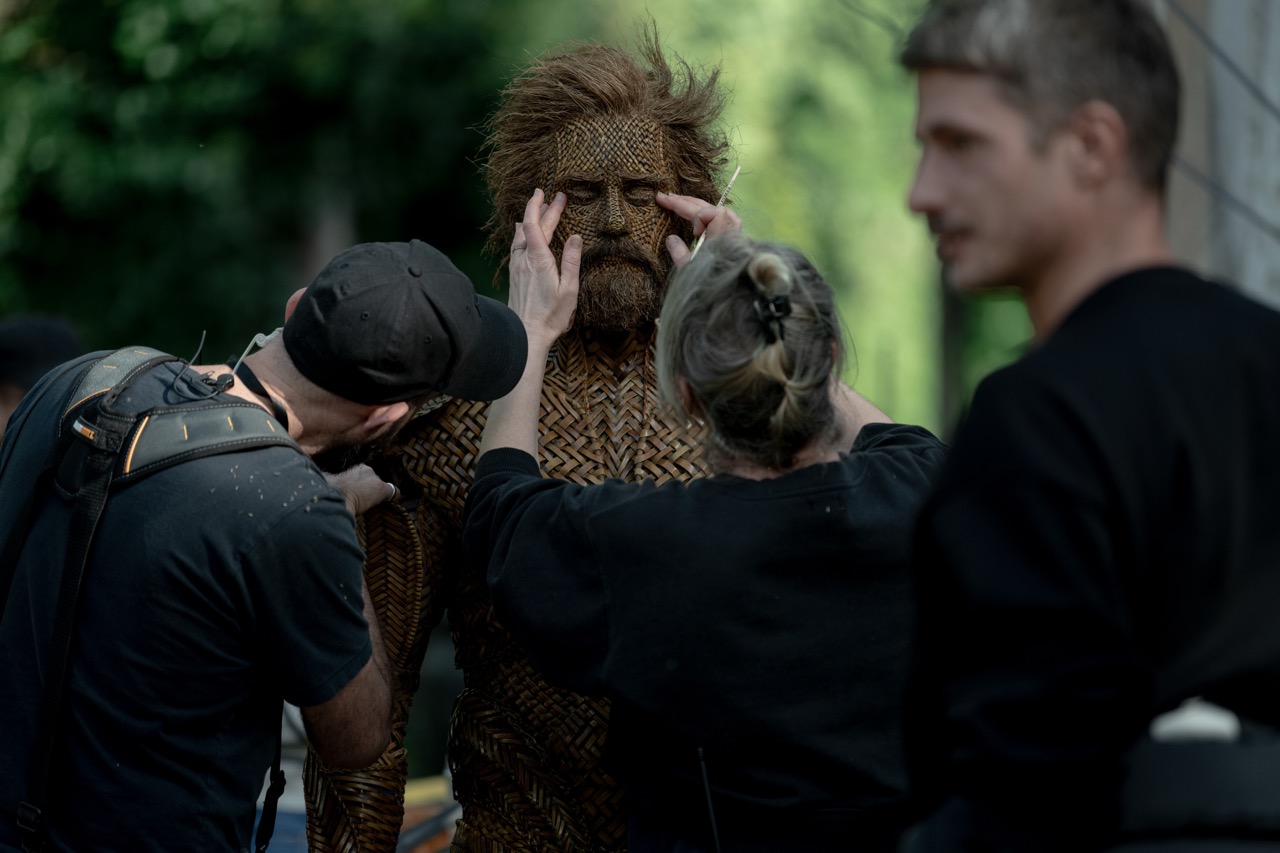
Led by Yasmine van der Lip, the project drew on a team of weavers fresh from the latest Avatar. Her team mapped 3D scans of Skarsgård’s face: bouncing concepts back and forth between physical weaves and digital schemas, before the bodysuit itself could finally map Skarsgård’s shifting expressions like a second-skin.
“We didn’t want to hide him, or his expressive qualities,” Joe notes, describing their quest for the “Skarsgård smoulder”—the actor’s handsome, attentive frown that seems to say ‘I’m listening’. To achieve the brow movement in molten wood, the team oriented the weave on a bias, overlapping frown lines and silicone strands to mimic the sympathetic shape of his forehead.
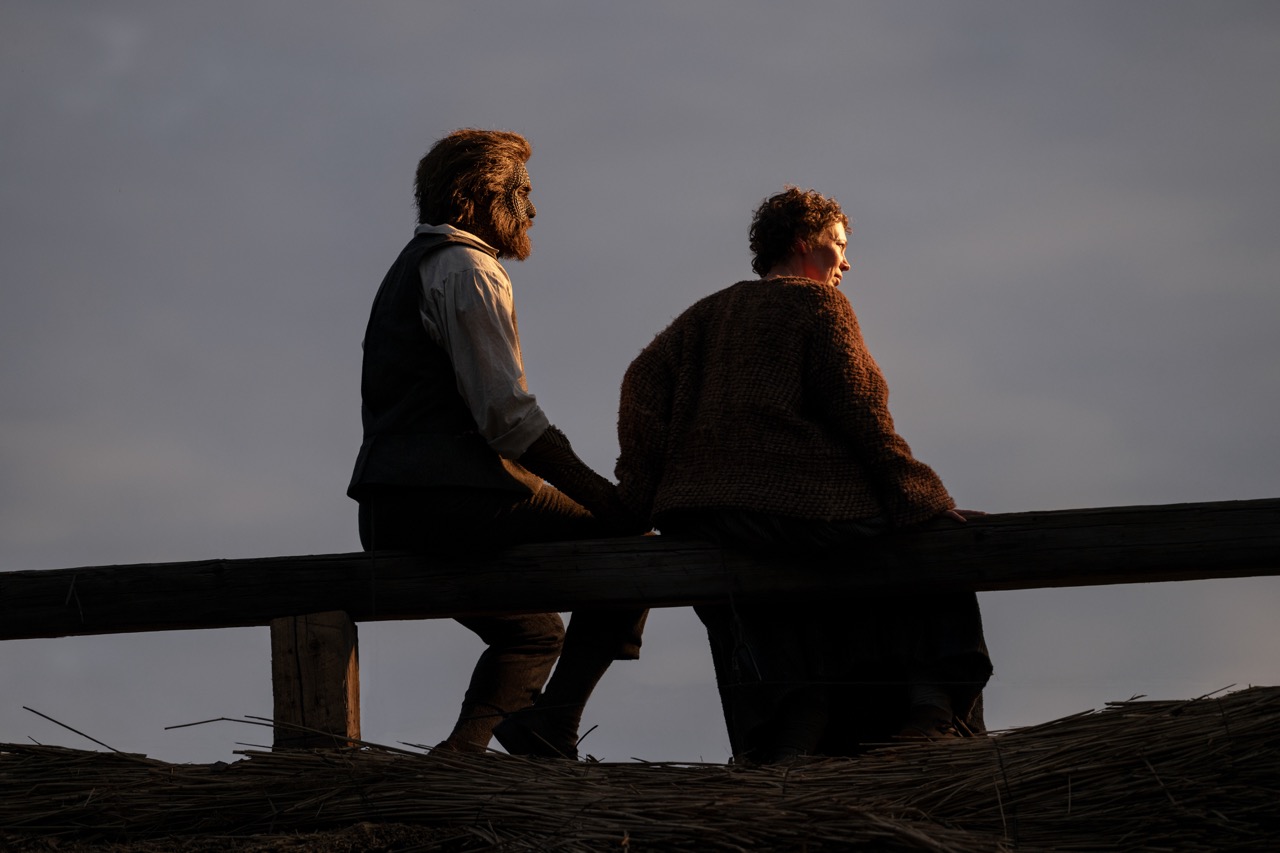
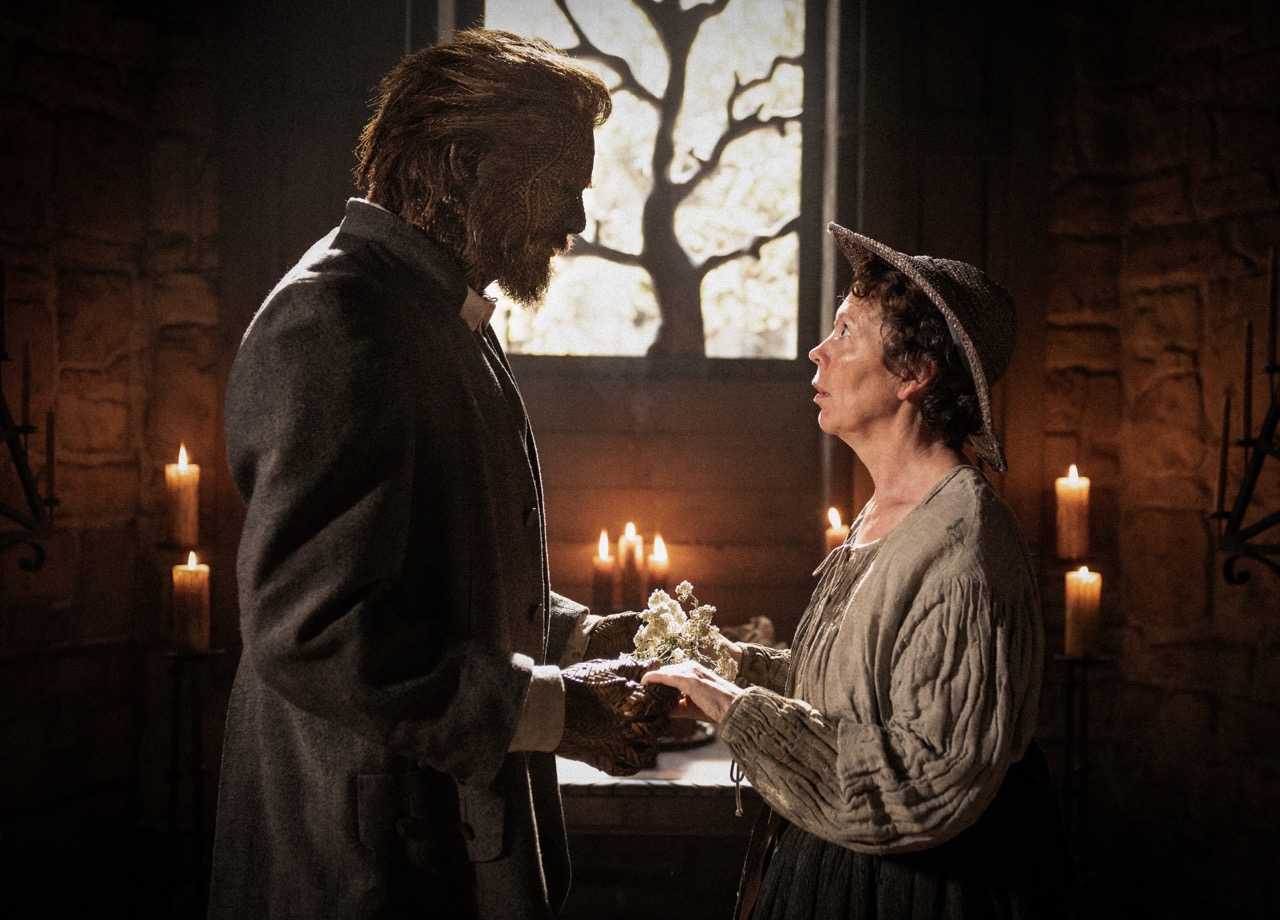
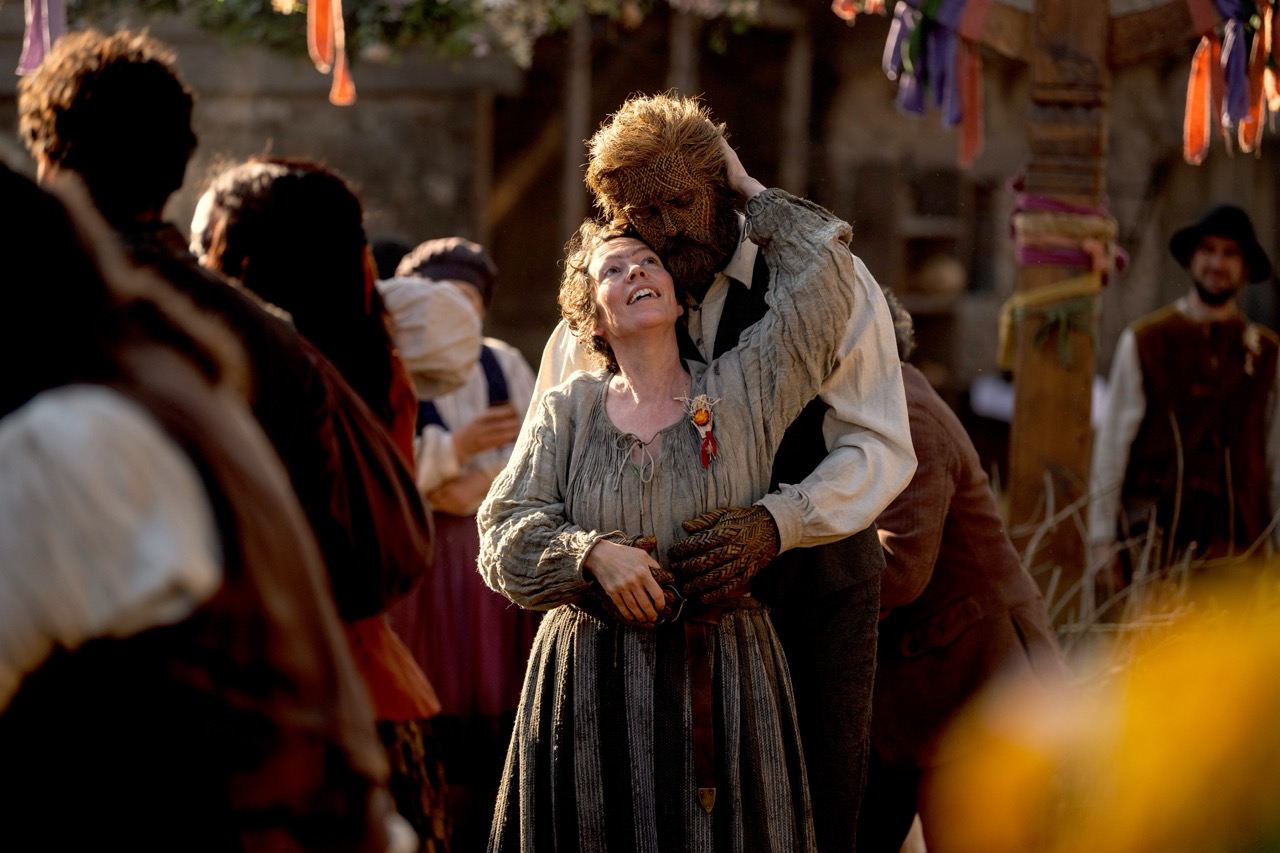


Because Wicker is ultimately a romance, the creature, from the outset, had to be an object of desire. “It was a real challenge: he had to be an adult, but also essentially a sentient basket,” Joe admits. During one moment of passion, Colman found herself playing with the branches on Skarsgård’s chest like one might play with a lover’s hair.
“Our directors knew the film hinged on the Wicker Husband, and they wanted to do it practically rather than with CGI,” Joe explains, trying, badly, to stop his dog from climbing into his lap. The commitment bordered on obsession. Every morning, Skarsgård was cinched into the custom bodysuit before enduring a 90-minute prosthetic application, then a woven corset pulled tighter across his back. The suit’s interlocking spine moved with his shoulder blades, while subtle digital effects added only the occasional pinprick of light or groan of hollow timber. Weta built in small mercies: removable lips for eating and detachable flax-fibre eyelashes. Otherwise, the actor spent ten-hour days inside what Joe describes as a remarkably unforgiving basket. To preserve the illusion completely, even a glimpse inside his mouth had to look wooden. Skarsgård wore custom dentures and rinsed with a dark mouthwash to stain his throat. Joe laughs: “You wouldn’t think it, but he always had very good breath.”

“It was a real challenge: he had to be an adult, but also essentially a sentient basket.”
- Joe Dunckley
Wētā ’s obsession with detail extended even to the couple’s “Wicker-Baby”: an animatronic wicker child that required four puppeteers to move, alongside radio-controlled eyebrows timed for maximum cuteness (and mad-scientist points). In the film’s final scene, Olivia Colman goes as far as puppeteering the baby’s head herself using a hidden handle. Sitting up, Joe proudly explains he was one of the puppeteers for the rest of the film.
It’s not quick, making two functional wicker creatures. I wonder how they ever find the patience, recalling the legendary fact that Wētā Workshop once made 12 million individual pieces of chainmail for a fantasy world. “Our team are serial makers; they’re always making something,” Joe reflects, noting that their administrators are sculptors, their painters potters, his potters … his dog finally making a break for the top of his wood table. “Energy on a project is really important,” he smiles. “It comes from a collective feeling. That we’re building something unique.”