

Daniel Weyman explains what playing Gandalf taught him about goodness, fans’ fierce sense of ownership, and the danger of losing yourself in a role.
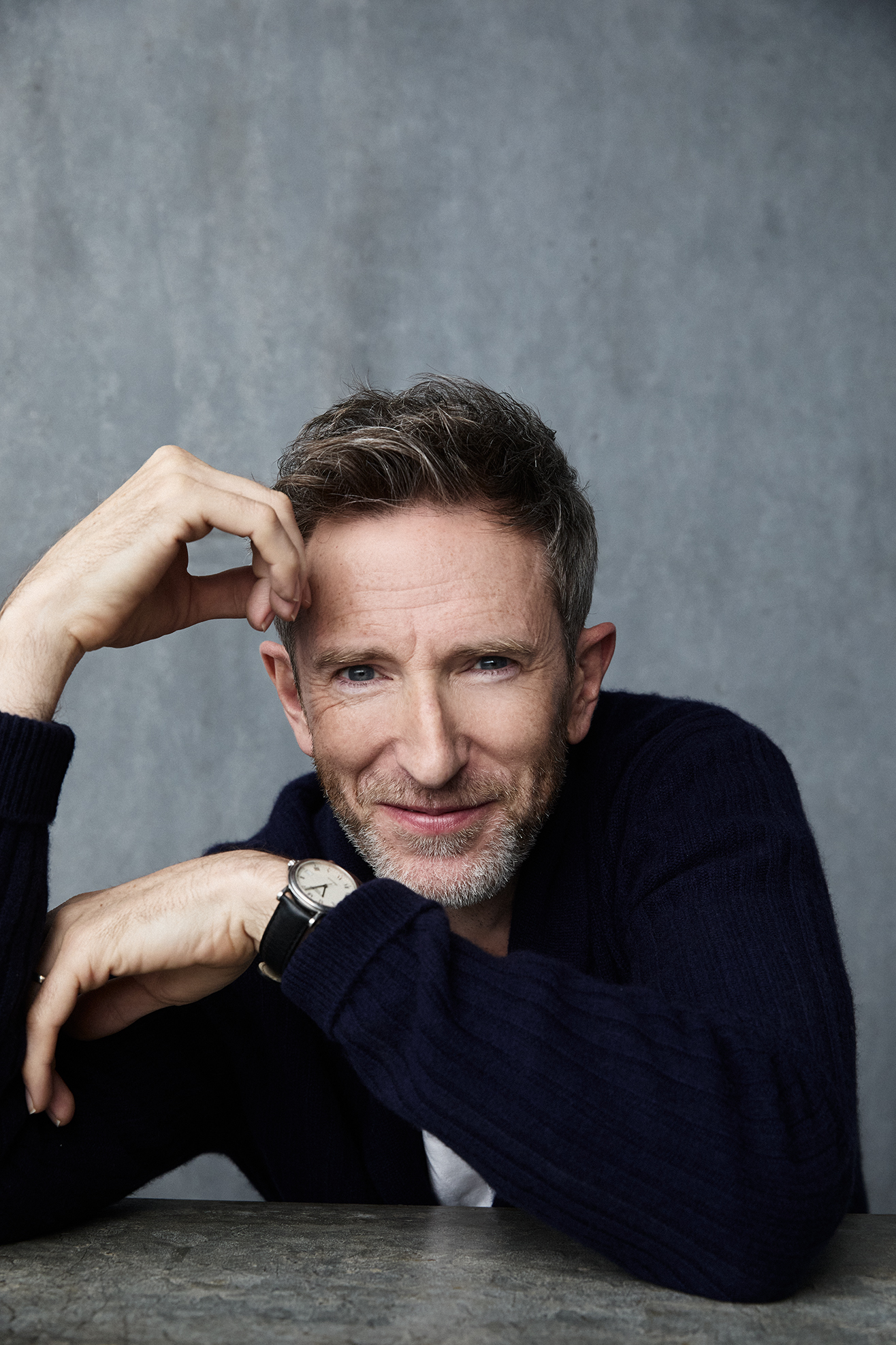
Aware of the punctuality of wizards, I arrive early. Daniel Weyman sits up sharply, wearing a faded linen shirt, blue jeans; eyes not quite as aquamarine as Amazon’s special effects department would have you believe. Still, magician’s crinkles line his eyes; and across his long hands, I notice a gold ring.
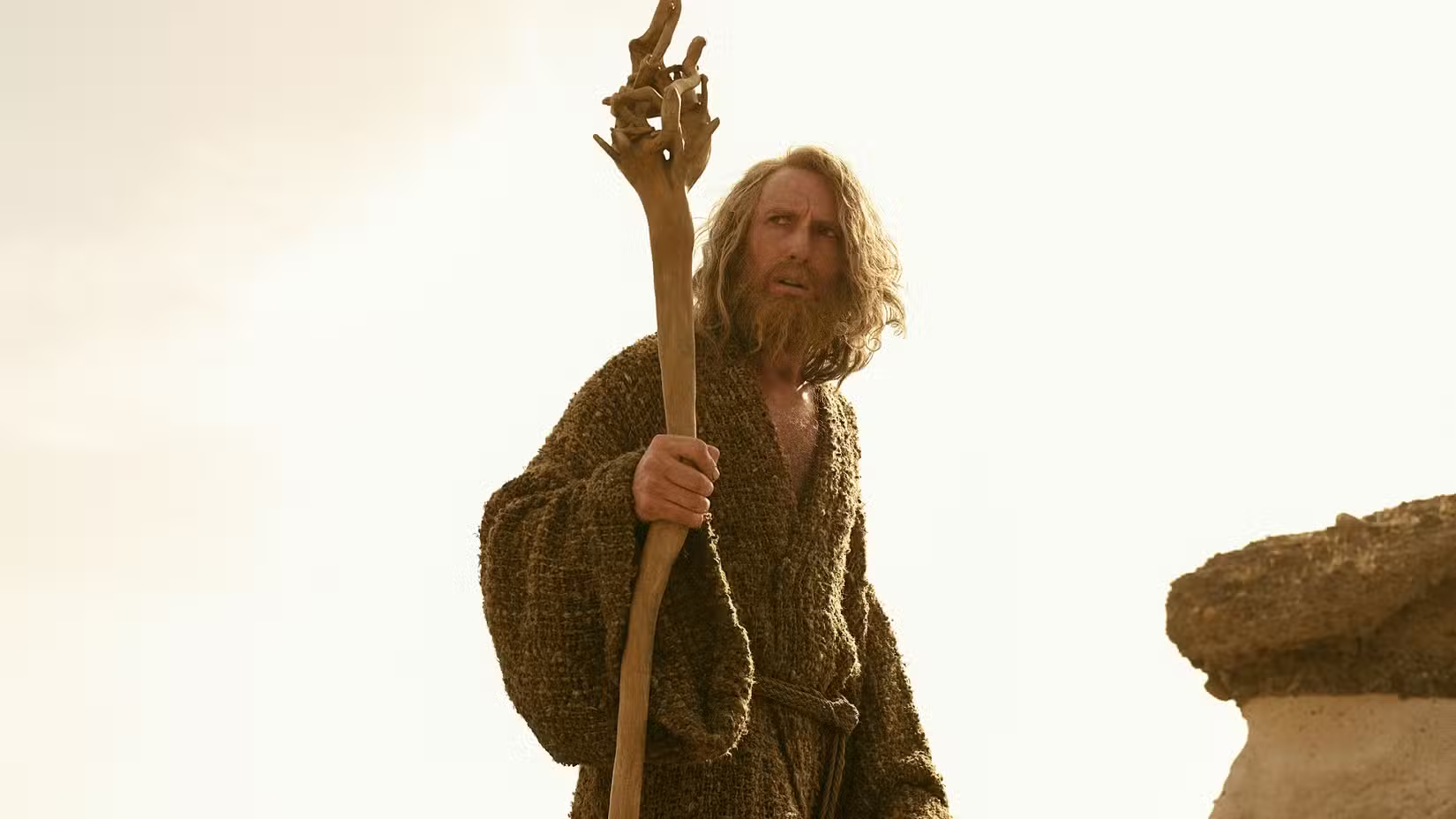
Weyman has spent seven years becoming Gandalf. And he isn’t finding it easy to leave it. In the Lord of the Rings prequel Rings of Power, he became the Stranger, then, he wandered from pastoral countryside to the deserts of Rhûn; and now, in season three, he’s found himself as the archetypal wizard, sporting a wonky hat that fans could pick out from a mile away. My first question is — does the hat fit?
“When Gandalf puts it on, of course it does,” he says. “It’s a magical object.”
Fanning his hands, Weyman admits he’s been on radio-silence for the shoot, unable to speak about Tolkien for months. Now the words come quickly.
One windy day in London, he tells me, he watched a leaf fall from a tree. As he reached for it, the person beside him put out a hand too, and by chance it landed in hers.
“That felt special to me,” he says. “The leaf never touched the ground. I think that’s the beginning of good fantasy: this human capacity for wonder.”
Before Middle-earth, Weyman was a Geordie chemist who ducked a job at Unilever for drama school and twenty-five years of theatre and television. Then, in November 2019, Weyman auditioned for a role known only as The Stranger for the Rings of Power. The stipulation was the character would not speak. He prepared a physical scene — finding fireflies, watching them fly out and die, excited, then horrified — and auditioned barefoot, in a dressing gown, with a stick and a jar. He got the job.
“Gandalf isn’t a baby. But there’s a young child in him, and an eternal being as well.”
Every other actor arrived in Middle-earth carrying millennia of history, pages full of scripts. Weyman got his scene by scene; playing his role silently.
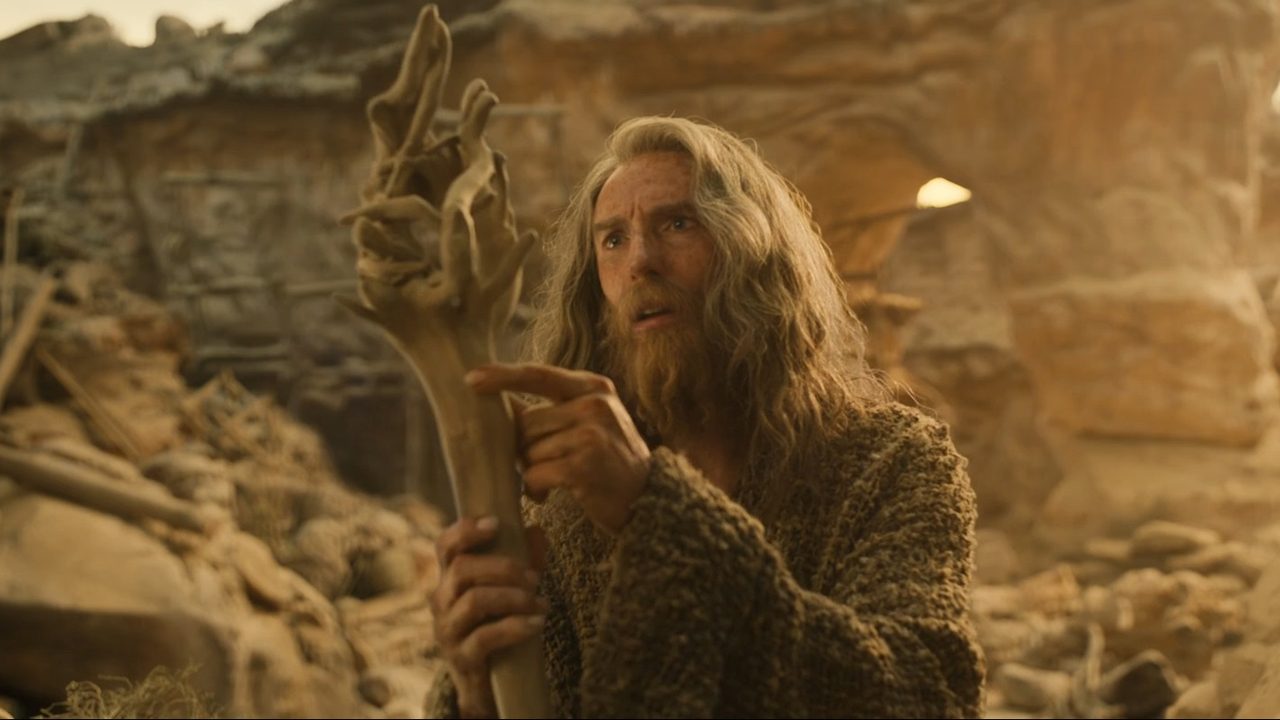
He began by watching children the cast had brought. Weyman noticed their curiosity. “Gandalf isn’t a baby,” he says, his accent slipping between Geordie and Shakespeare. “But there’s a young child in him, and an eternal being as well.”
His route into that being started with the Harfoots: the slightly twee Irish hobbits. “They are the lesson points for when he suddenly zooms out. I’m not only this forest in Middle-earth. I’m not in this area of Middle-earth. I am a Maia. I’m all of time.”
Weyman tells me he never yearned for a line that season. That some of the silent performances are among his best work. I believe him. “There is something joyous and present about being with another human being and truly listening,” he says, smiling like a Buddha. “Listening was new to me in my mid-forties.”
Arriving in New Zealand, production began during Covid, giving him something the filmmaking schedule rarely does: time.
It made the transformation unusually complete. Weyman’s beard grew out. Makeup ground into his fingernail. He stopped looking at himself in mirrors.
By the end of the first season, one of his drivers, Paul Rose, gave him a painting. It was titled Who Am I: depicting a silhouetted man against an abstract hill.
He broke down when he saw it.
“I looked at this scrawny, wizened old guy who I couldn’t see as Daniel,” he admits. “I got lost in the Stranger.”
“I always sort of thought I was a wizard, somewhere,”
Before he officially existed in Middle-earth, J.A. Bayona took him to a night shoot: it was Markella Kavenagh and Megan Richards as Nori and Poppy, talking on a hillside under moonlight, covered with “hair‑like branches.” Weyman blinks. “I thought, this is it. It feels like we’re in The Lord of the Rings.”
The images Weyman keeps are oversized: the crane lights on seven hills; or a “smoke sausage” drifting through a valley above the Harfoot grove. He describes the whole business, without embarrassment, as a cosplay that happens to be paid. When he was to cross sharp volcanic rocks in Rhun, he pleaded to do it barefoot despite the pain. During another four-day sequence in season three, set in the Dark Wizard’s temple, the assistant directors told him the camera would face the other way for the first two days. He wouldn’t be needed until Wednesday. He asked to come anyway, to watch the stunt team. “This is the sweet shop,” Weyman smiles. “When am I ever going to get the chance to do something magical like this again?”
I ask him why wizards occupy such a focal point in our culture. Weyman laughs. It was Gandalf, ironically, who first brought the idea into his mind. “They’re guides,” he explains.
His ten-year-old cousins carried Tolkien’s books on a family holiday. He remembers something fierce but soft in their love for the old wizard: something liberating about a figure who seems to have lived through an eternity. “I always sort of thought I was a wizard, somewhere,” he admits, explaining, now, he keeps a book of coincidences, like how fireworks played the night after his audition, the very same orange he imagined when he first pictured his Gandalf clutching at fireflies.
But with Weyman as the one wearing the hat, he’s realised the peculiar thing about finally becoming Gandalf. Everybody feels they got there first.
Readers, and he counts himself as one, are territorial. He remembers finishing Pride and Prejudice and then seeing an adaptation which was not the version in his head. No matter how many people happen to share in them, stories read privately are always personal fantasies.
“Storytellers have to be humble about that. Why would I want to upset that applecart?”
Fans bring him letters because they cannot always say aloud what the character means to them. What they can say is that Gandalf matters, and that he mustn’t be messed with.
His eyes go almost wet, bluer, as he recalls the interactions. “I always want to communicate back that I get that. I truly do.”
We get onto one of those territorial differences: the moral ambiguity Rings of Power affords its Orcs. True to Gandalf the Grey, Weyman is interested in goodness as something chosen. “I want to live by my values, but there are times I feel mean, or hard done by, or I want to create mayhem, and I have to work through those.” Eventually Sauron enters his argument: if viewers can imagine that something in him might have changed had Galadriel said yes, “why not the Orcs?”

“I picked this bit of character up, I wore it. Daniel morphed a little. That’s one of the great things about acting, one of the dangerous things.”
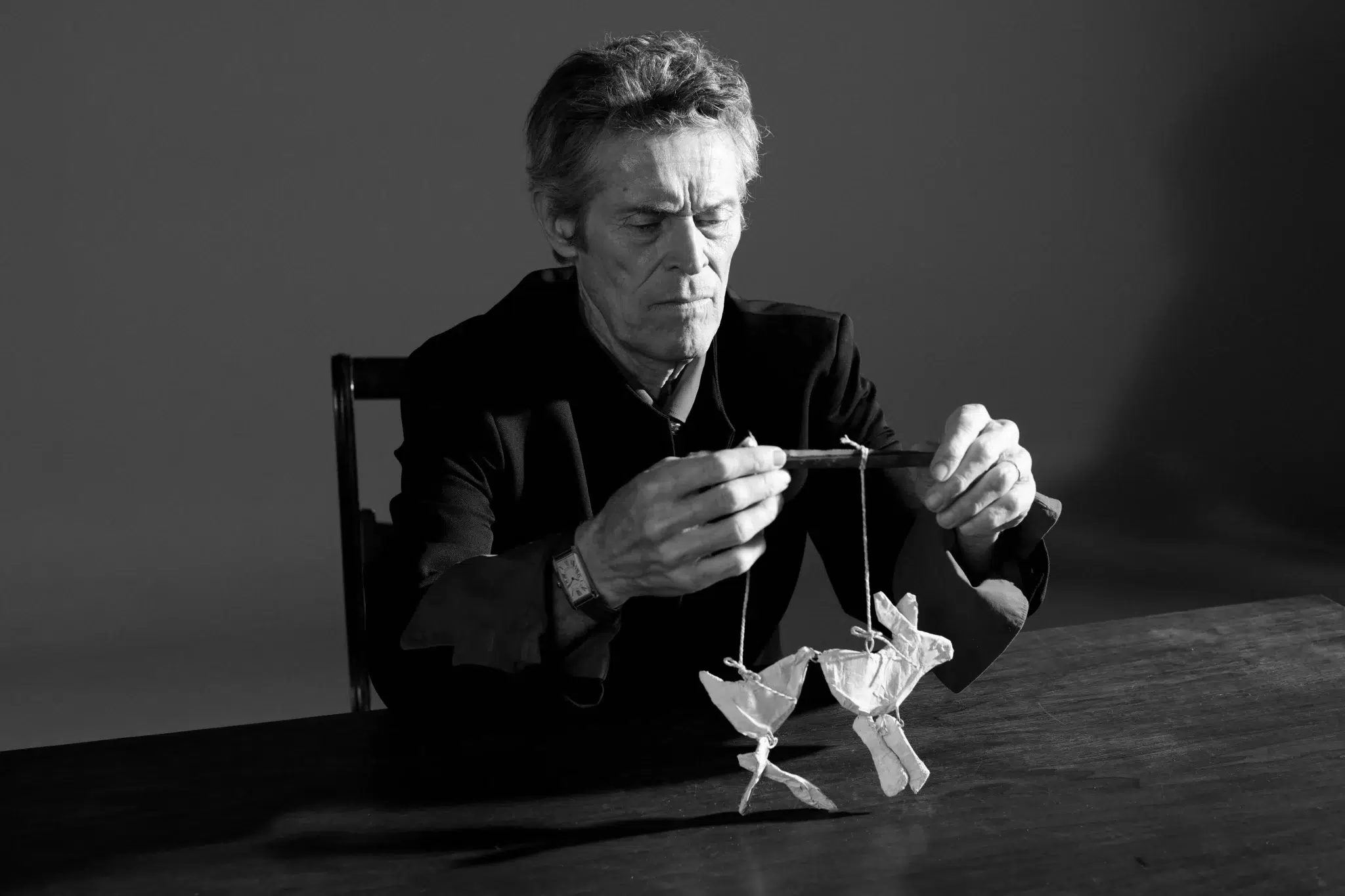
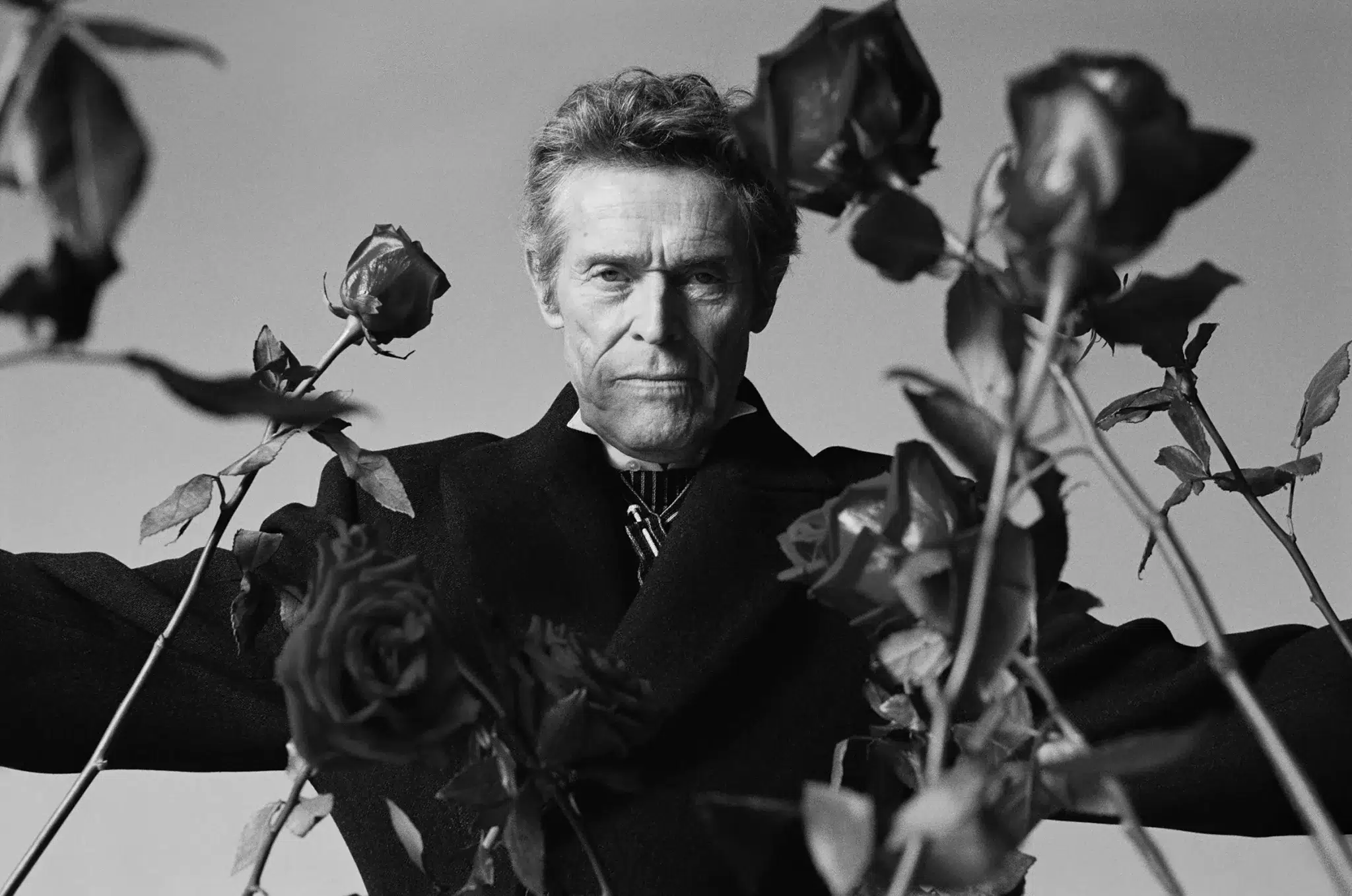
- Daniel Weyman | Photography: David Reiss, Grooming: Charlie Cullen, Styling: Tom O'Dell
Increasingly, though, Weyman’s Gandalf seems to work in both directions. Now, after Middle-earth, before a row, or when he finds himself stuck, a small voice has started up in his head.
What would Gandalf do?
“Asking it, makes me realise I actually want to be a nice person,” he says. “I want other human beings to have a nice time spending time with me.”
His Gandalf does not offer sainthood. He is irascible. Ill-tempered. He can also say sorry. “[Gandalf] shows a good version of ourselves that is achievable. We’ll lapse. We try again.”
Some changes are easy to identify. Like listening (Weyman, true to his claim, is fun to speak with). Others are harder. Weyman notices goodness in people now in a way he didn’t before. Post-Gandalf, “I’d have been a bit more numb to people generally.” Now he finds himself more willing to let another person’s kindness “come in”.
He admits too, that costume, makeup, dialect, directors, writers and showrunners all contributed their idea of Gandalf through him.
“That’s why I talk about conduits.”
This leads us, naturally, to magic. Season-three Gandalf is learning, he says, that control isn’t in the job-description. When I ask him what spell he would choose to deal with it, I’m surprised to learn that it would be fireworks. I tell him it’s perfectly useless magic, but he counters: “His power is light. And Gandalf brings them to the Hobbits because it makes them happy.”
“He’s never bored of fireworks.”
Weyman first noticed the danger in fantasy before Middle-earth. At Hampstead Theatre, in The Glass Room, he played a slightly arrogant lawyer. Drama school had taught him to work on the difference in a character to find them.
Weyman never sat cross-legged. His character did. So he found him there: his trouser creased over a smart shoe, hands resting on the fabric of a suit. It didn’t feel like Daniel.
Three months later, Weyman was sitting in his living room. He had settled into the same position. Across from me, he has slipped back into it again.
“I picked this bit of character up, I wore it. Daniel morphed a little,” he says. “That’s one of the great things about acting, one of the dangerous things.”
I magnify that across seven years. A long time ago, I had made up my own Gandalf; and I’d searched for him in Weyman. I look back at the man in a plastic chair, and wonder: what would Gandalf do?
“A lot of people,” he says, his eyes a little bluer, “show you how to get into character. They don’t tell you how to get out.”