

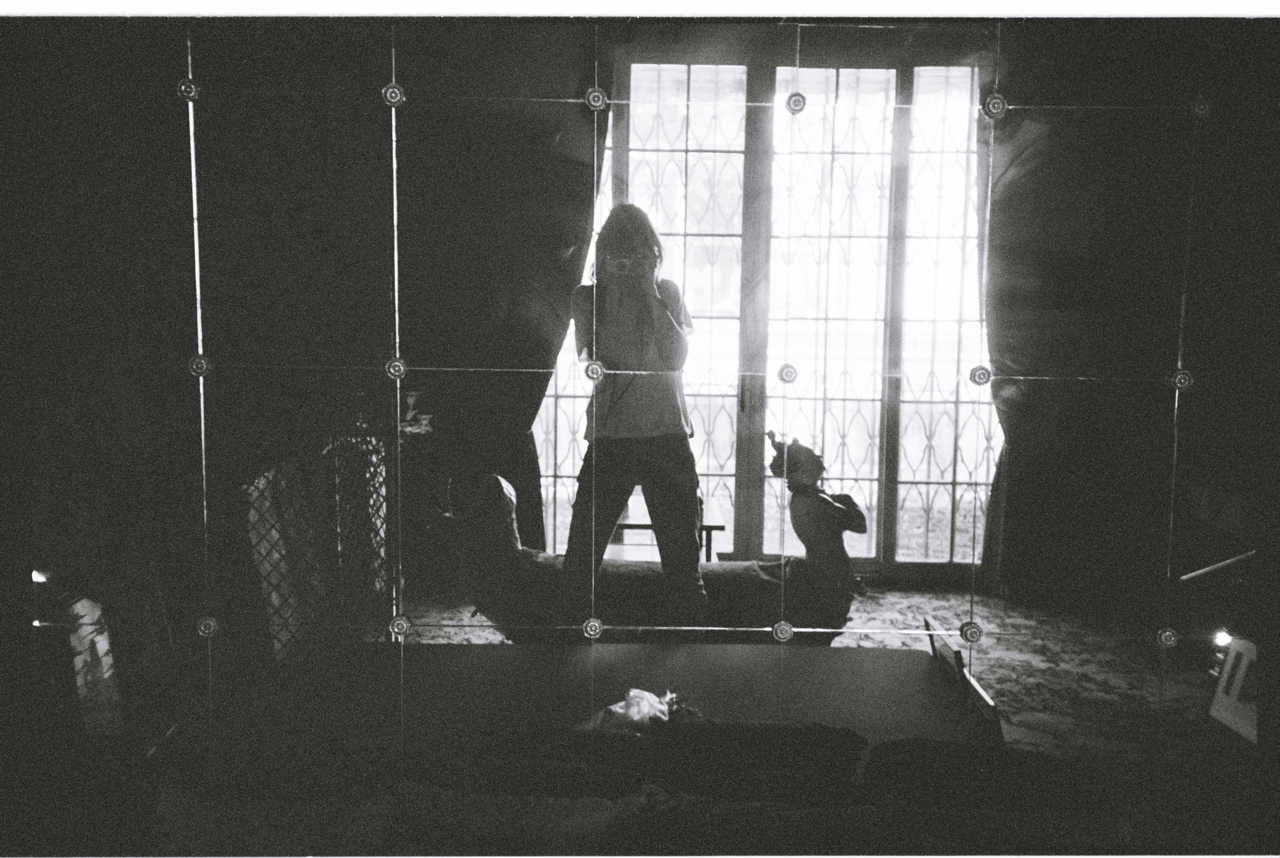
When we speak to actress and musician Charlotte Gainsbourg, she’s in a London taxi, weaving through the city on her way to the airport. The Paris-based icon has spent the past few months immersed in making a new album and is finally allowing herself a brief pause. But music isn’t what brings her into conversation with A Rabbit’s Foot creative director Fatima Khan. Instead, they find themselves talking about photography.
Gainsbourg has recently turned her camera on the long- preserved home of her father, Serge Gainsbourg, capturing the singer and actor’s Paris apartment in all its carefully maintained intimacy. In the pages that follow, she reflects on the making of the exhibition 5bis—named after Serge’s home address and organised in partnership with Saint Laurent and Maja Hoffmann—and her evolving relationship with the photographic medium.
Fatima Khan: Your work is so often rooted in places and the moments we inhabit. Where does this conversation find you? Where are you writing from today, and what has your attention been drawn to recently?
Charlotte Gainsbourg: I am currently in a taxi on my way to Heathrow. I’ve
been very focused on an album I’m trying to finish, so that has been on my mind these past months and, I dare say, years. Apart from that, I’m off to have a few weeks of holiday.
FK: You’ve said these photographs weren’t made to preserve your father’s house as a memory, but this seems to move through everything you make—your music, your films, and now these pictures. Has photography changed the way you remember, or has it changed what you choose to remember.
CG: It’s another perspective, and a new one for me, to have these photographs printed, because they’ve been sitting in my computer for years now. I made them when I knew the house was going to be open to the public. Those were my last moments alone under this roof, so they were emotionally taken—not with the intent to register anything. And the moment they were printed for Arles was yet another emotional time for me because they were suddenly coming alive and with a purpose.
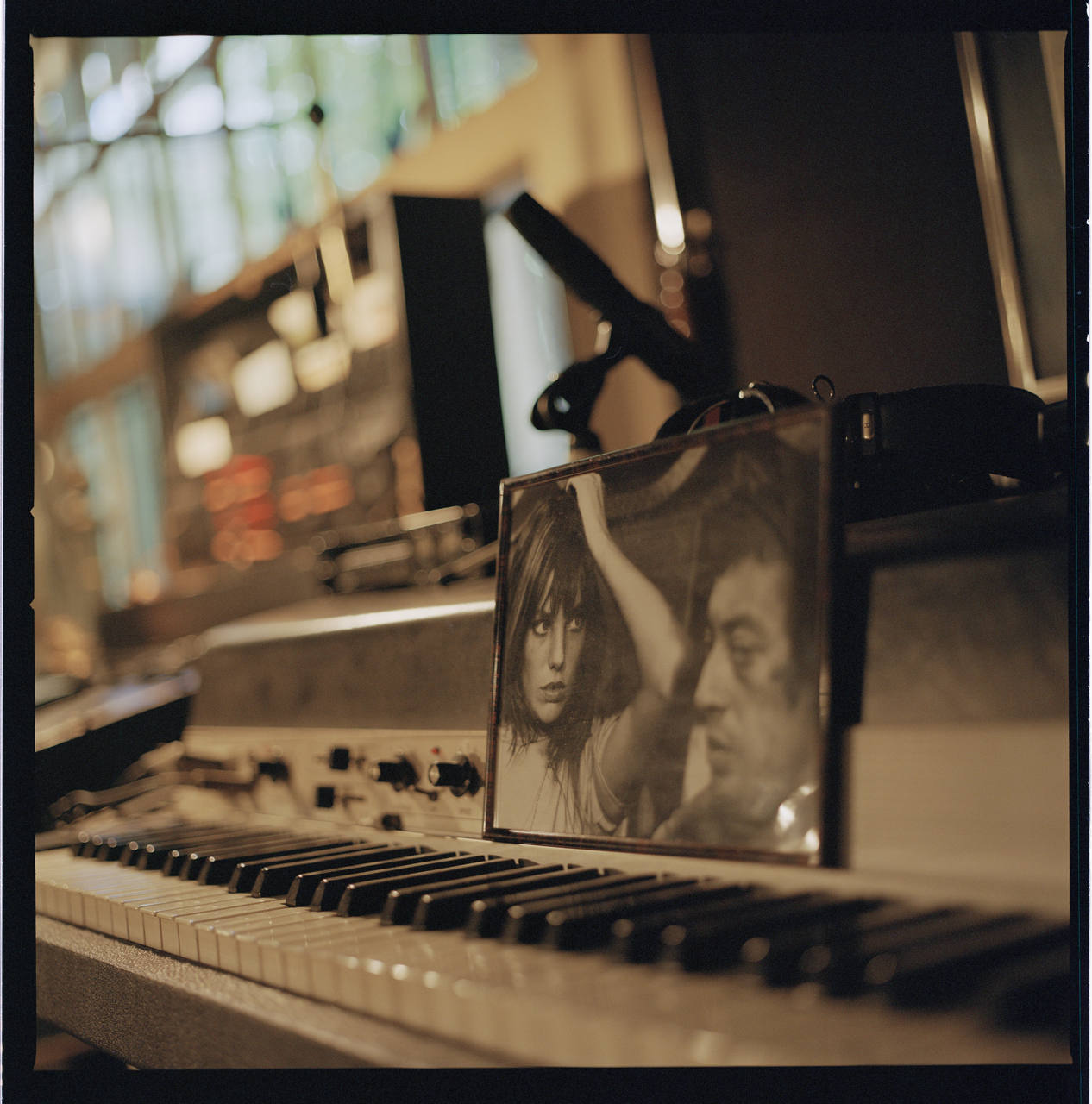
A photo of Jane Birkin and Serge Gainsbourg on a piano. By Charlotte Gainsbourg.
FK: You often speak about photographing instinctively, but these images also feel incredibly patient. Did spending so much time looking at the house change what you thought you remembered about it?
CG: Not yet, because I don’t think I want to have the distance just now. I’m still focused on what I feel about them, instead of reflecting. The time I spent taking the pictures was extremely precious. I was there for hours, busy with my tools—so, again, not reflecting on anything. Just being in the moment. Actively capturing.
FK: These photographs never feel like an inventory of belongings—they feel like portraits through objects. At what point did the objects stop standing in for your father and begin speaking in their own right?
CG: Every object in his house feels, for me, like a part of my father. So I don’t isolate them from him, his vision, his story, and the way the house gradually changed and built up through the years, while he was living there. I guess, for me, each object is a piece of him so in that sense I’m still holding on to everything I can since he died… 35 years ago.
FK: You describe making these photographs before the house opened as almost like a burglary—stealing one last private moment. Once something so personal becomes public, does your relationship with it inevitably change?
CG:It has to, but in a good way. It’s true that I can no longer visit by surprise. But I fought for this project to exist for more than 30 years, so now that I see people queuing in front of his door there’s a feeling of joy and accomplishment. For the moment, that’s stronger than what I could miss.
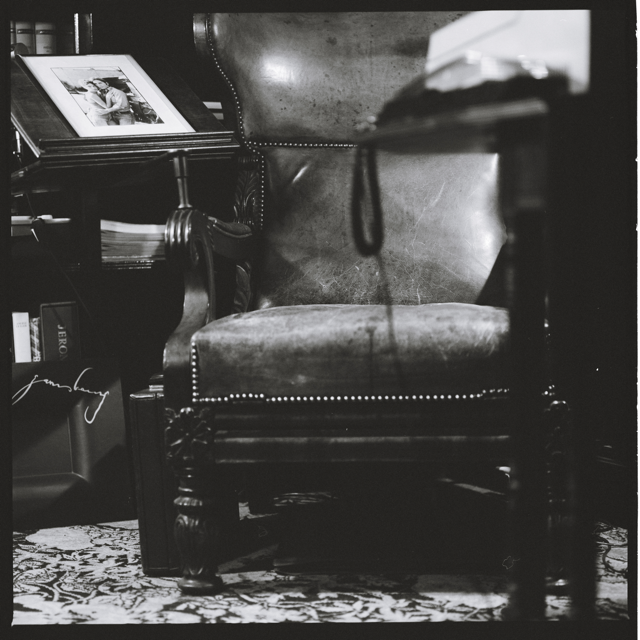
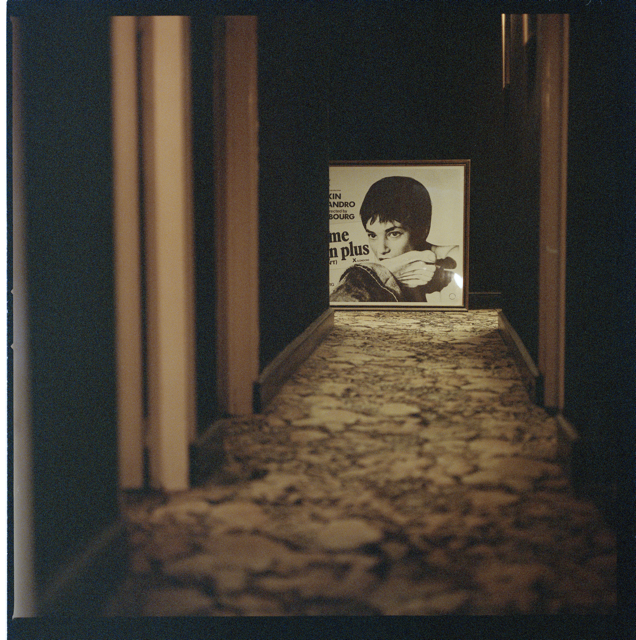
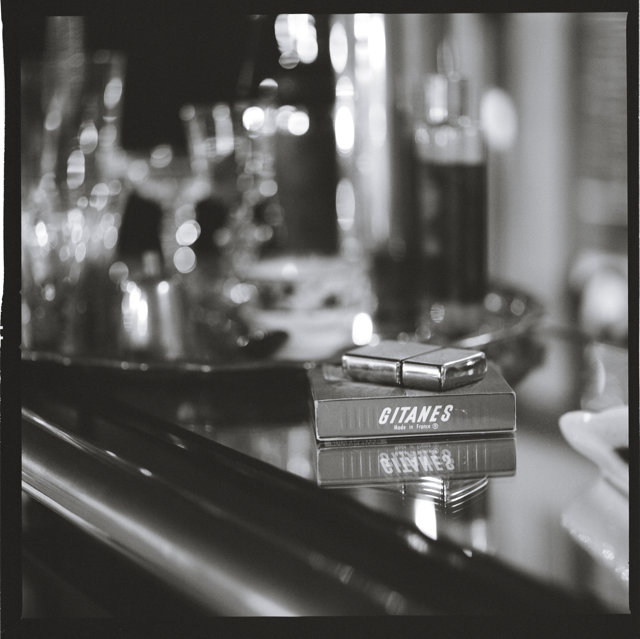
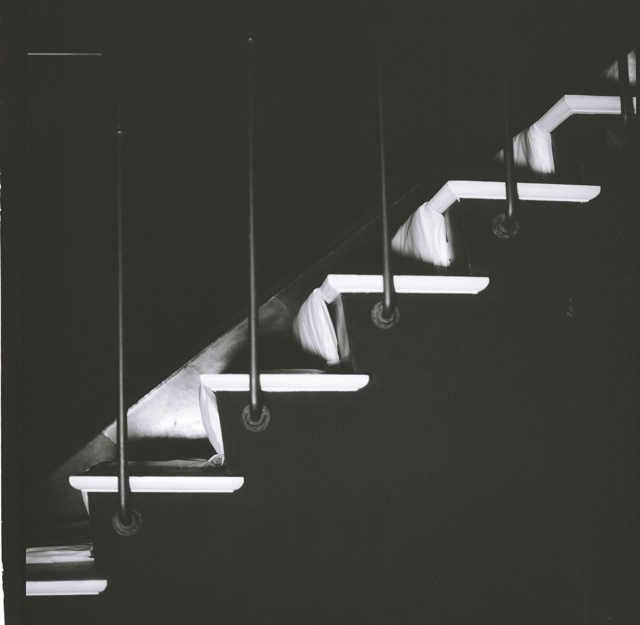


FK: You’ve said you photographed 5bis with your Hasselblad. I’m curious about the history of that camera in your life as a photographer. What first drew you to it, and what are your earliest memories of using it?
CG: I bought this camera when I was still living in New York, maybe around 2019. A photographer friend suggested that this, plus a Nikon with a macro lens, would suit me. And I think she knew more about me than I did. She understood what my vision could be and she understood the pleasure I’d be able to get thanks to these cameras. I started with tutorials helping me with almost everything: loading the camera, pushing the film to a higher ASA, little tricks… I went through so many mistakes. What annoyed me most at the beginning was what I disliked about my framing. The pictures were not what I planned—and then they had a lot of greyness that I also disliked. Plus the slow pace and, regarding that, I didn’t make much progress. I’m slow at everything. On the positive side are the emotions I get through the top of the camera—deciding when to press, and that sound, that click that is so specific to the Hasselblad. The format is a source of pleasure. Maybe the squareness reminds me of those first Polaroids we used to have in my family. There’s just something quite perfect about square photography.
FK: This exhibition begins with your memories, but it ends with ours. Once people leave 5bis, what do you hope they’ll carry with them—the story of your father, or perhaps their own?
CG: I don’t want to impose anything on people. I think the best I can wish for is for people to have their own emotions and feelings and memories about an exhibit. Same with a film or with music, in fact.
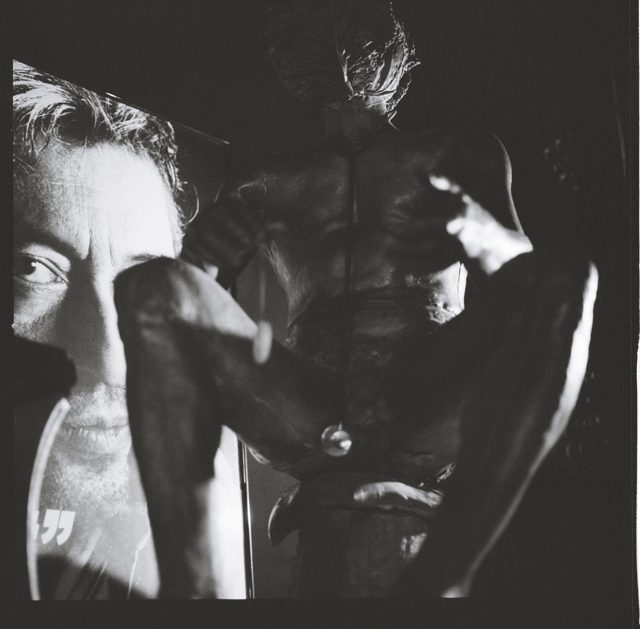
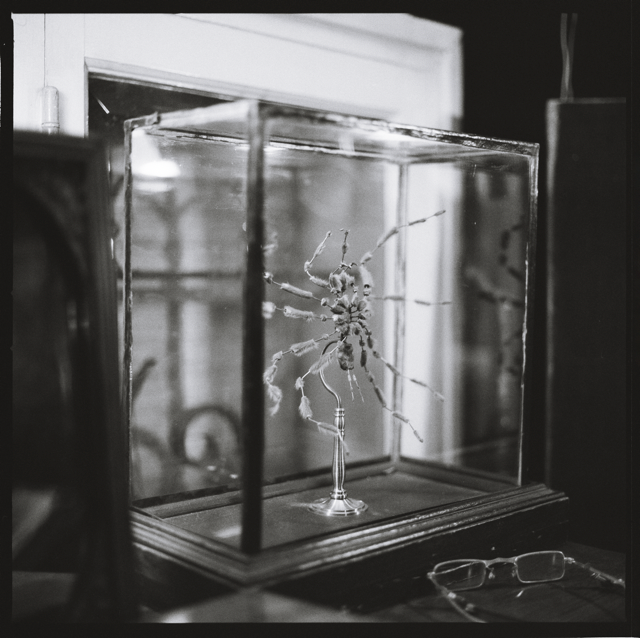
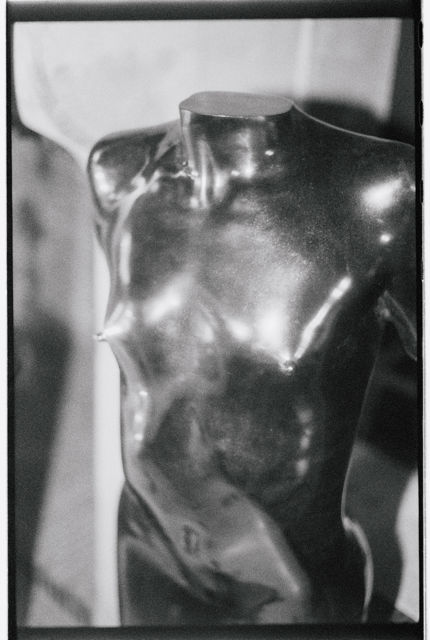
FK: Music and memory often seem to occupy the same emotional space. Is there a photograph in 5bis that plays like a song in your mind? If so, what song accompanies it?
CG: It’s quite the opposite for me. The pictures resonate with silence. That’s the way it was when I took the pictures and it makes so much sense for me. Solitude in silence.
FK: When the show is complete, how do you leave behind such a personal process? Or does it open up different ways—including ways of thinking—for you to begin new work?
CG: This exhibit and the process are very new for me. I was used to capturing, waiting impatiently for the films to be developed and to get those scans. The surprise after waiting, the hope—sometimes it’s a deception. And all this was very solitary. I was productive, but only for myself. To now know that those pictures might travel, that too is such a surprise. It’s an ongoing adventure and I’m just smiling at it all.
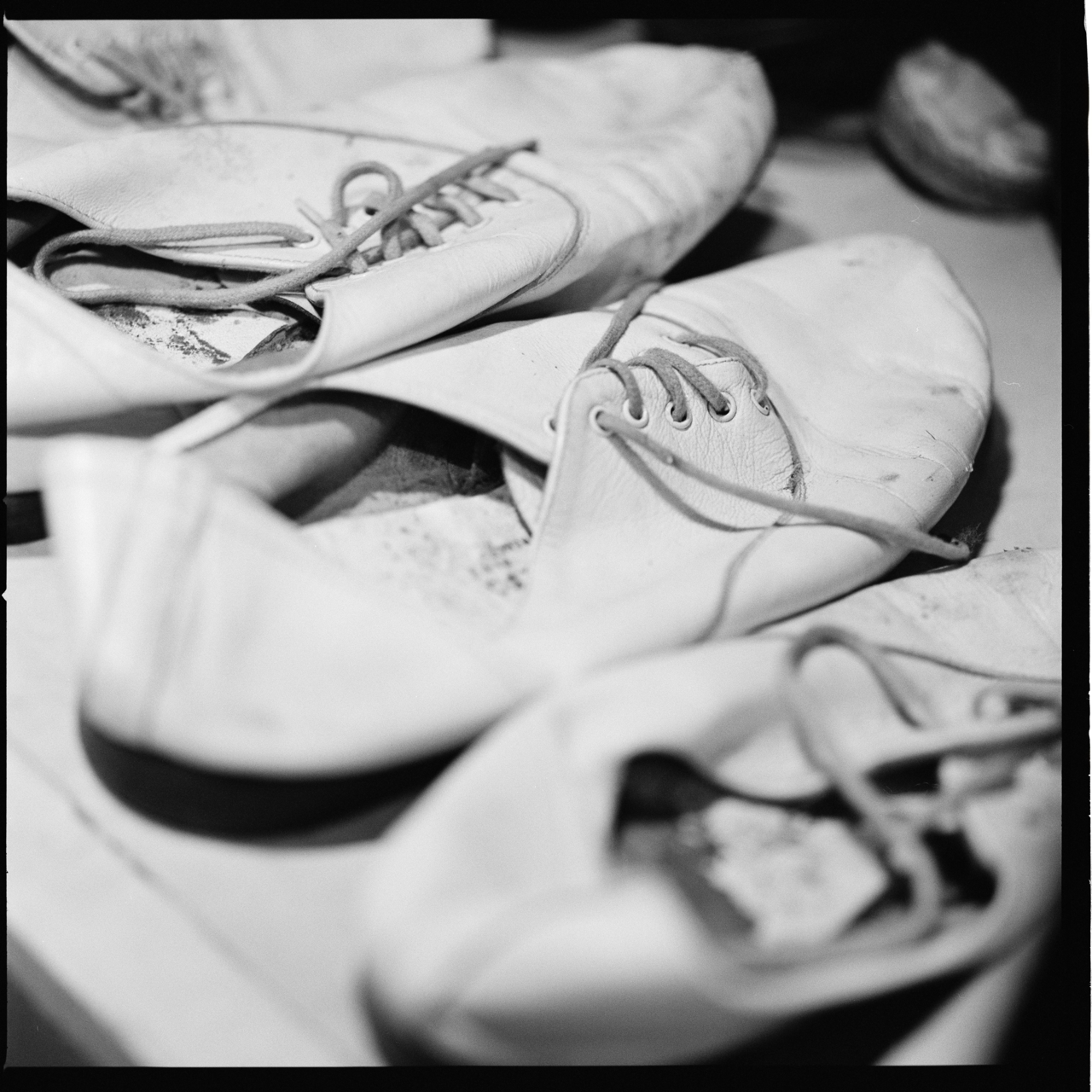
Serge Gainsbourg’s favourite Repetto ballet shoes. By Charlotte Gainsbourg.
FK: As a film, art and culture journal we would like to include cinema: I kept thinking of films where memory is held in spaces rather than people— whether it’s Chantal Akerman’s News from Home, Tarkovsky’s Mirror, or even Ozu’s interiors. Were there any films that stayed with you while making these photographs, or that helped shape how you thought about memory and place?
CG: Not really, no. When I take pictures I don’t have a precise intention. I’m in the moment. That’s what makes it so captivating—responding to what’s in front of me. I am inspired by precise films or other photographers, but not while I’m shooting. So many films and photographs have sculpted my taste. Hopefully, I’ve absorbed a bit of everything.
FK: When the show is complete, how do you leave behind such a personal process? Or does it open new ways—also of thinking—you begin to work?
CG: This exhibit and the process is very new for me. I was used to capturing, waiting impatiently for the films to be developed and to get those scans. The surprise after waiting, the hope—sometimes a deception. But all this was very solitary. I was productive. But only for myself. To now know that those pictures might travel… That too is such a surprise. It’s an ongoing adventure. and I’m just smiling at it all.