

In spring 2026, fashion photographer Collier Schorr (born 1963) — who shot actor and comedian Hannah Einbinder at her studio in Brooklyn for our August digital cover—presented Problems and Other Stories, an exhibition of her art projects, drawings, and video work at the Modern Art gallery in Paris. Kitty Grady spoke to the photographer about the commodification of fashion imagery versus art, her Chantal Akerman-inspired ballet, and the photograph thatshe can never share.
Kitty Grady: I was interested that this was your first art show in Paris—how was it to exhibit here?
Collier Schorr: Paris is a place where I do a lot of things, but art hasn’t been one of them. The audience in Paris is much more educated in my commercial work and fashion work. That isn’t in the show, but Parisians have an easier time getting engaged with that kind of material. It’s a place where there’s less of a divide between commercial and art work. Can I read something I just wrote today?
“Because fashion work is presented within a capitalistic framework, rebellion seems particularly cogent. With art, it’s not presented as such, but it only exists in the world that is sponsored. So a fashion work is not a commodity, it’s an advertisement. And art is a commodity because of the necessary financing. I’ve thought for years that artwork was my commercial work, and I wasn’t aware of the commodity or capitalism in advertising because I don’t have to sell the thing I made.”
KG: I read something you said about the age of Instagram, and how, with that, your work— art or commercial—becomes commodified in another way
CS:Yeah, it’s fascinating. Imagine if you went to a show in a gallery and every person had an exit interview and you could rate their liking of each artwork. That’s what Instagram provides you with. I can predict that if I post a picture of Timothée Chalamet or Kristen Stewart, I will get a lot of likes. After that, I’m not sure until I post something, then I get a sense of what people who follow me like more. But there’s no deeply commercial consequences of that. It’s just if I’m in desperate need of affirmation—I know where I go to get it.


KG: How do you feel about your drawing work, which is a completely different medium?
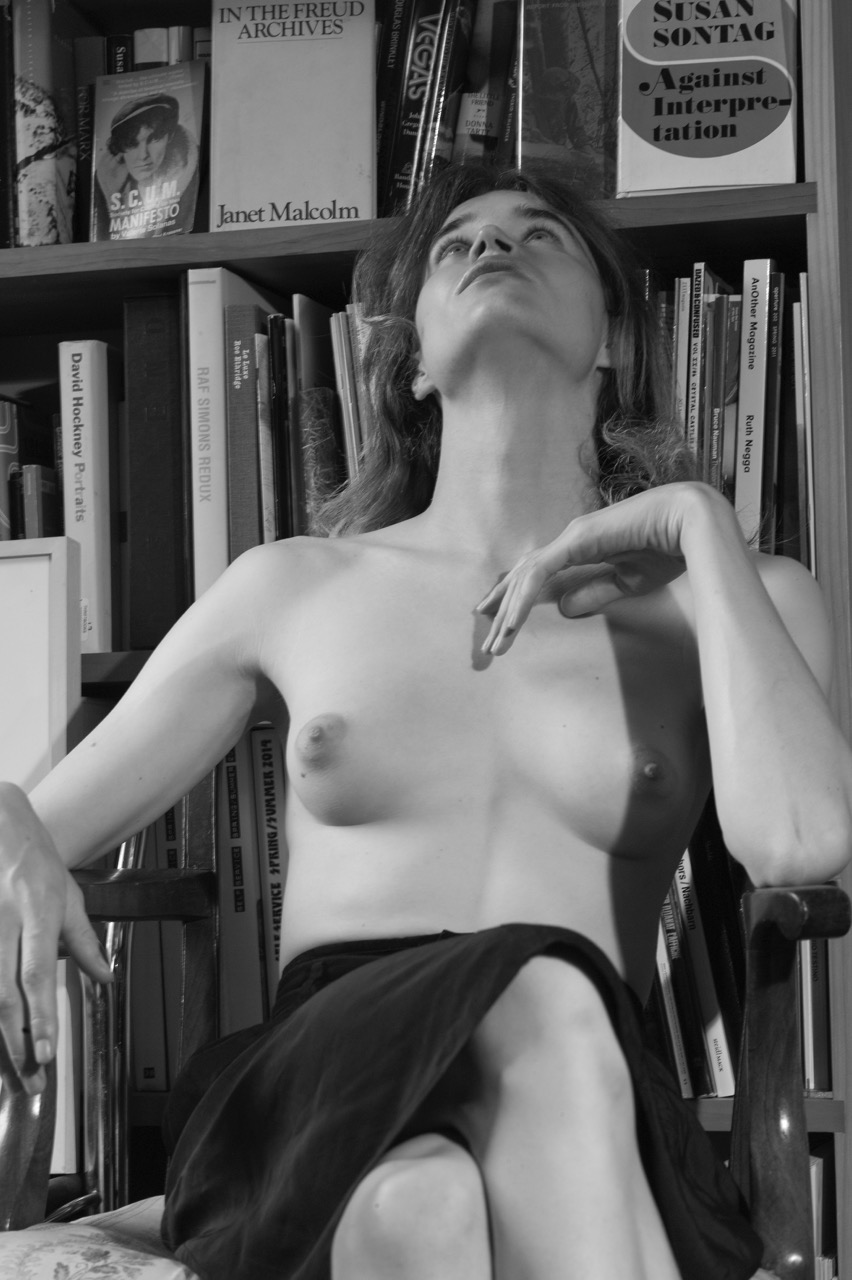
CS: I was thinking about the difference between a drawing and a photograph in terms of time. There’s no time in drawing. It’s just lines shaping the person. But a photograph is so intrinsically time-based that it’s already over once it’s taken; it’s already the past. Drawings have an autonomy that I haven’t figured out. Probably because I’m so uneducated in it. I didn’t go to art school for art. I’ve invented my ideas and how it is intrinsically connected to my photography. Drawing is like a reverb, a secondary text. I guess it’s like some kind of Xerox. It both is and it isn’t about the subject, whereas the photograph is constantly, almost oppressively, about the person in the picture.
KG: I was wondering how you approach nudity in your work? And do you think about the difference between nudity as a costume and nakedness as vulnerability?
CS: For the longest time, I didn’t photograph women because I was so educated in school about the dangerous nature of representation for women. There were so many pictures that already existed. It was this feminist repositioning of power and scopophilia. But then, at the time, there was also this appropriation of that: you can take a nude, and you’re making a statement about taking it, and you’re making a statement about where it came from and how it functions within your frame. In drawing, there’s a unique opportunity to control the perceptions of gender in a way that you can’t with photography. In photography, if someone is a trans man and they’re nude, you can tell that they are a trans man—you can see the scars—whereas in a drawing, you can really focus on what you want people to see.
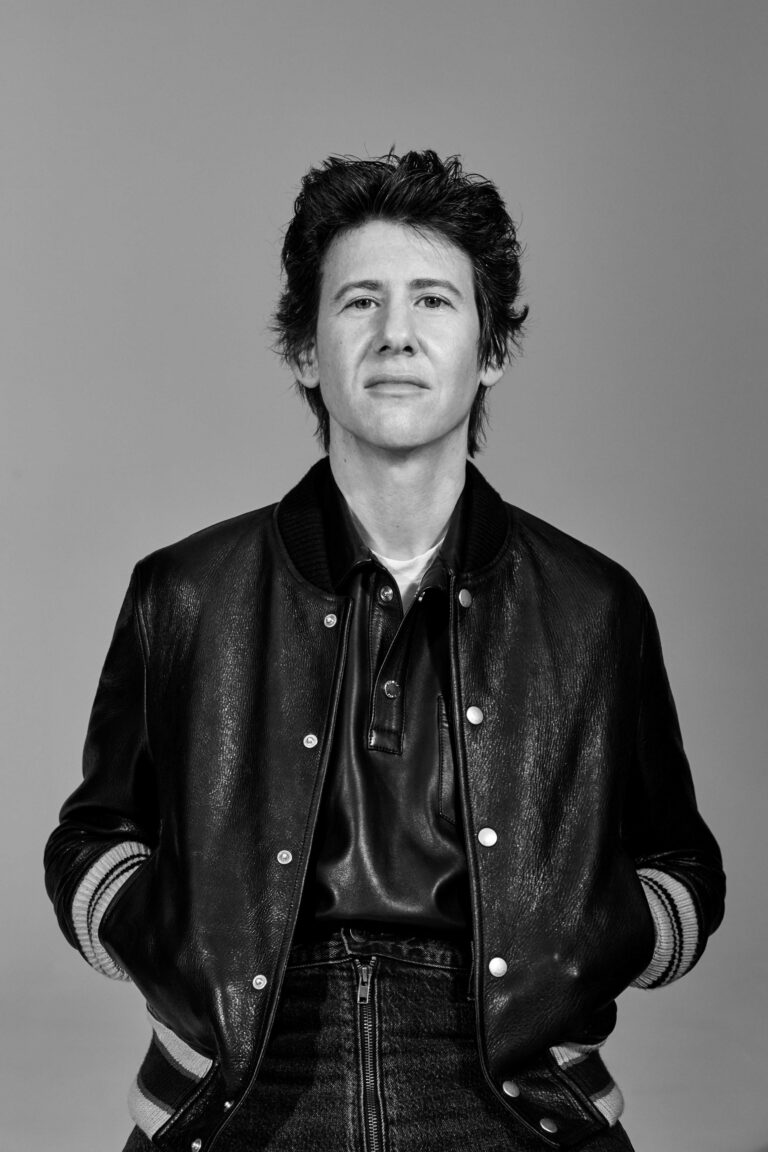
Self-portrait, Collier Schorr.
KG: In this exhibition, you’ve chosen to revisit the Akerman Ballet. Why has that been such an enduring work for you?
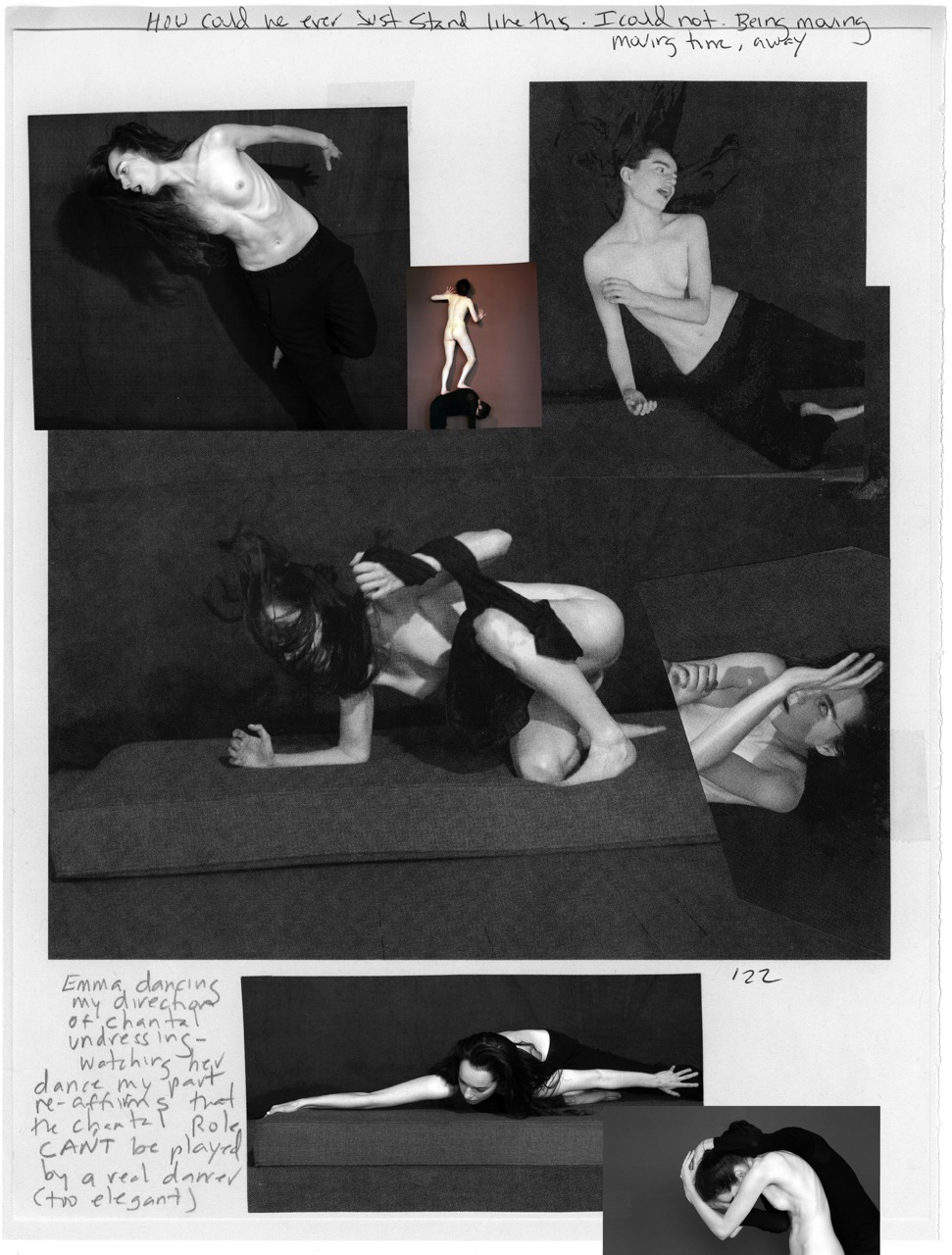
CS: When I was preparing the show, it was eight years since my previous solo show, and I’d been making all these drawings, working on the ballet, collages, portraits. I spoke to gallerist Stuart Shave on Zoom, and we were talking about my work and looking around the room, which was filled with all these artworks, and I thought, ‘Oh, I can bring that in and that in’. The drawing and the dance have a relationship, and the dance and the photography have a relationship, which all come from the same set of questions. What’s real and what’s a performance? I see myself as making the ballet with Chantal Akerman’s work [Je Tu Il Elle (1974)] as a foundation—it’s a collaboration with the material, because I’m adapting it.
KG: In your work, the idea of collage is really prominent, which really comes through in the Akerman dance. Is it decentering the gaze in a way?
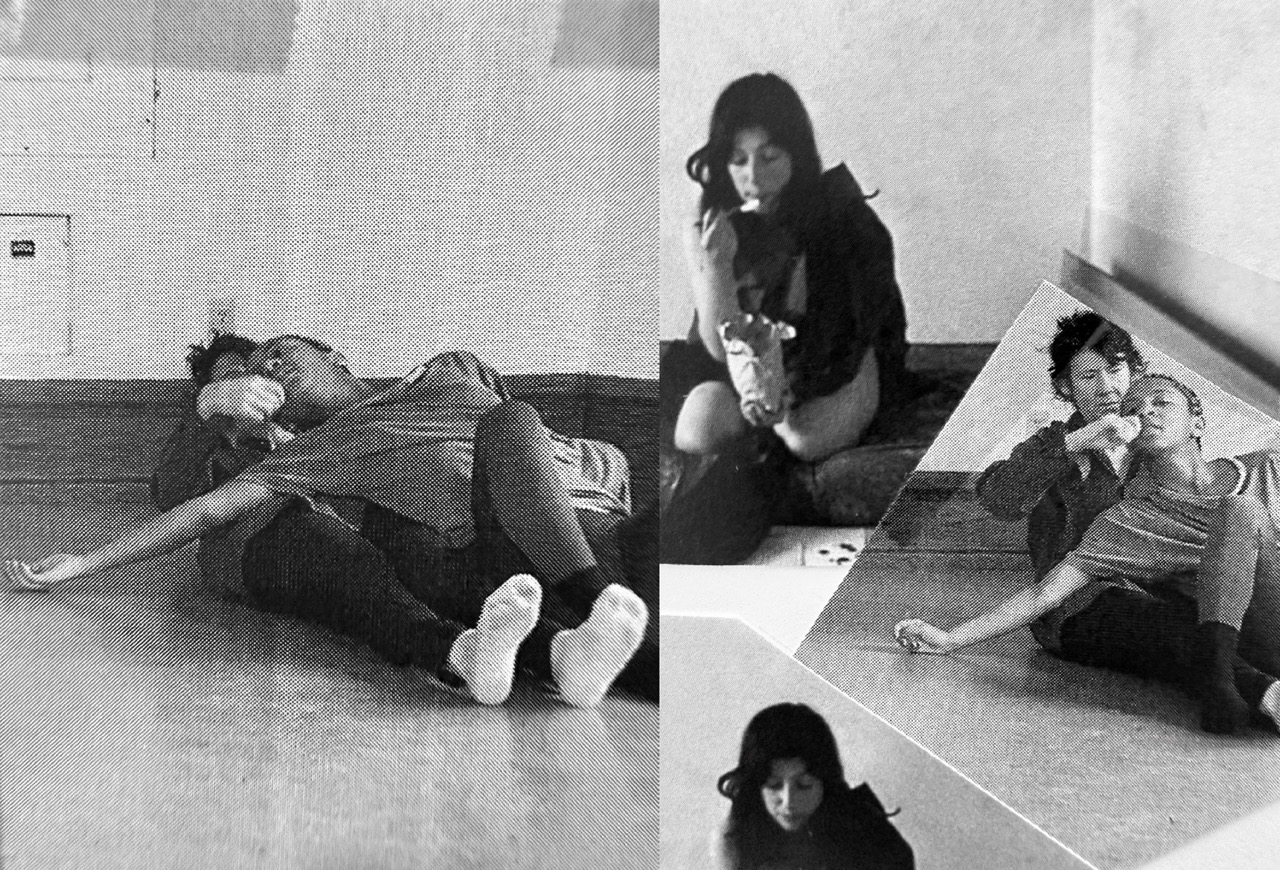
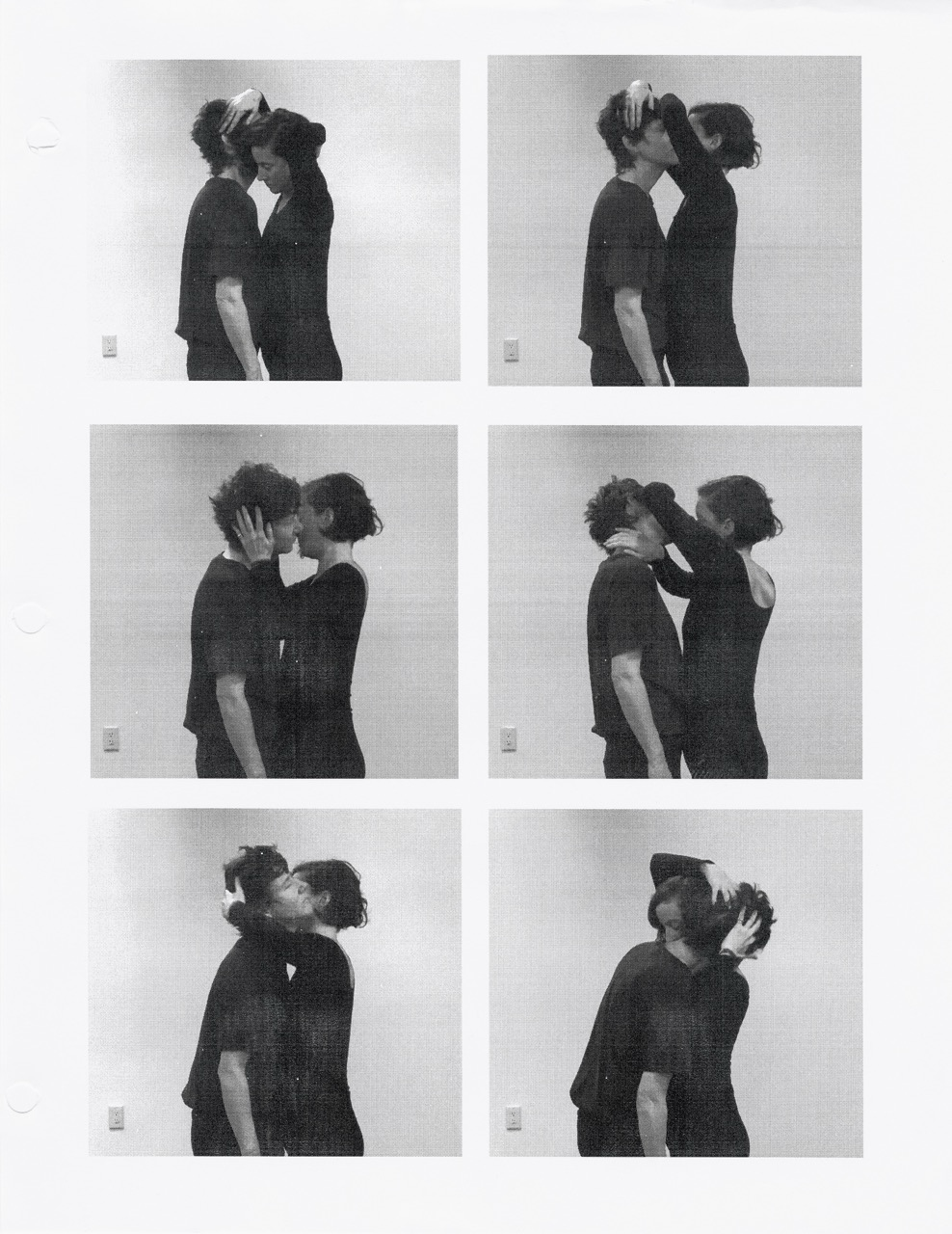
CS: In the exhibition, there’s a drawing on a mantle that reflects on a mirror, so I do seit as an assemblage. I’ve always seen collage as a strategy. It can be a juxtaposition or a secondary text. I’m obsessed with how I can use ideas from comparative literature or psychoanalysis in art. But it makes so much sense with the dance, because the first collages I made were with the wrestling photos, and I was wrestling with the idea that they were performers and Yvonne Rainer’s film Lives of Performers (1972). I was so interested in these bodies that went from standing to crouching to being smashed on the floor. The filming I did didn’t satisfy this. So by cutting up the image, I thought I could show what movement looked like. The collage of the ballet existed as a kind of notation, to talk about how the body goes from A to B: how does the body go from being on the floor to pushing a bed to sitting on a chair? It’s a way to tell people who might want to dance how to do it.
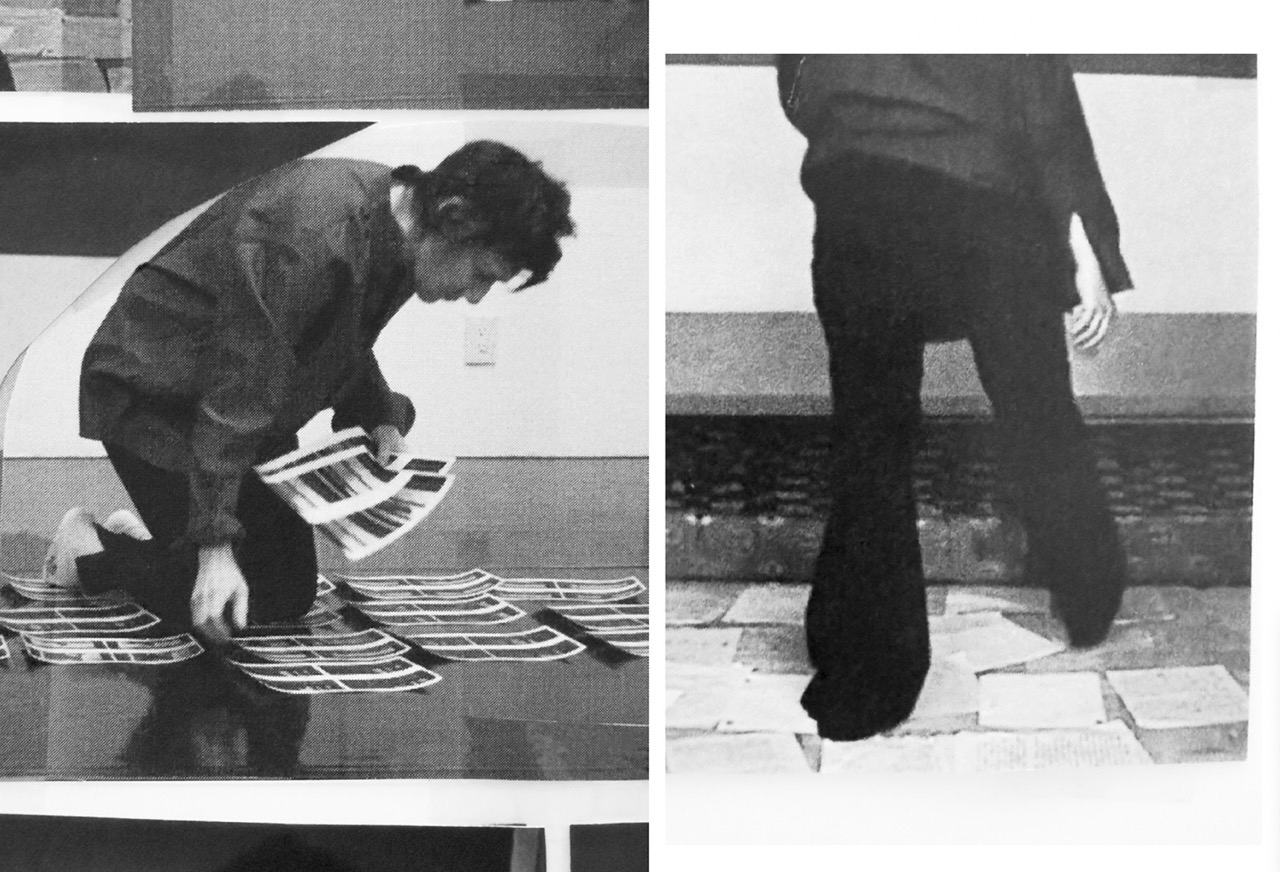
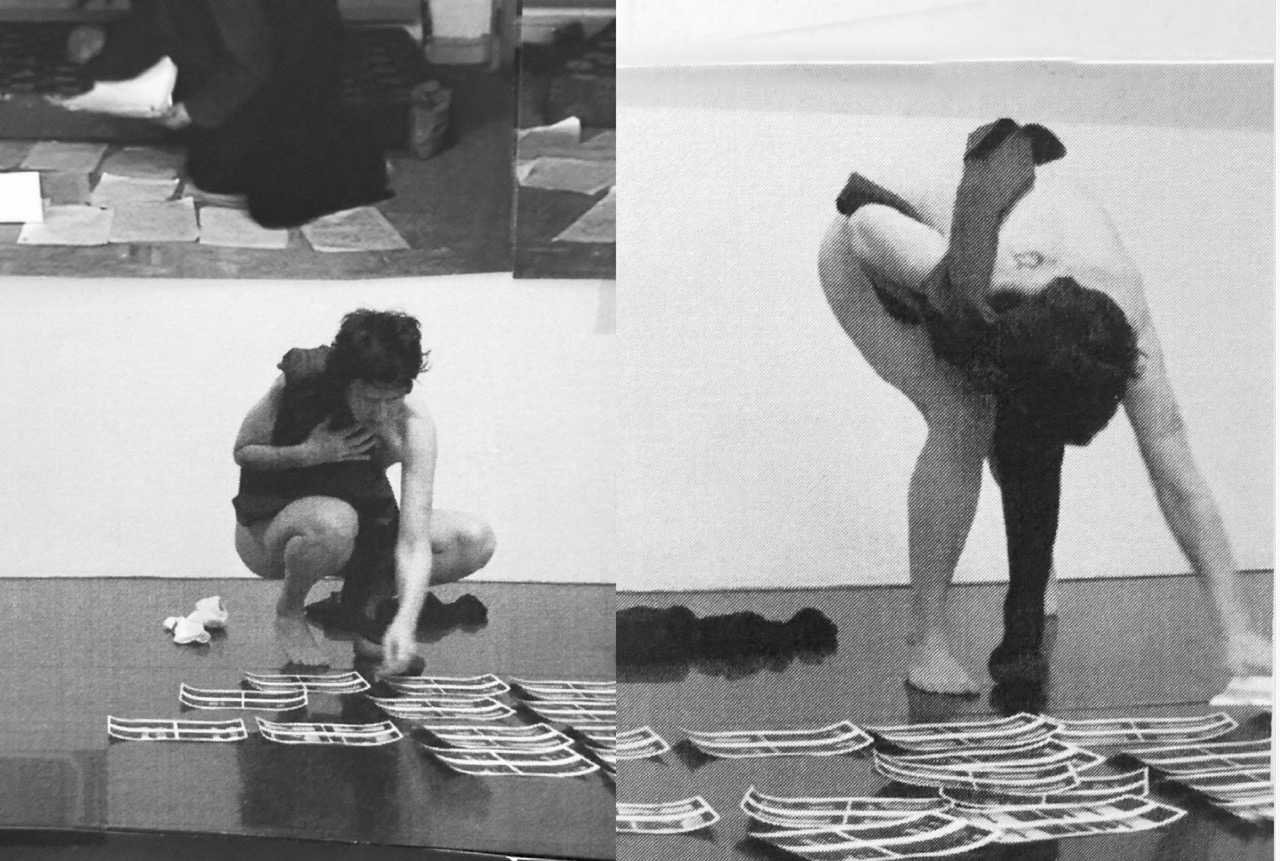
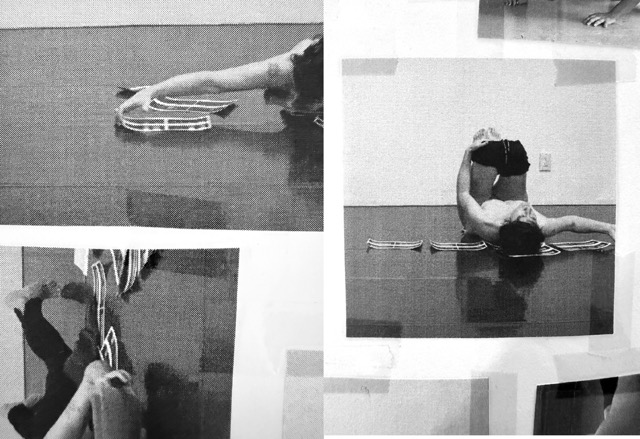
KG: You also make the distinction between these images being “stills” and not “photographs”. What is the difference for you?
CS: I had a beautiful argument with the performance studies writer Peggy Phelan, who is at Stanford, about this. She was writing an essay for a book on the ballet. She wrote about photographs, but I said they are stills for performance. Her thing is about liveness and the loss and past of a performance, or that a performance carries this inherent idea of loss because it’s over. I kept on arguing that they are stills. I really thought about how hard I try to show in the script for Akerman Ballet that it’s moving. I have so many stills, to the point where I’m embarrassed, as the dance is so simple. It’s not documentary photos of the dance; there was just a video camera that we pulled images from. I’m insistent on it being a script and I’m insistent on it being stills and not being photographs because I didn’t author them, I’m the body in them. If I was photographing two dancers, there would be choices I’m making, but there’s no moving frame, the dancers move in and out of the frame. Most photographers wouldn’t make those crops, they wouldn’t cut off the head, but that happens in my work.
KG: You started your career photographing teenage boys, and I’m wondering if that’s a topic you’d return to?
CS: That’s the beauty of trans men. It’s rare that I photograph a cis man now. The trans boy has so much commonality with me, so it’s this perfect space where I’m engaging with youth and brand-newness but I’m talking to someone who was born like me, who has carried a girl’s body for many years. It’s the same with trans women. I’m not the pied piper of trans people and I don’t intend to come off as such, yet I always think although I’m not trans, I could be. I probably was at points in my life, before it was really possible to me. When I photograph trans women and men, it’s like I escape a certain kind of baggage that those bodies might have carried, and the baggage I carry, and the deep conflict in representation. It’s photographing a body that has been made new, and authored by the person. There’s a sense of showing that feels consensual, as it’s this dire need to be recognised.
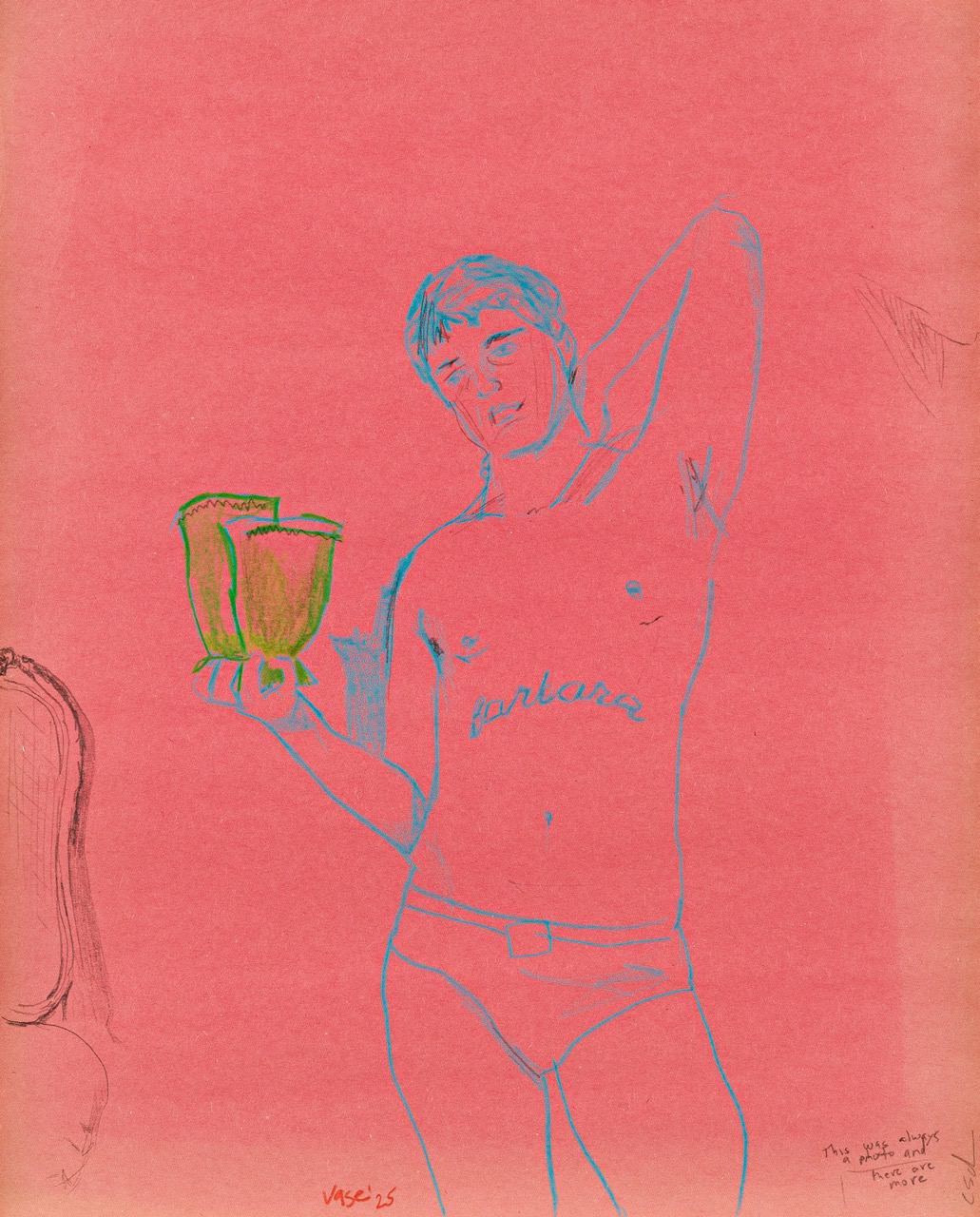
I assume a position (Milo with Vase), 2026. By Collier Schorr, courtesy of the artist, Modern Art & 303 Gallery New York.
KG: I’m interested in your recent fashion editorial work, where you’re approaching more hyper-feminine stars, such as Pamela Anderson. How do you make those shoots personal to you?
CS: There are times when I’m asked to do things and I think, why me? Pamela Anderson was really particular because she’s close to my age, which is becoming more and more of an important idea for me to connect to in my work. But because of her radical move away from make-up, it really cleared a lot of this pressure for her to just be beautiful. My idea was for her to be the muse and the artist. She came out as the muse, and she had this big curled hair and dressy clothes, and she was really performing in this hyper-femme way. Then she came out as the artist and I was completely surprised. She was in boy clothes, with this hair like Kurt Cobain, walking around the space talking about ideas. It was like being inside of a film, and she was so empathetic to herself as a character. When you’re dealing with an actor, they’re very conscious of playing a role, and to do it successfully means disappearing into it. The main takeaway was that there was no objectification because I never saw her as an object of desire. I saw her as someone who was inhabiting a space in a posture.
It was the same in the Kristen Stewart [Rolling Stone] shoot–they both have a kind of ‘top and bottom’ element to them. With Kristen, we were conscious of doing what we called the ‘femme picture’ and what we called the ‘butch picture’. I’m not sure if anyone would see it, but we knew. Like when she had a little ponytail or underwear and a T-shirt, those were the femme pictures. It was Pam who made the artist more boyish. Perhaps she’s looking at me, thinking, ‘Who do I want this artist to be?’ With Lady Gaga, too, when I photographed her the first time, I really felt she read my mind and gave me the version that I wanted.
KG: You’re almost this mirror as a photographer. People know you are creating a space for them to be seen in a certain way.
CS: You know something else I wanted to talk about, because I’ve never talked about it—and maybe it’s a great question to all photographers: what’s the picture you can’t show? For some reason it’s coming into my head because of this idea of objectification and how I didn’t feel that with Pamela that there was a sexual component. But I did this very quick shoot with Michelle Obama in the White House and she was wearing this little spaghetti camisole. I did a couple of polaroids just to make sure the light was right. There’s one that’s a double exposure and it looks very undressed. It’s very striking, and it feels so illicit. It holds what photography almost can’t hold anymore, which is a thing that shouldn’t be seen or a thing that overtakes the subject. Occasionally I look for the picture—I usually have it in a drawer somewhere—and think, ‘I want to show this picture’, and I could, but there’s something super-important to be a photographer with a picture you don’t show. It’s almost like you’ve realised your own boundary, and to have a boundary in this un-boundaried world is satisfying.