At Laika Studios, a radical case for the handmade



At Travis Knight’s stop-motion studio on the edge of Portland more than a thousand artists have spent the past seven years building a film by hand. In an age of instant everything, Wildwood makes a convincing case for slowness.
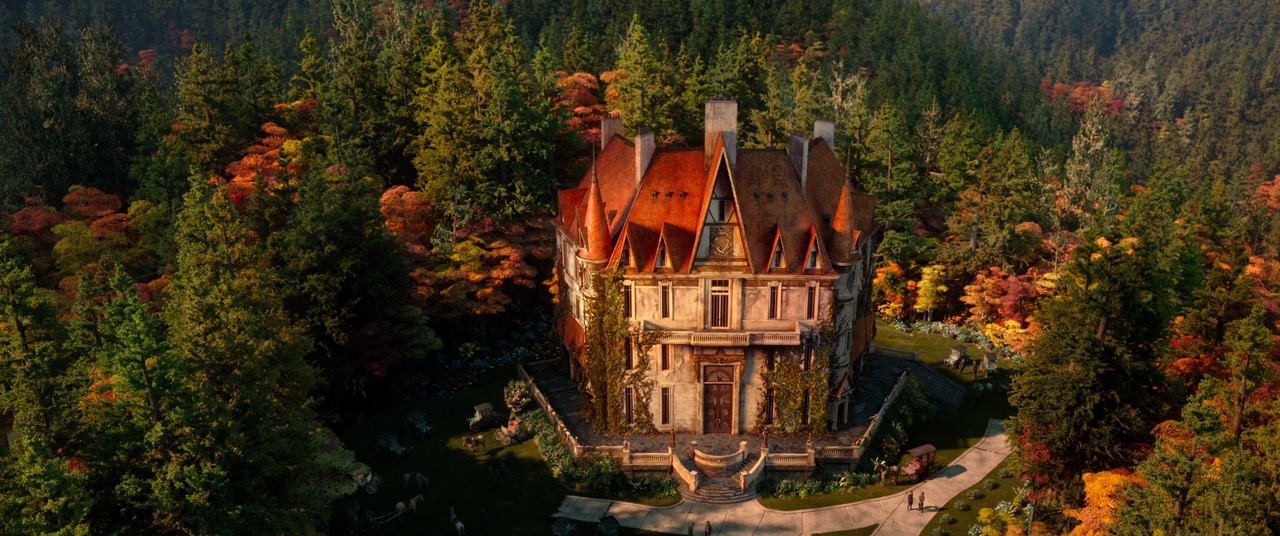
The cracks in the pavement were the hard part. Nelson Lowry, Laika’s production designer, is standing on a street corner in St Johns, the old working-class neighbourhood at the northern tip of Portland, Oregon, and he is talking about concrete. “If you have to design the cracks, it looks kind of not right,” he says. So the scenic artists poured big sheets of plaster and then dropped things on them. The street at his feet is about the height of a coffee table; its shopfronts reach to his chest. Above us, a cucoloris—a perforated board used to break up light—throws a dappled shade across the asphalt, to give the appearance of the sun falling through trees. Down the block is the St Johns Twin Cinema, where he catches first-run movies on opening day. There is a shop called Caleb’s Cameras, a nod to cinematographer Caleb Deschanel, a poster for ParaNorman (2021), and, somewhere in the crowd, a puppet of Carson Ellis, the illustrator of the novel on which all this is based. “You have to put something there anyhow,” Lowry says of the Easter eggs. “So why not?”
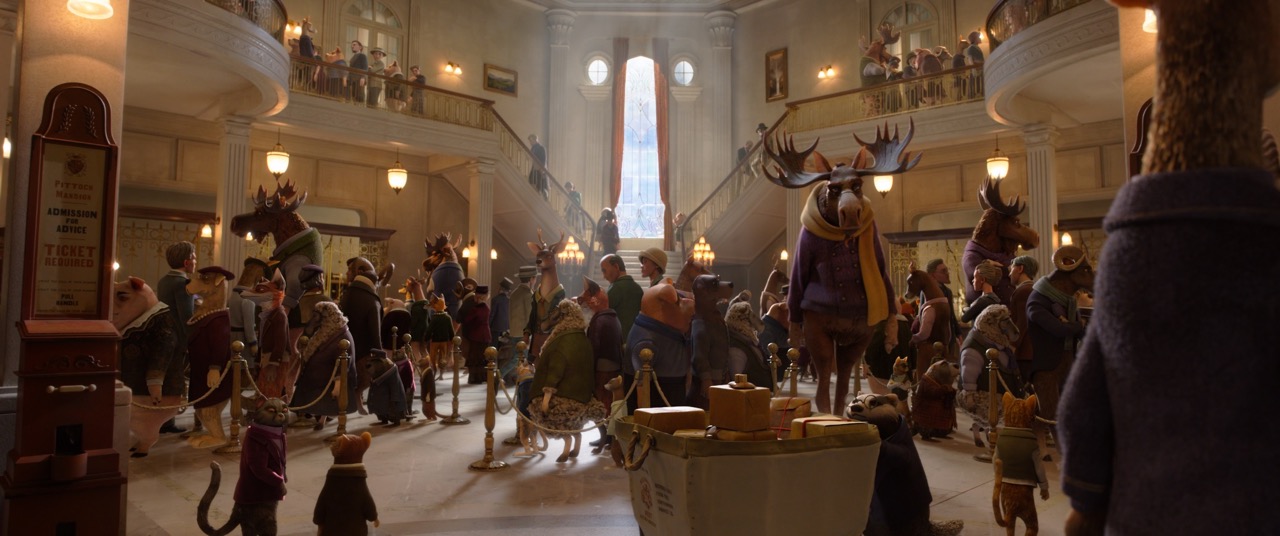
This is one of 136 locations built for Wildwood (2026), Laika’s sixth feature and, by some distance, the most ambitious stop-motion film ever attempted. To reach it, you walk through a hangar partitioned by black curtains—two miles of them, by the studio’s count—behind each of which is a “unit”, a self-contained stage with its own set, lights, camera, and puppet. At the height of production, 104 units were in use at once—some being built or lit, others shooting—and Laika had to annex two more buildings. The sets stand on steel tables whose legs can be pulled out so that an animator can be wedged into the middle of a scene. Shoes come off. Drinks stay outside. A single shot can occupy a stage for three months, and nobody wants a stray coffee cup drifting into frame in week 11. “Which,” Lowry admits, “has happened.”
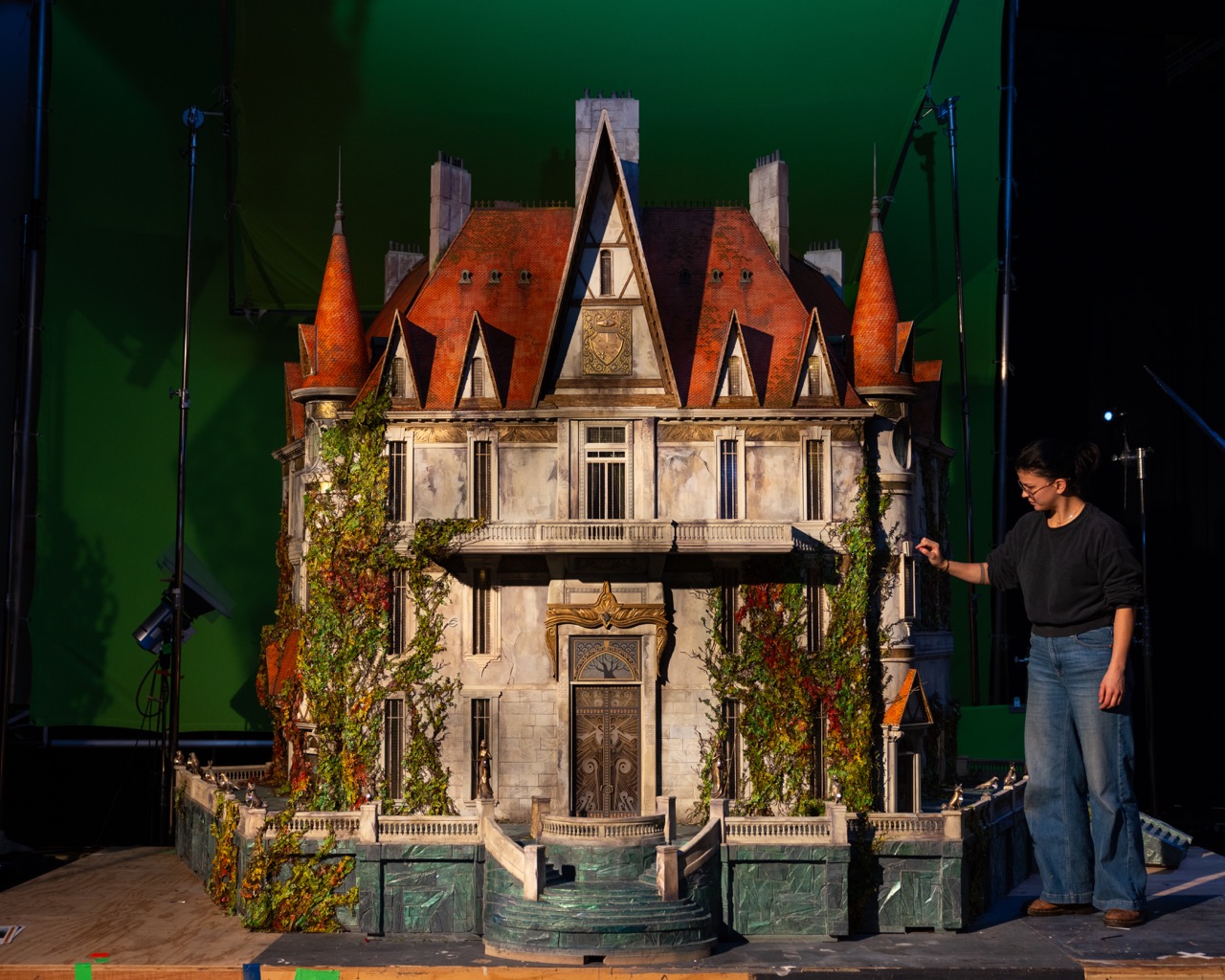
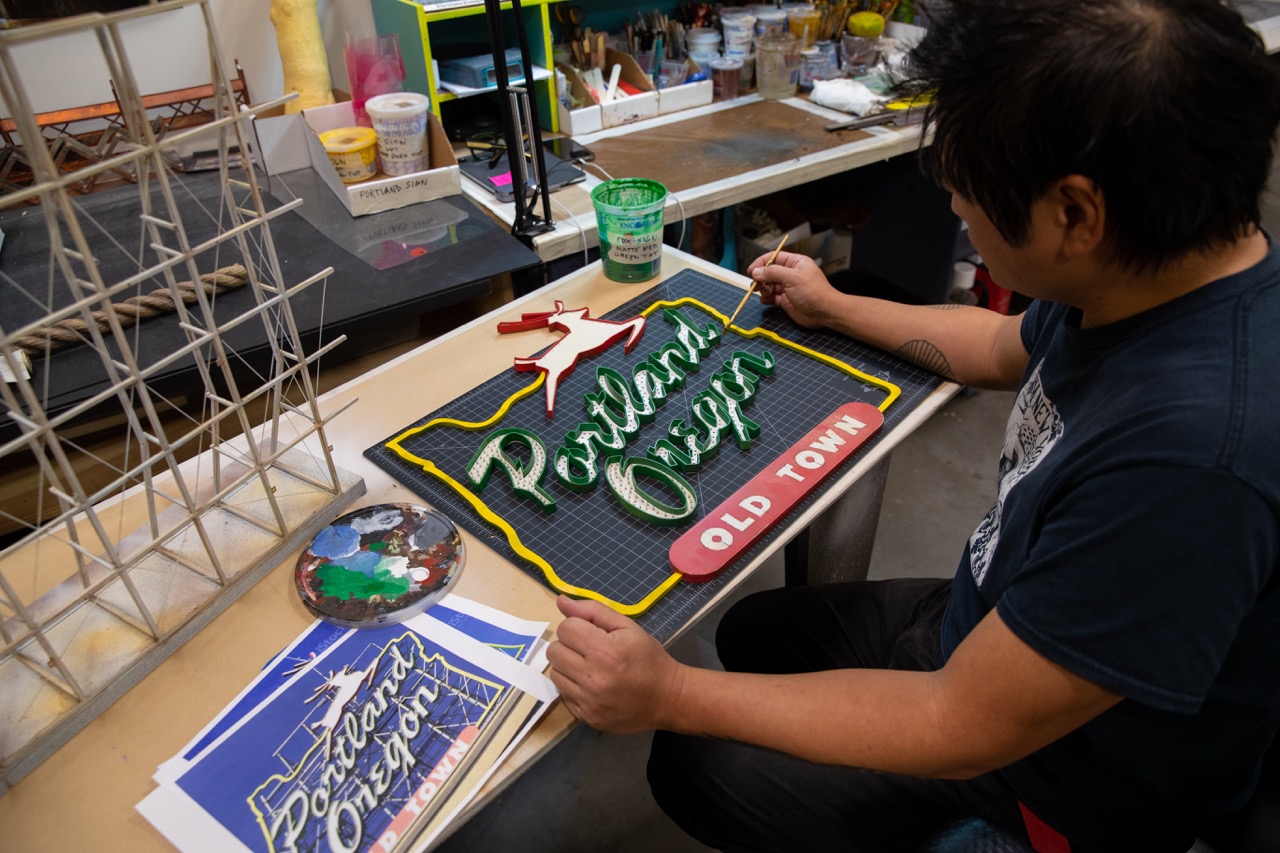
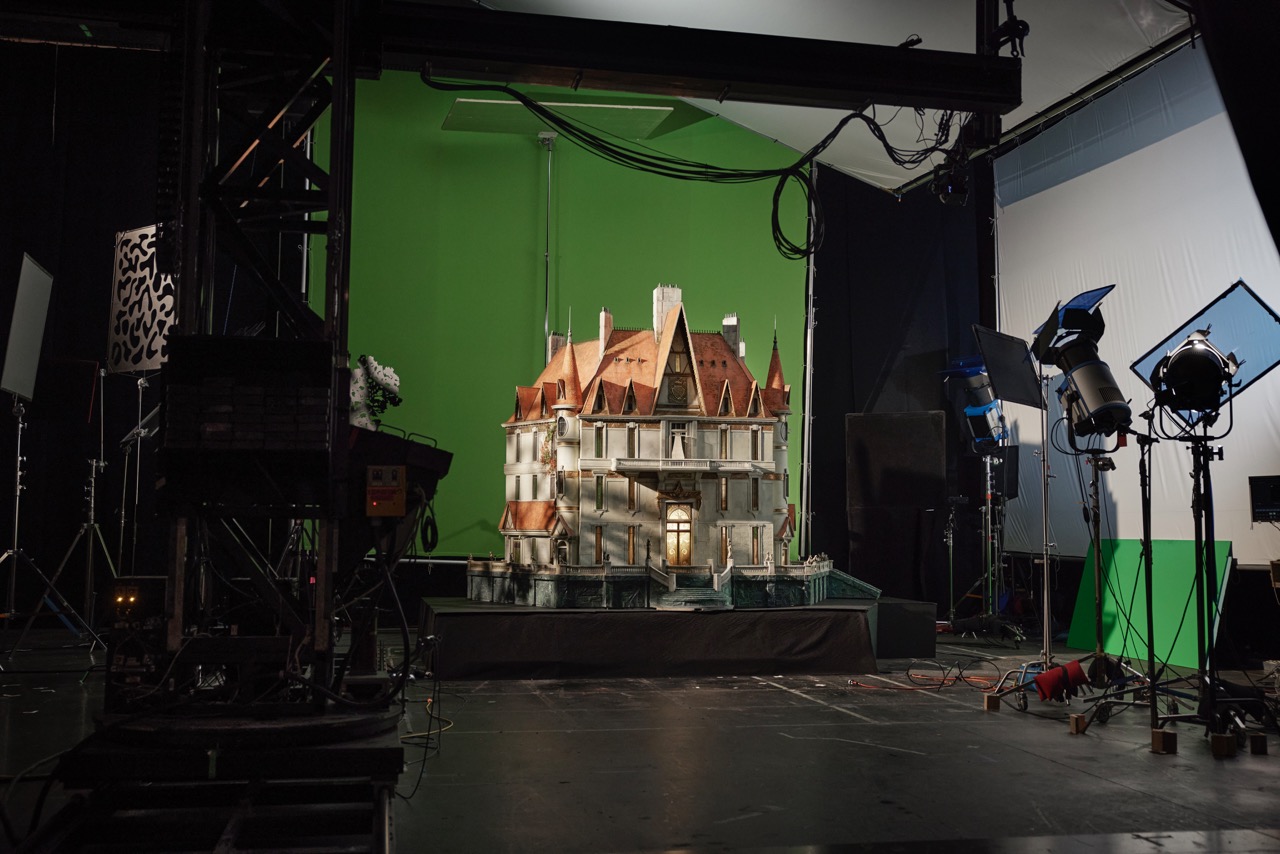


It is easy, in rooms like these, to lose track of scale, and that is the point. Stop-motion suffers from what Lowry calls “the dollhouse issue”: the eye registers miniatures as miniatures. The cure is light, and attention to how shiny or flat a surface is. Wet mud must gleam differently from dry mud. Stones need to look heavy. “We don’t want it to look real,” he says, “but we also don’t want it to feel like a kid’s show. Nothing wrong with a kid’s show, but that’s not what we’re doing here.”
Brian McLean has spent more than 20 years at Laika, pioneering the 3D-printed faces that let its puppets weep, smile, and rage. He has a Scientific and Technical Academy Award plaque for it, but none of this impresses his children. “I take my kids to the theatres now and I say, ‘Hey, wasn’t that Marvel movie awesome?’ They’re like, ‘Oh, Dad, they just did that in the computer’,” he says. “There’s a whole generation of kids who think that because it was done in the computer, it was easy. And we know that’s not true. But it does create this ambiguity over how hard something is.”
There is something particularly resonant about that ambiguity now, when whole worlds can be conjured with keystrokes and a prompt. Wildwood, adapted from Colin Meloy and Carson Ellis’s 2011 novel, follows Prue McKeel, a 12-year-old Portland girl whose baby brother, Mac, is snatched by a murder of crows and carried into the Impassable Wilderness, the enchanted forest that lies just beyond the city’s edge. It is a story about a child torn from a family, and about how unchecked grief can turn someone into a monster. For the man who made it, it is also something close to autobiography.
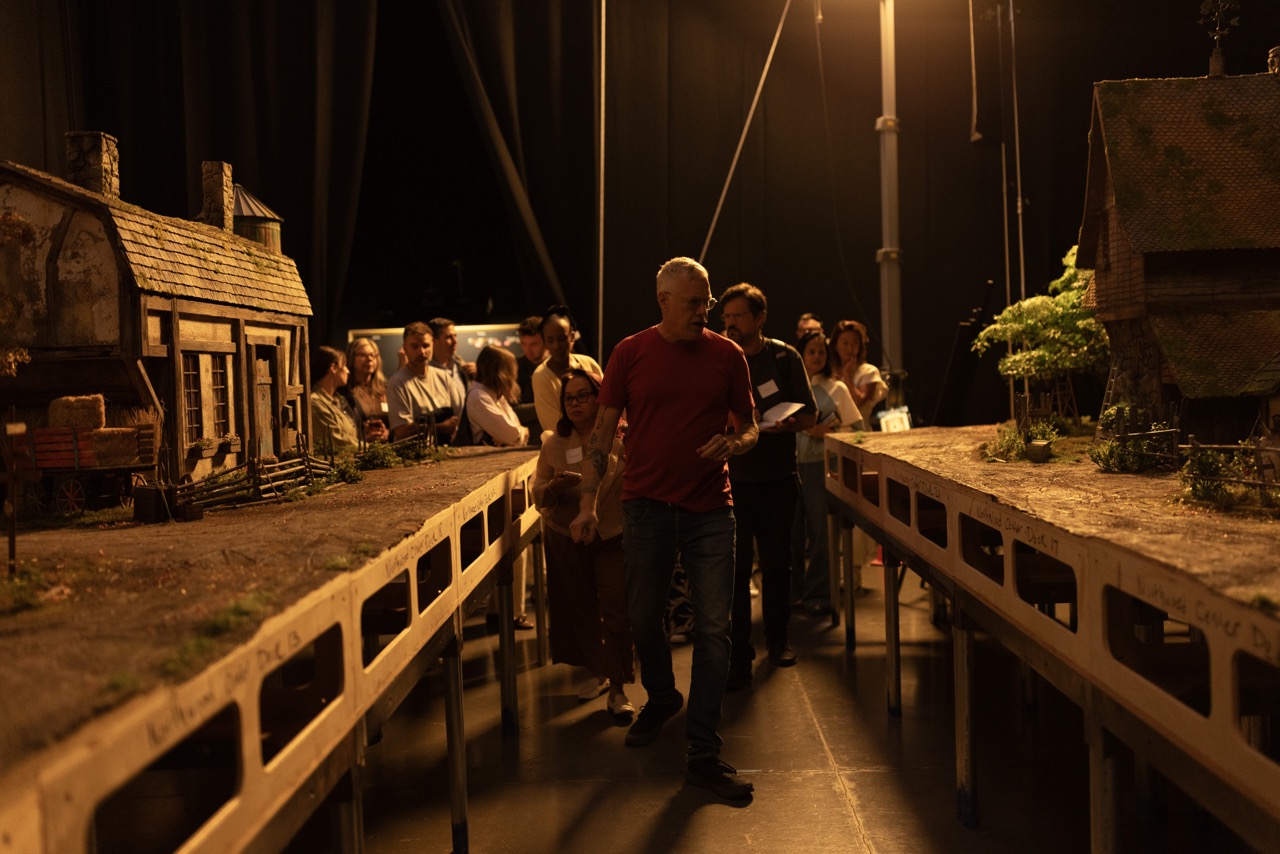
Nelson Lowry, Production Designer
Travis Knight, Laika’s president and chief executive, and Wildwood’s director, fell for the book “from the opening sentences”, reading it in 2010 as a manuscript, when Meloy, better known as the frontman of The Decemberists, was about 130 pages into what would become a novel of more than 500. “There are moments in the film that are drawn directly from my life,” he tells me when we speak via video between Melbourne and Portland. “It was, and is, the most challenging, the most difficult thing that I’ve ever done. And I think it’s also the thing I’m most proud of.”
In 2010, Laika was “still just a baby studio”. Coraline, the first stop-motion feature to use 3D-printed replacement faces, had come out the year before, and Knight knew that the studio was nowhere near ready for Meloy’s book. “There’s a huge cast of characters, there’s warring civilisations, there’s magic woven through it all, there’s massive battle sequences,” he says. Instead, Laika made ParaNorman, The Boxtrolls (2014), Kubo and the Two Strings (2016), and Missing Link (2019), each of which, as studio head of animation Brad Schiff puts it, was “really R&D for the next movie”. About seven years ago, Knight decided the studio was ready. “And we were still not ready,” he laughs. “I thought I knew, but I was wrong. Even though we had assembled a huge bag of tricks, it required us to invent new ones.” What he wanted was “a new grammar” for stop-motion: the sweep of filmmakers David Lean or Akira Kurosawa on a miniature stage. To that end, he recruited Deschanel, the six-time Oscar-nominated cinematographer of The Right Stuff (1983) and Being There (1979), to a medium in which cameras take a single frame at a time.
Knight holds two jobs that do not naturally sit together. He is the chief executive of what amounts to a small industrial town—1,000-odd artists and technicians, more than 100 stages, a five-year shoot—and he is also, by training and temperament, the person in the building most likely to notice if a blade of grass is the wrong shade of green. Before he was a director, he was an animator, and before that, he said, a kid “with a sketchbook glued to my hip”. Schiff, who supervised 40 animators on Wildwood—the largest team the studio has assembled—calls him “what Michael Jordan is to basketball or Wayne Gretzky is to hockey”. “Which is intimidating, as you can imagine,” Lowry says. Schiff agrees: “Yeah. It’s tough for my job.”
Knight’s notes on a rehearsal can be extremely granular—“This should be faster, this needs to be more linear,” as Schiff recalls—and, according to Lowry, when a new set goes up on a monitor, Knight asks to see the original artwork beside it. Yet the same man also told Lowry to build “as much practically, and as large as you can”, and, when Lowry worried there wasn’t room, found him two more buildings. “You can get lost in the details,” Knight says. “Always keep in mind the bigger picture of the story, but love the process, love the detail.”
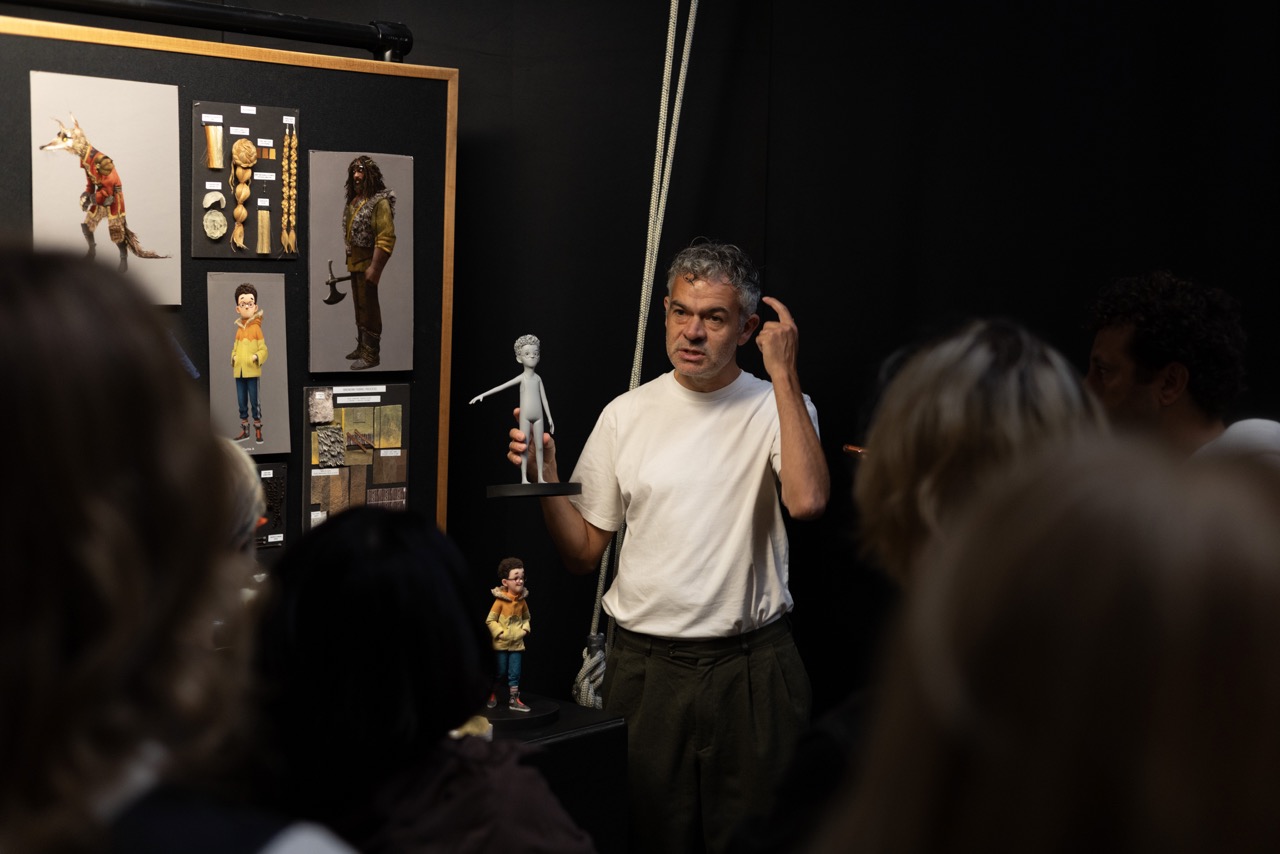
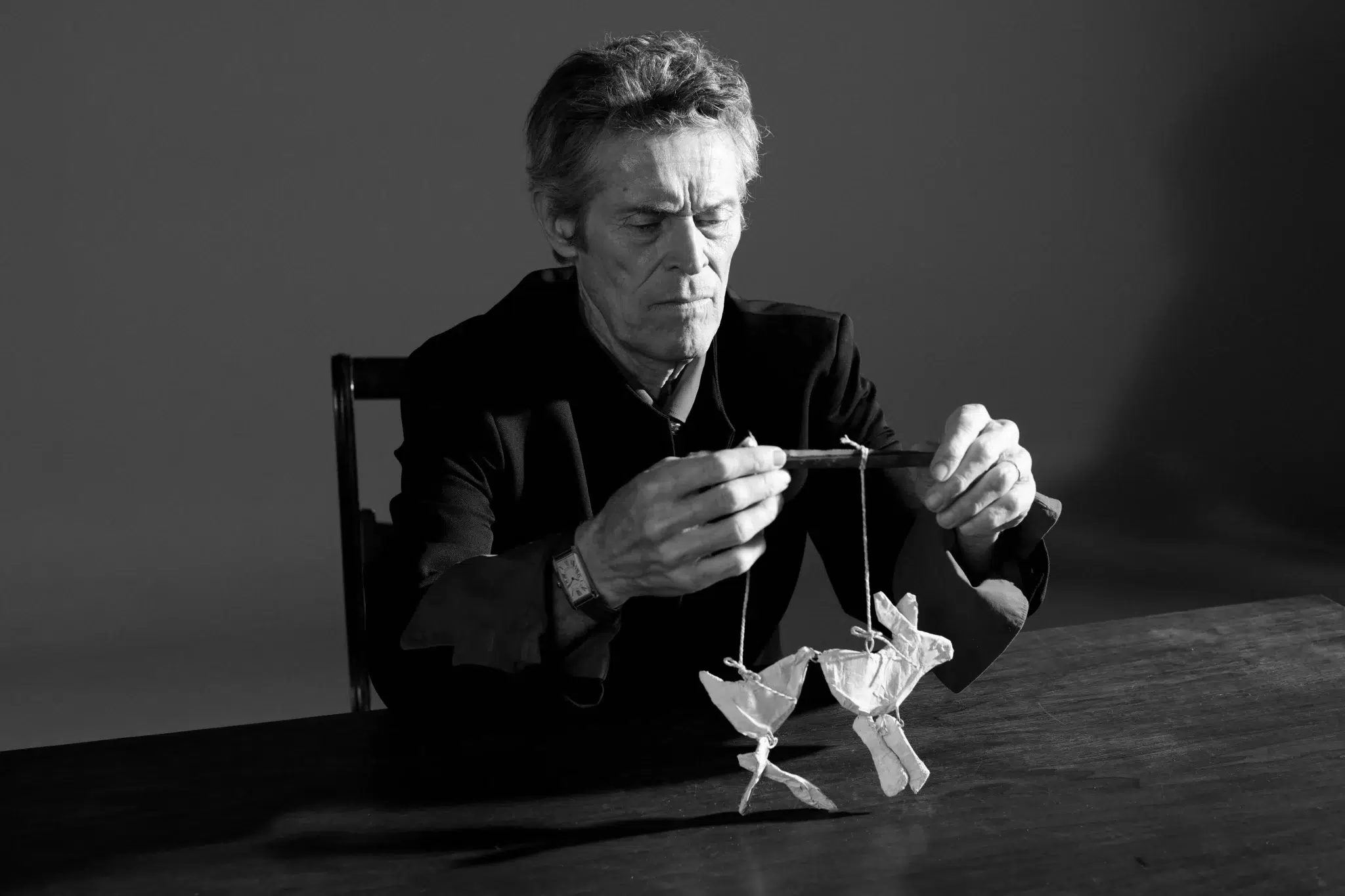
Ollie Jones, Laika’s Head of Character and Practical Effects
“I believe tactile filmmaking is very important for our psyche.”
The note he gave most often was counterintuitive. “It’s less realism than naturalism,” he says. “These characters, they’re people, but they’re stylised people. Within that stylised reality, I wanted the performances to be well observed.” Animation, he says, tends to act “for the cheap seats. It’s big, it’s broad, it’s gestural.” The animators would come back from rehearsals full of sweeping movements, “and I kept saying, ‘Do less, do less, do less’. If you want them to feel like people, they need to act like people. That’s virtually impossible to do in stop-motion.”
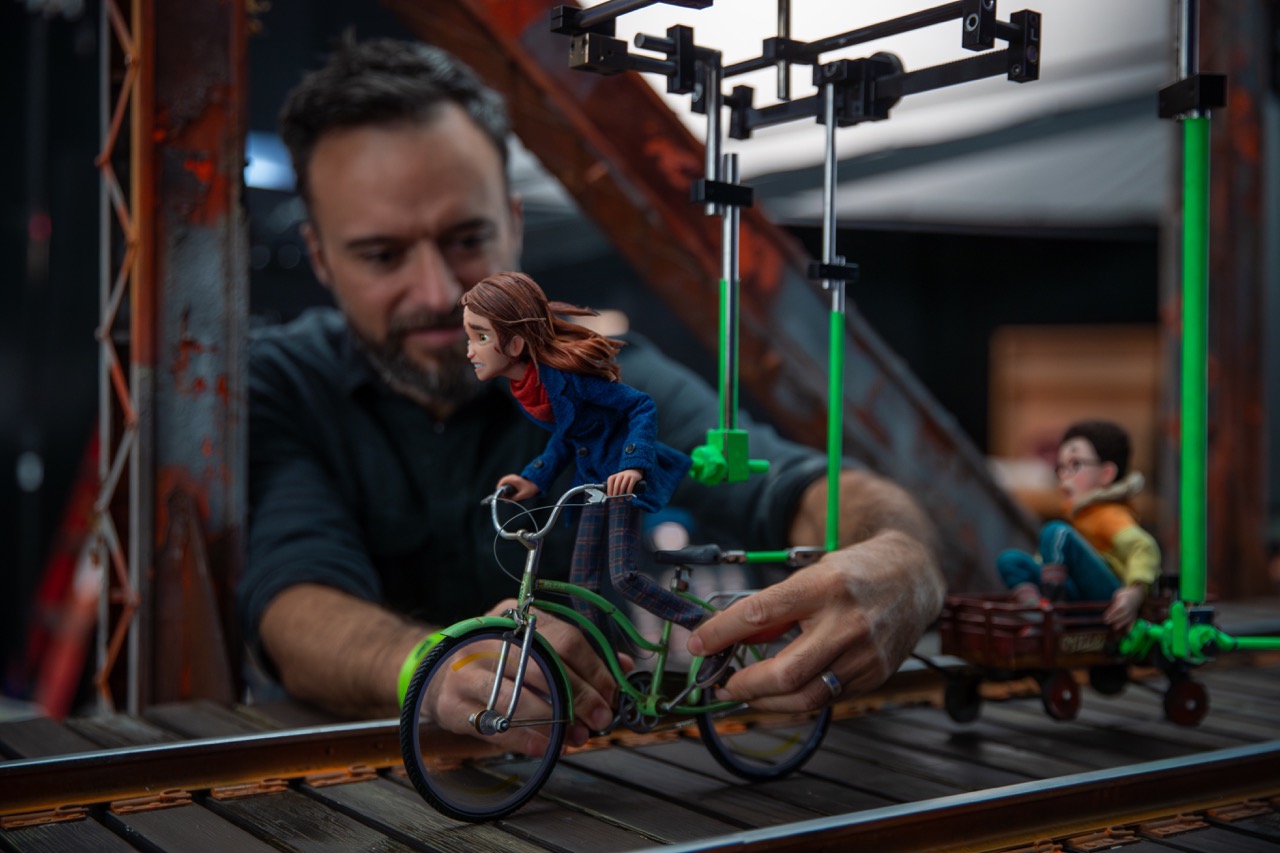
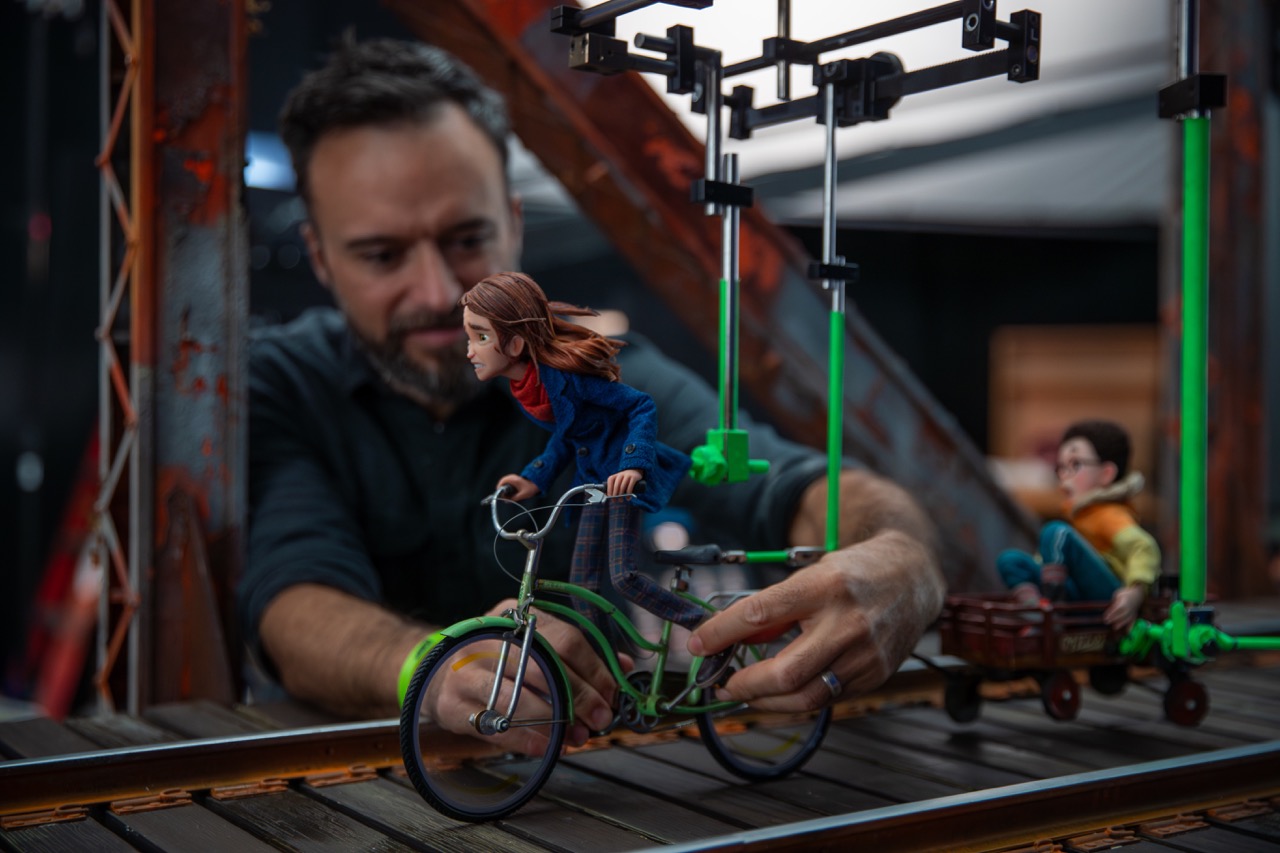
Doing less, it turns out, requires engineering more. Ollie Jones, Laika’s head of character and practical effects, demonstrates a “jetpack”, a pair of turnbuckles clamped between a puppet’s chest and hips that lets it lean or twist by a hair. Ninety per cent of the film’s puppets have “breathers”, tiny mechanical diaphragms that let their chests rise and fall. For the battles, the team built the studio’s first animatable muscles; one character’s bicep is made from horsehair boning, the woven mesh milliners use to stiffen hats. “One of the most challenging things to do in stop-motion is what you’re doing really well right now,” McLean says. “Standing still, but staying alive.”
The faces are McLean’s domain. His 70-strong Rapid Prototyping department sculpts, paints, and animates them on computers, then prints them in resin, which takes about an hour and a half per face. For a shot of Prue cycling through Portland with a tear on her cheek, he lays out a case of 24 faces, each so close to the next that you only see the change by comparing the first and last. Missing Link set a Guinness World Record with 106,000 3D-printed faces. Wildwood has passed 140,000. McLean is proudest of the tears. Most stop-motion crying, he says, looks like “melting ice running down the face”. Laika’s printers lay down droplets of coloured and clear resin—330 million voxels per cubic inch—and by controlling which droplet goes where, the team printed a clear tear that wells in the corner of Prue’s eye, runs down her cheek, and is pushed sideways by the wind of her bicycle.
Some things cannot be printed. Eyes are still animated by hand on the shooting floor, with what McLean calls the eye rake. “If anyone is prone to nightmares,” he says, “close your eyes now.” He presses the tip of a very sharp X-Acto blade into a puppet’s pupil and turns the eyeball, then catches the lid and slides it down, twisting as it goes, so that the lid seems to change shape as it passes over the curve of the eye. On screen, the effect is of a girl blinking back tears. Up close, it is a man very gently stabbing a doll in the eye.
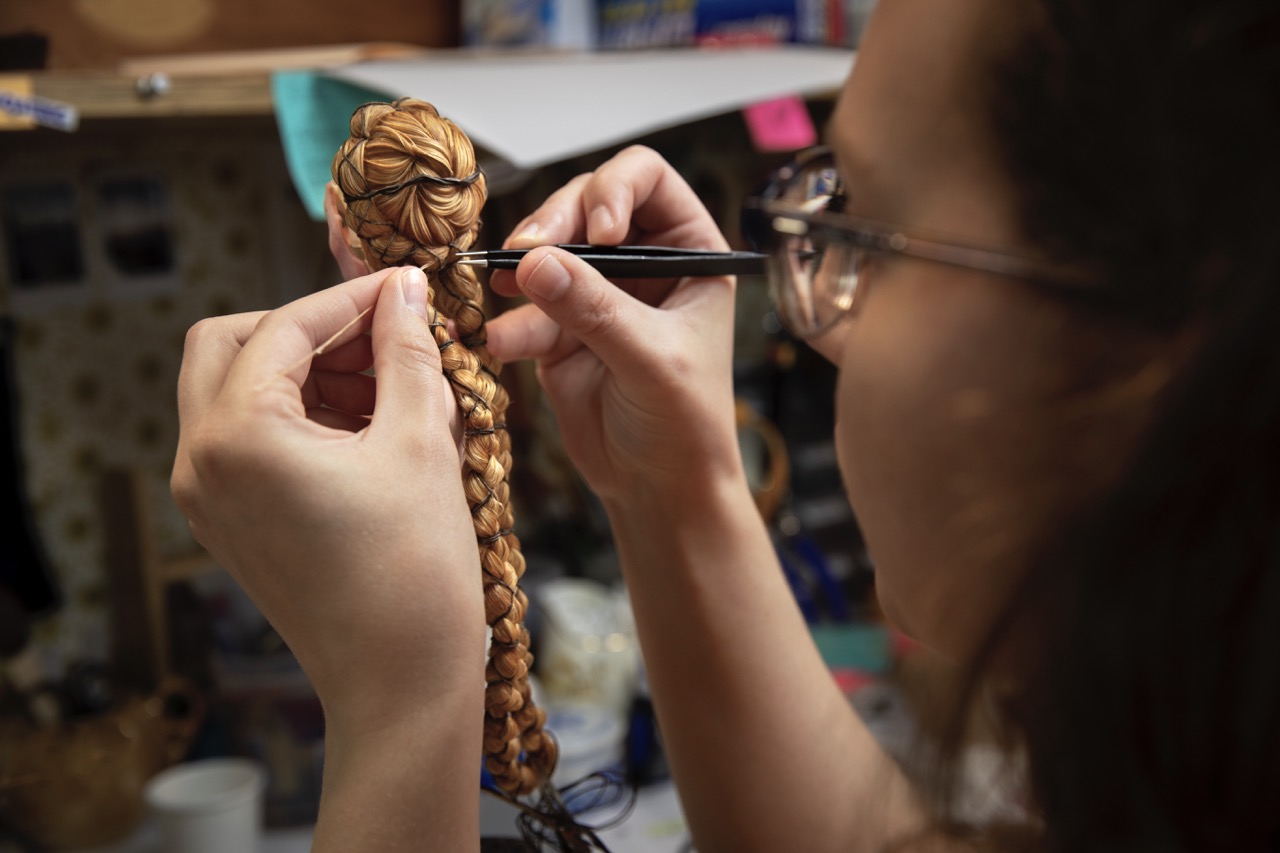
All of this is why an animator on Wildwood, working alone, produced around three seconds of finished footage a week. On Coraline, the target was five or six. On Kubo, about three and a half. For Wildwood, Schiff notes, “every character has long hair or long coats. Every one of those things is another character on top of your character.” The studio’s films usually take two and a half years to shoot. Wildwood took five. “Imagine being the animator on this set. The curtains are closed and you’re there by yourself,” McLean says. “It literally is one person in this unit. But to get to the point where everything is ready—the set is lit, the faces are ready, the puppet’s ready—that’s months and months of planning.” There is no undo button. If the chairs are on the wrong side of the room when the animator starts shooting, “you gotta start over.”
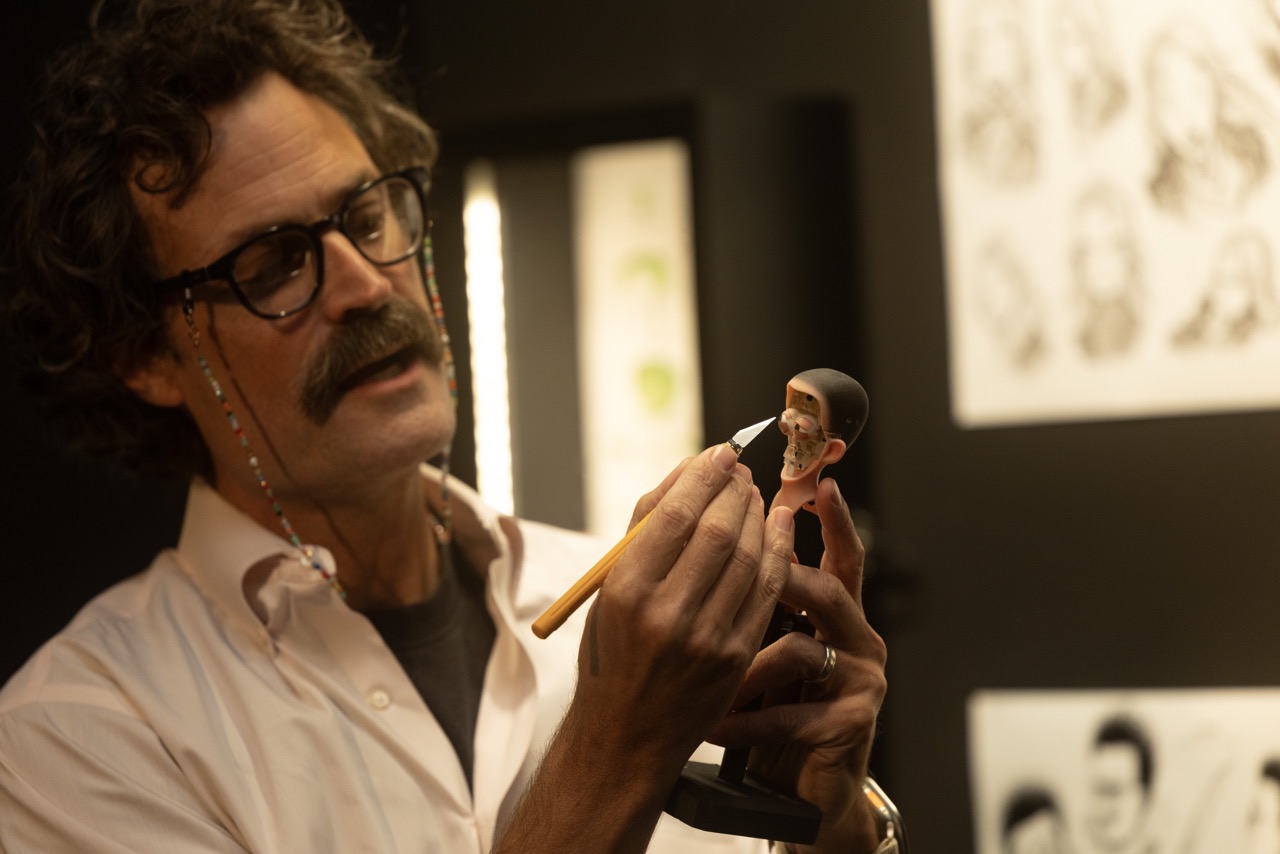
Brian McLean, director of rapid prototype
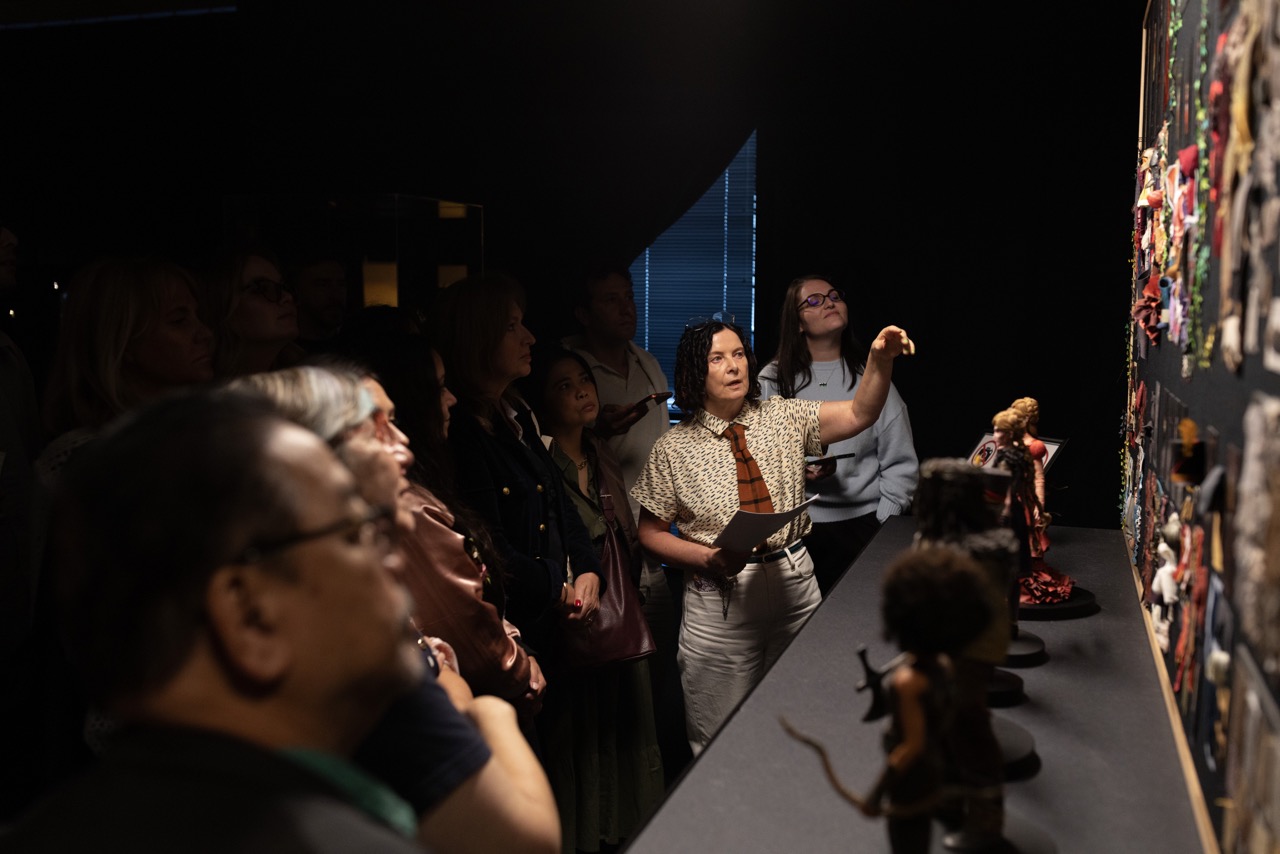
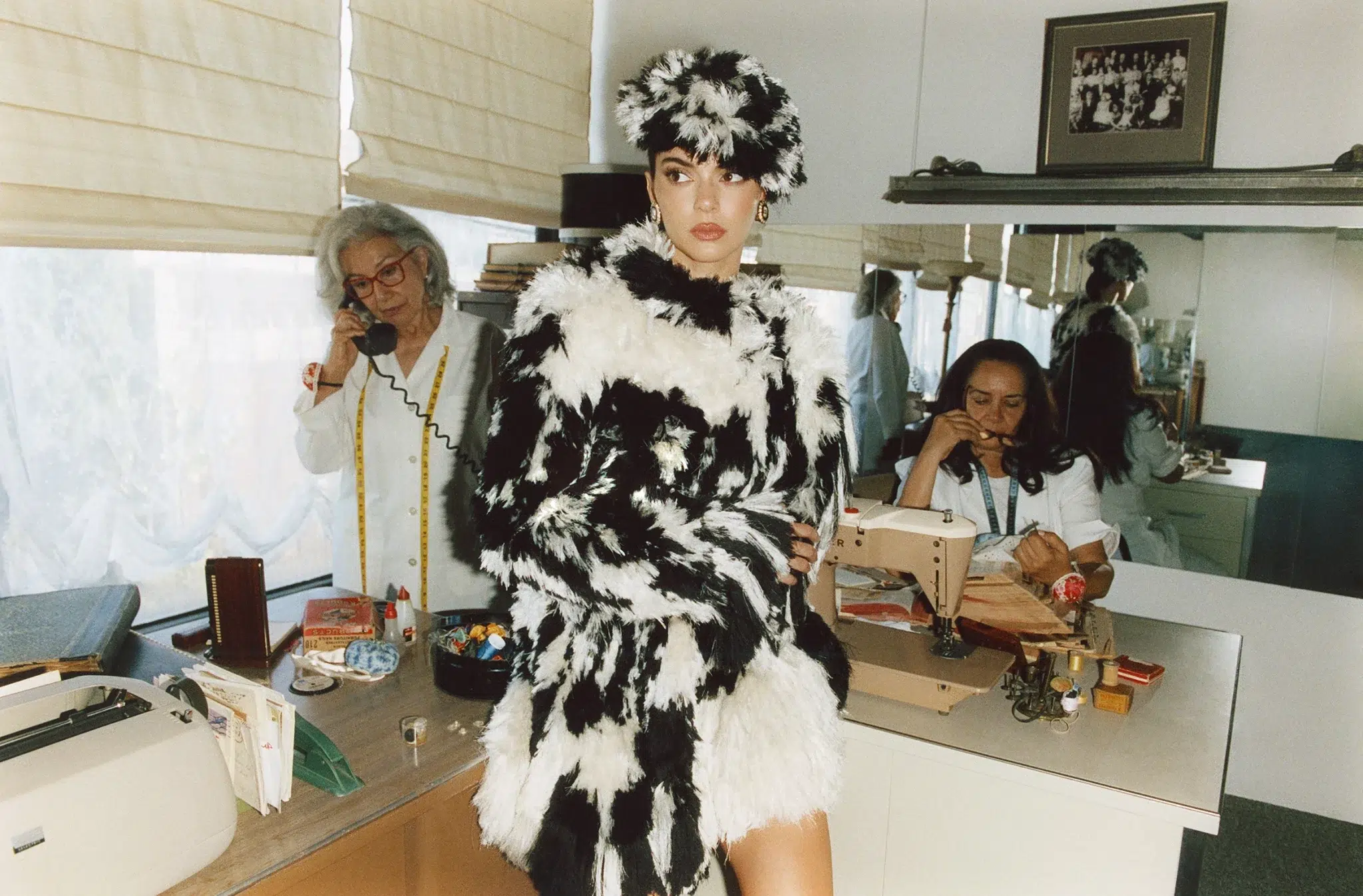
Deb Cook, Costume Designer at Laika Studios
The people doing the work describe labour this intensive as a kind of transfer. Every tear, every blink, every rise of a breathing chest is a moment in which a person decided, by hand, what a feeling should look like. “There’s a person there with a puppet at all times,” Lowry says. “You just take the person out, but they’re imbuing that puppet with that life.” Knight calls it “the humanity at the core” of the medium.
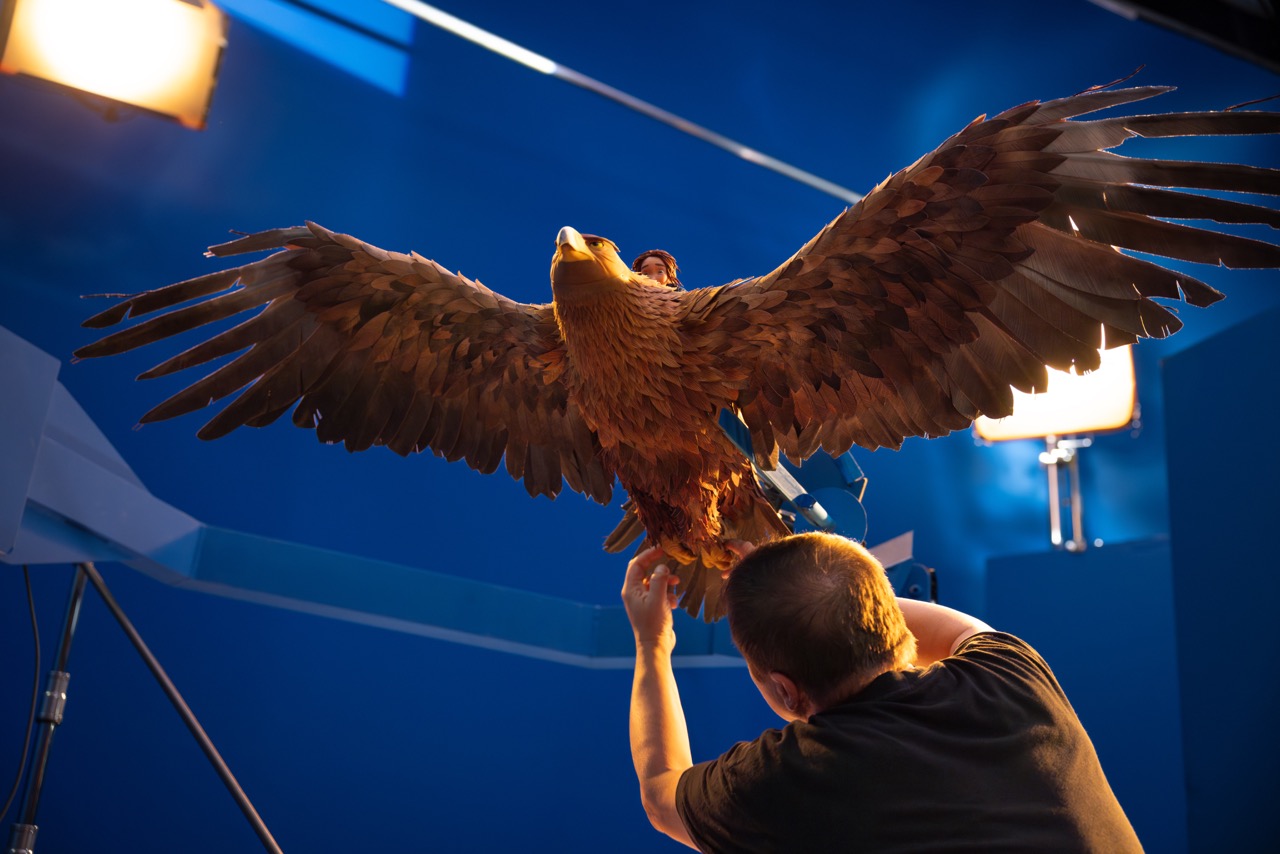
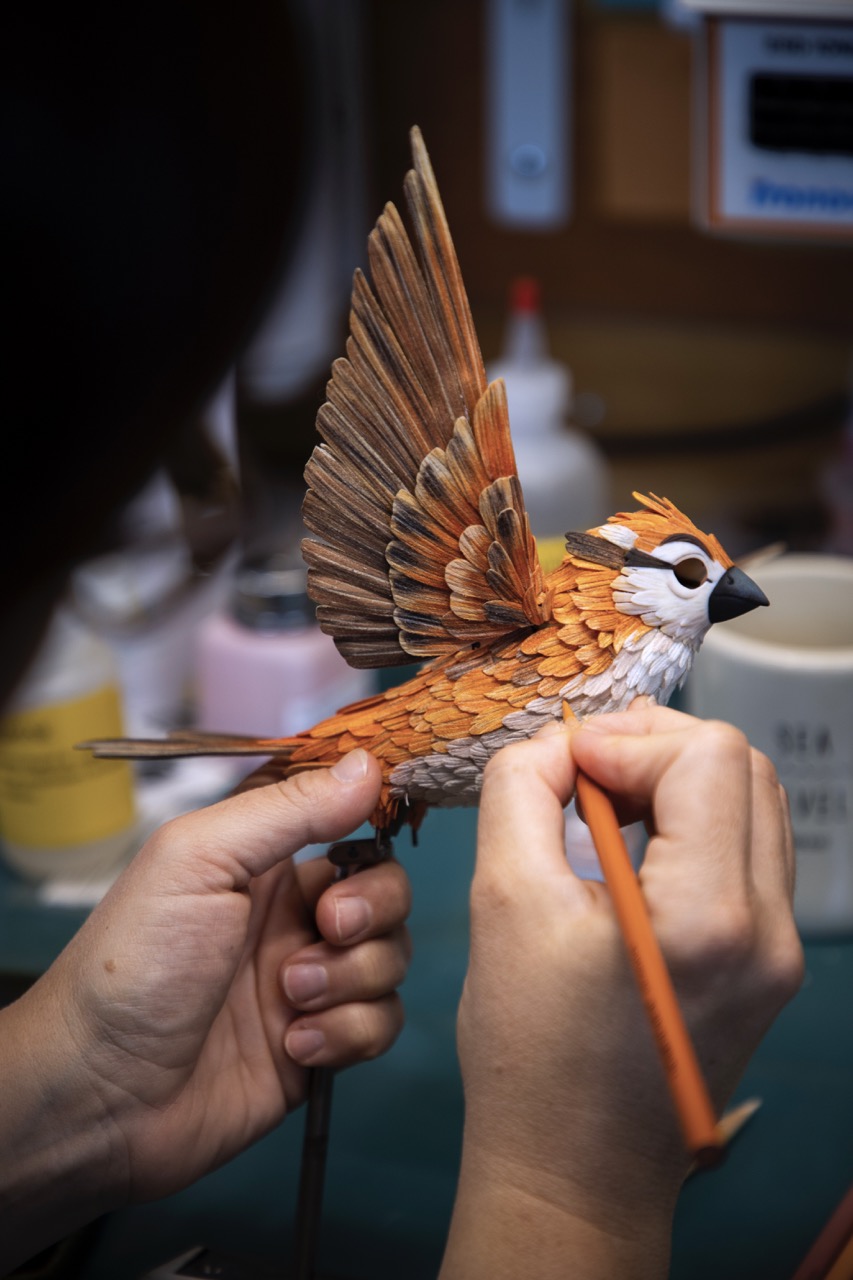
Nowhere is that clearer than in the General, a golden eagle voiced by Angela Bassett, who carries Prue across a dawn sky. Jones calls her “probably the most complex and ambitious puppet we’ve ever made”. The fabricators dyed, crimped, and laser-cut a gold-shot poly satin into 3,794 feathers, then attached each one by hand, backed with foil or fine wire, so that every feather could be bent into a new position, frame by frame. “It’s mind-numbing. It’s mentally exhausting,” Schiff says. “Every bit of life that you see on screen has been sucked out of an animator.” The General is, Jones says, “kind of like a giant costume”, in the way you might describe a cathedral as kind of like a shed.
The actual costumes belong to Deb Cook, Laika’s costume designer since Coraline. Cook grew up in Bristol, and a West Country lilt still runs under her voice as she describes her job as “part psychology, part textile art”. She designs at one-fifth scale, and the first lesson of puppet tailoring is that fabric does not shrink elegantly. “The physics of those fabrics don’t change when they go onto a smaller person,” she says. A crease that suits a human jacket stays the same size on a puppet, so folds have to be engineered from underneath.
None of this is cheap, and Knight is unsentimental about what that means. Laika is an independent studio owned by Knight’s father, the Nike co-founder Phil Knight. As with Missing Link, Laika’s previous film, the budget of Wildwood is around $100m. Lowry builds about 15% percent beyond the edge of each frame, in case the camera shifts, and no more, because even a little outside the camera “is expensive”. There is no coverage—no alternate takes, no extra angles—and the animatic Knight approved seven years ago is, he says, “basically the same movie” as the finished film. “You can’t play jazz with these things. You always have to put downward pressure on the budgets,” he says. “You want to make sure that every single dollar goes on the screen.” Compared with “a big CG tentpole that comes out of one of the big animation houses”, he argues that Laika does “significantly more with less. We have a fraction of the number of animators. People contribute more of themselves to these movies.”
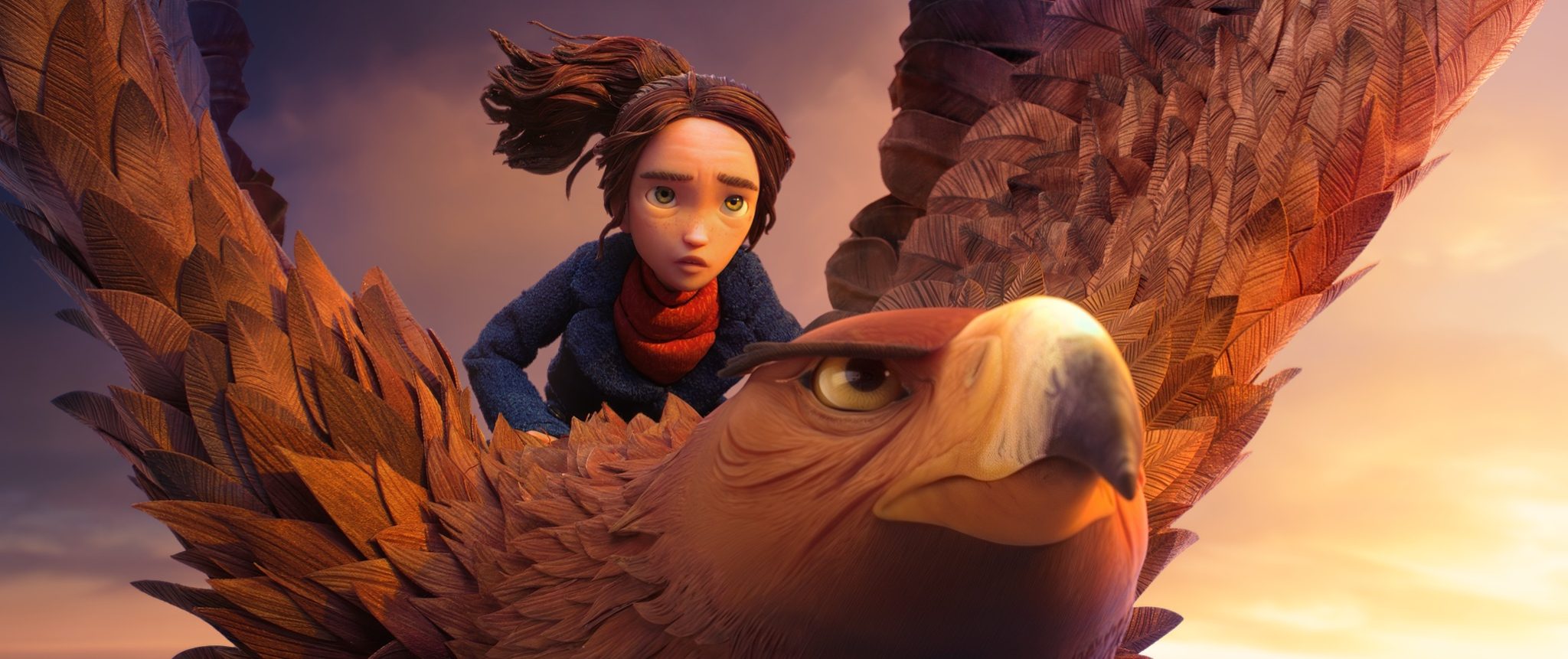
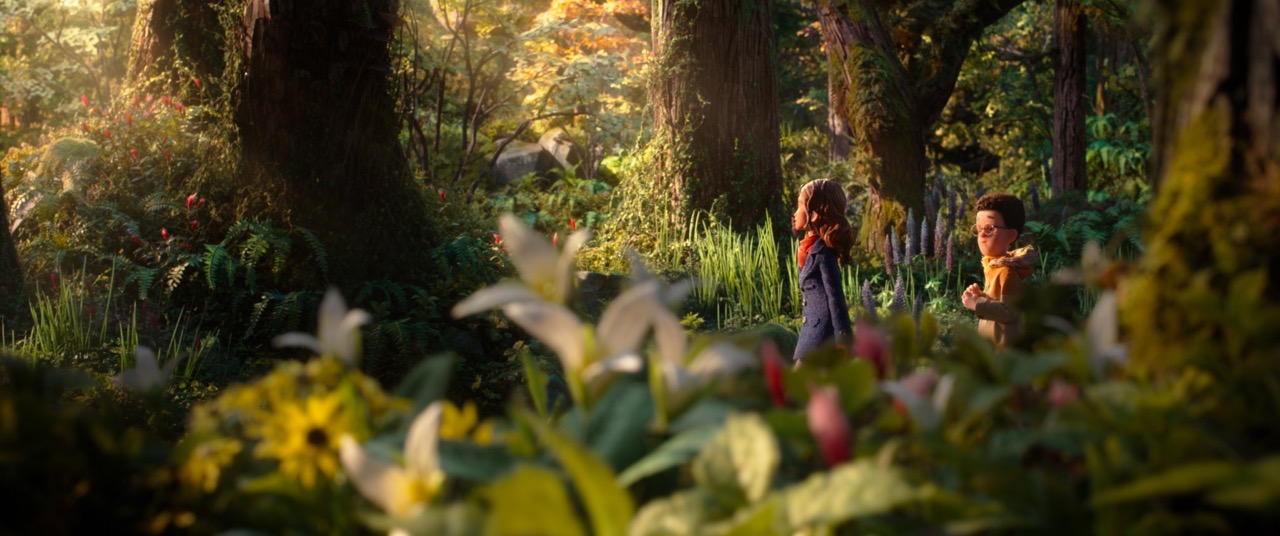
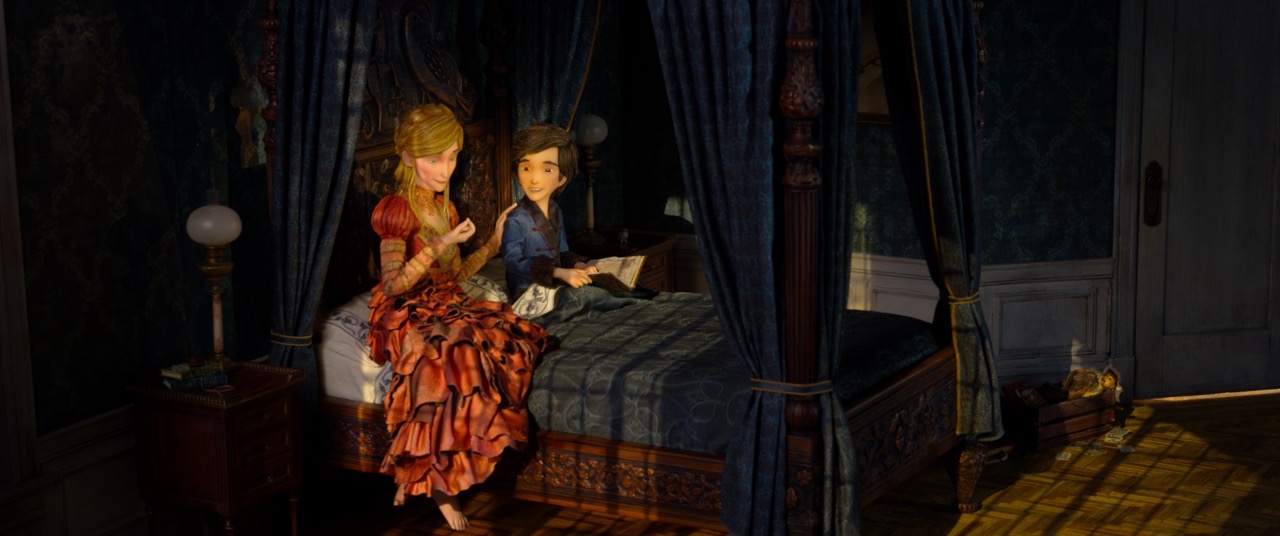
Cook dresses characters the way a novelist describes them. Prue has a blue town coat—“something she wraps up in to go and have coffee and nerd about in cafés around Portland”—and an adventure outfit of patched jeans, perhaps patched by her mother, and the warm hiking boots that “a lot of us in Portland have by the door for tramping around the forest”. Her silhouette barely changes, because Prue already knows who she is. Curtis, the classmate who tags along because he has a crush on her, goes through costume after costume. A “slumpy old parka” with rain drips down it, Converse high-tops, a soldier’s uniform he doesn’t want to wear, and a bandit’s vest of scavenged things all show Curtis is still finding out who he is.
The best thing Knight can say about all this craft is that you shouldn’t notice it. “If you’re doing your job properly, it’s invisible,” he says. “Technique in and of itself is meaningless.” The same goes for the cast. In animation, he says, “the only tool an actor has to bring a character to life, the entire range of human emotion, is their voice”. So Laika designs a character first, then lays clips of actors’ voices against the drawings to see who fits.
Alongside Bassett, the cast of Wildwood includes Mahershala Ali, Awkwafina, Jacob Tremblay, Carey Mulligan, and, as Maxim, the snarling commander of the coyote army, Tom Waits. It is the one moment in our conversation when Knight’s composure gives way to glee. “They told me there’s no way he would say yes,” he says. “I said, ‘I don’t give a shit. I want Tom Waits in this movie’.” Waits, it turned out, had seen Laika’s films and loved them. “He was like, ‘This is the quickest yes I’ll ever give’.” Knight wanted Maxim to sound “like a character who’s gargled with shards of broken glass. And Tom brought that, and then some.”
Knight is clear-eyed about the odds he and his chosen art form face. “Stop-motion is never going to be the dominant way stories are told,” he says. “A studio executive is never going to look at a balance sheet and recognise, ‘What we really need is a bunch more stop-motion movies’. It’s only because people care about them that these things get made. If, in the end, the world decides they don’t want these things, they will cease to exist.”
Which brings the argument back to the puppets, and to the people behind them. Ask Jones why anyone would go to this much trouble for a film so seamless that much of its audience will assume it was made on a computer, and he answers without hesitation: “I believe tactile filmmaking is very important for our psyche. You are able to breathe when you see something real. Somehow, that’s telling you on a subconscious level that you are connecting with this thing. It might not be a quick fix, but I think it sustains over time.”
“Stop-motion is never going to be the dominant way stories are told,” he says. “A studio executive is never going to look at a balance sheet and recognise, ‘What we really need is a bunch more stop-motion movies’. It’s only because people care about them that these things get made. If, in the end, the world decides they don’t want these things, they will cease to exist.”
For Knight, the craft and the feeling have never been separable. He put his own life into Wildwood—“moments from being a father and being a parent,” he says, “experiences I’ve had with my own parents, my own experiences of loss and grief, my own experience of love and healing”—and so did others. “I had many, many conversations with some of my key collaborators where we opened up about things we’d gone through, and we were crying together,” he says. “If you’re going to tell a story like this and be honest, you have to be vulnerable. You have to go inside those darkened corners of yourself and pull some of these things out… [then] await the world’s unsparing judgment.” A film, Knight says, is “an invisible handshake. The storytellers reach out their hand to an audience, and that handshake is incomplete until the audience reaches back.”
The first audience to reach back, as far as Lowry knows, was in St Johns. He was at the Twin Cinema—the real one—for a horror movie when, without warning, the Wildwood trailer came on, opening on the St Johns Bridge. “The room went dead quiet,” he recalls. When it ended, the audience applauded. “I’ve never heard of anybody applauding a trailer,” he says. “It gave me chills, because I realised how special it was to them.” Most people who see Wildwood will never set foot in St Johns. But, for a moment, in a cinema that also exists in miniature behind a black curtain at Laika, this handshake was complete.
Wildwood is in cinemas now