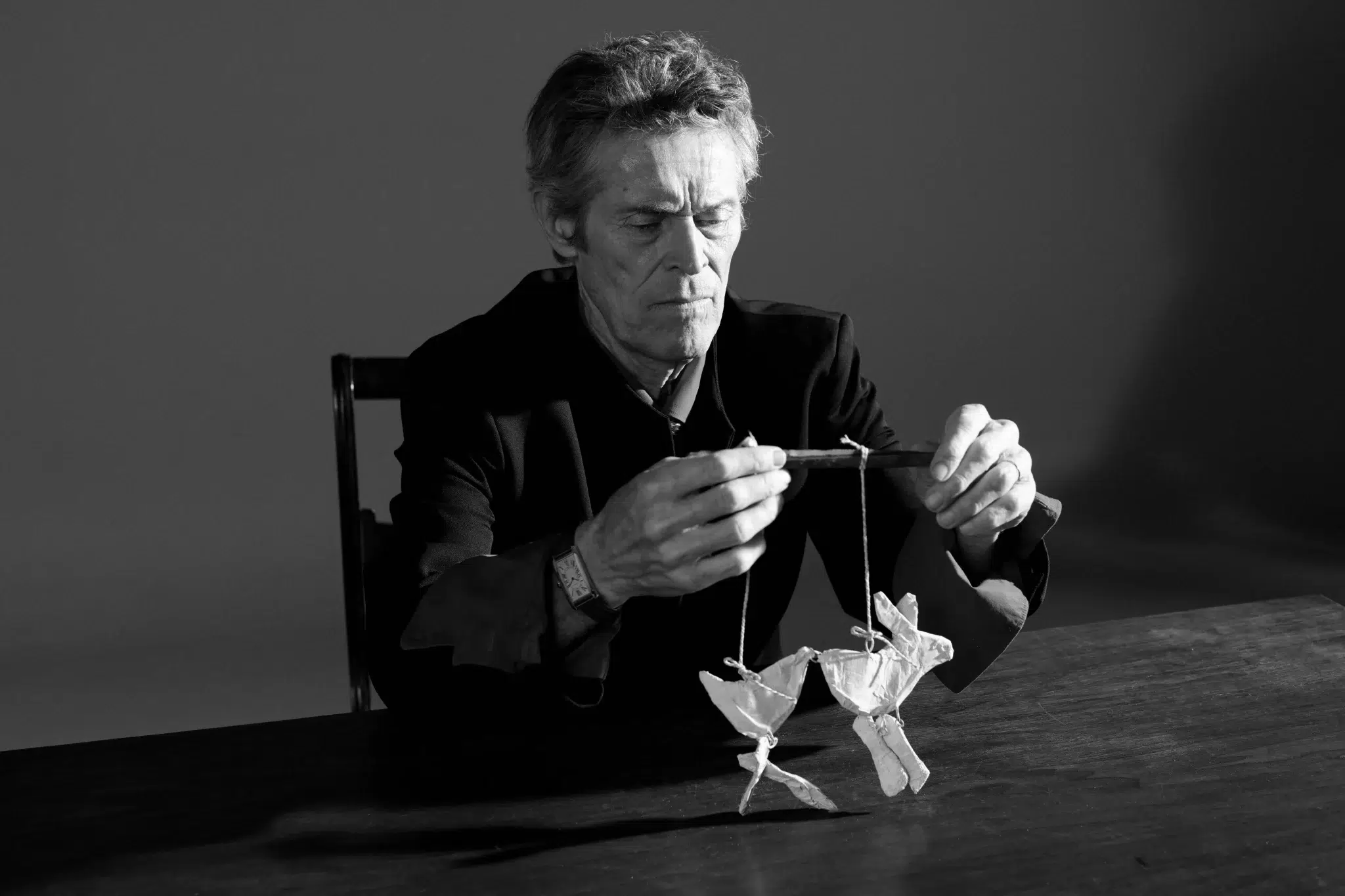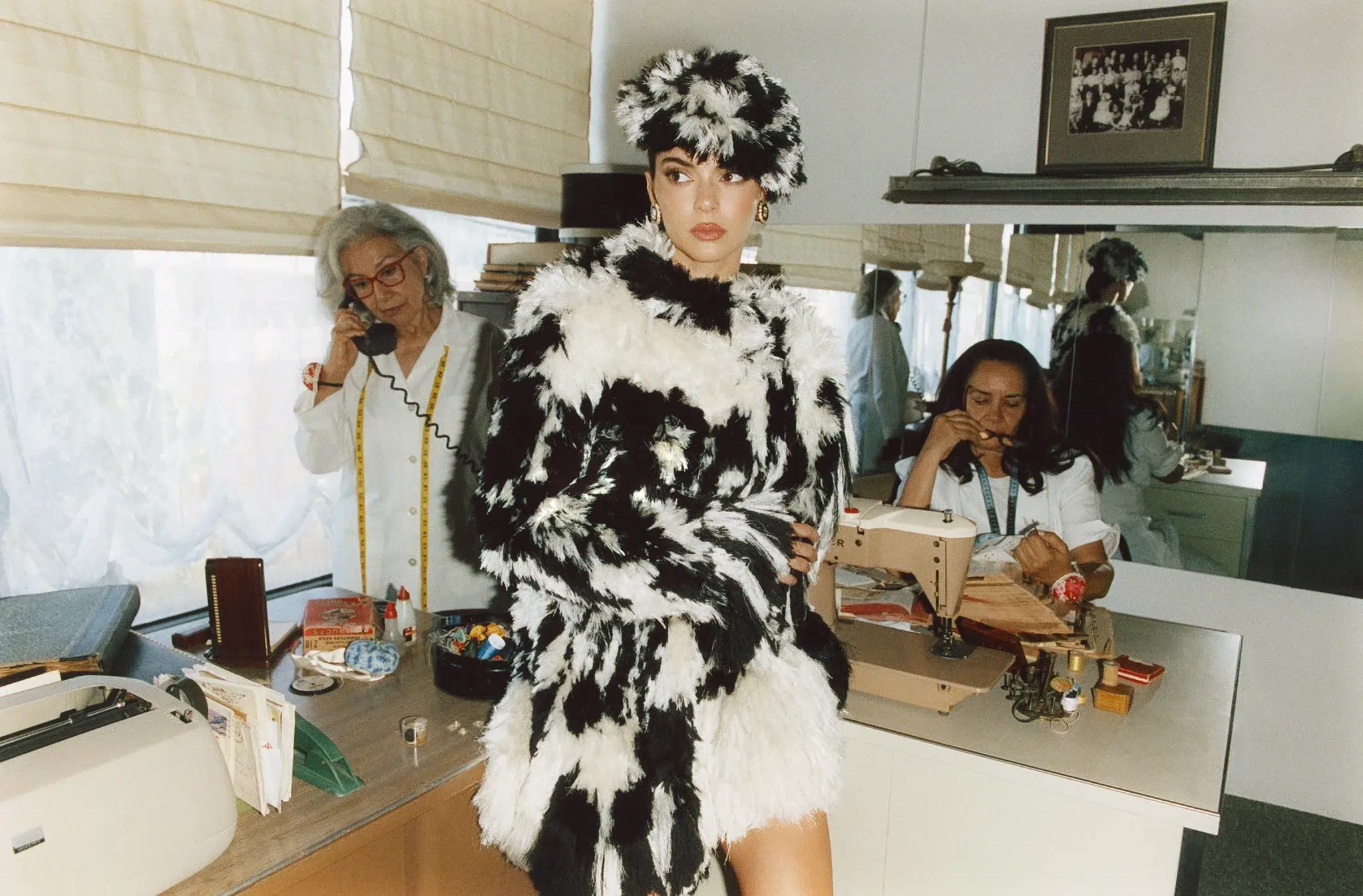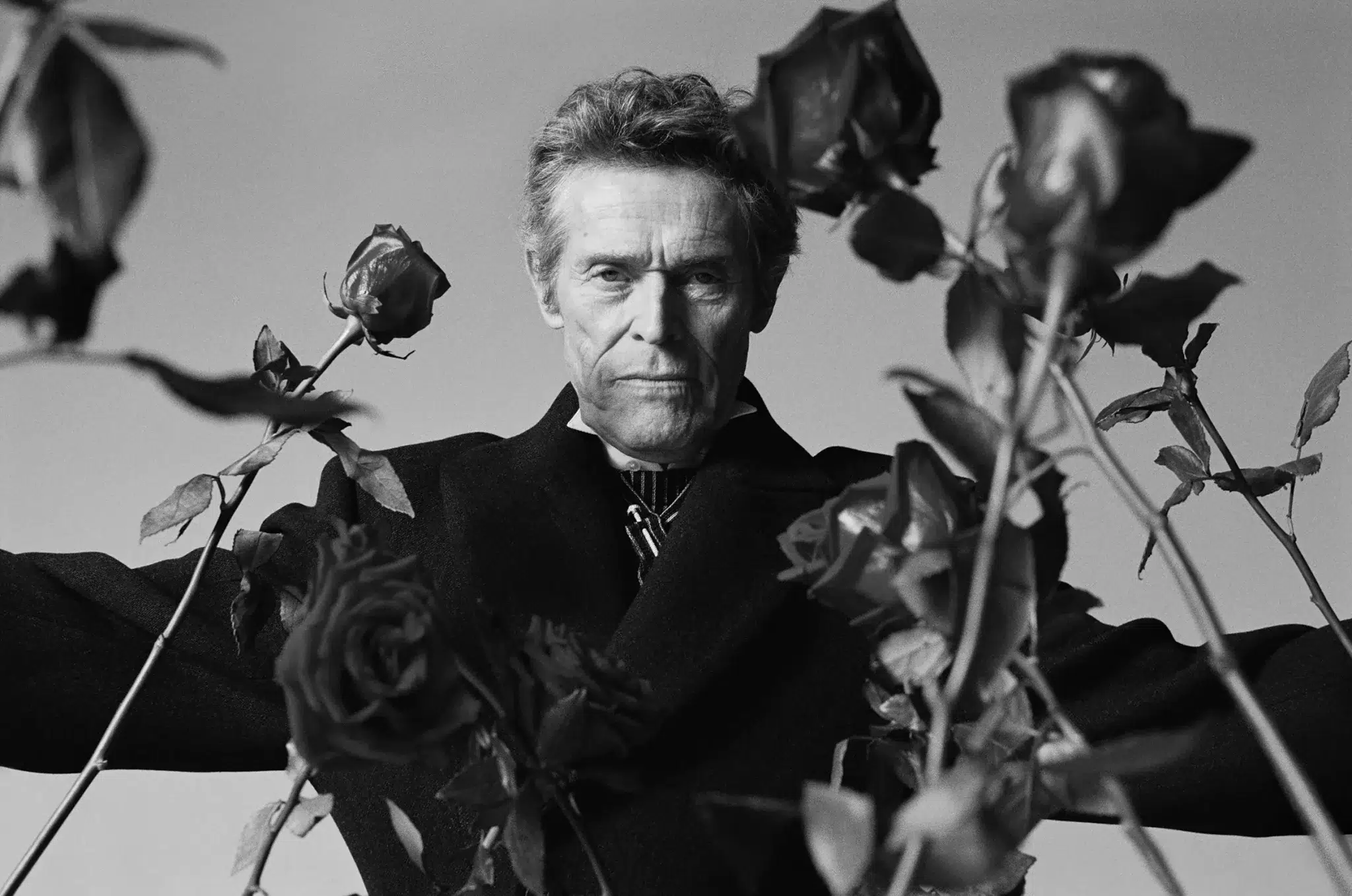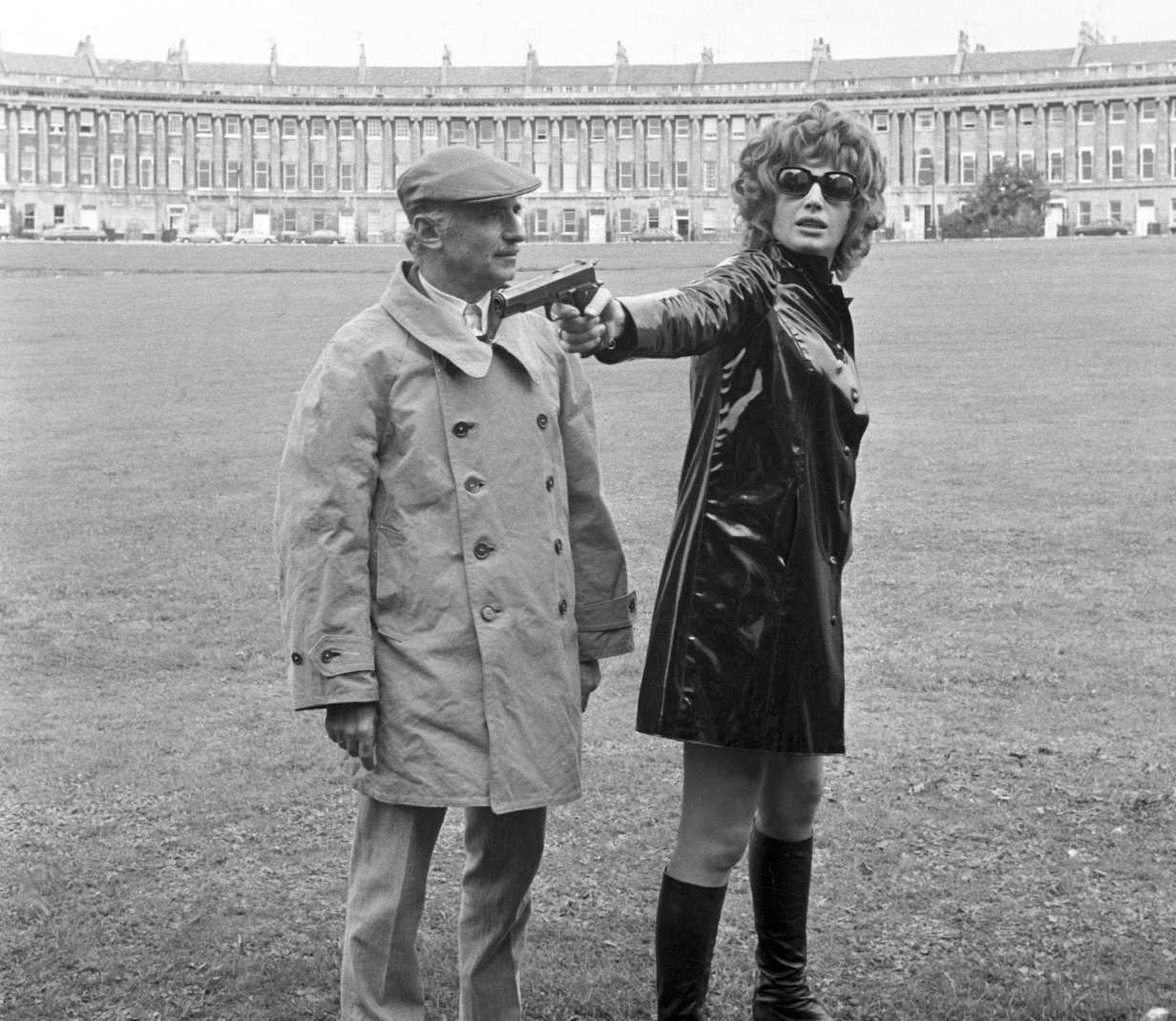


Filmmaker Sally Potter and costume designer Sandy Powell speak to Rosalind Jana on the style legacy of Orlando and how, three decades later, it remains a quintessential period influence, not only in film but on fashion runways. Images courtesy of Sally Potter and Adventure Pictures.
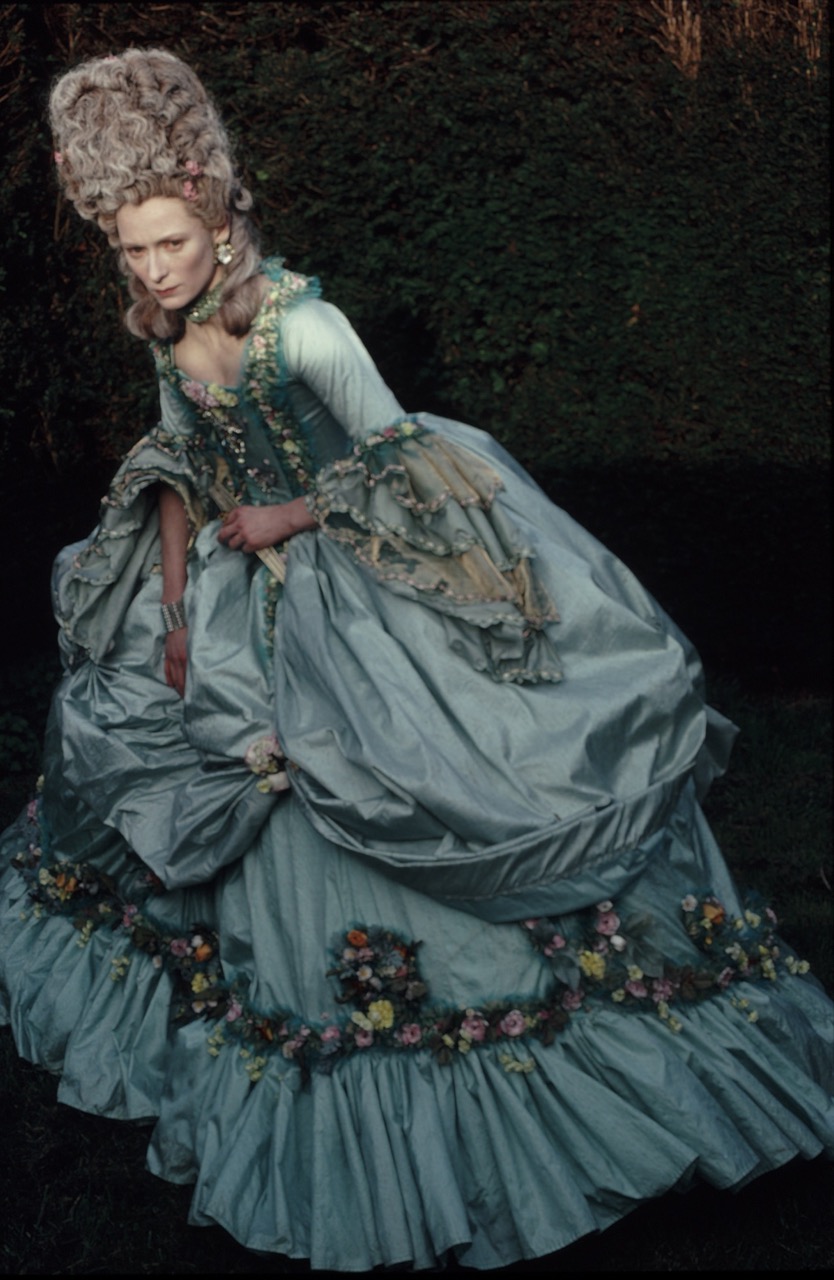
Midway through Sally Potter’s Orlando (1992), our heroine gathers her frothing, flower-studded skirts and disappears into a maze. She is in the mid-18th century, wearing a panniered gown in a shade of pale blue reminiscent of sugared almonds, her powdered wig piled as high as her hips are broad. The fabric is cumbersome, rasping against the high, inescapable hedges. She has just refused a proposal and been reminded that a woman without a husband is nobody—“Spinster!” she spits to the camera, “Alone!”—so she storms towards the heart of the labyrinth, ducking and weaving through the yew. The camera briefly loses her; when it finds her again, she has changed. The panniers have contracted into a Victorian crinoline, confectionery colours replaced with sombre shades of black and deep green. The wig has disappeared, red hair now tightly bound. She has entered the maze in one century and exited it in the next. It is now 1850, the future hurtling towards her in a puff of steam from a passing train.
It’s an exhilarating sequence; the perfect illustration of Potter’s sensitivity to the way time folds, bends, and bolts sideways in Virginia Woolf’s 1928 novel, in which an aristocrat with good ankles and bad poetic judgement lives for 400 years and turns, abruptly but matter- of-factly, from a man into a woman. In 2020, Andrew Bolton, the Metropolitan Museum’s Costume Institute curator, cited the scene as a key inspiration for that year’s exhibition About Time: Fashion and Duration, its seamless shifting from one era’s silhouette to another shaping the show’s examination of clothes travelling through the centuries. Potter’s adaptation has been as pivotal as Woolf’s text in shaping the fashion world’s recent obsession with Orlando—its costumes and painterly visuals practically offering a standing invitation to plunder. This interest, though, is nothing new. The robe à la française worn by Tilda Swinton in the maze was run up by costume designer Sandy Powell in cheap silk dupion; within months, Swinton was pictured wearing it in the pages of American Vogue, photographed by Karl Lagerfeld for the July 1993 issue.
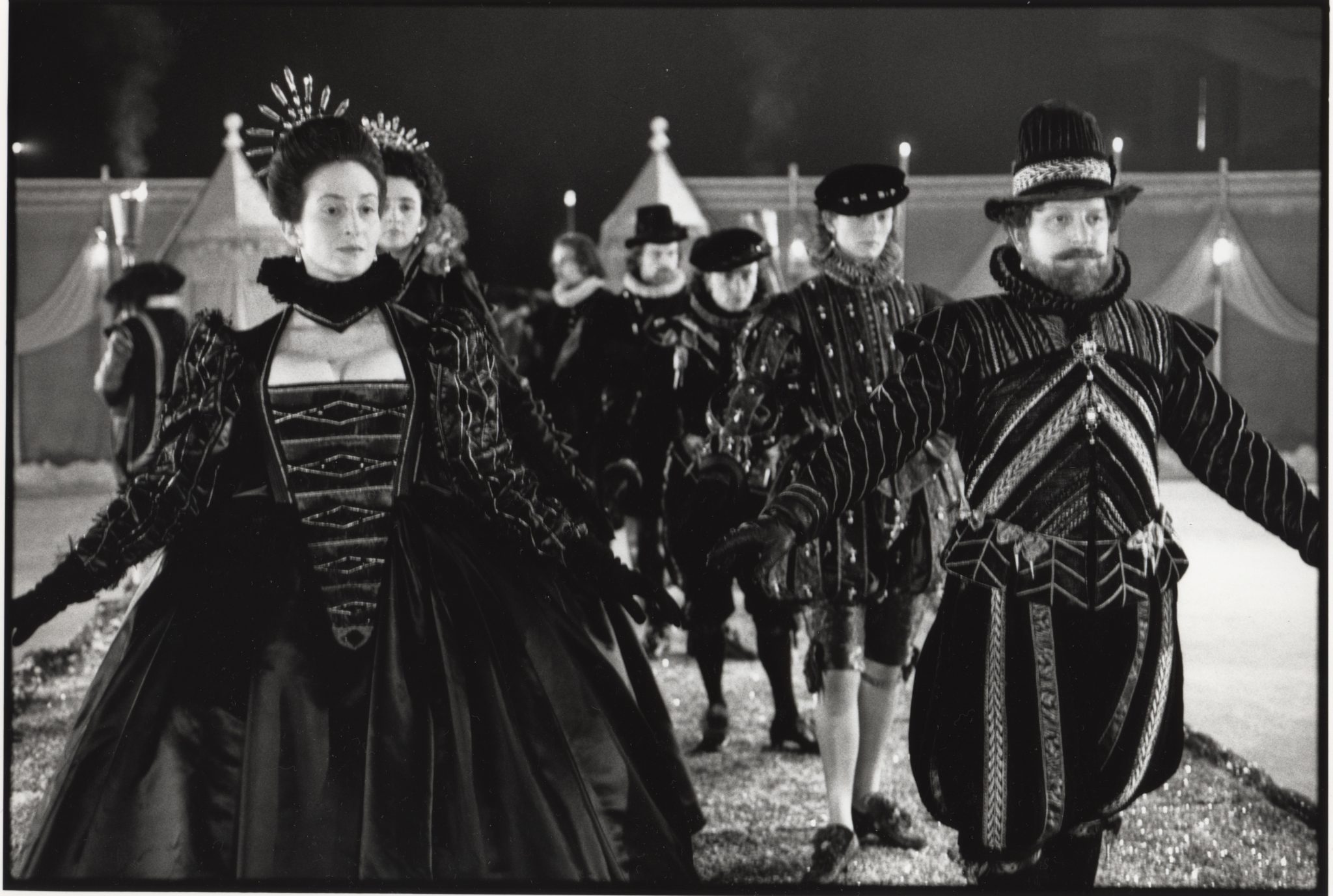
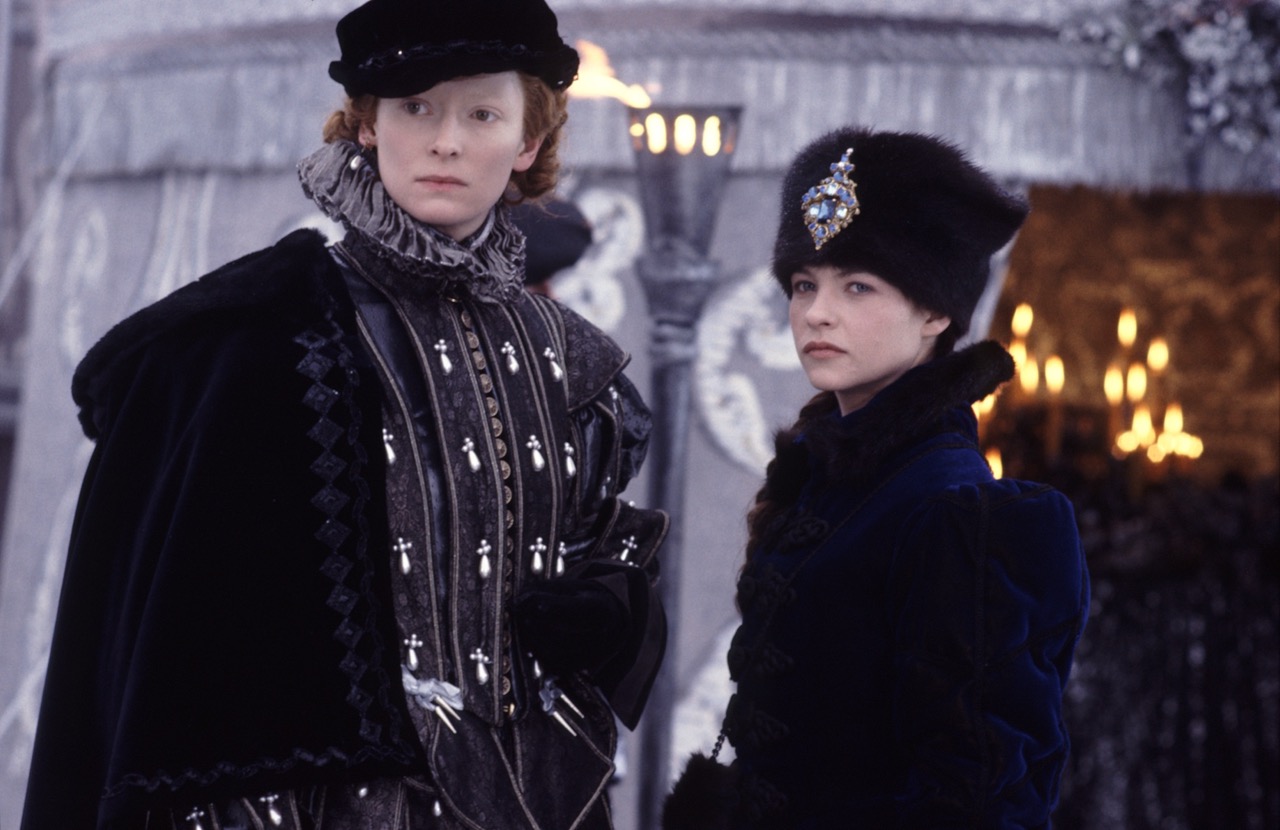
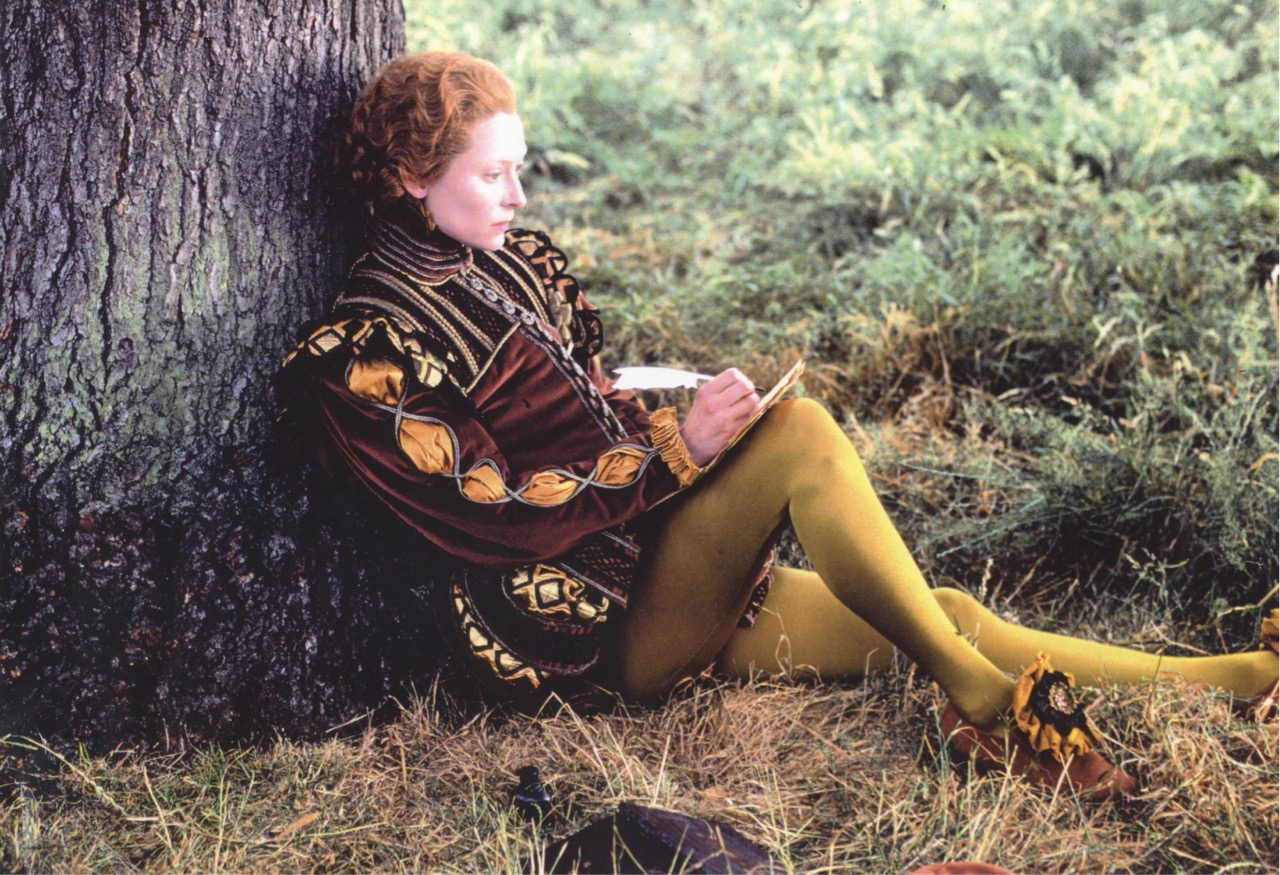


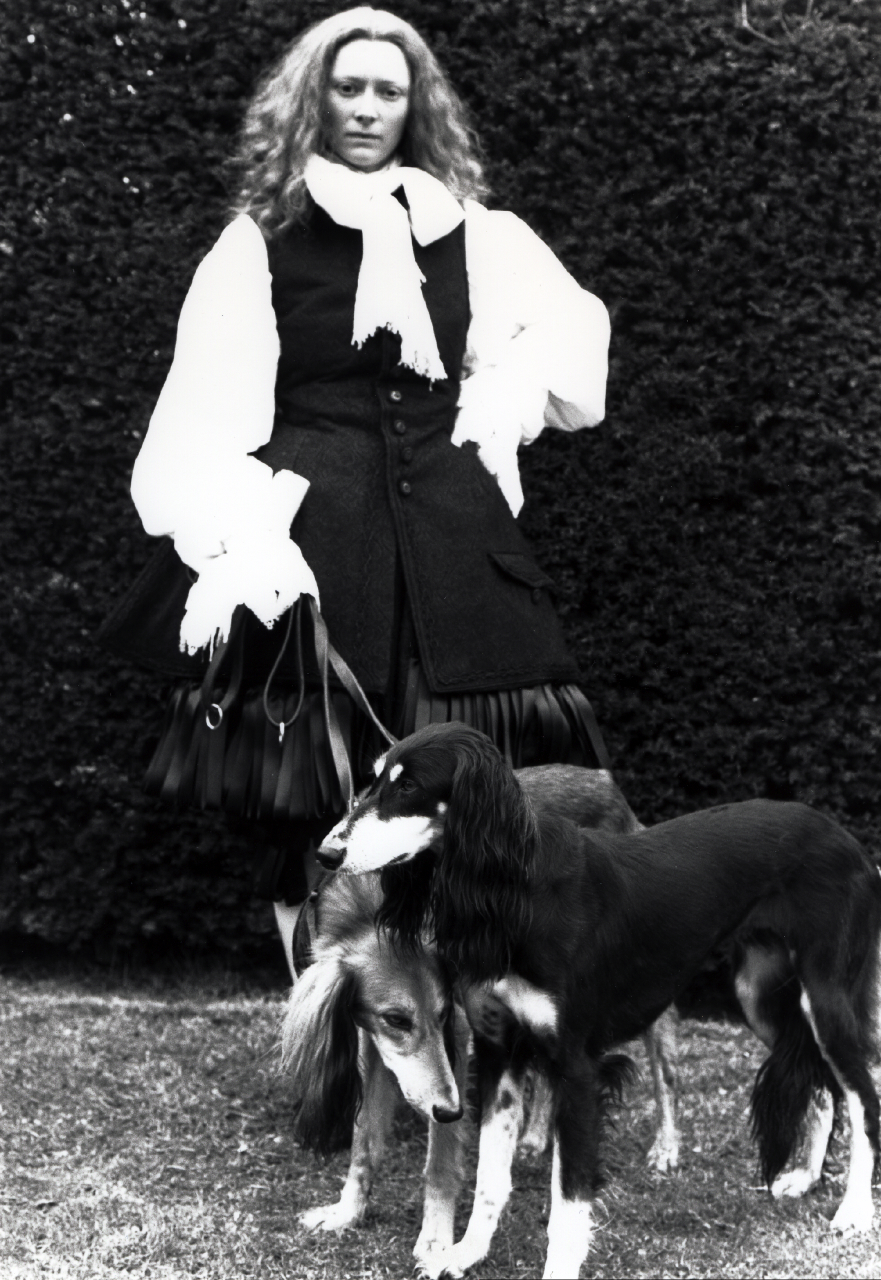
It began with a letter. Potter, who had seen the cinematic potential in the book when she first read it as a teenager, spent the best part of a decade trying to finance the film (“almost impossible,” she says). In that long period of purgatory, she met with a succession of costume designers, none of them quite right. Finally, a handwritten note arrived in the post from Powell, “detailing all the reasons why she would be perfect for the job”. They met. Potter showed her the visual research she had amassed: photographs of Swinton, collages, landscapes, “to give the feeling that the film existed already, in some sense, and my images were a glimpse of its future incarnation”. The affinity was instant.
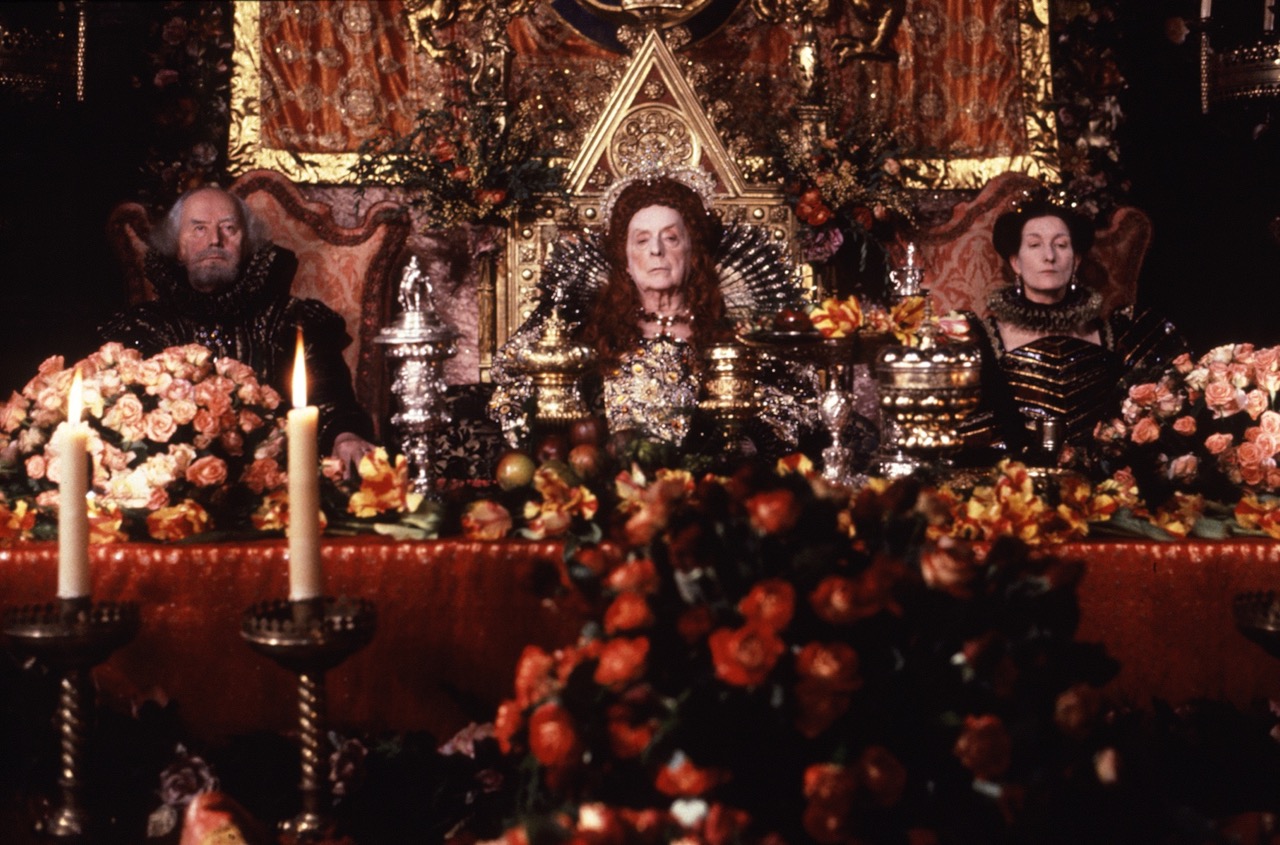
The design system the two women arrived at had a spiritedly stylised aesthetic that owed as much to theatre as it did to its art-film precedents, including Peter Greenaway. Potter wanted what she calls a quality of “exaggerated realism… not inaccurate historically, necessarily, but not ploddingly correct either”. To enhance the transitions through time, each era was assigned a strict palette—Elizabethan red and gold, Victorian purple and green. It was an idea lifted from a passage from Woolf where the mood of each age is described in terms of colour and weather. Powell “took this idea and ran with it, or perhaps I should say flew with it”.
For Powell, a sprinkling of “poetic licence” was key to unlocking the costume cupboard. “Orlando is a fantastical story,” she explains— comparing it to her subsequent work on Shakespeare in Love (1998) and The Favourite (2018), with both films treating history as malleable material rather than a set of facts requiring unswerving fidelity. “I was fairly early on in my career as well,” she adds. “I was just glad I got the job. Only in retrospect, years later, [did] I think, ‘My god, how lucky I was to get that particular fantasy’.”
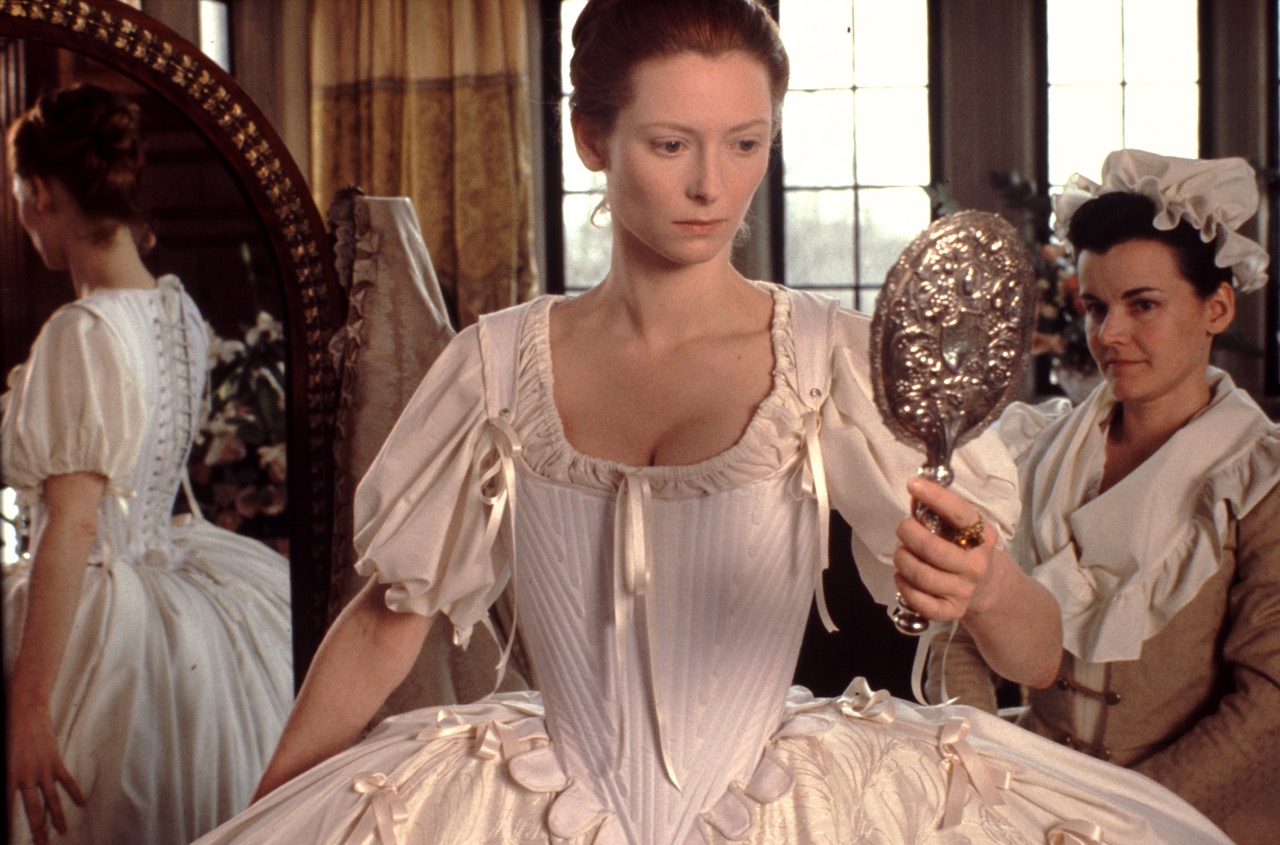
Tilda Swinton in Orlando (1992).

“We didn’t have time or the money to try lots of different versions… so with styling Orlando, it was just: let’s just do it.”
Sally Potter
Potter and Powell had emerged from the rich creative mulch that was London in the 1970s, 80s, and early 90s. Both women worked across theatre, choreography, music, and experimental film, moving between stage and screen as they collaborated with some of the era’s foremost creative practitioners. Prior to Orlando, Powell had made “a little red dress” for one of Potter’s early works. “Something to dance in,” she recalls. Her approach to costuming retains these kinetic underpinnings. “You always take into consideration movement,” she adds. In the case of Orlando, the bodily element was built into the very marrow of the narrative. “Tilda walks differently when she’s the boy than she does when she’s female.”
Swinton, of course, had arrived on the film scene via the same route as Powell: Derek Jarman. Powell worked on Caravaggio in 1986 and The Last of England in 1987. By the time of Edward II in 1991, she had honed her incandescently modern approach to historic dress. Swinton appeared in all these films, and first met Potter on a march in 1988, with Jarman by her side. Like Potter, Swinton’s relationship to Orlando had been forged in the feverish heat of adolescence: she had slept with a copy of the book under her pillow at boarding school. Jarman, characteristically generous with the talent around him and alive to the cinematic magic of collisions between past and present, advocated to get Orlando off the ground. He would be dead within two years of its release, but his presence was palpable. The path he had trodden—iconoclastic, scrappy, weaving politically astute provocation with luscious imagery on a skeletal budget—cleared the way for his inheritors. Powell puts the lineage plainly: “Like Tilda, I went from Derek Jarman and graduated to Orlando.”
The money, of course, was minimal. Orlando was assembled from a patchwork of European co-production funds and shot in 10 weeks. What might have been a handicap became a spur: the shortfall, Potter says, bred “a kind of raging inventiveness”. There was no budget for second thoughts or finessed outcomes. “We didn’t have time or the money to try lots of different versions,” Powell says, “so with styling Orlando, it was just: let’s just do it.” She was young and unencumbered by the caution that experience brings: “I was, in a way, a lot bolder, a lot less reserved. There wasn’t time to think things through properly, and so a lot of it was from the gut and from the heart.” The gowns that would later be photographed by Lagerfeld and hung in museums were, in the moment of their making, decisions taken at speed, using cheap materials to dazzling effect.
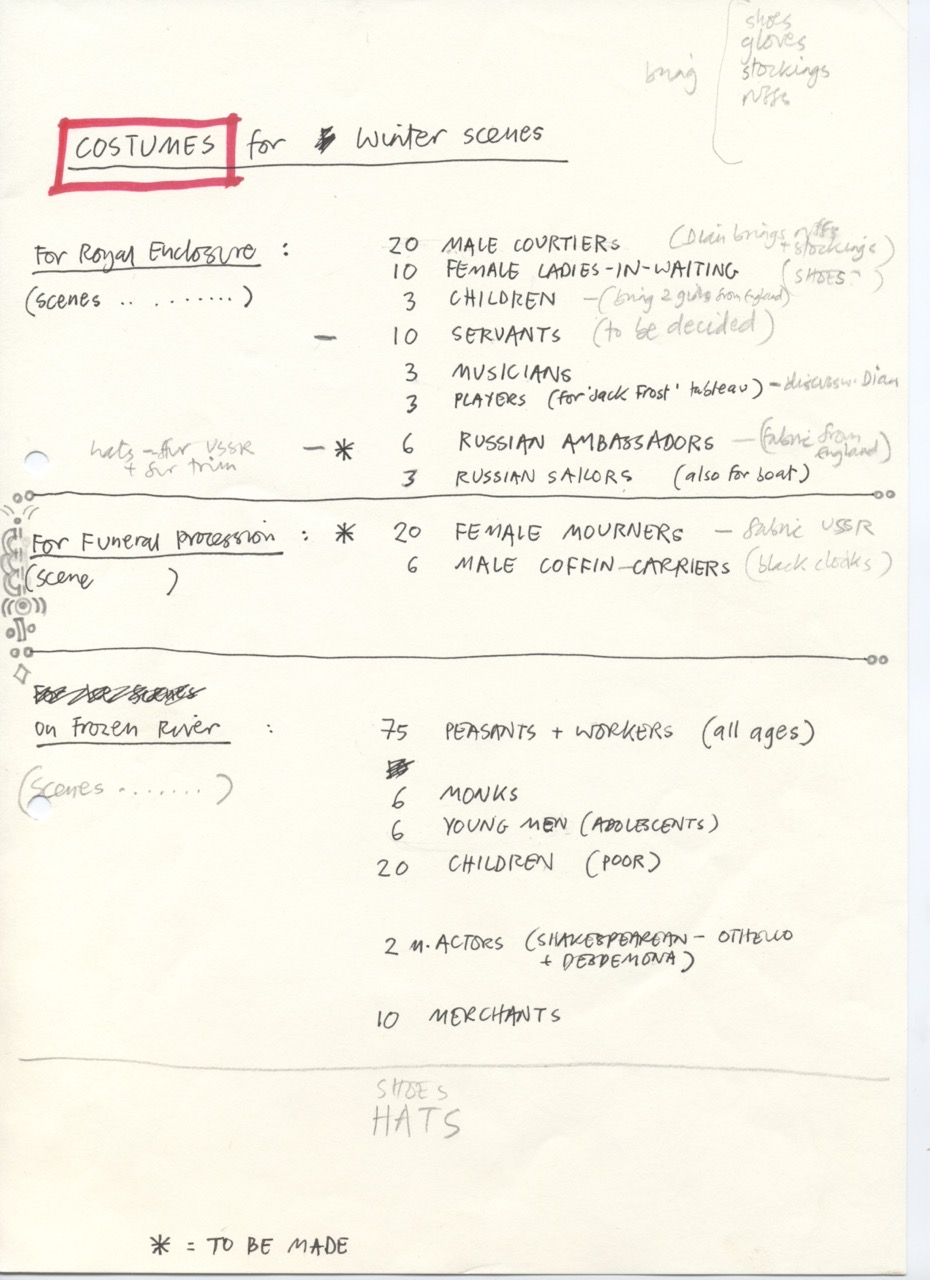
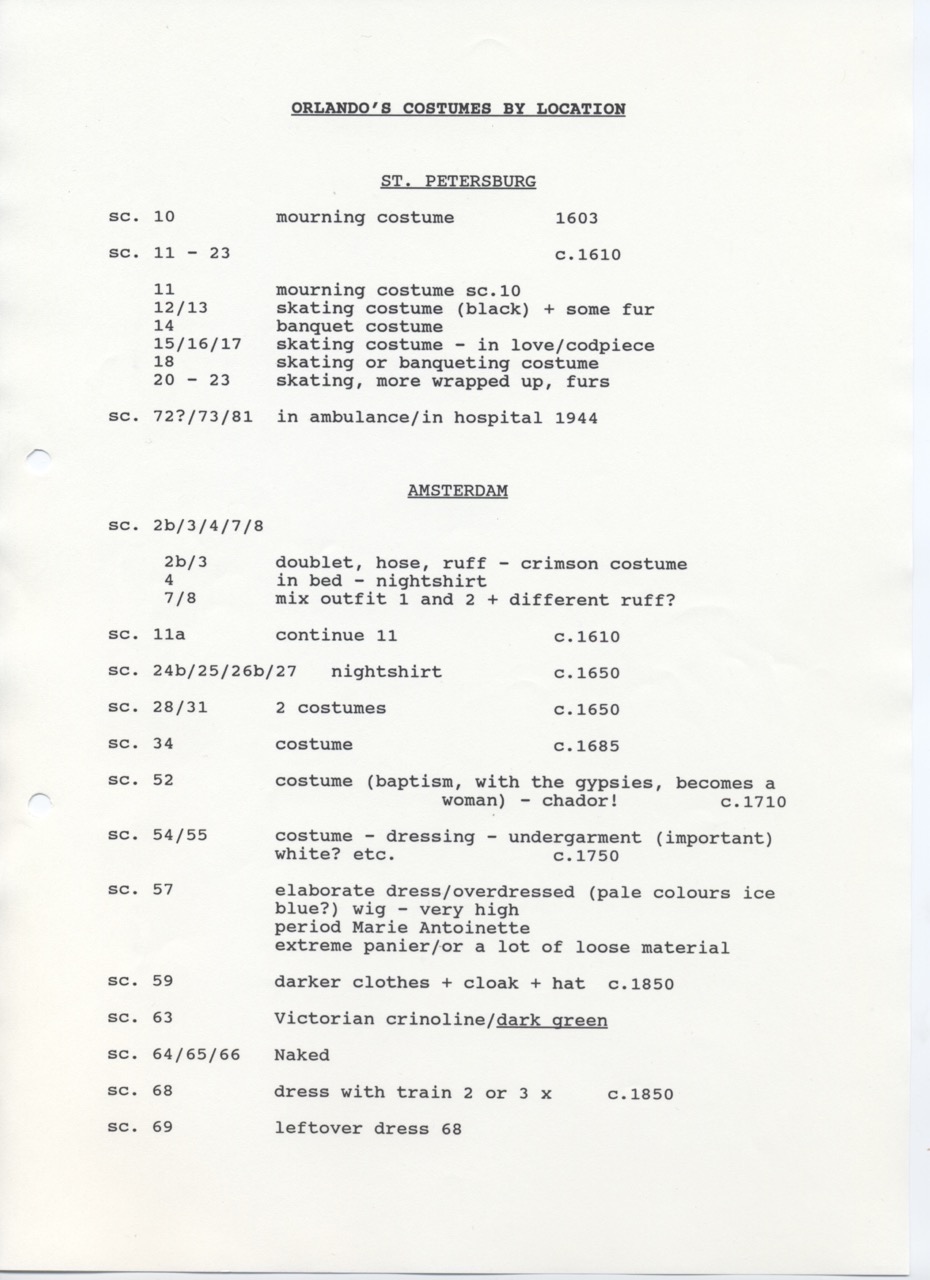
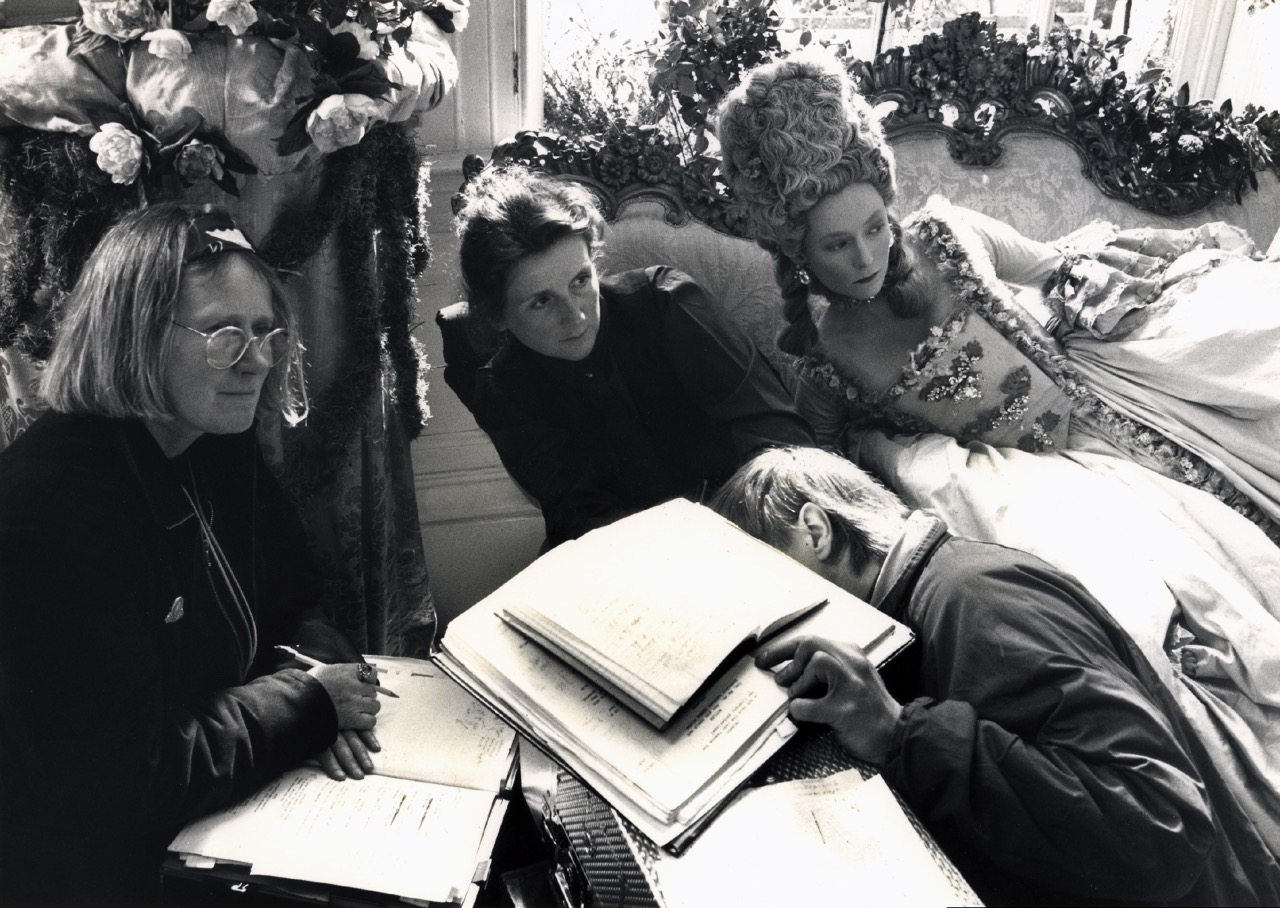
Sandy Powell’s costume notes for Orlando.
The same anarchic instinct governed the casting. For the role of Elizabeth I, Potter chose Quentin Crisp—the true queen of England, as she saw it. Powell flew to New York to take his measurements in his tiny apartment and found him frail. The costume she built— brocade and pearls and a great jewelled collar—was so heavy he had to sit for most of the shoot. He bore it, Potter recalls, “with patience and stoicism”. During a long night on a lake standing in for the Thames, she took to shouting a single note of direction across the water—“Just keep being queenly, Quentin”—to which he replied, “I will try, dear”, in a “faint, quavering” voice that, she says, “made me love him forever”.
In recent years, Orlando’s renaissance has come via multiple industries: opera adaptations, theatrical works, and countless nods from designers ranging from Burberry and Fendi to the appearance of Powell’s costumes in last October’s Vogue World: Hollywood spectacle. These resurrections have, with varying degrees of success and understanding, used both the book and film to riff on androgyny, fluidity, and self-invention. Neil Bartlett’s 2022 play, with Emma Corrin, narrowed it down to a single question: who am I? But Woolf’s protagonist is less plagued by the existential aspects of identity than the material ones. Orlando surveys herself in a mirror after 400 years and a change of sex and concludes, unbothered, that she is the same person; no difference at all. The trouble begins beyond the glass, where the world decides the legal and cultural consequences of outer appearance. Woolf, after all, wrote the novel as a love letter to a woman who could not inherit her own house: Vita Sackville-West lost Knole because she was not a son.
Powell’s costumes do not tell us who Orlando is; they reveal what he, and later she, is permitted to be. As a young nobleman, he is unencumbered in a doublet and hose. As a woman, she is upholstered: corseted, wigged, wedged into panniers and crinolines. “You become what you wear,” Potter says. “You move differently, you assume the role thrust upon you.” But beneath this outer shell, which can always be removed, a quality of indeterminacy thrums. That, Potter is careful to say, is Woolf’s doing: hers was a “subtle rendition of what constitutes maleness and femaleness”, and, more radically, a “gentle demolition of ‘identity’” combined with “her portrait of the joys and the tragedy of eternal life”.
Asked about Orlando’s influence on the fashion world, Potter is circumspect but generous. “[It] may well have to do with the central theme of impermanence, a state of perpetual change, that every designer will recognise as central to their work,” she reflects. Fashion is built on the certainty that everything it makes will be superseded. It is, itself, a form of time travel, in which the past is continually raided to furnish the future, and the present is always on the brink of expiry. Visually, she also recognises the draw of what “the film left out; not just the restricted colour palette but a refusal to tell the story as a conventional period film”.
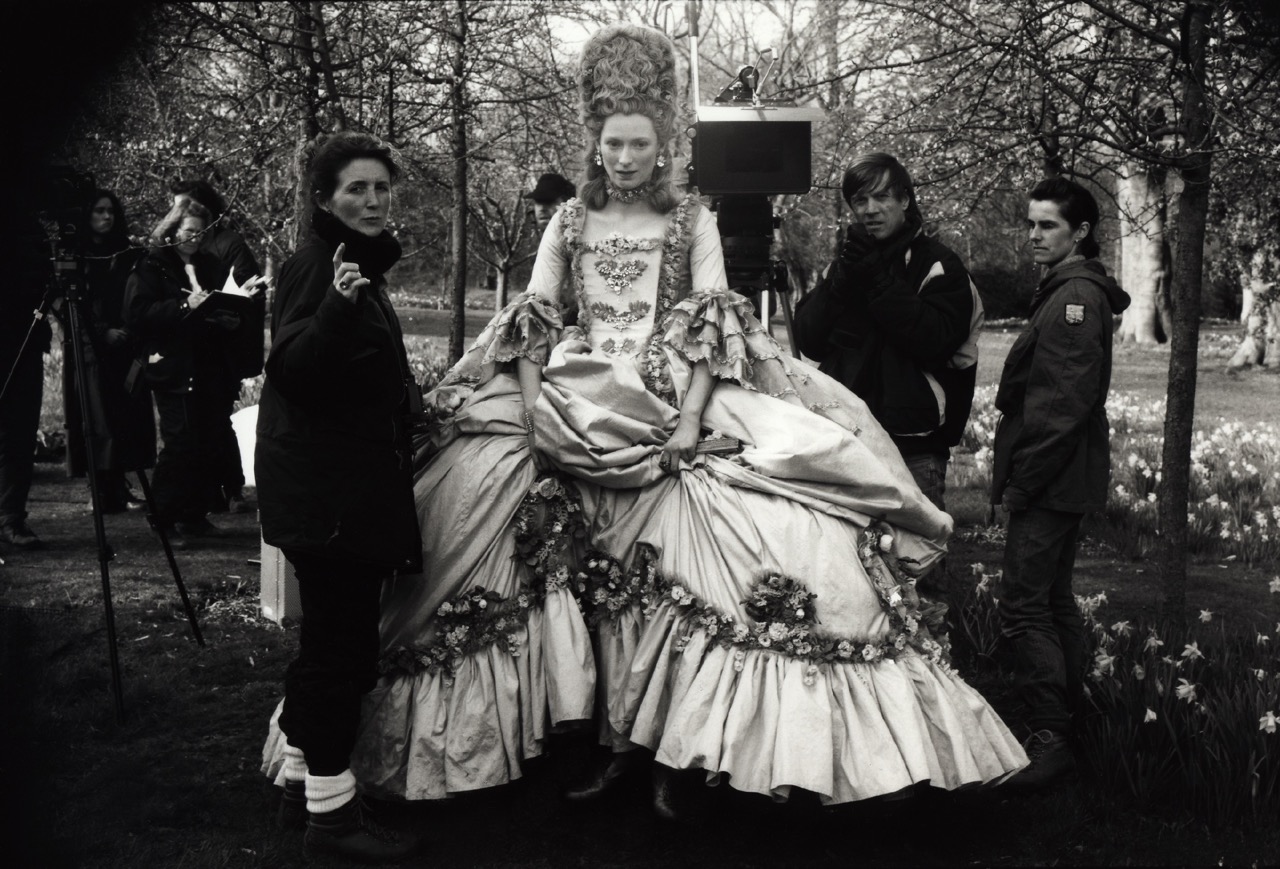
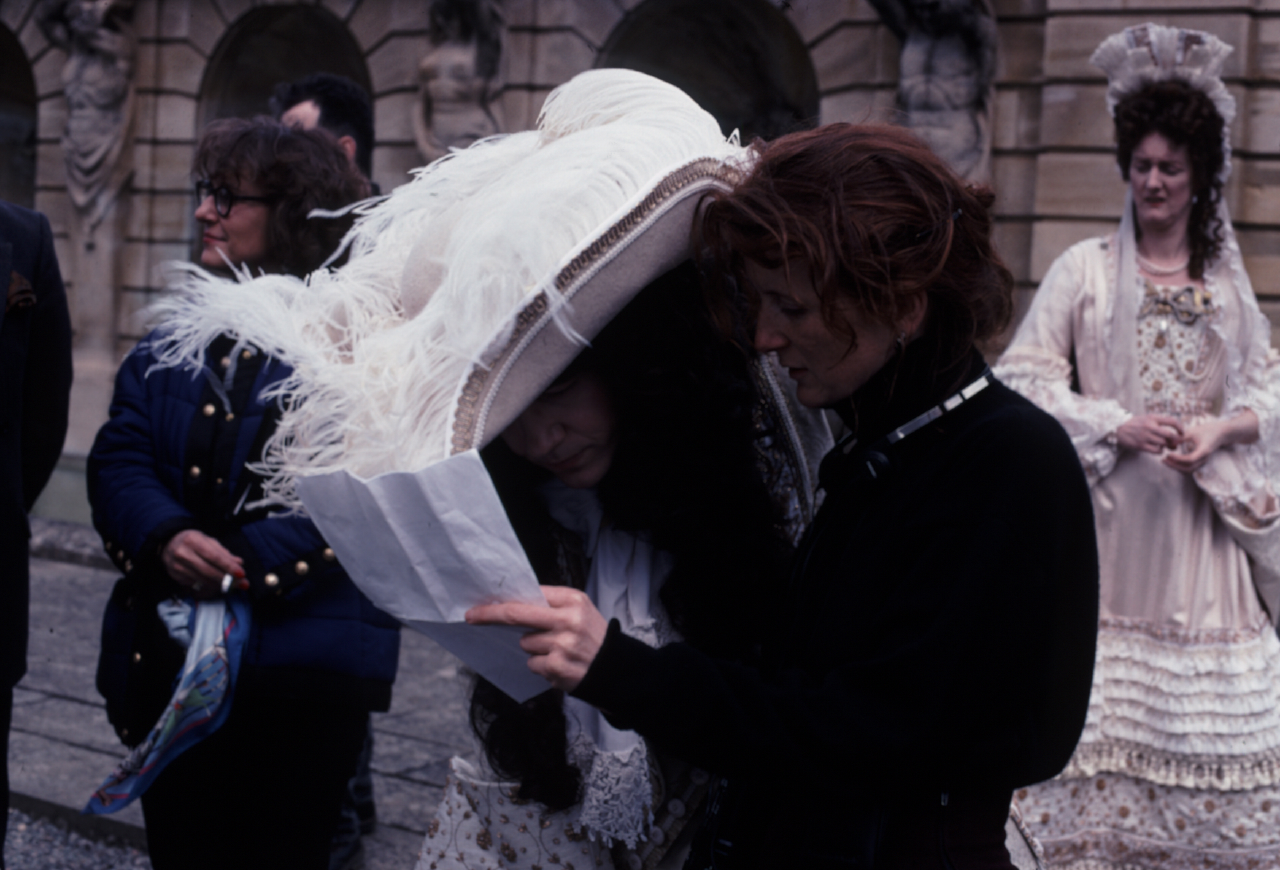
On the set of Orlando (1992).
“You become what you wear… You move differently, you assume the role thrust upon you.”
Sally Potter
For three decades, Potter has been invited, by interviewers and curators and now by an entire industry, to agree that Orlando is a film about gender—and she has always thoughtfully resisted. In August 1992, she told Sight and Sound that the story was “not so much about femininity and difference as about Woolf’s notion of an essential self that lies beyond gender”. But her film, like the book before it, is now an artefact each era recruits—and perhaps re-dresses—according to its own image. What separates the borrowings is not fidelity but attention—and originality of thought. Read or watch Orlando closely and it yields things no one has taken yet. Approach it lazily and you arrive where everyone else has: at a pull-quote about vain trifles, a powdered wig or pressed ruff, and a faint whiff of bohemian Bloomsbury that won’t upset the sexually squeamish.
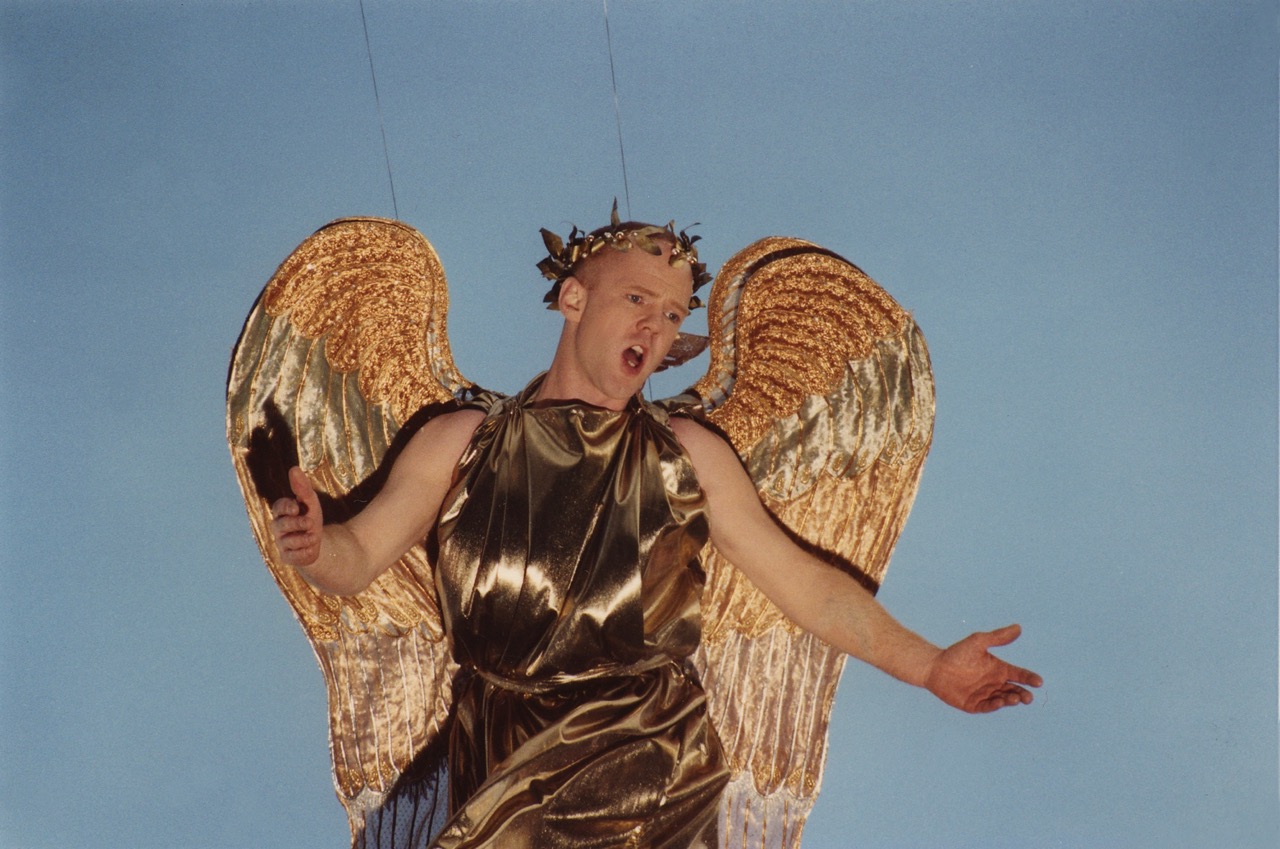
Potter has always insisted that Orlando is not about then but about now: “How we got here.” Which is, really, fashion’s domain too. We look back over transitions in silhouette and style and use them to map the changing tastes, technologies, and social mores that have both preceded and shaped us. The film’s last move, then, is to arrive. “Virginia Woolf ended her book on the day she completed it,” Potter says. “To be true to this idea, I had to bring the film into my present moment.” Orlando arrives by motorbike in shirt and trousers, daughter in hand, an image of the modern woman in an outfit that allows her to move. Behind her, Jimmy Somerville, dressed as a golden angel, sings about freedom from the branches of an oak tree, the music soaring towards the sky.