

Milena Canonero is the greatest costume designer of all time—winning multiple Oscars and styling iconic characters for Stanley Kubrick, Francis Ford Coppola, and Wes Anderson. In this rare profile, her longtime friend Natasha A Fraser speaks with her ahead of the upcoming Marie Antoinette exhibition in Paris and a documentary about the making of the film by Eleanor Coppola, featuring the voices of collaborators and friends Sofia Coppola and Marisa Berenson. Additionally, read Wes Anderson’s short essay on Canonero.
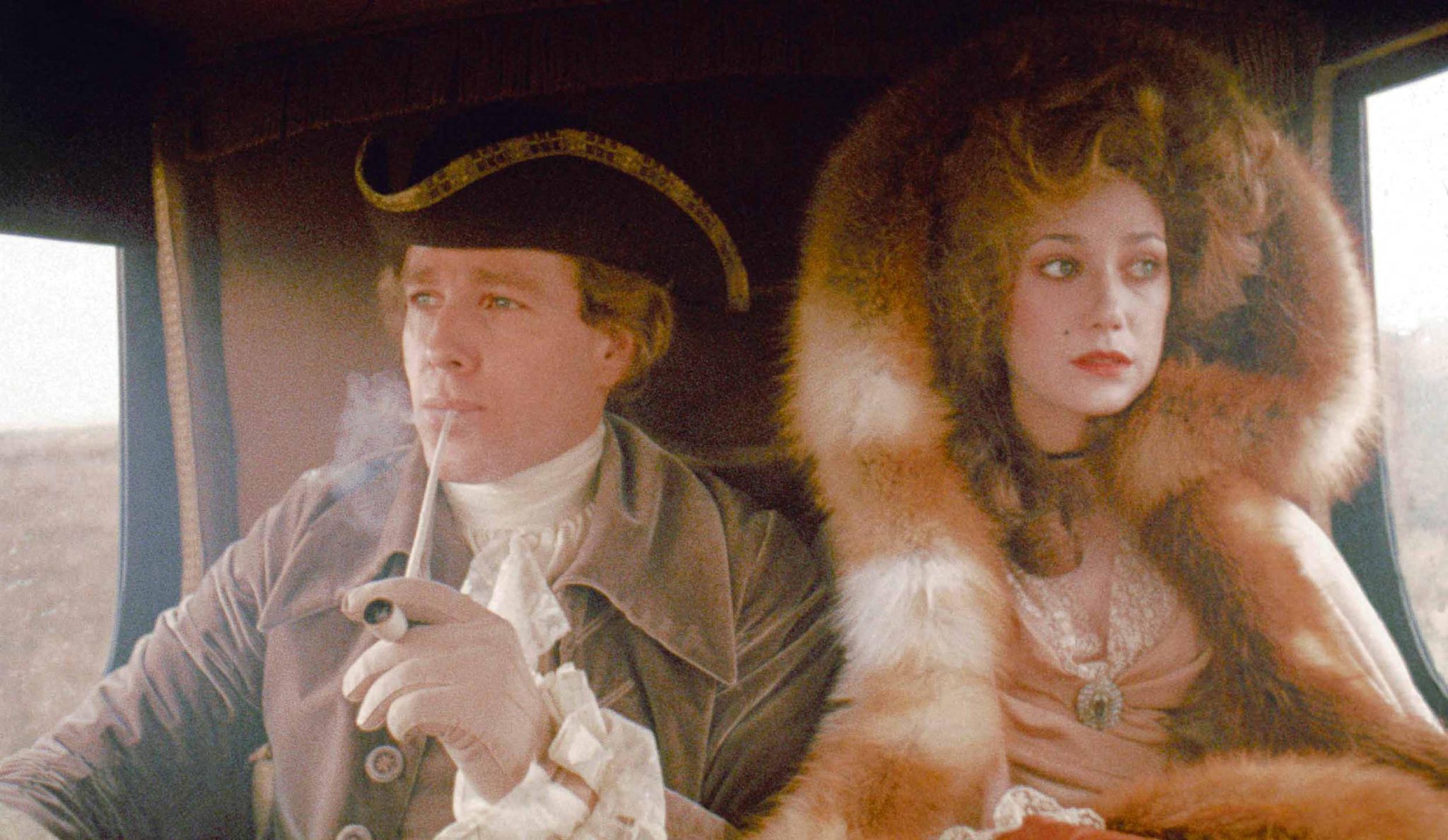
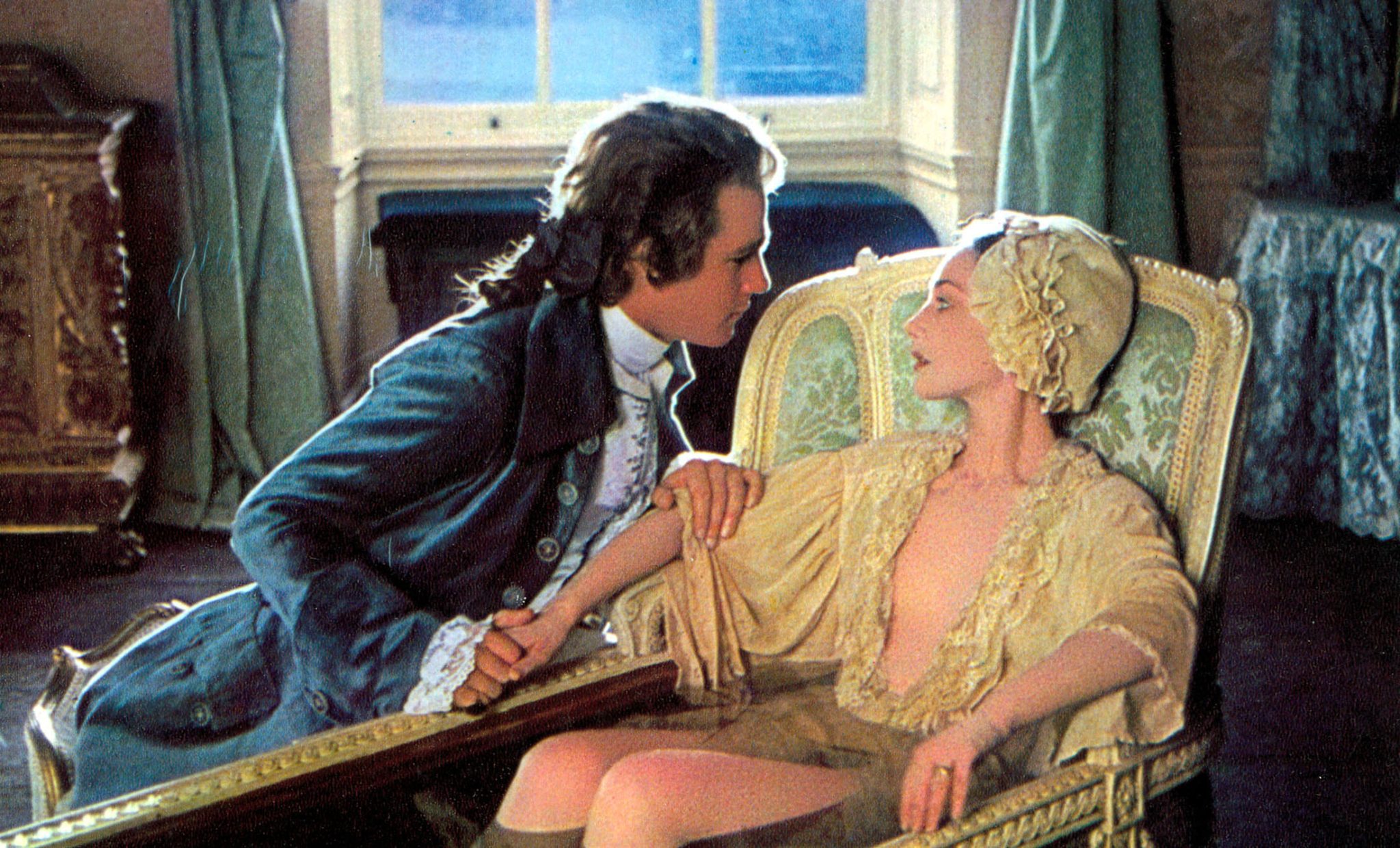
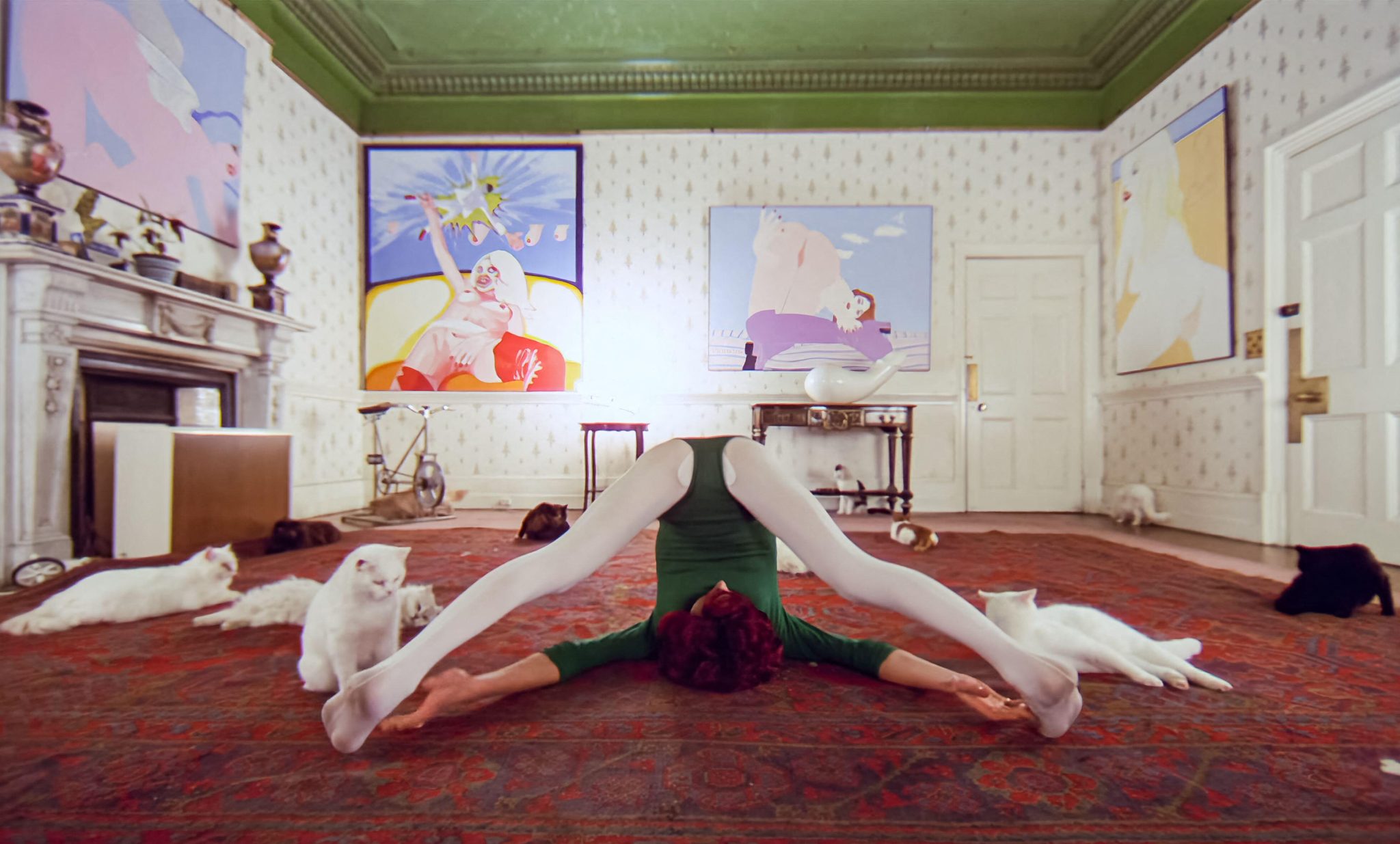
Milena Canonero and I first met in Los Angeles in 1985. The multi-award-winning costume designer and her husband, the American actor Marshall Bell, had just moved from New York. Although my British background was sartorially influenced by Milena’s work—whether it was the menacing droogs and their bovver boots and canes in Stanley Kubrick’s A Clockwork Orange (1971), Marisa Berenson’s powdered exquisiteness in Barry Lyndon (1975), David Bowie’s sculpted silhouettes or Catherine Deneuve’s steely cat eye sunglasses in Tony Scott’s The Hunger (1983)—I had no idea who she was. That said, I was swiftly charmed by Milena’s feline features and “let’s eat pasta” attitude, as she and a fellow Italian concocted a memorably tasty lemon and parmesan al dente dish. We were in the Hollywood home of the British director Damian Harris and his actress wife Annabel Brooks, whose lunches and suppers remain unmatched for their inclusive and exhilarating atmosphere—spontaneity reaching mildly riotous on occasion. Both the Northern Italian Milena and Oklahoma-born Marshall fitted in.
Thinking back, it was a blend of the couple’s charisma, their appreciation for the unconventional, and their understated elegance. (Later, I realised there was dark blue and then Milena’s very own particular take on the shade.) While the handsome Marshall was exceptionally droll, she was empathetic and sweet. It now comes as no surprise that Berenson had introduced them on the Barry Lyndon set. “Milena was sleeping on a bench, opened an eye, saw Marshall and that was it,” she told me. They’ve been married since 1980.
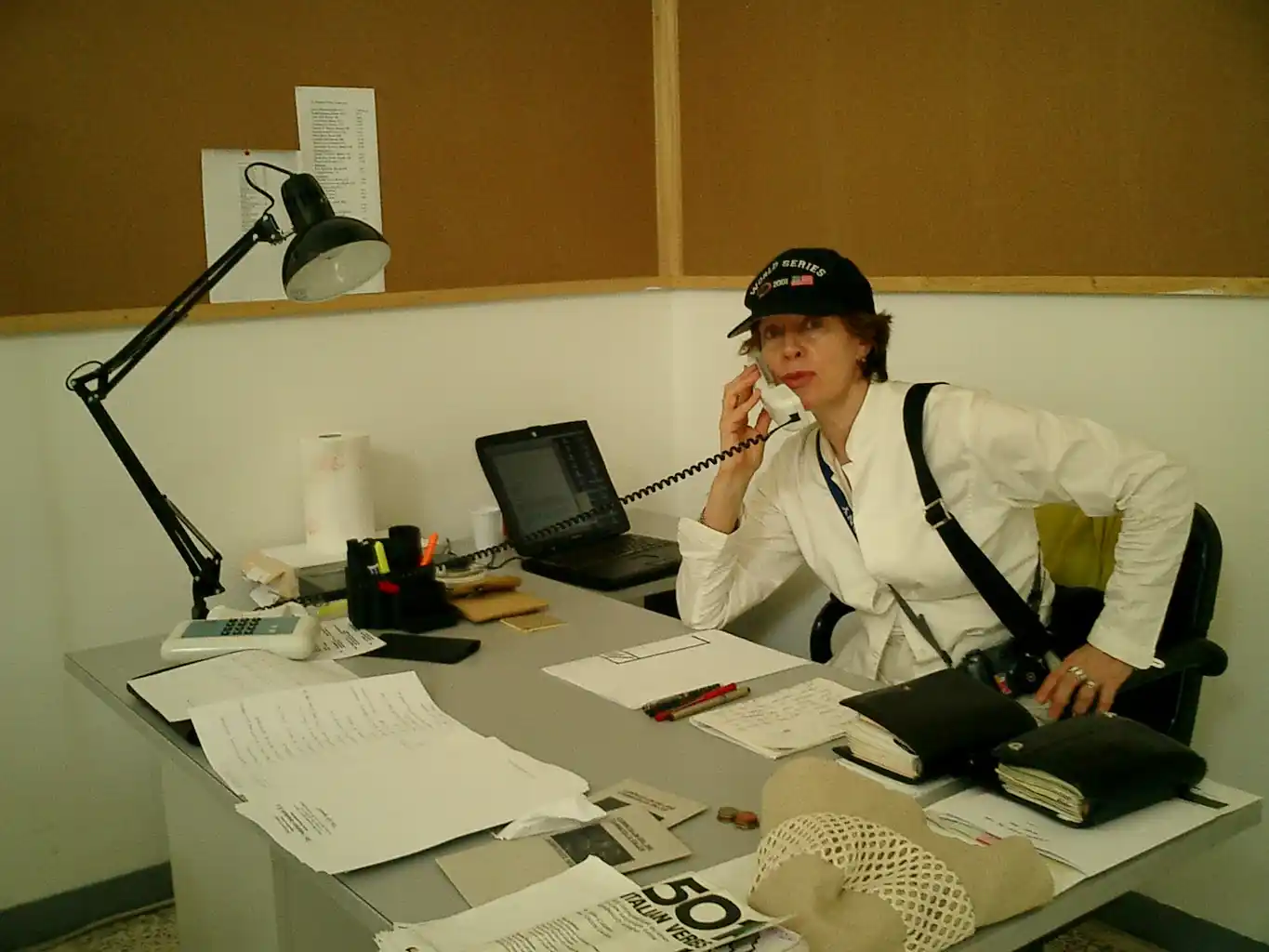
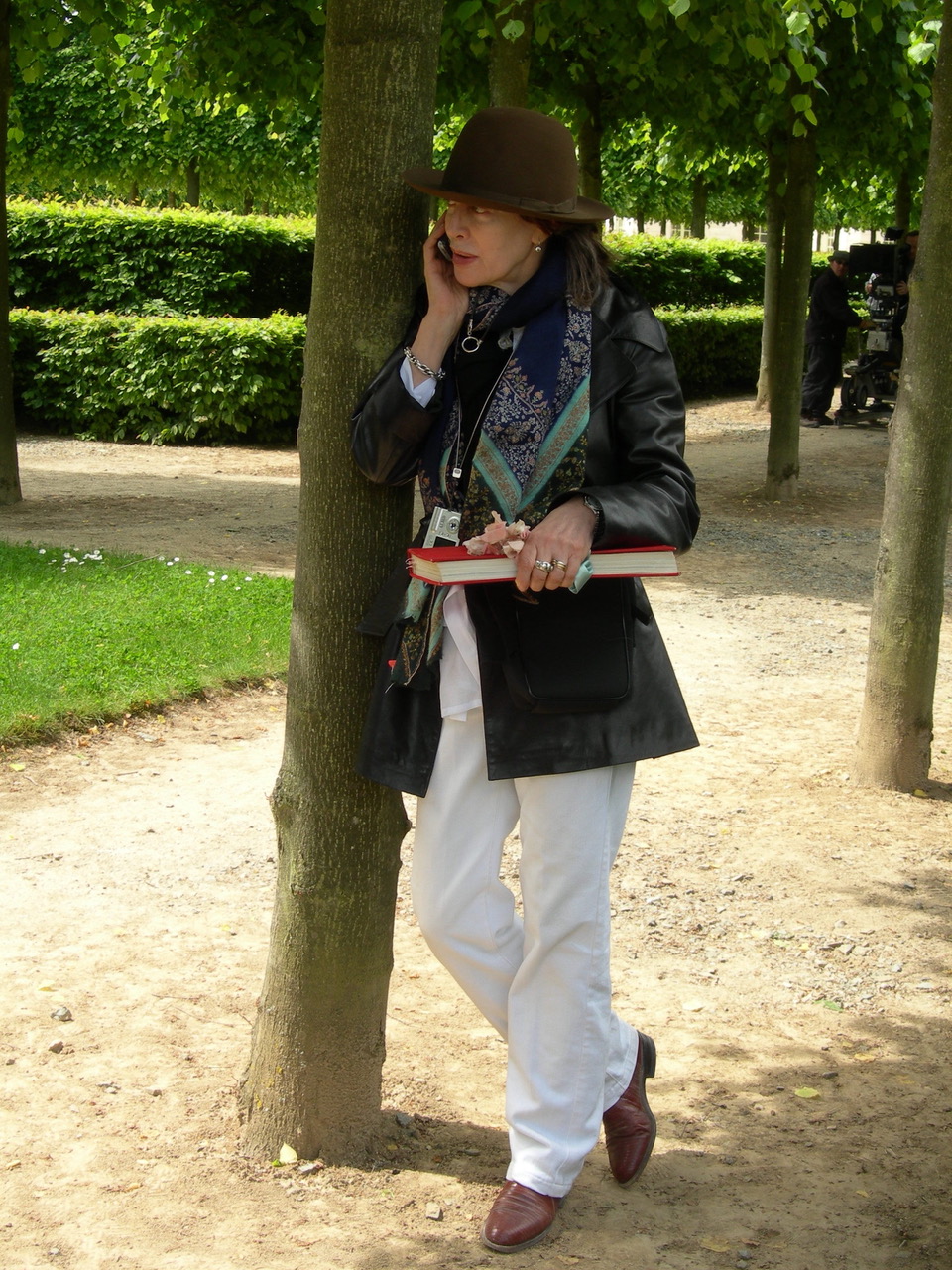
Milena Canonero at her office in Cinecittà, Rome while filming The Life Aquatic with Steve Zissou (2004). From Canonero’s own archive.
Milena’s four Oscars—for Barry Lyndon, Chariots of Fire (1981), Marie Antoinette (2006), and The Grand Budapest Hotel (2014)—speak for themselves, as do her equally richly deserved five other Academy Award nominations (for Out of Africa (1985), Tucker: The Man and His Dream (1988), Dick Tracy (1990), Titus (1999), and The Affair of the Necklace (2001)). Obviously, there’s her unwavering eye, storied taste, and the confidence she inspires. Berenson recalls Kubrick giving her carte blanche on Barry Lyndon: “He trusted her,” she explains. As a 12-year-old, Sofia Coppola felt “dazzled” by the costumes in her father’s movie The Cotton Club (1984). “Milena is such a legend, it was a dream come true to work with her on Marie Antoinette,” Coppola says. “I knew she would make it look beautiful and unique for the period: nothing standard. A perfectionist, Milena would spend six hours on a background character.” Relative newcomer Mia Threapleton, who worked with Milena on Wes Anderson’s The Phoenician Scheme (2025), concurs: “She has such a clear idea of what she wants the characters to look like, that once you put on her costumes, even in the early stages, you no longer have to imagine—you are that person.”
“Costumes are a way for me to feel part of the visual and aesthetic process that creates movies,” Milena tells me during our interview. “It is more than the basic love of the costumes per se. Once I start, I am compulsive and compelled to be detail orientated… and never quite satisfied.”
In the cut-throat movie industry, attention must be drawn to Milena’s reputation for loyalty and friendship. Sharing her sense of la famiglia, of course Francis Ford and Eleanor Coppola (known as Ellie) swept her and Marshall up. Sofia Coppola views her as aunt-like.
Meanwhile, Milena and Anderson—another “family maker” with his favoured troupe of actors—are currently working on their seventh project together. Even during the 1970s, when she collaborated with brilliant young-gun directors who ruled Britain’s golden era of advertising—namely Tony Scott, Alan Parker, and Hugh Hudson—and who could be tough and unforgiving, Milena earned their respect. “They liked that I had worked with Stanley [Kubrick]” Canonero offers. “And they knew to be more careful.” Florence Niçaise, her then assistant, describes the “exotic” Milena as “a one-off.” “Naturally, she was infinitely knowledgeable and professional,” Niçaise says. “You had to be around those très militaire men. But she never lost that accent, femininity, the Latin hand gestures, and belief in her talent.”


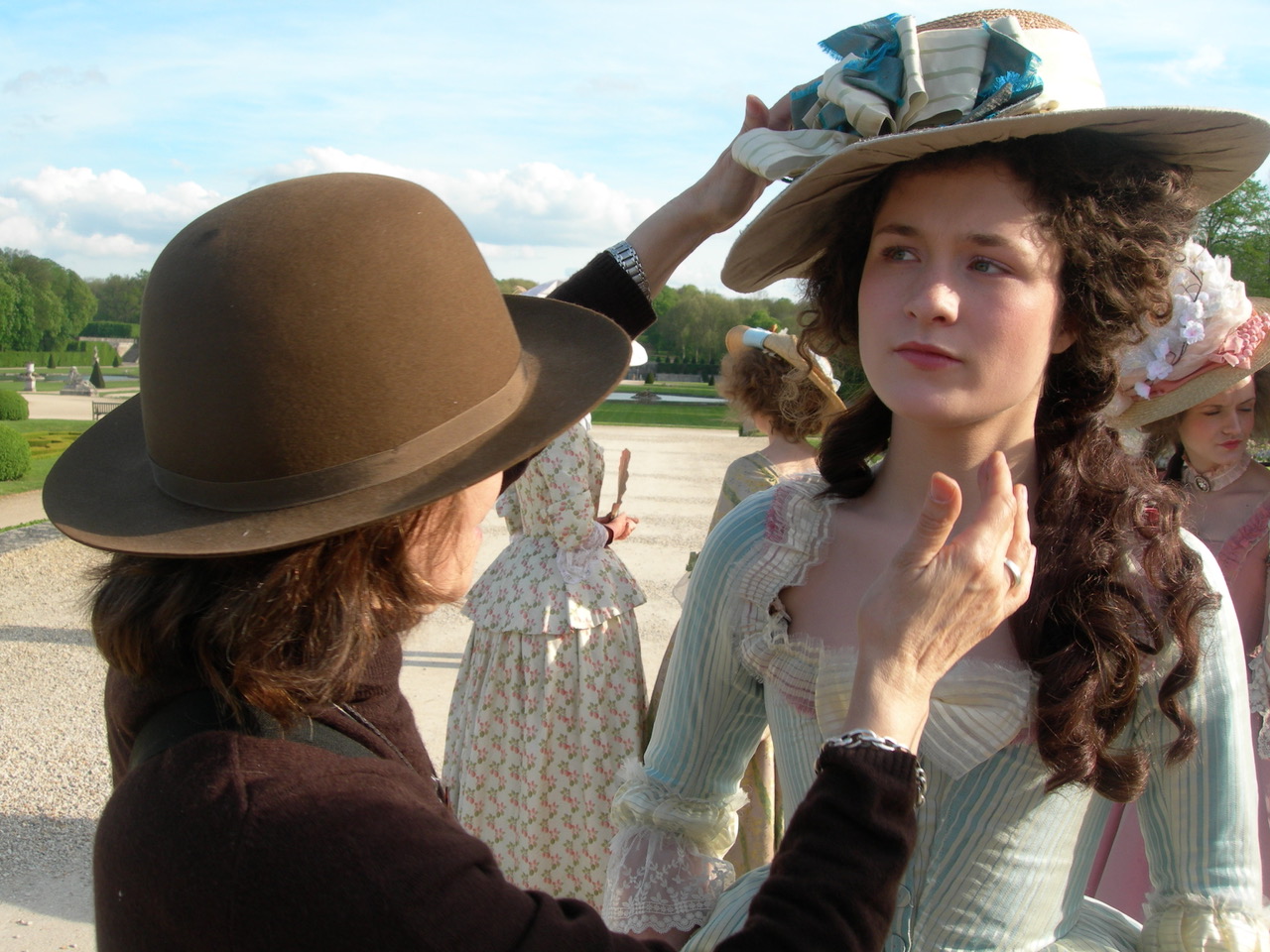
When I was cast as a catty countess in Marie Antoinette, watching Milena became yet another highlight. It was her general nimbleness of movement, whether she was holding up a pink diamond necklace to the light before attaching it to Kirsten Dunst’s milky, child-like neck, or clocking the rest of us—debauched aristocrats seated at the royal table—and then placing a bird on my head because I didn’t “look important enough”. My ochre-coloured silk dress was in tatters but appears transformed in the film: call it Milena magic.
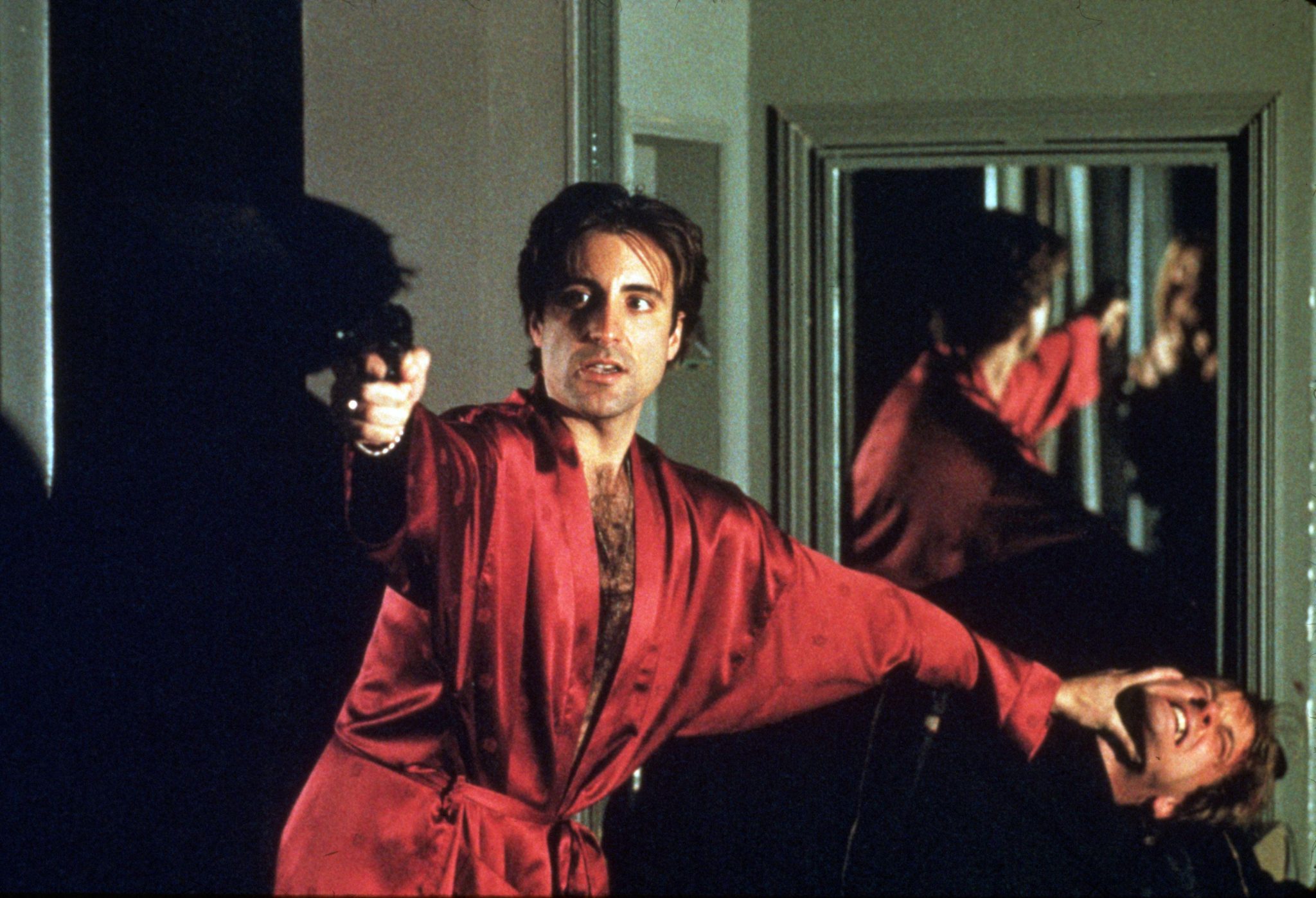
To my mind, Milena is an alchemist. However, in the opinion of the revered film critic David Thomas, she’s “a goddess” who, though renowned “for a fusion of antique and modern”, was “just as impressive with the prison range of Midnight Express (1978) and the tweed jacket Jack Nicholson wears in The Shining (1980).”
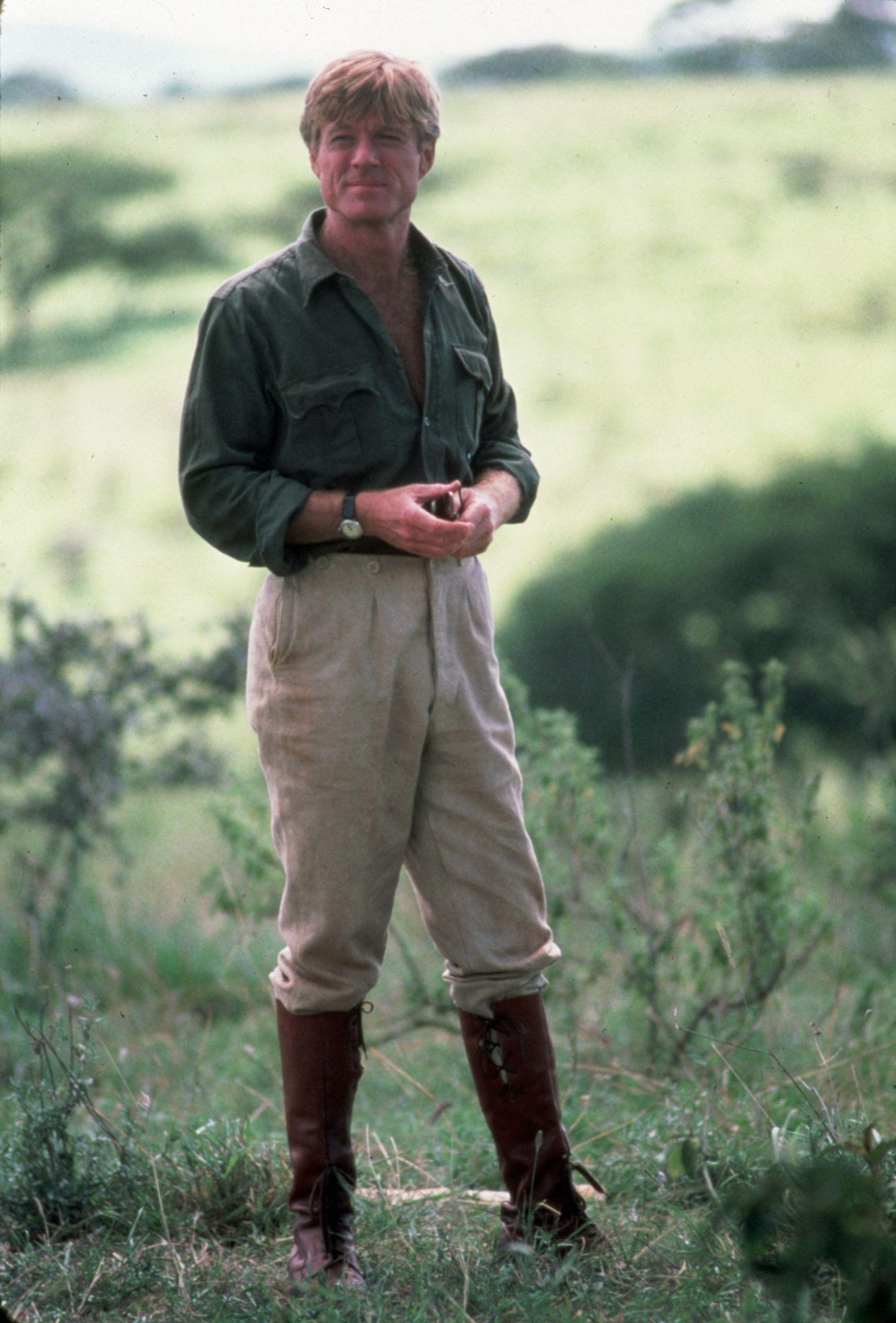
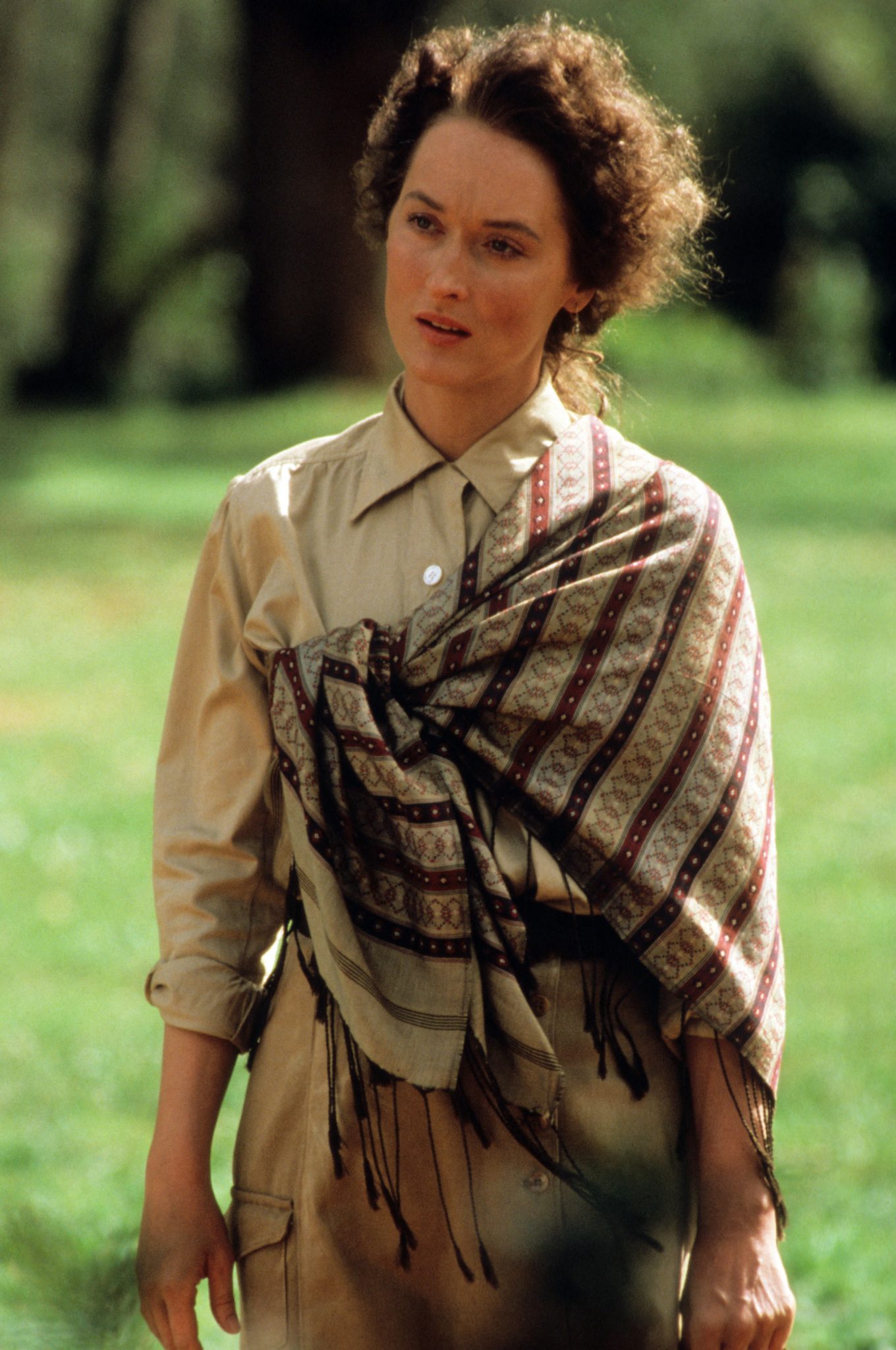
She hasn’t changed since 1985. There are her gripping Out of Africa on-set tales. I thought that all the clothes were stolen, but Milena corrected me. “That would have been a major disaster,” she says. Here is what really happened: “We had just set up in Nairobi to shoot the movie when the first costume change for Robert Redford went missing, the day before he was coming in for a final fitting.” Milena and her local assistant Elizabeth had to work all night to dye a spare suit. “It fitted him perfectly, but Robert seemed slightly puzzled by the costume’s dampness,” she continues. When newly made riding boots and colonial pit helmets began to disappear, it transpired that the security guards were entertaining prostitutes in the costume department and paying them with clothes.
“Items are often stolen during a movie,” notes Milena. When filming The Cotton Club, dozens of original 1930s costumes were swiped from their location in Harlem. Again, the security guards. “They were jolly: celebrating and bringing in the New Year,” she remembers.
Fortunately, this didn’t happen on Marie Antoinette, hence the extraordinary exhibition to celebrate its anniversary in Paris. And for fervent Milena Canonero fans, a book is in the works. Expect the unexpected. “I like to keep learning, evolving, and doing many different things,” says Signorina Canonero. “One life is not enough.”
The Marie Antoinette exhibition at the Petit Trianon marks 20 years since the film’s release. How involved have you been with the curators?
My assistant Francesca Brunori and I—she was with me on Marie Antoinette—have been involved for months and on a daily basis. Since Sofia wanted an exhibition that was richer in tone and detail, we cut down the initial number of costumes in preference for a smaller group of mannequins, dressed, wigged, made up with accessories and props resembling porcelain figurines. For the mannequins, we found Bonaveri, a fantastic Italian company, which is bending over backwards to satisfy us. It will be a much more interesting and exciting exhibition than originally planned, as well as showing some of Sofia’s creative process from her script notes to research and drawings: a glimpse of what we did.
You met the 12-year-old Sofia on the set of The Cotton Club.
I liked Sofia immediately. She was with her two brothers (Gian-Carlo ’Gio’ Coppola (1963– 1986) and Roman Coppola) who were there on the shoot. They were so young, lovable, and gentle, and very professional—they went about doing their work. Roman was in the editing department and Gio was on the second unit. After The Cotton Club, Francis invited Marshall and me to stay briefly at their home in Napa. We fell in love with that place and with his wife Ellie (Eleanor Coppola 1936–2024) who always gave us one of the big rooms in the main house. It was heaven there. Marshall even gave Sofia her first driving lesson.
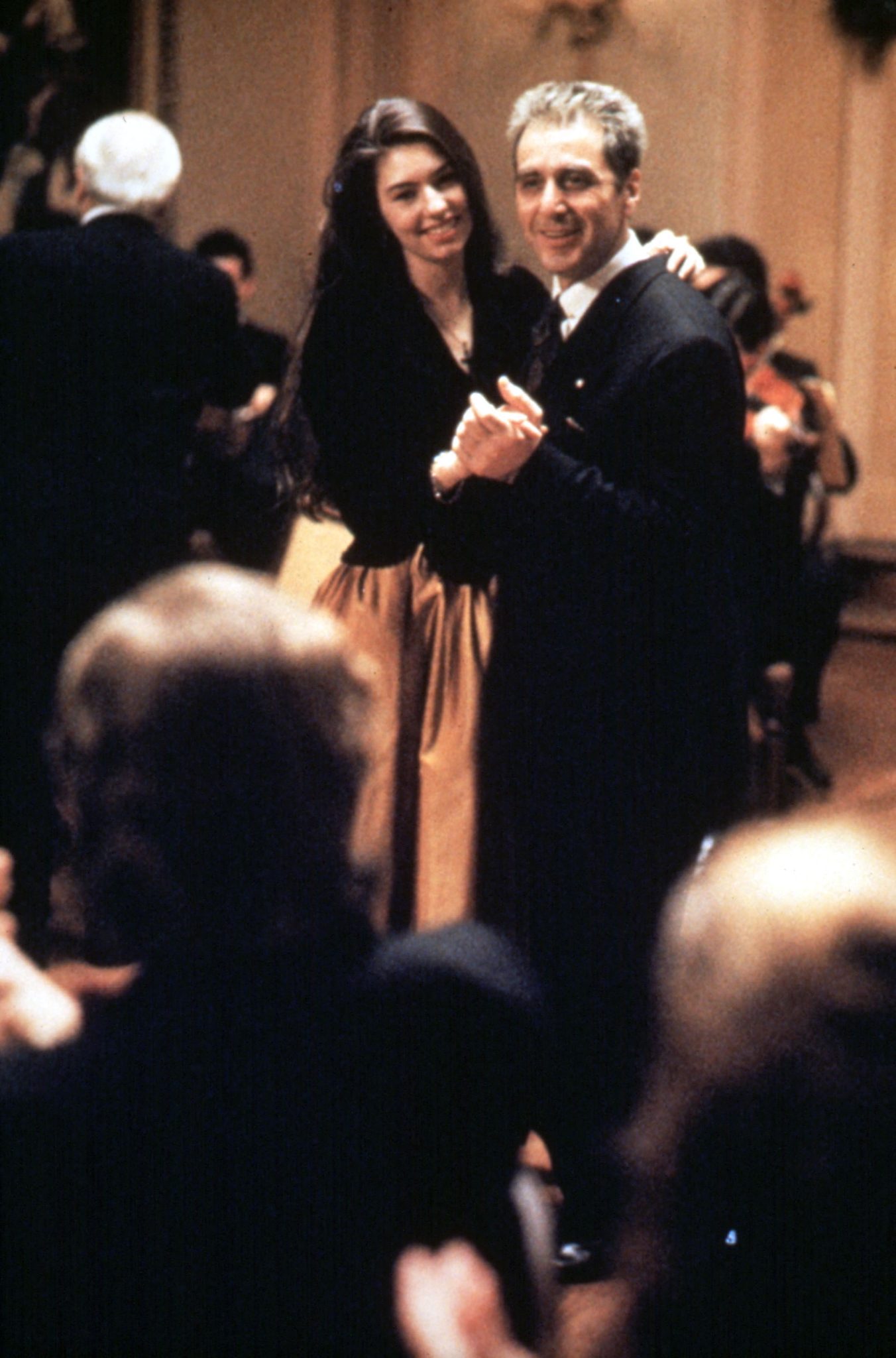
Sofia Coppola and Al Pacino in The Godfather Part III (1990).
Six years later, you created Sofia’s costumes for The Godfather Part III (1990). And for her third movie, Marie Antoinette, you were her costume designer.
I have many happy memories on Marie Antoinette but the happiest was meeting with Sofia in Los Angeles, when she asked me to do the movie. Frankly, I was very touched. I liked her Marie Antoinette script and her direction style—minimal, clear, strong. Once again, I felt blessed to be working with another great director.
While you were at Cinecittà in Rome, preparing Marie Antoinette with your team, Sofia paid you a visit.
She did, and brought us an enormous circular box of Ladurée macarons. Their beautiful display made a great impression on me. I told Sofia that the colours were going to be my inspiration for the costumes’ palette. She liked that.
Professionally, you’re no stranger to the 18th century.
I worked on three projects set in the 18th century: Charles Shyer’s The Affair of the Necklace, with Hilary Swank and Joely Richardson as Marie Antoinette. Peter Shaffer’s Amadeus directed by Roman Polanski for the Italian stage (1999), as well as designing the sets, and, of course, Barry Lyndon—a milestone for me. There were overlaps but every time was different.
How did you prepare with Sofia?
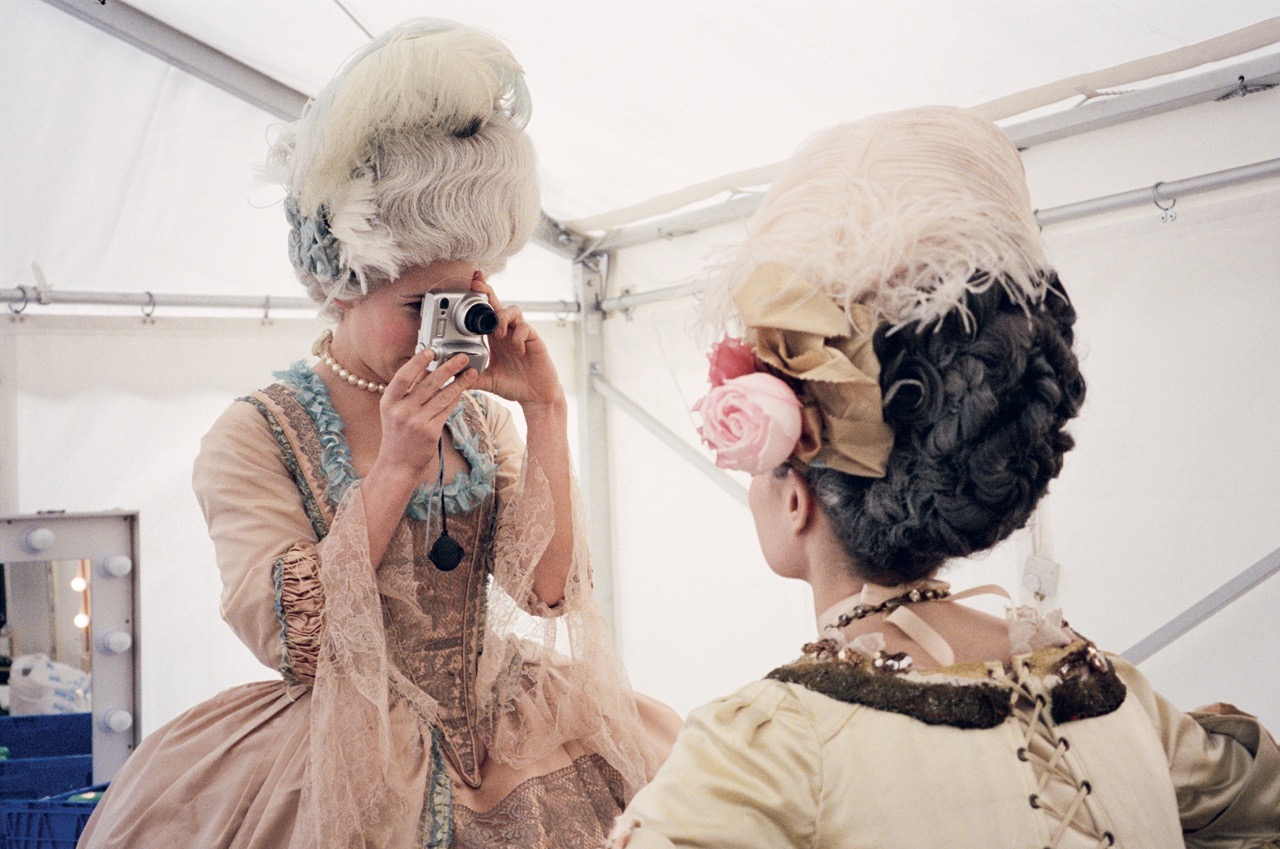
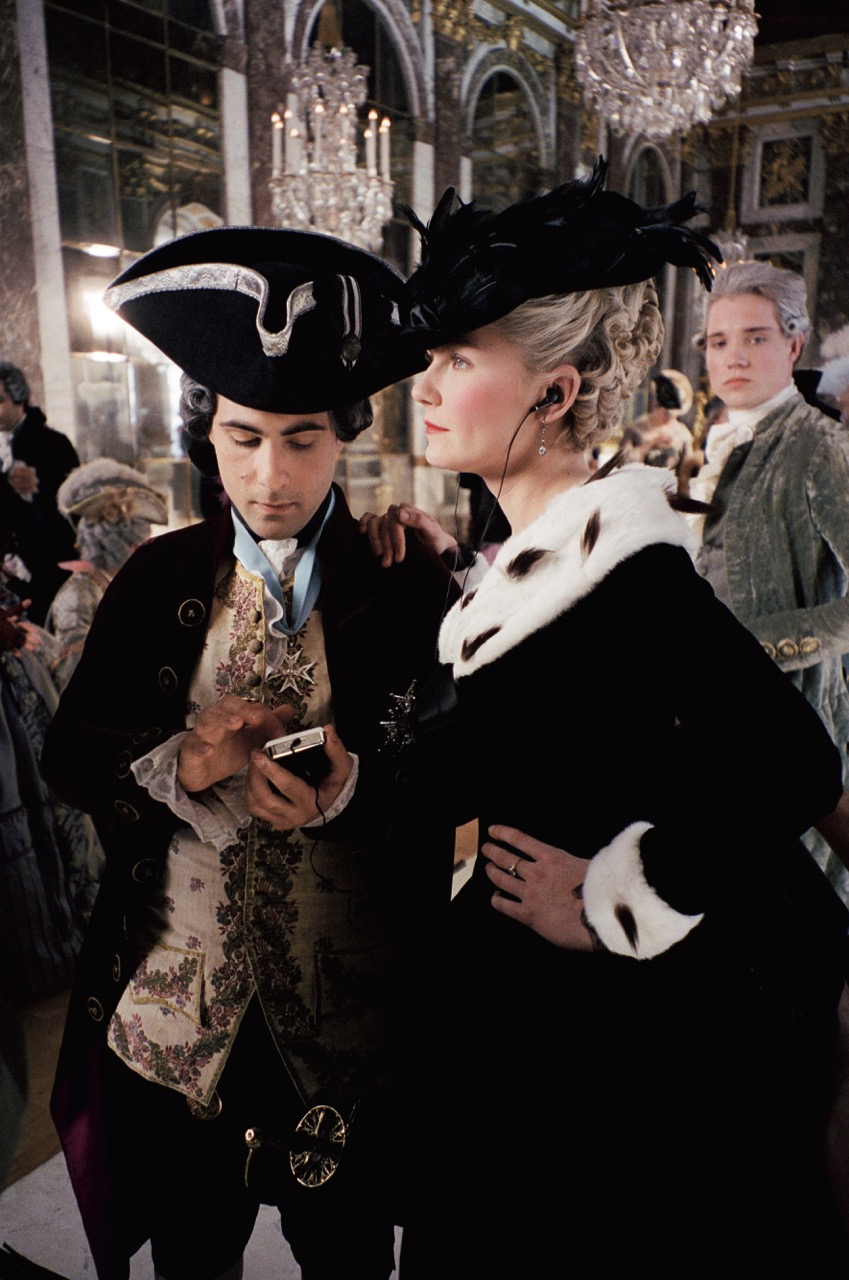
Sofia and I went through a short collection of modern images and photos that she had put together. They had nothing to do with the period but epitomised attitudes and moods that were the basis of Sofia’s concepts and enabled me to understand what she was looking for. The music, the language, the unexpected cast— Jason Schwartzman, so unlike the real Louis XVI yet so right—and the acting in Sofia’s movie is in harmony with her re-interpretation of that historical tragedy told so many times. She made it fresh and new without pretending it was a period reproduction.
What was your goal?
I tried to capture the youth and beauty of Marie Antoinette and create a bridge towards contemporary tastes, without seeming to be forced or false: that journey from innocent, frivolous youth to maturity to the darkness looming in.
Ravishingly pretty, Kirsten Dunst resembles a Meissen porcelain figurine—how did you create the look
Kirsten came to Rome for one day for her pre- fittings so we could take her measurements. We later moved to Paris to set up our own workshop and finalise the work. There, we had just two days of tests for Kirsten’s costumes, make up, and hair. Hard to believe but that was it. So I resolved any future costume fittings by finding Kirsten’s perfect body double to work with. As you know, I am always involved in the complete look. After the drawings and references were sent to Sofia, we worked on the hair with Odile Gilbert, a wonderful hair artist, and Stéphane Marais for the make-up. The rest of the actors were looked after by our wonderful Italian and French make-up and hair stylists.
Meaning that Kirsten hadn’t seen most of your work?
Kirsten’s finished looks would only happen after we completed them in her trailer and she would then leave for the set. Kirsten was easy, grateful, and absolutely charming: we loved her. Each time, she would thank me and say the outfit was better than the previous one. But the cherry on my memory’s cake was to see that Sofia liked what we had achieved. She always knew what she wanted and, like her mother Ellie, Sofia was very gentle, kind, but also very strong.
On set, I witnessed Eleanor Coppola filming everyone.
It was for Ellie’s documentary about the making of Marie Antoinette. And, at last, you can see it at the Marie Antoinette exhibition. Her presence was another great memory. Ellie was often with us, working discreetly and quietly. Marshall and I miss her tremendously. She wasn’t just Sofia’s mother but also a wonderful and sincere writer and filmmaker. Ellie’s documentary Hearts of Darkness (1991) about Apocalypse Now (1979) has been newly restored and is even more poignant than the original. It meant a lot to me to work on her personal film Paris Can Wait (2016). Marshall felt the same about acting in her final movie, Love is Love is Love (2020).
Let’s talk about Marie Antoinette’s actual filming.
No one else had been allowed to shoot in Versailles like we did. That was another greatly satisfying aspect of this movie. I don’t think anyone had even filmed in the Petit Trianon. A moving scene was shot in the small theatre that had just been restored, having been closed for a long period of time, Kirsten was filmed singing a sweet song.

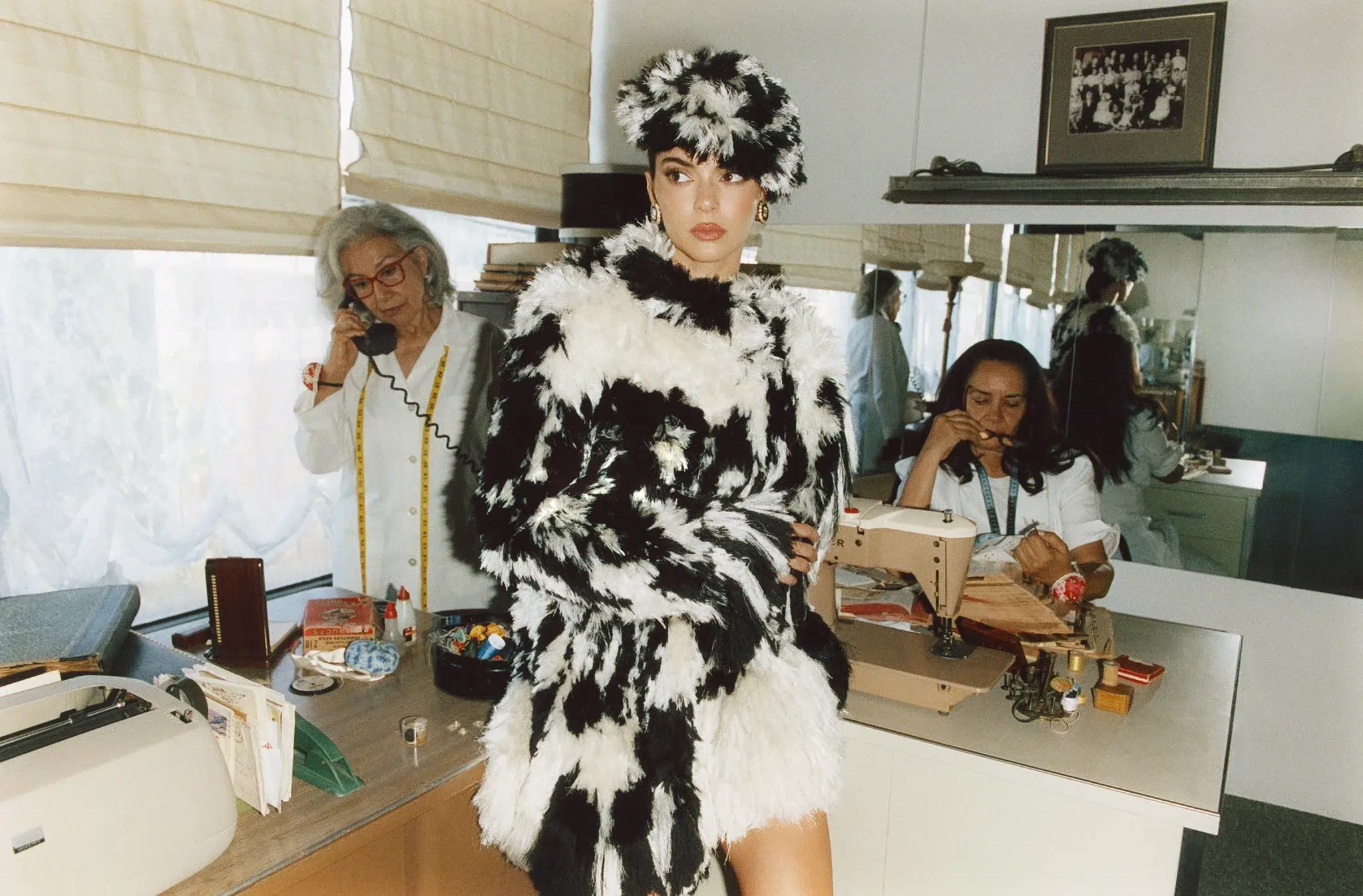
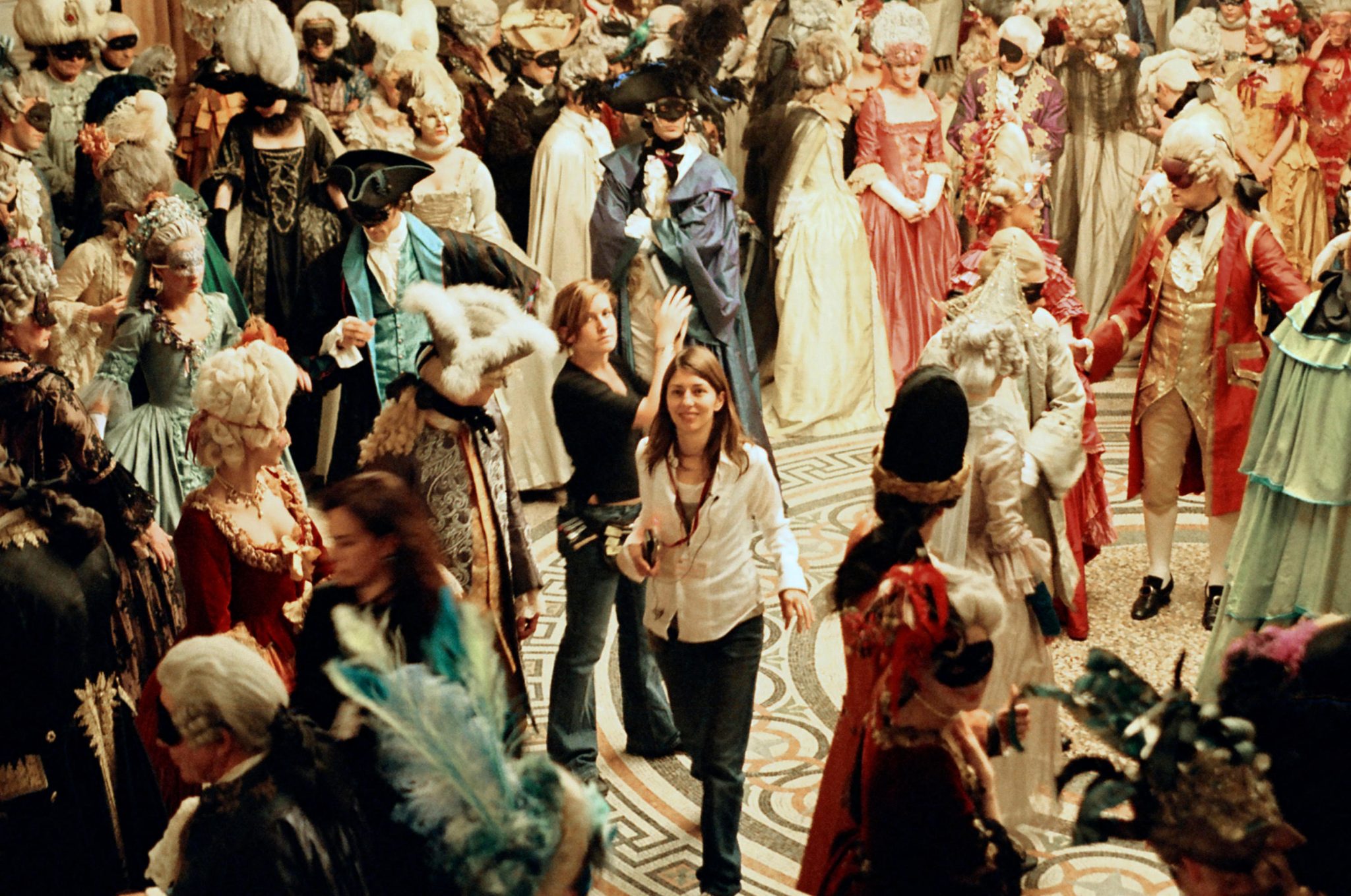
I care that the extras are perfectly fitted as if he or she were playing a leading role. The frame should resemble a big painting, where you can look at all the tiniest characters being depicted by the artist.
Milena Canonero
Did being in Versailles give you a personal sense of Marie Antoinette?
One of the curators showed me the private royal apartments where Marie Antoinette slept, as well as her private boudoir and the narrow staircase linking the very private rooms. Since they were much smaller and more intimate than the official apartments, I felt the tragedy of that family more deeply and emotionally than any books could convey.
During the shoot, I remember coming to see you in a vast warehouse-like place. It was very organised and you were surrounded by dresses upon dresses.
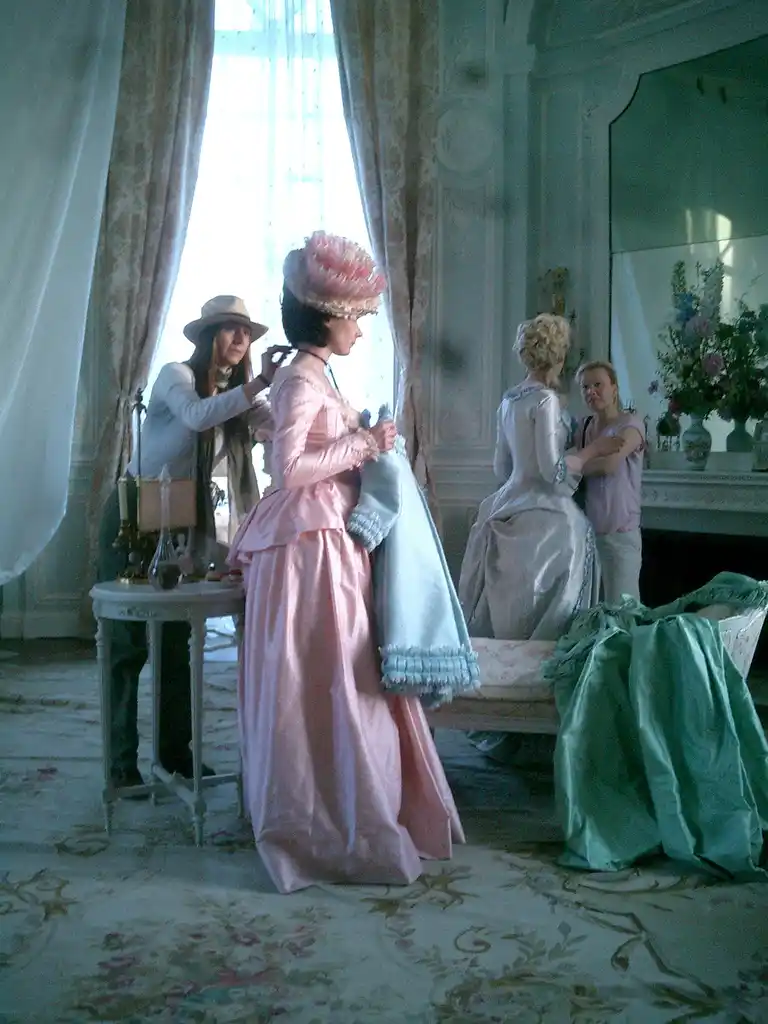
Our wonderful Patricia Colin, the wardrobe supervisor, had found this great industrial place. I wonder if it had been a former armoury. It was where we set up the workshop. The costume, hair, and make-up departments were contingent with each other. I could zoom in and out of each department to work on the look of our cast and the extras. We had our own kitchen and cook, and a lounge with sofas and big armchairs to relax. Patricia also set up a tailoring workshop for me that included two milliners.
It’s unusual to find that kind of space in Paris.
Our cars could load and unload costumes, and I could rush to Versailles to be on set and back to the workshop; sometimes twice a day. On location, mainly at Versailles, we had another big set up. I remember the palace’s courtyard being filled with our trailers. I wonder what Marie Antoinette and Louis XVI would have thought of all our carnivale. Of course, in their day, Versailles must have been one of the busiest parts of France. And now it is silent and tourists are only allowed to come on foot.
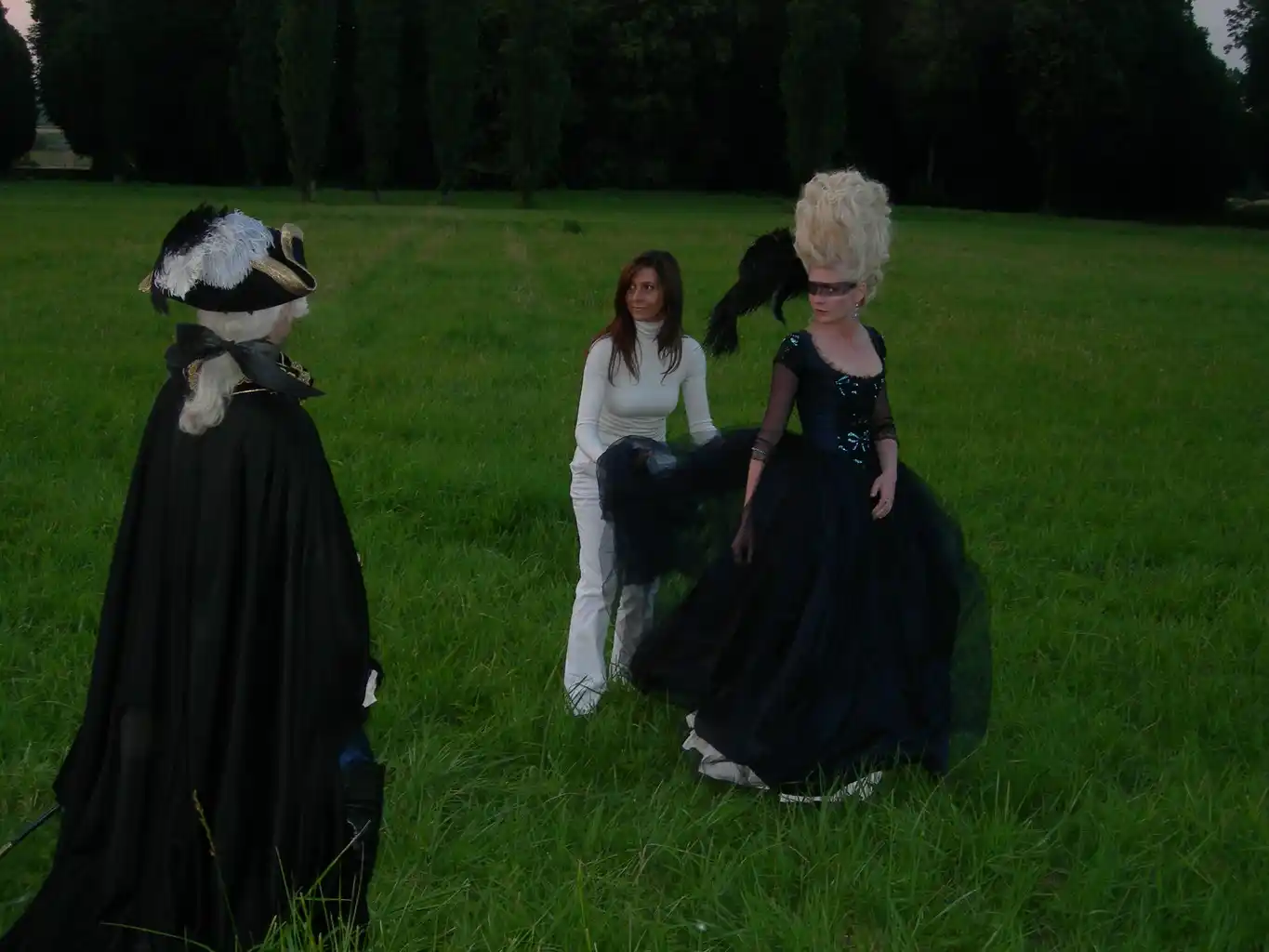
There was a rumour that you occasionally slept at the Marie Antoinette workshop. Is that total nonsense
Yes, I almost slept at work but I always went back to the lovely apartment that I had rented from my darling friend Marine Gefter, near the rue du Bac. Still—not much sleep. My first holiday was Easter Sunday lunch at 4pm with Marshall, who had come over from Los Angeles to see me. We hadn’t been together for weeks.
My fellow extra, Paul Fortune (aka le Duc de Fortune), claimed his blue outfit was from Barry Lyndon.
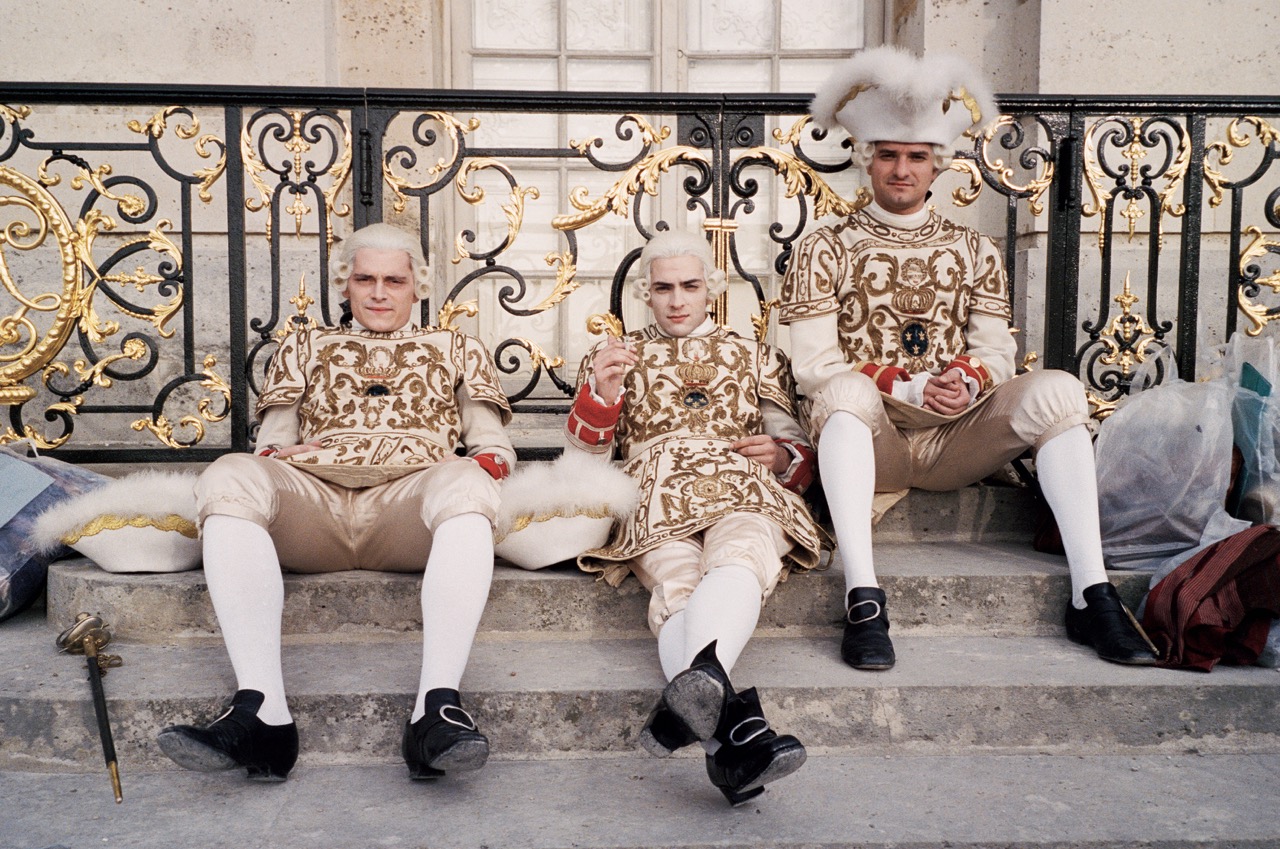
True. I re-used a small stock of costumes, still in perfect condition, from Barry Lyndon. The idea being to steer away from the heavier, conventional French court style in order to be in tune with Sofia’s concept. But I decided to make most of the costumes at GP11 in Rome because the owner Gabriele Pacchia was a great tailor. Some also came from Tirelli in Rome and Sands in London, but the best of the best emerged from our own tailoring workshop in Paris.
Sofia has said that you “would spend six hours on a background character, down to the detail of his socks”.
Yes. I care that the extras are perfectly fitted as if he or she were playing a leading role. The frame should resemble a big painting, where you can look at all the tiniest characters being depicted by the artist.
And you came in on budget? That seems extraordinary.
The producers were afraid. But we kept a strict grip on our expenses. I always prepare a realistic budget. I am always careful.
When you won the Oscar for Marie Antoinette in 2007, you mentioned Kubrick, Hugh Hudson, and your mother in your acceptance speech. Was your mother as stylish as you? Did she encourage your career?
My mother was very happy for me. Born Italian, she loved high fashion but mainly she was an Anglophile—having spent time in England as a young woman. She introduced me to English humour when I was nine, giving me PG Wodehouse’s Jeeves and then Alice in Wonderland to read. She sent me to London where it all began. I became addicted to the National Film Theatre, BBC classic movies, and the great museums. It was mainly the journalist and screenwriter Riccardo Aragno I should have thanked. Through him, I met his friends Kubrick and Hudson. Riccardo opened my mind and vision to so much more than that. There are always very special people who help you across the river of life.
‘Marie Antoinette by Sofia Coppola’ will be on view at Versailles from 22nd September. ‘Making Marie Antoinette’ directed by Eleanor Coppola will be in UK and Irish cinema from 23rd October.