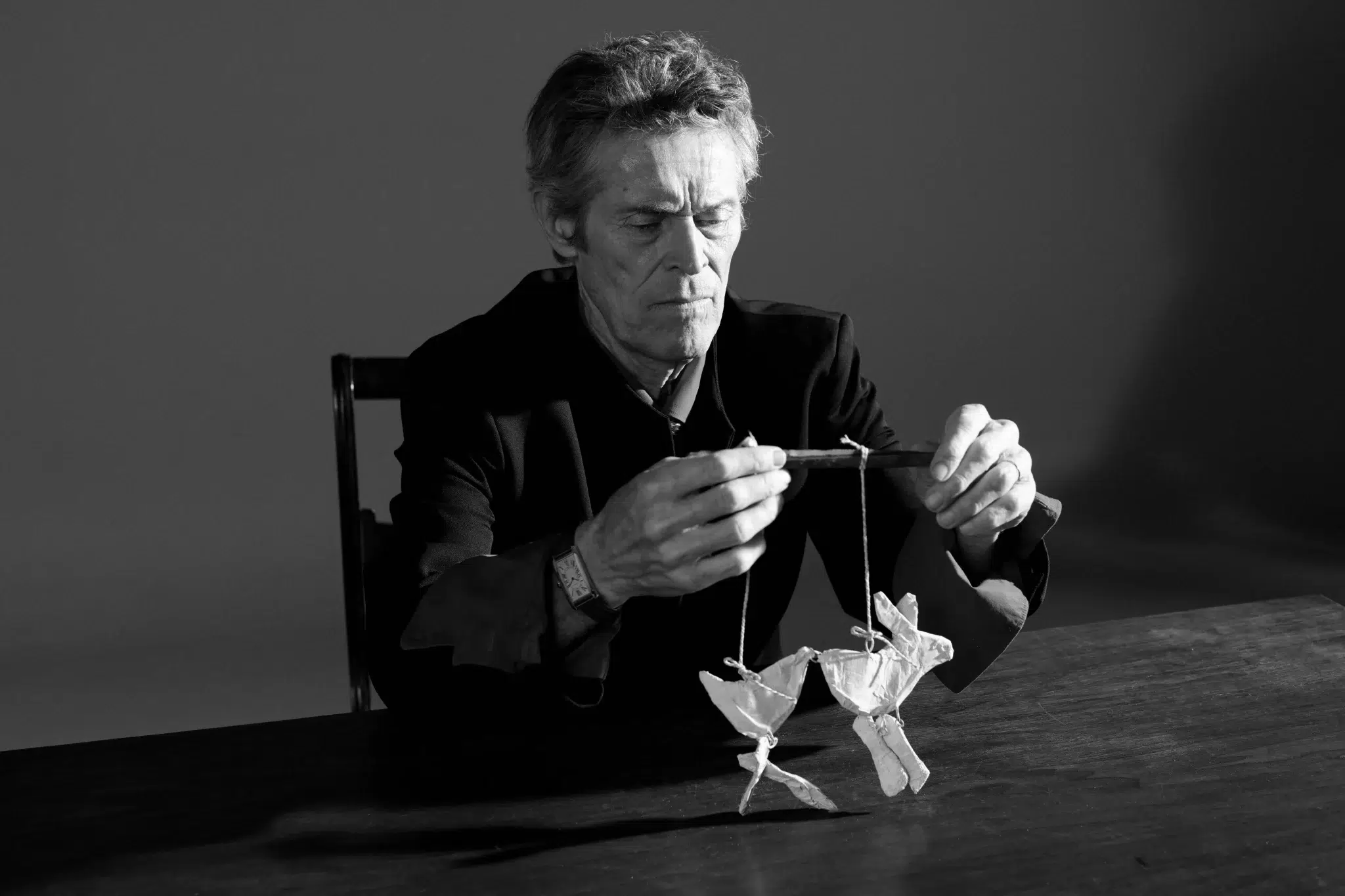


In the latest installment of ‘Hotel Notes’, Ramzi De Coster looks at the creative possibilities of the off-season hotel. From Hemingway and Matisse seeking out the solitude of empty hotels to Stanley Kubrick’s The Shining, De Coster examines what happens when a place designed for crowds is emptied of them. At the Overlook Hotel, the silence, isolation and abundance of empty space that Jack Torrance initially sees as ideal conditions for writing gradually become the forces that unravel him.
It’s always hard to put your finger on exactly where summer ends, but you always know it, more or less, from the general melancholy people are afflicted by at the end of August. All of a sudden the parties fade out, flings progress into relationships or stay forever as flings, time spent sitting or talking or reading under the shade of cypress trees becomes the stuff of the past and all those people, everywhere, on planes and ferries and buses and trains, filling every seat and driving the prices up, all those people who were somehow never in short supply for months on end, they peter out and leave behind the deepest silence.
Off-season hotels and the people who stay in them often provide the best possible proof that the summer period is over. Writers and artists have long exploited the impulse in both their work and ritual to go where people usually go when they aren’t there, on the knowledge that making the two work together (art and practice) relies on a rare fuel made from a base of time, space, and silence. Ernest Hemingway started For Whom the Bell Tolls (1940) at the Hotel Ambos Mundos in Havana in March 1939. Henri Matisse spent his winters painting at the Hôtel Mediterranée in Nice, a decade before Hemingway left Florida for Cuba. And Claude Monet, two decades before Matisse, is alleged to have done the same thing, staying in London and painting heavy winter fogs and soft sunsets lingering over the Waterloo and Charing Cross bridges from his room at The Savoy.
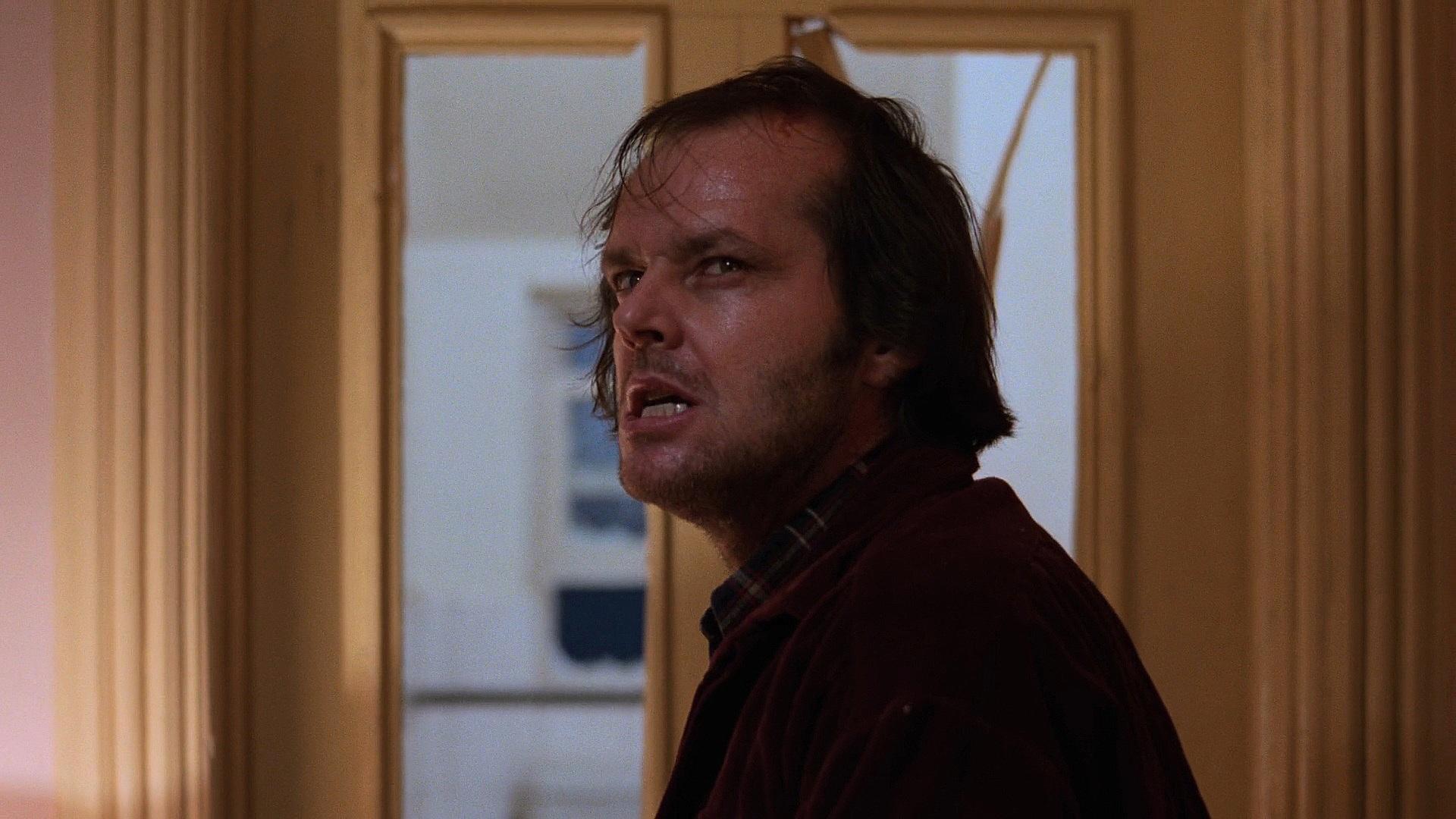
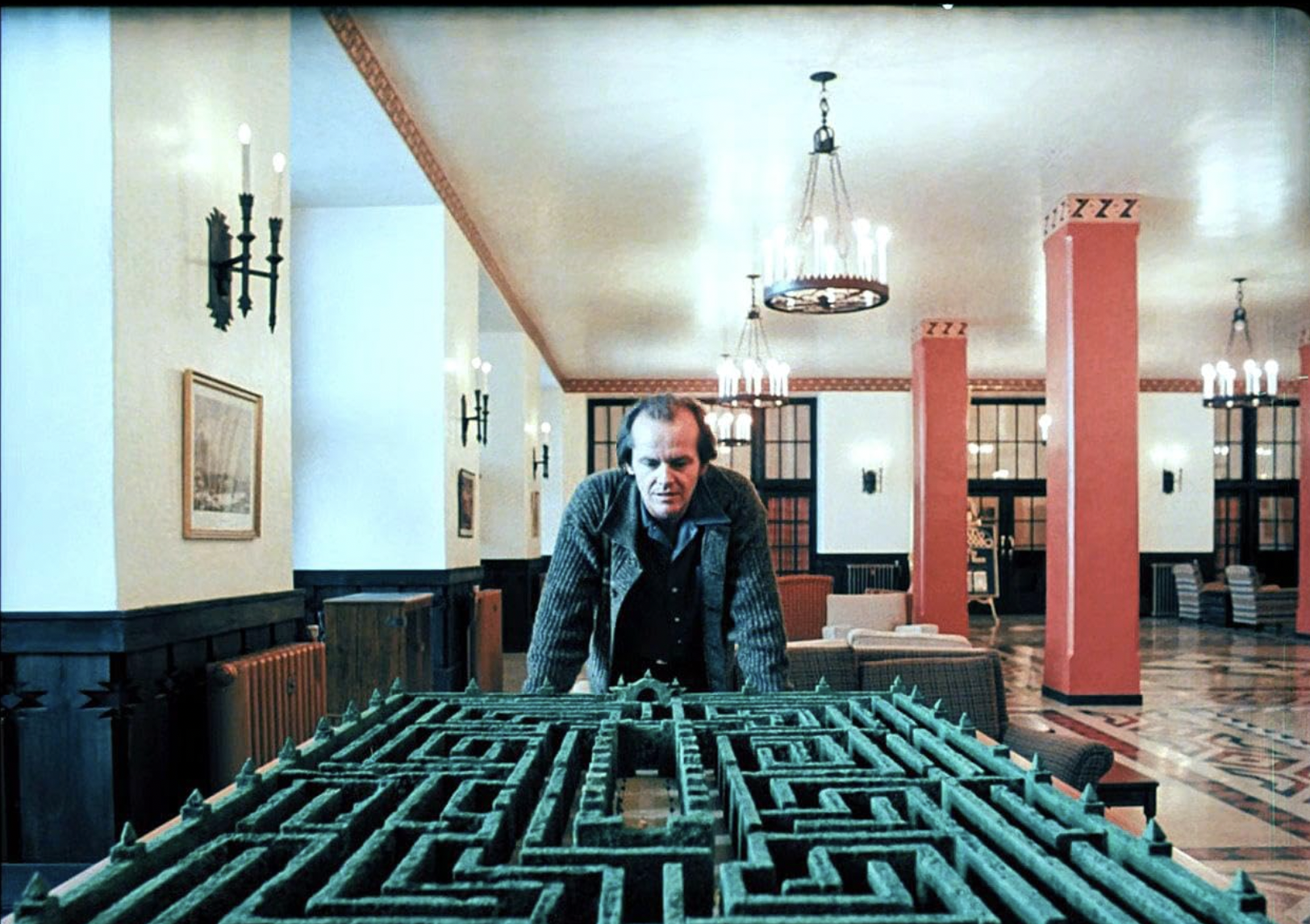
There’s no better-known example of this impulse and habit, however, than the one supplied by Stanley Kubrick’s The Shining (1980). The Shining, based on the 1977 horror novel by Stephen King, is in part about the offseason Overlook Hotel, hidden menacingly in the pale grey mountains where at first you almost can’t tell it apart from the rocks. But it’s also about Jack Torrance, played by Jack Nicholson, a writer who takes the caretaker job that uproots his family on the promise that the Overlook will give him everything a manuscript-in-progress needs: time, space, and silence.
When we first see the Overlook, the parking spaces are filled with cars and almost every lounge chair is taken in a brightly-lit lobby where staffers in uniforms carry trays full of drinks back and forth and the phone, foreshadowing the role it will play, rings and rings behind the reception desk. Kubrick places two scenes in succession early on to illustrate the premise on which the drama of the film will kick into motion and, eventually, turn into horror. In one of these, the hotel manager warns Jack during his formal interview that “the only thing that can get a bit trying up here during the winter is the tremendous sense of isolation.” Jack quips back: “Well, that just happens to be exactly what I’m looking for. I’m outlining a new writing project and five months of peace is just what I want.” In the preceding scene, Jack’s wife, Wendy Torrance, (the late Shelley Duvall) reads J.D. Salinger’s The Catcher in the Rye—itself one of the best examples of a book about emotional and intellectual escape—while Danny, their son, imbued with the telepathic gift the film calls “the shining,” asks what ends up being a very prophetic question: “do you really want to go live in that hotel for the winter?”
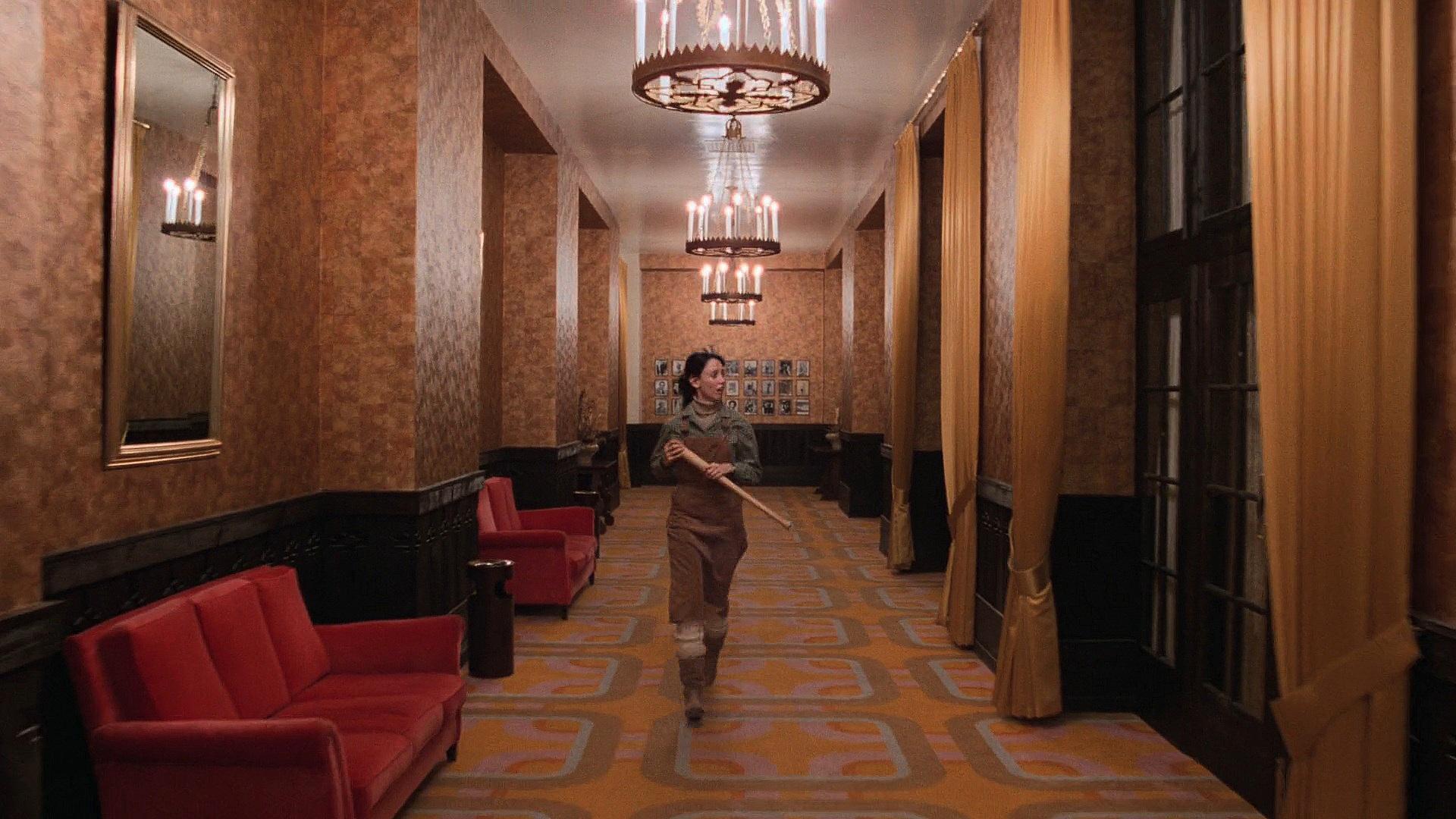
The offseason Overlook is a place where abundance of stillness, and silence, amplifies sound wherever it’s created. Doors whine and echo when they’re opened, the wheels on Danny’s tricycle whisper and scrape down the neverending hallways Kubrick tracks to show us the endless red-carpeted maze that foreshadows the actual maze of the climax. And, of course, the keys on Jack’s typewriter clank against the walls of the large empty room he takes as his office when they’re pressed, as though speaking directly to his isolation. This, too, is meant to contrast with Wendy’s experience of the Overlook Hotel. Wendy, who becomes the film’s (and the hotel’s) anchor for sanity, is often seen in the small apartment where the Torrances live throughout their stay, which slightly resembles the apartment they lived in before they moved to the Overlook. In this apartment, they appear more like tenants than guests, and the apartment itself has none of the usual, impersonal furniture we associate with hotel rooms. What Kubrick seems to be showing us by contrasting a seemingly normal apartment with a clearly abnormal hotel is a physical or structural representation of the split between Jack and Wendy as characters and between insanity and sanity at the Overlook.
There’s no greater representation of the on-and-off-season dichotomy, the stark contrast on which the film derives its mood, than the infamous ballroom scenes that are arguably the film’s strongest. Anyone who’s ever stayed in a hotel when most or all of its guests are gone knows the cold feeling of absence it leaves in you. Jack, already in the clutch of a growing psychosis that Nicholson renders brilliantly with his cartoonish eyework, sits at a ballroom bar with no bartender, where all the lantern-lit tables are unoccupied. “God I’d do anything for a drink,” he says to himself, and buries his face deep into his hands. When he pulls his fingers below his eyes, though—a desperate man’s peek-a-boo motion—he sees a bar stocked with all the bottles he wishes it were stocked with and a bartender, Lloyd, with whom his psychosis finds a willing partner to communicate. Later, Jack returns to the ballroom, enticed by faint orchestra music. Suddenly the place is as it once was, in the 1920s or 30s filled with tuxedos and flapper girls drinking and talking in a haze of cigarette smoke.
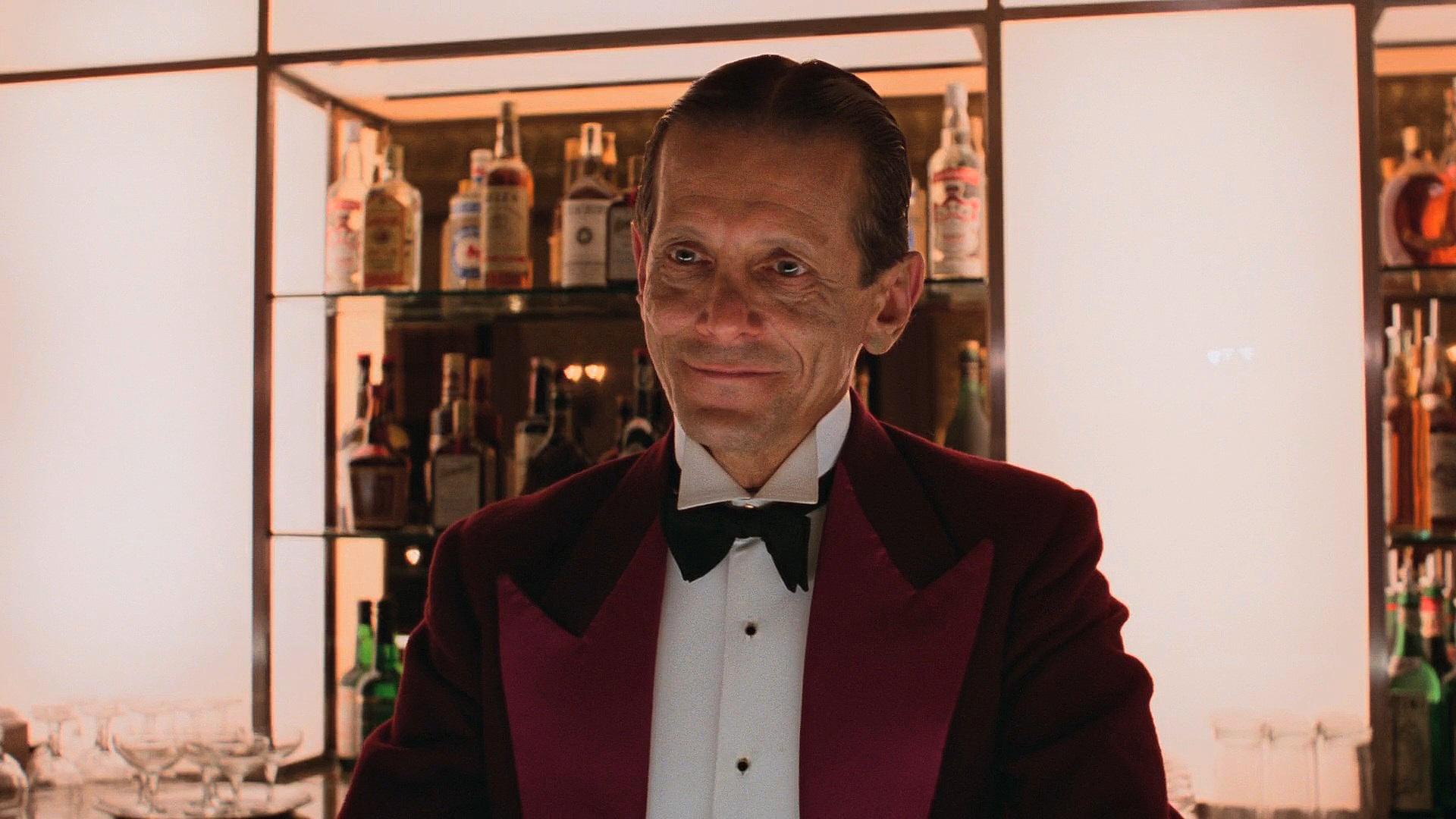
The Shining has produced dozens of theories on its meaning and many people purport to know what Kubrick really meant when he sprinkled it with hints and clues for us to ponder and debate. The Overlook Hotel can be called any number of things: setting, symbol, metaphor, motif. Maybe it comes to mind whenever you walk through an empty or eerie hotel, on or offseason, maybe it doesn’t. But our fascination with hotels, the shadows they cast, and our inclination to think of the people who stayed in them and all that happened to and because of them while they were there has been well-mined in film and literature for a reason.
I can’t remember exactly when I last went to the Palmyra Hotel in Baalbek, Lebanon, or what year or month it was. Maybe it was summertime. Maybe it was mid-Februrary. But I can remember with a clarity that has not dulled or grown murkier with time, though, how I felt wandering the hotel on a slow, quiet day, when almost no one was around and the light, just before dusk, fell too perfectly through the arched windows to fill the lime-green and pink rooms with glow. I couldn’t tell if anyone was staying there at the time, I assumed no one was, but I remember listening to a family member list the people who had stayed there since it opened in 1874, from Emperor Wilhelm II to Ella Fitzgerald. The Palmyra’s façade was half-hidden in thick foliage and vines at the time, which grew across the windows the way clouds drift across the sky. Standing in its silence and looking out, you could just about feel what it was like to see the Roman ruins that have always been the hotel’s view, through the glass, the way everyone who once stayed there has.