

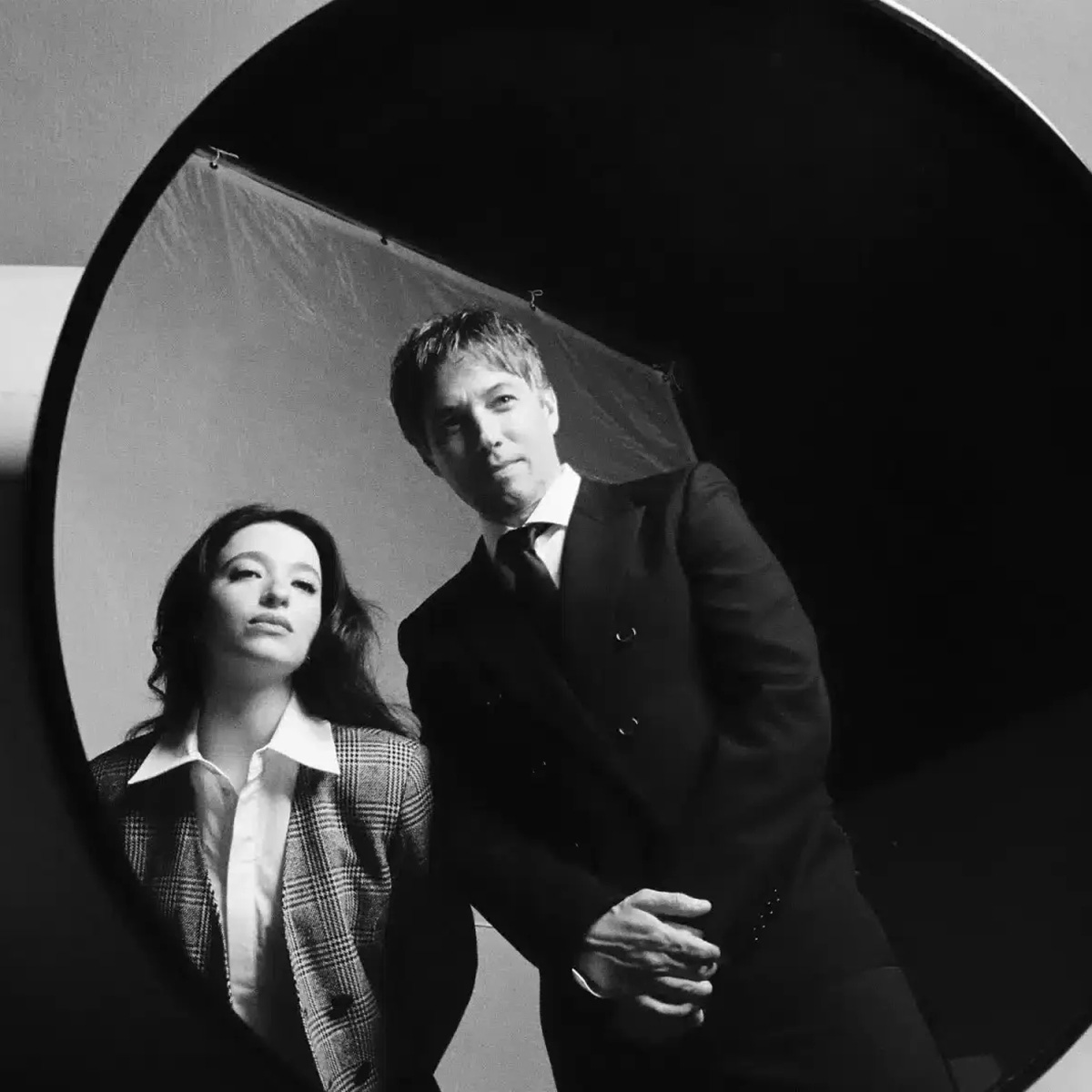

With Flesh Impact, Maggie Gyllenhaal has followed up Frankenstein fantasy The Bride! with a short film that imagines Marilyn Monroe at 100.
Flesh Impact, a 17-minute short film from Maggie Gyllenhaal poses a simple and pertinent question. What if Marilyn Monroe was still alive today? On the year of Marilyn Monroe’s centenary, the director and actor was tasked with making a film about the screen legend—who passed away at the age of 36. It stars a 93 year-old Ellen Burstyn as Monroe, who arrives at an audition, speaking her mind and regaling producers with stories of her life, illustrated with flashbacks to her younger self (a peroxided Dakota Johnson). With A Rabbit’s Foot, Gyllenhaal, who is also jury president of this year’s Mostra, speaks about the origins of the project, casting Dakota Johnson and her early attempts at using AI on the project.
Marilyn Monroe has been photographed, painted and interpreted countless times by artists and photographers, and there’s an exhibition at the NPG Gallery in London to this effect. How do you approach making a film about someone who has already been so heavily represented?
Let me start by saying this: most of the stories we tell in the movie are all real — they’re real stories and real quotes. Most of them, I hope, are new stories to people, and they’re in the service of saying something complicated and human about her. But alongside that, there’s this total fantasy, that Marilyn Monroe is back from the dead at 100. That combination of fantasy and reality is the tone of the movie. It also gave me freedom in terms of interpretation. Because she’s 100 years old in the film, I didn’t have to worry about simply imitating her.
Dakota has her own family links to cinema history, what drew you to cast her?
With Dakota playing her younger, which is much more common, it was interesting because I almost didn’t ask Dakota to do it originally. I didn’t think she looked like Marilyn. But Dakota kept coming into my mind, and I kept pushing the thought away. Eventually I thought, No, what am I doing? It doesn’t matter if she looks like her.
What matters is her artistry and herself as a performer. That felt much more aligned with what I needed to tell the story. I went back to The Lost Daughter for that, because I had a similar experience with Jesse Buckley and Olivia Colman playing the same person. Do they look alike? No. Are they actually the same person? Definitely not. But you ask the audience to go along with that fantasy in order to tell the story. And it’s similar here. These are the absolute right people to tell this story. It doesn’t really matter what they look like. They’re not doing an imitation. We’re actually talking about the opposite of an imitation, we’re trying to find some kind of real human expression.

Maggie Gyllenhaal in Venice, 2026. Photo: Ambra Vernuccio.
What was your own relationship with Marilyn Monroe before making the film?
I really wasn’t particularly interested in her. I was interested in the things I saw seeping through the performance she was doing, which I think is probably what compels everybody to her in different ways. I could see the performance, but I wasn’t especially interested in that. What interested me was that, in every role she does, she can’t help but have humanity come through the cracks: sadness, real humour, pleasure. Even her body, the way it spills out of things, feels human.
I was interested in that, but I didn’t know that much about her. Then I was asked to do this, and I started to study her to see if it was something I could do, because I wasn’t sure if it would touch something in me. As I studied her, I started to feel a kind of empathy, and I really related to her in unusual ways. That’s when I started to realise I could do it.
You’d spoken about initially considering an AI approach to Marilyn’s appearance. Can you talk about what happened and why the physical presence of an actor became so important?
I was asked to consider a version of the movie where Marilyn Monroe could look exactly like she had looked in her 30s. It wasn’t OpenAI; it was licensable work using things we’d licensed. They started trying to train on that prompt a version of Marilyn Monroe’s face that could essentially have gone over Dakota’s. To be honest, I never really thought it was going to work, but I was simultaneously curious. I wondered, Whoa, could that be? This really sounds like magic. So we started to look at it and work on it.
It became clear to me pretty much immediately that the very thing I was trying to do was being stopped by that tool. If the thing I’m trying to do is break through a kind of iconic performance of this actress and imagine her very private inner life, I couldn’t put a machine over her face. It just didn’t work. If it had worked, I would have been in an ethical bind. But it didn’t work. What Dakota was doing was where the value was for me in taking on this project. I was seeing in her eyes an imagined human being.

Still from Flesh Impact, directed by Maggie Gyllenhaal.
The film imagines Marilyn as an older woman, something we never got to see because she died so young. Were you interested in what might have happened to her — whether she would have remained iconic, how her career might have evolved, or how perceptions or popularity of her might have changed as she aged?
A: I don’t know how to answer that, actually. You look at Ellen Burstyn, who’s 93 and has had such a complicated, full career. To me, that’s fascinating. Has she maintained iconic status, as you say? It’s been all sorts of things. And yet here she is, having been able to express a lifetime of ideas and feelings. It makes me so curious, and a little sad, about what Marilyn Monroe might have been able to offer if she’d been able to live out her life in the way that Ellen did.
Q: Were there particular Marilyn Monroe films you returned to while preparing for the role?
A: One that really surprised me, because I’d never seen it, was Bus Stop. And The Misfits. They’re not super-deep cuts, I know, but Bus Stop really surprised me. She’s amazing in it. You should see it if you haven’t.
Continue Reading