

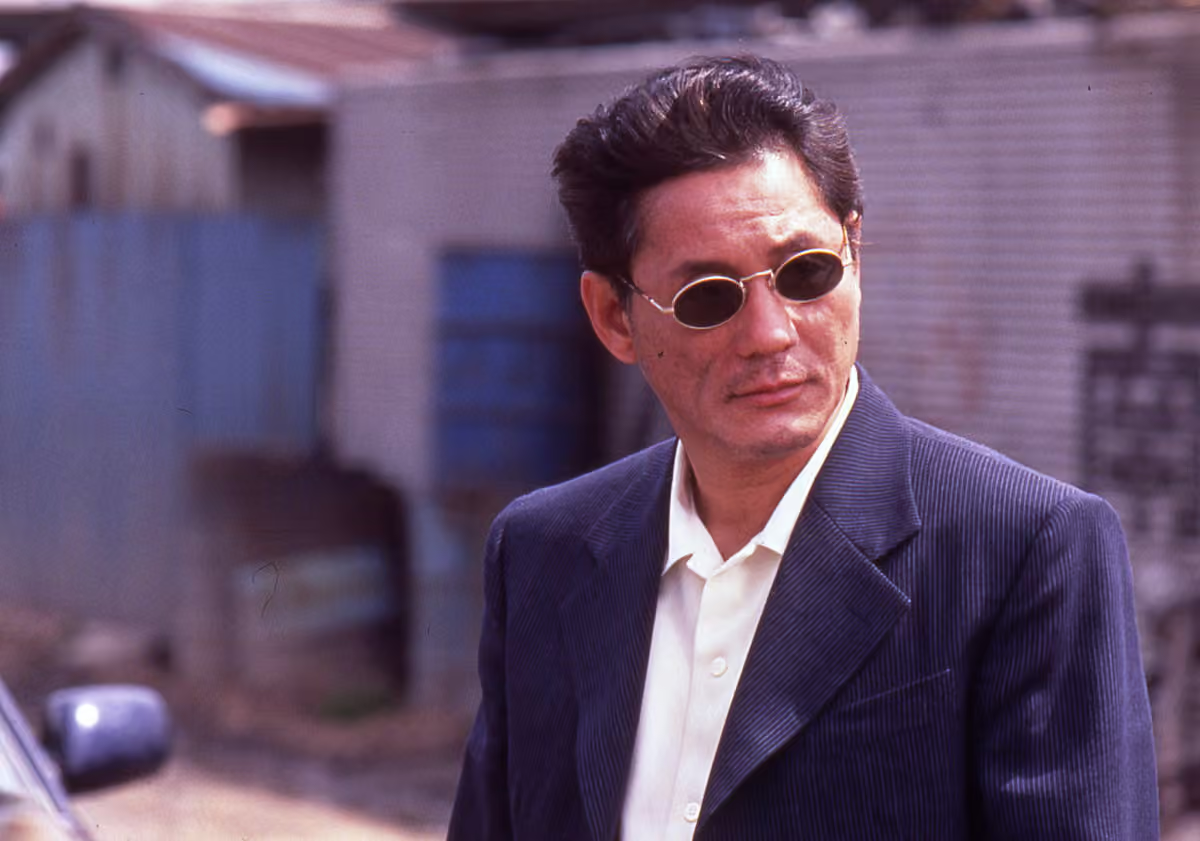
In our second essay on style icons, Japanese writer and editor Makoto Kikuchi explores the loose and dangerous yakuza attire that became a hallmark of Beat Takeshi’s cinema and image.
Violence in Takeshi Kitano’s films resides not only in weapons or bloodshed, but also in the clothes his characters wear—above all, the yakuza suit. Japanese cinema has a myriad of images characterised by the ensemble. But none do it so memorably as through Kitano’s cinema. Perhaps its most striking effect is in his masterful cop drama Hana-bi (1997), where the oversized silhouette—cut deliberately loose rather than tailored to the body—becomes animated by the distinctive swagger of its wearer.
As his broad shoulders sway with the gait commonly known in Japanese as yakuza aruki (the yakuza walk), the fabric catches the wind, amplifying the wearer’s physical presence. Kitano draws attention to this distinctive way of walking in the film itself: in one scene, detectives identify and begin tailing a suspect only by watching him from behind. His low, wide stride immediately distinguishes him from the other pedestrians around him, revealing his affiliation even before his face is ever seen.
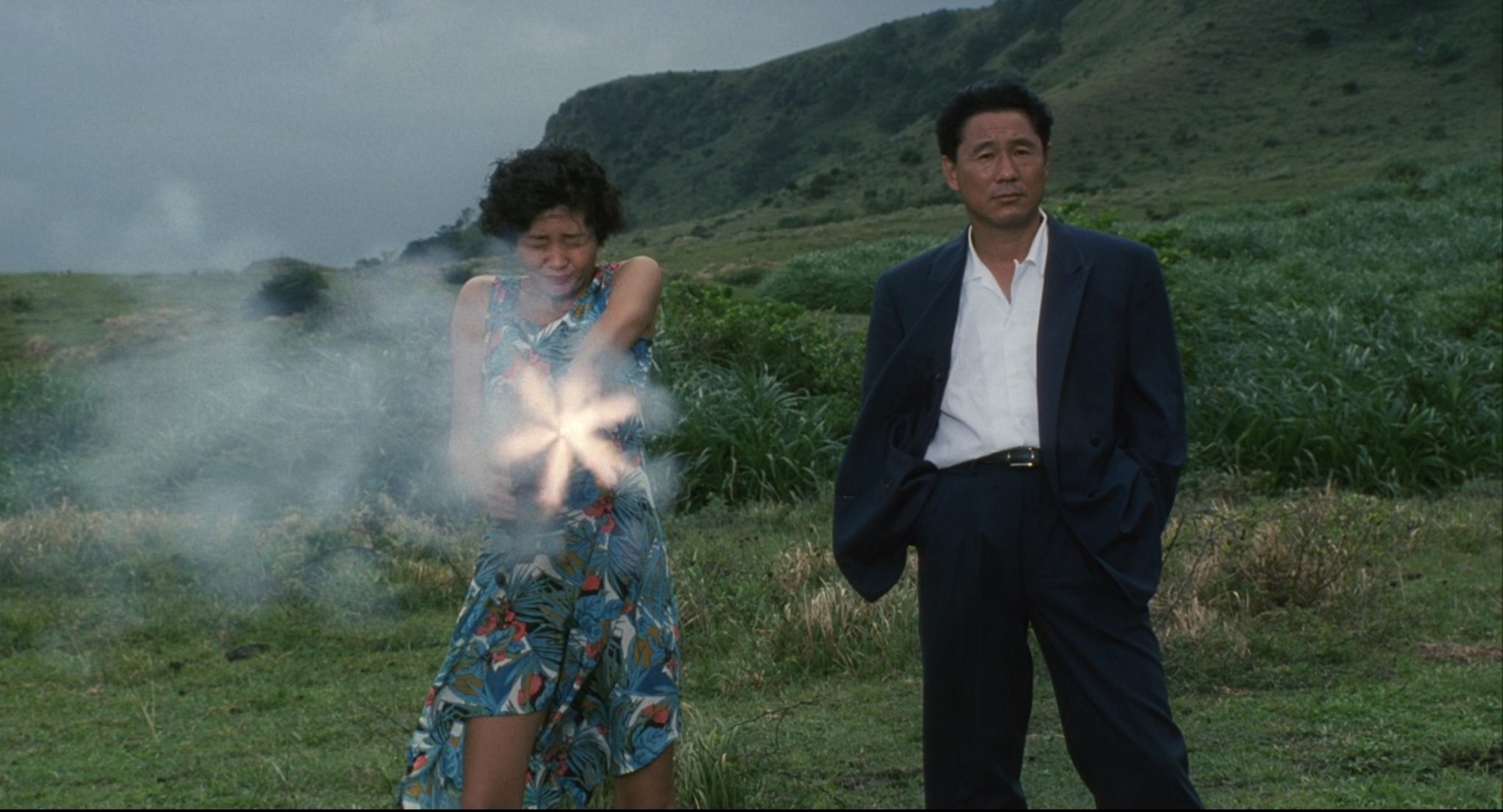
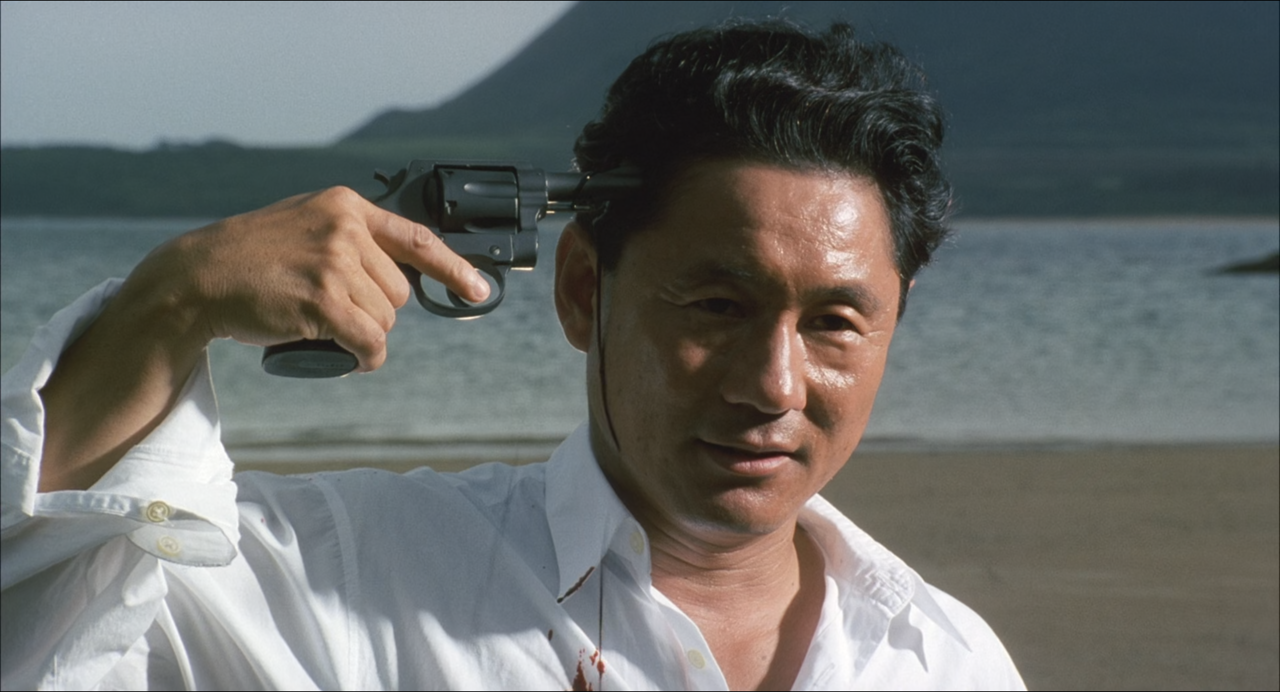
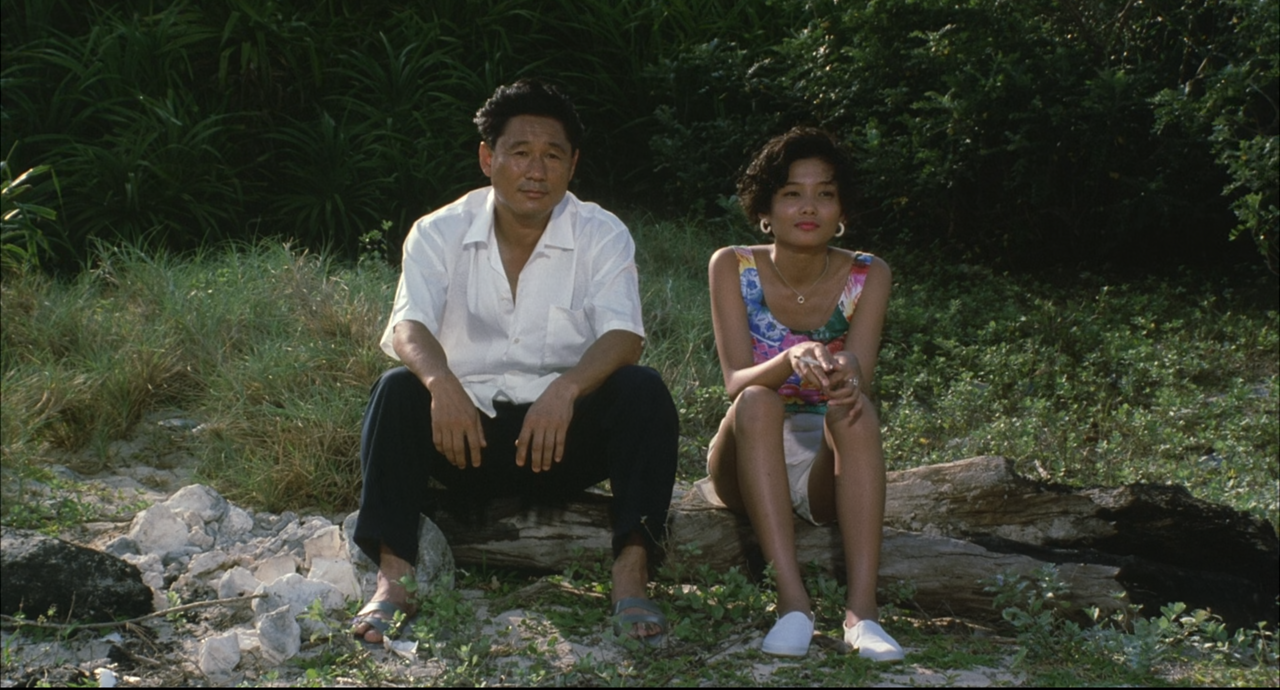
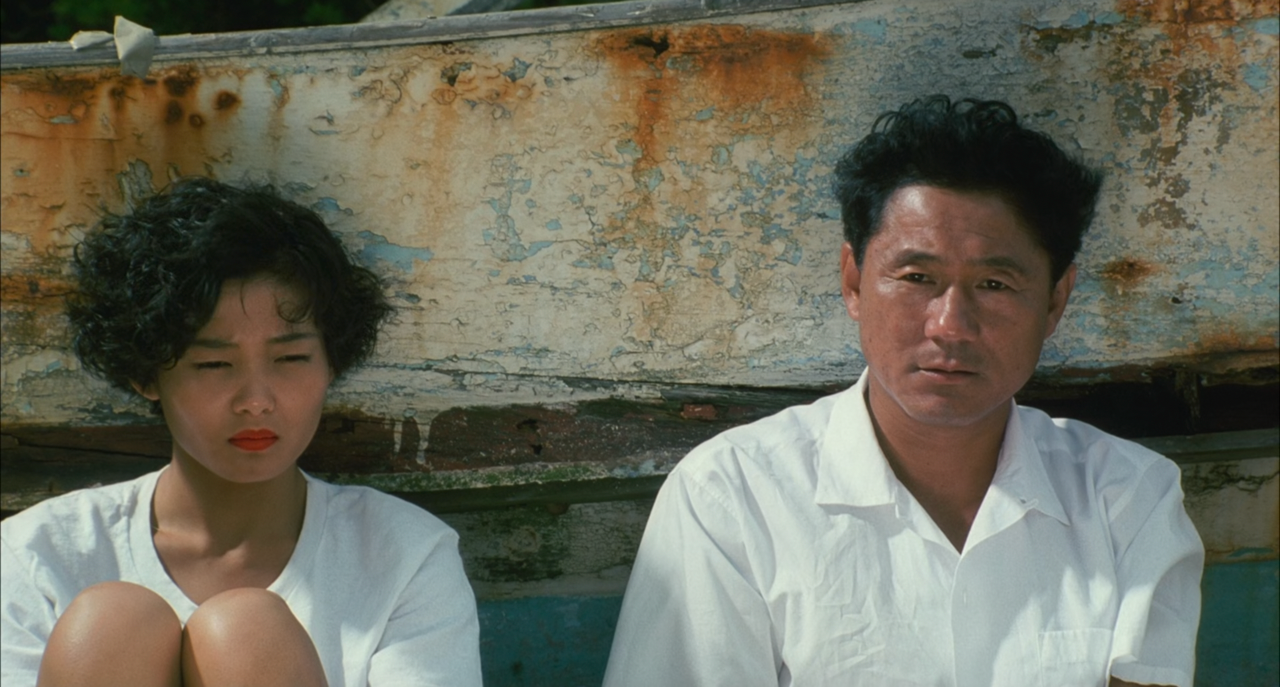


In his earlier film Sonatine (1993), menswear assumes an even more symbolic role. As the Tokyo yakuza arrive in Okinawa, the gang members relax in colourful kariyushi shirts and Okinawan aloha shirts, embracing the island’s leisurely atmosphere. Only the protagonist, played by Kitano, continues to wear a plain white shirt throughout the film. While white is traditionally associated with weddings in the West, in Japan it is also the colour of burial garments. In a film that portrays a yakuza haunted by an ever-present awareness of violence and death, the white shirt becomes indispensable—a silent emblem of his death wish.
When Kitano directed his first film in 1989, it came as a surprise to many Japanese audiences for its unflinching violence and sombre tone, which seemed at odds with his public persona as the comedian Beat Takeshi. The director was born in 1947 in Adachi, a working-class district of Tokyo, where his family ran a small painting business. To this day, when appearing on television as the comedian Beat Takeshi, he deliberately speaks in the old downtown Tokyo dialect—a way of talking that has largely disappeared from contemporary Japanese. In a television landscape dominated by comedians performing in the rapid-fire rhythms of the Kansai (western Japan) dialect, Kitano’s speech remains distinctive. His trademark insult, bakayarō (“You idiot”), heard repeatedly in his films as well as in his television appearances, belongs to this downtown vernacular.
For Kitano, who was born into the working class of eastern Tokyo yet attended an elite private university, continuing to speak this language while delivering provocative jokes functions as an act of resistance—a defiant rejection of social pretension, as if to say, “Don’t put on airs, bakayarō”.
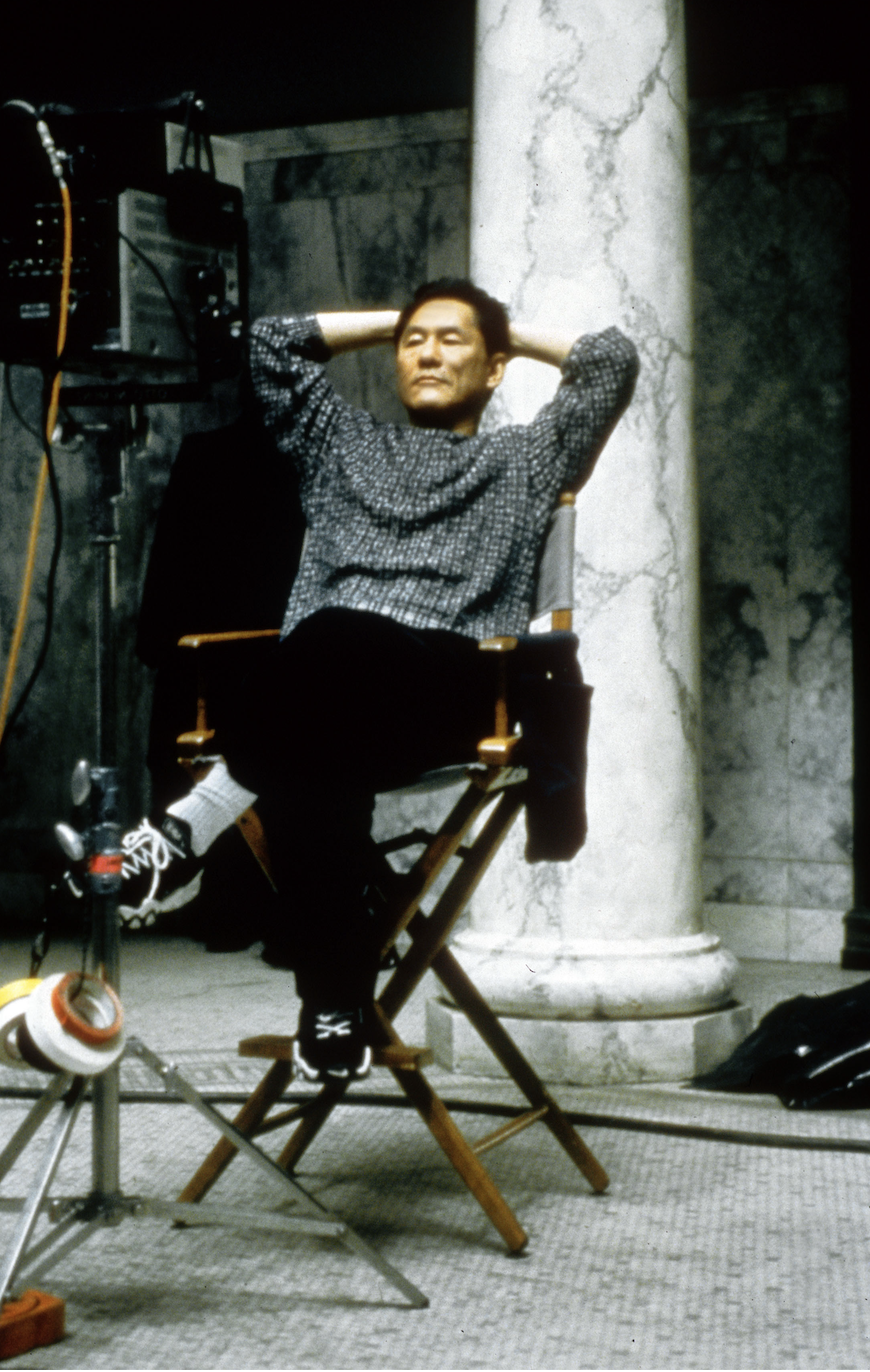
A smart-casual Takeshi Kitano on set of Brother (2000).
In the early 1980s, while Kitano was performing as one half of the comedy duo Two Beat, he frequently wore Issey Miyake, when the designer was leading the new era of Japanese high fashion. Kitano’s preference for the brand quickly became widely known, providing endless material for fellow comedians to mock. Kitano himself has often recounted—perhaps with some exaggeration—that the brand’s PR once begged, “Please, stop wearing our clothes”, fearing that his public image might damage the brand. Every time he tells the story, he bursts into laughter: “What’s wrong with me wearing Issey Miyake? I’ll buy even more of it!” Where, then, did this fascination with the sharp, yet breezy yakuza style come from?
The origins of the yakuza suit can be traced to the 1980s. As Japan’s postwar economic boom filled its cities with impeccably dressed businessmen embracing Western ideals of elegance, men of the criminal underworld developed a sartorial language of their own. In Tokyo, street photography taken in Shinjuku’s Kabukichō district—most famously by photographers Katsumi Watanabe and George Hashiguchi—reveal gangsters who were not only feared but also admired as fashion icons.
At the same time, Shinjuku—then packed with live music venues and independent cinemas— stood at the centre of Tokyo’s underground cultural scene. Before entering show business, the young Kitano spent countless hours there each day. A student at Meiji University, he has described how he drifted between part- time jobs at jazz cafés while contemplating his future.
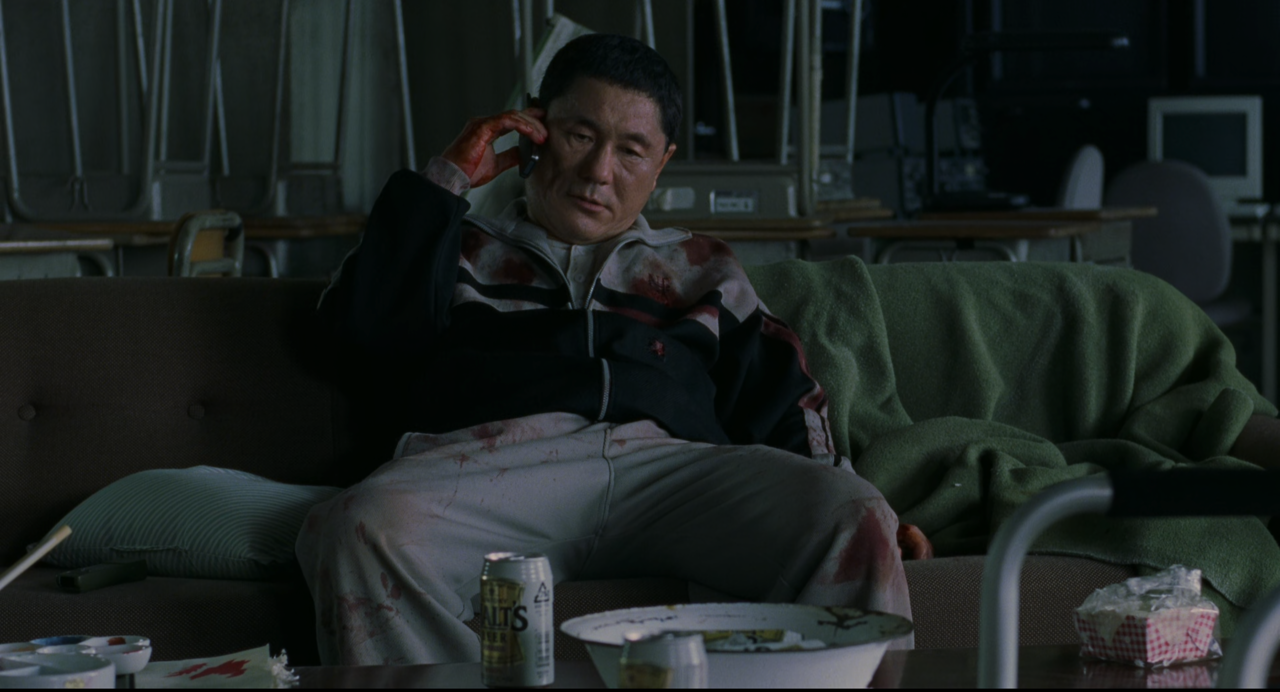
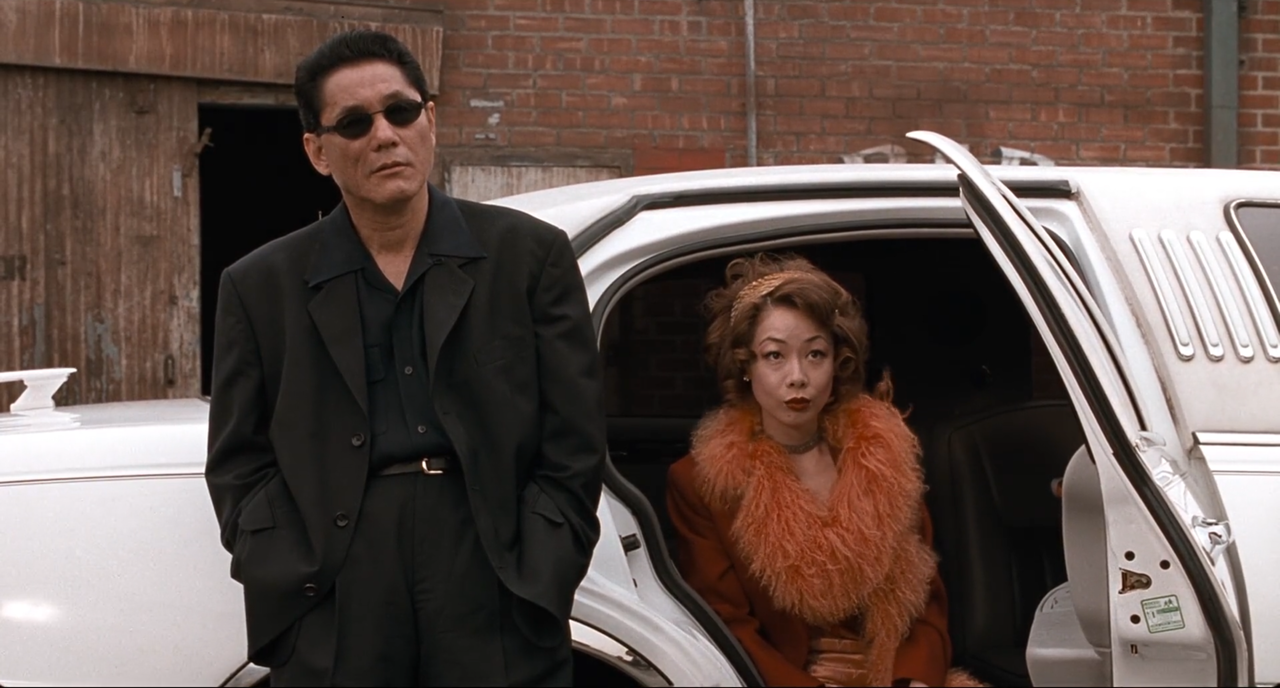
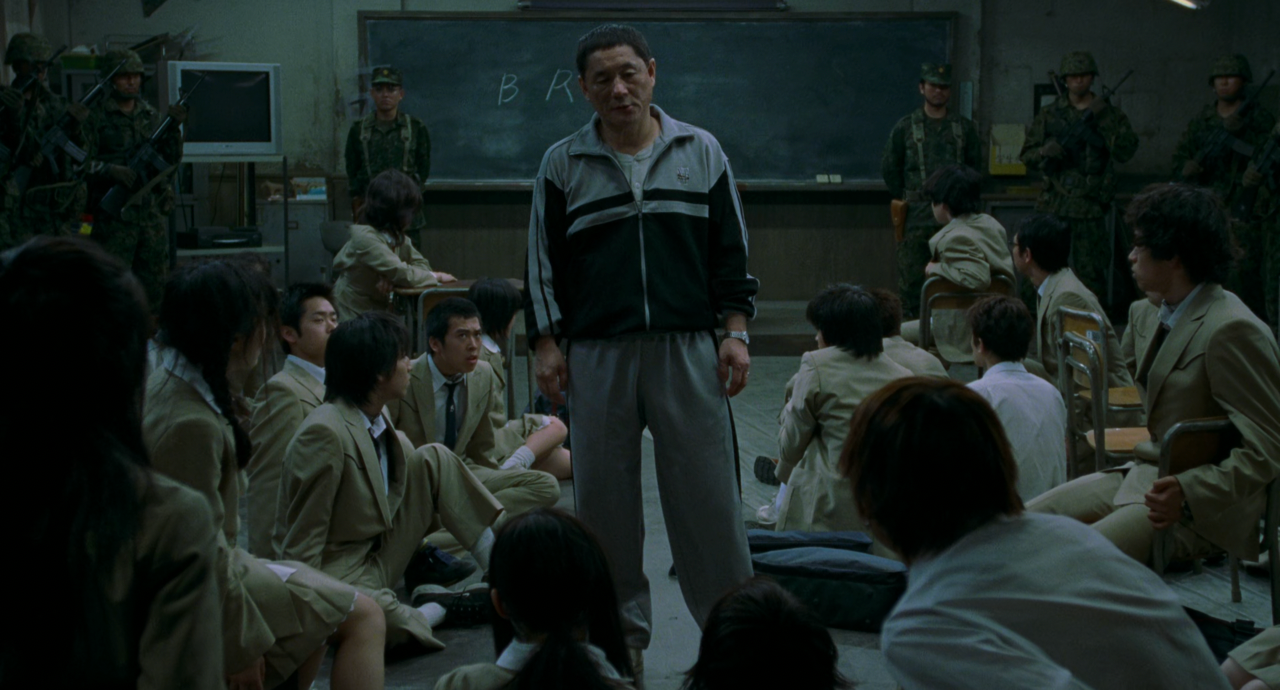
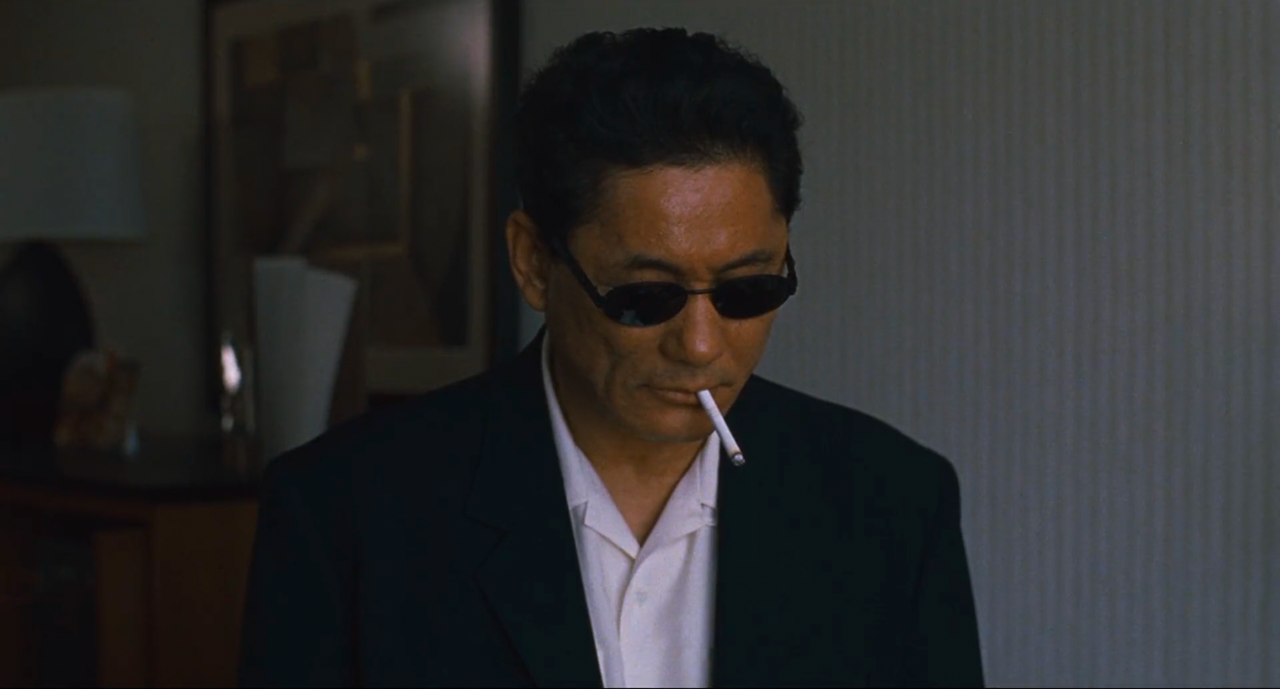
Coincidentally, Kabukichō was also the neighbourhood where the fashion designer Yohji Yamamoto, known to be a Kitano fan and a long-time collaborator of the director, grew up. It is impossible to overstate the influence this district, especially in that era, had on the formative years of these two remarkable artists. Yamamoto’s menswear of the 1990s shares a striking affinity with Kitano’s vision of men’s fashion: generous proportions, fluid movement, loose white shirt, and garments that seem to come alive in the wind. The brand’s spring/summer 1999 collection featured Kitano alongside Japanese rock star Yūya Uchida as guest models on the runway. In interviews at the time, Yamamoto described them as “the coolest men today”, explaining that he was captivated by the violence, danger, and latent darkness they embodied.
The Western suit—with its origins in military uniform and its ideal of closely following the body’s natural contours—stands in sharp contrast to both the yakuza suit of 1980s Japan, and naturally Yohji Yamamoto’s menswear. If the former seeks to project social legitimacy and respectability, the latter declares, through its very silhouette, a refusal to belong to the respectable world. Here, one is reminded of a memorable line from Sonatine, in which Kitano’s character remarks, “People carry guns because they’re not strong”.
Like the gun in Kitano’s films, the menswear worn by yakuza and reimagined by Yamamoto is less an expression of strength than a performance of it. For figures such as Kitano and Yamamoto, both artists who challenged Western artistic convention, their clothes became a kind of weapon: an armour worn not for protection, but for defiance.