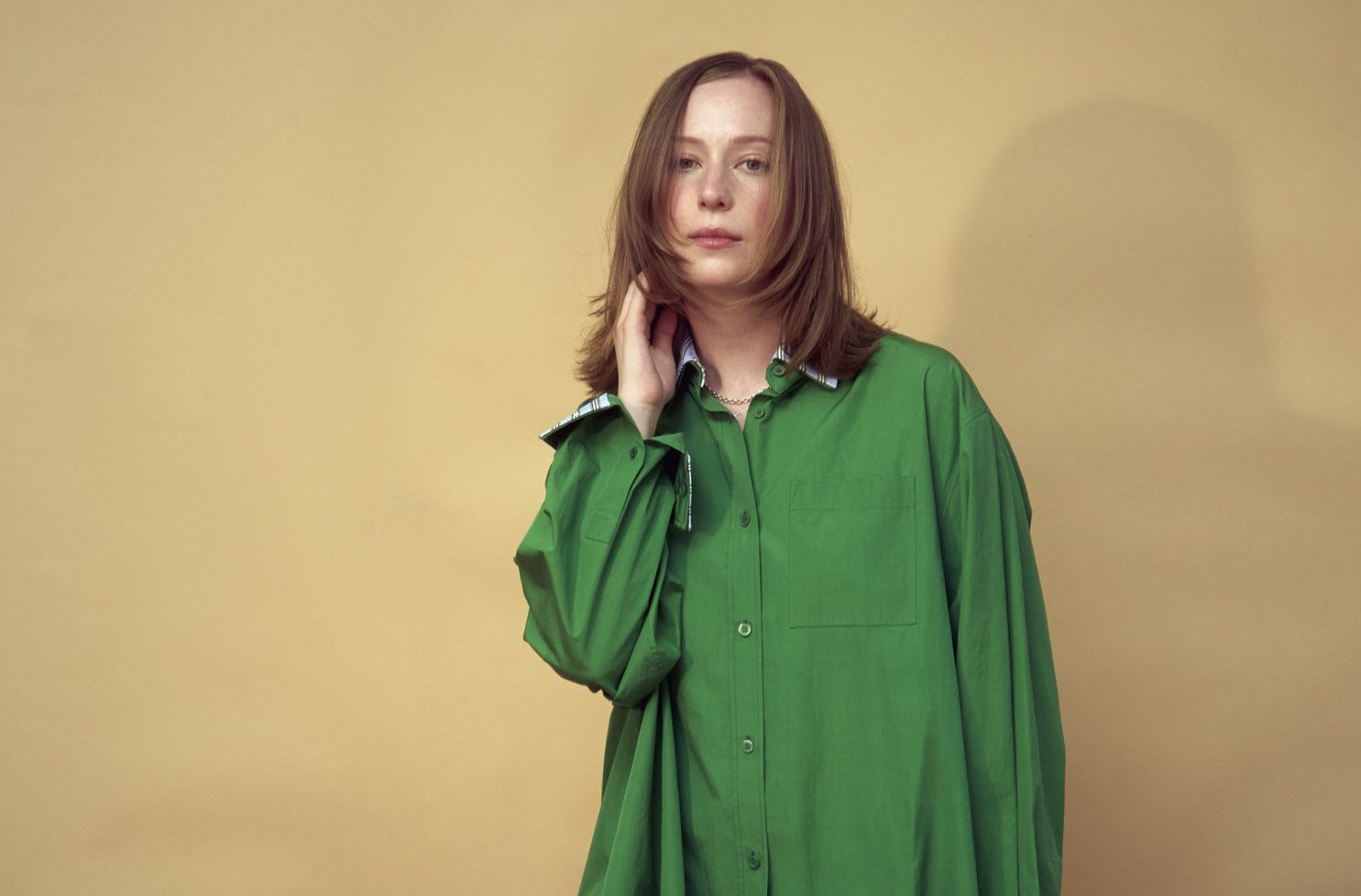


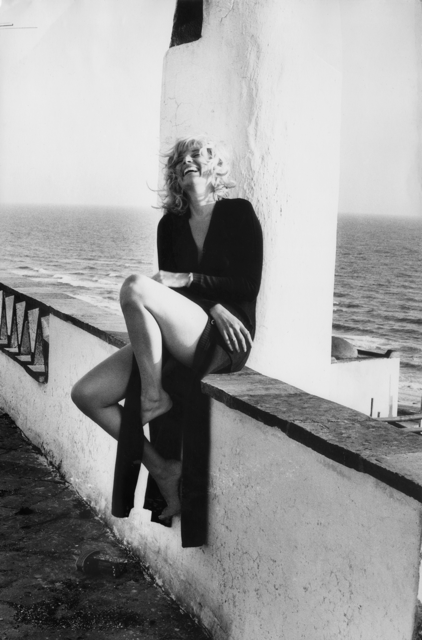
In the first of three stories that pay tribute to timeless style icons in the issue, Italian actor Benedetta Porcaroli looks back on the influence of the great Monica Vitti—both as a performer and through a dignified lightness that transcended fashion.
When I was little, I remember how at my grandparents’ house we watched countless films from the golden age of Italian cinema. Alberto Sordi, Marcello Mastroianni, Anna Magnani, and Monica Vitti were the first names in cinema I remember hearing, and as I grew up watching more of their films, I was convinced they embodied the very soul of cinema. Of them all, Vitti was the actress who captivated me most. The first film I saw of hers was Mario Monicelli’s comedy The Girl with a Pistol (1968). I adored it as a child, but, more than anything, I simply adored observing her perform.
Vitti on-screen was a truly extraordinary creature, gifted with an exceptionally rare power: an astonishing technical mastery combined with a sense of unpredictability. That unpredictability is what makes her characters feel so profoundly human—she is always truthful, never afraid of pauses or silence. Even when we see Vitti’s silhouette from behind, she grips our attention because we’re certain she’s thinking something—lost in her contradictions and in the complexity of life, exactly as we all are, but in a role nonetheless. As I continued watching her, I noticed that Vitti’s acting style represented freedom, just as she lived, and that’s what has made her a timeless icon.
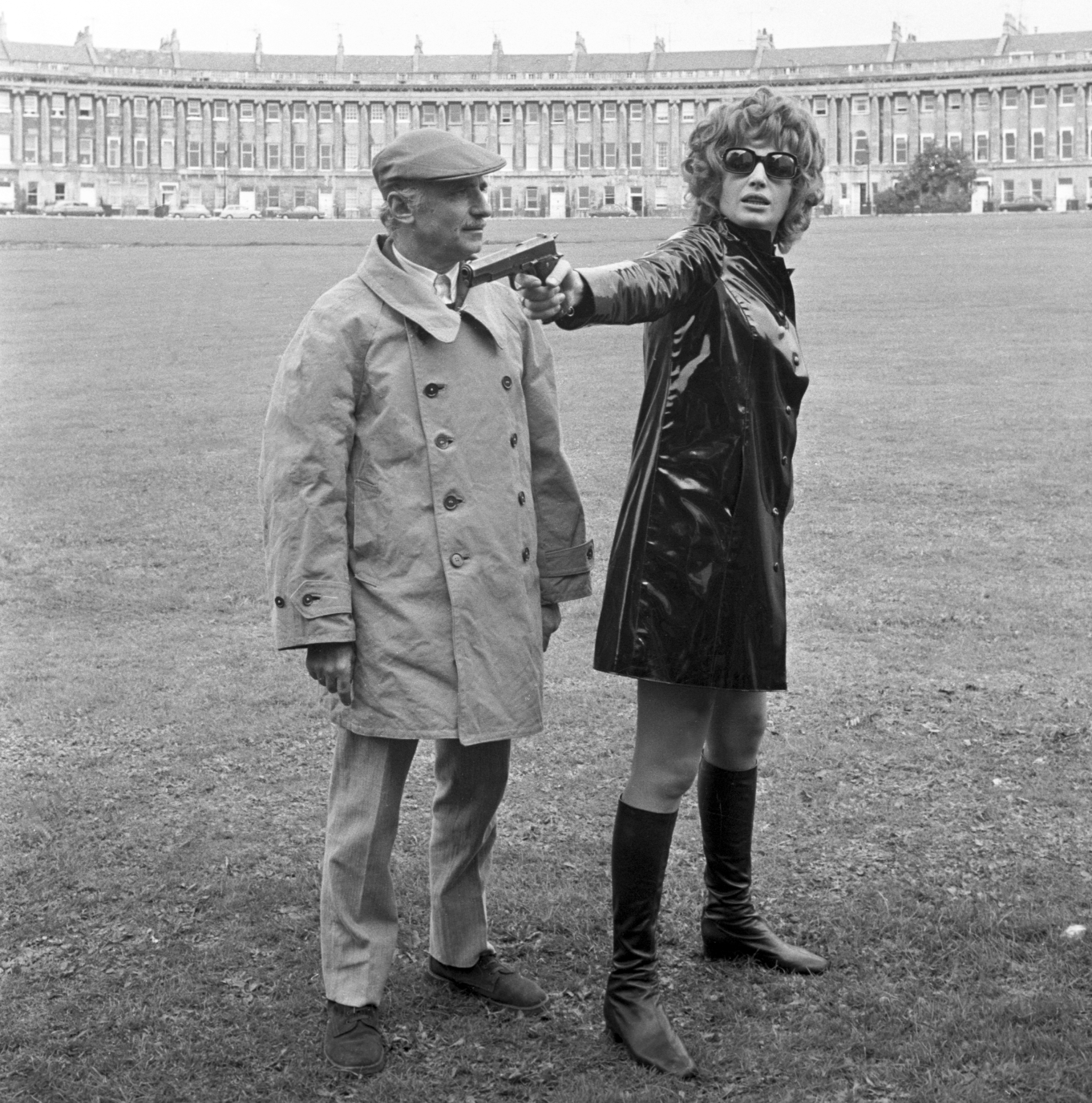
Mario Monicelli and Monica Vitti staging a scene on location in Bath, England for The Girl with a Pistol (1968).
She was never afraid. to reveal the multitude of personalities that each of us contains. She could be sophisticated, funny, ironic, vulnerable, melancholy, and joyful—all at the same time. I don’t think she ever set out to invent a fashion or even worried about it. Instead, she made recognisable a way of being: a character, a gaze, a certain elegance, a particular way of occupying space.
I think that’s precisely what continues to make her feel contemporary and what sets her apart from everyone else. It’s also why she remains iconic and an inspiration to actors studying their craft. That freedom allowed her to make everything she touched—from films to clothes—feel deeply, unmistakably her own. In that act of complete ownership lies all of her honesty and clarity as an artist.
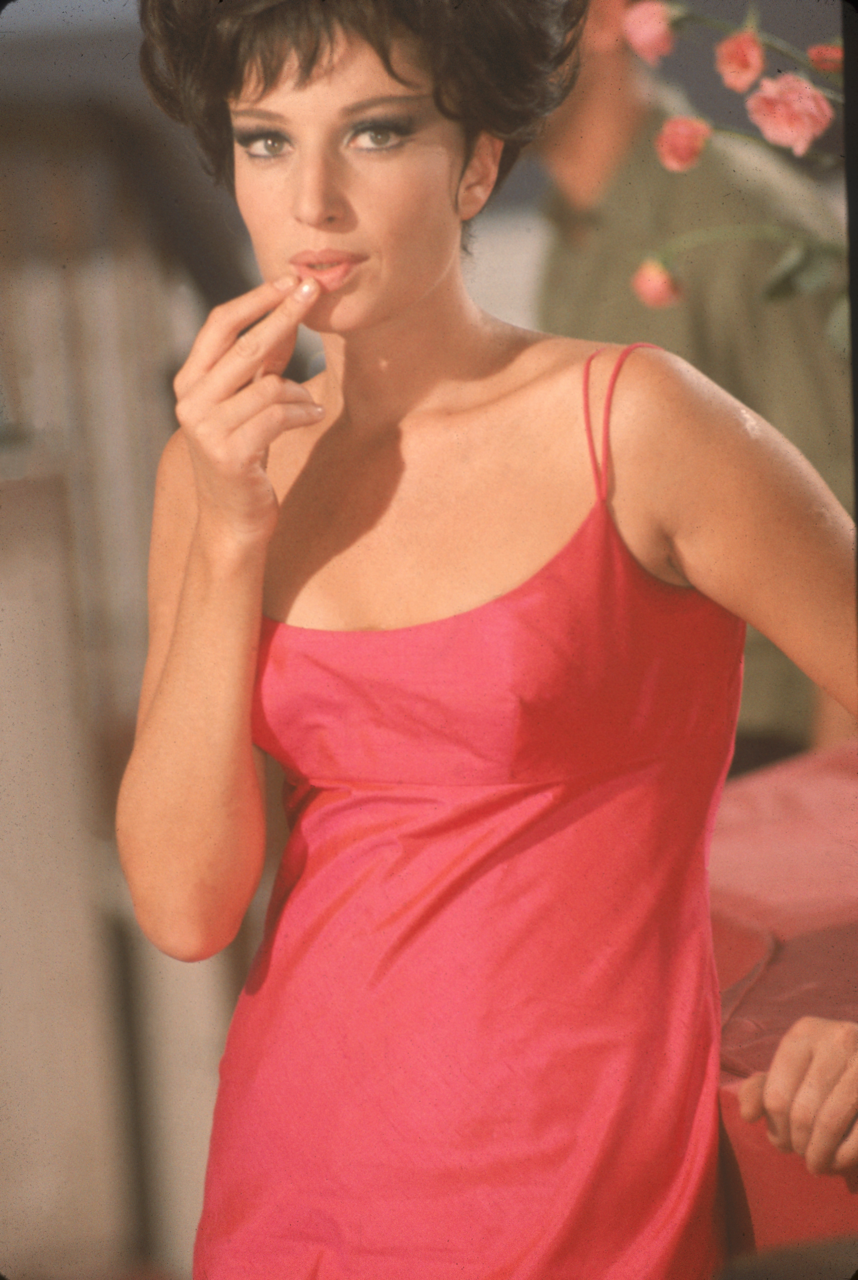
Monica Vitti on the set of Modesty Blaise (1966), photographed by Susan Wood.
I imagine her wardrobe exactly as I imagine her: a certain dignified rigour paired with a certain lightness. I don’t think her clothes were ever trying to create a character different from who she was. They simply expanded what she already was—which was everything, both as a person and an actor.
Vitti managed to be deeply sophisticated without ever seeming distant, ironic without sacrificing elegance. No one could ever confine her to a single image, let alone to a single dress— whether it’s her black number in Michelangelo Antonioni’s La Notte or her colourful 1960s outfits from Modesty Blaise (1966). On the contrary, her clothes seemed to give her freedom of movement; the way she inhabited them made the clothes speak. But whatever she wore acquired meaning through her, never the other way around. And that sense of play is perhaps what I love most as an actor.
The images that stay with me of Vitti aren’t even the best-known, the pin-up shots of a beautiful Italian icon. I recall, instead, the way she walked on-screen, her gestures, her glances, the moments—especially in pensive dramas such as L’Eclisse (1962) or L’Avventura (1960)—when she could fill even the most uncomfortable silence simply with her presence.
Naturally, I think some of her greatest performances are actually her interviews. Revisiting old clips, to hear her speak about love, happiness, and her profession, you always sensed a special intelligence and depth behind her eyes—as if she wanted to tell us that she too lived through her own dramas, yet somehow managed to remain whole. It’s what is left unsaid more than anything, with Vitti. While I have a special affection for The Girl with a Pistol because it was the first Vitti film I ever saw, I also look back these days to Antonioni’s L’Avventura or L’Eclisse.

Vitti managed to be deeply sophisticated without ever seeming distant, ironic without sacrificing elegance.
Benedetta Porcaroli
Perhaps in L’Avventura—which I consider one of the greatest films ever made—she gives the fullest expression of human conflict, of the inexplicable and the unresolved that exists within every one of us, bringing all of it together with an incomparable complexity of performance. In the end, she’s the only character in that film who, in some way, achieves redemption—the only one capable of rising above it. When it comes to her style, which was inseparable from the actor’s image in those days, she has inspired everyone, and still does today (especially in Italy), because she always fully inhabited whatever character she chose to become.
What makes her so strikingly modern—and such an inspiration to me today—is that she transformed the way women were represented in cinema. Through her, women were no longer defined solely by their relationship to a man or confined to embodying some version of the maternal or sexual ideal (as with some of her contemporaries). Instead, they could exist within a world of restlessness, desire, and constant transformation.
That required extraordinary courage on Vitti’s part. If I could embody one side to her as an actor, I would take her aura—but of course that’s impossible. So, instead, I continue studying her, hoping to preserve at least a small part of the greatness of an artist who is almost impossible to describe in words. But as a young actress myself, above all, I try to honour the noblest intentions of this profession. Something Vitti did in abundance. I remind myself to play, and to take that play very seriously, exactly as she did. Because, as she famously said: “Where representation ends, reality ends.”
Continue Reading