Why can’t Sylvia Plath rest in peace?



Get unlimited access to all our articles for just £3.50 per month, with an introductory offer of just £1 for the first month!
SUBSCRIBESince her tragic death in 1963, the poet Sylvia Plath remains a constant symbol in our cultural imaginary. A ripe figure for projection, Plath has been a poster girl for everything from feminist Tumblr aesthetics of the 2010s to a more insidious expression of female vulnerability today. But where is the real Plath? asks Sarah Fletcher.
When did you last see Sylvia Plath? She may be dead, but she is on the move. Even during the writing of this essay, she made multiple public appearances. This week, there were rumours that Billie Eilish might play her in a film adaptation of The Bell Jar. A novel fictionalising the final year of her life (The Daffodil Days by Helen Bain) has also been getting critical acclaim, with the Guardian praising it as an “astonishing achievement”.
Only last month, Plath starred in a Lana del Rey music video. We don’t see her face, but we see her hourglass figure sliding itself softly into an oven. Del Rey has cast herself to play the poet: her hair is perfectly manicured for the suicide attempt. Her skirt is flattering. Her spine is arched. A friend tells me that this decapitated woman reminds him of the ludicrous and popular porn trope of women getting stuck in laundry machines, with their arses out and muffled voices pleading for help (usually from a family figure, such as a stepbrother), an unintentional echo with Plath’s poem ‘Daddy’.
Del Rey has invoked Plath before. She purred on her 2019 single ‘hope is a dangerous thing for a woman like me to have, but I have it’ that she’s been “running around in this fucking nightgown / 24/7 Sylvia Plath’. Plath here is a byword for madness. Del Rey’s upcoming album ‘Stove’ is a morbid wink to Plath’s death.
Its single ‘White Feather Hawk Tail Deer Hunter’ seethes with domestic menace (“whoopsie daisy… take my hand off the stove / you know how absolutely bad I am with an oven”). The rest of the video has a Southern gothic verve that looks almost like found footage from a horror film. Perhaps if Lana were an astute reader of Plath’s poems, she might have heard echoes in the poem ‘Cut’, a poem in which the speaker cuts her thumb while chopping onions, and queasily rejoices in the “pink fizz” of blood. These interesting parallels, of course, are abandoned for the unsubtle bludgeon.

Artwork for Lana Del Rey’s forthcoming album ‘Stove’, which is inspired by Sylvia Plath’s life.
Plath’s life has always been up for grabs. In the 1990s, the all-girl grunge band Babes in Toyland yowled lines of her poetry over rough guitar riffs. Or maybe you saw her as Gwyneth Paltrow in 2003 box office bomb Sylvia, with Paltrow conjuring high, hammy hysteria in an unsuccessful Oscar bid. Perhaps you glimpsed a copy of The Bell Jar (1963) in the corners of much loved teenage angst comedies such as 10 Things I Hate About You (1999) or ten years earlier in Heathers (1989).
These are high production afterlives of Plath. But many of her afterlives have been more casual. She’s had her own DIY folklore. She’s been conjured in whispered conversations at sleepovers between young women, manifested in memes, and turned into her own fashion icon. In this sphere, Plath lives on as a talisman in which one might decipher the mood of disaffected young women of an era.
Many millennial women, myself included, first spotted Plath on Tumblr in its arguable peak of 2012—2o15. This Plath took on the pose of a feminist: a proto-Hillary Clinton voter, who might’ve had a scathing view on mansplaining had she survived the sex wars of the 1970s. There, Plath was a strong woman, who resisted being slut-shamed by boldly calling out (in her private journal) the sexual double standards of 1950s America. But simultaneously, in the backwaters of 2014 Tumblr, Plath could be seen in other disguises. Sometimes a kinky daddy fetishist; sometimes a mean girl who’d insist that the blood jet is poetry the way Regina George would dictate that on Wednesdays, we wear pink.
It’s easy to blame teenage girls, one of the most scapegoatable groups of society, for not understanding Plath. But as a figure, she’s had her story continuously told by others, making her a ripe figure for projection. After her death, those left to tell her story first were fellow poets. Robert Lowell, her one-time mentor, suggested that it was writing the Ariel poems that killed her, while literary critic Al Alvarez suggested the opposite, that it was this work that might’ve saved her. Plath’s estate was controlled by Ted Hughes, who, at the time of her death, she was in the process of separating from in an acrimonious divorce, and Olwyn Hughes, his sister, who Plath hated so much in life that she even accused the two of them of being in an incestual relationship. Their despotic reign over Plath’s rights meant her legacy was sprawled with fighting between academics and biographers and Ted Hughes himself. It was Ted Hughes himself who put out her posthumous book Ariel, deciding which poems to leave in and out, and having the final say on edits.
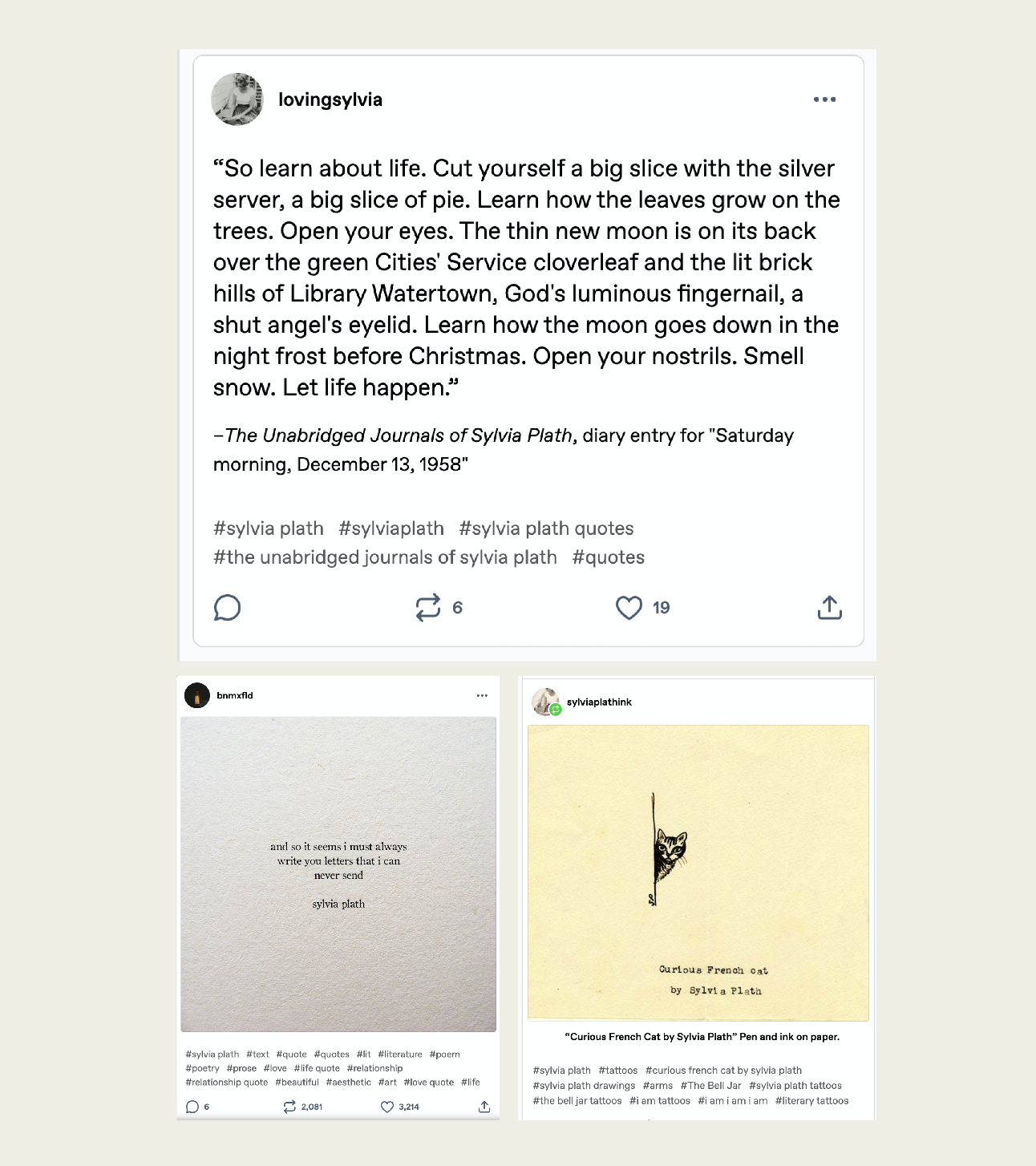
Various Sylvia Plath Tumblr edits
The literary ‘scene’ was silent about this treatment (Philip Larkin’s review of Ariel wrote her off as a “miniature mad talent”), but the burgeoning women’s liberation movement certainly wasn’t. In 1970, just seven years after her death, feminist activist and poet Robin Morgan delivered a coroner’s report consistent with findings from Betty Friedan’s popular treatise ‘The Feminist Mystique’ that her husband, Ted Hughes, had killed her: “I accuse Ted Hughes,” wrote Morgan.
Though these interventions were meant to salvage her legacy, they made Plath’s legacy her life and not her work. Plath’s death, which was perhaps the smallest part of her life, still manages to overshadow everything else. Woody Allen notices a Sylvia Plath book in Annie Hall’s apartment in his 1977 film and quips: “tragic poetess whose suicide was misinterpreted as romantic by the college girl mentality.” The fight over her image was clearly on. Janet Malcolm’s acclaimed book The Silent Woman goes into detail about biography as a form: how can it be used to silence, elucidate, smear, or deify? It charts the shocking history of ways Plath was silenced in favour of other people’s interpretations of her, most often at the hands of her estate.
Amazingly, Plath seemed to pre-empt that people would be fascinated by what they could glean from her living and her dying, rather than her verse. In her bold dramatic monologue Lady Lazarus, the speaker—a thinly veiled Plath—gloats about returning after multiple suicide attempts. The voice is swaggering and sarcastic. She talks about “the big striptease” of projection, wherein an audience acts as the “peanut-crunching crowd”, arriving to interpret the leftover accessories of a death. We are salacious voyeurs.
If Plath has been appropriated to fit various moments in femininity, the current iteration of Plath is the most strange of all. This year, I’ve seen Sylvia Plath on Instagram and TikTok, decorated with pink bows and fishnet tights. In these contexts, she’s surrounded by open pomegranates, flanks of bloody meat, Victorian nightgowns, stills from Girl, Interrupted, images of Lana Del Rey, and baby deer. She is no longer the ferocious feminist battlecry of my 2014 Tumblr Plath, but, rather, an icon of intense yearning and vulnerability—much like Del Rey. She has subsumed into a larger cultural trend of ‘coquette’.
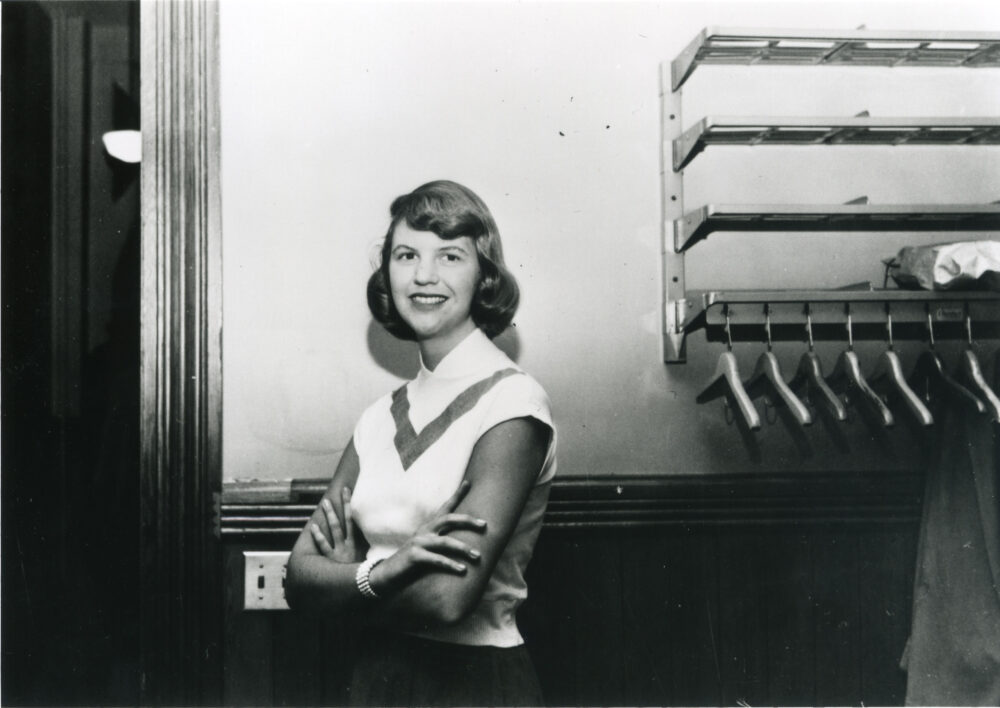
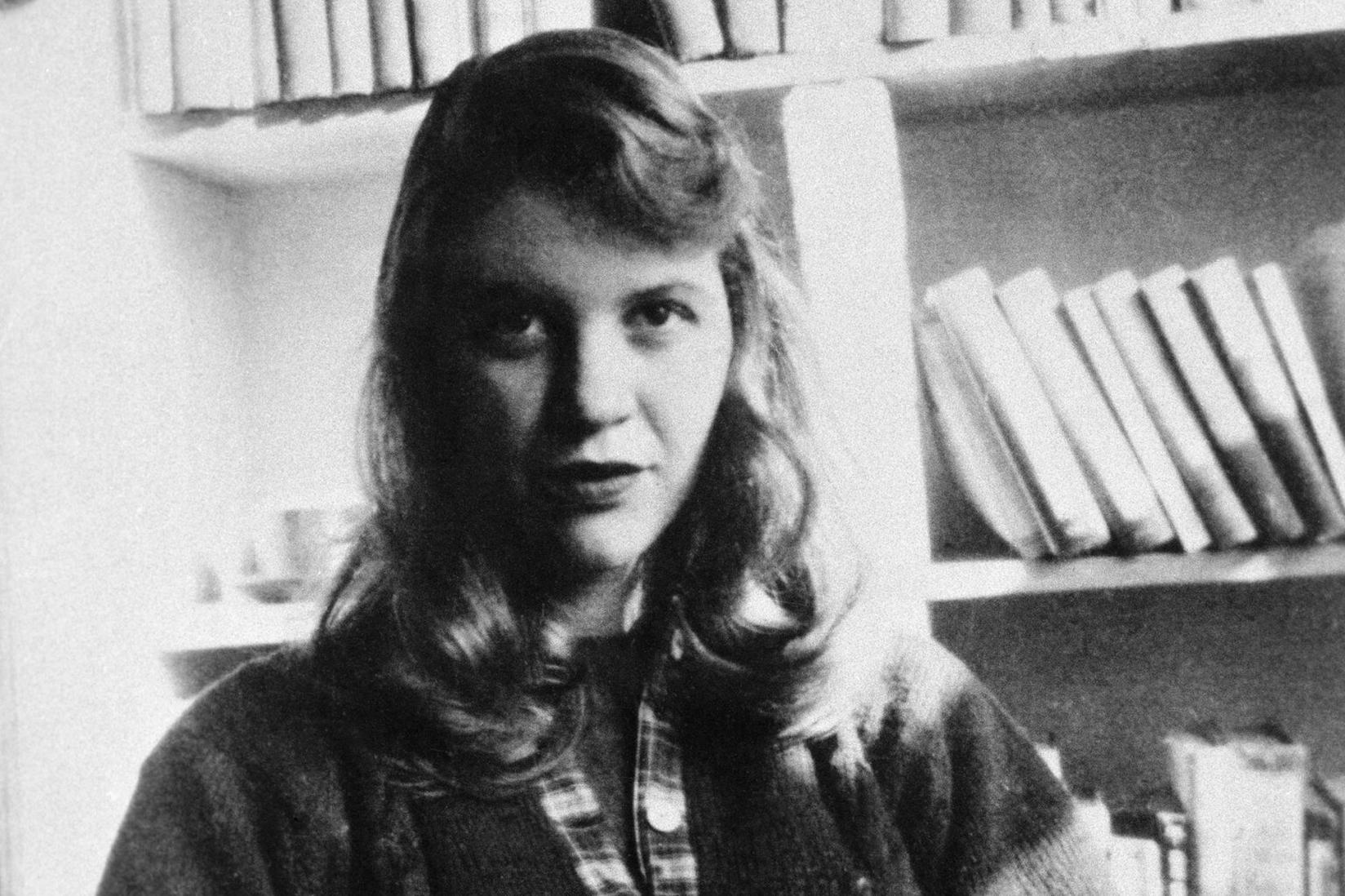
Sylvia Plath pictured during her time at Smith College in the early 1950s.
The coquette Plath aesthetic is meant to articulate a (usually white) femininity based on being delicate. The symbols seem muddled. Spot Sylvia among midcentury lamps, dirty martinis, milk, Class A drugs, age gap relationships, Catholic kitsch, and gingham bathing suits. That she is at home in this circumstance suggests that young women are no longer chasing empowerment. There is a resignation towards fragility, even a romanticising of fragility, that to me suggests that the girls are not alright.
Of course, this Sylvia Plath is wrong. But not necessarily more wrong than all the other Sylvia Plaths. She has a tendency to be a canary in the coalmine for the cultural mood of artistic and troubled young women: 2016 feminism and the tidal wave of ‘woke’ it brought with it are over, dithering about sexism is passé, and all the cool girls and their Plaths are dissociating. It is understandable to want a mirror in a writer, particularly for women, who struggle to find footholds and lookalikes in the canon. But Plath was wise to mirrors, as she wrote in her poem ‘Mirror’: “a woman bends over me / searching my reaches for what she really is…in me she has drowned a young girl, and in me an old woman / rises towards her day after day, like a terrible fish”.
But what I notice the most is how quiet these Plaths are. The current wave of coquette memes do sometimes cite Plath’s words, but usually as hollow snippets from her letters and diaries. A few phrases are perennial favourites: “I desire the things that will destroy me in the end” ,“I talk to God but the sky is empty”, “kiss me and you will see how important I am”. Of course we like these quotes. They are vague and compelling as a psychic trying to map facts on to a stranger. Mysterious as an Angelina Jolie back tattoo.
Maggie Nelson’s new book that juxtaposes Plath with Taylor Swift reinvigorates feminist interpretations of her image as well as challenges us to see her as fame-hungry and calculated. I hope not. These images of Plath shatter when we engage directly with her work. We can kintsugi them together with a sensitivity to the cracks, paved with the gold of her poetry. Her voice is wild and strange and alien: it is the alienness rather than relatability that draws me back to her. I remember asking my mother for a copy of ‘Ariel’ as a teenager, hoping to find something that’d speak to my adolescent pain, my unique itch for life diminished by my age, my sex, and despair.
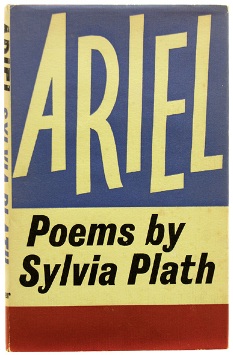
An early edition of Ariel by Sylvia Plath
Reading Plath’s writing for the first time at 17, I felt more fearful and intimidated than empowered. To my chagrin, she was not “just like me for real”. She scared me. I put the book aside until my early twenties. Instead, I found solace in Anne Sexton, who had more straightforwardly tormented verse, with poems titled “Wanting To Die” or “Buying The Whore”. Sexton’s life is the life many want to find in Plath: she is a martini-swilling, red-dress-wearing seductress. She outlived Plath by eleven years, and died ultimately, also, by suicide.
Al Alvarez once asserted: “the pity is not that there is a myth of Sylvia Plath but that the myth is not simply that of an enormously gifted poet whose death came carelessly, by mistake.” This is often what I return to most. In these myths, we lose not only the genius of Ariel, but the humanity of Plath. Plath got married at 22, and died at 30. She died in one of the coldest recorded winters in London. She was in the midst of a brutal divorce, and worried about finances as well as her immigration status. These things are not romantic.
The day Plath died, her neighbour noticed her smell was “sharp, like an animal’s”. She stuffed a towel under the door to keep the gas from leaking to her two children, and left a plate of homebaked cookies for them to eat. This is hard to see as anything but a tragedy on a human level. She wrote her final poems, which were genius, at 5 AM in the morning. She was not a 365 party girl; she was not a manic pixie dream girl; she was not “me, if you even care” with a bottle of rosé and a red lippie. These depictions of her life are exaggerations, the kind that inhibited her poetry writing the most. And we have so much to gain from her verse, which still has the capacity to move us. Reading it undoes the spell of her stereotypes. Next time you see Sylvia Plath, which you will, say hello. It is not her. Lucky for us, we know exactly where to find her.