

Jeanne-Pierre Jeunet’s Le Fabuleux Destin d’Amélie Poulain received a mixed reception when it was first released in 2006. Some loved, whilst others loathed the whimsical portrait of an isolated and idiosyncratic woman in Paris. Yet, less appreciated at the time was how Amélie, for many, was the first time they had seen a neurodivergent woman on screen. As it turns 25, film writer Lillian Crawford pens a personal essay in praise of Jeunet’s heroine.
Home film footage shows a finger making music around the edge of a glass of crème de menthe. Then the back of a young girl’s head, her hands flapping against her ears and touching her hair—not with distress, but playfulness. It is instantly recognisable to an autistic viewer as self-stimulating behaviour, or stimming. Less obvious to an audience in 2001, when the opening titles of Jeanne-Pierre Jeunet’s Le Fabuleux Destin d’Amélie Poulain first appeared, than it is in 2026. The last twenty-five years has seen a shift in our understanding and diagnosis of Autism Spectrum Condition, and the neurodiversity paradigm in which it thrives.
When Amélie is introduced as a child, her neurotic father gives her monthly health checkups. He listens to her heart with a stethoscope, an action which the narrator informs us was the most physical contact he ever gave to his daughter who craved his affection. Causing her heartbeat to quicken, Raphaël Poulain declares that she must have a defect and must therefore be educated at home. Born in 1974, it is highly unlikely that the girl’s behaviour would be associated with autistic traits, not least because the condition was predominantly seen as male. This continues to make diagnosing girls and women as autistic complex, since we are more likely than our male counterparts to imitate the social behaviours of others, known as masking or camouflaging.
I was first suspected of being autistic by my parents as a child, although it was not until early adulthood that I received a formal diagnosis. This was always complicated by my sense of humour, as well as my interests in culture and history over maths and science— doctors told me I was “quirky” and “interesting”, but not “on the spectrum”, as it were. The green VHS cover of Amélie smiled at me knowingly on the rental stand at the local newsagent at that time, although it was not until I went to university that I finally watched it. It was a deeply emotional viewing experience, one which allowed me for the first time to recognise another woman who moved through the world as I do. Watching the film today, I can identify that sensibility as autistic.
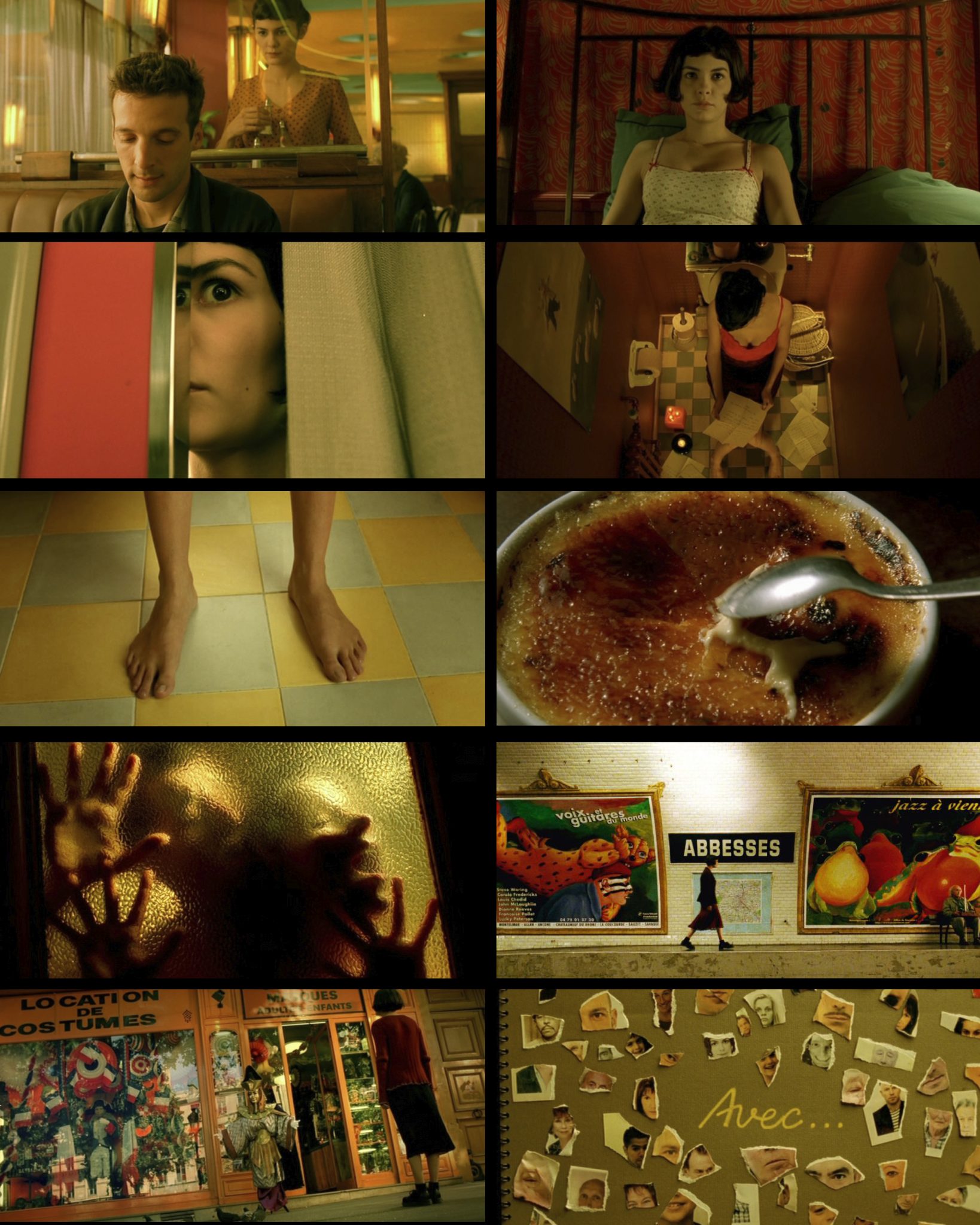
The world of Amélie. Stills from the 2006 film.
The narrator presents an itemised breakdown of the adult Amélie’s likes and dislikes. She enjoys going to the cinema because she enjoys looking behind her to see people’s faces in the dark, and to notice details in the film that no one else sees. Other people have seen autism within the fabric of Jeunet’s film—since Amélie is never labelled as neurodivergent, she can only be read this way by an audience. When she takes the Paris Métro, the film’s frame rate increases, the camera angle tilts, and the sound is heightened, inviting us to share in this overwhelming sensory experience. CGI is used to bring Amélie’s imagination to life, of her childhood imaginary friends and the longing look of her pet goldfish, Blubber. Jeunet allows us to see the world as Amélie does.
We are told that “she cultivates a taste for small pleasures”, revelling in the sound of cracking crème brǔlée with a teaspoon and plunging her hand into a sack of grain at the market. In this she is comparable to her parents, who are similarly described as having intense sensory pleasures (emptying their toolbox/handbag, cleaning it, and putting everything back) and displeasures (the clinging of wet swimming trunks/the puckering of fingers in the bath). But Amélie embraces life in a new way; she attempts to emulate the good deeds of Princess Diana following her death in 1997, discovering a box of childhood treasures in her flat which she decides to return to its owner. If he is touched by her kindness, she will become a regular do-gooder. If not, too bad.
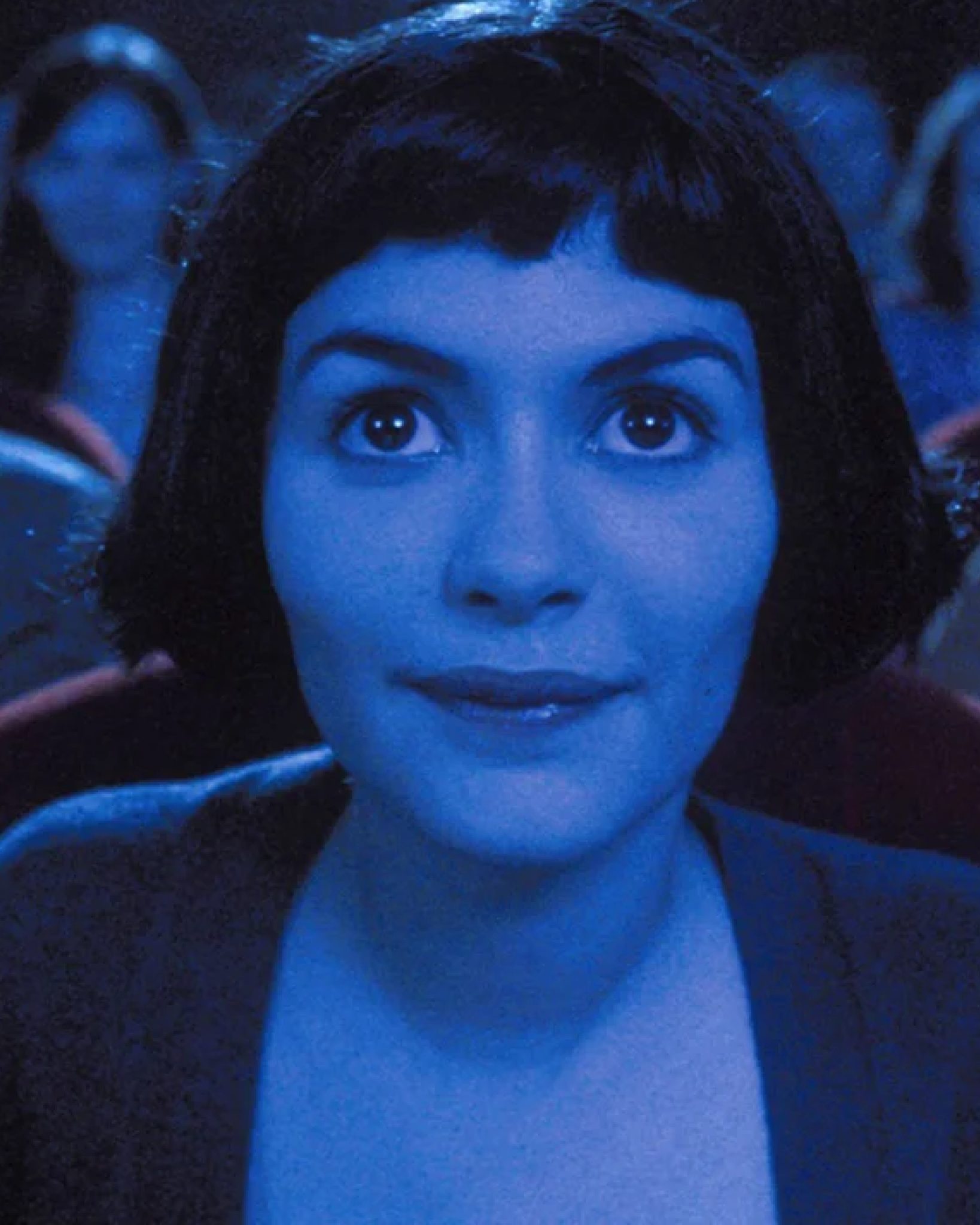
Amélie in Jeanne-Pierre Jeunet’s 2006 Le Fabuleux Destin d’Amélie Poulain.

The film creates a sense of the metaphysical barrier which characterises the autistic sense of isolation and distance from others through bold cinematographic techniques.
Lillian Crawford
Amélie is therefore experimenting with modes of behaviour, of how to interact with other people. She watches a painter known as the Glass Man, a fellow outcast who paints copies of Renoir’s Luncheon of the Boating Party over and over again ad infinitum, through binoculars at her window. She is a spectator of other people, attempting to live vicariously through them but being stopped from doing things herself by overwhelming anxiety. The Glass Man teaches her that she can afford to take a few knocks to build her confidence, for it shall not be the end of the world.
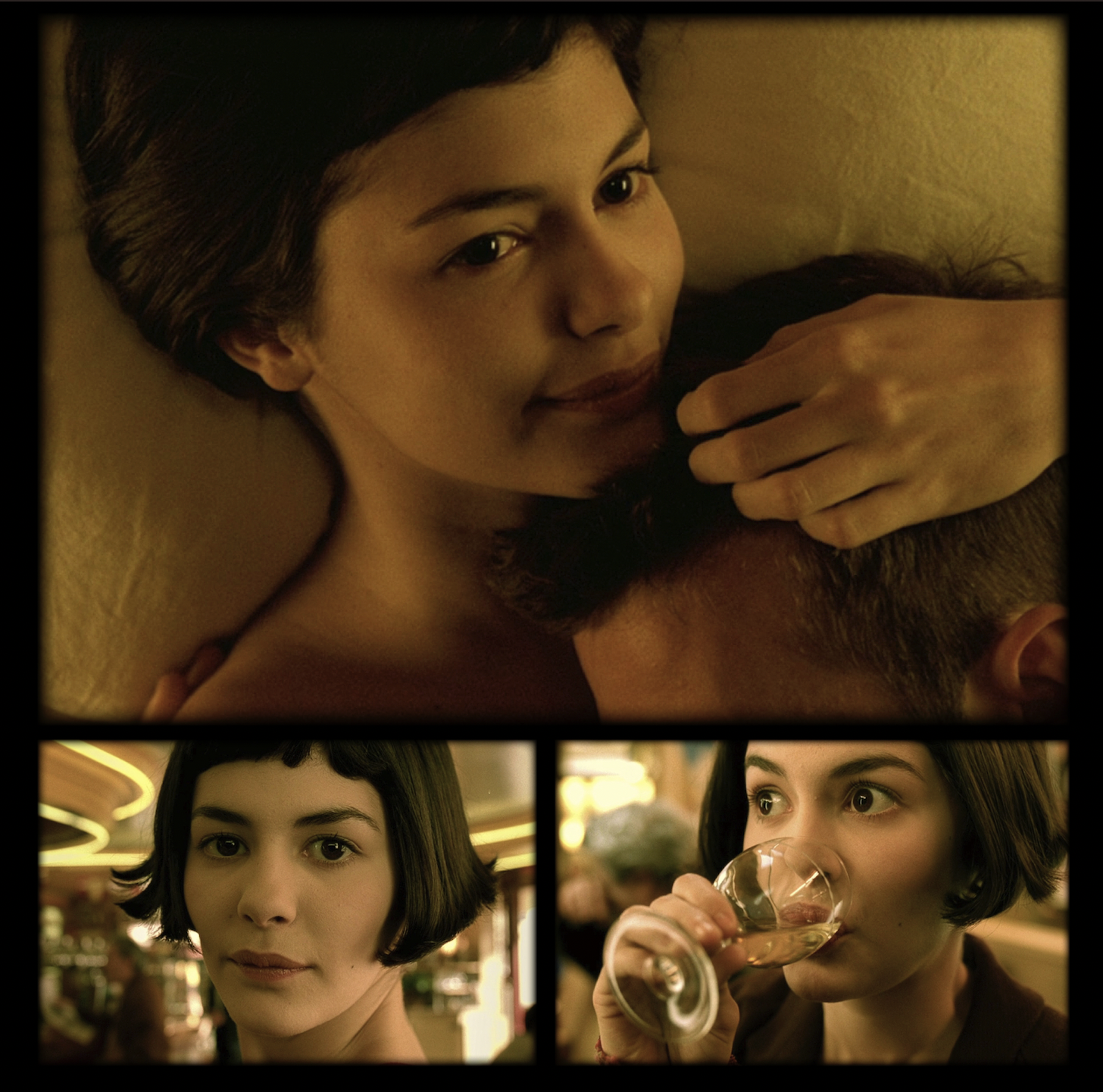
It is with this encouragement that Amélie embarks on her greatest adventure: romance. Nino Quincampoix is her male counterpart in many ways—we are told he was bullied for his difference at school, and he collects discarded photobooth pictures at Métro stations. He is slightly bolder than her, for Amélie has had boyfriends before yet when we are shown her having sex she seems to find it amusing rather than stimulating. Her understanding of sex is clinical rather than sensual, wondering how many orgasms people are having in Paris at a particular moment (fifteen).
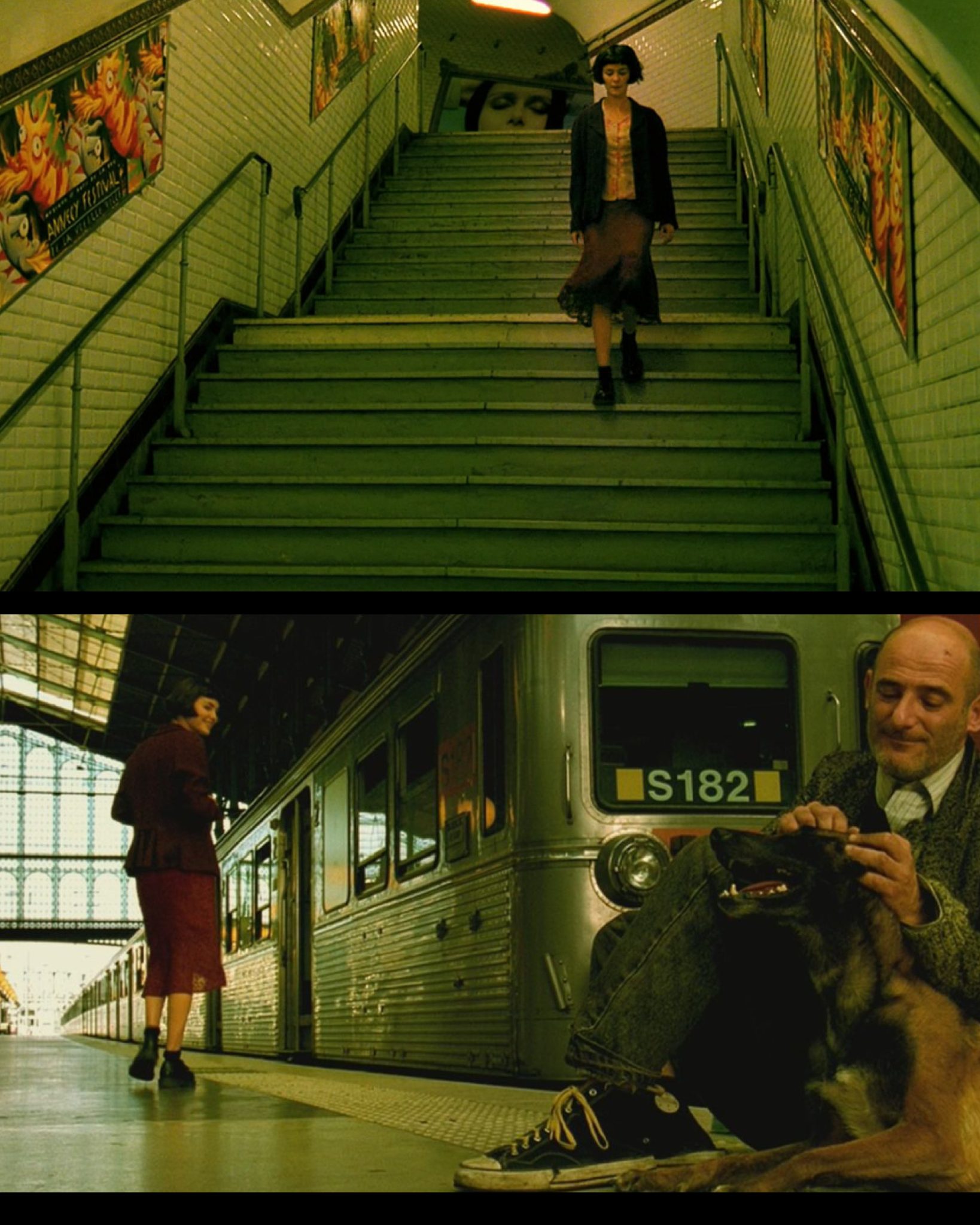
Jeanne-Pierre Jeunet’s 2006 Le Fabuleux Destin d’Amélie Poulain.
Yet Amélie cannot confront Nino or her feelings directly, leading him on a trail of breadcrumbs to her place of work at the Two Windmills café. Even when he is sat in front of her, she stands behind a literal pane of glass and denies that she is the woman who has been leaving him clues. Once again she passes on a note rather than speaking to Nino aloud, and when he leaves she quite literally melts into a pool of water on the tiled floor. Such fantastical moments remain an experimental and brilliant mode of visualising Amélie’s internal feelings, to place us within the experience of a woman for whom flirtation and conversation do not flow easily as they do for so many women in French cinema—she is certainly no Catherine Deneuve or Brigitte Bardot. More Anna Karina perhaps, in her Godardian flights of fantasy, yet still lacking her forwardness when it comes to men.
A musical version of Amélie premiered in 2015, coming to London in 2021. Without the presence of the narrator in the film, the songs provide insight into Amélie’s internal monologue—in one song she sings of a ship which is sailing towards the shore, but no matter how close it gets, there is always halfway to go. The film creates a sense of the metaphysical barrier which characterises the autistic sense of isolation and distance from others through bold cinematographic techniques. Still twenty-five years on the film can be recognised for changing the language of the medium to capture a sense of a way a neurodivergent mind works, with few other films, save perhaps the filmography of Wes Anderson, similarly encapsulating this sensibility within its style. It is surely the fabulous destiny of Amélie to endure as a truly singular vision.