In search of ‘slow tech’



Get unlimited access to all our articles for just £3.50 per month, with an introductory offer of just £1 for the first month!
SUBSCRIBEAs a new year arrives, Haaniyah Awale Angus explores her evolving relationship to technology, finding comfort in the CD players and Walkmans of her childhood.
I hate my alarm clock. It’s an old Google Nest I was gifted in the summer of 2018 as a first-year university student. At the time, I thought that having a device that doubles as a calendar, an alarm clock, a weather report, and a music player was a game-changer. I grew up technologically savvy—my dad often torrented, burned DVDs, and taught my brothers and me the basics of the internet. As a teenager, I took what I’d learnt and went on my own online quest. I used Tumblr to learn the basics of HTML coding, which I have since forgotten, created my own WordPress blog, and micromanaged various social media accounts to varying degrees of success. But I always lagged behind with hardware. I never had a Blackberry, got my first iPhone at age 19, and my first MacBook at age 22. This was due to both financial constraints and my father’s belief that children didn’t need expensive gadgets. In his defence, I accidentally broke two of my budget smartphones by leaving them in the washing machine.
I hate my alarm clock. It’s clunky, doesn’t follow commands and I’m pretty sure it’s spying on me. I’ve been scouring the internet to find an older, analogue alarm clock like my grandmother has. It wakes her up to the radio (news or BBC 4) every day at the same time, a set routine she only breaks out of when visiting me in London. She seems content with an alarm without any of the bells and whistles of an Alexa or Google Nest, familiar and not distracting from its intended purpose, and not trying to sell any add-ons. I spoke to my friend Mojda about this over coffee. She laughs. Mojda tells me that my grandmother probably isn’t content because of the alarm clock itself, but that she has a routine that works for her. I could buy one and still not be sleeping enough because my issues aren’t due to the tech but unmedicated ADHD and way too much late-night overthinking. I was taken aback, not at my friend’s bluntness but because, despite my pleas that I wasn’t playing into the current techno-nostalgia, I was absolutely romanticising a life I didn’t have access to. My grandmother is in her 70s—that’s a lifetime without internet brain rot I could never recreate.
If, like me, you’re on the cusp of Gen Z or what’s commonly known as “Zillennial”, you’ve only ever known technology as something that rapidly shifts. I sought to find out whether I was the only one battling with a relationship to tech, so I did what all zillennial journalists do: put up an interview request on my IG stories. One of the respondents, 27-year-old Jo, tells me that she felt she was constantly learning how to use something new. “I feel like Zillennials are generally either very nihilistic and cavalier about their relationship to tech or are very intentional and thoughtful about it,” she informs me over email. “When I mention that I was born in 1998, people older than me are always asking if I even know what a floppy disk is, as if they weren’t used pretty widely until about 2008. I think that rapid change has led many members of our generation to lose their grip on what our responsibility is with tech, because in our minds, it’ll be gone in the next 18 months anyway. If everything is a bubble set to burst, then what’s the point of being careful with it?”
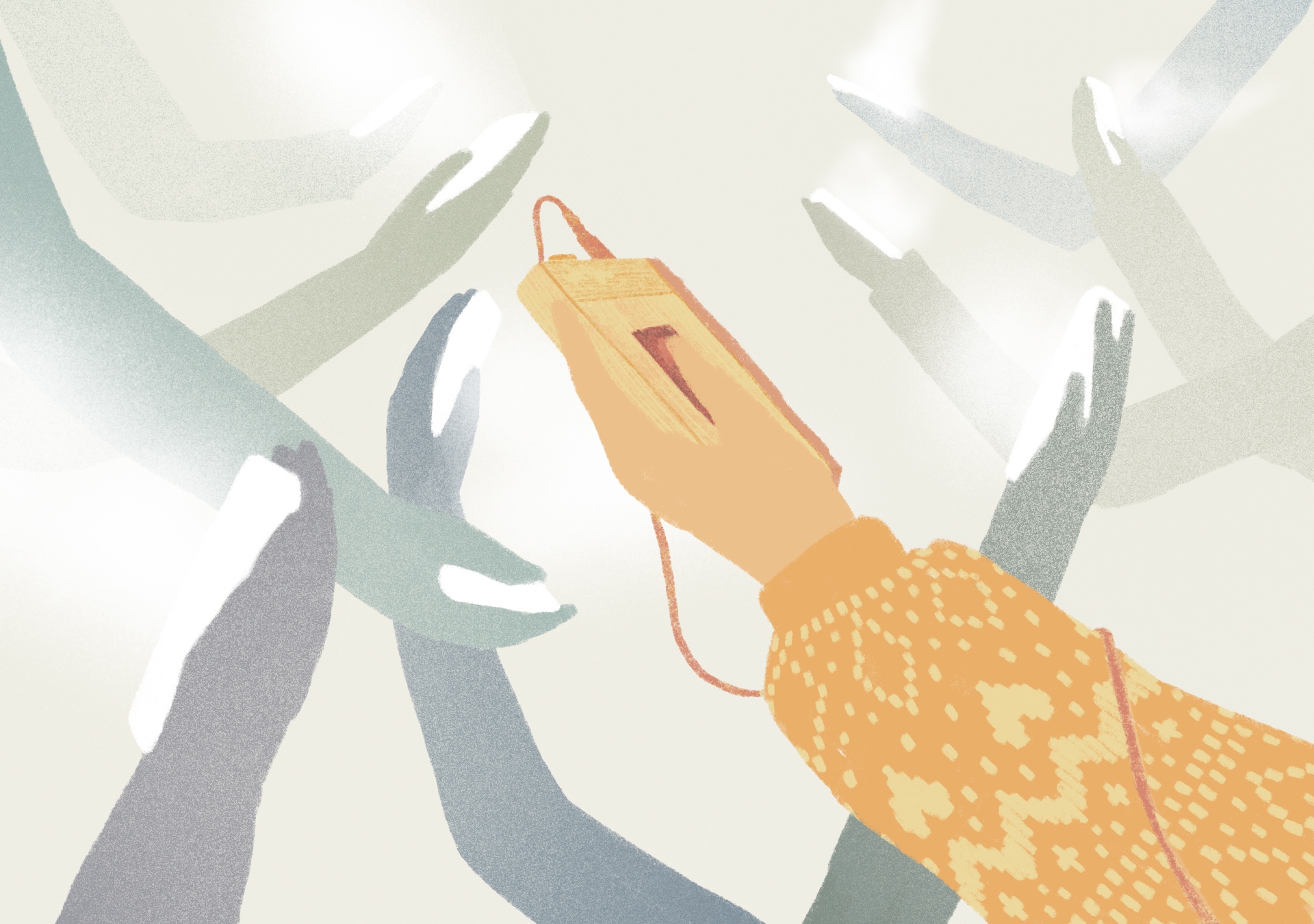
That exact sentiment has been on my mind for months, not only what’s the point of being careful, but if you do want to be careful, not to mention environmentally mindful and not spend a ton of money, what can you do to salvage your relationship with technology? The answer might be in the growing movement towards slow-tech, also known as dumb-tech or retro-tech. At first, I cynically believed it to be a TikTok trend, something to do with a desire for a simpler time or an aesthetic ‘core’. Young people were opting to replace their smartphones, Google Nests, Alexas and so on with older forms of technology. Spotify for an MP3 player or Walkman, Fire TV Stick streaming for burned DVDs, or a flip phone for your smartphone. Each time these videos would pop up, I’d roll my eyes, partly because similar fads have been around since I was a teenager and partly because I wasn’t sure how possible it is to permanently replace your smartphone.
As I spoke to friends about this in my day-to-day life, I discovered that more of them have grown disenchanted with their relationship to tech. My friend Kate has purchased a flip phone and contacts us via a newsletter to keep our friends up to date on her goings-on. My friend Ren is turning their old iPhone into an iPod to give up streaming. And for a mutual friend of mine, 25-year-old Ben, a current user of a second-hand iPhone 6, he’s spent the last few years trying to sever his relationship with new tech. In his opinion, the key to avoiding endless replacements comes down to resisting the urge of immediate gratification. “In my past attempts to get rid of my iPhone, the convenience of it has always wormed itself back in. I’m certain someone with a strong will could resist the temptation and fully transition to a more analogue tech relationship,” he asserts. “Flip phones are expensive, though, and I certainly don’t feel that the world we live in is currently built for you or me to entirely reject smartphones in our lives.”
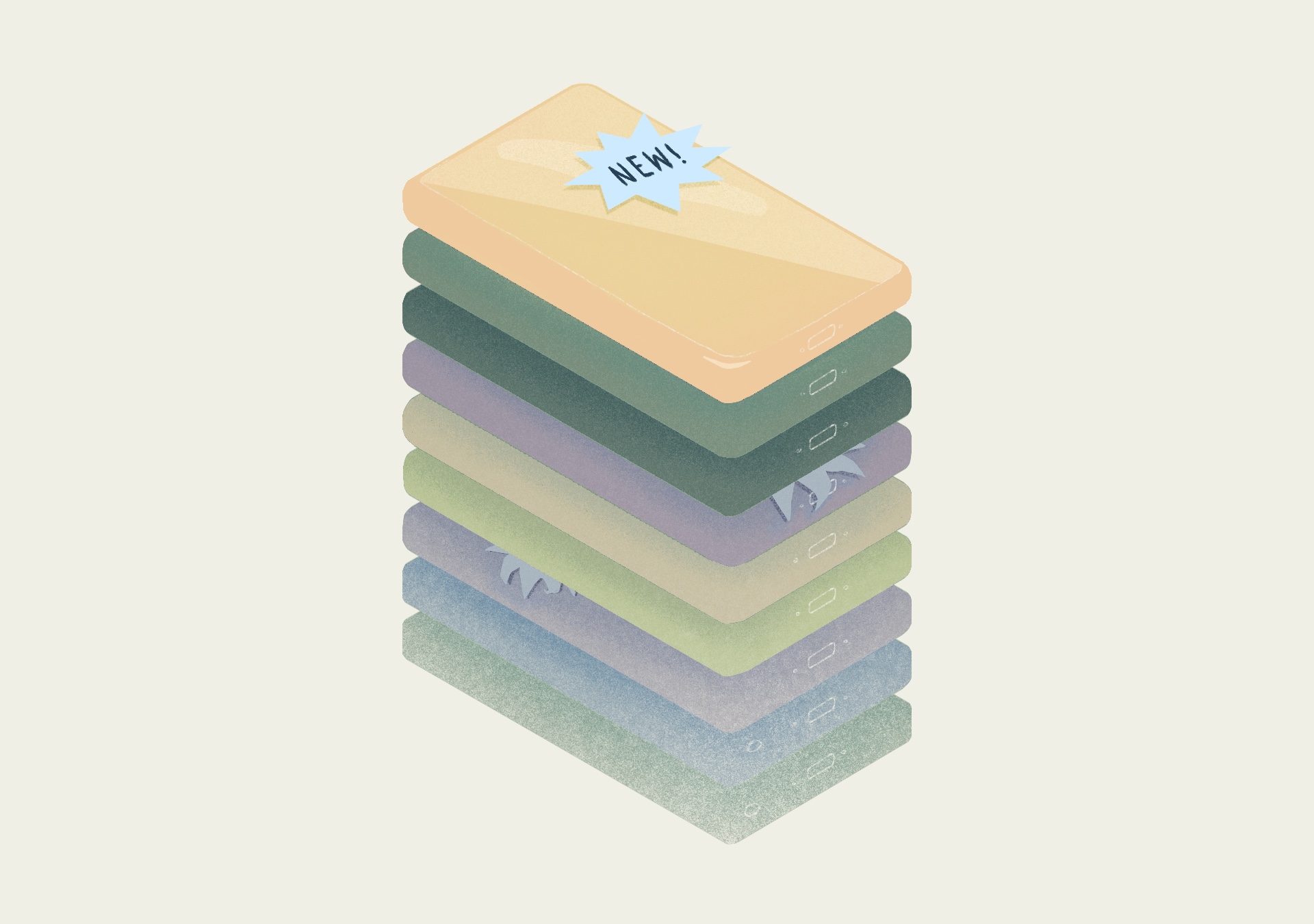
“In my past attempts to get rid of my iPhone, the convenience of it has always wormed itself back in… I certainly don’t feel that the world we live in is currently built for you or me to entirely reject smartphones in our lives.”
This sentiment also holds true for 27-year-old Kynan, who told me that, due to his work in social media, disconnecting feels almost impossible. “Even if I wanted to completely disconnect, replace all my technology with analogue and offline products, and be free of the ethical and social pressures of current technology, I would be forced back on due to work,” he tells me. “It is expected that I keep up to date on trends, platform changes, and best practices. Last year, I attempted to disconnect from TikTok and Instagram, but found that I was less able to do my job for that reason. It’s a vicious cycle.”
I’ve had the same phone model for the last 3 years, and if not for a pickpocketing incident in April, I wouldn’t have gotten a new phone for a while. I find that the older I get, the less amused I am by new releases. Thinking back to my alarm clock obsession, I suppose it’s my way of letting go of the hype and the status that comes with new technology, and despite the well-worn argument that ‘no ethical consumption exists under capitalism,’ I should at least try. I own an old JVC CD player, sourced on eBay, that sits in my living room next to my collection of magazines and second-hand DVDs. I tell people the sound quality is better. I don’t rely on streaming services to watch The Sopranos because I have the box set. Not to mention my ownership of vintage magazines is helpful for any writing research I might need. All true. I love that it means I buy my CDs second-hand, giving new life to unwanted media that would otherwise sit in a landfill somewhere. It helps me slow down and avoid algorithms that determine which music I should listen to, and scarily enough, have been pushing AI-generated music.
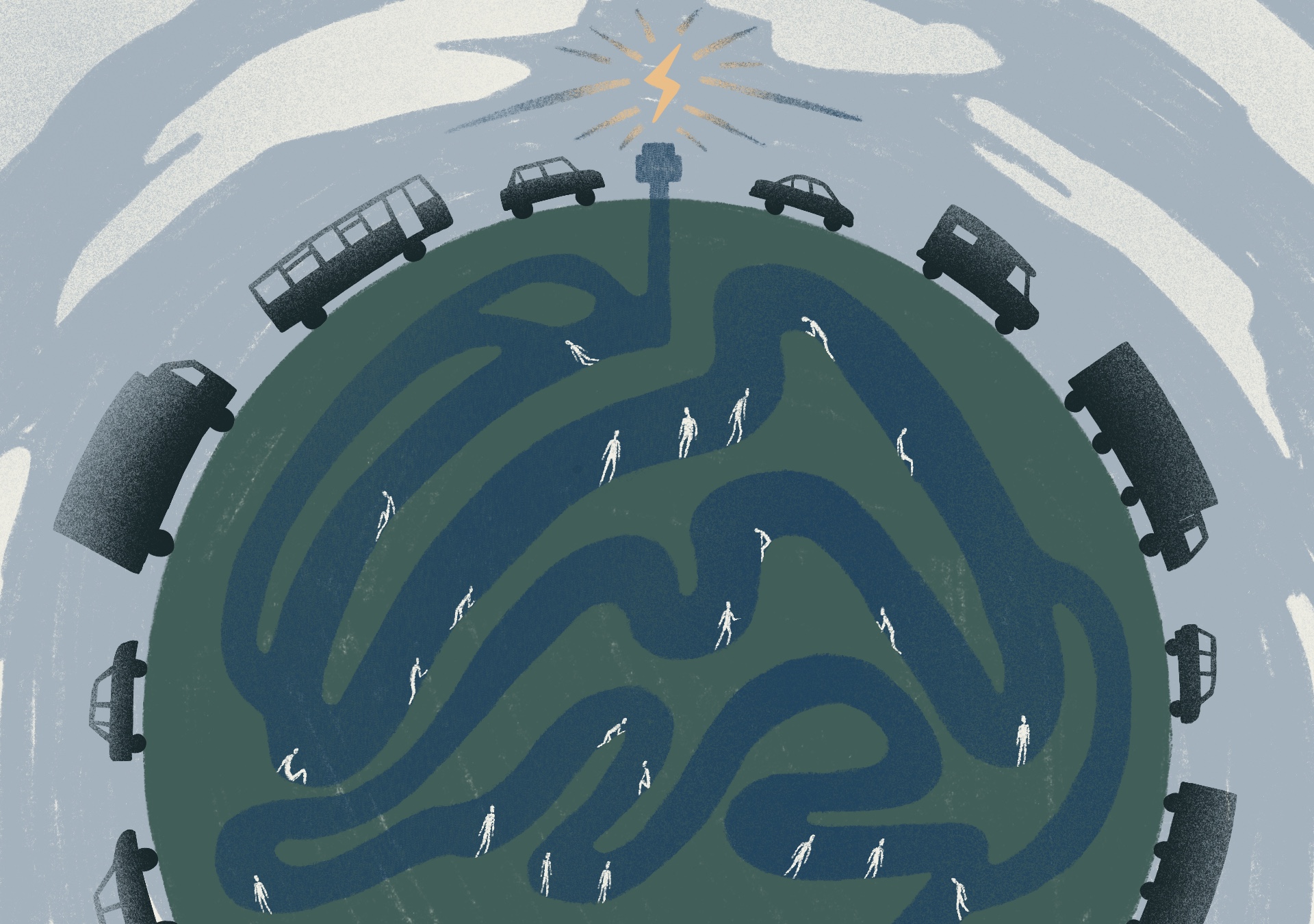
22-year-old Maya finds herself in a similar position, exhausted by streamers and willing to take a leap of faith into unknown avenues of cultural consumption. “I’ve been starting to transition out of using all music streaming services and using YouTube to MP3 to download songs to my computer, like the old days. I could just go a step further and buy a CD player again, but it would take some time to acclimatise to the old way of life. I see it as a conscious hobby that takes a lot of effort, not an easy switch you can make overnight. I think it’s a worthwhile change to make, though, at least in part. It’s refreshing to detach, even if you become a complete luddite. I feel like I’m spicing up my life by making it a little harder.”
Maya’s line of thinking makes sense to me; perhaps it’s that hardship that makes using older forms of technology worthwhile. It’s an effort rather than the current ease granted to us, ready to do our bidding. It’s true that buying CD players is a conscious hobby. I often stop myself from buying albums that I only kind of enjoy because of how much of a waste that purchase would be and how much space it would take up in my CD shelf. My digicam broke earlier this year, and amidst a frantic eBay search to replace it, I realised there was no point in buying something else, even if it was second-hand. I already owned an APS film camera and a camcorder I’d sourced online when I was 17. Why would I need a third camera, and where would I store it? As I dug deeper on TikTok, watching people’s recommendations for flip phones, MP3 players, and the like, I realised that the sheer amount of consumption at hand didn’t seem that different from the yearly purchase of new phones. One user had a flip phone, an MP3 player, a film camera, a digital camera, and an extensive Vinyl collection. Another showed off the Walkman they carried alongside a VHS camera and their smartphone. Performative? Maybe. Consumerist? Definitely.
“I love that it means I buy my CDs second-hand, giving new life to unwanted media that would otherwise sit in a landfill somewhere. It helps me slow down and avoid algorithms that determine which music I should listen to, and scarily enough, have been pushing AI-generated music.”
37-year-old Steve suggests that it is our relationship to consumption that might need a revamp, not the phones we hold in our hands. “This can’t be solved simply by changes in our individual consumption habits, but I don’t mean to make it sound like a hopeless battle,” he says. “I do believe the best way to combat this on an individual level is to reduce how much we consume in general and to be willing to give up some conveniences for the sake of the greater good.”
I’m still unsure of what to do with my alarm clock. I could wait till I find one in perfect condition at a local charity shop—crazier things have happened. I could also bin my Google Nest and just use the phone I have to wake me up in the morning. It might not be the big fix for my dopamine-riddled need for doom-scrolling or be aesthetically pleasing, but it’s using something I already own for a task I need. Two birds, one stone and all that malarkey. Who knows, maybe an iPhone 14 will be retro tech in 10 years, and I can feel good about being ahead of the curve.
Haaniyah Awale Angus is an essayist, film critic, and culture journalist based in London. She specialises in writing about film, internet culture, body image and opinions she can’t keep to herself. She publishes essays on her Substack called in a panoramic, pens a monthly column for A Rabbit’s Foot and is set to co-host a panel on romance films for the BFI at their annual Woman with A Movie Camera Summit later this month.