

As The Drama, Kristoffer Borgli’s controversial romcom incites debates online, Haaniyah Awale Angus asks if everyone is missing the point?
This piece contains spoilers.
The Drama hinges on a massive secret. One that was unfortunately spoiled for me ahead of its release due to a leaked script, but has set the internet alight with theories, speculations and arguments. During the week of their wedding, Emma (Zendaya) drunkenly reveals to her fiancé Charlie (Robert Pattinson) that she almost shot up her school as a teenager, sending their relationship and the wedding into a minefield of, well, drama.
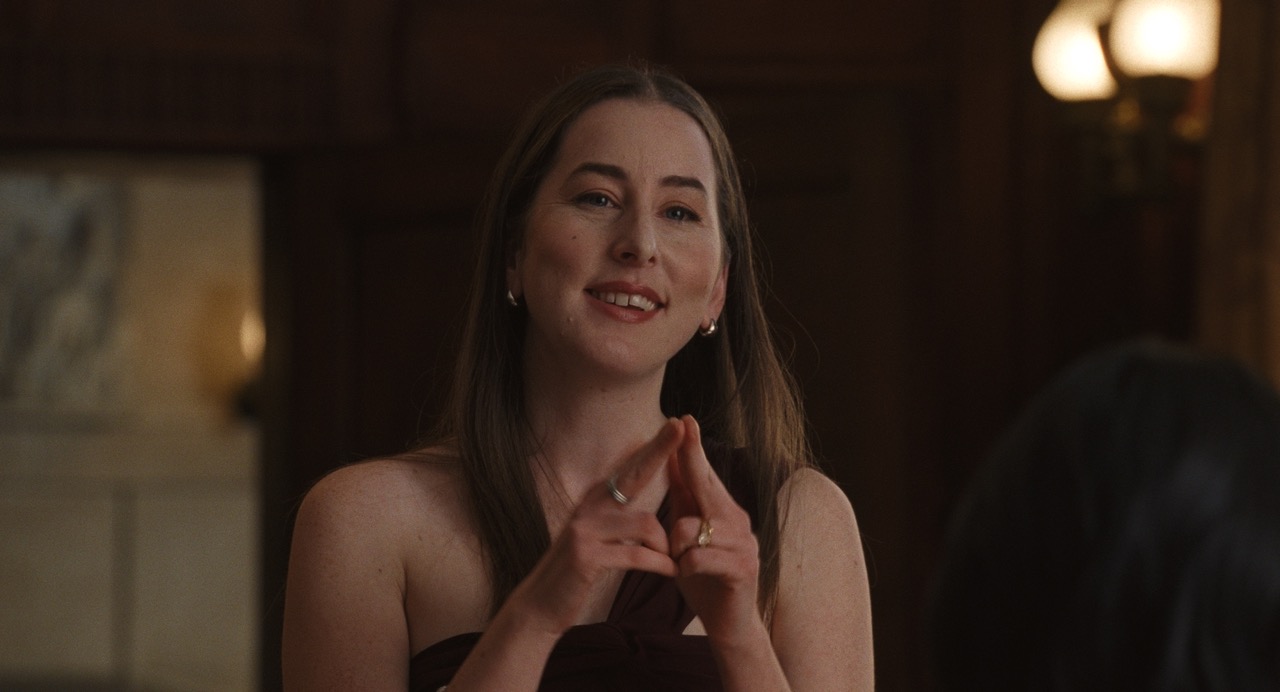
The film’s reception has been critically split. The AV Club recently released a review arguing that it would be much edgier if a white man had revealed that secret instead. The New Yorker has dubbed it one long troll, stating that The Drama exists solely as bait for inciting discourse. Vulture argues that the film is far too cowardly to double down on its premise of a mixed-race woman dabbling with America’s long history of gun violence. Salon suggests that The Drama holds up a mirror to America and its reality. TikTok, in particular, has taken the film in stride, treating it like a piece of gossip from a friend of a friend. Video breakdowns of what the film really means, confusion about its ending and arguments that Rachel (Alana Haim) is the true villain. I probably feel more tepid about The Drama than most, although watching it in Berlin last week, I laughed and cringed, and discussed it with my cousin. The more I sat with it, the more I felt that audiences not only seem to be refusing to engage with its obvious themes but are needlessly set on debating one another about who has the correct take.
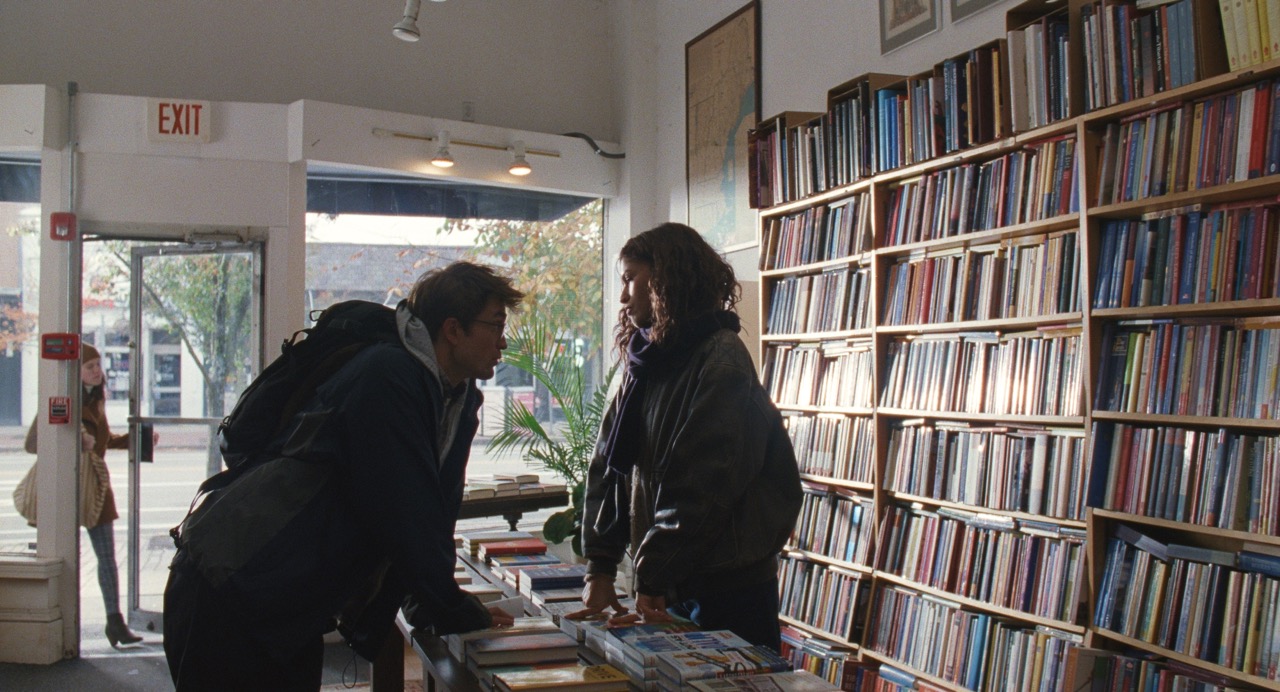
Robert Pattinson and Zendaya star as Charlie and Emma in The Drama (2026). Directed by Kristoffer Borgli.
Expectedly, most online conversations have centred around the secret. Who’s in the wrong: Emma or her fiancé and his friends? When coming out of the movie, I felt an immediate urge to say, “Well, Rachel (Alana Haim) actually did the terrible thing she revealed, so why would she be so angry?”. I thought about it for a while, and then realised that I was basing this judgement not on the characters or the writing, but on the performers. The rush to sanitise Emma’s secret is incredibly unsurprising given the internet’s obsession with beauty and celebrity. Zendaya works well as an awkward woman finding her footing during stressful nuptials, but it would be a lie to pretend that the Zendaya of it all allows viewers to fully settle into the story, separating character from actor. And the same can be said, to a certain extent, of Robert Pattinson, whose online persona, for someone so remarkably offline, is that of a goofy trickster (and for those of you who were into Twilight, your first crush). I can’t help but feel that if Emma were played by anyone other than Zendaya, she wouldn’t garner immediate empathy.
It’s fascinating that Emma has been given the benefit of the doubt by audiences despite knowing from my time on the internet that women, and particularly women of colour, rarely receive grace. The film itself refuses to engage with her race directly, instead gesturing at posters of Lil Wayne in her bedroom and childhood bullying by mostly white peers. The fact is that she didn’t commit the act in question, but she very much almost did, to the point of planning out the shooting, writing and recording a manifesto in a hilarious sequence where her desktop begins rebooting over and over again, but most importantly, she brought the gun to school. I’m not saying she needs to be put in custody, but I don’t believe that if you or I came across Emma in real life, we wouldn’t also pause to think about what kind of person they were and if they were truly apologetic or able to atone. And that’s what The Drama is asking us to examine: where forgiveness truly comes from, and who decides what an acceptable level of immorality looks like.

I can’t help but feel that if Emma were played by anyone else than Zendaya, she wouldn’t garner immediate empathy.
Haaniyah Awale Angus
There are no reliable narrators in The Drama—it hinges on messy people being cruel to one another while pretending as if their own individual dramas matter less than the central one at hand. Charlie is a man with no backbone and no identity; he can’t stand on his own two feet, caring more about what people think of him than what he thinks of himself. Mike (Mamoudou Athie) uses people as shields, as examined in his own secret, where his ex-girlfriend was used to defend him against a rabid dog. He throws rocks and hides. And to me, Rachel reads as a microcosm of a post-lockdown internet age; she is judgmental and condescending, refusing to look inwards and examine herself despite the fact that she locked a child in a closet. She could’ve easily dropped out of the wedding if it offended her so much, but the fact that she not only went but gave a pointed speech that only Emma and Charlie could bear the brunt of, reminded me of people I’ve known who force themselves into discourse and debate just to twist the knife instead of merely blocking and moving on. Unfortunately, I, too, have done this, I think a lot of us have, because the internet at large exists as an almost unstoppable force towards sheer cruelty.
If The Drama is clear in its messaging, why are we having conversations that seemingly pull away from its intentions? Why the rush to determine a villain or a victor, and, more importantly, why are we so angry at one another for our opinions? I mentioned those critics at the start of this piece because reactions to critical analysis of the film have been dismissed as mere complaining and pointed specifically at Zendaya herself. I assume The Drama wants us to take it seriously, to really sit with its premise, so then why can’t we have measured and honest conversations about its relation to race and gender? There’s a larger conversation to be had about the relationship between film and the internet, one where pop fandom, polarised thinking (influenced by our current politics) and celebrity worship have made discussing film and television impossible unless you’re willing to fight tooth and nail for your take. Will The Drama will stand the test of time? I’m not sure, but if anything, I hope that when all settles down, we remember we should touch some grass once in a while and maybe go to a diner.