

The Queen of Pop is back. As it is announced that Confessions II—Madonna’s sequel to her iconic 2005 Confessions on a Dance Floor—will be released this summer, Charlotte Matheson argues that Madge has always been the master of her own narrative.
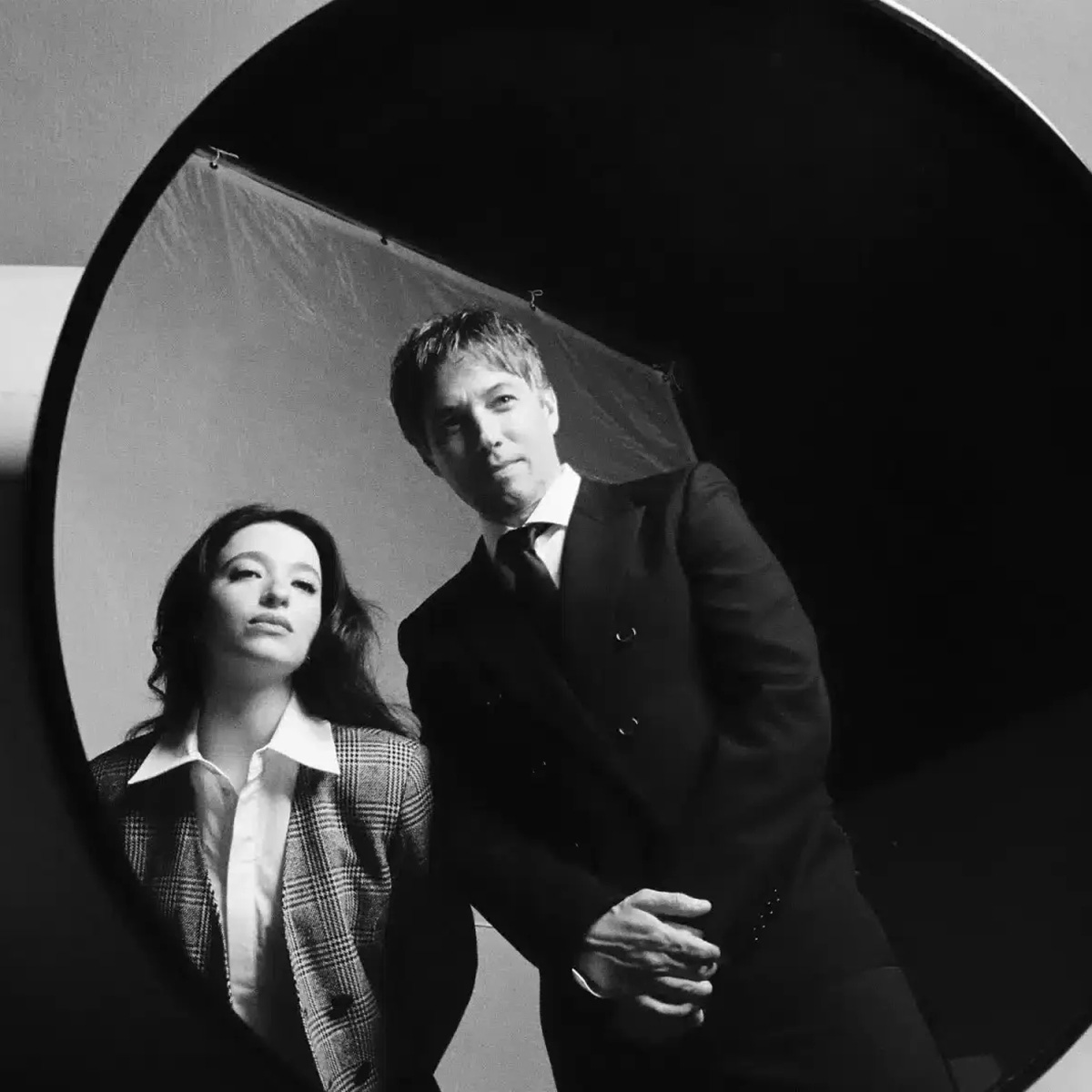
On Tuesday morning, Madonna’s Instagram grid was wiped clean, her bio updated to ‘Time goes by so slowly…’. We were later presented with some characteristically provocative artwork for Confessions II: a pair of women’s legs spread with a huge speaker between her thighs. The announcement that the sequel to her iconic 2005 album Confessions on a Dance Floor is finally coming. It coincides with news that she will appear in a two-episode plot arc in the second season of Apple TV’s The Studio. Reportedly set to play herself, Madonna will star alongside Julia Garner as an actress who wins a gruelling bootcamp audition to portray her. The joke is that The Studio‘s fictional Continental Studios has greenlit the Madonna biopic that real-life Hollywood couldn’t. Madge gets to play herself in a series about a film about herself. If you wanted a symbol of the star’s total command over her own narrative, you’d struggle to top it.
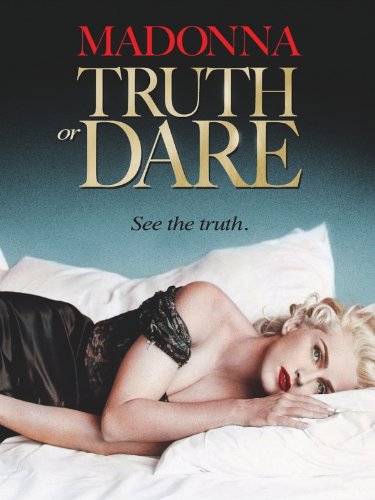
This is, of course, exactly what she has always done, through her many eras of reinvention. When the news broke I thought immediately of Alek Keshishian’s 1991 documentary Madonna: Truth or Dare, which is celebrating its 35th anniversary this year and remains the blueprint of the celebrity-endorsed confessional. Long before the parasocial era made oversharing a professional requirement, Madonna invited a camera crew behind the curtain of her Blond Ambition tour and produced something genuinely strange and revealing: a film in which she is simultaneously the subject, the auteur, and the performer of her own mythology. It is far more self-aware than anything that has followed in its wake.
What makes the documentary—known as In Bed With Madonna internationally—so enduringly fascinating (I rewatch it at least once a year), is how we are presented with a very deliberate version of the truth. Madonna is vulnerable: shown as still grieving her mother, who died when she was five, whilst lucidly aware of her need to mother the troupe of dancers around her. She strokes their hair, settles their spats, and dishes out tough love, ultimately reflecting that maybe: “I needed them more than they needed me”.
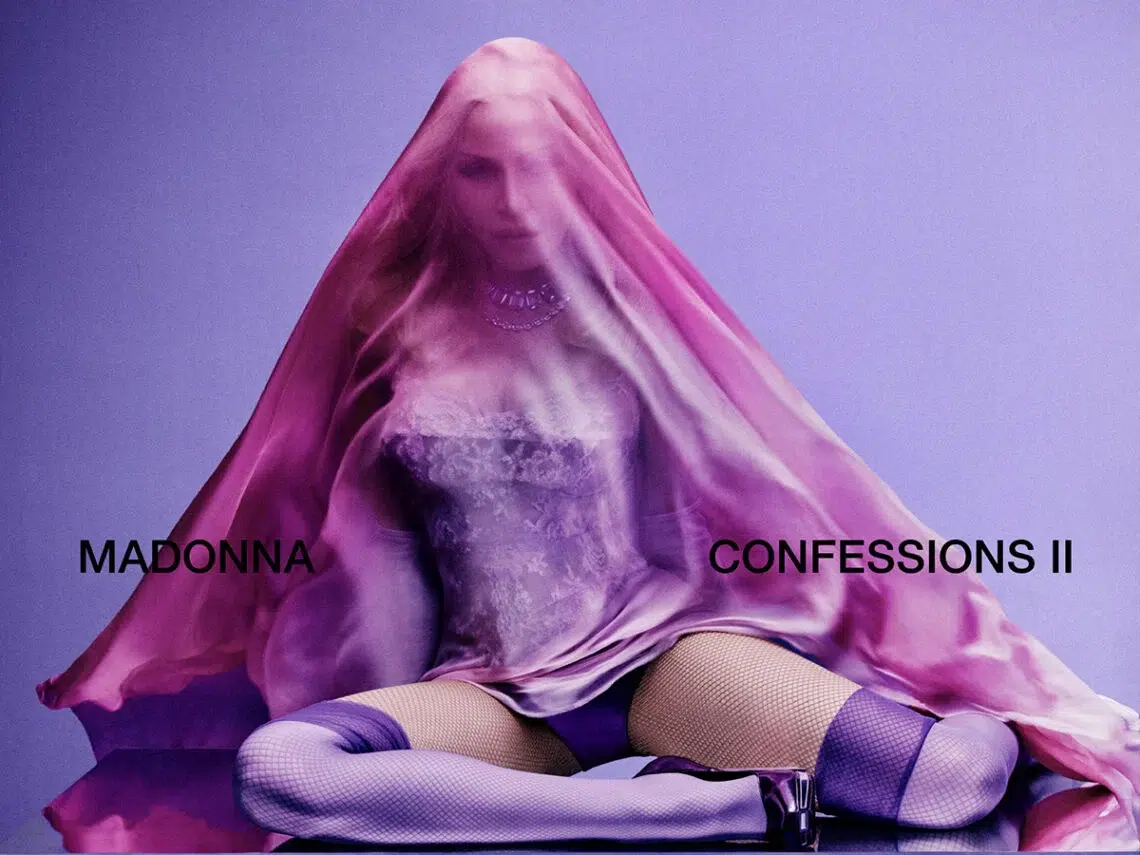
Album artwork for Madonna’s upcoming album Confessions II
It is the film’s confessional style, along with the undeniable pleasure of watching a pop star at the top of her game, that pulls me back year upon year. Madonna’s moments of reflection throughout the doc, coming sometimes as airy voice-overs added in post-production, make us believe that she is being honest with us. She even includes the dancer’s private thoughts about her (“sometimes, Madonna can be a bitch”) creating an impossible level of intimacy with a superstar at this level. Indeed, one of her dancers says: “she knows what she’s doing, and she knows how to work it… that’s probably why she’s such a big star.” Madonna knew how impactful being “authentic” could be. But, as an Executive Producer on the film, all her confessions are offered on her own terms.
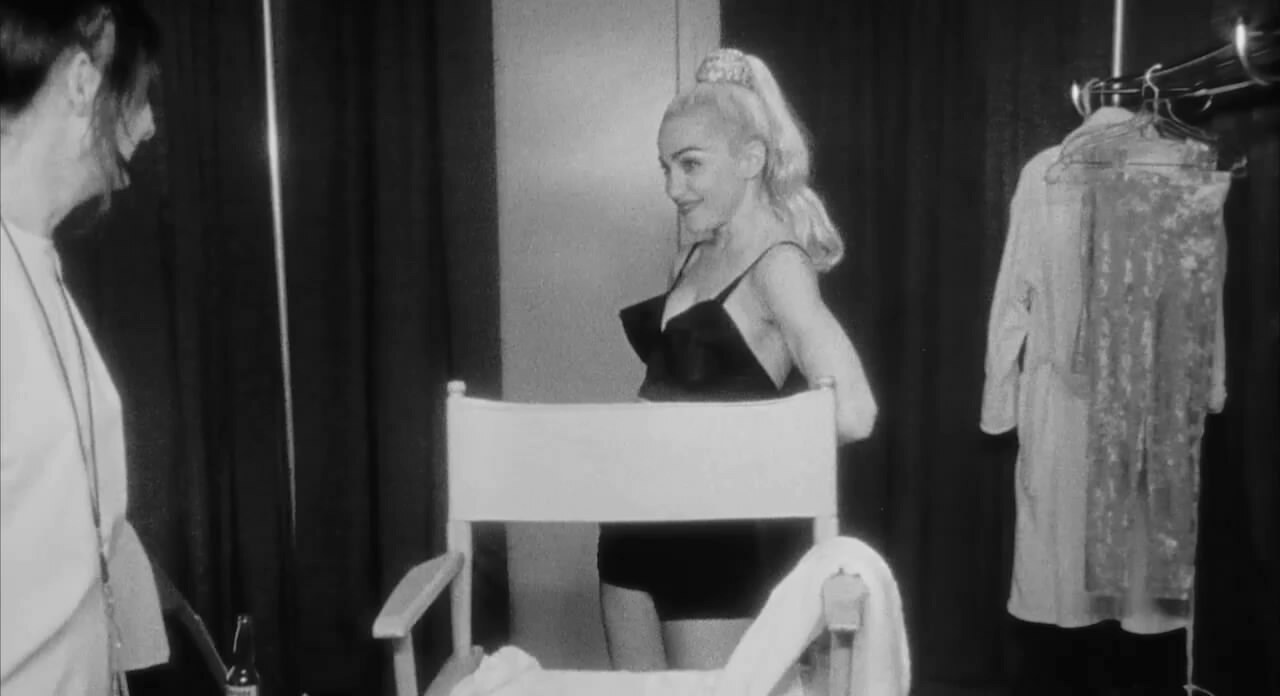
She is also utterly in control. It is striking that there are points in the film where Madonna does her own makeup, ever the queen of reinvention and holder of her own image. Warren Beatty, her then-partner, observes at one point that she has no interest in living off-camera, asking: “Why would you say anything if it wasn’t on camera?” It reads as a mild criticism from a man who is, perhaps, not entirely at ease with the superstardom he’s found himself adjacent to. Madonna, however, takes it as a compliment.
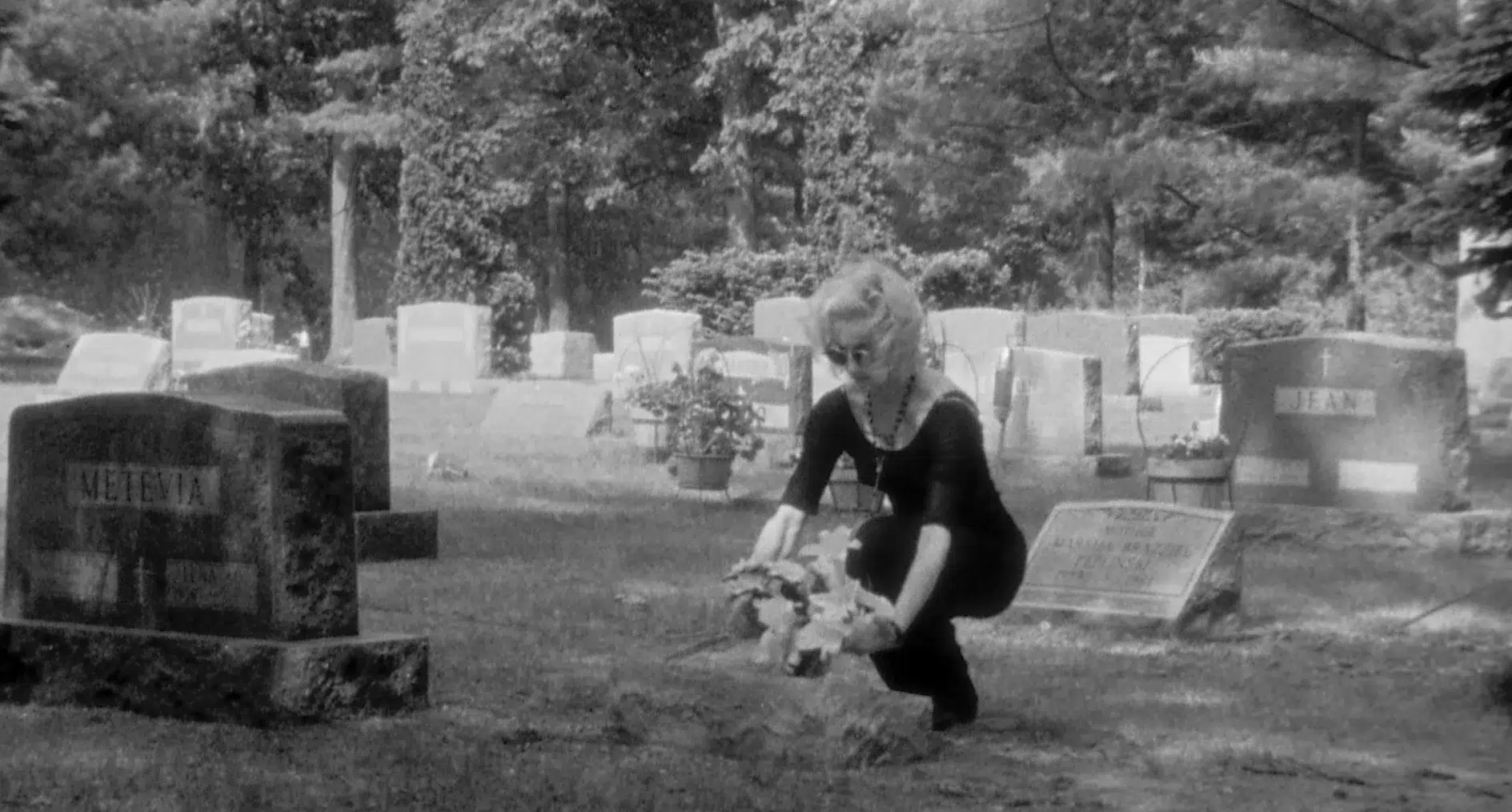
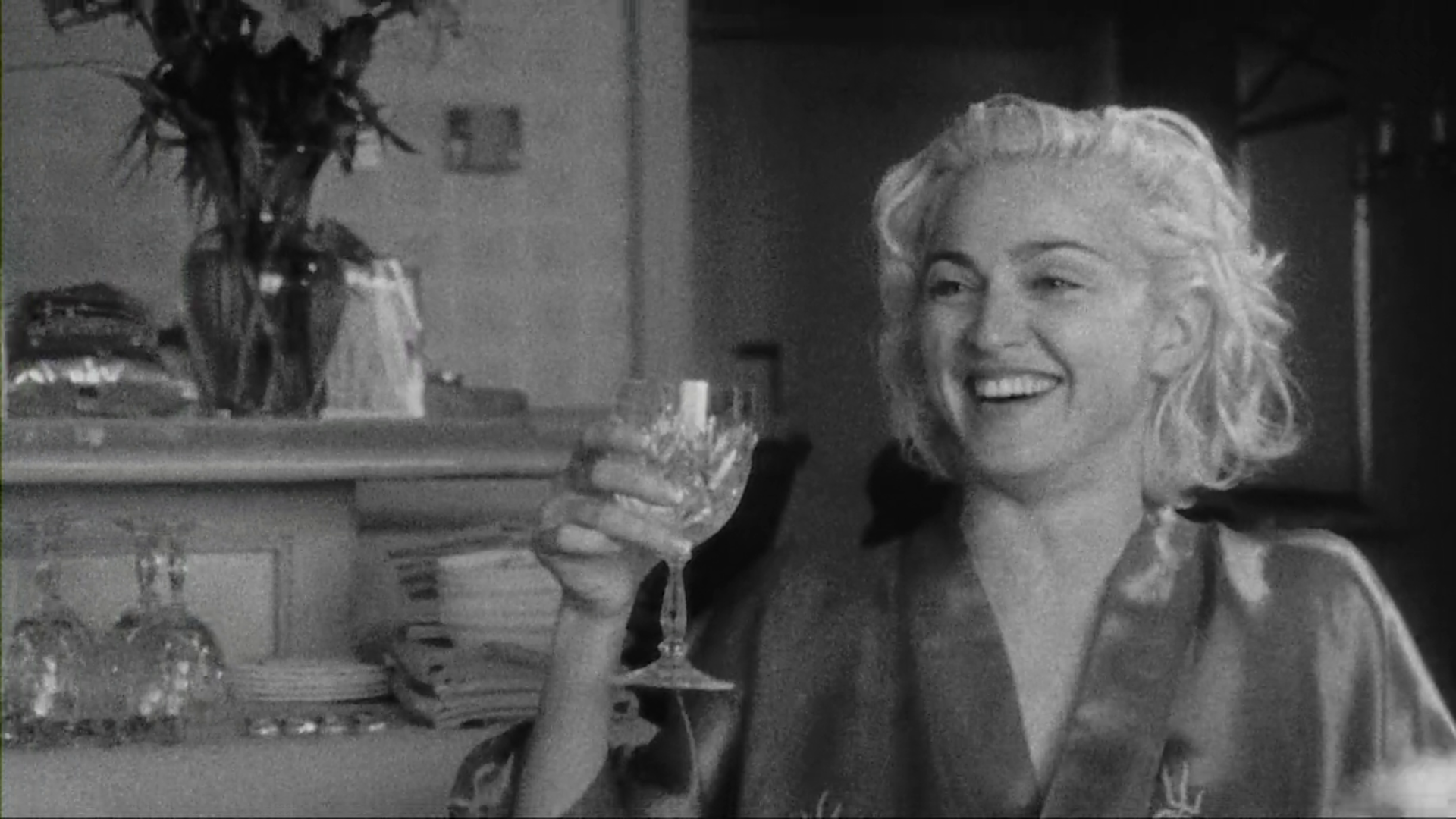
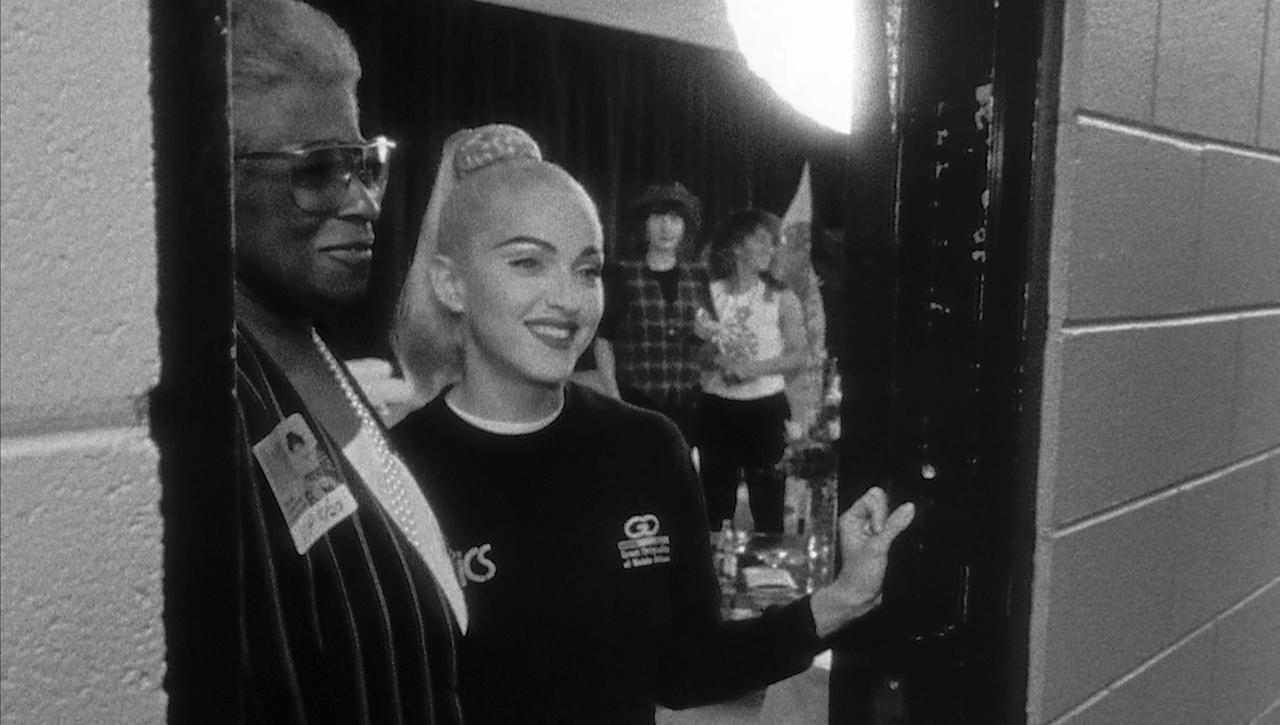
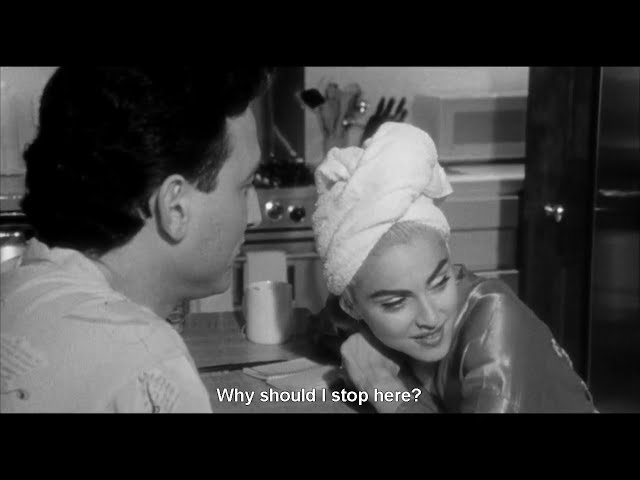


There is something telling in that gap: between what Beatty thinks he’s exposing and what Madonna already understands herself to be doing. And she is alive to it: there are moments in the film where she quietly closes the door on the camera, asking Keshishian to stop filming after her rainy soundcheck in Tokyo (“Get out—I’m having a business talk”), or retreating from a conversation that has gone somewhere she hasn’t chosen. During an examination of her vocal chords, Beatty pushes her to confront the idea that when people enter Madonna’s sphere ‘they feel crazy”: “You want to think about that don’t you?”, he asks, “No, let’s get back to my throat”, she replies. These small withdrawals are what make everything else feel earned.
Three and a half decades later, the mechanics have changed but the instinct hasn’t. The Instagram wipe—the grid cleared, the slate cleaned, attention hoovered in—is the 2026 version of the same move. Madonna has always understood that controlling what you reveal is more powerful than concealing everything. One recalls her dramatic 1992 Jean Paul Gaultier moment: the pinstriped dress and completely bare breasts she modelled in the amFAR catwalk fundraiser for AIDS. And now, the Confessions sequel, The Studio cameo, the Venice photographs with Garner recreating Like a Virgin on a gondola: none of this is accidental. It is the most meticulously managed image making in pop.

“One recalls her dramatic 1992 Jean Paul Gaultier moment: the pinstriped dress and bare breasts…. And now, the Confessions sequel, The Studio cameo, the Venice photographs with Garner recreating Like a Virgin on a gondola: none of this is accidental. It is the most meticulously managed image making in pop.”
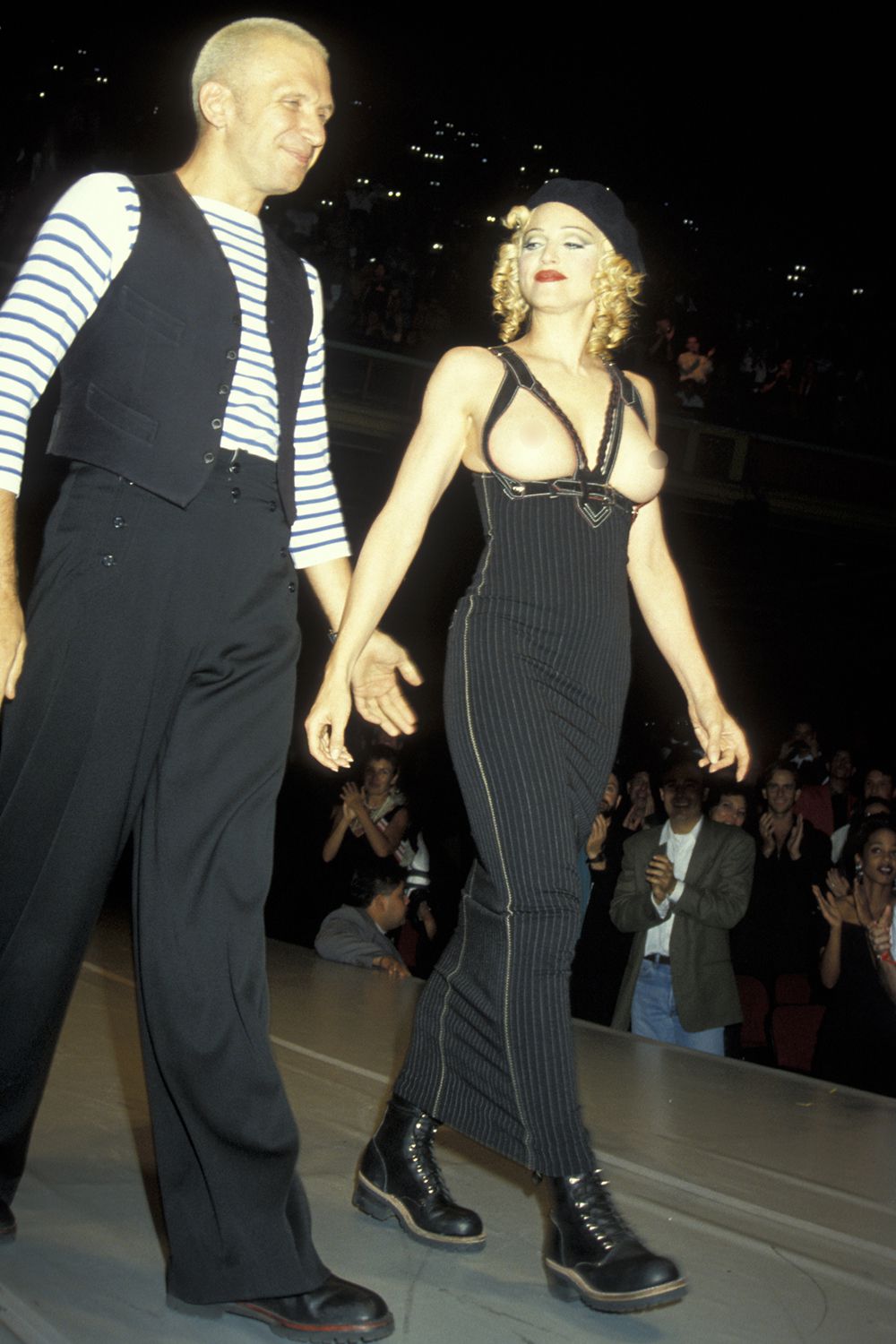
Madonna on the catwalk with Jean-Paul Gaultier in 1992
What’s new, and what makes the current moment particularly interesting, is that she’s operating with slightly less control than usual—and she knows it. The widespread disdain for her plastic surgery, the misogynistic chorus that she is too old and should pack it in: these are not narratives she has been able to get ahead of. Neither is the biopic saga. Years spent overseeing an exhaustive, reportedly punishing eleven-hour day audition process, with Florence Pugh amongst those put through their paces, only for the whole thing to collapse in 2023. The fact that she’s now folded it into The Studio, a show whose entire premise is the puncturing of Hollywood ego, suggests something more than damage limitation. It suggests a performer who has decided that if she can’t control the narrative, she’ll satirise it first. It also suggests that she knows that after decades of unprosperous acting stints she is reprising her most-loved role: herself.
In Bed With Madonna understood this instinct ahead of the publicity landscape we now find ourselves in. The documentary isn’t really a confessional at all: it’s a masterclass in the performance of confession. Every revelation is a choice. Every moment of apparent rawness has been let through. What you are watching is not Madonna unguarded. It is Madonna performing unguardedness, with such skill that the distinction almost doesn’t matter.
At 67, with a wiped Instagram and a sequel nobody saw coming, she’s still at it. The screen goes blank. You look. That’s always been the trick. It has never stopped working.