


From Mulholland Drive to The Neon Demon, Carlos Aguilar explores Los Angeles as a seductive but ruthless machine of reinvention. The LA critic reveals how cinema exposes the city’s darkest truth: every dream demands a price that few can afford to pay.
If a flame draws in moths, then Los Angeles does the same for caterpillars—the human type that is. People desperate to pour their wildest ambitions into a city where they hope to flourish. Amid the palm trees and sunny mirages, they’ll shed the cocoon of the person they were back home to become the butterflies with wings of success they always wished to be.
But there are no guarantees that such metamorphosis will take place. And if you must compromise your essence in order to attain it, is the transformation worth it all? The answer, for some, remains positive, no matter the sacrifices or consequences.
The subject of Los Angeles as a minefield of dreams fulfilled has been prevalent on the big screen since the silent era. And even in those early days, while Hollywood built its reputation as a star factory, narratives about fresh-faced new arrivals trying to catch their big break pointed to the less-than-pleasant demands of the business of make-believe.
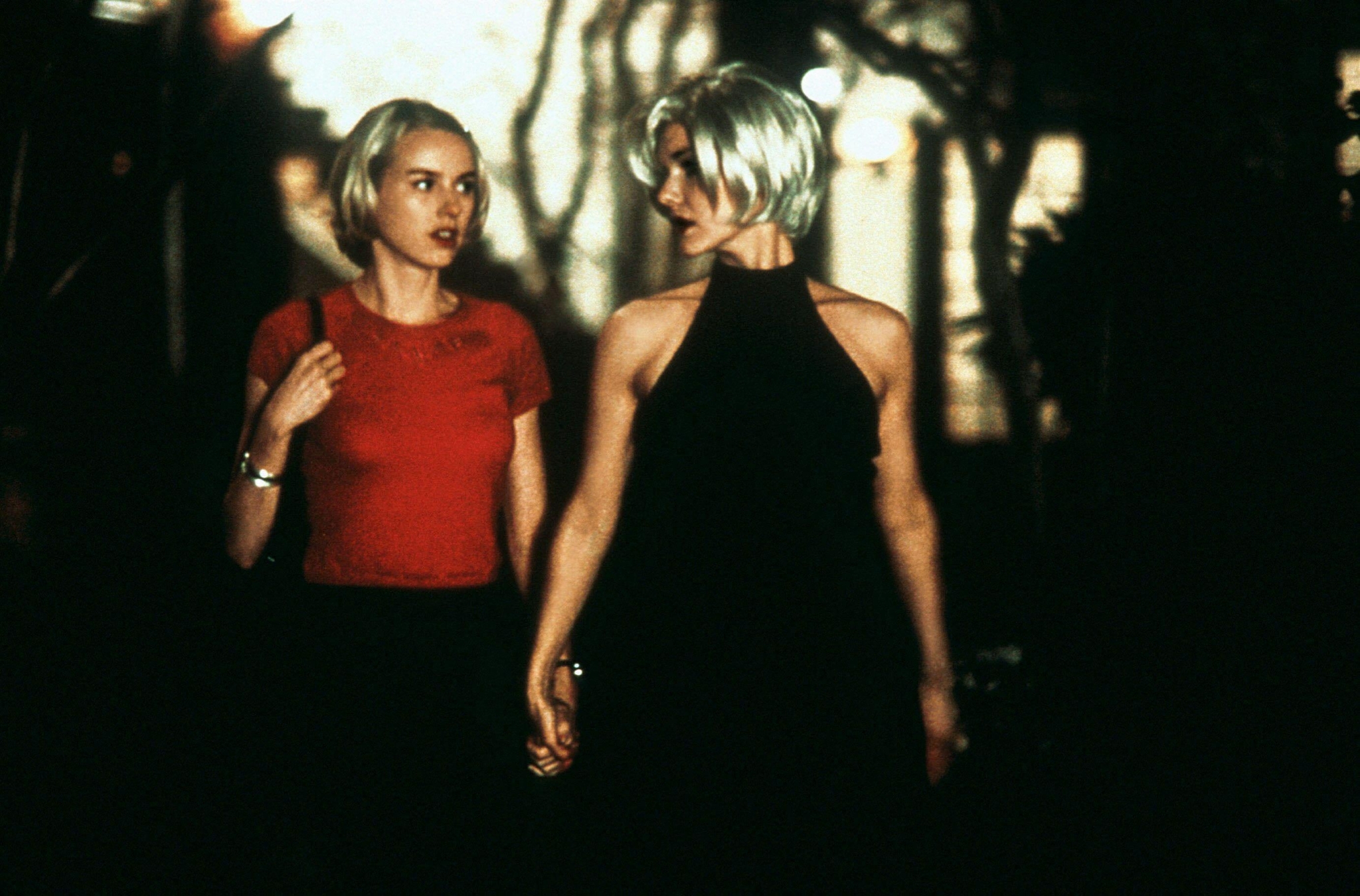
Naomi Watts and Laura Harring in Mulholland Drive (2001). By David Lynch.

“Her multiple personas reveal Los Angeles, and the amorphous notion of Hollywood, as fertile ground for unabashed escapism, often through deceit and betrayal. You don’t have to be someone you don’t want to be, but every second chance comes at a price.”
Carlos Aguilar
In the new millennium, however, movies centring fame-seeking characters have fully embraced cynicism, portraying this town with enviable weather as a cesspool of vanity, self-destruction, and unchecked exploitation, fed by those begging to belong. Sinister as the City of Angels can turn out for transplants flirting with its endless promise, its allure hasn’t faded away. A century on, lost souls still believe it’s here they’ll finally be found.
What’s mostly unchanged about the way cinema depicts this treacherous pursuit in Los Angeles is that the protagonists are, more often than not, young women. The majority of them naïve and susceptible, at least at first, to the predatory practices of a machine that sees them as a product with an expiration date. Others think their boldness and self-determination will spare them from the metropolis taking its pound of flesh. They are, of course, mistaken.
On a pedestal of its own among this subgenre of Los Angeles movies is David Lynch’s Mulholland Drive (2001). The film’s unsettling atmosphere and puzzling construction encapsulate what’s so enticing and dizzying about this place where nightmares and dreams feel interchangeable. That Mulholland Drive introduces two alternate realities, one otherworldly and the other gruesome in its straightforwardness, suggests two distinct interpretations of how people can experience their road to triumph or failure here.
When Naomi Watts plays Betty, an aspiring actress who’s just moved to the city from Toronto, the narrative appears to attribute all the evils of the film industry to ominous and omnipresent forces that control everything, including who gets cast in what role. These eccentric mobsters behave bizarrely and never disclose their ulterior motives. Still, there’s something comforting about thinking that villainous entities pull the strings, absolving the individual of any responsibility for their choices. If being discovered or ostracised is out of one’s control and in the hands of others, then the blame will always lie elsewhere.
The true horror is accepting one’s agency and, in turn, taking accountability for part of the guilt. After the characters in Mulholland Drive cross the Rubicon, so to speak, into what one could interpret as reality, Betty becomes Diane and the tragic events that befall her are presented as the product of her own untamed darkness, namely romantic jealousy that drives her to pay for a murder and ultimately to suicide. On the other hand, Rita (Laura Harring), who in the second part becomes Camilla, is a shapeshifter agile in leaving her past behind, first by way of amnesia and later through marrying a famous director. Her multiple personas reveal Los Angeles, and the amorphous notion of Hollywood, as fertile ground for unabashed escapism, often through deceit and betrayal. You don’t have to be someone you don’t want to be, but every second chance comes at a price.




It makes sense that those who make the pilgrimage to Los Angeles, and even people with roots here, want to make a living playing pretend, disowning other versions of themselves for one they think others will like. The city itself has always been manicured to resemble other places on screen. And with new apartment buildings and businesses constantly erasing its history in order to stay trendy, Los Angeles seems to perpetually be getting a facelift.
Aside from its location-specific title, Mulholland Drive features sweeping aerial views of downtown Los Angeles, establishing its vast geographical expanse. But in the sexually explicit and unflinching Pleasure (2021), the city is barely visible by design. Writer-director Ninja Thyberg’s debut follows a 19-year-old Swedish girl, Linnéa (Sofia Kappel), whose goal is to become a widely known porn star under the alias Bella Cherry.
Freeways between the house she shares with other young “models” in the same industry, and the warehouses and office buildings where her scenes are filmed, are the extent of Linnéa’s engagement with Los Angeles. “Don’t you want to see anything else in LA besides a fucking porn set?” her fellow on-camera talent and new friend Joy (Revika Anne Reustle), a transplant from Florida, asks as the two of them hike near the Hollywood sign. The pair never makes it there on account of Linnéa’s disinterest in sightseeing.
Linnéa’s mind is hyper-focused on making a name for herself, but Joy warns her that the only road to “guaranteed stardom” is to have no boundaries. The city becomes merely a backdrop since the world she wants to be a part of operates in a subterraneous manner, away from productions considered more “legitimate” in Hollywood. A determined Linnéa agrees to more violent sexual practices, including a scene where another performer crosses the line without her consent. Complaining, however, could jeopardise her path to success.
As she explains it, her motivation to compromise her safety and agree to acts that she may not be comfortable with stems from a desire for recognition and wealth. That conviction is eventually tested as humiliation mounts and the reward doesn’t measure up to the cost.
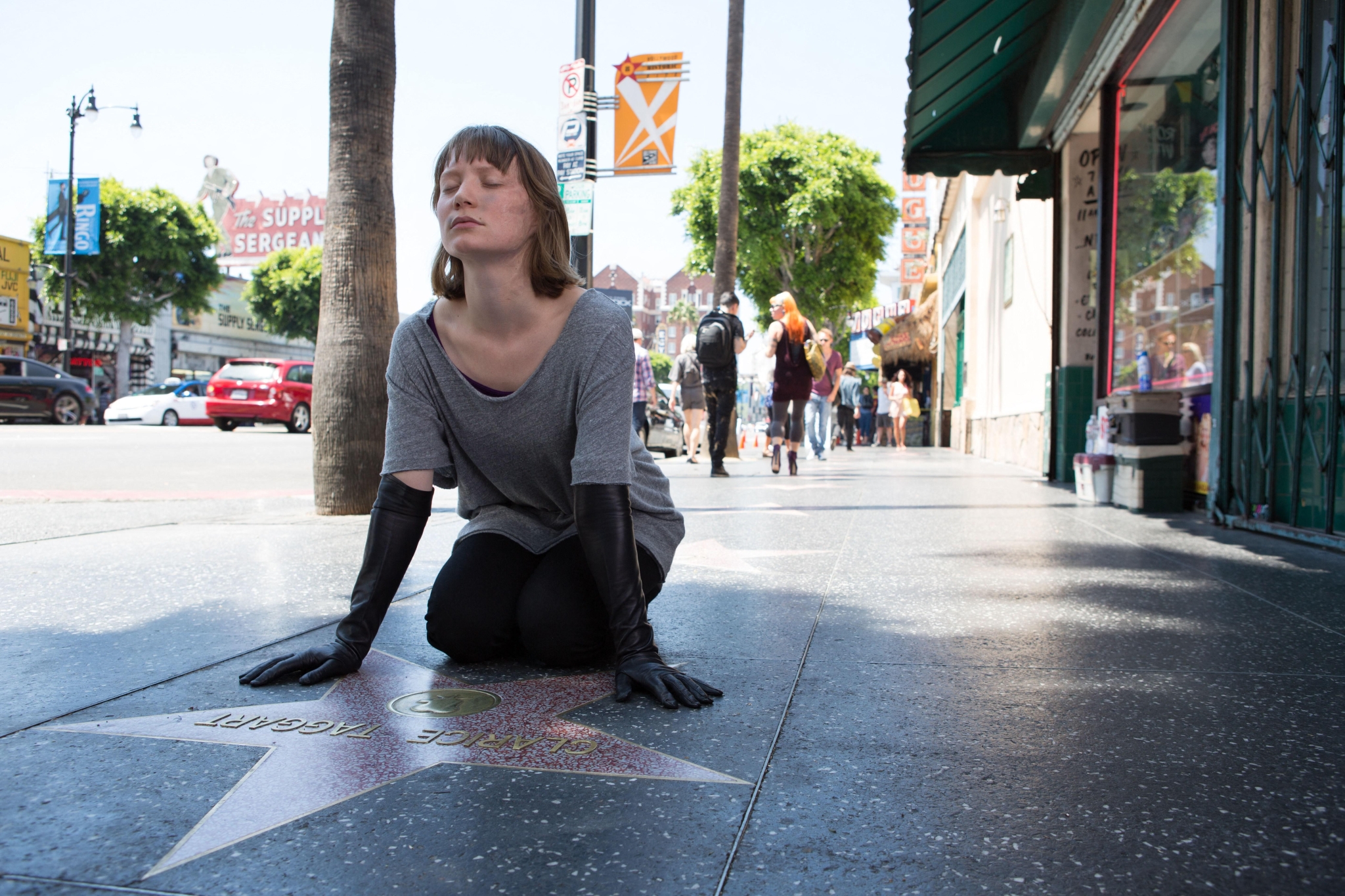
Unlike the disdain shown for the Hollywood sign in Pleasure, the zombie landmark (an advertisement turned emblem) features prominently in the brutal Maps to the Stars (2014). Agatha (Mia Wasikowska), in Los Angeles from Florida and working as an assistant to a major star, and Jerome (Robert Pattinson), a screenwriter and actor employed as a driver, spend time under the imposing letters getting to know each other. David Cronenberg’s perverse look at the entertainment microcosm digs into the taboo subjects of incest and mental illness through the lens a drug-addicted child star, an ageing actress clamouring to be seen again, and a family’s black sheep, Agatha, crawling back into the lives of those who banished her.
Gorgeous homes only feasible for individuals who’ve made it big in Los Angeles serve as the sets where terrifying visions haunt the characters, where a murder is committed, and where a suicidal pact is completed. The opulence and pristine quality of the spaces is only a veneer covering what’s festering under the surface in the lives of these characters. Cronenberg certainly takes self-medicating to cope with unhealed trauma to the extreme, but awful occurrences in his fiction are not so distant from those in real-life cases.
“The grotesque ritual, ripped straight from a conspiracy theory, illustrates the voraciousness of a city made of fish out of water, forcibly making themselves luminaries. Los Angeles literally consumes Jesse.”
Carlos Aguilar
Perhaps what’s most perturbing amid what Maps to the Stars unveils is that, despite the unbearable pain that struggling to stay in the spotlight causes some of the characters, particularly veteran talent Havana Segrand (Julianne Moore) and kid heartthrob Benjie Weiss (Evan Bird), they are willing to do whatever is necessary to maintain relevancy. A child’s death opens the door for Havana to play her dream role, a chance she will unscrupulously take, while Benjie almost kills a younger co-star stealing his thunder.
Troubling as it may appear, being the centre of attention, it seems, is deadly irresistible. And that’s precisely what obsesses 16-year-old Jesse (Elle Fanning), the “it” girl in Nicolas Winding Refn’s The Neon Demon (2016). Alone in Los Angeles to become a model, the innocent teenager from Georgia is instructed to lie about her age. “People believe what they are told,” explains Roberta Hoffman (Christina Hendricks), who runs a major modelling agency. Soon, Jesse’s looks and effortless charm awaken the jealousy of other, more seasoned models with a long list of plastic surgeries to their name. Ironically, in a land of artificial bodies and pretenders, Jesse’s natural beauty is her most precious currency. Her untainted body and soul are valuable.
Halfway through, as important photographers and designers start to pay attention to Jesse, Winding Refn implies her evolution from kindhearted outsider to a fierce creature reaching for glory by any means necessary through a surrealist sequence of dazzling lights. It doesn’t matter that she’s staying at a cheap, unsafe motel in Pasadena (relatively far from where it all happens); when she emerges from this neon-induced trance, Jesse embodies someone else. But though she might now be more attuned to the danger around her, that won’t save Jesse. Before this upstart can dethrone them for good, the women who envy her savagely kill her, eat her flesh, and bathe in her blood, as if to absorb her entrancing youth.
The grotesque ritual, ripped straight from a conspiracy theory, illustrates the voraciousness of a city made of fish out of water, forcibly making themselves luminaries. Los Angeles literally consumes Jesse. And if these cautionary tales have anything in common, is that same warning about the perils of losing yourself to the deceiving, blinding lights.