

In the run-up to his first book, To Entertain: Instructions for a Dinner Party, Jago Rackham writes about his favourite movie dinners. This month, he muses on the importance of patisserie in Sofia Coppola’s Marie Antoinette (2006).
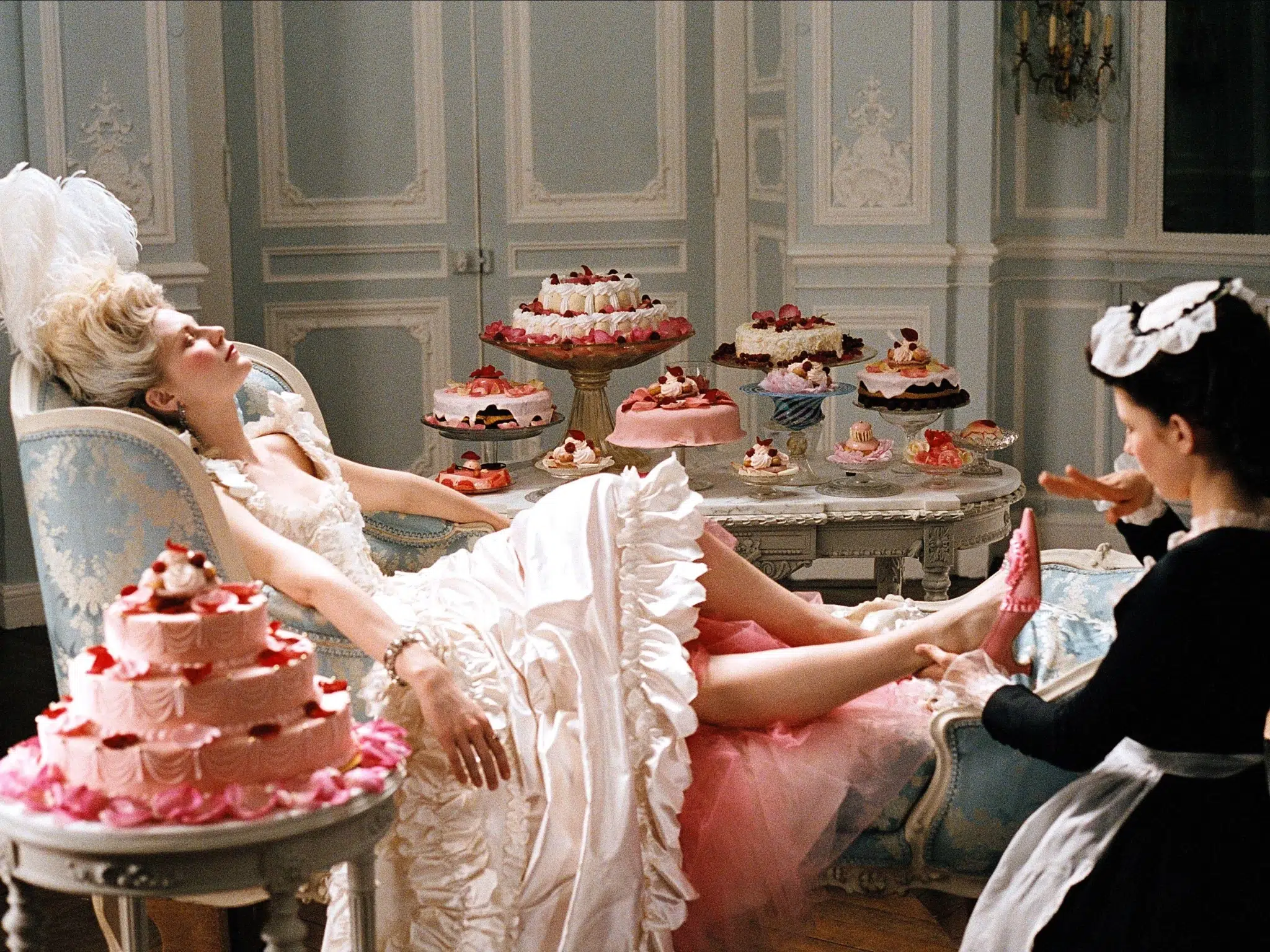
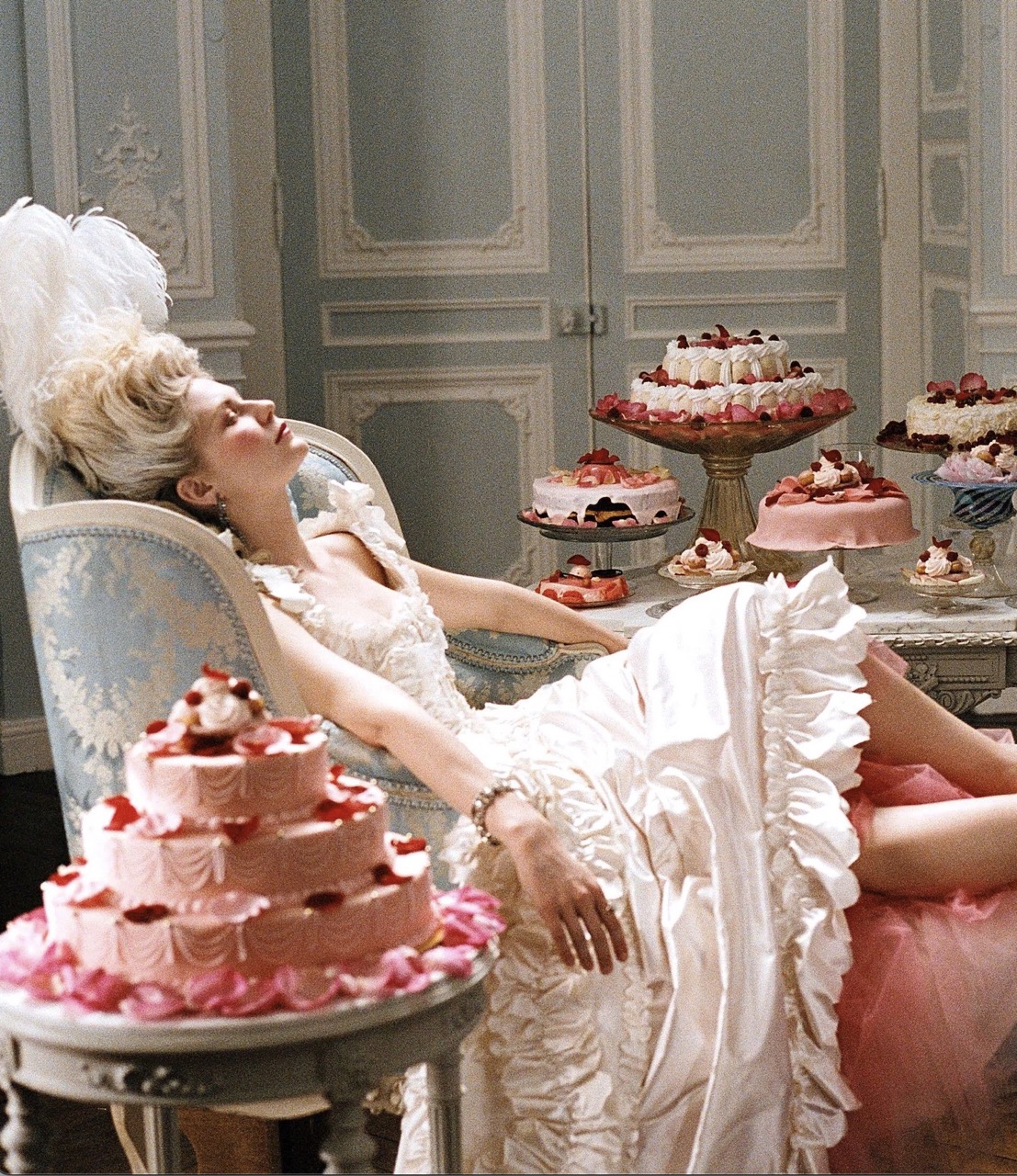
Sofia Coppola’s Marie Antionette (2006) begins with cake. Kirsten Dunst, the young queen, reclines, her dress a pile of white silk like whipped cream. The walls are picked out with ornaments that resemble sugar sculpture. Her shoes, by Manolo Blahnik, might be pink, iced choux buns. And beside her and behind her, are the cakes themselves: millennial pink, graced with deep red rose petals, rounded, layered, as pretty as the shoes, the dress, as Marie herself. Designed by the Parisian pattissier Ladurée, the cakes take influence from the 18th century, but also creative license. Dunst takes her finger to the largest cake, licks it and stares into the camera, as if acknowledging irreality: this film is concerned with evocation above accuracy.
I first watched Marie Antoinette when I was 14, in my now-fiancée Lo’s bedroom, on a 12-inch television. The music, a skilful mixture of the 18th century and 1980s post-punk —Couperon, Sissoux and the Banshees—evoked that quickening of the pulse we call adolescence. And it is an adolescent that Marie Antoinette is for most of the film: 14 (as I was) when she is handed over to France, stripped naked to remove everything from Austria—this really happened—and eighteen when she becomes queen. Marie’s life is pampered and spoiled, terrible and watched, every pain enlarged by a chorus of whispers—contemporary hell, recognised by any girl with an iPhone.
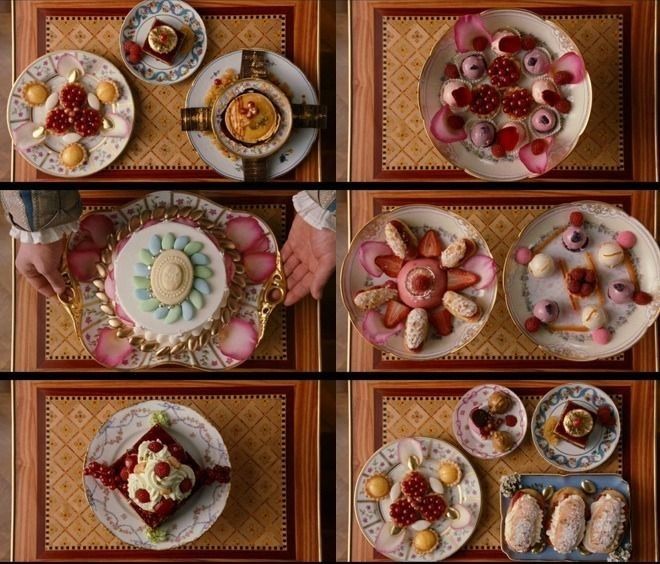
Cakes and other patisseries in Sofia Coppola’s Marie Antoinette (2006).
The film’s plot is well known: Marie struggles to conceive an heir, and is blamed, though the fault is her husband’s—a frigid Louis XVI’s. Conception, she is told, is necessary for her survival, for Austria’s, for France’s. In between childbearing she will spend too greatly and is reckless and wasteful, alienating her subjects. This spending is an engine toward her death, but also the outcome of her stupid and impossible position: for the lot of the Queen is miserable. It is all pointless anyway: the sans-culottes arrive regardless. Mare Antoinette does not end with the queen’s imprisonment, trial or execution, but with a shot of her dressing room, in ruins.
We threw an 18th century party for Lo’s 16th: in a clearing beside a tree we laid a white tablecloth over a picnic table, placed poker chips among the glasses and lit candles. The girls wore rustling dresses, the boys cravats. And center stage were cakes brought from London, from Ladurée, by Lo’s mother. An extravagance beyond her means, but as necessary as the dresses.
And what dresses: Marie Antoinette’s were designed by Milena Canonero, a feast of colour and communication. The real Queen loved a frock, her dressmaker, Rose Bertin, was referred to as her ‘female minister’ by who, so it’s right that the film’s happiest scenes see her choosing clothes: their bright curves equally esteemed by the camera. Ladurée’s designs mimic Canonero’s, owing as much to the forms of dresses as to their historical precedents. It is said Ladurée matched their macarons exactly to the film’s silks: towers of them filled the patissier’s windows in Paris, gawped at with an ardor normally reserved for clothes, these bites of Marie Antoinette. It doesn’t matter that macarons were invented in the 1930s.

“[Sofia] Coppola understood—proved—the expressive nature of cakes.”
Jago Rackham
This is a quiet film: much of the dialogue is incidental, overheard and unfinished. Emotions are conveyed by expression and music, humour is often physical: Louis XVI’s little hop and skip while playing a childish game, as his wife listens to a duke boasting about his sexual conquest; the King of Austria’s dour look at his sister’s French manners.
This quiet means a lot of the talking is left to the inanimate: Versailles, whose grandeur emphasises each glance and step; while clothes reveal innocence, constriction, liberation and sex and the cakes are pleasure when eaten, ennui when ignored. Such communicative visuals endeared the film to its decade’s internet and stills from Marie Antoinette were endemic on its every girlish corner. Dresses had always been lushly photographed, cakes had not, so they spread furthest, their blocky simplification of 18th century opulence easily emulated by the likes of Lilli Vanilli, the Hummingbird Bakery and hundreds of recipe blogs.
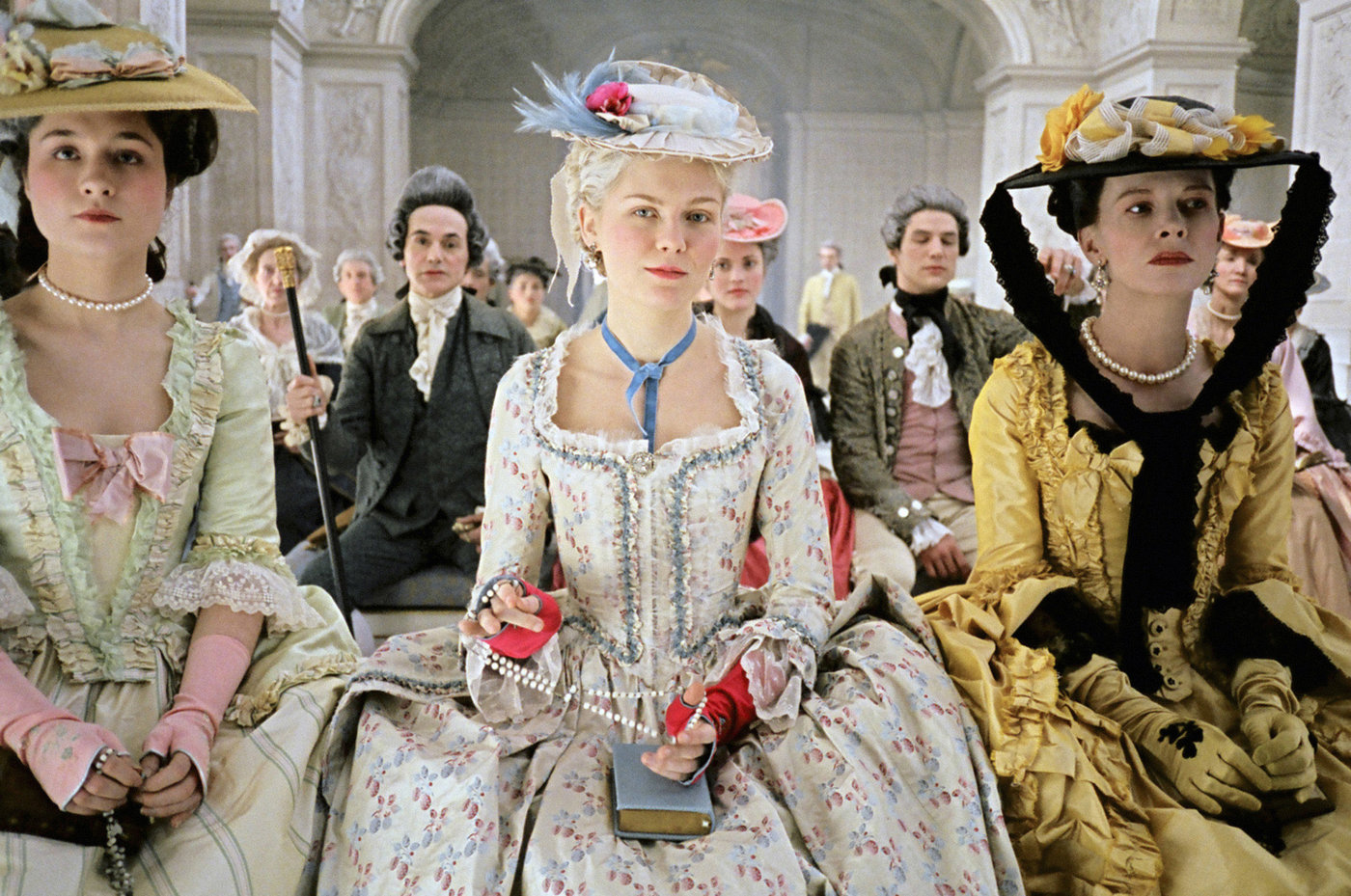
Sofia Coppola’s Marie Antoinette (2006), with costumes designed by Milena Canonero.
This was just the beginning. Coppola understood—proved—the expressive nature of cakes, and clearly knew how they grabbed attention. Looking back, it feels as if her film fired a starting gun for a revival in the sweet arts. At 18, Lo’ and I moved to London together, to study. We lived in a small apartment with no furniture and took celebrations seriously. On birthdays Lo’ would make cakes: a cheap way to conjure luxury. She was still inspired by those in Marie Antoinette, especially by their existence as near abstract forms, and took this further.
We made our first big strange cakes in 2015 or so, and began posting them. Others were doing similar things. Stylists took note, with cakes used by designers as diverse as Chopova Lowena, Prada and even ASAP Rocky; articles were written in Vogue, The New York Times, to name a couple—and are still being written, and careers, like those of Monika Varšavskaja, Zélikha Dinga and my own were forged. A fashion party or brand launch is now remarkable not by the presence, but by the absence, of an attention grabbing cake, for such a cake will not simply be looked at but photographed and shared. It is an artform intimately linked to marketing. The presence of so much sugar and cream beside couture and beautiful people nods, knowingly or not, to Marie Antoinette.
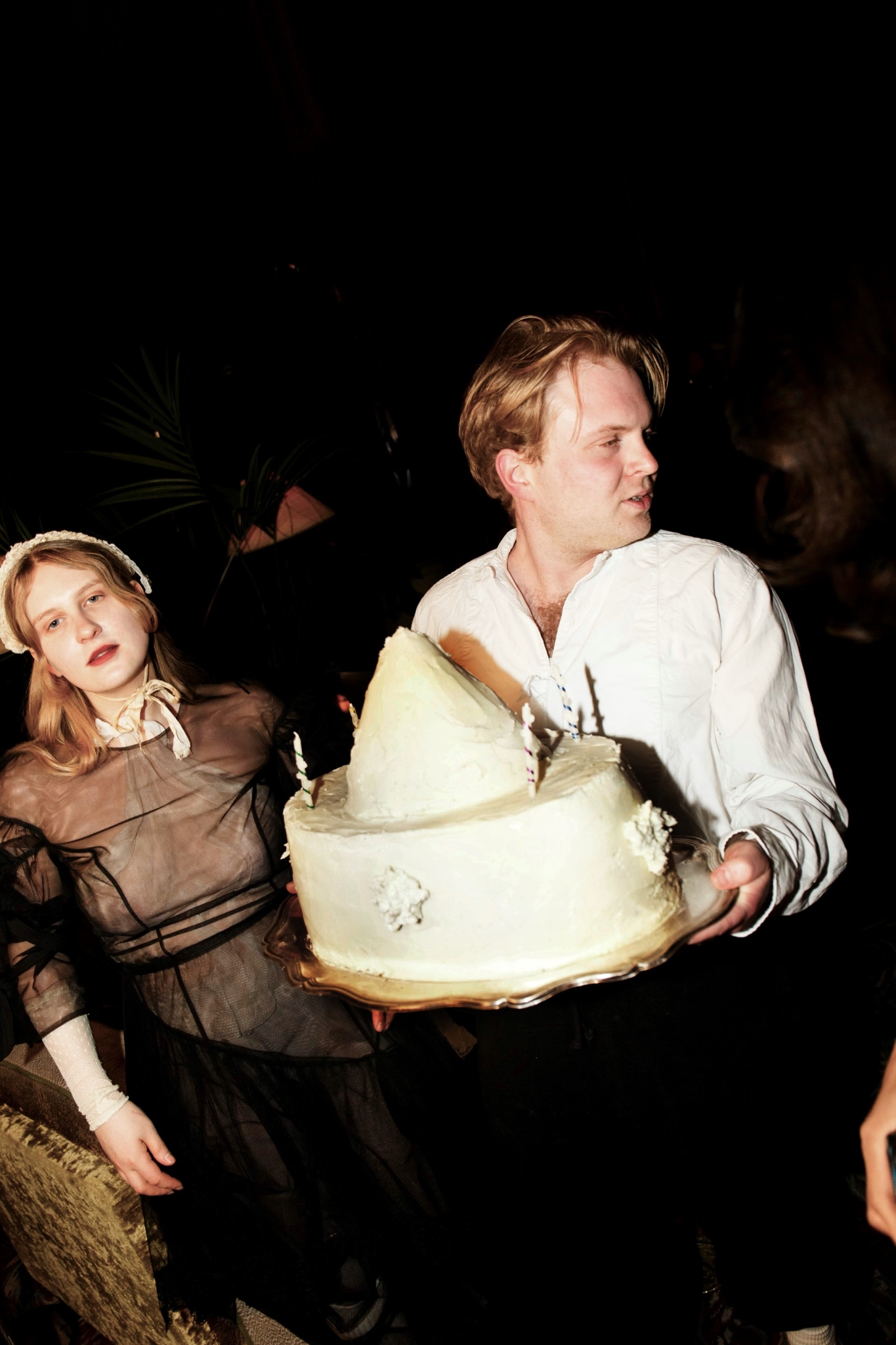
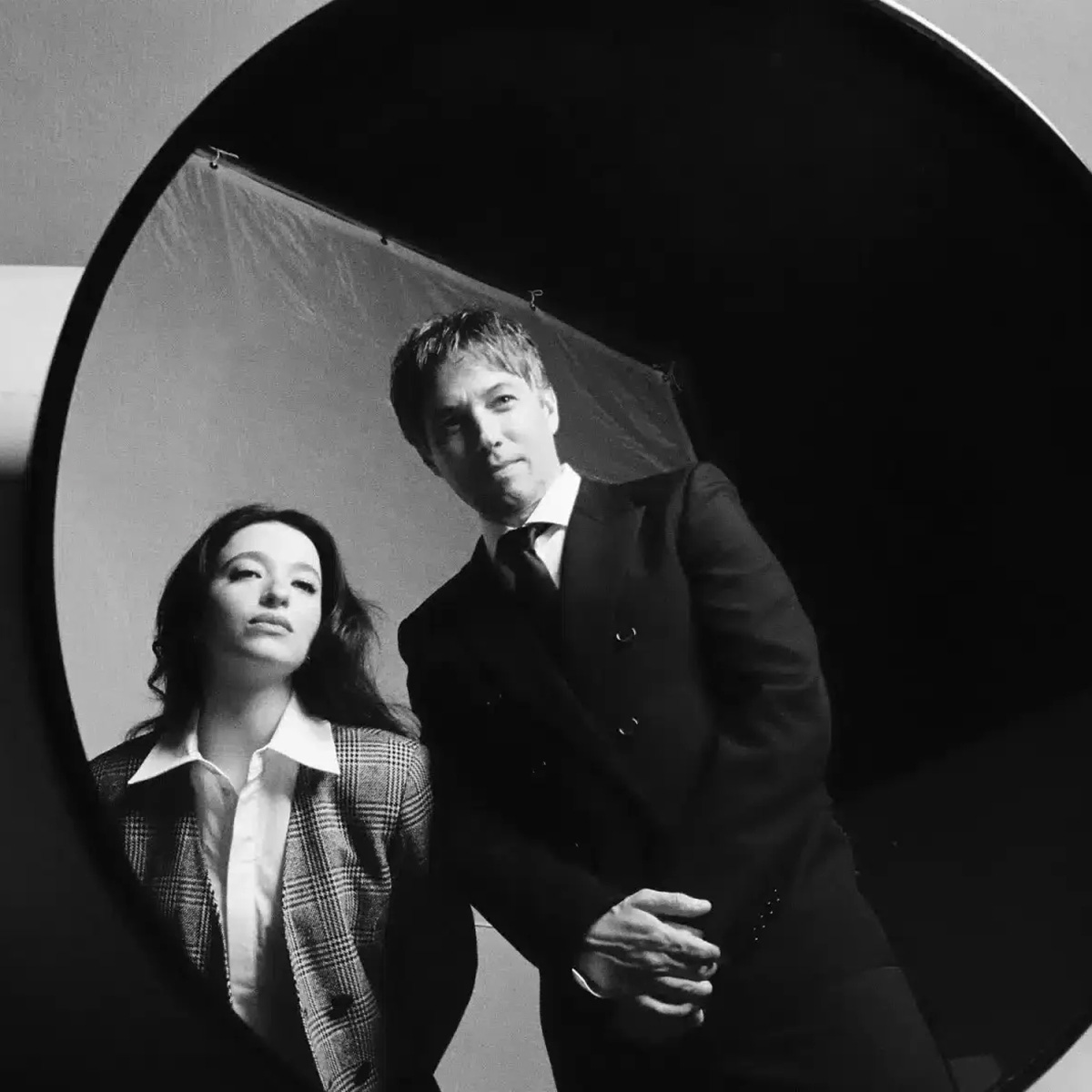
Jago Rackham with one of his Coppola-esque cakes.
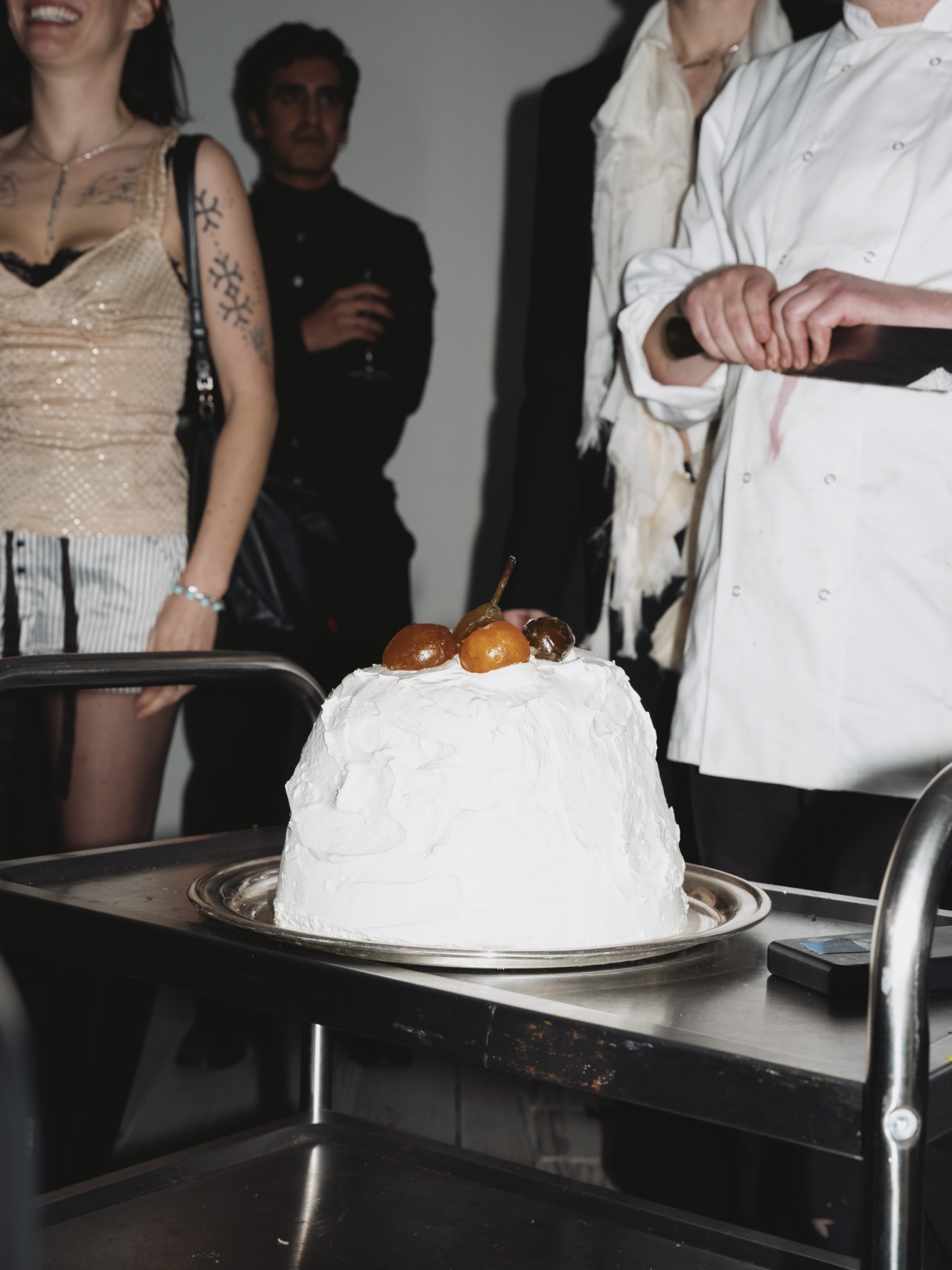
Image credit: Adriana Glaviano.
The film’s final scene sees the royal couple at their final Grand Couvert, in an empty and dark room. They do not eat and each blink of the camera summons a new, horrifyingly sumptuous dish. Outside we hear the mob. Marie Antoinette begins with cake, with all its sweetened possibility, and ends with a pointless dinner. No matter that Marie has produced an heir, her existence is now impotent. Dunst stares once more into the camera, but this time her expression is scared and absent.
I put off re-watching Marie Antoinette. I hadn’t seen it since I was a teenager, though its images followed me around. But I was struck by its subtle brilliance, by its humour and humanity, its elegance and beauty. It is like an exciting Barry Lyndon and is as good as Godfather II, another film that takes its silliness very seriously. That Coppola comes from Hollywood royalty makes sense, perhaps she was uniquely placed to understand Marie as a victim of inheritance. But most importantly, it is a happy fact that a film about Marie Antoinette pointed toward a culture that raises cakes into art: after all, she’d have us eat them.