

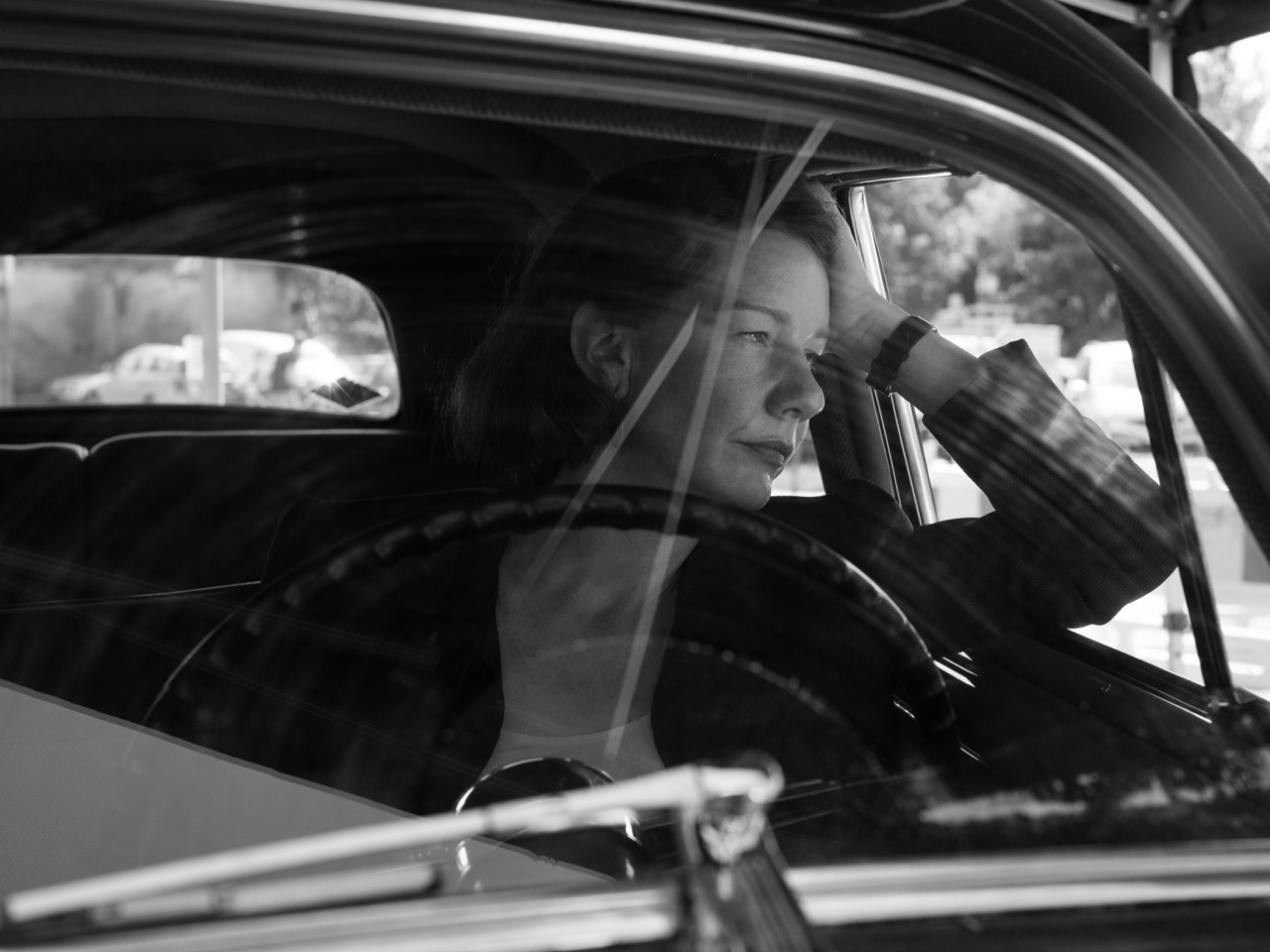
His first feature since Cold War (2018), Pawlikowski returns with this melancholic portrait of Thomas Mann as he returns to Germany after his exile in America.
In Mephisto, both the novel by anti-fascist writer Klaus Mann and its Academy Award-winning 1981 film adaptation, a German stage actor achieves his dreams of stardom by acquiescing to the demands of the Nazi regime, unaware he’s accepted a Faustian deal even as he performs in Goethe’s celebrated play. In Paweł Pawlikowski’s Fatherland, the same barbed questions of compromising artistic integrity to support building a national consciousness are present, but they have a new emotional timbre: muted, melancholy, approaching a bitter apathy.
The film’s setting is partly responsible for this – originally titled 1949, Fatherland takes place four years after Allied victory in a divided Germany, with self-exiled Nobel Prize laureate and Death in Venice author Thomas Mann (Hanns Zischler) returning to Germany from his new home in California to receive the literary Goethe Prize. It’s clear to Thomas’ children – Erika (Sandra Hüller) and Klaus (August Diehl) – that their father has been courted back for some political glad-handing that benefits both West and East Germany, as Thomas and Erika (in her new role of her father’s assistant) will be travelling from Frankfurt to Soviet-controlled Weimar for a duplicate ceremony that will hopefully dazzle the great writer – both governments want Mann to recognize them as having the best intentions for Germany.
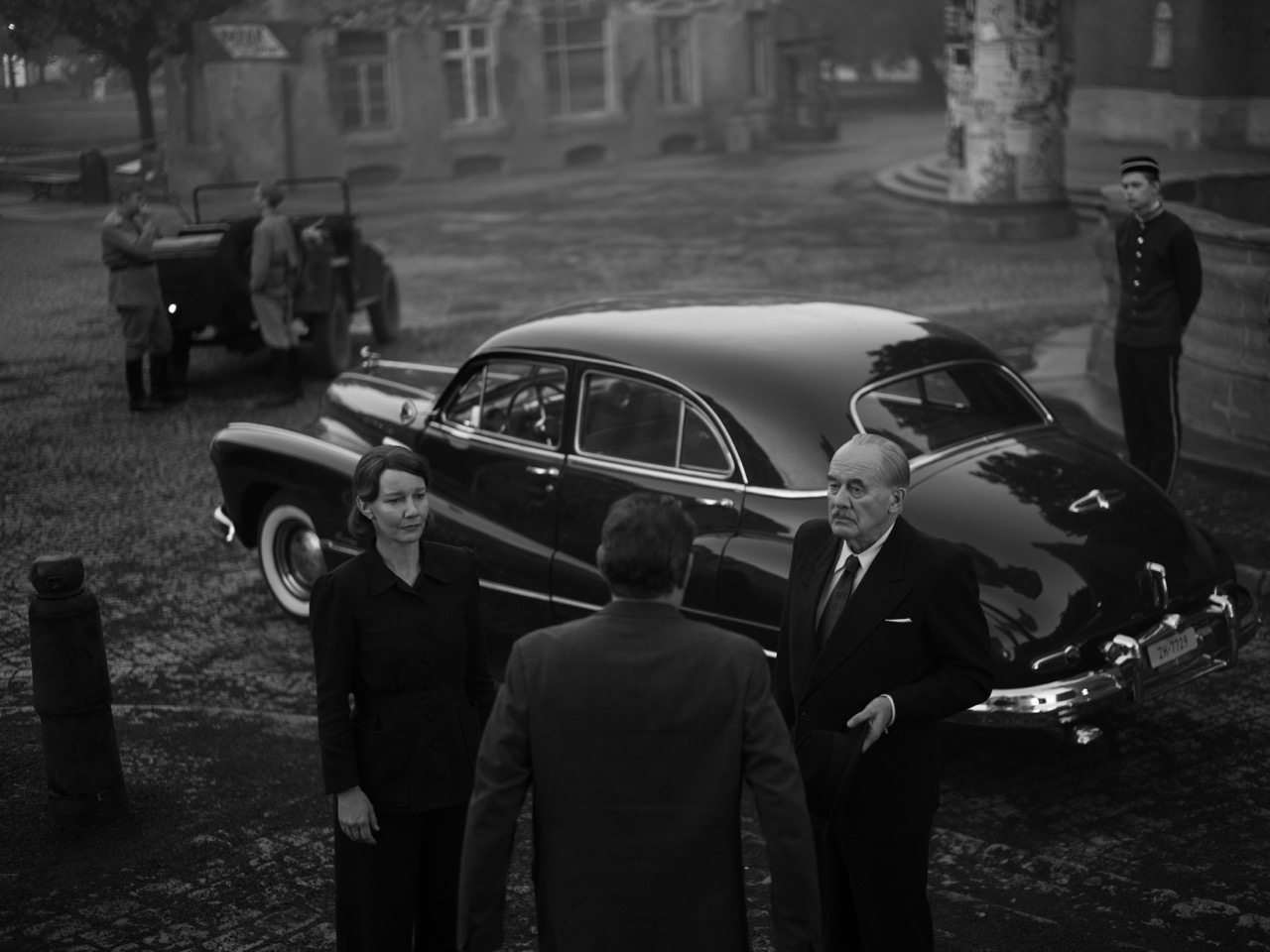
Hanns Zischler and Sandra Hüller in Paweł Pawlikowski’s Fatherland
Fatherland divides its short runtime (82 minutes) between East and West in mundane scenes of greetings, speeches, and receptions, characterized by weak smiles that drop when out of public view. Some specific historical context is necessary to beat appreciate the moments where Fatherland uses the principled Manns to confront their peers who benefited from Nazi rule and have already got a headstart on postwar image rehabilitation. Pawlikowski’s disinterest in extrapolating on Erika and Klaus’ queerness beyond veiled implication could be generously interpreted as a sign of a mutual spiritual disintegration—the souring of love and identity—as a result of their exile.
Though the West and East receptions differ in stark ways – twinkling parties and smiling celebrities in Frankfurt; serious dinners with no fewer than three choir recitals in Weimar – a sense of officiousness and sterility lingers across Mann’s disavowed fatherland, aided by the potent black-and-white cinematography that Pawlikowski and director of photography Łukasz Żal (Hamnet, The Zone of Interest) honed in their previous minimalist dramas about the grief of midcentury war in Europe, Ida and Cold War. The camera is often completely stationary, immersing us in a sea of drab, noncommittal greys, contrasted by the pure black textures of dinner suits and high ceilings that lamplight doesn’t reach. No matter where we are, there is no semblance of home.

“Such is the minimalist power of Fatherland, all Thomas and Erika can hope for is a momentary acknowledgement of shared suffering, rather than a successful reconciliation of their wounds.”
When Thomas and Erika learn of a crushing death in the family, Erika’s shock and grief takes root in paternal resentment, as Thomas starts to exhibit the telltale signs of a narcissist compromising his politics for insincere flattery. Erika, more than Thomas, is Fatherland’s centrepiece, both her father’s sharp, clear-eyed navigator and an emotionally sophisticated lens for their shared suffering. Hüller is magnificent, interpreting Erika’s rootlessness as a spectrum of both weariness and distrust; as her father monologues with academic dexterity about philosophy and culture, she is constantly present and vigilant of the subtle, pervasive tensions that define the spaces they occupy.
Fatherland is direct in its aims, achieving them in a brief, deft fashion – Mann’s famous works nor his complicated personal history are not mentioned, as the film is more concerned with how his prestige is dryly, quietly picked clean by the two regathering Germanys. It’s less aching and devastating than Pawlikowski’s decades-spanning tragic romance Cold War, but the film’s minor-key search for a shred of recognizable beauty in Mann’s former country delays its final moment of catharsis until its final minute – as is apt for a film about surveying the fragmented purpose of art in the remnants of a once-powerful nation, it takes place in a vast but now abandoned church. Such is the minimalist power of Fatherland, all Thomas and Erika can hope for is a momentary acknowledgement of shared suffering, rather than a successful reconciliation of their wounds.