

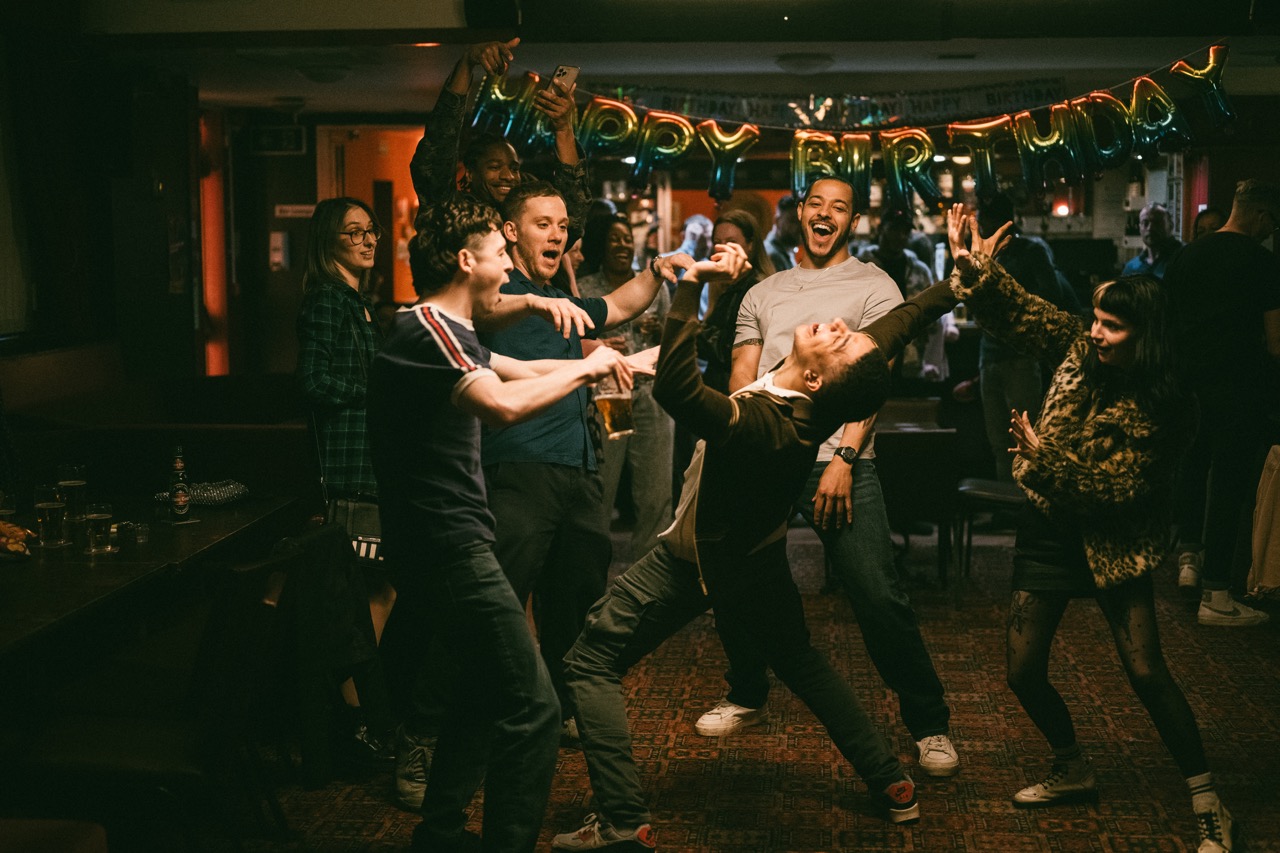
Next up in our series of quick Cannes conversations: we caught up with Clio Barnard and Anthony Boyle, the director and lead actor in I See Buildings Fall Like Lightning which took home the People’s Choice award in the Director’s Fortnight category. With a screenplay by Enda Walsh, the film is a thoughtful, funny and at times euphoric adaptation of Kieran Goddard’s 2024 novel which tells an interwoven story of five childhood friends in Birmingham, who, now adults, and a chronic housing crisis as a backdrop, find their lives to be invariably precarious or rich for a web of interwoven reasons. On the beach in Cannes, Barnard and Boyle discuss the premiere at Cannes, that Turn the Page needle drop and the political intentions of the film.
How has your time in Cannes been?
Anthony Boyle: It was my first time in Cannes so I wasn’t prepared for the madness of all of it. When I watched the film at the screening in London, I felt a bit too close to it. But then I watched it in Cannes and I could see it as a piece of art. Being in that room was special. The French, they love cinema, like the clapping, it’s so beautiful. That was a really good experience.
What was your journey like to the film?
AB: Well, I door-stopped Enda Walsh [screenwriter and playwright] outside of a play when I was like 23. It was a play with Cillian Murphy called Grief Thing is the Thing with Feathers. About 1,000 people were there, queuing up outside to see Cillian and I was like the one dude waiting for him. I was like hey, I like your writing. We worked on something that fell through during Covid and then he wrote me a letter saying he would like me to play Patrick. Cléo also wrote a letter, and I was like, this is unbelievable: one of my favourite directors and my favourite Irish writer, I was like wow, I feel blessed.
Clio, how did you come to this story?
Clio Barnard: Enda Walsh wrote to me, and I love his work. I absolutely loved Small Things Like These and Hunger and his work as a playwright is brilliant. He asked me to read the book and I read it very quickly and I’m not usually a quick reader. I fell in love with the characters and kind of didn’t want to leave their company when the book ended.
Was it hard to find a balance with 5 main characters?
CB: It’s definitely an ensemble. That was a challenge: how do you fit 5 interweaving stories into a feature film length, you know, and how do you give pretty much equal weight to each person? That needed careful handling. Michael Winterbottom’s Wonderland was an important reference for Enda.
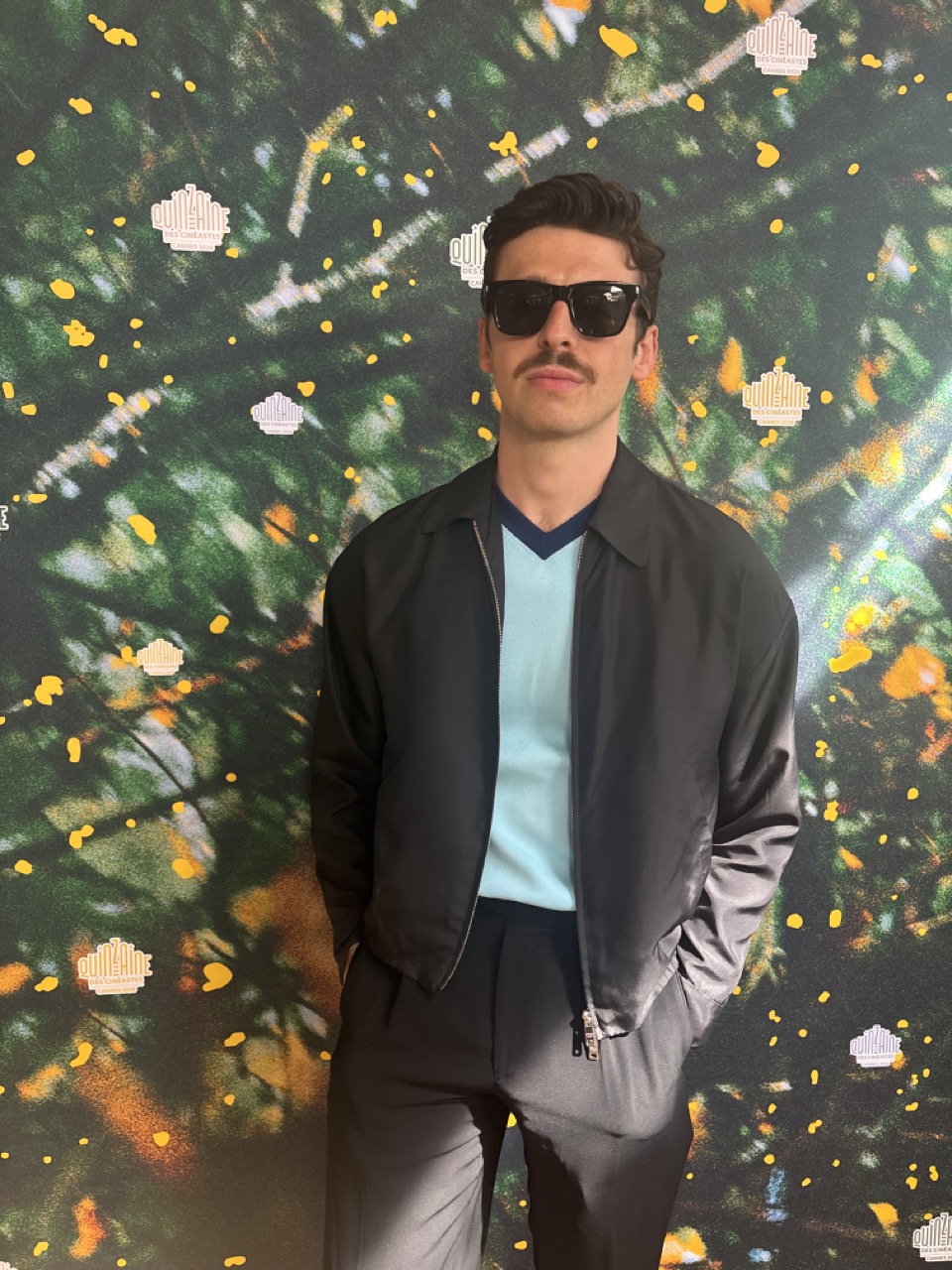
Anthony Boyle in Cannes, May 2026
Anthony, how did you get into Patrick’s character?
AB: I came to Birmingham a couple weeks early and I found a guy on Instagram who’s a bare-knuckle boxer, and I hung out with him to get the accent done. And, uh, yeah, just hung out with them all. Tracey behind the bar, shout out Tracey, shout out Big Ginge, shout out all the lads in the Crown Pub. They were great craic and really welcoming and lovely, lovely people.
How did you find the balance between humour and tragedy as an actor?
AB: I just think that’s life. A lot of serious films tend to shy away from comedy, but to me, comedy is life, especially for the people in Birmingham. They’re funny. Spending time with them, they’re full of energy, always having a laugh. It would feel strange to portray them as constantly dour, unable to joke with each other. We wanted it to feel true to life—like the people I was actually spending time with, eating and drinking with in Birmingham. Even in the middle of the crisis, they were incredibly funny. At the same time, there were real tragedies unfolding in their lives. So we tried to capture that balance. For me, the mix of comedy and tragedy just felt honest.
The film is so much about dismantling the winner-loser dichotomy of capitalism. How did you view that idea in relation to Patrick?
AB: He’s a winner for me because he’s created two beautiful children with his wife and they love each other and they’ve got this beautiful family. That’s success, you know?. Unfortunately, he’s under a system where going to work and breaking your back every day and he’s only making 40 quid. That’s one of the great socialist rally cries in the film. There’s Patrick’s life, you know, and then Rian, who trades stocks and bonds and overnight became a multi-millionaire, hasn’t done an honest day’s work for years or possibly ever, and his life is so comfortable.
Clio, your film The Arbor (2010) also explores the social impact housing to some extent–did you think about the change between then and now?
CB: That was 2010, and the Tories had just got in and it was, you know, the start of austerity and I think that’s been devastating. And yeah, I guess in a way this is a generation who— where that promise is now completely gone and things are very precarious. In terms of a regular income and a roof over your head. You know, those are hard things to come by now.
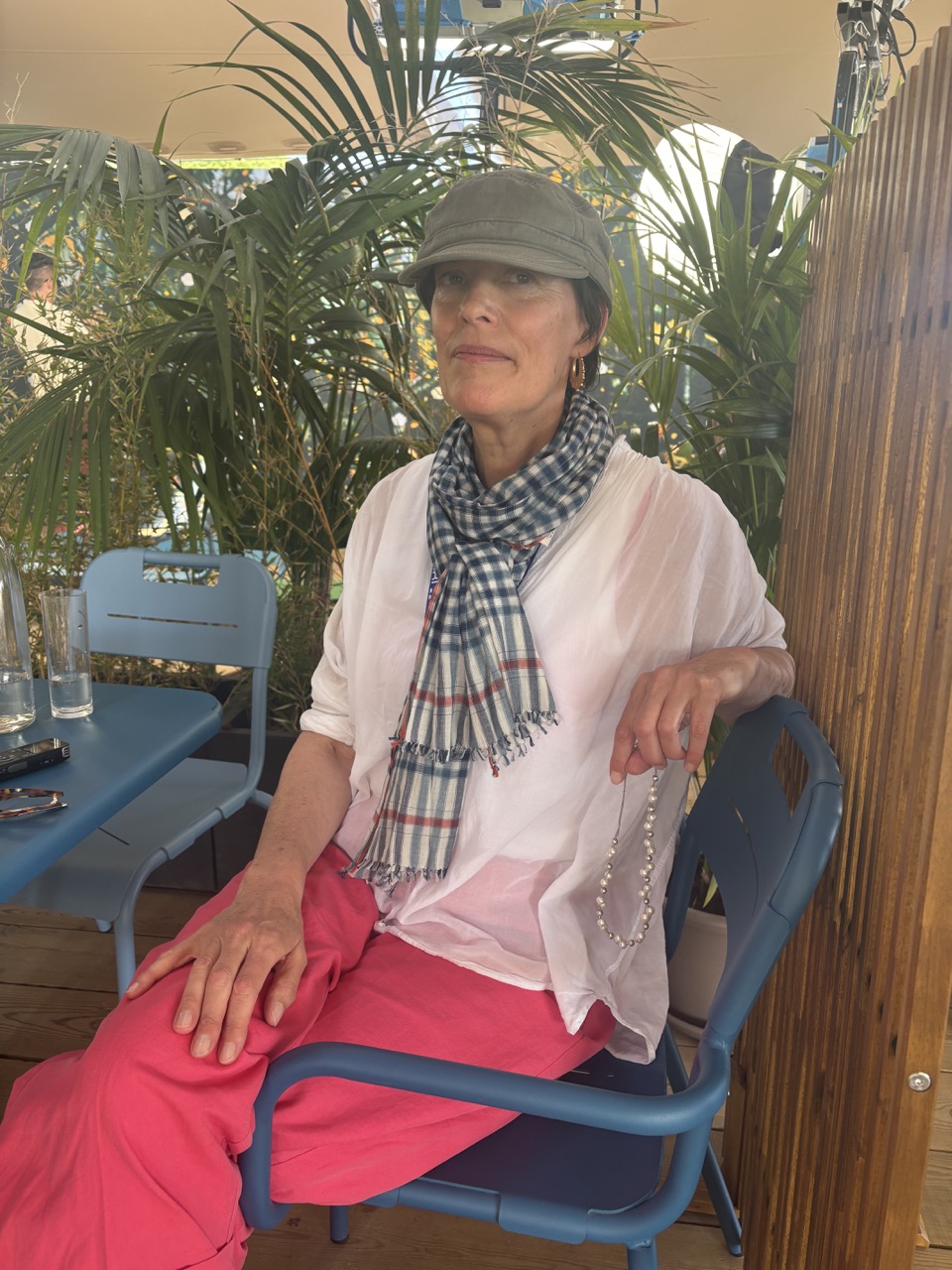
Clio Barnard in Cannes, May 2026
And did you come to any new conclusions while making this film?
CB: That we need to invest in people. Yeah. You know, whether it’s a public library or the health service or state education or public transport or public amenities like water and property, of course, as in we need to dismantle the way the economy is so bound up in property ownership and social housing and changing the way private landlordism works. We need a change. It’s such a bad system, and it’s impossible for, especially for young people at the moment.
Lola [the dog] surely deserves the Palme Dog?
CB: I think there is a dog in the novel, but it’s quite a kind of slender thing, but Enda really bigged up the role of the dog–I think because he has a dog. The dog is called Lola and we also have an actor called Lola, but if you’re on set and you call a dog by any other name, the dog is not going to respond.
I’d also love you to talk a bit about the music–The Streets needle drop is great.
CB: The music was fun. I make a playlist as soon as I start a project, pulling in random, loosely connected tracks. I work with a brilliant music supervisor, Connie Farr, who sends ideas, and Kieran, who wrote the novel, shared one too. So I lived with music for a long time. Choosing the final track took a while: we went with Four Tet remix of Bicep’s “Opal”. It needed to carry Ollie’s grief for his friend while also expressing a decision to live joyfully, in tribute. I wanted something you could dance to, a club track with emotional weight, and that one felt right.
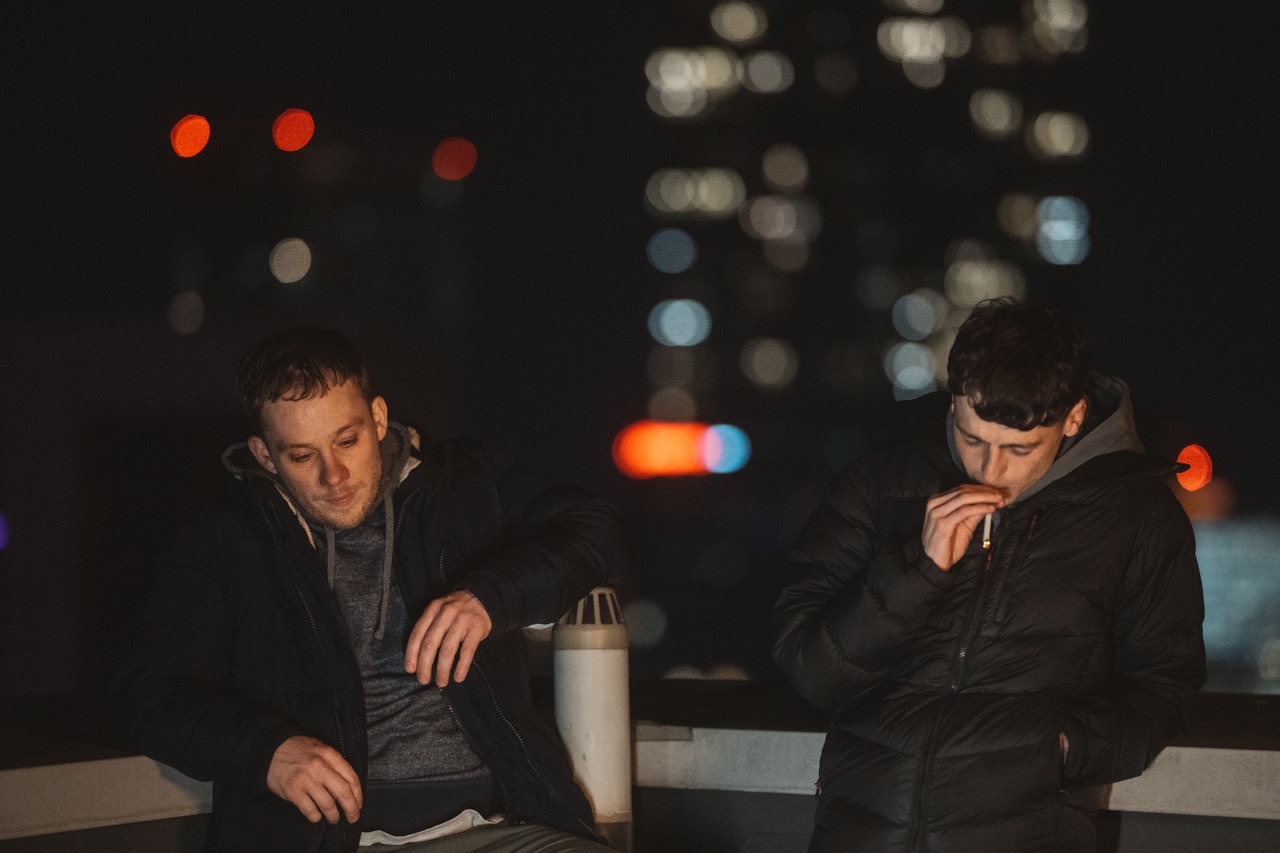
Still from I See Buildings Fall Like Lightning, directed by Clio Barnard
What do you make of the fact it has been a quiet Cannes for British film?
CB: There is a British presence here. Mark Cousins, who I love, has a film. And Ken Loach presented Land and Freedom on the beach. I think the BBC and BFI are an extraordinary and brilliant resource that supports British filmmakers. It’s like what Kieran talks about with the end quote of his film—that these things can get sacrificed for other things that are about making money. We can lose sight of what human needs are.
Anthony, what has this experience taught you about filmmaking?
AB: I just shot Close to Home, which is an amazing book by Michael Magee set in Belfast. I took a lot of what I learned from Clio and I applied it there. We worked with a lot of the community, a local guy is playing one of my best friends, and it’s his first acting job on TV. We just tried to be in the community as much as possible, celebrate the talent there and give a bit of a voice to the voiceless.