

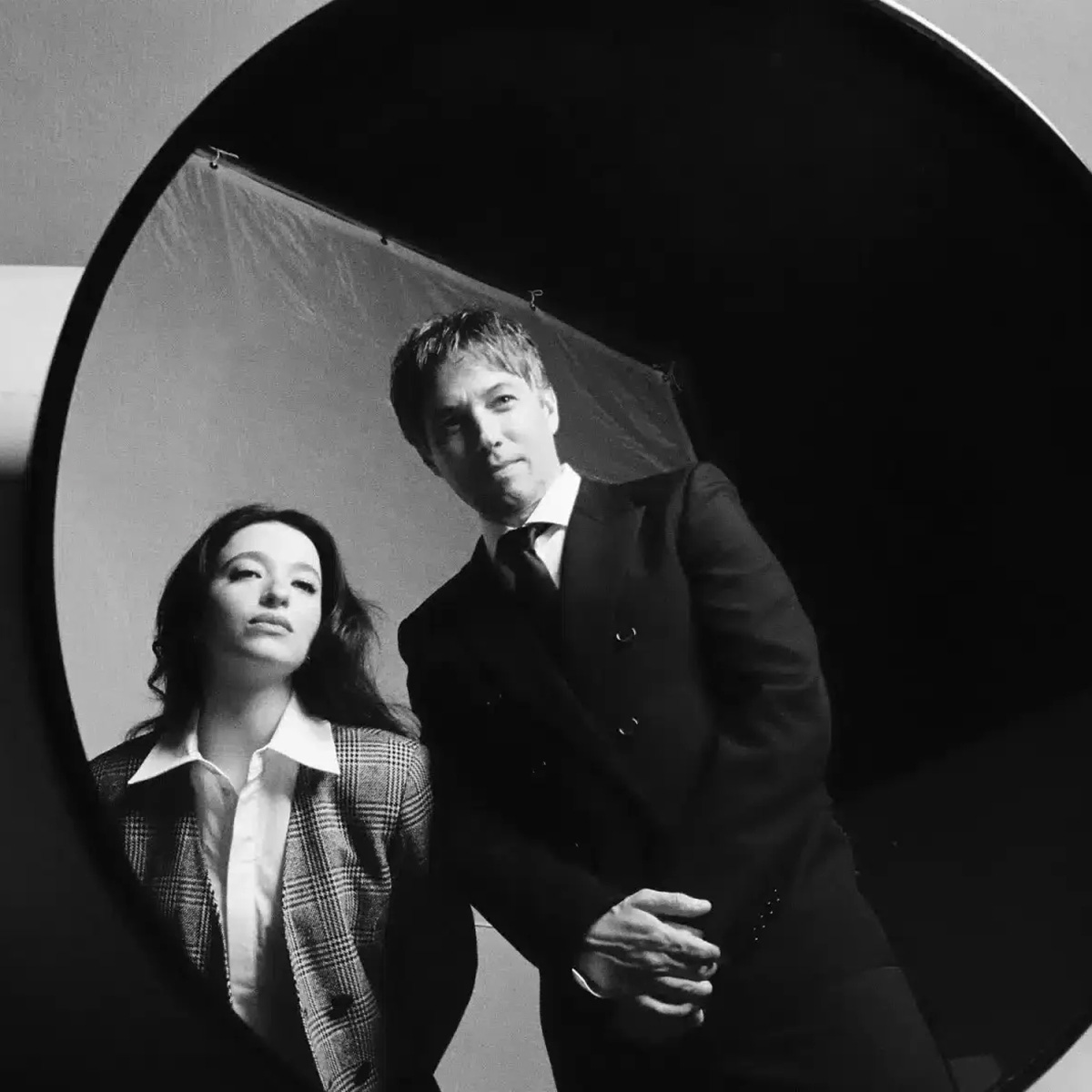

The British artist continues to flesh out his sprawling musical universe with debut album Forever Ends Someday.
Wesley Joseph points to a muddy stain on the forearm of his jumper. “That’s Walsall dirt,” he says, with equal parts frustration and a badge of honour.
The 28 year-old singer-songwriter, producer and director has come straight from the set of his latest music video, taking the three hour road trip from his hometown of Walsall to The People’s Tavern, a buzzy pub in Hackney where he has requested we meet. He has spent the night with his friends—including fellow hometown hero Jorja Smith—shooting the video for their joint track ‘July’, one of the lead singles from his dynamic debut album, Forever Ends Someday.
“I’m so tired,” he admits, when I ask how he’s holding up. “But good, in spirit. The whole of the community came through to be in the video, to celebrate the moment. It was intense, but it was a beautiful homecoming. Here, let me show you.” Joseph whips out his phone and begins swiping through his camera roll. The images show a beaming Joseph amongst a crowd of Walsall-ites, including Smith. They are in an open field, the sky above their heads grey and gloomy, the ground and grass below their feet patchy, murky. Still, the group look happy—almost childlike in their euphoria. “These are all my people”, Joseph says proudly. “Me and Jorja used to go to this park a lot as kids. We’d sit on the tarp and write music.” He continues the slideshow: there’s an image of he and Smith in the field backed by her Blue Lights choir, then of he and his friends joyfully shooting fireworks into the purple-hued evening sky. “There was a scene where we were just biking with all the mandem. It was amazing. Just Walsall hood shit, but elevated.”
Joseph tells me Walsall was once dubbed “the most depraved town in England”—a reputation that has shaped his character and become his most enduring superpower. Though he left for London in his late teens to study film and eventually pursue music, our conversation keeps circling back to his hometown, as if Walsall were less a place than an idea—a belief system he carries like a lucky totem.
He recalls his early days with Smith in the Walsall SoundCloud collective OG Horse, where they wrote some of their first songs in a run-down council flat that doubled as a creative hub. He talks about his parents, and the community that has taken root amid the town’s so-called depravity. “There’s so much wholesome, raw love going on there, which you don’t see from the outside,” he says. “That gave me my perspective on life. I’m mad resourceful, but I also don’t bend or stretch for things that feel inauthentic. That’s because of Walsall.”
Glancing around The People’s Tavern, I notice we’re seated beside a giant portrait of Bob Dylan. Elsewhere, a mural of David Bowie hangs on the wall—artists who, like Joseph, spent their careers resisting easy definition and uncompromisingly carving out their own spaces. I ask whether the pub holds any particular resonance for him. “I’m gonna be real, it’s not that deep… I’m just tired as fuck, and my house is right around the corner,” he laughs.
Nevertheless, over six years, two acclaimed EPs, and sold-out headline shows and tours across the UK and US, Joseph’s journey has been following much the same path as visionaries like Dylan and Bowie, alongside Kanye West and Childish Gambino, who have similarly applied a no-ceilings, no walls approach to their artistic undertakings.
A conversation with Joseph is akin to peering through a kaleidoscope of all the art he consumes, with the musician speaking in a wide-ranging stream of music and movie references to further illuminate his own artistic ambitions. He describes a reverb effect as “some ’80s Phil Collins shit,” and a particularly lifted chord progression as “Stevie Wonder-levels” of sweetness. On album cut ‘Peace of Mind’, he compares himself to Stanley Kubrick, and depicts Danny Brown, who features on the track, as “a comic book character in the plethora of rap.” During our chat, he frames stories and songs like scenes from a coming-of-age film. As a result, Forever Ends Someday plays like a universe containing multitudes, each track unfolding as a wonderfully chaotic whirlpool of ideas, sounds, and emotions.
There’s also a poetic irony to the project, which is a rebirth of sorts for Joseph—a new life, a new era—but was itself conceived against the backdrop of a world on fire. When he released the music video for lead single “Pluto Baby” a few days before our interview, he described it as “end-of-the-world music.” Has Forever Ends Someday been designed as a soundtrack to the coming apocalypse?
“Sometimes the music just does something to me,” he says, “and I think, ‘this sounds like what I’d want to hear if the world was burning and we were all in the club without a care.’ But a lot of this music was made in isolation, with the awareness that the world actually is burning right now. So naturally the instrumentation reflects that: angry, dark, and angsty. It’s a beautiful pain, but it’s pain. That’s why the colours of the record are dark purples and blues, with pastel creams and whites—because that’s how it felt. The music felt like finding the light within the dark.”
Below, Joseph and I discuss home, world-building, and making music for a world on fire.

“Perfection can destroy spontaneity and rawness. It can make the mix too clean. I don’t like that shit. I like a bit of dirt in my music.”
Wesley Joseph
Luke Georgiades: How has your relationship with Walsall shaped your artistry over the years?
Wesley Joseph: There are a lot of super talented people from Walsall, and people always ask me what it is about that city that births that. It got voted the most depraved town in England. It doesn’t feel that way to me, but it’s objectively impoverished. Not much opportunity there at all. It’s grey. But at the core of it…man, yesterday I was on a field, singing with a choir behind me. My mum’s friend let us use her living room—this old school, Jamaican, Windrush style living room. That’s in between all of the madness. There’s so much wholesome, raw love going on there, which you don’t see from the outside. That gave me my perspective on life. I’m mad resourceful, but I also don’t bend or stretch for things that feel inauthentic. That’s because of Walsall.
A lot of people think that places that have limited access to a wider view of the world produce limited dreamers, but I think it’s the inverse of that. Being from Walsall is why my videos look like they’re from another universe, why my beats don’t sound like no one else’s beats. Everything that exists inside my bain is the subject of a kid who wanted something that wasn’t outside his window. When Tekken’s your only game, you become the best fighter. You complete it three times and understand the cheat codes. If you have every game at your disposal from the beginning, you won’t be as good of a fighter. I can do anything because of Walsall.
LG: You dropped the music video for ‘Pluto Baby’ and described it as “end of the world music.” What does that mean to you?
WJ: Sometimes the music just does something to me, and I think, “this sounds like what I’d want to hear if the world was burning, and we were all in the club without a care in the world.” But a lot of this music was made in isolation, with the awareness that the world actually is burning right now. So naturally the instrumentation reflects that: angry, dark, and angsty. It’s a beautiful pain, but it’s pain. That’s why the colours of the record are dark purples and blues with pastel creams and whites—because that’s how it felt. The music felt like finding the light within the dark.
LG: You made this album in Los Angeles, London, Walsall, a mountain in Switzerland. Would those songs look different depending on if you made them elsewhere?
WJ: All of the music felt different until I brought it back to the studio in London. There were songs that I wrote in L.A. that I love, but they didn’t feel UK enough. The top line that I wrote in Switzerland had to be dulled down, because I was too happy when I was making it. The stuff made in Walsall feels close to home. Me and Jorja wrote the top line lyrics of ‘July’ there. That can’t change. The chords for ‘Seasick’ were played by Ryan Raines in his garage in L.A. in the Hills. That can’t change. But when it comes to making it more punkish, when my vocals want to go on some Phil Collins shit with 80s reverb, then we’ll make it UK again. The feeling of those places remains, but the framework changes. I stay true to the feeling.
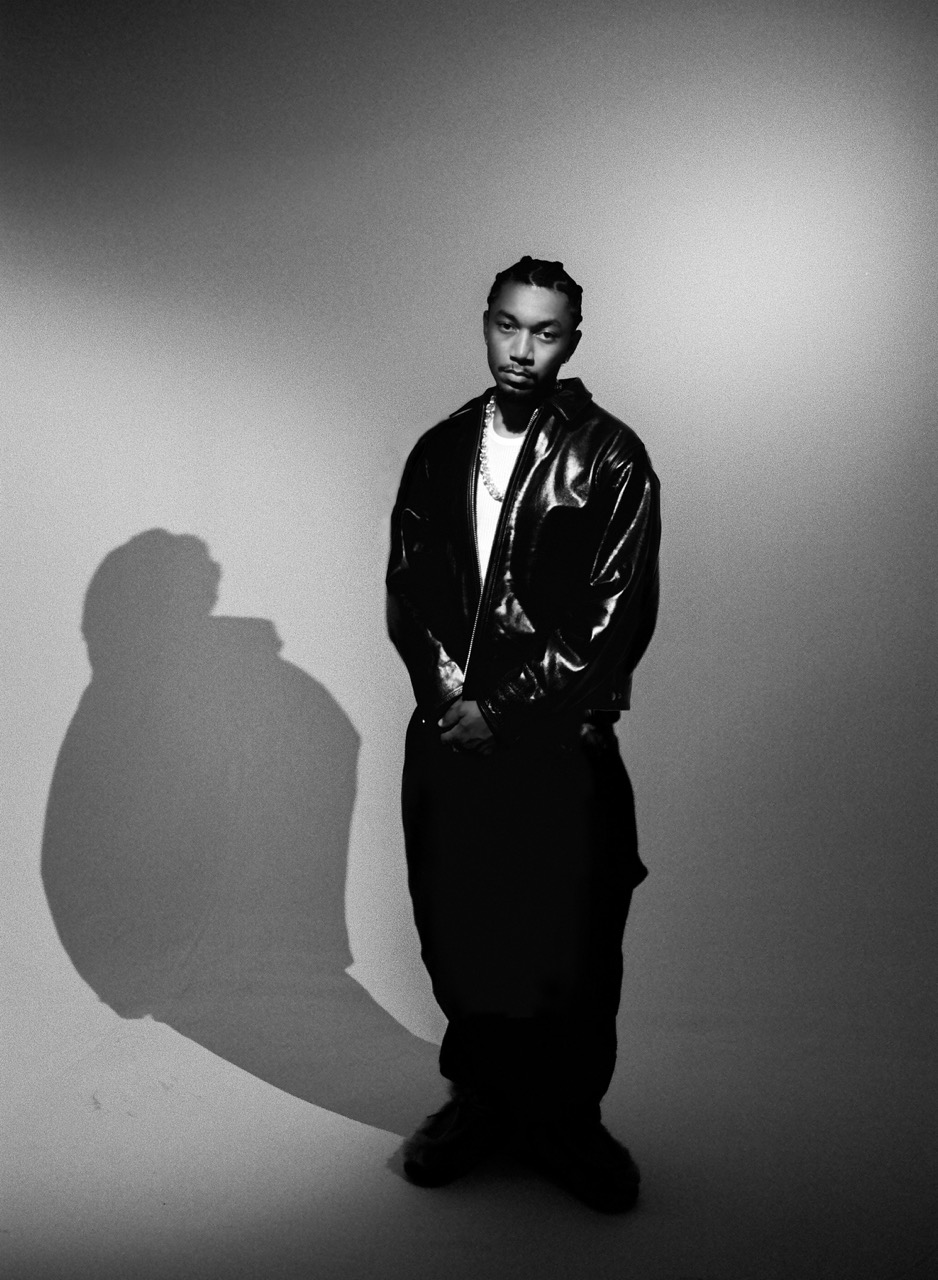
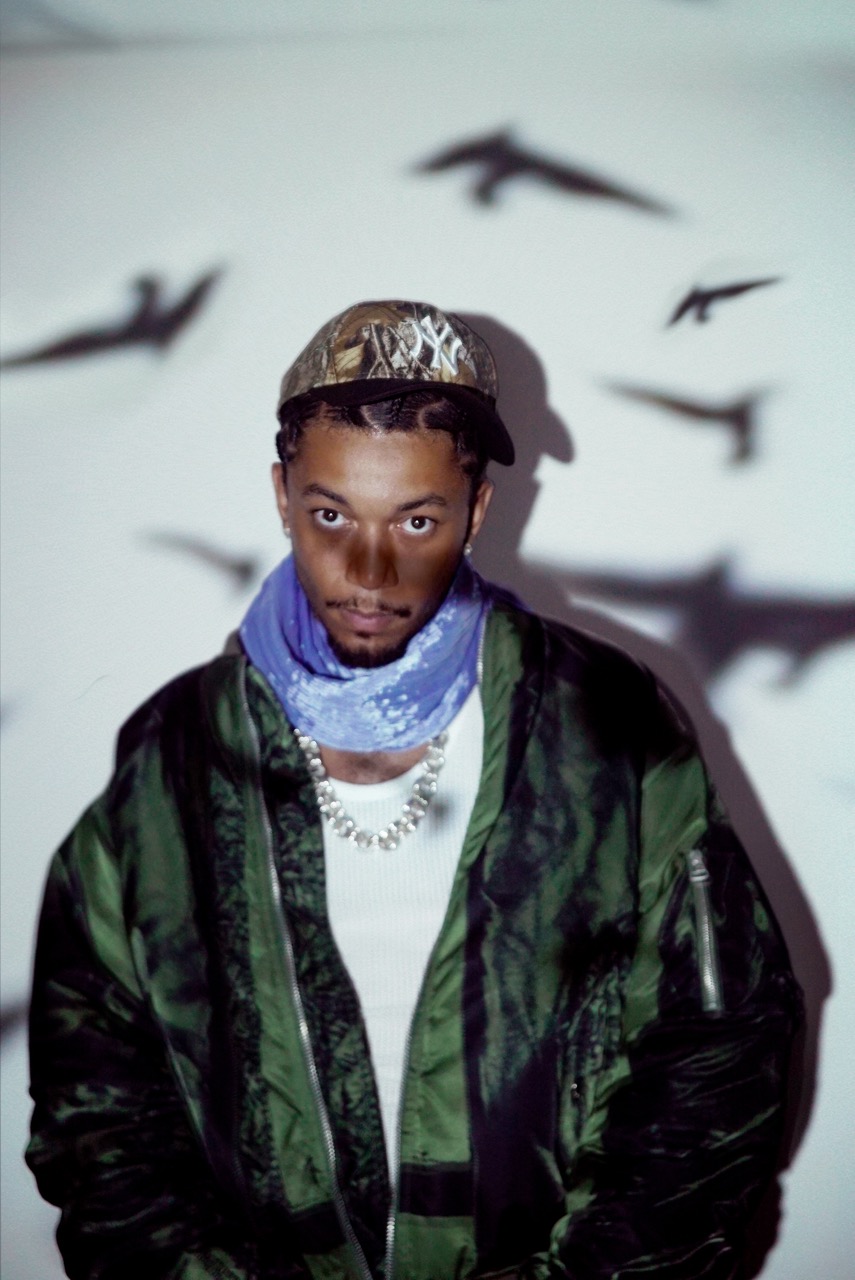
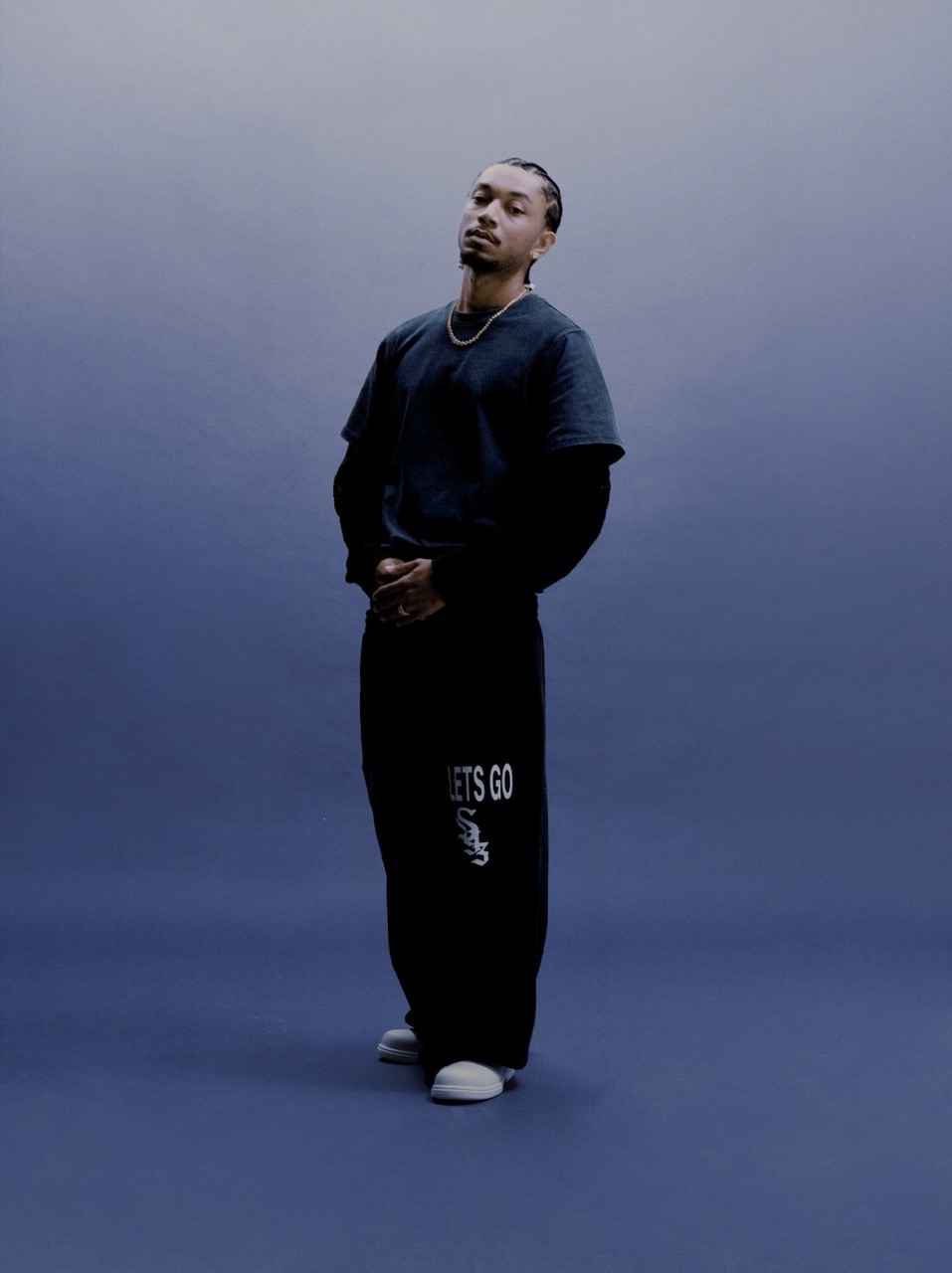


LG: Which is why the music doesn’t necessarily fit in a clean box of tone and meaning. If the lyrics are nostalgic, the song doesn’t need to sound like how people think nostalgia should sound.
WJ: I love playing with the concept of nostalgia. Take ‘White Tee’, for example. The beat starts, and it’s this angry beat. Everyone’s saying, “oh, let’s make this a hard rap song.” I said, “nah, let’s put some sweet Stevie Wonder-level chords to juxtapose the aggression.” That song feels like what a typical Summer day was like in Walsall—full of lust and hope and grit and confusion and anger. At the bridge, I introduce a fight scene, where someone gets bottled in the club. That really happened. But in the song, right as the bottle smashes, the strings come in, the backing vocals come in, this falsetto comes in, and it’s this beautiful, almost-gospel moment on the record. My version of nostalgia is non-linear and contradictory. You can feel angry and lifted at the same time. I love being able to capture the delicate nature of all things at once. I don’t want to tell people to be happy. If you’re not happy, then don’t force it. I can’t make music one-dimensionally. I can’t make a sad piano song. I’ll make a song that you’ll cry to, but it will contain multitudes. It needs to be as close to the nature of living as possible. A song can feel like a movie.
LG: Cinema is clearly at your core on some level. When you studied filmmaking as University, you were always planning on building worlds with it that extended beyond the medium itself?
WJ: It’s got something to do with my interest in escapism. I’ve always been obsessed with creating worlds that feel both contained within themselves and infinite. I made a music video for the first song I ever made, an hour after I recorded it. I was 14. Both are terrible [laughs]. But I’ve always been excited about holding people in something that they feel like they can get lost and feel safe in. Film is just the most powerful medium to execute that with. Every track feels like a scene. One is a thunderstorm, another is a sunrise, a warm breeze on your face. When I close my eyes, I can see it. At the same time, I’m becoming less self-indulgent with age. Restraint is powerful too. I won’t tweak a snare just because it sounds like it should be in a forest.
LG: Is perfectionism the enemy of artistry?
WJ: When you allow it to be your excuse. It’s important to be a perfectionist, but it’s also important to know when to stop. It’s easy to enter the void. It’s like the Green Goblin mask is speaking to you: if you stay long enough with that mask on, it becomes your own insecurity stopping you from reaching your greatness. Perfection can destroy spontaneity and rawness. It can make the mix too clean. I don’t like that shit. I like a bit of dirt in my music. At the same time, I’ll never put out music that I think could be better. That’s my line.
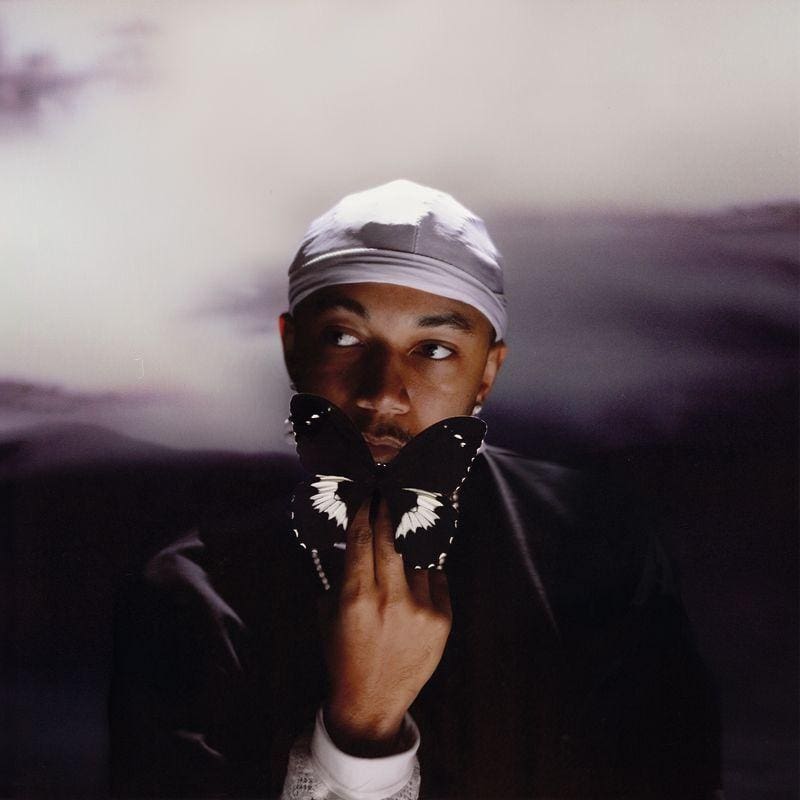
“You know how in Korea they’ve got K-Pop school? In Walsall we’ve got a yard filled with people smoked out, making crazy beats, writing bars and tryna making tunes. We’ve got photographers making dark rooms out of coat cupboards.”
Wesley Joseph
LG: The music industry is notorious for its ups and downs, its limitations. How have you gone about navigating that space in order to make what you really want to make?
WJ: Back then, I didn’t even consider the concept of a “music industry.” I just said to myself, ‘Okay, here are my terms: I have to do it and be excited by it, and I can’t compromise anything I love in order to do it. The moment I prostitute what I love, it becomes worse than getting a menial job I don’t care about.’ I’ve protected that ideology throughout all the music industry bullshit. I’ve fought tooth and nail to do all this my way. I’ve said no to a lot of opportunities, I’ve given up a lot of bags, but my eye has always been on the bigger picture. I look back to when I put out the first EP—I put in £600 to market the whole thing. I had a leak in my room, I was eating noodles and stressed, and still, all I could really think about was, “man, this fucking project is hard, and eventually they’re going to know about it.” A year later, that shit was on a hundred million streams. £600. One shitty laptop. That’s what got me here—it still carries me forward.
LG: You’re also selective with your features. Tell me about linking up with Danny Brown.
WJ: He’s always been one of my favourite artists. I found his music when I was a young skater. The gap in his teeth, the skinny jeans, the crazy hair—he was a comic book character in the plethora of rap. One day he followed me back, and we spoke on DMs. He was showing me love, and said we need to tap in. I told myself, ‘I’m not gonna force it, when the song comes and I hear his voice, I’ll know.’ We made Peace of Mind, and I wrote the first and third verse, and there was a gap in the middle where the pen just wouldn’t write the second verse [laughs].
LG: The pen telling you to hit Danny uuup.
WJ: [Laughs] Daaannnyy Brooooown. It was like that. I remember going to have a cigarette, and was playing the track in my head, and I just heard his cadence on the beat. We hit him up, and he gave me the verse the next day. I met him at his Koko show a few weeks ago. He’s good energy, man.
LG: It must feel special linking up with Jorja at this stage in your career, considering your long history with OG Horse together. Was that a time of creative abundance?
WJ: You know how in Korea they’ve got K-Pop school? In Walsall we’ve got a yard filled with people smoked out, making crazy beats, writing bars and tryna making tunes. [Laughs] We’ve got photographers making dark rooms out of coat-cupboards. One of our boys got a council house, so we’d all be in this room creating. That house got fucked up. There was graffiti across every single part of the house. Me and Jorja wrote a few of our first songs there. Back then everyone was trying to impress each other. If you wrote something bad, you wouldn’t even show it. We kept each other sharp. It was more difficult to impress them than it is to impress an A&R. So if I know a track is hard in my brain, in that space, I know it’ll be hard to the kids at my shows. I don’t care if the industry gets it or not. I know when something’s worth pressing play on.
LG: Did you inherit any of your creative spirit from your parents?
WJ: My dad’s the most passionate music-head I know. He was in a band with Jorja Smith’s dad. They were in a band together. It’s not his trade, but he’s always been into music. He’ll tell me when a harmony isn’t working. I’ll see a drawing he did in my grandma’s house, and I’ll be like, ‘what artist is this?’ And she’ll be like, ‘oh, your dad did that.’ It’s crazy. My mum is strong and charismatic. The introverted, creative part comes from my dad, but the stage presence comes from my mum. My mentality—the way I move through the world, protecting my shit, affirmatively—that comes from my mum for sure. She works for a Black sister’s charity. She’ll be doing beautiful things in the community. She knows everyone. She did the casting for the July music video.
LG: What does ‘Distant Man’ mean to you?
WJ: It was one of them ones where I came into the studio after some bullshit happened, and I just started ranting to my producer about the shit that was on my mind. “I’m tired, I’m sick of this shit, I’m worth more than this, I wanna change shit.” And he just started playing the piano. I jumped on the mic and started murmuring lyrics. We used to dream about the little things back then, and the least I could do is sing for you. Those original murmurs I laid down, just me figuring out my thoughts, are still on the album. It was the first vocal that got cut on my whole record. It started this whole journey. It was also the last song I finished. The entire themes of the record—the heartbreak, the coming of age, the make-ups, the loss, the joy, the best Summer nights, the worst Winter nights—are encapsulated in that song and the making of it. It’s a mission statement on where I am, where I want to be, and what it means to sing for the kid I used to be.