

Art & Photography, Confessions
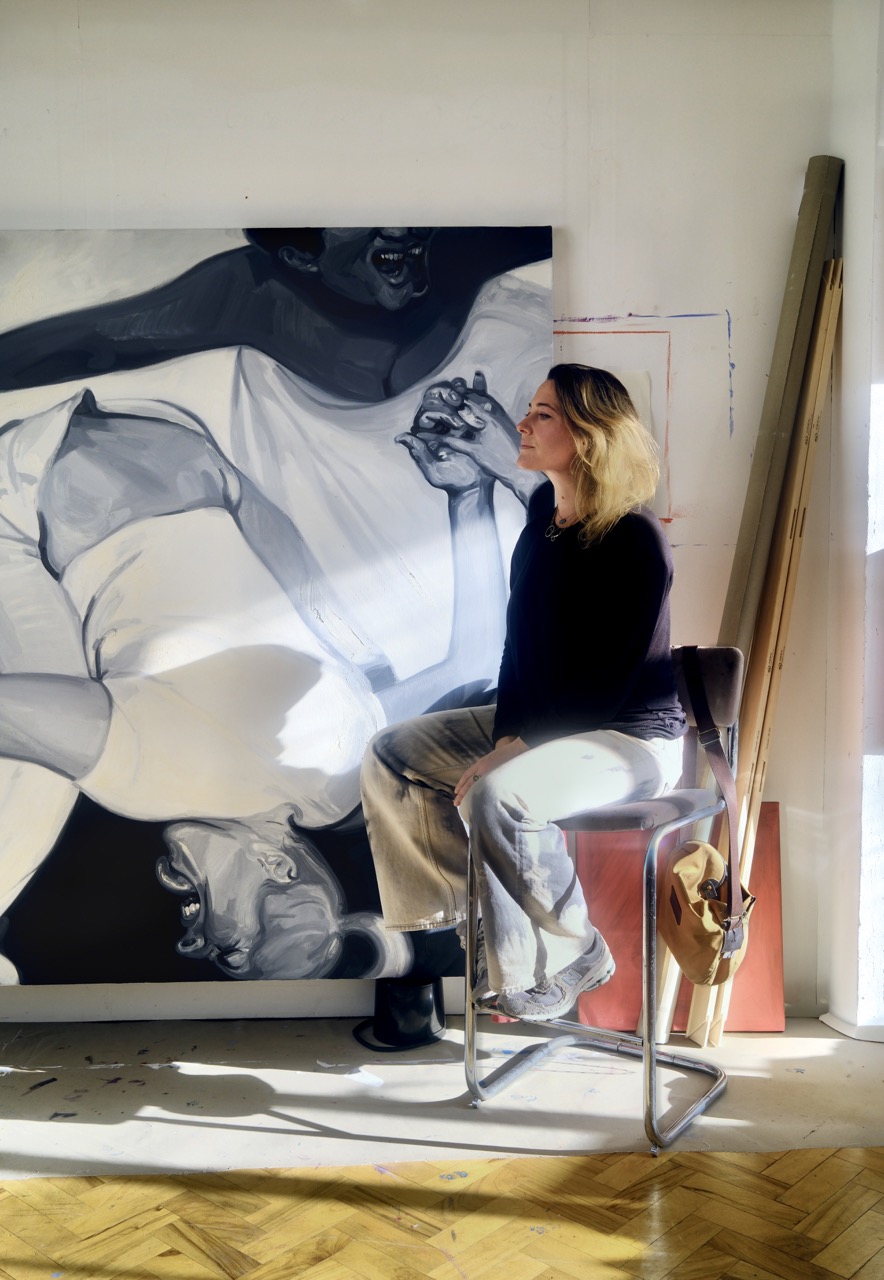
From her studio overlooking the Newlyn harbour, Vanessa Garwood has reimagined her practice—moving beyond formal portraiture to paint a vivid, psychological world of female connection, transformation, and freedom, writes Lydia R. Figes.
Earlier this summer, the British painter Vanessa Garwood took up residence in the historic Anchor Studio in Newlyn, Cornwall. The lofty, light-filled studio—constructed in 1888 by artists Stanhope and Elizabeth Forbes, and where the Newlyn School of painting emerged—overlooks a quaint fishing harbour. From her window, Garwood could see luminous Cornish waters dotted with fishing boats, beneath a vast blue sky. Immersed in the atmosphere of nature, painting, and history, something stirred within her: “After a long and dark winter, I felt very moved by the landscape and the flourishing of spring colours. It was almost a spiritual experience.”
Garwood’s first evening in the Cornish seaside town coincided with the summer solstice—the longest day of the year—when ancient pagan festivities of music and dance spill out onto the streets. “I felt very connected to the rituals of history and painting during that time,” Garwood reflects. “Painting can be a way to access a kind of collective consciousness, or way of communicating with the past.”
The resulting body of work captures the energy of early summer: a sense of vibrancy and renewal. Works such as Mulberry Tree and Chameleon Girls pulse with colour and life. Exhibited in Garwood’s Story Circles show at Sim Smith gallery in Camberwell, which ran from September to October, they signify a brave departure from Garwood’s early beginnings as an artist. Her formal training as a portraitist, having studied draughtsmanship and oil painting in Florence, initially set her on a path rooted in traditional figurative painting. “My creative challenge over the past several years has been to unpick that training—to break away from learned methods and techniques, and instead convey something more personal,” she explains. “I wanted to make work that feels honest and captures my inner world.”
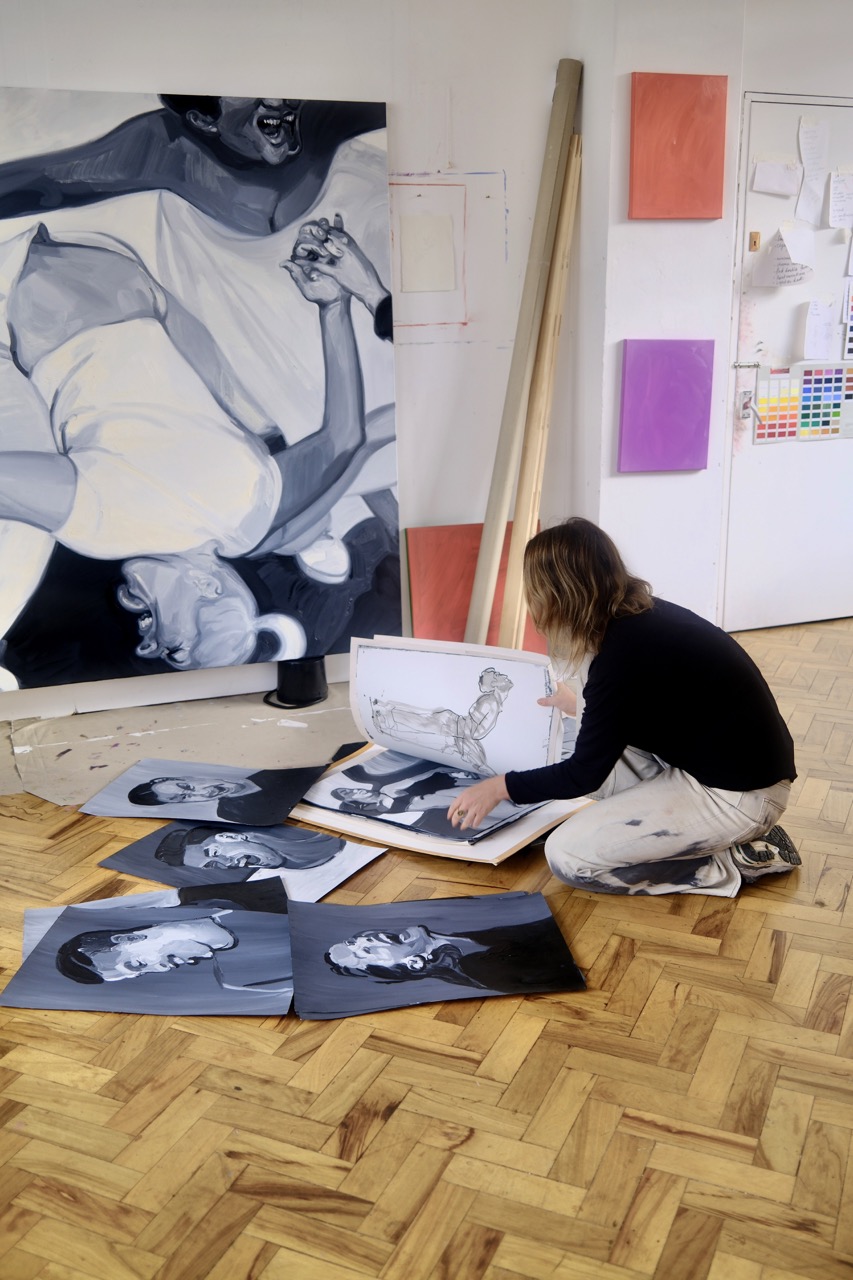
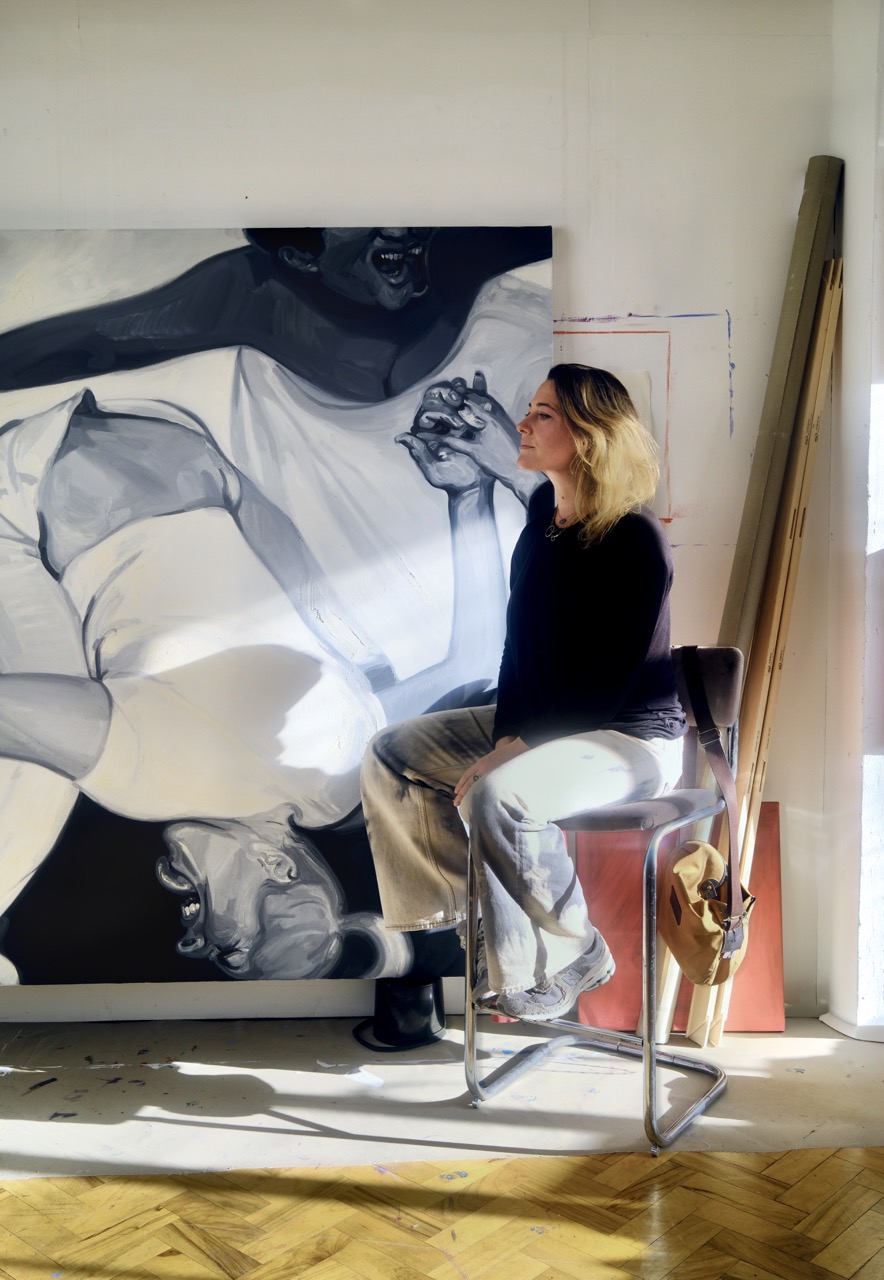
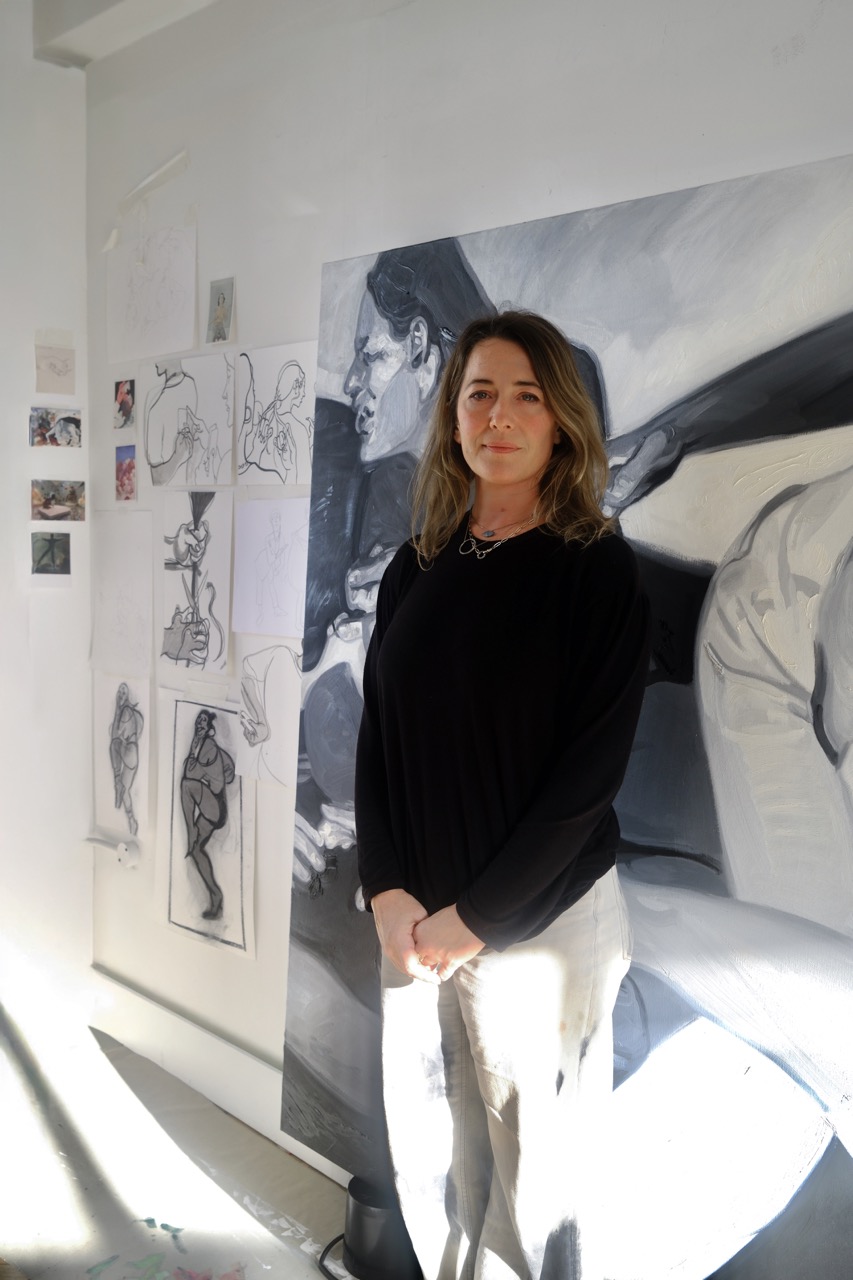


In both style and subject, Garwood has forged a new visual vocabulary. Her compositions feel circular and open-ended, pointing to elusive narratives beyond the parameters of the canvas. Recurring motifs—particularly the sisterly bond and affection between women—reveal a deeply empathetic eye. A rich alchemy of feeling, memory, and imagination, Garwood’s canvases express both her subconscious and lived experience, collapsing past and present, time and place: “I would say the recent works are engaged with the psychological building blocks that have shaped my way of seeing the world, infused with strong memories from childhood: storybooks, archetypes, and even the animated Beatles movie Yellow Submarine (1968), with its use of vibrant and psychedelic colours.
A key influence is dance—both as a recurring theme and a physical process underpinning her method. A trained dancer herself, Garwood draws parallels between the two disciplines. “Figurative painting and dance both use the body as a vehicle to express emotion and personality,” she says. “In that sense, composition and choreography are closely linked.”
This embodied approach defines her painting practice: a pas de deux between artist and canvas. “When I’m painting, I’m searching for that same feeling as when you’re dancing—the sensation of losing yourself in an idea,” she says. Indeed, we see the references to Henri Matisse’s La Danse (1909), or even Francisco de Goya’s dancing figures in his Los Disparates (The Follies (1815-1823)) series (both of which she credits as influences). Since her early days of Florentine observational portraiture, Garwood has continually stretched her imagination and paintbrush in new directions, never ceasing to challenge herself. “It’s hard to trust yourself when you have been trained with a formal set of rules—where there’s a clear sense of right and wrong,” she reflects. “I’ve found it much harder to paint my inner world rather than what’s in front of me. As an artist, it makes you feel more vulnerable. But it’s also an enjoyable challenge.”
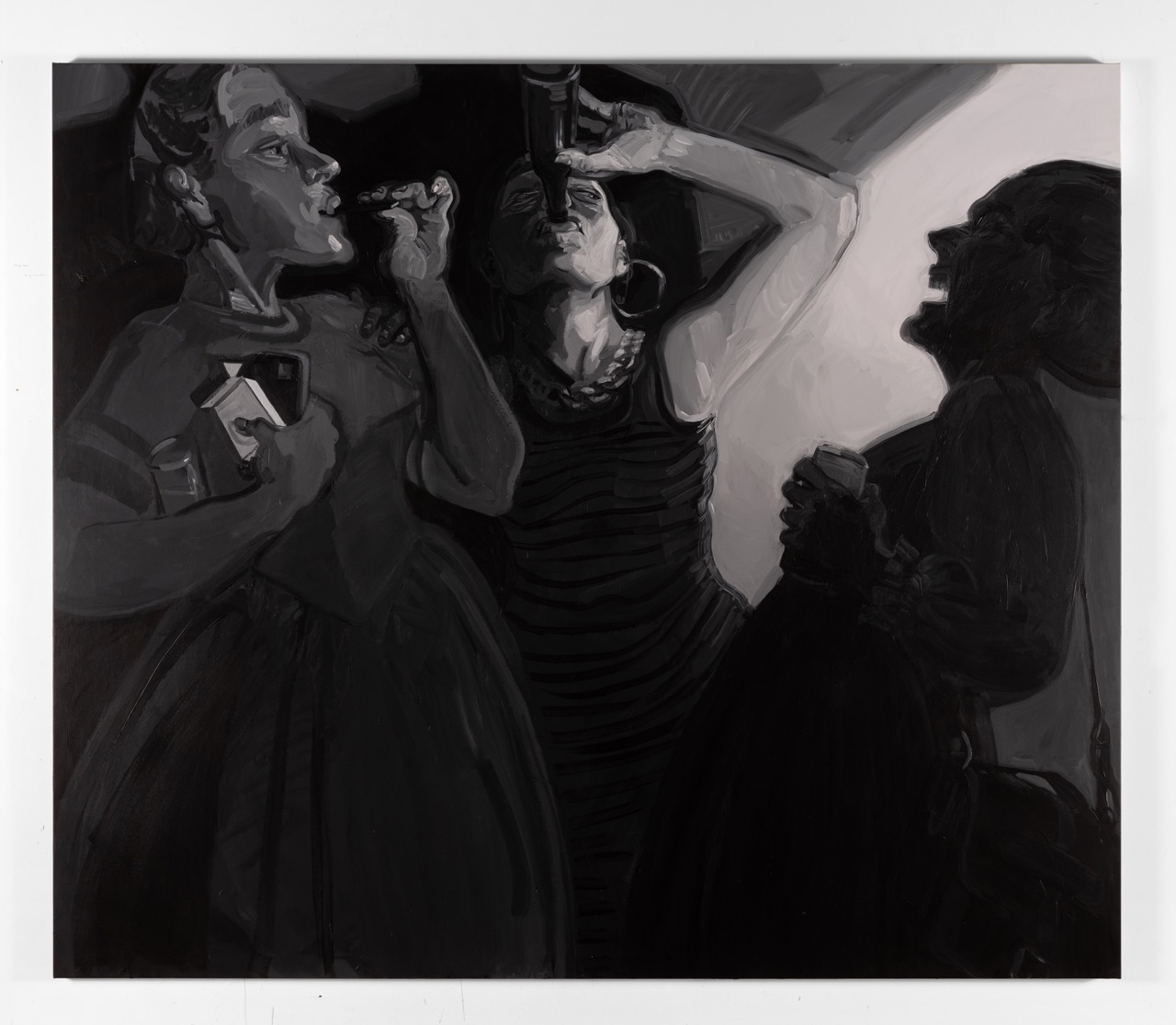
The Covid-19 lockdown ignited the desire to take a new direction. As the external world slowed down, Garwood turned inward. “I took a step back and really tried to break down the way I painted,” she says. “I realised I wanted to work in a way that was more instinctual and gestural.” She stripped her palette back to black and white, a move that allowed her to focus on form and composition. “Taking out the colour means you can paint in a less literal, looser way,” she explains.
The resulting monochrome series, depicting young women in scenes of hedonistic abandon, interrogated the gaze—especially how the female body has been framed through art history’s predominantly male lens. “I was thinking about matrilineal storytelling and the power of female bonding,” Garwood says. “I wanted the works to convey a sort of chthonic, earthly power.”
Leaning into what Garwood describes as the “grotesque”, these works convey a raw authenticity grounded in empathy. Her figures are imperfect, unidealised, yet deeply human—portraits of women liberated from the limiting expectations of ‘femininity’. “I believe seeing women in this way deserves to be celebrated,” she says. “It’s the opposite of being a portrait painter, where you are painting people at their best.” An homage to the nuances of the female experience, Garwood admits that these works speak to personal transitions and transformations in her own life. “I guess I’m trying to affectionately portray messy women,” she says, adding with a slight laugh, “and also the fact that I can be one of those messy women too.”
A painterly act of sister solidarity, Garwood’s paintings revel in the ebb and flow of human life, against the passage of time and complexity of modern womanhood. “I’m making work about the strongest relationships in my life—friendships with women, who have been instrumental to my life and work.”