

With an exhibition at the Pallant House Gallery closing late April, we spent time with the influential British artist to learn more about her newest series ‘Mothering’ and how motherhood has influenced her practice.
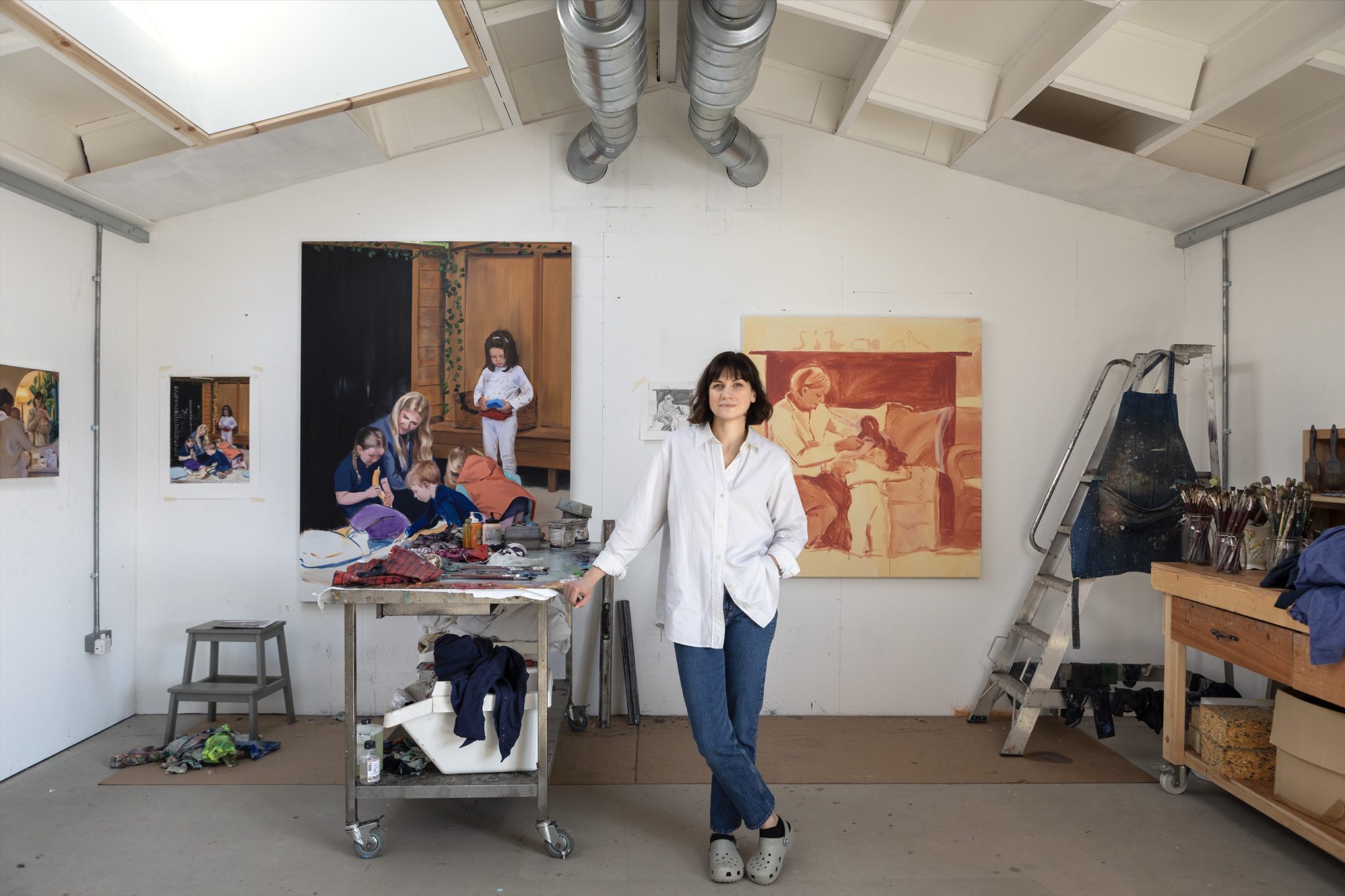
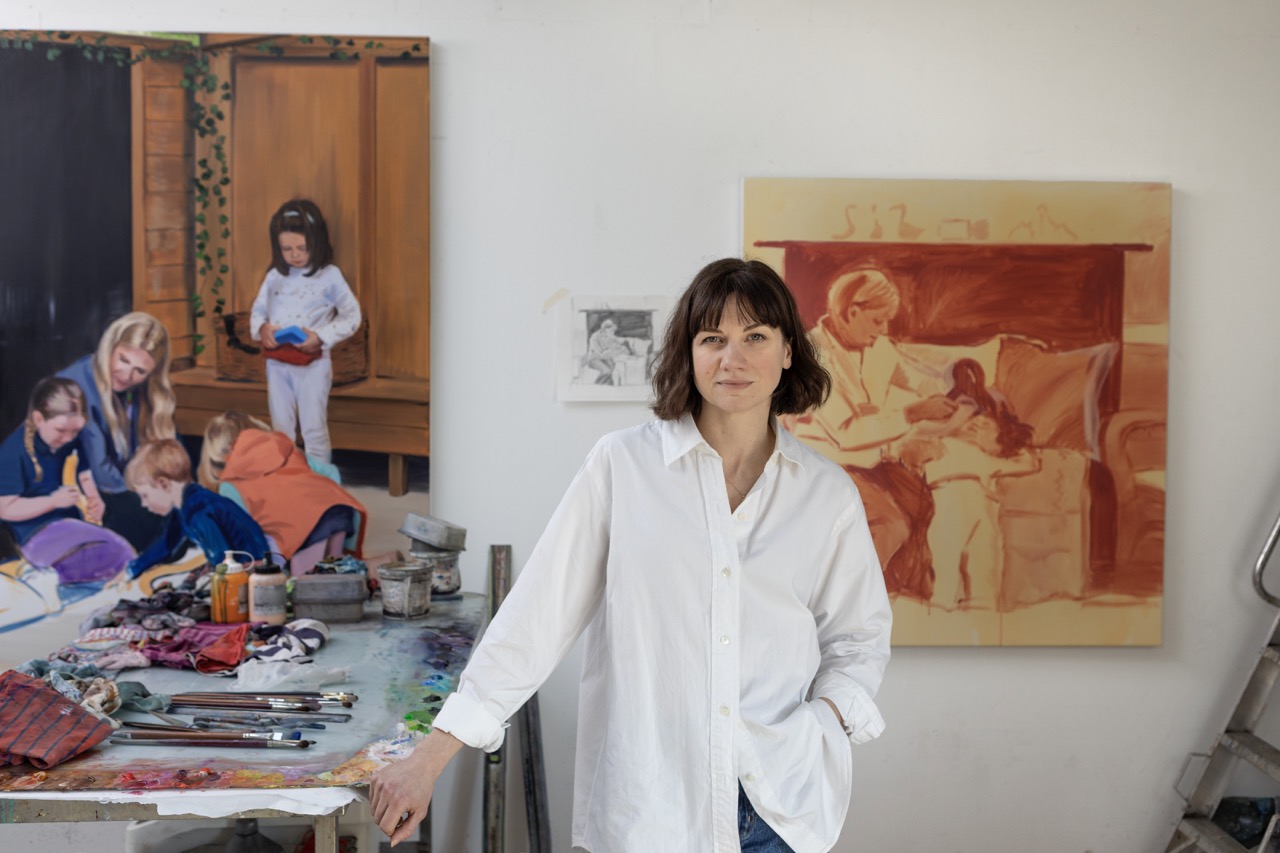
Caroline Walker obtained her MFA at the Royal College of Art, London in 2009. Best known for her intimate portrayal of women in work and house environments and bringing the public a new perspective, she is currently running a show ‘Mothering’ at Pallant House Gallery (organised by the Hepworth Wakefield) until the 26th of April 2026.
The Scottish painter is today listed among her British peers, including Tracey Emin, as one of the more respected artists of her generation—known best for her intimate scenes of women’s lives, where she paints underrepresented figures in different domestic and work environments. Walker has a unique way of absorbing you, almost against your will, as if she lingers on certain scenes to make you notice what isn’t meant to be seen, or what you wouldn’t dare look at for too long.
I first came across her work through the Night Scenes series, where staged interiors are charged with a strange nocturnal atmosphere. I quickly became obsessed. The underlying voyeurism has, over the past year, come to occupy a central place in my own practice.
I decided to reach out to Caroline and ask her more about this series, and maybe better understand my own direction. As we spoke, I began to learn how her relationship to her subjects has evolved over the past decade, from her early staged works to a gradual distancing from that approach. We also discussed her recent projects, and the ways in which motherhood has influenced both her practice and her trajectory as an artist.


Myriame Dachraoui: Would you like to introduce yourself in your own words?
Caroline Walker: I think of myself as an artist — a painter who looks closely at women’s lives as a subject. Within that, I’m interested in how we spend our time, how we work, how that work is valued in every sense of the word, and how women are seen in society.
MD: Your work explores women’s stories through different perspectives and worlds, often focusing on unseen women and workers in domestic and professional environments. Can you tell me more about your early decision to represent women in these contexts, and how your subjects have evolved?
CW: Since childhood, I’ve always been interested in making pictures of women. I don’t really know where that came from — it just felt like a natural focus. During my undergraduate studies in Glasgow in the early 2000s, I didn’t paint women exclusively; I sometimes painted men too. But as I became more engaged with art history and aware of the proliferation of images of women within it — and began questioning who was authoring those images — I found myself increasingly focused on painting women.
During my MA at the Royal College, I started working with a life model I met in a drawing class. She didn’t have a permanent home in London and moved between houses, dog- and cat-sitting. I visited her in each of these places and worked with her for about a year. From that, I developed a body of work in which she remained a constant presence while the domestic settings around her changed. That was when I became interested in how different elements within a painting construct meaning and begin to tell a story — about what we’re looking at and about who the person is.
MD: Some of your series adopt an investigative approach, immersing you in specific working environments such as Nails, Housekeeping or Tailor. How do you choose your themes, and how would you describe your creative process?
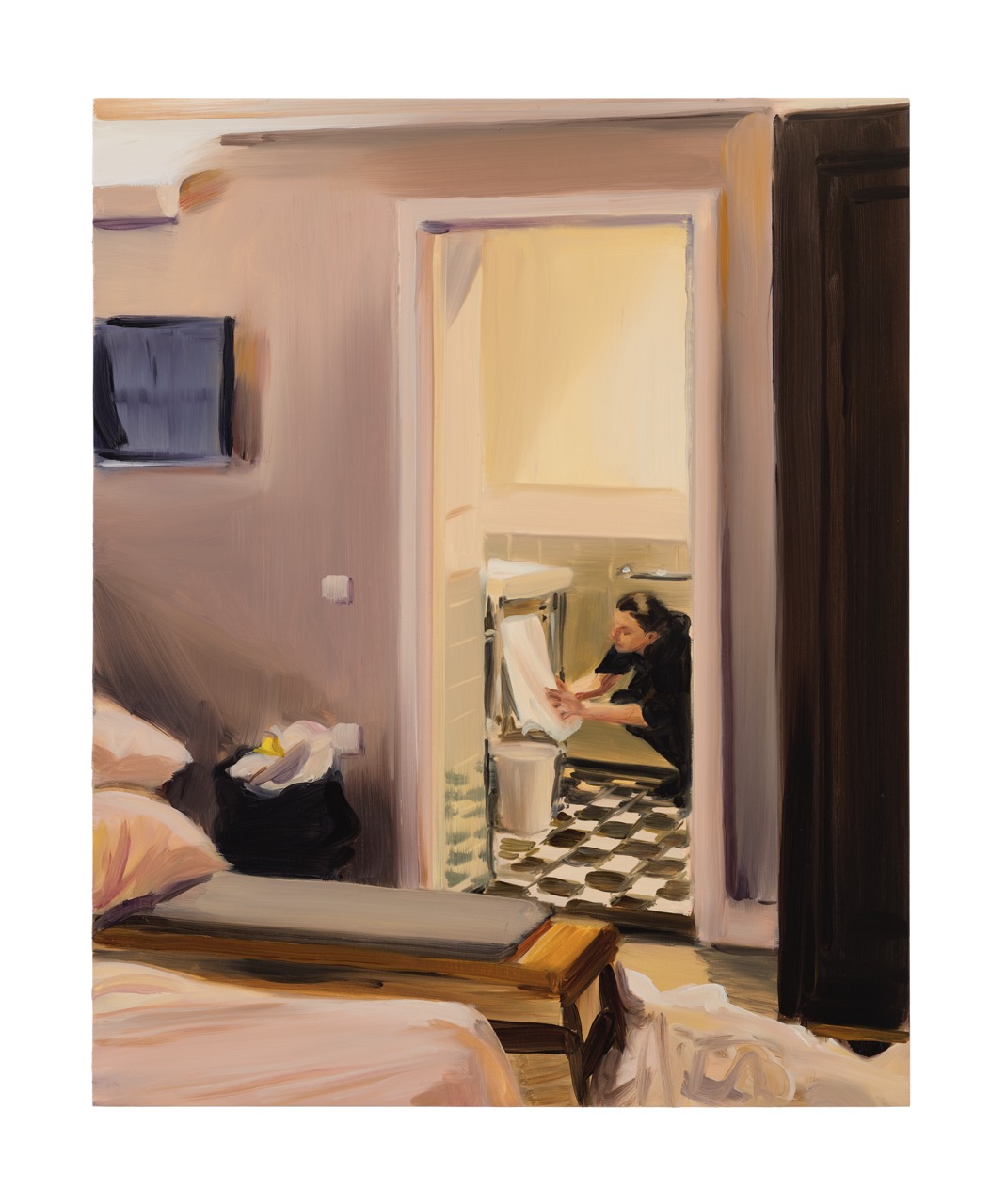
CW: For Housekeeping, I was working with a London charity to make portraits of women — asylum seekers and refugees — connected to its network. Through that process I began thinking about visibility: who occupies certain spaces in the city at different times of day and night. That led me to consider forms of labour designed to be invisible. Cleaning work is a good example. From there I became interested in hotel housekeeping.
MD: You immersed yourself in an unfamiliar environment. How did you earn the workers’ trust?
CW: It was a tricky project to access. Sometimes introductions come through people I know; sometimes through art-collecting contexts, which is how it happened with one hotel. When I first speak to managers, it’s important to explain that I’m not trying to make anyone look bad. Then there’s another stage — gaining the consent of the people who will become subjects.
For the housekeeping project, I arrived at half past eight one morning when staff were assembling. All the women were Romanian, and the head housekeeper translated. I showed them images of my work and explained what I hoped to capture. Once we agreed who was comfortable being photographed, I was given a key and allowed to wander around the floors observing.
Some of them were amused — they couldn’t understand why anyone would want to see a painting of this work. I kept saying, “No, they will.”
MD: Do you already know some of the people you portray, or do you spend extended time with them?
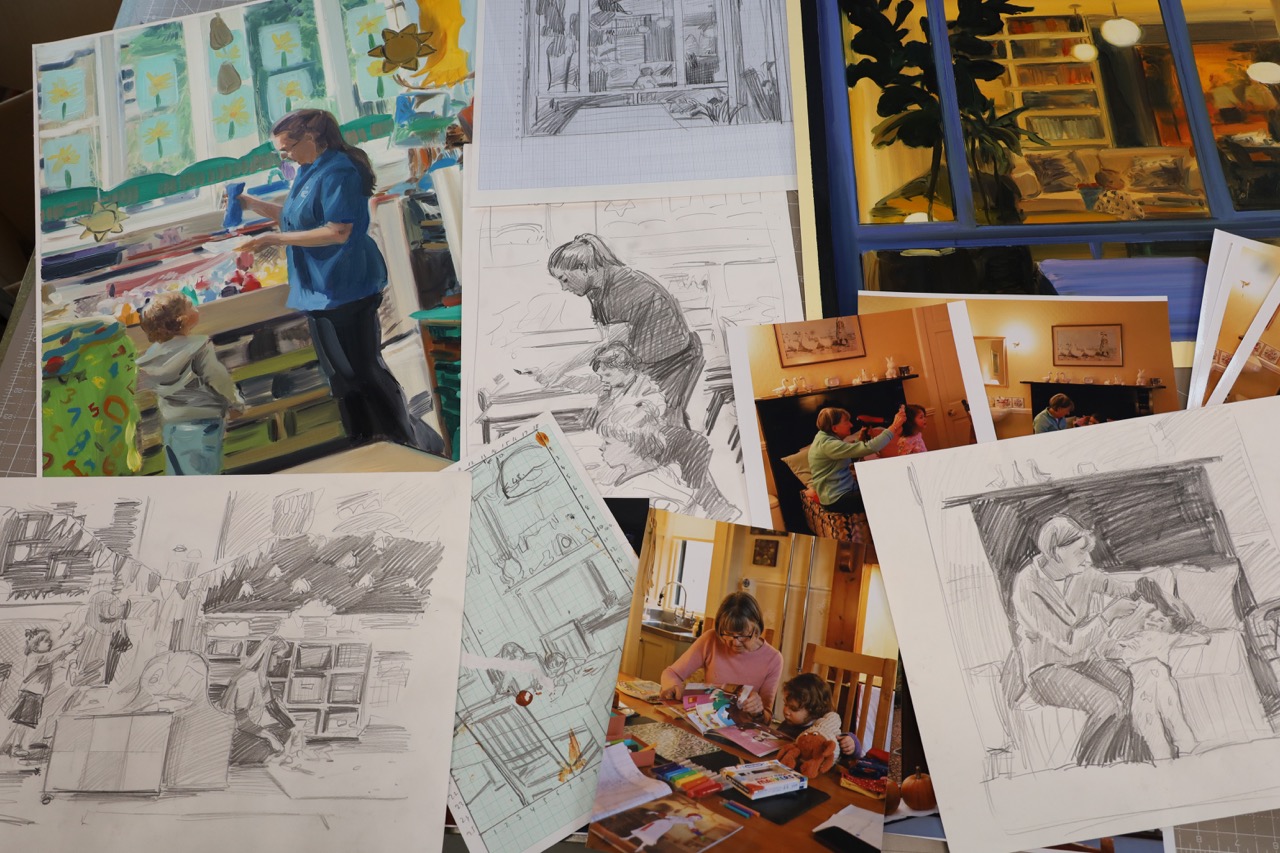
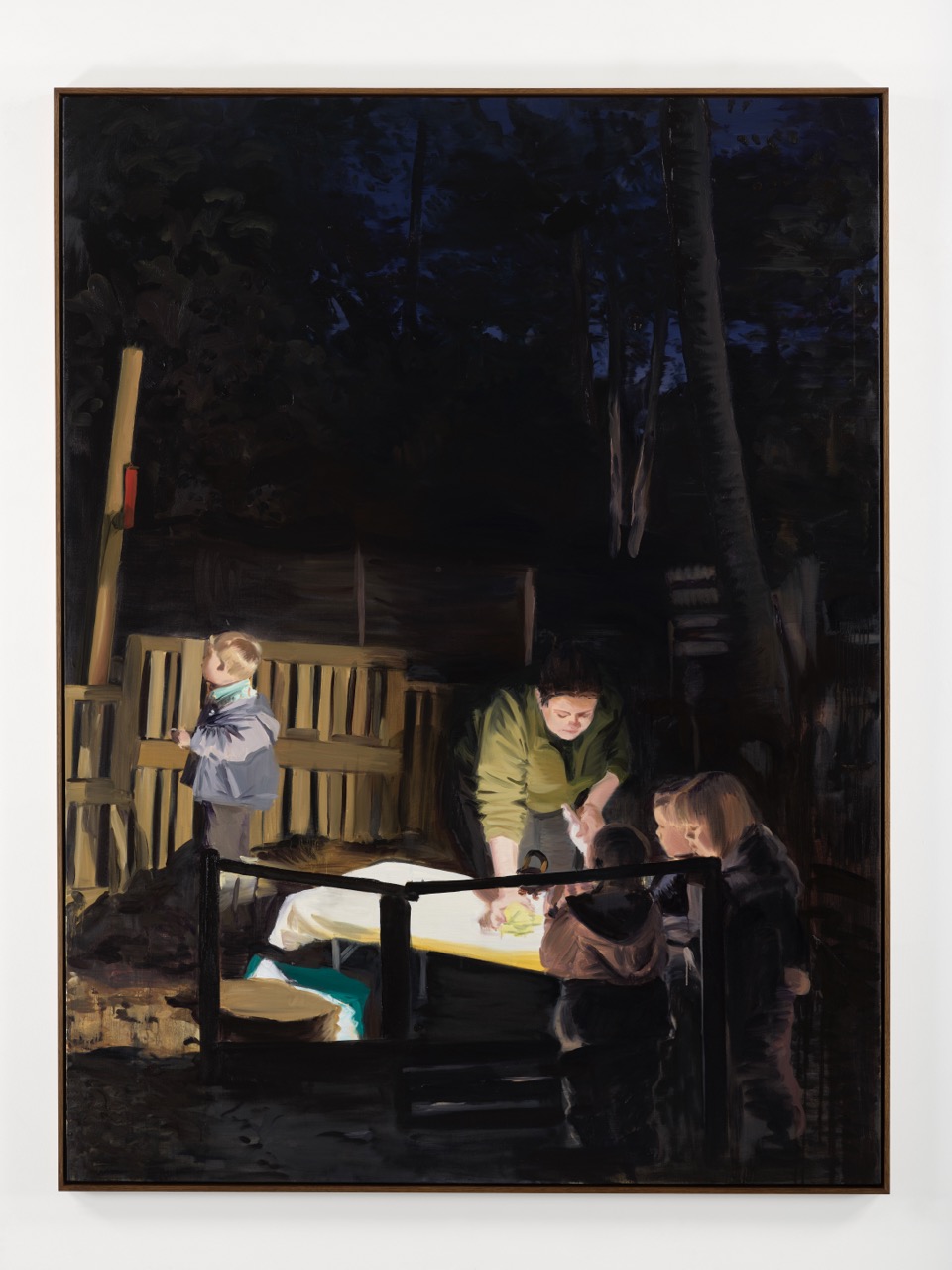
CW: Many subjects are directly connected to my own life — staff at the nursery my children attend, or the health visitor who comes to see my son. Those relationships are different because they already exist outside the artwork.
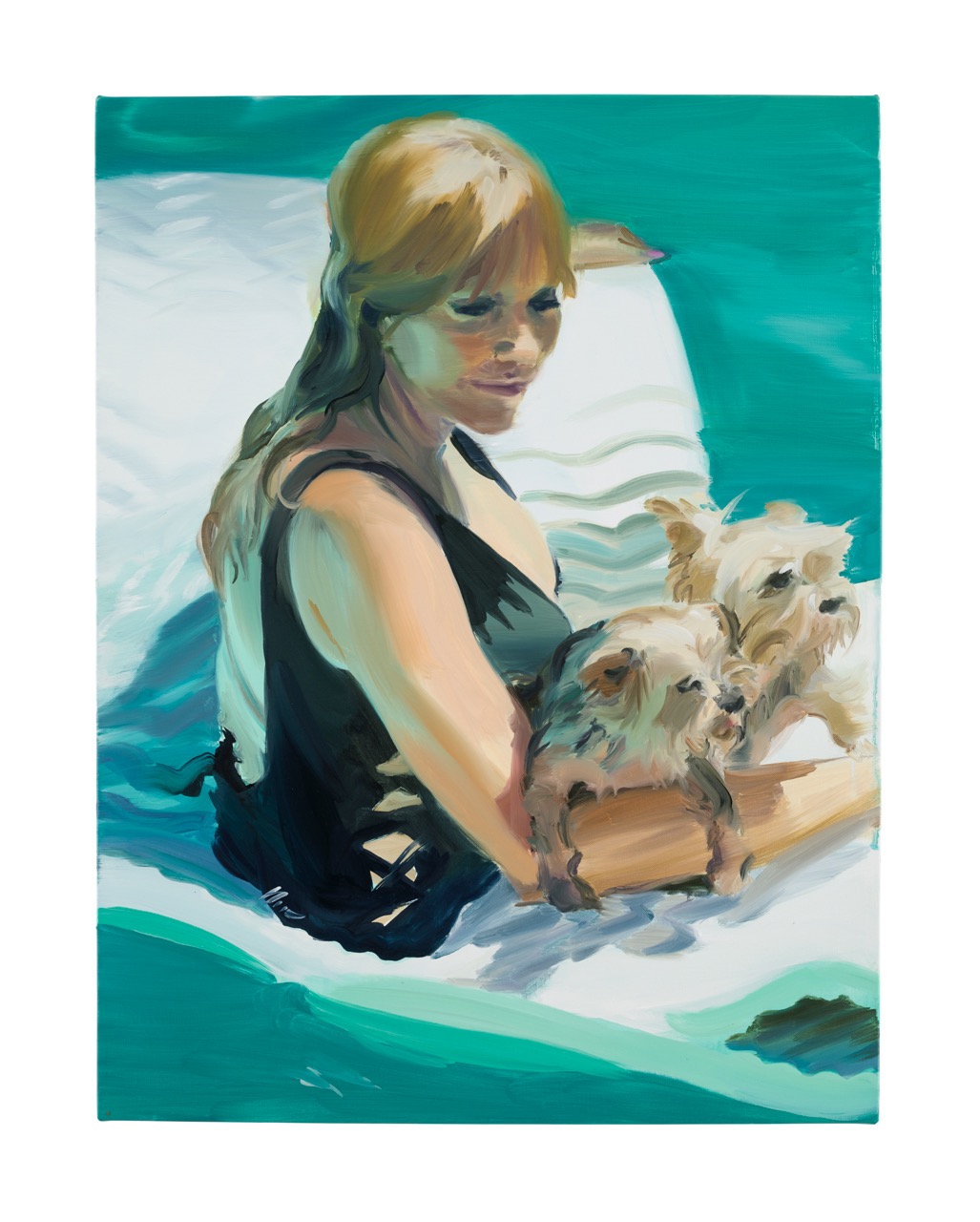
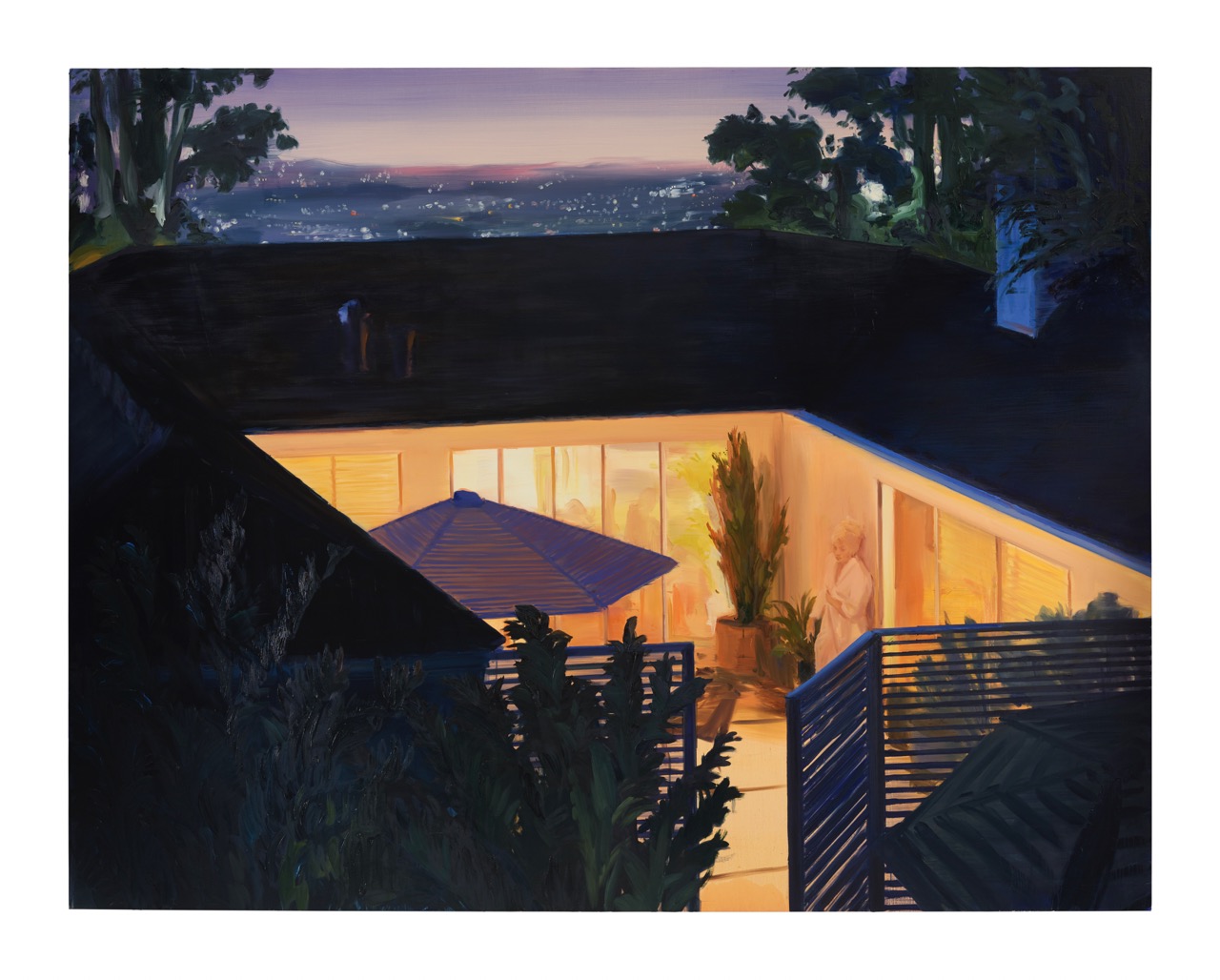
MD: Let’s talk about the California series from 2016. Nearly ten years on, it still conveys a timeless, intimate vision of the Hollywood Hills. Can you tell me about your time there and the process behind it?
CW: It was stressful. The project grew out of earlier work in California. I’d become fascinated by modernist domestic architecture, and people kept telling me to go there. In 2015 I received an unexpected grant and decided to spend a few weeks in California. I went to Palm Springs, rented a house through Airbnb, and put out a call for models.
One reply shaped the entire project. It came from Susan, about sixty years old, a former Miss America contestant — Miss Colorado in 1970, I think. She was glamorous, a bit like Goldie Hawn. I immediately wanted to work with her. We did a photoshoot that resulted in a large body of work.
A couple of years later I returned, wanting to work with her again. This time she played a character — though partly herself. I rented another Airbnb in the Hollywood Hills. We only had two nights, and Susan was there for about thirty-six hours, so everything was carefully storyboarded. There was a stronger narrative intention: a beautiful woman growing older, alone in a spectacular house filled with the markers of success — a pool, elegant interiors — yet seemingly lonely.
At that stage I was still drawn to aesthetics and formal qualities that could suggest a story without fully defining it. I always left the narrative open for viewers to imagine their own interpretation.
MD: In early works like this, you staged photoshoots. In later work you take us behind the scenes into real moments. How and why did this shift happen?
CW: Interestingly, while working on the California project, I was also involved in a completely different commission with a refugee charity in London. The contrast couldn’t have been greater. In Los Angeles I was constructing narratives — hiring houses, shaping characters. In London I was responding to lives that already existed and trying to capture something truthful.
MD: The effects are evident. In recent works we feel present within intimate scenes, whereas earlier architecture often isolated subjects.
CW: The origins go back to graduating from the Royal College. I’d been painting the same model in different settings when a tutor — who annoyed me at the time — said the work could have been made at any point in the last 150 years. I decided to make it unmistakably contemporary. That led me to modern architecture: clean lines, open spaces, interiors that feel staged. When you visit those houses, everything is arranged like a show home. I began creating voyeuristic viewpoints that suggested performance rather than lived reality.
I believed that to reach a wider audience, the work couldn’t feel too personal. It had to be generalised. That’s why I felt nervous starting the charity project. I didn’t know how it would come together.
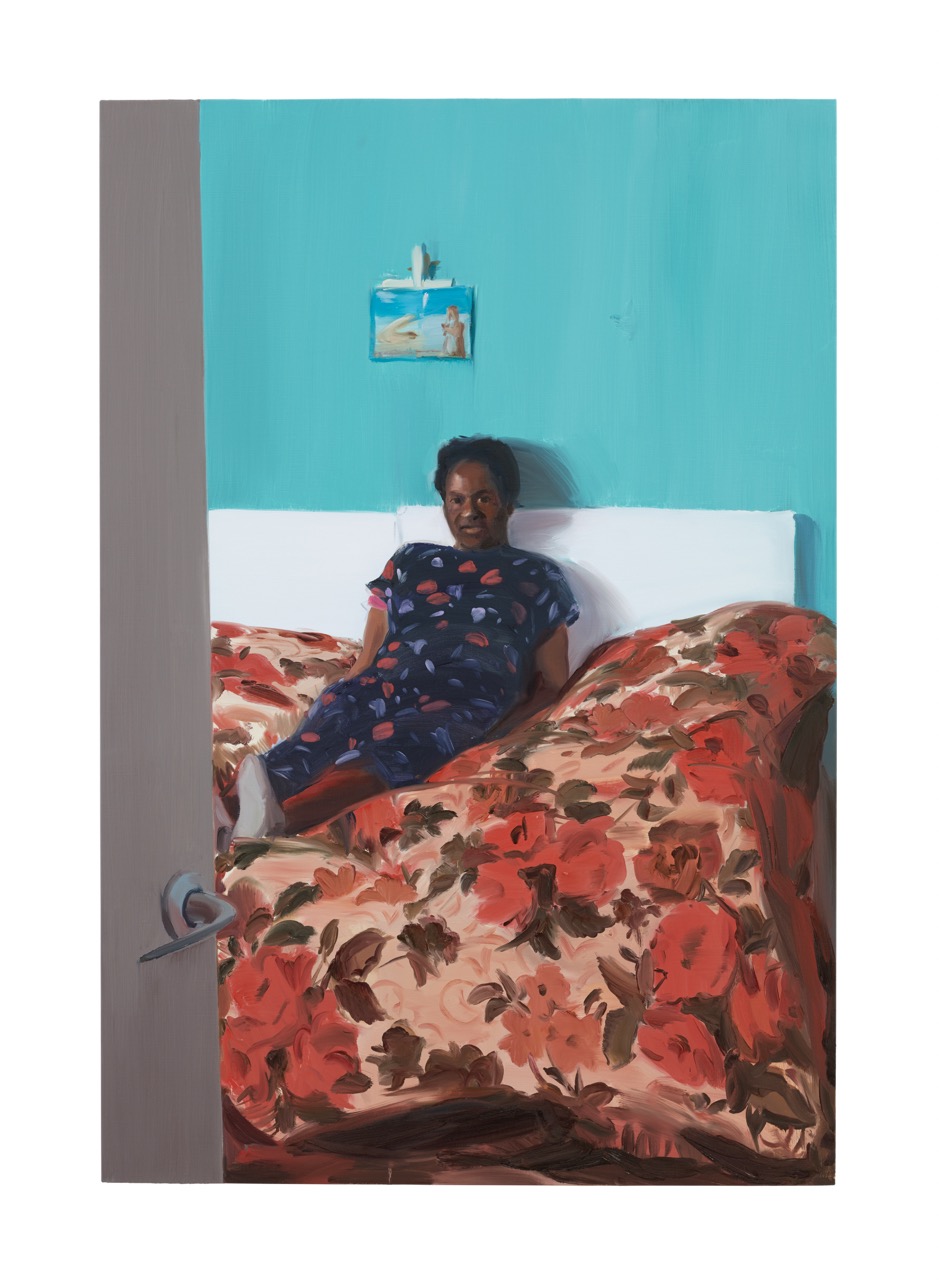
The first painting I made was of a woman called Joy, the only subject who had been granted refugee status and given a flat. She’s sitting on her bed, looking directly at me. I’m positioned in the doorway. When I finished it, I realised it was essentially a portrait — something I’d always avoided. Portraits felt too specific. But I also realised it might be the most powerful work I’d made.
Her returned gaze challenged my ideas about observation and distance. It felt like a revelation. I understood that something deeply specific can still speak universally. You don’t need to share someone’s experience to connect with it. That was the turning point. I’d spent years constructing stories, but nothing is more compelling than real people.
MD: You were also relinquishing aesthetic control — moving from staging to documentation.
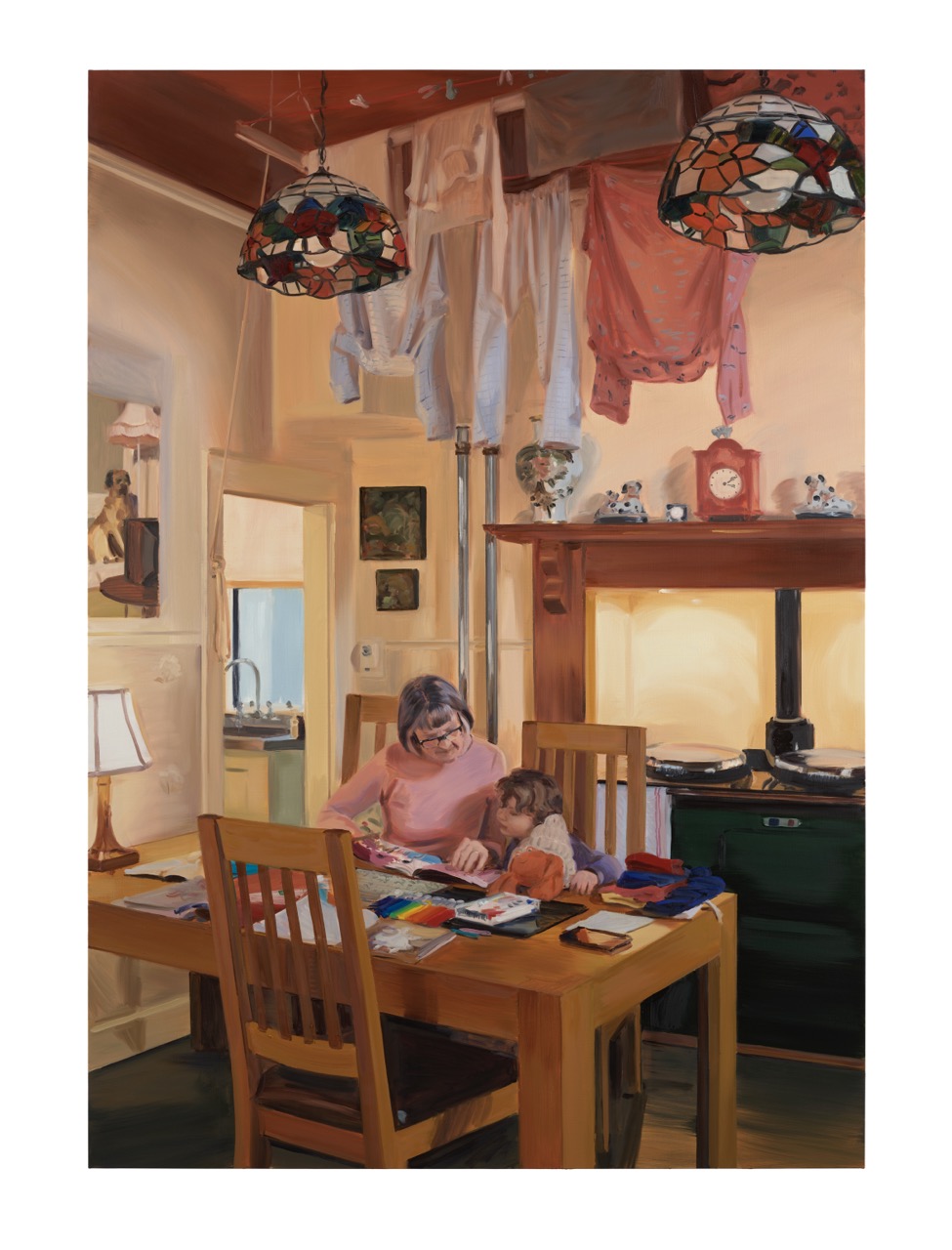
CW: Yes. Previously I could choose visually striking settings. Now I enter a room and look for the detail that reveals its character — fluorescent strip lighting, a particular piece of furniture, the architecture. It’s the same skill, but used in reverse.
MD: Did you know what to expect? It feels like a significant shift — one that became your new modus operandi.
CW: It was a major turning point and one that could sustain me indefinitely. Daily life constantly presents new potential subjects — moments you suddenly notice or see differently.
MD: People often say artists must remain connected to the world around them. Your work today feels more human — attentive to lived experience.
CW: I still value the earlier work. It just feels like a completely different way of thinking about painting.
MD: Your current exhibition Mothering, at Pallant House Gallery until April 2026, explores not only motherhood but also the wider network of care — working women and family members. What prompted this focus?
CW: Becoming a mother changed everything. Before having children, motherhood didn’t interest me as a subject because it wasn’t my world. It felt almost like a revelation sitting at home with my first newborn. The house looked different because of all the unfamiliar objects that suddenly defined daily life — and the endless cycles of washing and organising. Home became both sanctuary and, at times, prison. Even leaving the house required enormous planning.
It also introduced me to the labour of other women — midwives, health visitors, nursery staff — professions overwhelmingly dominated by women. That broadened the subject.
MD: You also undertook a residency in the maternity ward at UCLH. Can you tell me about that?
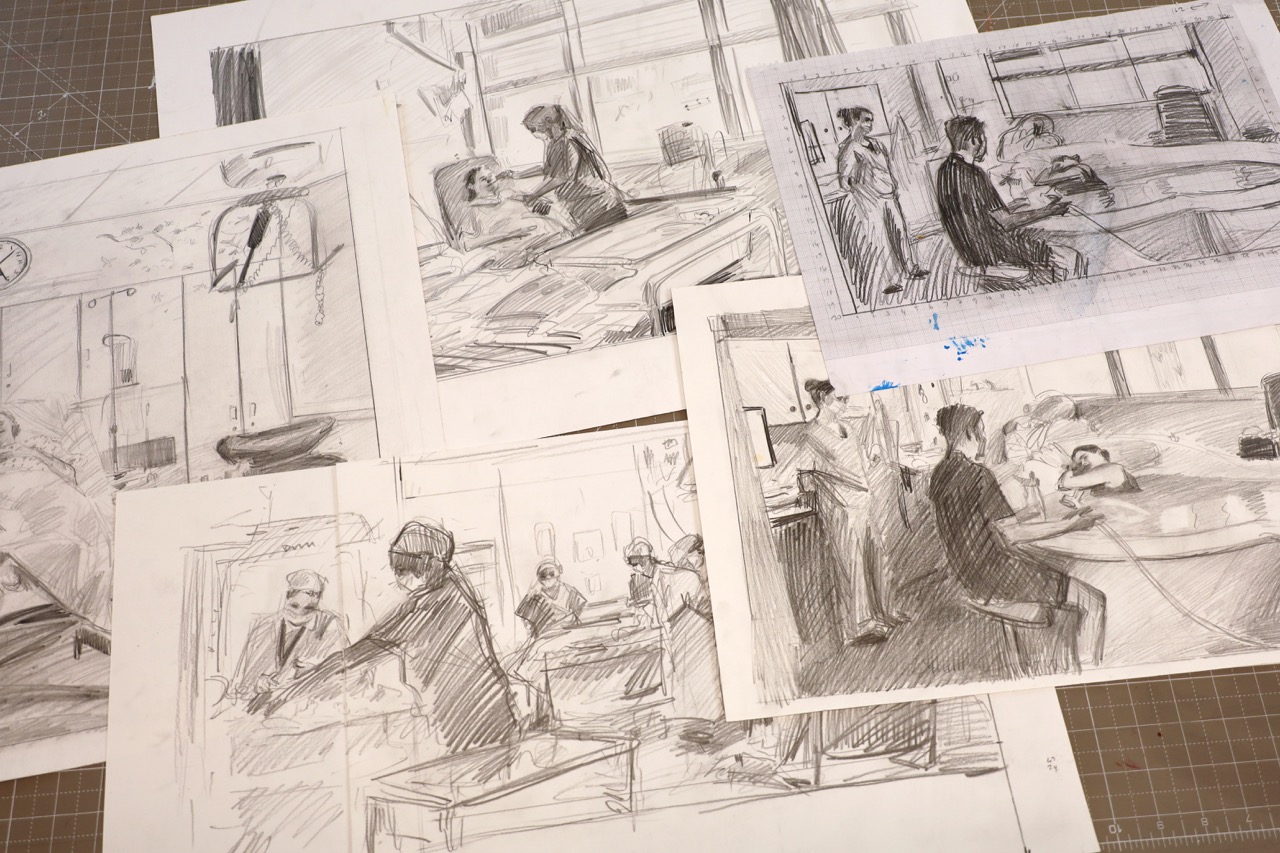
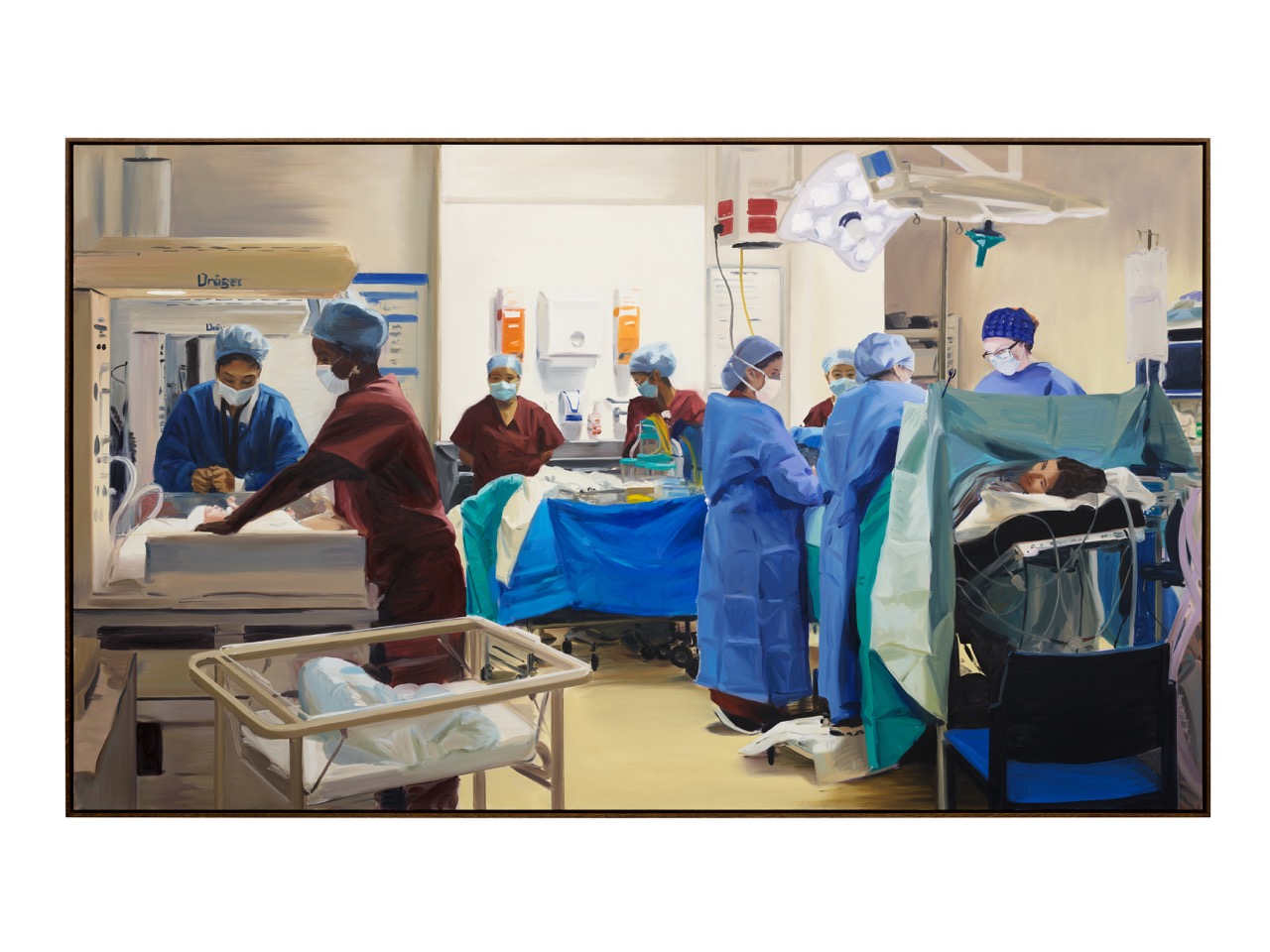
CW: The residency had been arranged before I was pregnant. I initially thought about painting nurses more generally, but I’d never spent much time in hospitals. We were about a year away from starting when I became pregnant. UCLH was my local hospital, so I began attending antenatal appointments there. I realised the maternity department was visually and emotionally unique — operating theatres, dark ultrasound rooms, birthing suites. It offered a rich range of settings connected to women’s labour — both medical work and childbirth itself.
At the same time, my sister-in-law was expecting her first child and agreed to be the subject of the Lisa series. Her daughter was born just days before my residency began. I would spend one day photographing in the hospital and the next visiting Lisa at home. When I later made the paintings, I saw the two bodies of work as two sides of birth. In hospital, everything builds toward the moment of delivery. At home, the real transformation begins — the shift from institutional space to domestic rhythm.
I’m still working with this imagery. The painting I finished yesterday shows my daughter at nursery. She’s older now, but I continue drawing on material collected over several years.
MD: So is your work still about mothering, or moving somewhere new?
CW: It’s beginning to focus less on care and more on early education — what’s often called the “early years”. Some paintings address foundations of numeracy and literacy, but many are about learning self-care: brushing your teeth, dressing yourself, feeding yourself.
MD: In a way you’re rediscovering these stages through your children.
CW: Yes. I now have a son as well — he’s nearly three — while my daughter is six. Painting allows me to look more closely at these moments.
MD: Some artists distance themselves from motherhood in their work. You seem to embrace the overlap.
CW: I have a different relationship with this work. I enjoy the blurring of boundaries between family life and artistic practice. My studio is just across a courtyard from the house. The children come in, comment on the paintings, demand that I paint them.
It’s strange documenting their lives because they change so quickly. Sometimes I’m working from photographs taken a year earlier, and they already feel like different people. In a sense I’m preserving memories — not only of them at that moment, but of the experience of making the painting.
MD: A documentary about the Mothering series, directed by Nicola Black, was produced alongside the project. Where can it be viewed?
CW: The film premiered last June and has had several screenings, including at Parent House, with another scheduled in Edinburgh next month. It will also be broadcast on the BBC and then made available on iPlayer. The BBC acquired it last autumn, but we’re still waiting for a confirmed date. Once broadcast, it will remain on iPlayer for twelve months.